Florida Motion For Writ of Garnishment
What is this form?
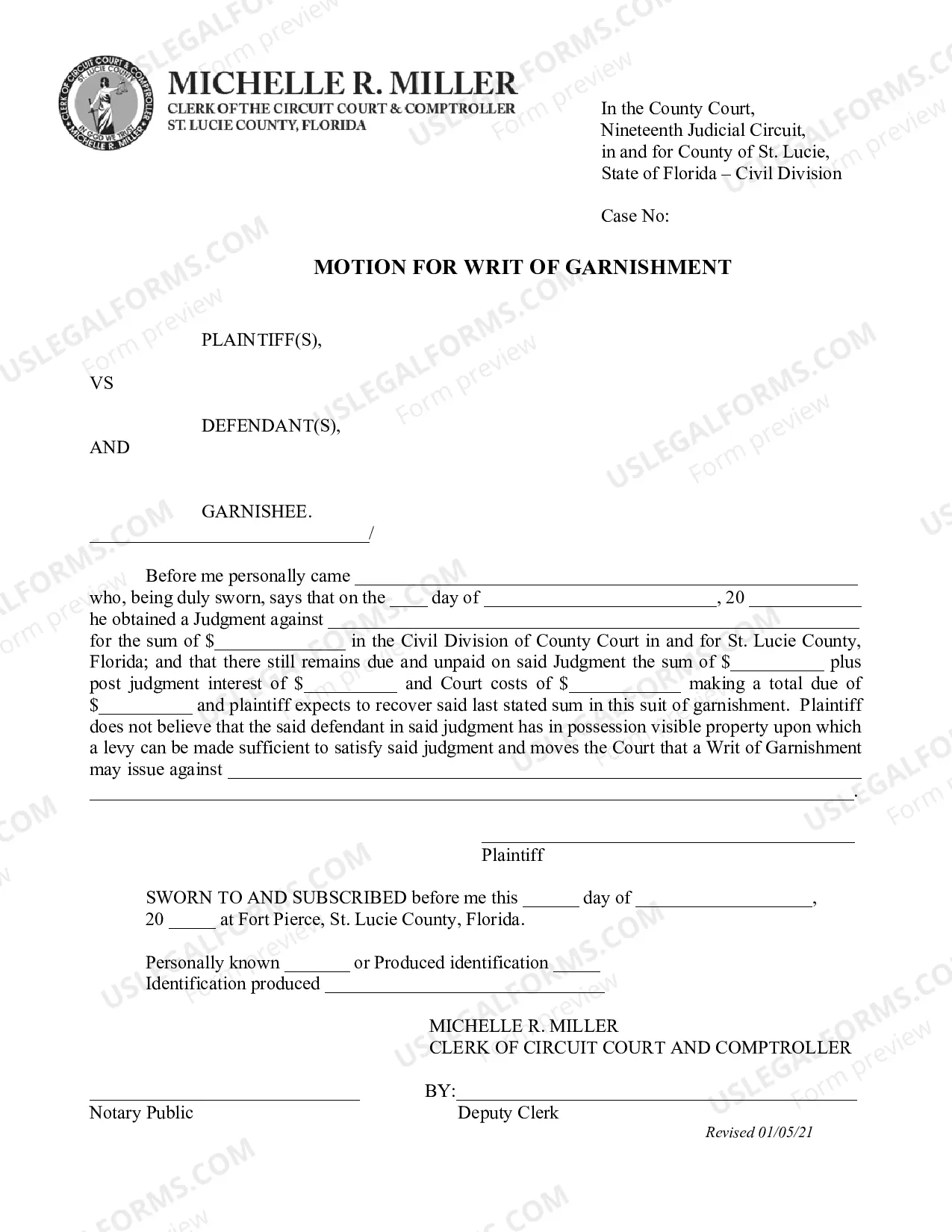
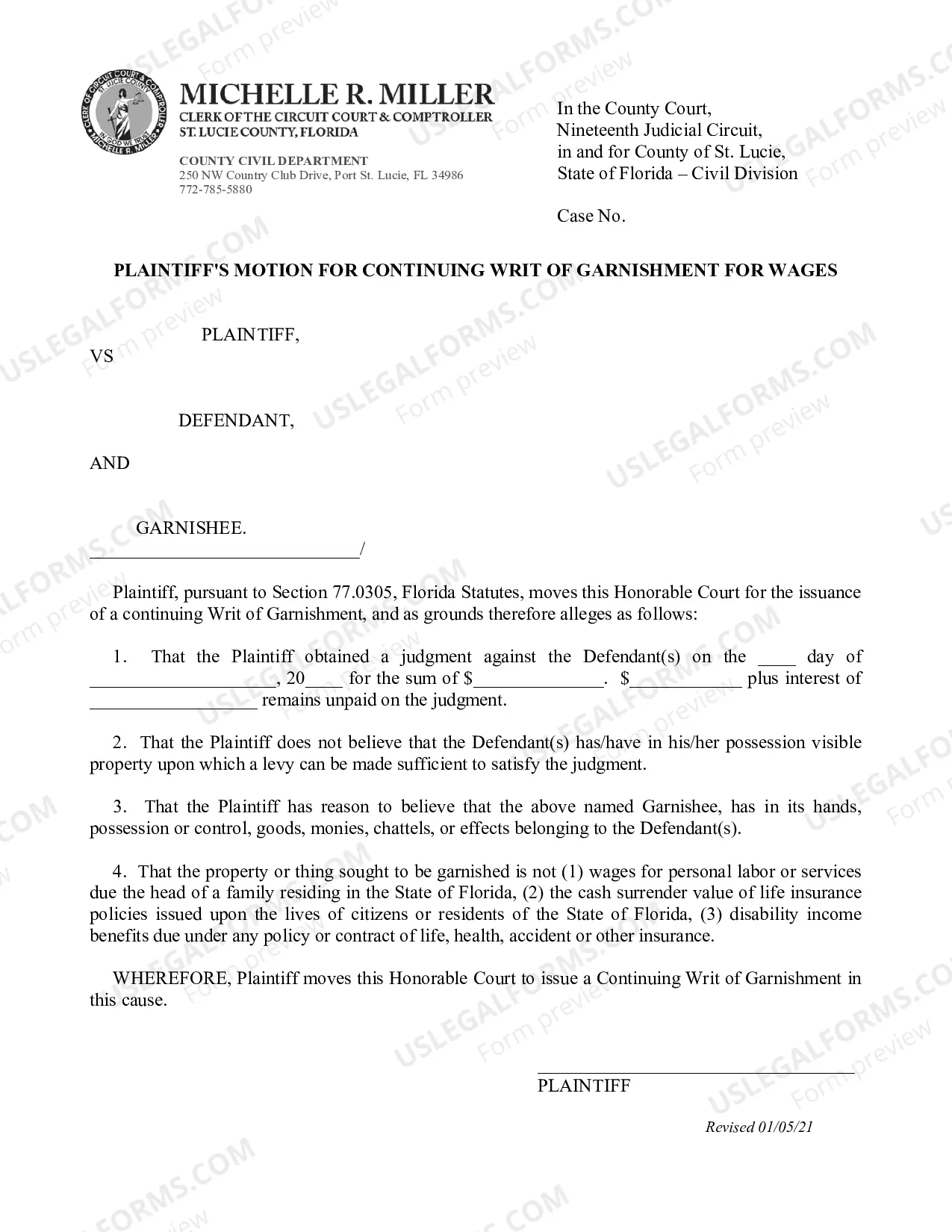
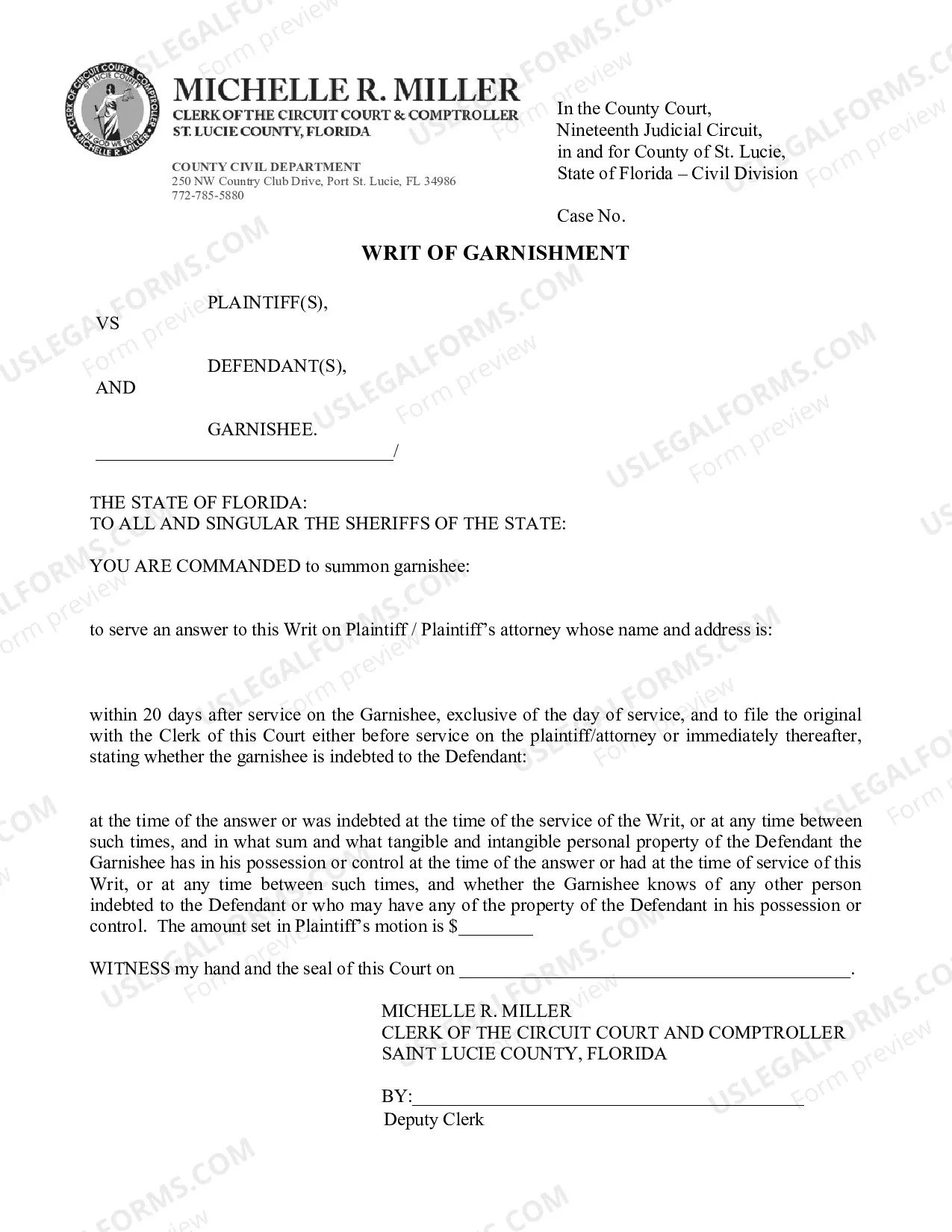
The Motion for Writ of Garnishment is a legal document filed with the court to request the garnishment of a third party's assets or funds that are owed to a debtor. This form is used after obtaining a judgment against a defendant and is essential for collecting owed amounts when the debtor does not have sufficient visible property for levy. Unlike other forms of debt recovery, this motion specifically targets funds held by a third party, known as a garnishee, to facilitate payment of the judgment amount.
Main sections of this form
- Case title identifying plaintiffs, defendants, and garnishee.
- Details of the judgment obtained, including the date and amount.
- The request for the court to issue a writ of garnishment.
- Signature of the plaintiff and notarization section.
When this form is needed
This form is used after a plaintiff has successfully obtained a judgment against a defendant in a civil case. If the defendant is unable to pay the judgment, and if there are no visible assets to levy, the plaintiff can use this motion to garnishee funds held by a third party, such as a bank or employer. It is an important step in effective debt recovery for civil judgments.
Who can use this document
- Individuals or businesses that have won a monetary judgment in court.
- Creditors seeking to recover debts from a defendant who has not paid the judgment.
- Attorneys representing clients in debt recovery cases.
How to prepare this document
- Enter the names of the plaintiff(s), defendant(s), and garnishee at the top of the form.
- Fill in the case number and details of the judgment, including the date it was obtained and total amount due.
- Specify the reasons for the garnishment request, detailing the expected recovery amount.
- Sign the form and have it notarized to ensure legal validity.
- File the completed form with the appropriate county court.
Does this form need to be notarized?
Yes, this form must be notarized to be legally valid. Notarization verifies the identity of the plaintiff and ensures that the document is formally recognized by the court. US Legal Forms provides integrated online notarization services available 24/7 through secure video calls, making it simple and accessible.
Get your form ready online
Our built-in tools help you complete, sign, share, and store your documents in one place.
Make edits, fill in missing information, and update formatting in US Legal Forms—just like you would in MS Word.
Download a copy, print it, send it by email, or mail it via USPS—whatever works best for your next step.
Sign and collect signatures with our SignNow integration. Send to multiple recipients, set reminders, and more. Go Premium to unlock E-Sign.
If this form requires notarization, complete it online through a secure video call—no need to meet a notary in person or wait for an appointment.
We protect your documents and personal data by following strict security and privacy standards.

Make edits, fill in missing information, and update formatting in US Legal Forms—just like you would in MS Word.

Download a copy, print it, send it by email, or mail it via USPS—whatever works best for your next step.

Sign and collect signatures with our SignNow integration. Send to multiple recipients, set reminders, and more. Go Premium to unlock E-Sign.

If this form requires notarization, complete it online through a secure video call—no need to meet a notary in person or wait for an appointment.

We protect your documents and personal data by following strict security and privacy standards.
Avoid these common issues
- Failing to provide complete information about the judgment.
- Not including the case number or correct party names.
- Leaving the form unsigned or not notarizing it appropriately.
Benefits of completing this form online
- Convenient access to legally drafted templates created by licensed attorneys.
- Editable fields that allow users to customize the form easily.
- Reliable resources that ensure legal compliance with state-specific laws.
Legal use & context
- The motion is used within a civil court context, specifically in cases involving debt collection.
- Understanding local statutes related to garnishments is critical; they may vary by jurisdiction.
- The effectiveness of a garnishment relies on proper completion and filing of this motion.
Summary of main points
- The Motion for Writ of Garnishment allows a creditor to collect from a debtorâs third party.
- Complete all relevant information accurately to avoid processing delays.
- Notarization may be a necessary step; make sure to follow legal requirements.
Looking for another form?
Form popularity
FAQ
An order to quash garnishment is a court order that nullifies the garnishment action, effectively stopping the collection process. This order can be issued for various reasons, such as improper service or lack of jurisdiction. If you find yourself in a garnishment situation, understanding how to pursue an order to quash can be crucial. Professionals familiar with the Florida Motion For Writ of Garnishment can offer valuable guidance on this matter.
A release of writ of garnishment formally cancels the garnishment, allowing the debtor access to their funds again. This document is typically filed once the debt is satisfied or the court has determined that garnishment is no longer necessary. It is essential to follow proper procedures when filing a release to prevent any legal complications. Utilizing services like USLegalForms can assist in streamlining the preparation of these essential documents.
A motion for garnishment is a legal request made to the court to authorize the seizure of a debtor's funds or property to satisfy a judgment. This motion outlines the reasons why garnishment is necessary and includes details about the debtor and the judgment. Understanding how to properly file a motion for garnishment in Florida can be complex. Resources like USLegalForms provide templates and expert advice to navigate this effectively.
To appeal a garnishment in Florida, you must file a notice of appeal with the appropriate court within a specified time frame after the garnishment order is issued. Include all relevant documents from the original case, detailing your reasons for the appeal. This process can become intricate, so seeking assistance from professionals experienced with the Florida Motion For Writ of Garnishment is advisable for clarity and effectiveness.
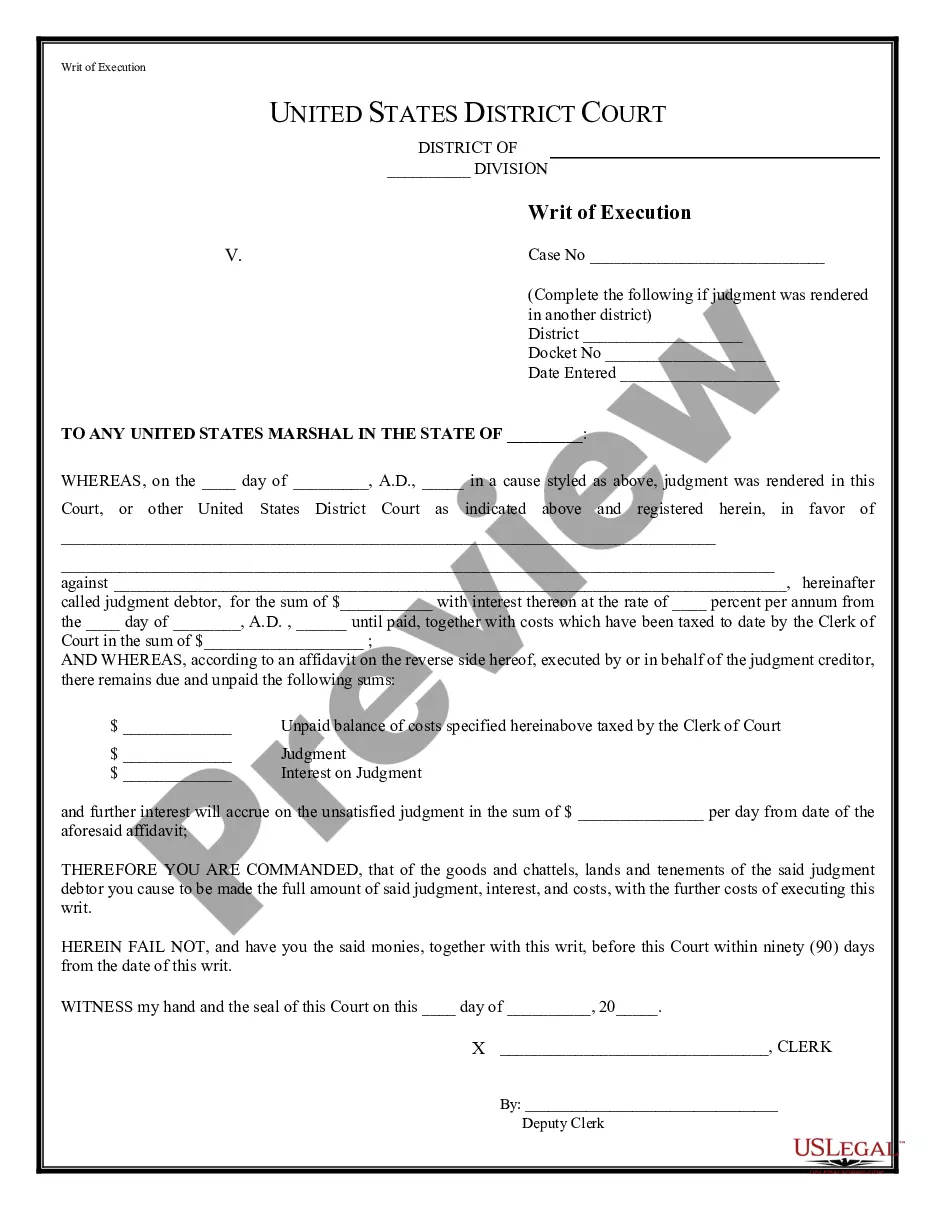
Filing a writ of execution in Florida requires a prior judgment, similar to garnishment procedures. You need to submit a motion to the court detailing the judgment and request the writ. The court will then review your motion and, if granted, will issue the writ, allowing you to collect the amount owed from the debtor. Accessing USLegalForms can simplify the forms and instructions you need for this process.
To file a writ of garnishment in Florida, you need to first obtain a judgment against the debtor. Following that, you can complete the necessary forms, including the Florida Motion For Writ of Garnishment. Once your documentation is prepared, submit it to the court for approval. Utilizing USLegalForms can streamline this process by providing the required templates and guidance.
Dissolving a writ of garnishment means to legally cancel or lift the garnishment order. This action allows the debtor to regain access to their funds that were previously withheld. To dissolve a writ of garnishment in Florida, you typically need to file a motion with the court. Engaging with professionals who understand the nuances of the Florida Motion For Writ of Garnishment can assist in this process.
Requesting a garnishment hearing in Florida requires you to file a motion with the court, stating your intent to contest the garnishment or to address specific issues related to it. Make sure to include the case number and relevant details to facilitate processing. The court will then schedule the hearing, allowing both you and the garnishee to present your arguments. For further assistance with drafting your motion, visit US Legal Forms for the necessary templates and support.
To get a Florida Motion For Writ of Garnishment, start by filing a written request with the court where your judgment resides. You will also need to provide information about the debtor's assets and the amount owed. Once the court grants the writ, it will direct the garnishee to withhold funds from the debtor's accounts or wages. For a more straightforward approach, explore US Legal Forms to access templates and guidance tailored to your needs.
To obtain a writ of execution in Florida, you must first secure a judgment from the court. Next, you will need to file a request for a writ of execution with the appropriate court, ensuring you provide all required documentation, such as the original judgment and any relevant details. Once the court reviews your request and issues the writ, you can then use it to enforce the judgment. For assistance with this process, consider utilizing the resources available at US Legal Forms to simplify your experience.