Florida Affidavit of Heirs
Overview of this form
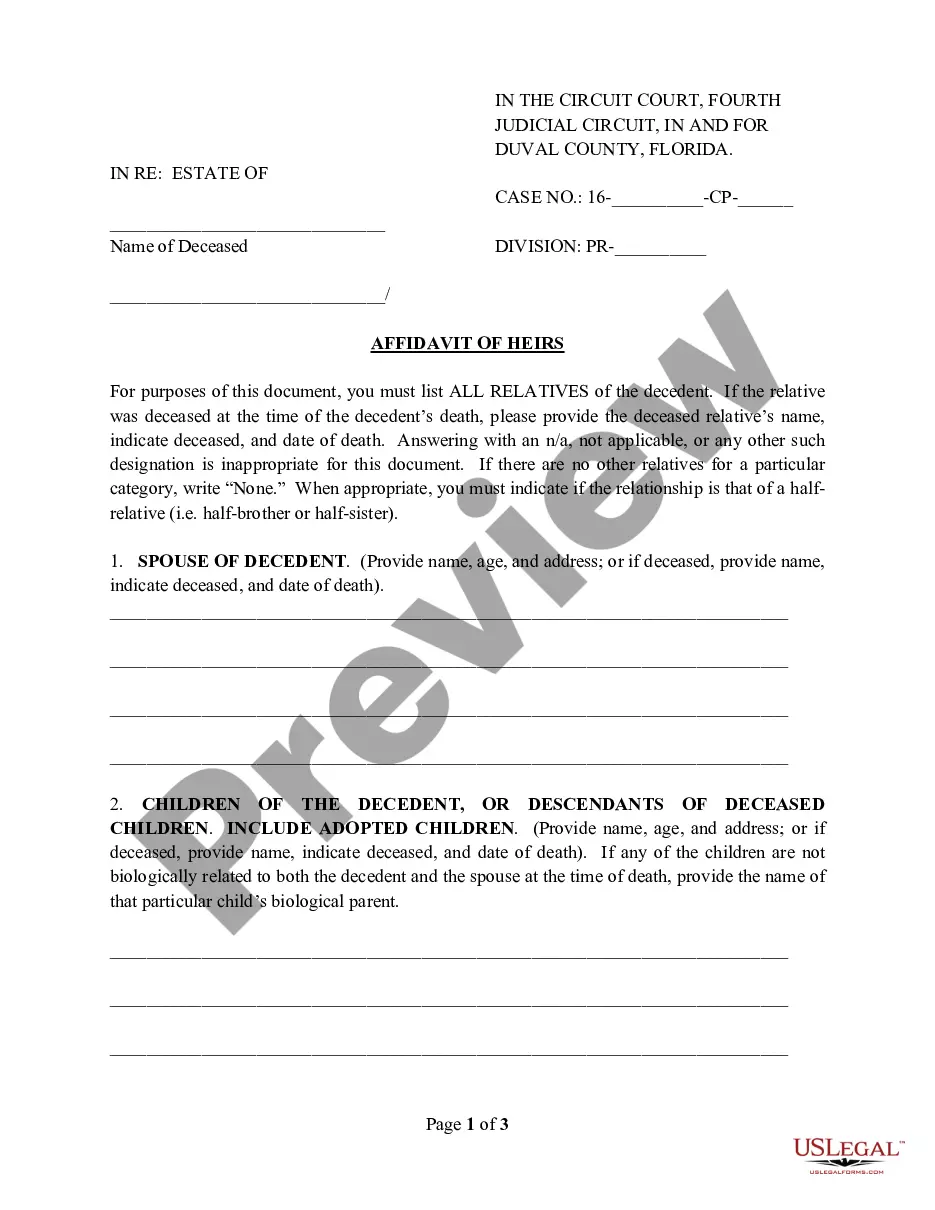
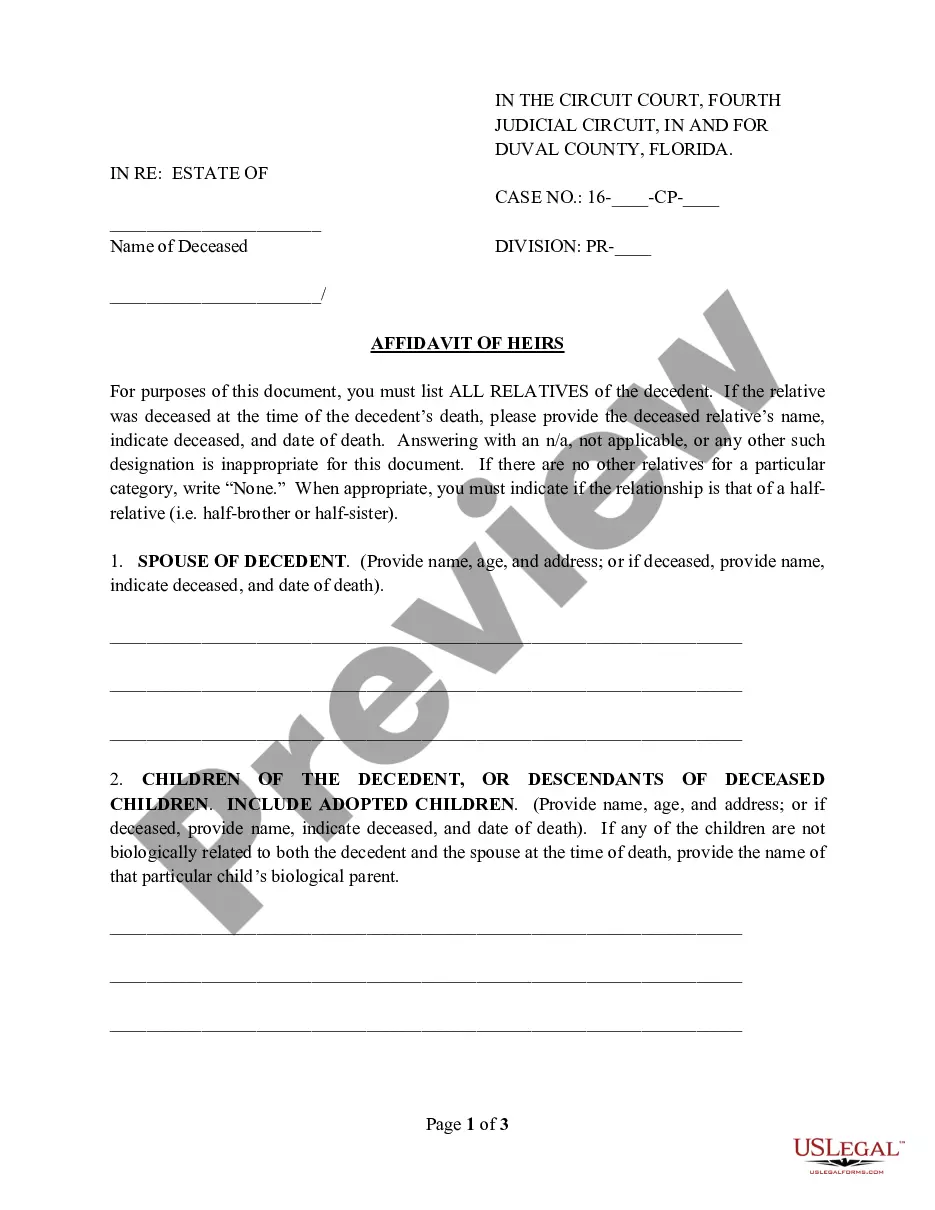
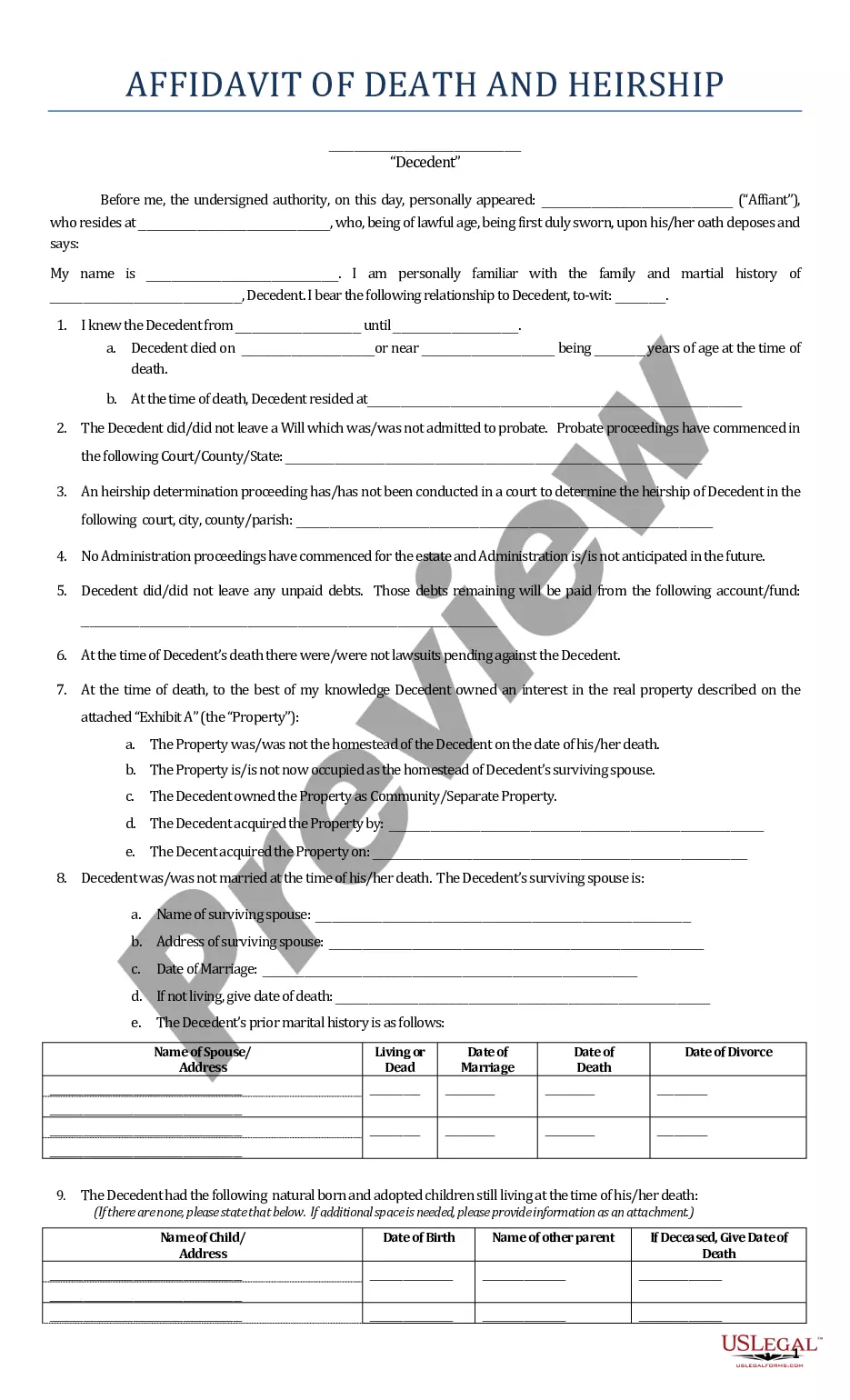
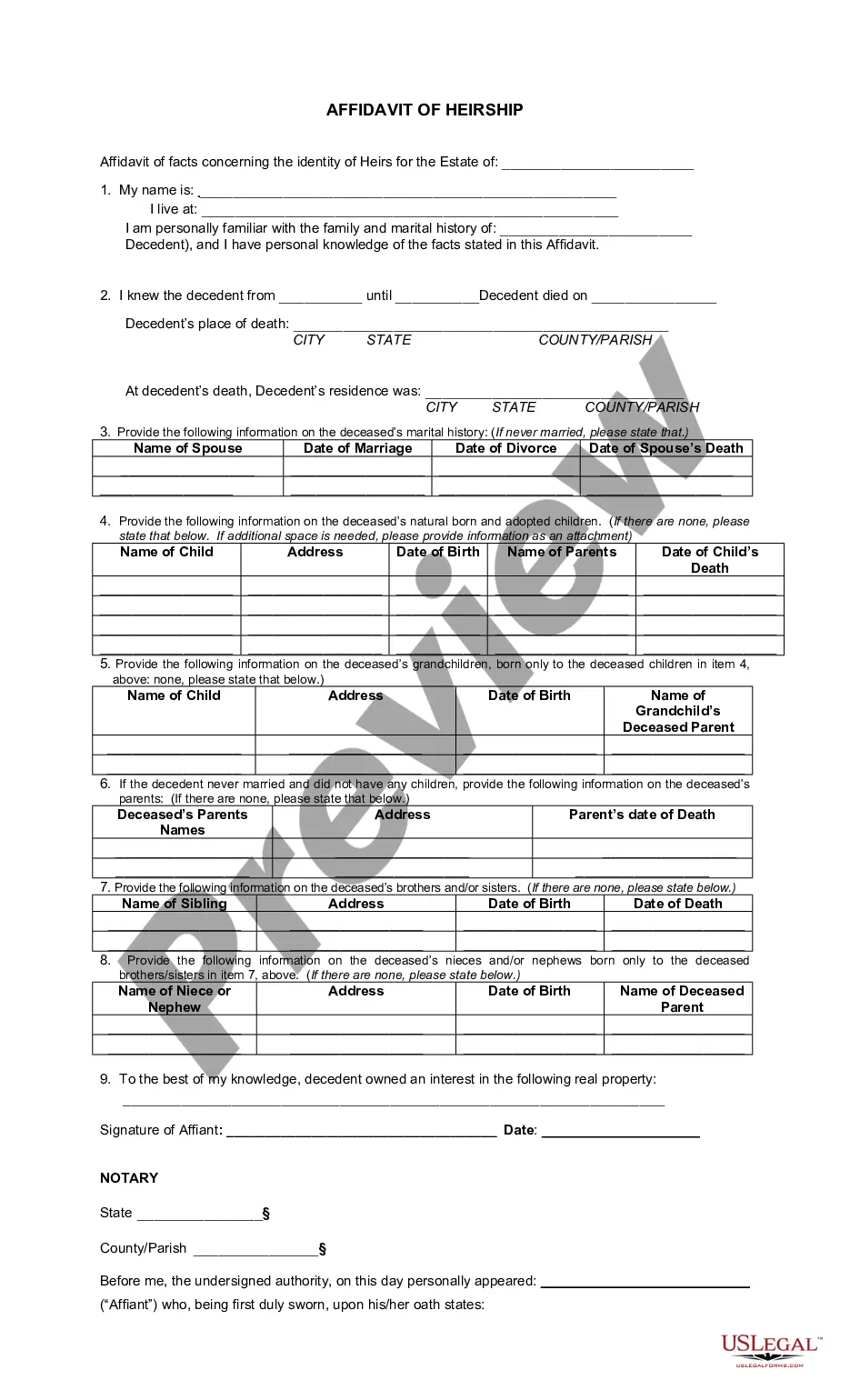
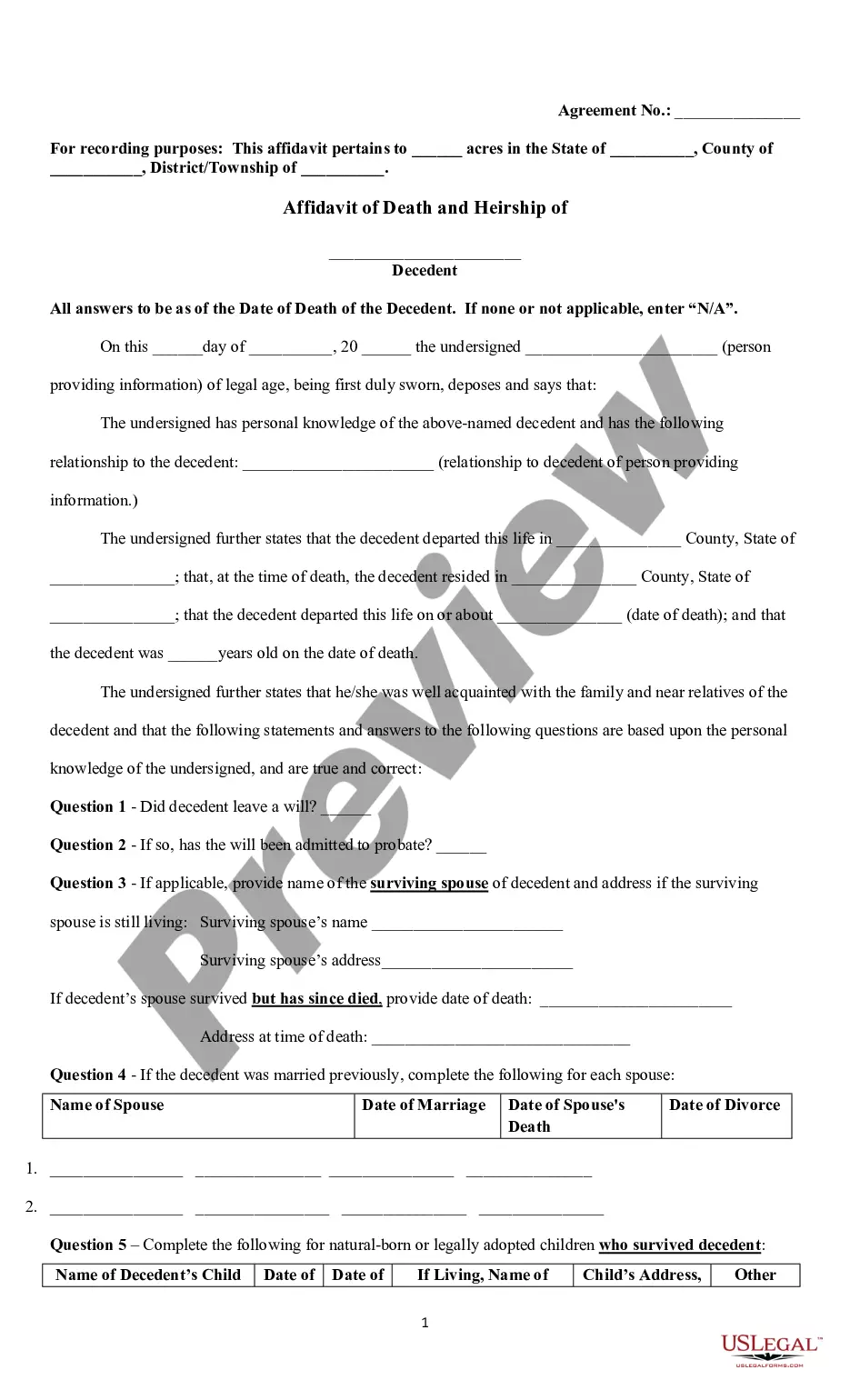
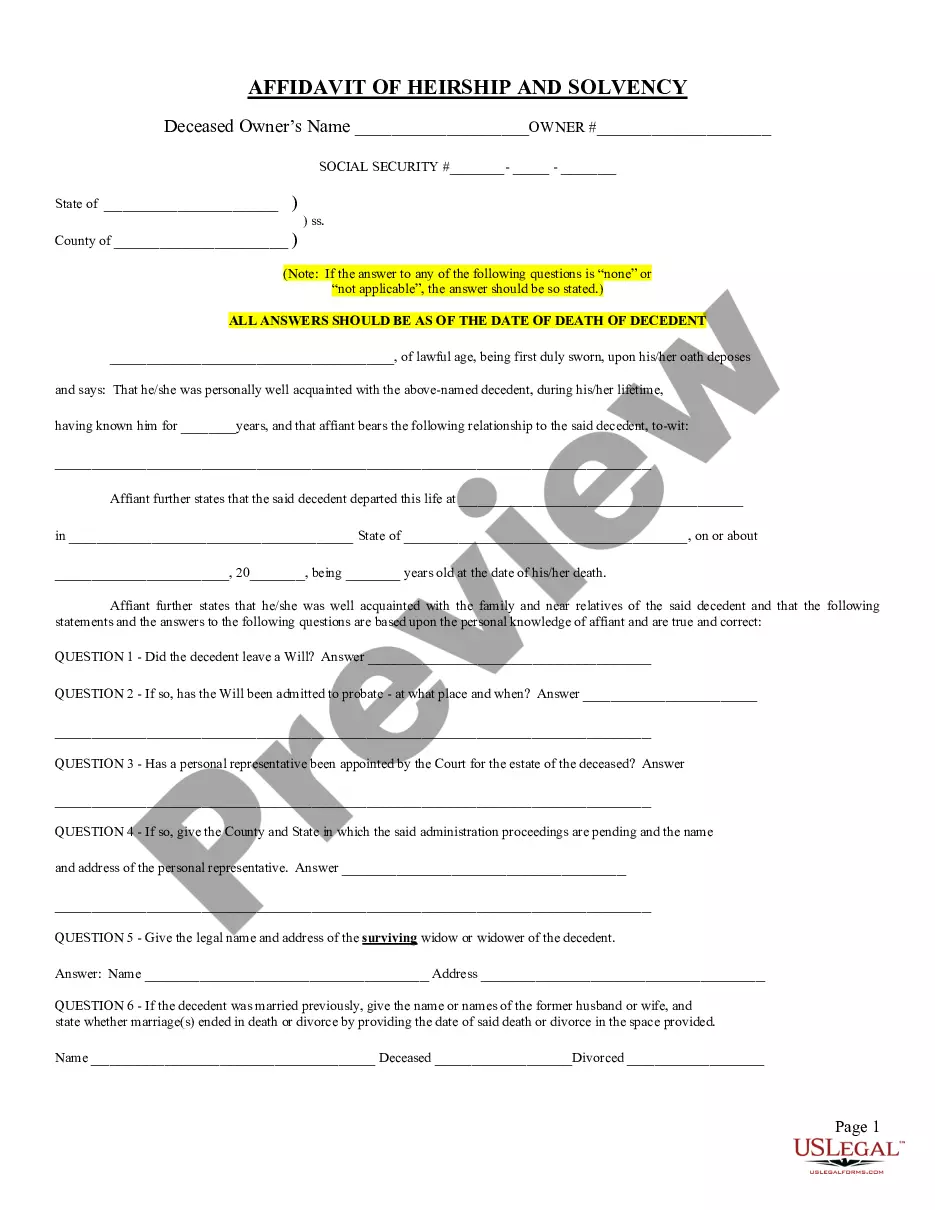
The Affidavit of Heirs is a legal document used to declare the heirs of a deceased individual. This affidavit outlines the relationships of the heirs and is essential when determining who is entitled to the deceased person's assets, especially in cases where there is no will. Unlike a last will and testament, which specifies the wishes of the deceased, this affidavit focuses on identifying family members entitled to inherit under the law.
Key parts of this document
- Identification of the deceased: Name, case number, and date of death.
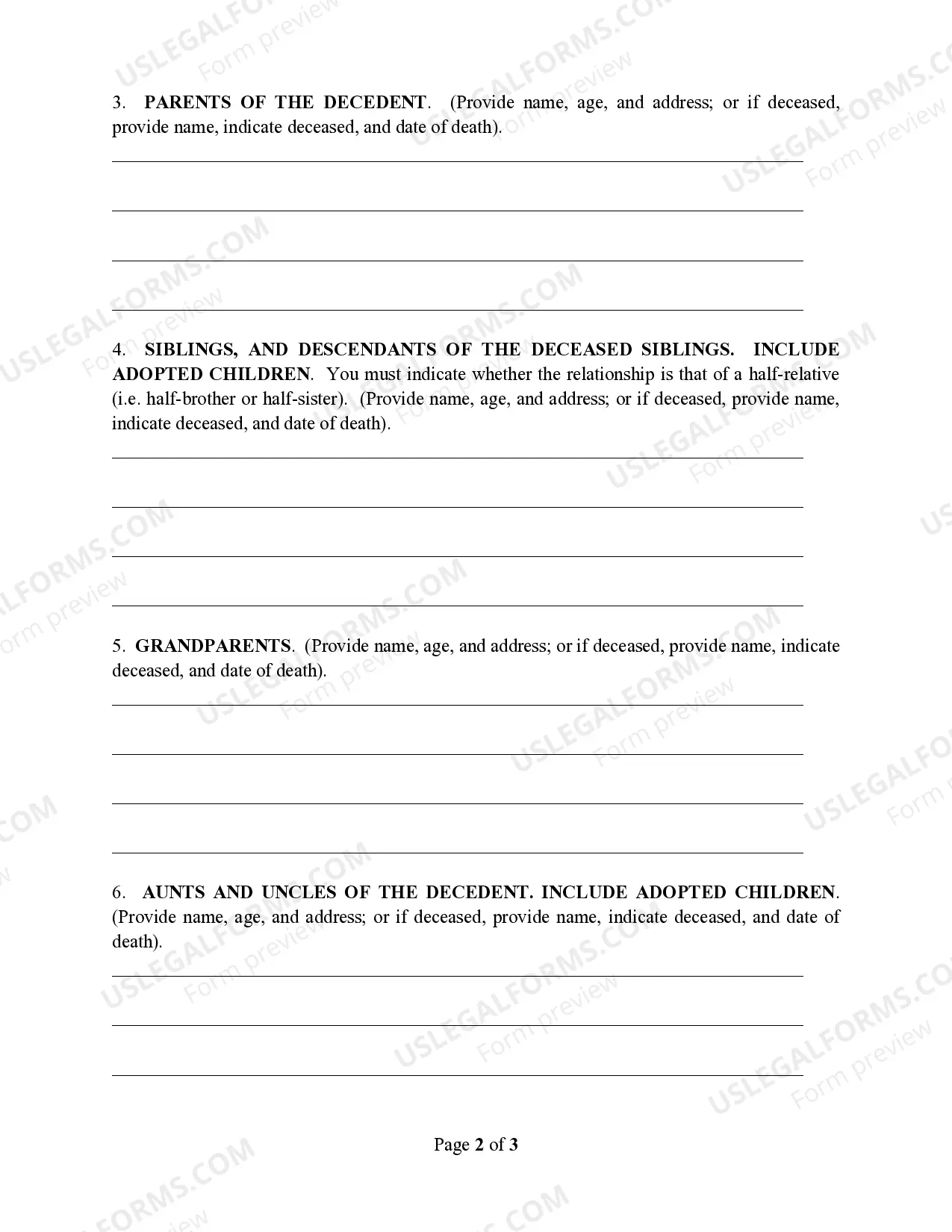
- List of relatives: Names and details of all relatives, including spouse, children, parents, siblings, grandparents, aunts, and uncles.
- Half-relatives: Identification of half-siblings when applicable.
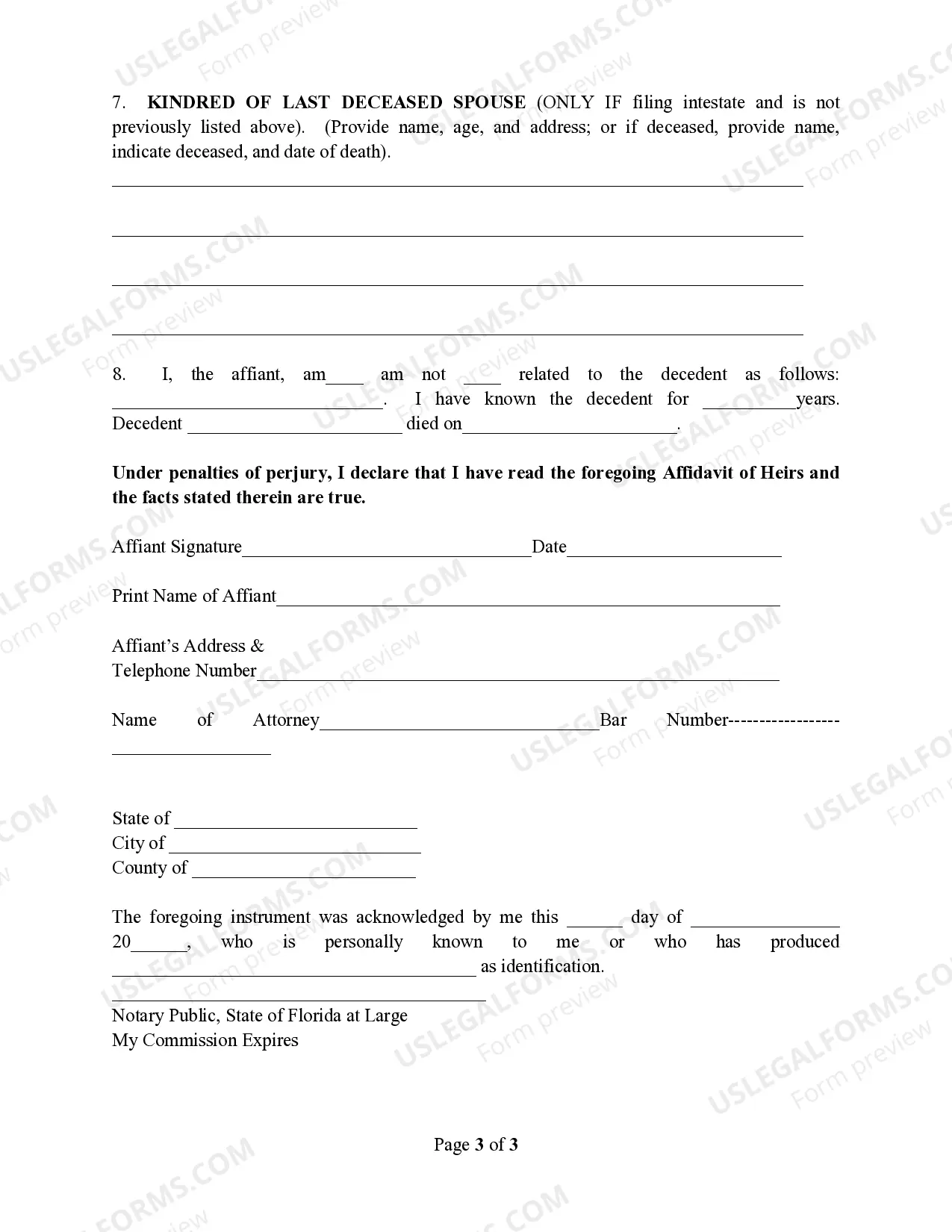
- Affiant declaration: Statement from the affiant regarding their relationship to the decedent and knowledge about the deceased.
- Notarization section: Space for the notary public to sign and acknowledge the affidavit.
When to use this form
This form is typically used when a person has died without a will (intestate), and there is a need to establish the legal heirs for the distribution of their estate. It is essential in probate proceedings, particularly when multiple potential heirs claim an interest in the deceasedâs property. Additionally, it may be necessary for accessing bank accounts, transferring property titles, or settling estate debts.
Who needs this form
- Individuals seeking to establish the heirs of a deceased family member without a valid will.
- A personal representative or executor involved in the probate process.
- Any party needing to clarify heirship for legal, financial, or real estate-related matters.
Instructions for completing this form
- Begin by entering the judicial circuit and county details relevant to the estate.
- Provide the name, case number, and division of the deceased individual.
- List all relatives in the required categories, ensuring all details are accurate, including names and dates of death for any deceased relatives.
- Indicate any half-relatives and specify their relationship to the decedent where applicable.
- Complete the affiant section by detailing the affiant's relationship to the decedent and providing a signature in front of a notary.
Does this form need to be notarized?
Yes, this form must be notarized to be legally valid. Notarization helps confirm the affiant's identity and the authenticity of the information provided. US Legal Forms offers an integrated online notarization service available 24/7, allowing you to complete this process securely and conveniently without needing to travel.
Get your form ready online
Our built-in tools help you complete, sign, share, and store your documents in one place.
Make edits, fill in missing information, and update formatting in US Legal Forms—just like you would in MS Word.
Download a copy, print it, send it by email, or mail it via USPS—whatever works best for your next step.
Sign and collect signatures with our SignNow integration. Send to multiple recipients, set reminders, and more. Go Premium to unlock E-Sign.
If this form requires notarization, complete it online through a secure video call—no need to meet a notary in person or wait for an appointment.
We protect your documents and personal data by following strict security and privacy standards.

Make edits, fill in missing information, and update formatting in US Legal Forms—just like you would in MS Word.

Download a copy, print it, send it by email, or mail it via USPS—whatever works best for your next step.

Sign and collect signatures with our SignNow integration. Send to multiple recipients, set reminders, and more. Go Premium to unlock E-Sign.

If this form requires notarization, complete it online through a secure video call—no need to meet a notary in person or wait for an appointment.

We protect your documents and personal data by following strict security and privacy standards.
Typical mistakes to avoid
- Leaving out any relatives or incorrectly stating relationships.
- Failing to provide all necessary information for deceased relatives.
- Using "n/a" or "not applicable" instead of specifying "none" when no relatives exist in a category.
- Not having the affidavit notarized when required for validity.
Why complete this form online
- Convenience: Download and complete the form at your own pace.
- Reliability: Forms are drafted by licensed attorneys ensuring legal compliance.
- Editability: Modify the form as needed before finalizing.
Looking for another form?
Form popularity
FAQ
An affidavit of legal heirs is a formal document that identifies all individuals who are recognized as legal heirs of a deceased person. This affidavit is crucial for establishing how the deceased's assets will be distributed. Using a Florida Affidavit of Heirs helps clarify the heirship situation, making it easier for estate administrators to divide assets according to the law and avoid potential conflicts among heirs.
Yes, you can prepare your own affidavit of heirship in Florida, but it is important to ensure that you follow all legal requirements accurately. Many individuals choose to use resources like USLegalForms, which offer step-by-step instructions and templates to simplify the process. Completing the affidavit correctly is key, as mistakes can lead to delays or complications in estate matters.
An affidavit of notice to heirs is a document that confirms all heirs have received proper notifications regarding estate matters. Specifically, this affidavit demonstrates compliance with legal requirements to alert heirs about proceedings affecting their rights. It plays a crucial role in maintaining integrity and preventing future disputes, contributing to a well-managed Florida Affidavit of Heirs process.
Once you file a Florida Affidavit of Heirs, the court will review the document to verify its completeness and accuracy. If approved, the affidavit acts as legal proof of heirship, facilitating the transfer of the deceased's assets without undergoing a lengthy probate process. This efficient method can save time and reduce frustrations for heirs, allowing for a smoother transition in estate administration.
To file a Florida Affidavit of Heirs, you must first complete the required form with accurate information about the deceased and the heirs. Next, submit the completed affidavit to the appropriate county court where the deceased resided at the time of death. Keep in mind that filing procedures can vary by location, so it may be beneficial to consult resources on USLegalForms for specific directions tailored to your county.
To complete an affidavit of heirship in Florida, you typically need information about the deceased, including their full name and date of death. You'll also need to identify all legal heirs and their relationship to the deceased. Preparation of this document often requires specific forms that you can find through platforms like USLegalForms, which offer guidance and templates for creating a valid Florida Affidavit of Heirs.
An affidavit of notice serves as a legal document that verifies that all interested parties, such as heirs or beneficiaries, have been notified regarding certain matters. In the context of a Florida Affidavit of Heirs, this document provides proof that heirs were informed about the estate proceedings. Properly executing this affidavit is essential to avoid disputes later on and ensure transparency in the estate management process.
An affidavit, like a Florida Affidavit of Heirs, holds considerable legal power. It serves as a sworn statement, providing evidence of the facts within it, which can be crucial in disputes or legal proceedings. Moreover, because it is notarized, an affidavit carries a presumption of truth, making it difficult to contest. This can be a powerful tool for heirs seeking to claim their inheritance without unnecessary hurdles.
Not having a Florida Affidavit of Heirs can lead to significant complications when settling an estate. Without this document, heirs may face delays in accessing assets or may be required to go through the lengthy probate process. Additionally, disputes can arise between potential heirs, causing further friction among family members. Thus, obtaining an affidavit is a wise step to ensure smooth transitions of property.
A Florida declaration of heirs is a legal document that establishes the rightful heirs to a deceased person's estate. This document is essential in facilitating the transfer of assets without needing a formal probate process. In the context of a Florida Affidavit of Heirs, it serves a similar purpose by confirming the identities and rights of heirs. Understanding this can help streamline the estate settlement process.