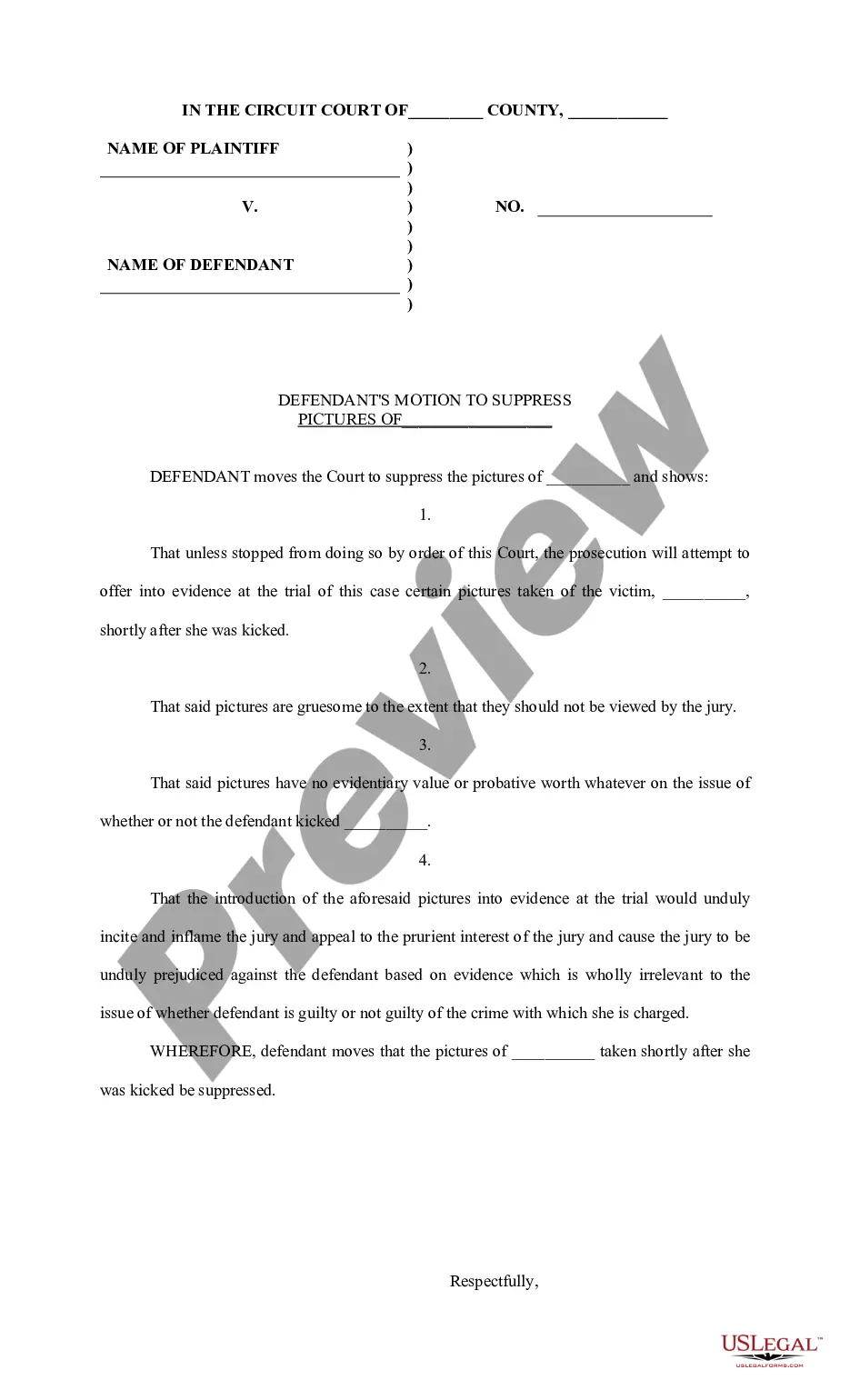
Florida Complaint for Landlord to Evict Tenants for other than Failure to Pay
What this document covers
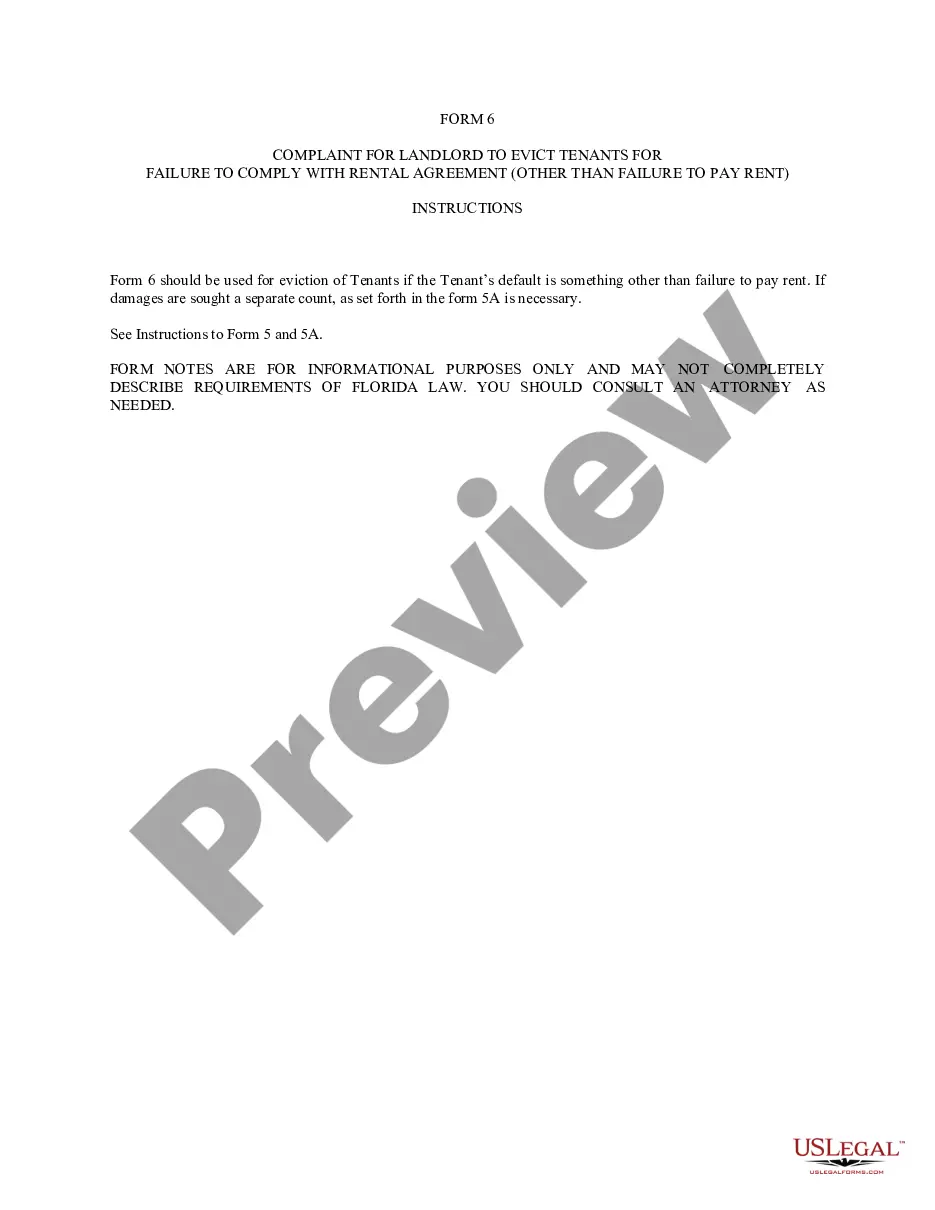
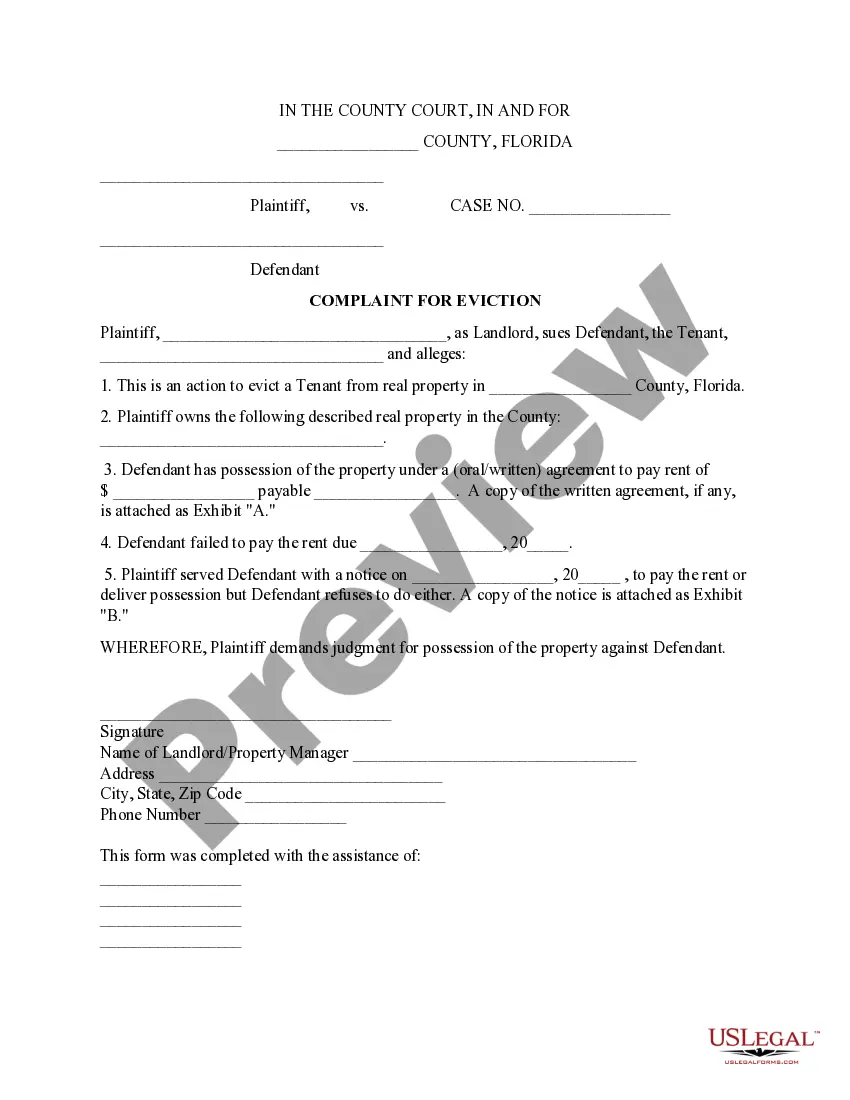
The Complaint for Landlord to Evict Tenants for other than Failure to Pay is a legal document that allows landlords to initiate eviction proceedings against tenants for reasons other than non-payment of rent. This form is essential for landlords seeking to terminate a tenancy due to violations of the rental agreement, ensuring that they follow proper legal protocols in their jurisdiction.
Main sections of this form
- Identification of the Plaintiff (landlord) and Defendant (tenant).
- Details about the property involved in the eviction.
- Information about the rental agreement.
- Evidence of notice provided to the tenant regarding the rental agreement violation.
- Request for judgment and possession of the property.
Common use cases
This form should be used when a landlord needs to evict a tenant for reasons such as lease violations, damage to property, or illegal activities, rather than for failure to pay rent. It is important to follow the correct legal process to ensure the eviction is valid and enforceable.
Who should use this form
- Landlords seeking to evict tenants for violations of the rental agreement.
- Property managers representing landlords in eviction proceedings.
- Individuals with rental properties who want to ensure their legal rights are upheld during the eviction process.
How to prepare this document
- Identify the parties involved: the landlord and the tenant.
- Specify the property being rented, including its legal address.
- Include the details of the rental agreement, mentioning if it is oral or written.
- Provide the date when the notice of violation was served to the tenant.
- Clearly state the reasons for the eviction based on the rental agreement violation.
Is notarization required?
This form does not typically require notarization unless specified by local law. It is important to review any specific state requirements or consult with a legal professional for guidance.
Get your form ready online
Our built-in tools help you complete, sign, share, and store your documents in one place.
Make edits, fill in missing information, and update formatting in US Legal Forms—just like you would in MS Word.
Download a copy, print it, send it by email, or mail it via USPS—whatever works best for your next step.
Sign and collect signatures with our SignNow integration. Send to multiple recipients, set reminders, and more. Go Premium to unlock E-Sign.
If this form requires notarization, complete it online through a secure video call—no need to meet a notary in person or wait for an appointment.
We protect your documents and personal data by following strict security and privacy standards.

Make edits, fill in missing information, and update formatting in US Legal Forms—just like you would in MS Word.

Download a copy, print it, send it by email, or mail it via USPS—whatever works best for your next step.

Sign and collect signatures with our SignNow integration. Send to multiple recipients, set reminders, and more. Go Premium to unlock E-Sign.

If this form requires notarization, complete it online through a secure video call—no need to meet a notary in person or wait for an appointment.

We protect your documents and personal data by following strict security and privacy standards.
Typical mistakes to avoid
- Failing to provide sufficient details about the notice served to the tenant.
- Not indicating whether the rental agreement was oral or written.
- Neglecting to include a complete legal description of the property.
Why use this form online
- Convenience of downloading and completing the form at your own pace.
- Access to reliable templates drafted by licensed attorneys.
- Editable and easily customizable to fit specific situations.
Looking for another form?



Form popularity
FAQ
In Florida, a landlord can terminate a tenancy early and evict a tenant for a number of different reasons, including not paying rent, violating the lease or rental agreement, or committing an illegal act. To terminate the tenancy, the landlord must first give the tenant written notice.
On average, an eviction process takes about 15 days if there are no valid defenses to the eviction action. An eviction occurs when a tenant has breached the terms of the tenancy in some material way, or has refused to move out once the rental agreement has expired.
Guide To The Eviction Process In Florida Determine whether to proceed with the Florida process of eviction.Make sure you haven't violated any Florida lease term.Notify the tenant of the eviction.Notice of Termination with Cause.Serve the Florida Eviction Notice.Create an eviction complaint.
Timing of Eviction Notices for Failure to Pay Rent in Florida. If a tenant fails to pay rent on time, then the landlord can give the tenant a three-day notice for failure to pay rent, or a notice similarly named.
Supposing the judge sides with you, the court will order the sheriff to evict the renter within 24 hours. You must obtain a Writ of Possession from the Florida court, which you must pay for. Once the Writ is served or conspicuously posted on the property, the renter has 24 hours to vacate.
If you do not pay the rent you can be evicted. But, you cannot be evicted without a court order. To get a court order, the landlord must first take several steps listed below.
3-day notice The notice must say that their tenancy is terminated if the tenant doesn't pay within three days. If the tenant fails to pay after the 3-day notice and doesn't move out, Fla. Stat. § 83.56(3) allows a landlord to start a lawsuit for the eviction process.
If a landlord is guilty of any of the following, the tenant may file a wrongful eviction lawsuit against them: Failing to provide adequate notice of the eviction. Removing any of the tenant's belongings from the property. Changing the locks on the rental property. Cutting off utilities to the property.