Florida Foreign Judgment Enrollment
About this form
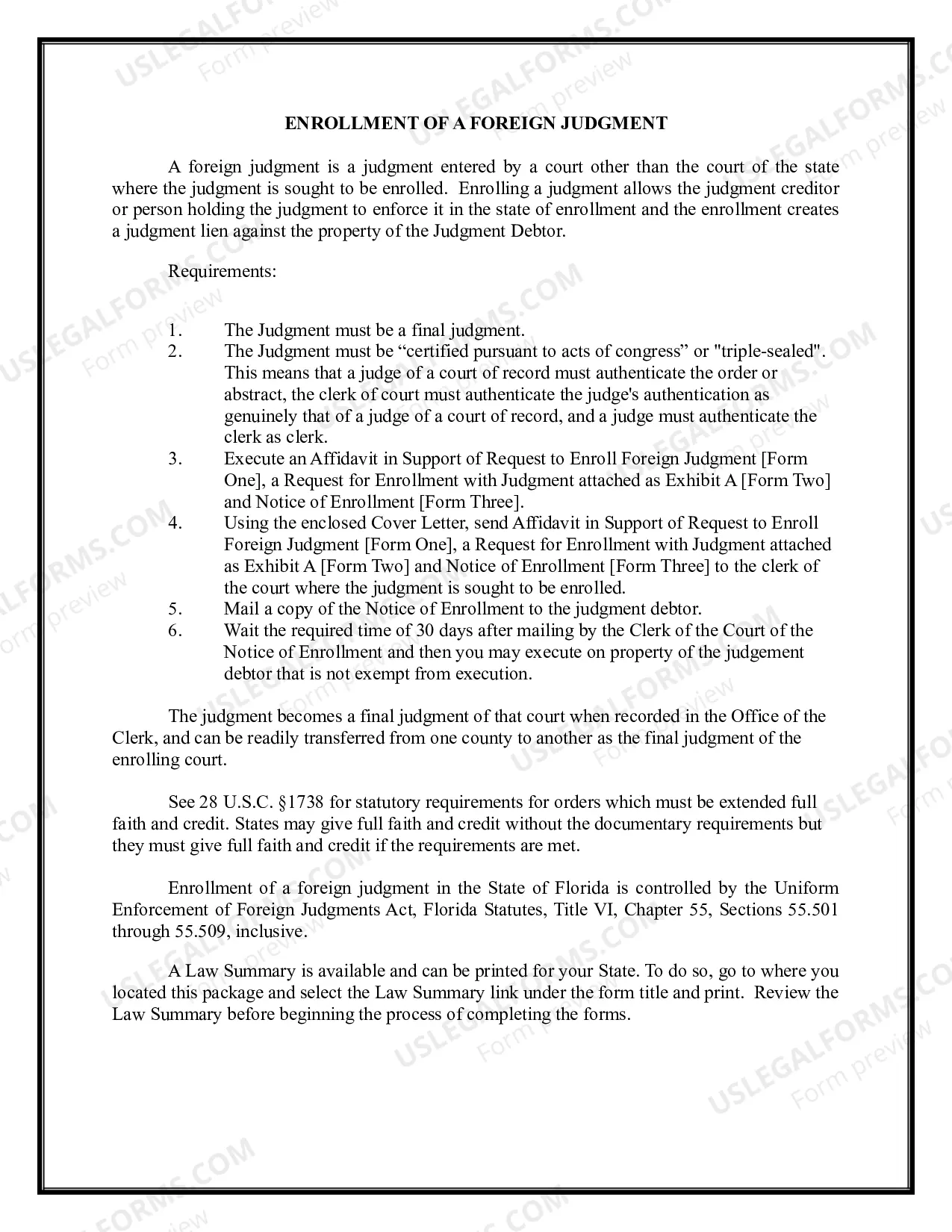
The Florida Foreign Judgment Enrollment form allows a judgment creditor to enroll a judgment issued by a court in another state to ensure it is enforceable in Florida. This process creates a judgment lien against the property of the judgment debtor, effectively enabling the creditor to pursue collection actions in Florida. Enrolling a foreign judgment is distinct from filing a new lawsuit, as it recognizes and enforces an existing judgment rather than creating a new one.
Form components explained
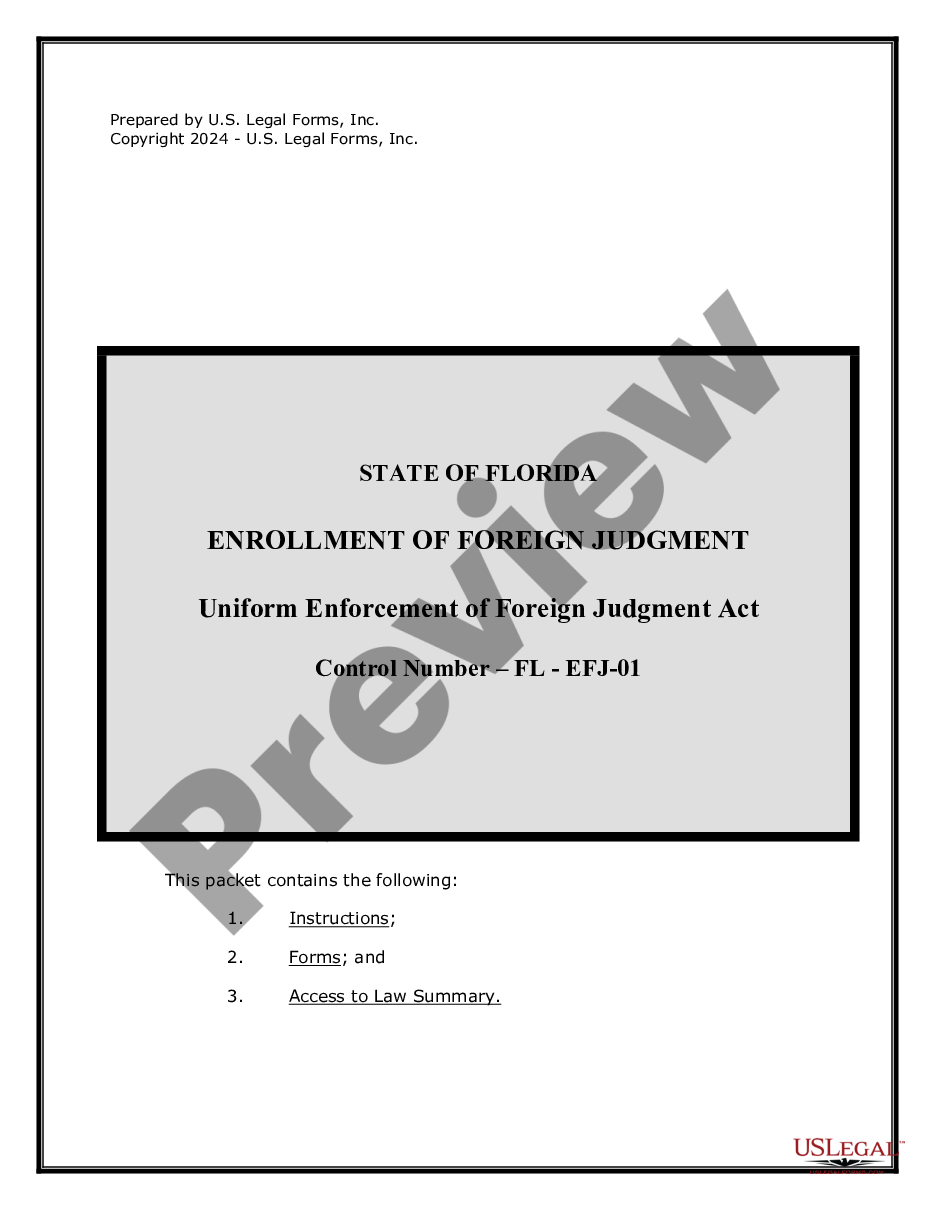
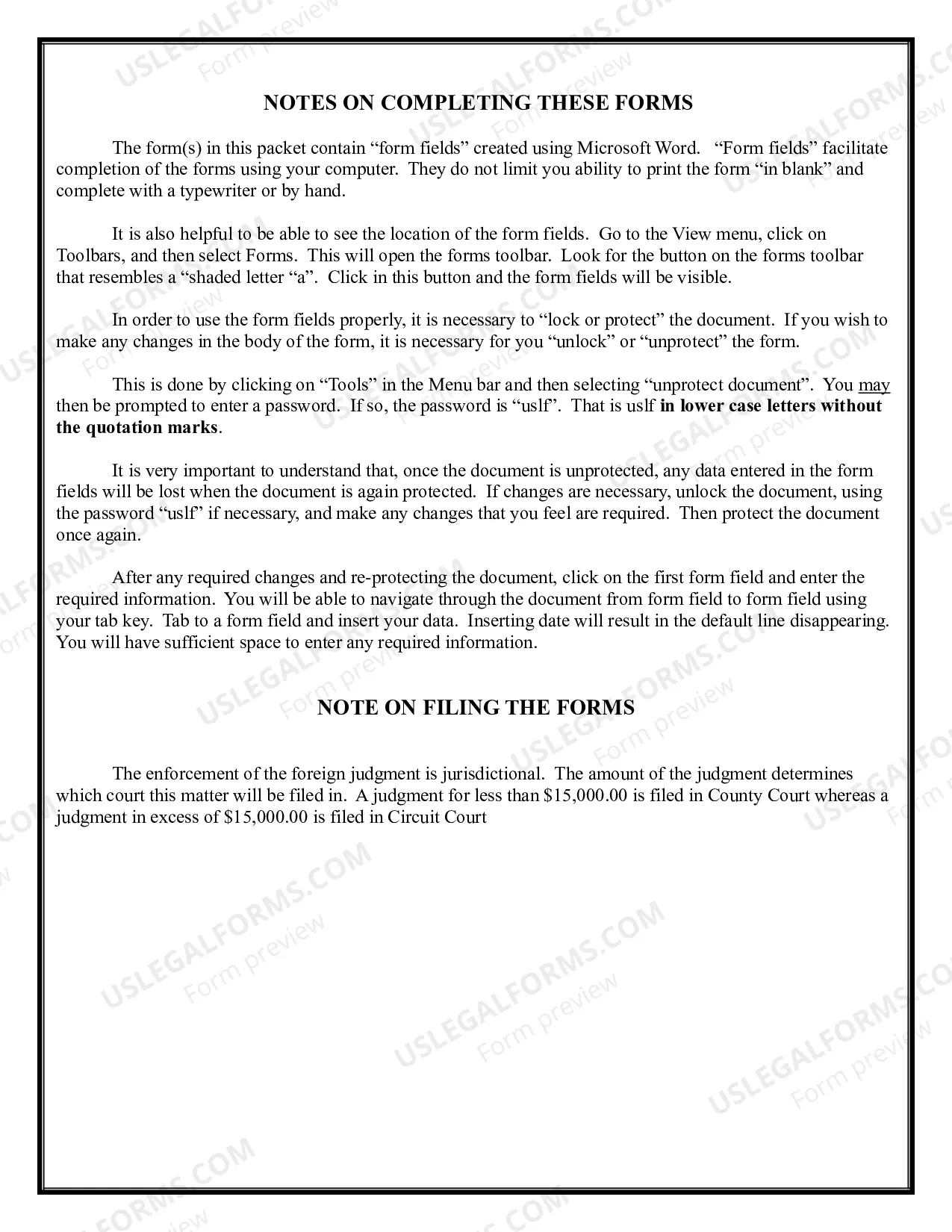
- Instructions for filling out the enrollment forms.
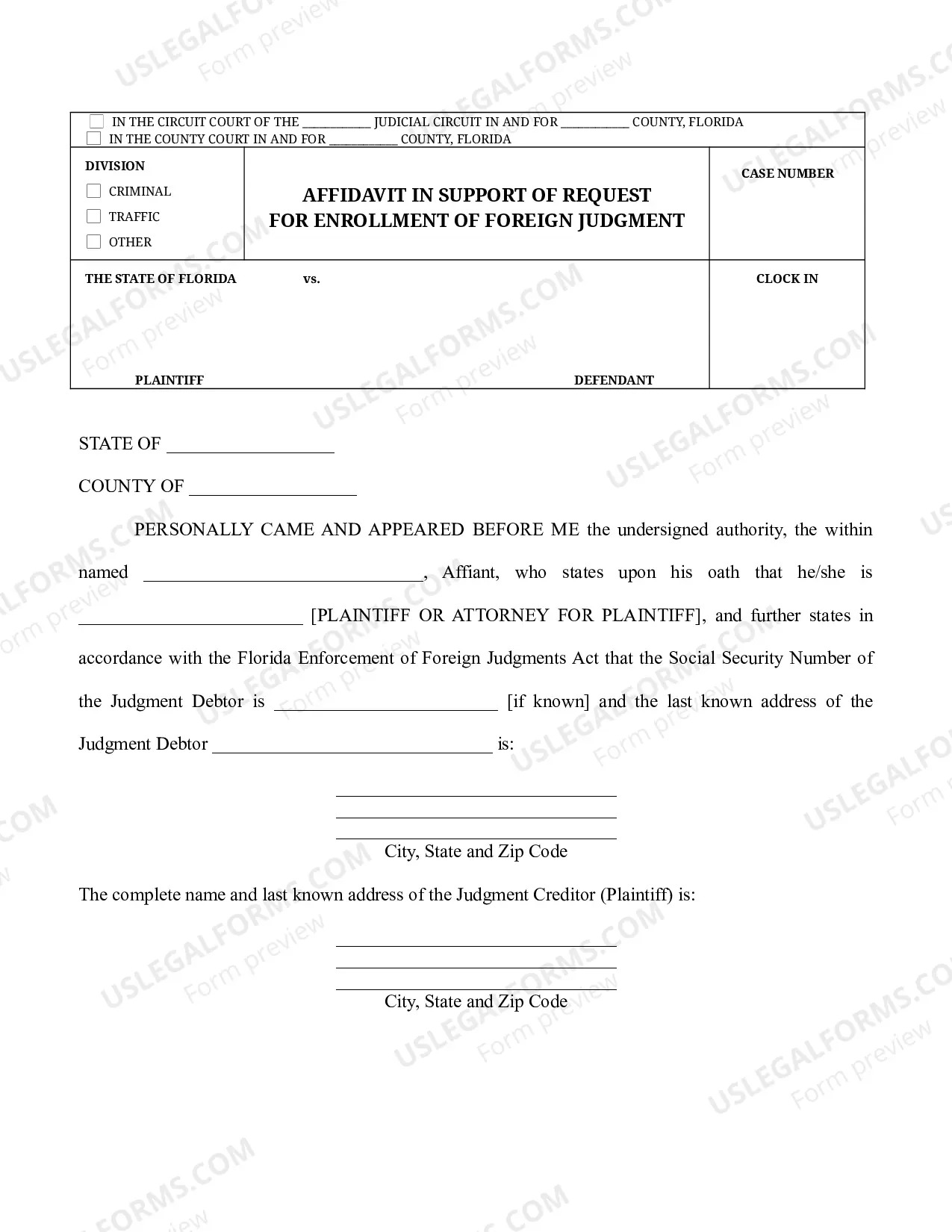
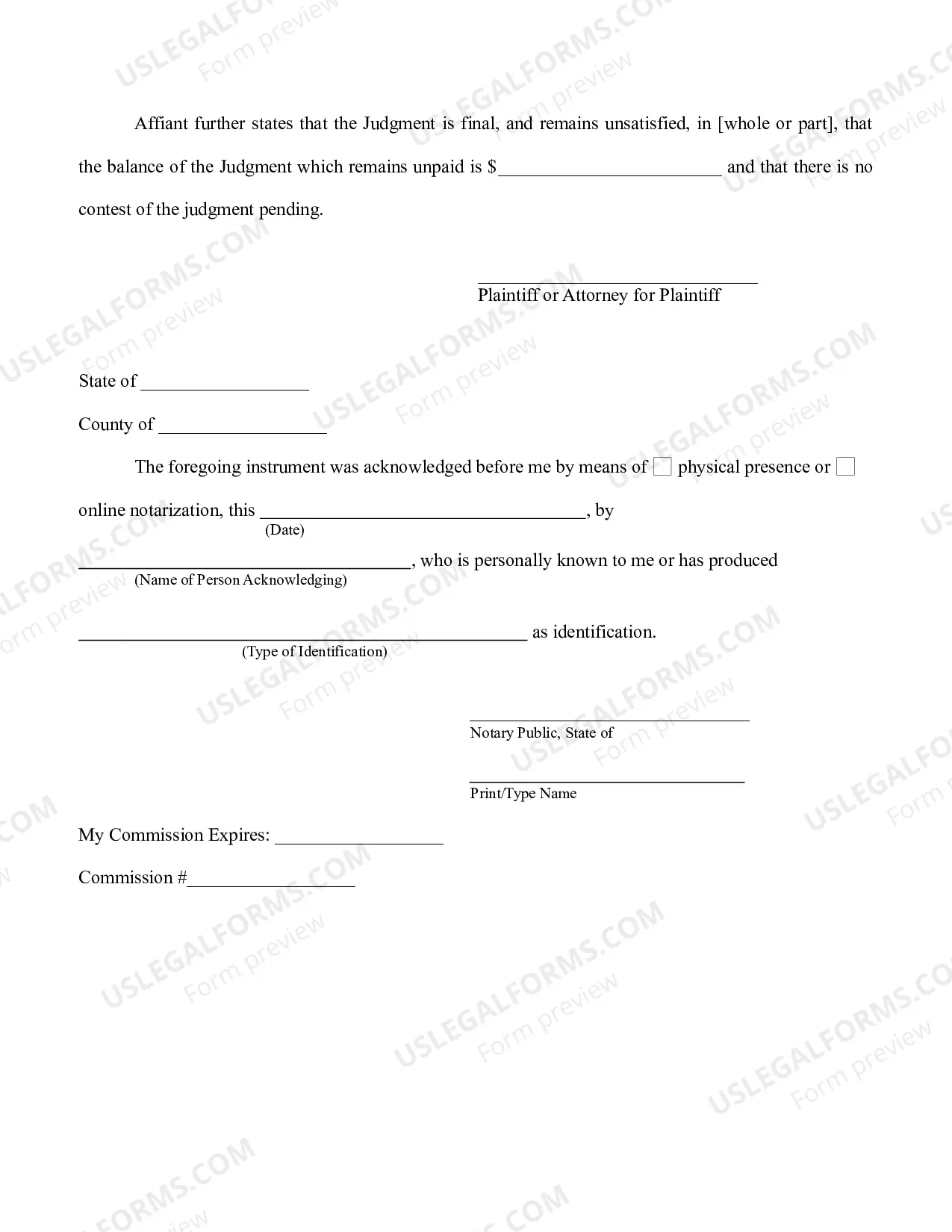
- Affidavit in Support of Request to Enroll Foreign Judgment.
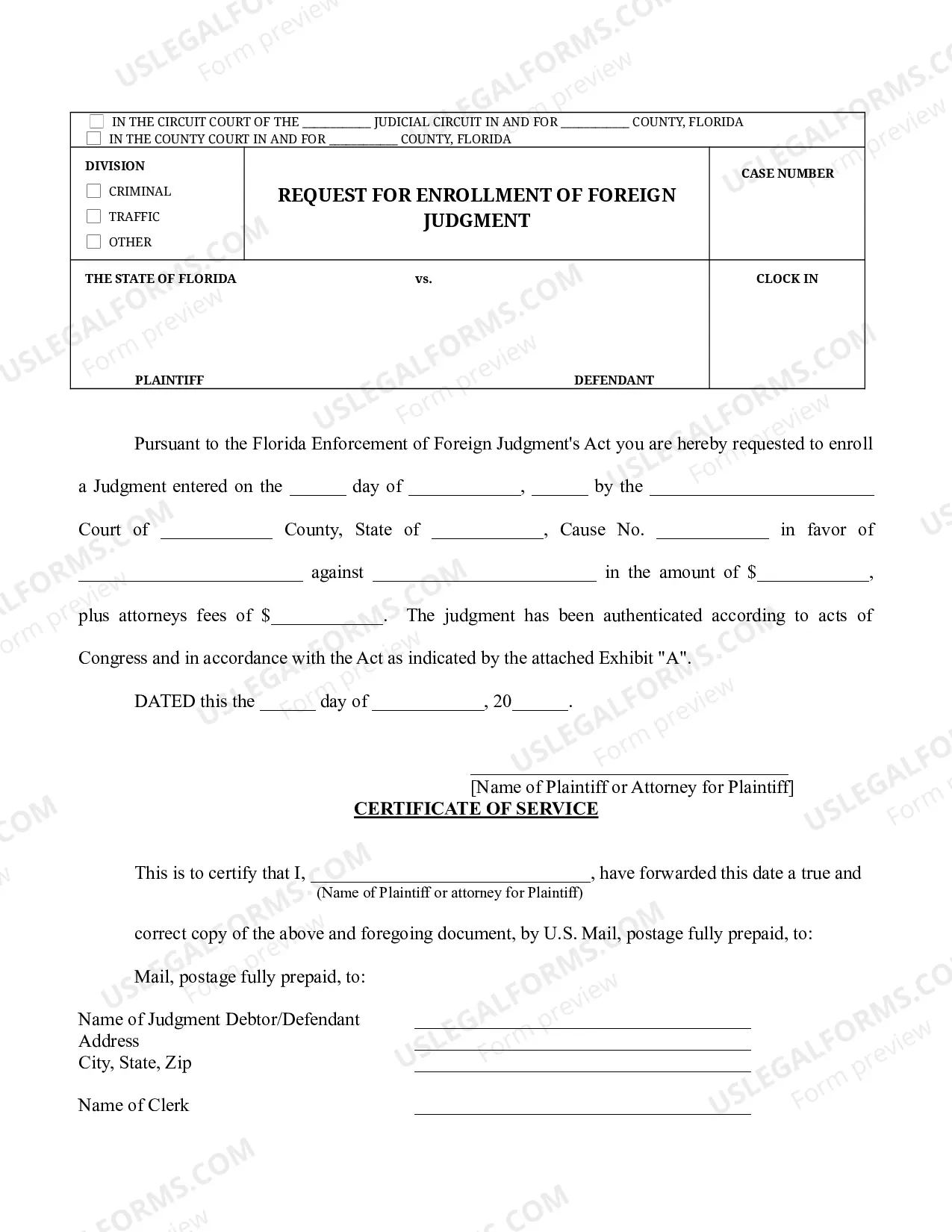
- Request for Enrollment with the original judgment attached as Exhibit A.
- Notice of Enrollment to inform the judgment debtor.
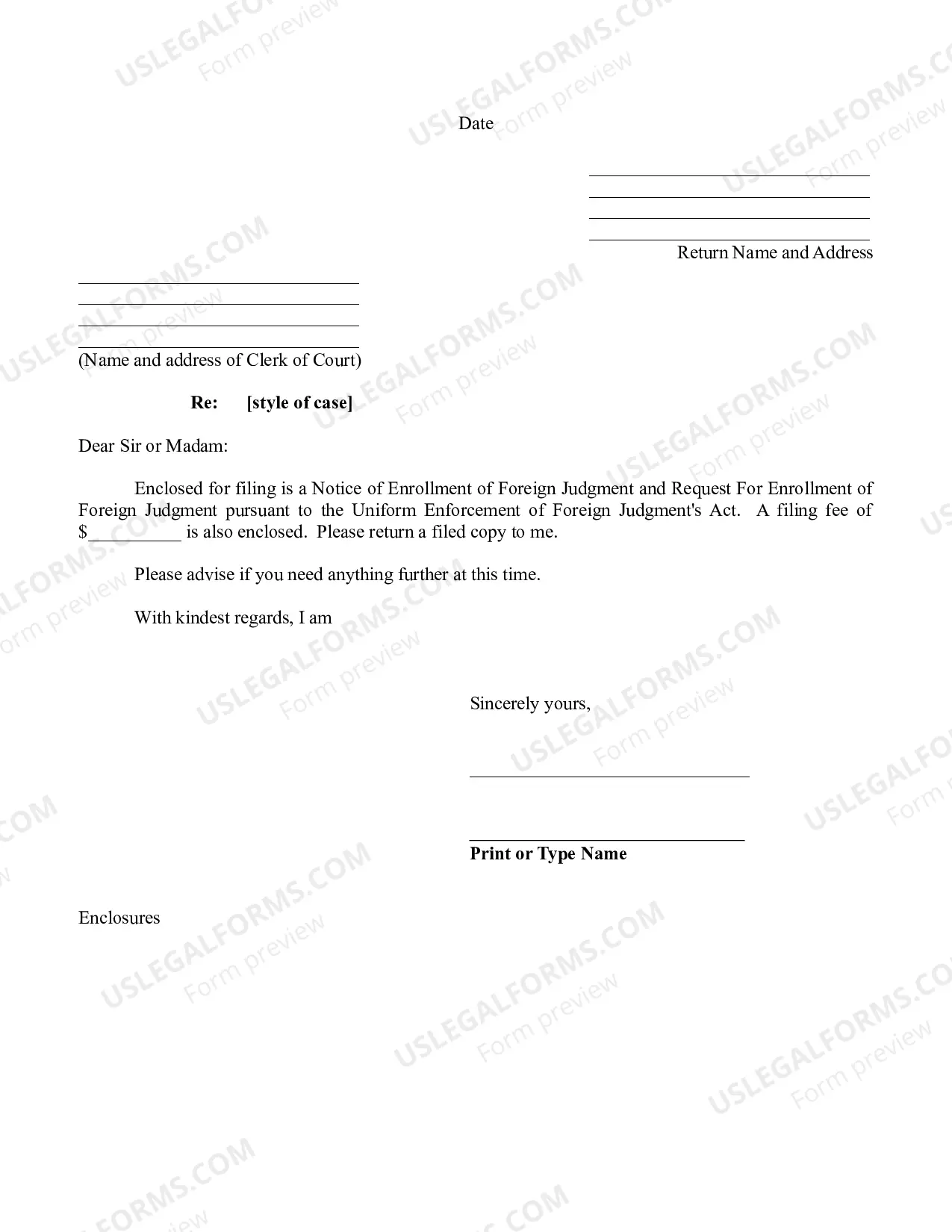
- Cover letter for submitting the forms to the court.


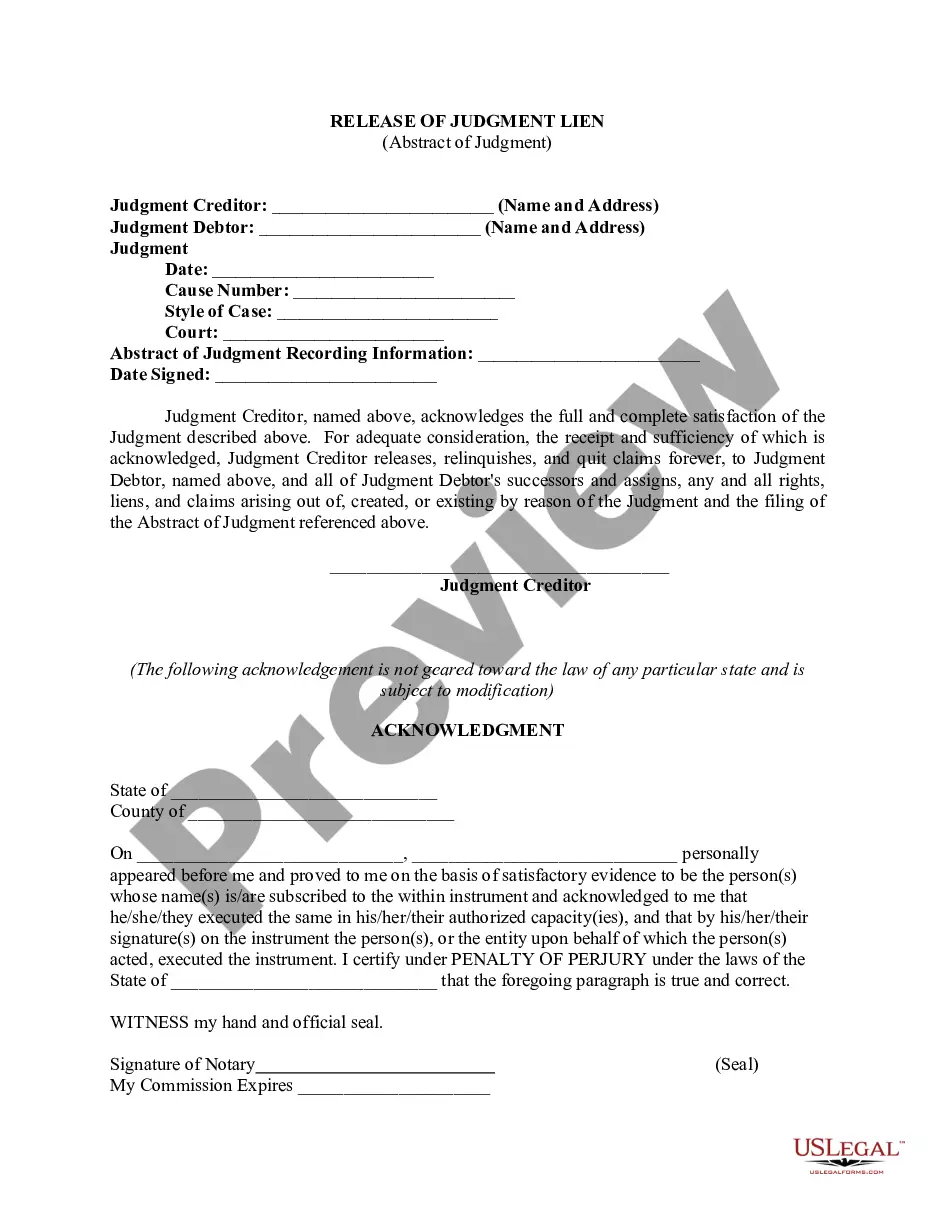
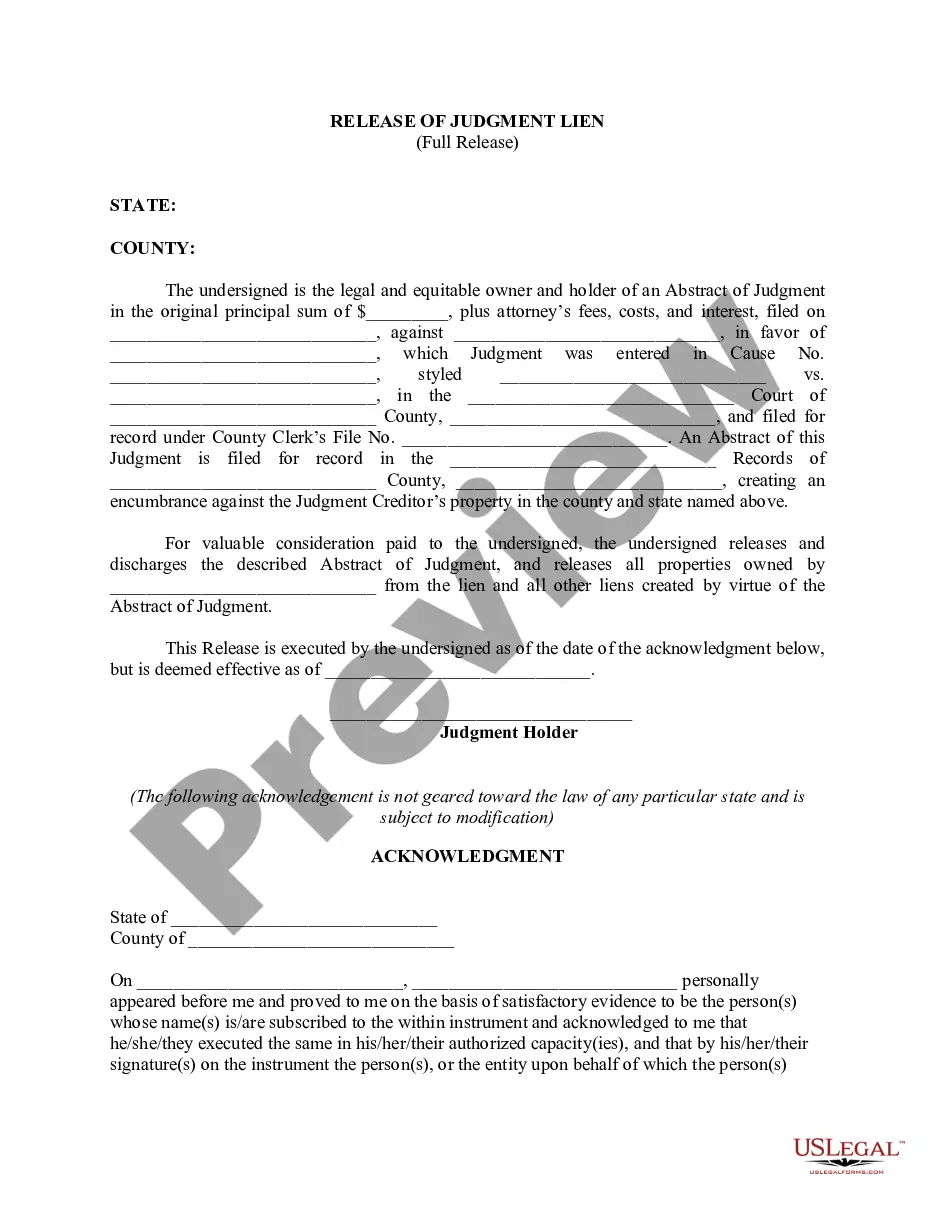
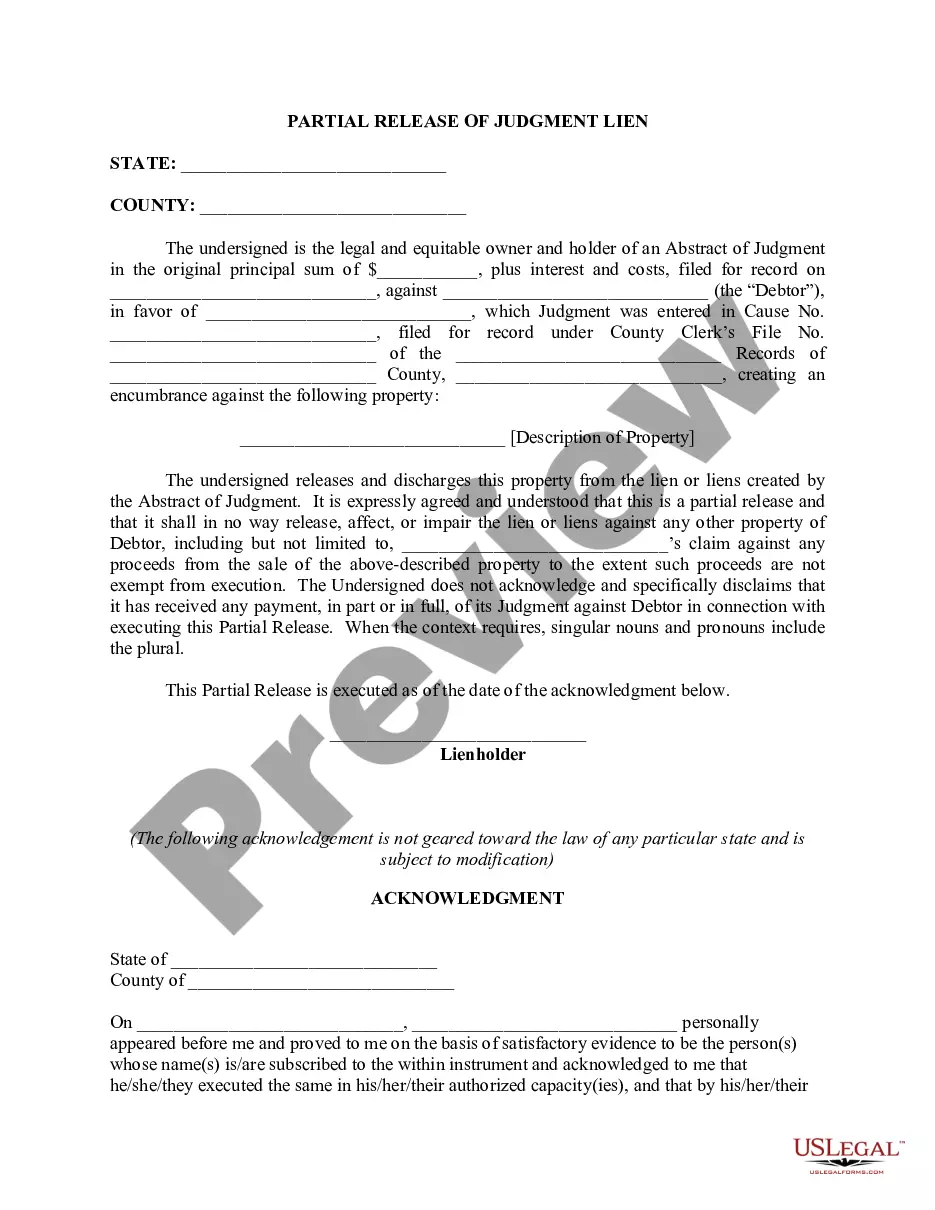
When to use this form
This form should be used when a creditor holds a final judgment from another state and wishes to enforce it in Florida. If you have tried to collect on a judgment made outside of Florida and are unable to do so, enrolling the judgment in Florida will allow you to use state-specific enforcement methods against the debtorâs assets located in Florida.
Who can use this document
- Individuals or businesses that have a foreign judgment against a debtor.
- Attorneys representing clients in need of enrolling a foreign judgment.
- Creditors seeking to enforce a judgment from another state to recover owed amounts.
How to complete this form
- Gather the foreign judgment and confirm it is a final judgment.
- Complete the Affidavit in Support of Request to Enroll Foreign Judgment by filling in required fields.
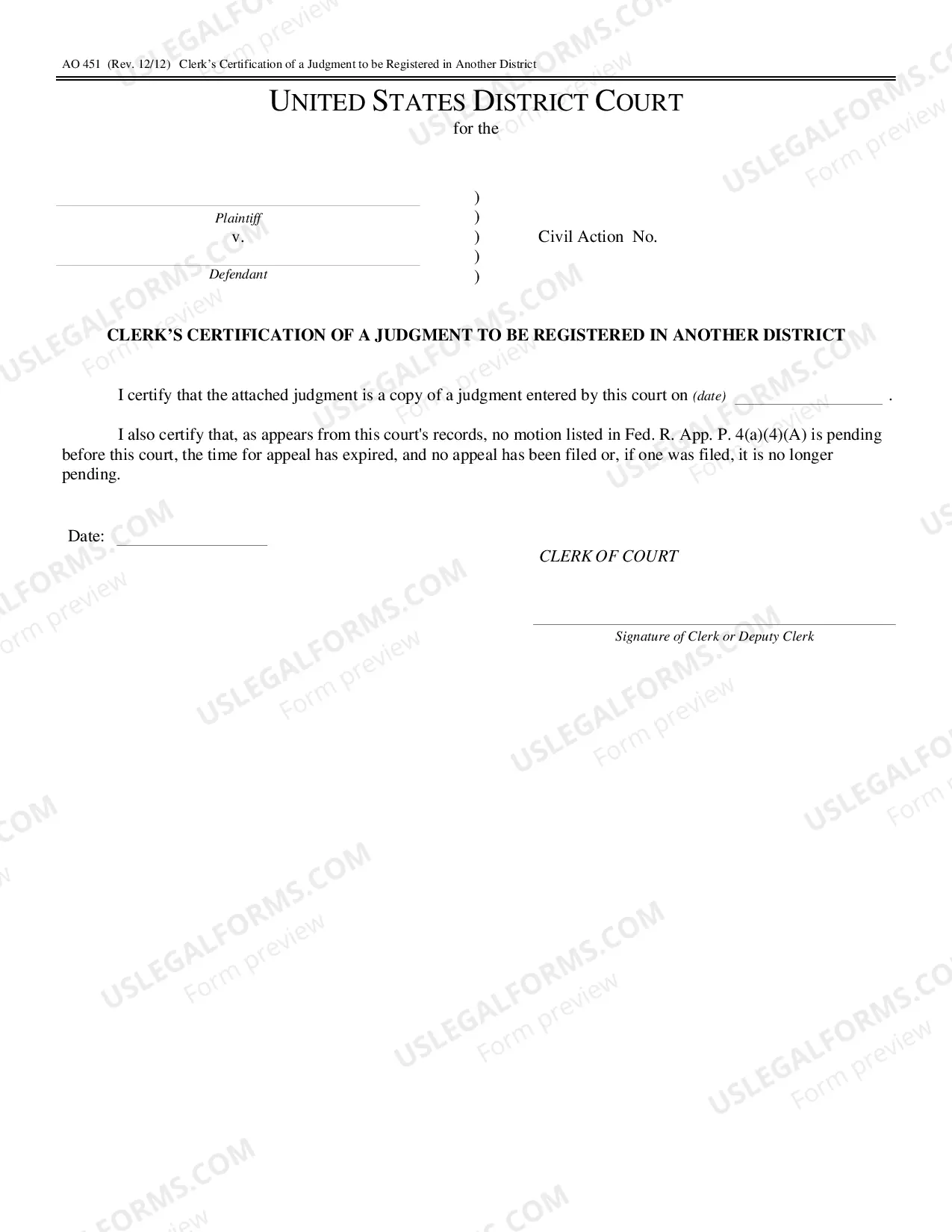
- Attach the authenticated judgment as Exhibit A to the Request for Enrollment.
- Mail the completed forms along with any required fees to the appropriate court clerk.
- Send a copy of the Notice of Enrollment to the judgment debtor.
- Wait the required 30 days before initiating any collection efforts on the judgment.
Does this document require notarization?
Yes, this form must be notarized to be legally valid. Notarization confirms the identity of the parties and the authenticity of the signatures, ensuring the document holds up in court. U.S. Legal Forms offers integrated online notarization services to facilitate this process, including secure video calls and legal equivalence without the need for travel.
Get your form ready online
Our built-in tools help you complete, sign, share, and store your documents in one place.
Make edits, fill in missing information, and update formatting in US Legal Forms—just like you would in MS Word.
Download a copy, print it, send it by email, or mail it via USPS—whatever works best for your next step.
Sign and collect signatures with our SignNow integration. Send to multiple recipients, set reminders, and more. Go Premium to unlock E-Sign.
If this form requires notarization, complete it online through a secure video call—no need to meet a notary in person or wait for an appointment.
We protect your documents and personal data by following strict security and privacy standards.

Make edits, fill in missing information, and update formatting in US Legal Forms—just like you would in MS Word.

Download a copy, print it, send it by email, or mail it via USPS—whatever works best for your next step.

Sign and collect signatures with our SignNow integration. Send to multiple recipients, set reminders, and more. Go Premium to unlock E-Sign.

If this form requires notarization, complete it online through a secure video call—no need to meet a notary in person or wait for an appointment.

We protect your documents and personal data by following strict security and privacy standards.
Mistakes to watch out for
- Failing to obtain the proper certification of the foreign judgment.
- Not mailing the Notice of Enrollment to the judgment debtor.
- Incorrectly determining the court jurisdiction based on the judgment amount.
- Not including all required forms when submitting to the court.
Advantages of online completion
- Convenient access to forms from any device at any time.
- Edit and customize the forms easily according to individual needs.
- Downloadable and printable for immediate use, saving time and effort.
- Reliable guidance and instructions provided to ensure accurate completion.
Legal use & context
- Enrolling a foreign judgment creates a judgment lien against the debtor's property in Florida.
- Understanding the Uniform Enforcement of Foreign Judgments Act is crucial for compliance.
- Failure to file appropriately can result in loss of enforcement rights.
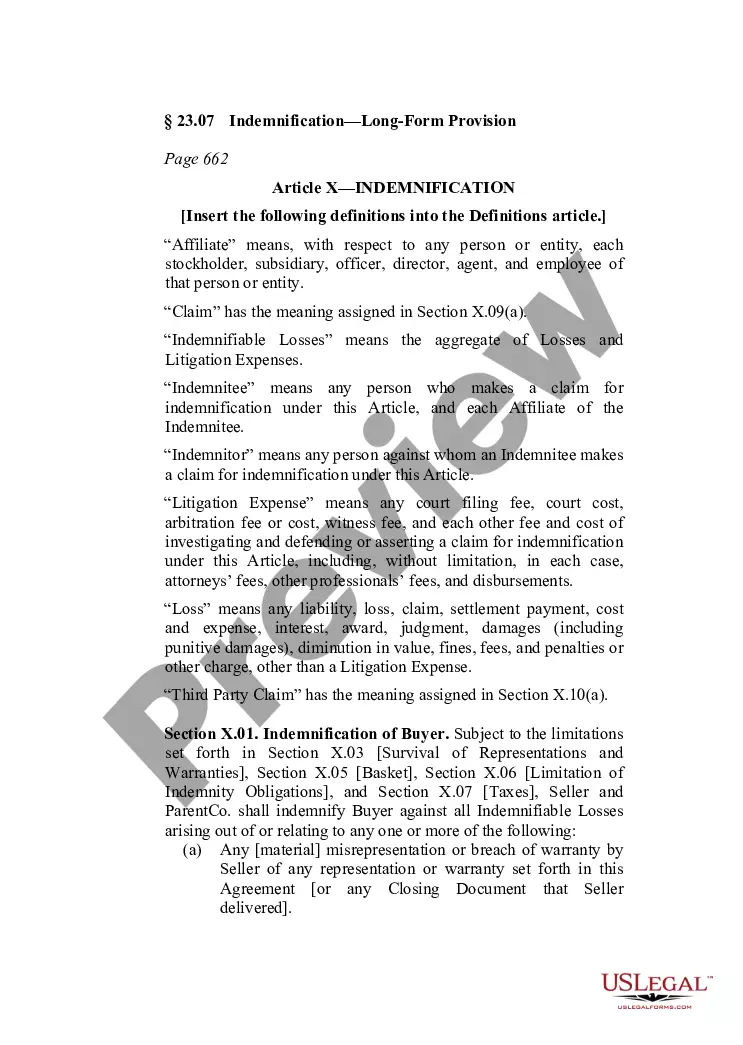
Looking for another form?
Form popularity
FAQ
The statute of limitations on a judgment in Florida is typically 20 years, granting creditors a solid timeframe to enforce a judgment. This means that if you have a foreign judgment, you have up to 20 years to enroll it in Florida. Being aware of this timeframe is crucial for those considering Florida Foreign Judgment Enrollment to ensure they do not lose their opportunity to collect.
Section 55.505 of the Florida Statutes provides details about the registration process for foreign judgments in Florida. This statute outlines specific requirements that must be met for a foreign judgment to be recognized and enforced. A strong understanding of this section can facilitate smoother Florida Foreign Judgment Enrollment for individuals and entities.
Section 705.105 of the Florida Statutes deals with the enforcement of foreign property judgments. This section is relevant for anyone looking to enroll a foreign judgment regarding property disputes in Florida. It ensures that individuals and entities can navigate the complexities of Florida Foreign Judgment Enrollment effectively.
Yes, Florida does recognize foreign divorces, provided they meet certain legal criteria. This means if you've obtained a divorce outside the state, it may be valid in Florida, impacting matters like child custody and property division. Understanding this recognition is important, especially when considering Florida Foreign Judgment Enrollment related to divorce or family law.
Statute 55.141 in Florida addresses the process for executing a judgment, which is essential if you're considering Florida Foreign Judgment Enrollment. This statute allows creditors to collect on judgments efficiently, detailing the procedures for filing and enforcing judgments within the state. It is vital for anyone involved in cross-state legal matters to be familiar with this statute.
Section 25.075 of the Florida Statutes pertains to the enforcement of foreign judgments in Florida. This section outlines the process by which a foreign judgment can be recognized and enforced, ensuring that individuals and entities can seek justice across state lines. Understanding this statute is crucial for anyone looking to pursue Florida Foreign Judgment Enrollment, as it provides the legal foundation for enforcing judgments issued outside of Florida.
Filing a judgment from a foreign jurisdiction involves several steps. You start by acquiring a certified copy of the original judgment and its English translation if necessary. Then, you will file an application for Florida Foreign Judgment Enrollment in a court in your state. This process ensures that your judgment is recognized and enforceable, giving you the tools to collect what you are owed.
To enforce a foreign judgment in Texas, you must first obtain a certified copy of the judgment from the original court. Next, you file a petition with the appropriate Texas court and serve it to the judgment debtor. This process is often part of Florida Foreign Judgment Enrollment, which simplifies the recovery of amounts owed. Utilizing this service can help streamline your enforcement efforts.
To enforce a foreign judgment in the US, you will need to file a petition in the appropriate state court. This usually involves submitting the original judgment and complying with state laws. Understanding the complexities can be daunting, but Florida Foreign Judgment Enrollment provides a pathway to help streamline the enforcement process efficiently and effectively.
Overseas debt can be enforced in the US, but it typically requires a legal process to recognize the debt in a US court. This process may necessitate providing evidence and following the appropriate legal channels. When dealing with overseas debt, consider the Florida Foreign Judgment Enrollment process to facilitate recognition and enforcement in Florida.