Florida Mutual Wills or Last Will and Testaments for Man and Woman living together, not Married with Minor Children
What is this form?
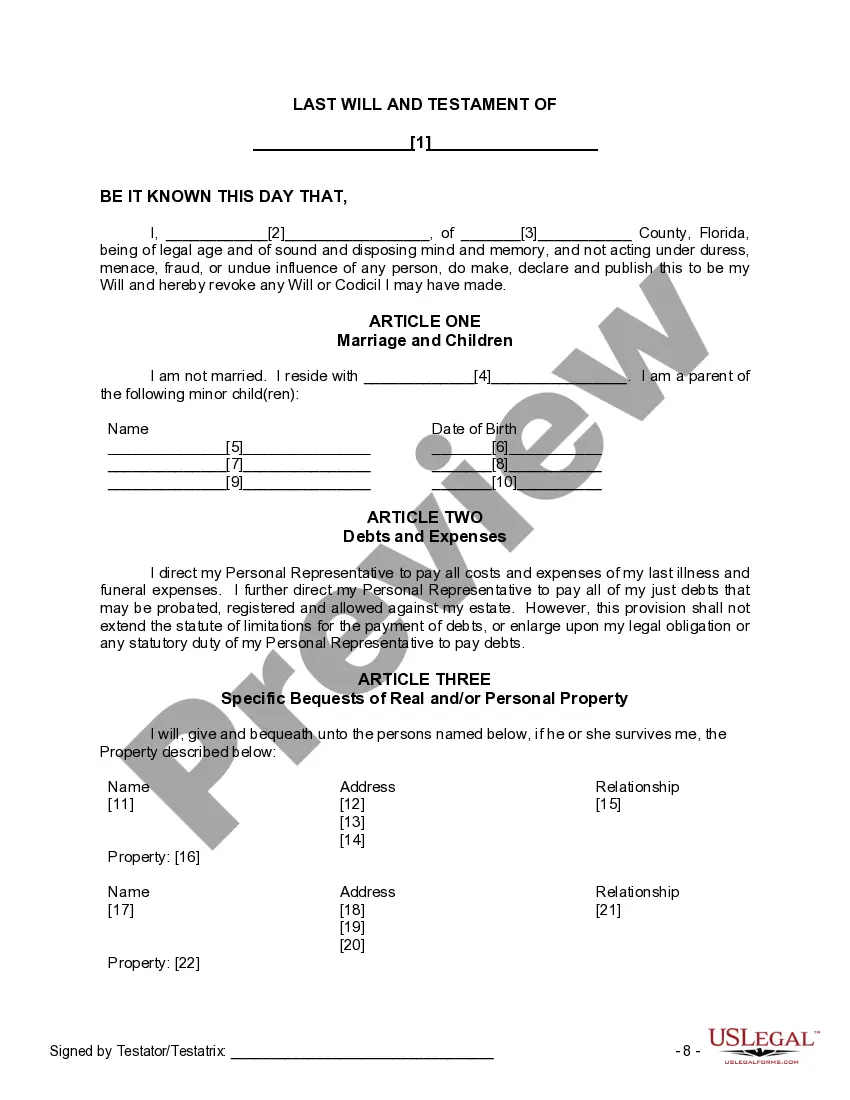
This Mutual Wills package is for a man and woman living together, but not married, who want to ensure their assets are allocated appropriately in the event of their passing. It includes two last wills and testaments, designed specifically for partners who share minor children. This form allows each party to leave their belongings to the surviving partner and establish provisions for their children. Unlike standard wills, mutual wills create a binding agreement on how the assets will be distributed after both partners have passed, ensuring both parties' wishes are respected.
Key parts of this document
- Details of the underlying relationships, specifying marital status and minor children.
- Provisions for debts and expenses of the estate.
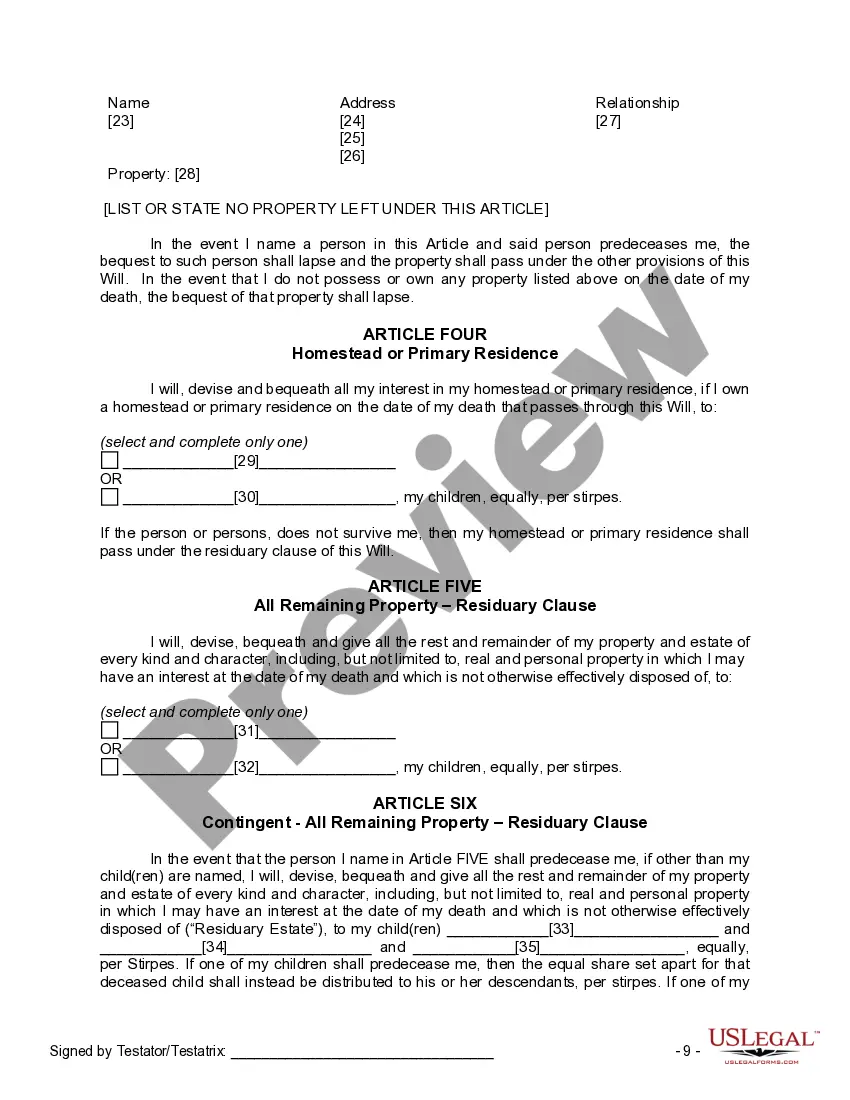
- Specific bequests of property to chosen beneficiaries.
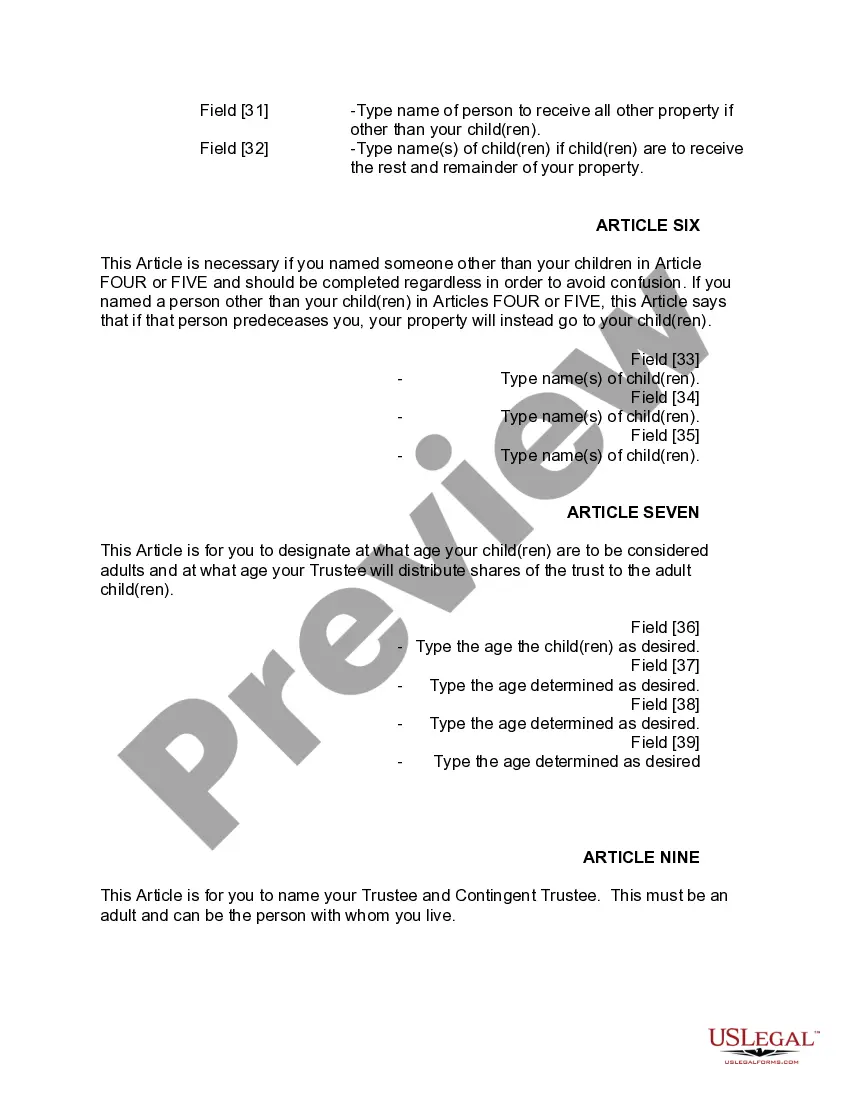
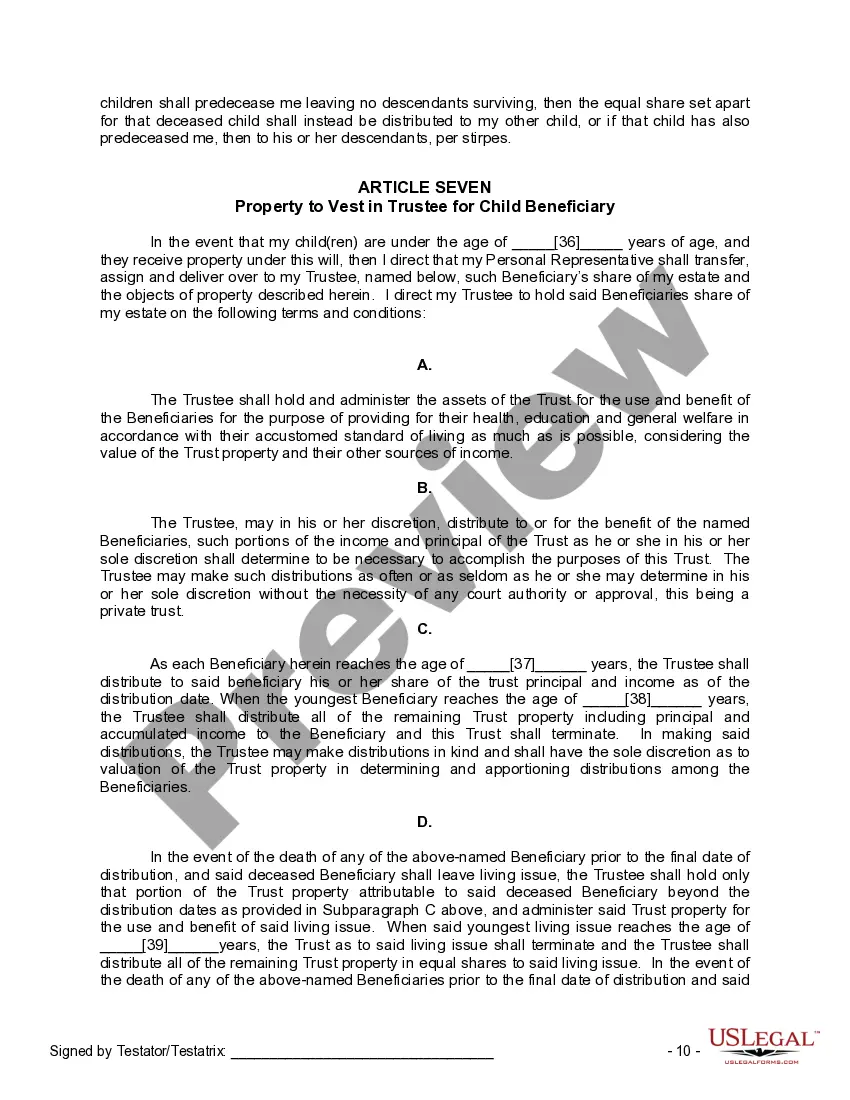
- Trust structure for minor children, outlining trustee responsibilities.
- Appointment of a guardian for minor children in the event of both parents' deaths.
- Appointment of a personal representative (executor) to manage estate affairs.



Common use cases
You should use this form if you and your partner are cohabitating without being married and have minor children. It is ideal in situations where you both want to ensure your property is left to each other and to provide clarity on the distribution of your estate after both pass away. This form is also required if you want to establish legal guardianship for your children in your wills.
Who should use this form
Eligibility for this form includes:
- Partners living together and share minor children.
- Individuals who want mutual wills to protect each other's rights to assets.
- Those seeking to ensure provisions for minor children after both partners' demise.
How to prepare this document
To complete this form, follow these steps:
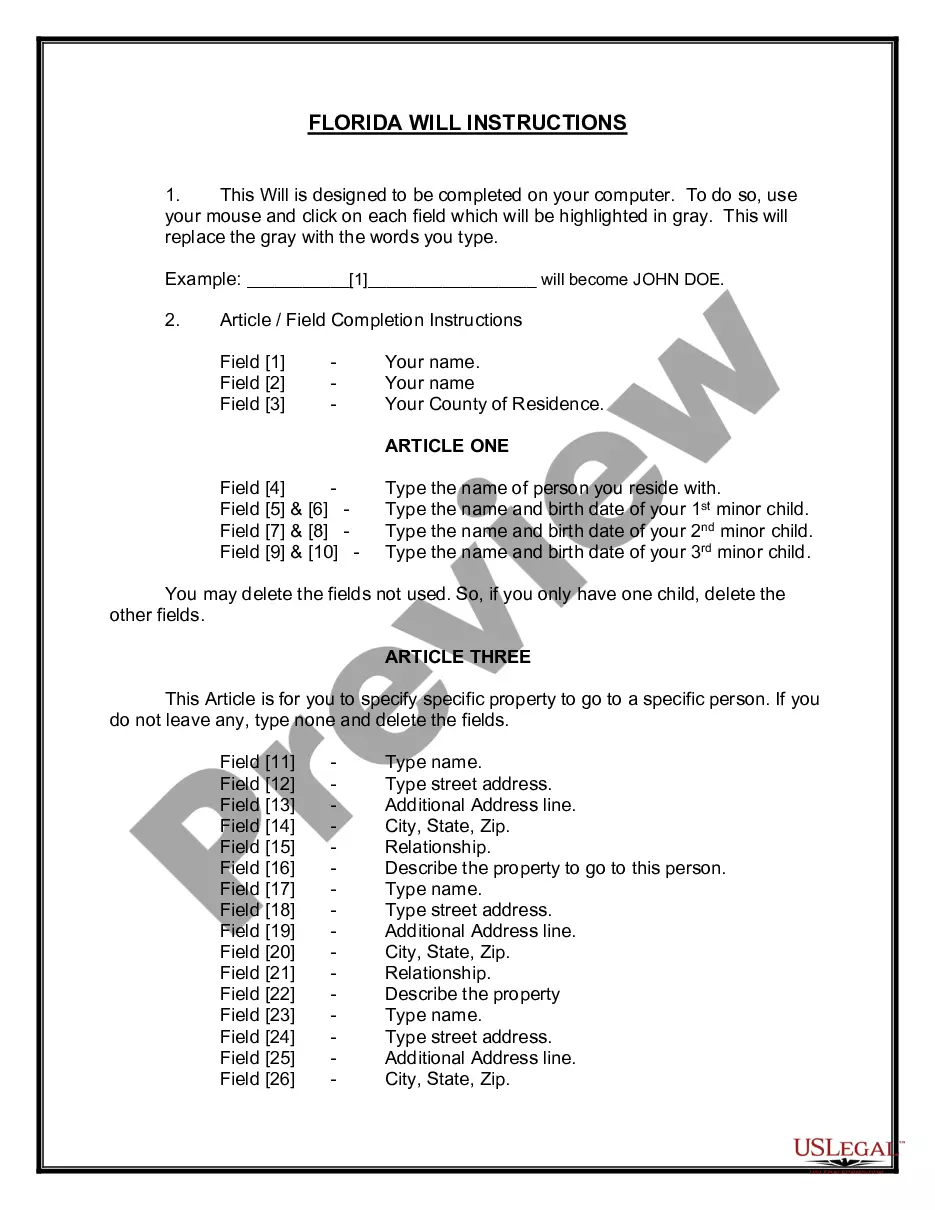
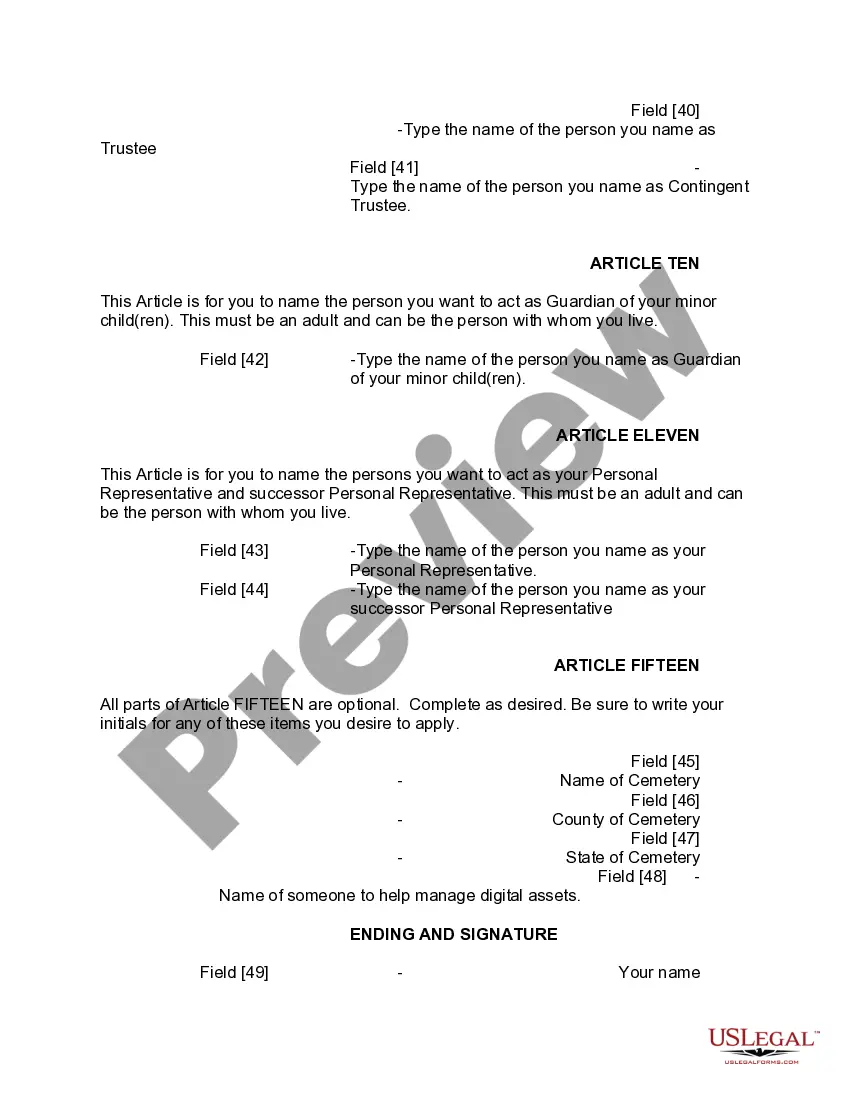
- Identify the testators (the parties making the will) and provide personal details, including full names and addresses.
- List minor children, including their names and birthdates.
- Specify any debts or expenses to be paid from the estate.
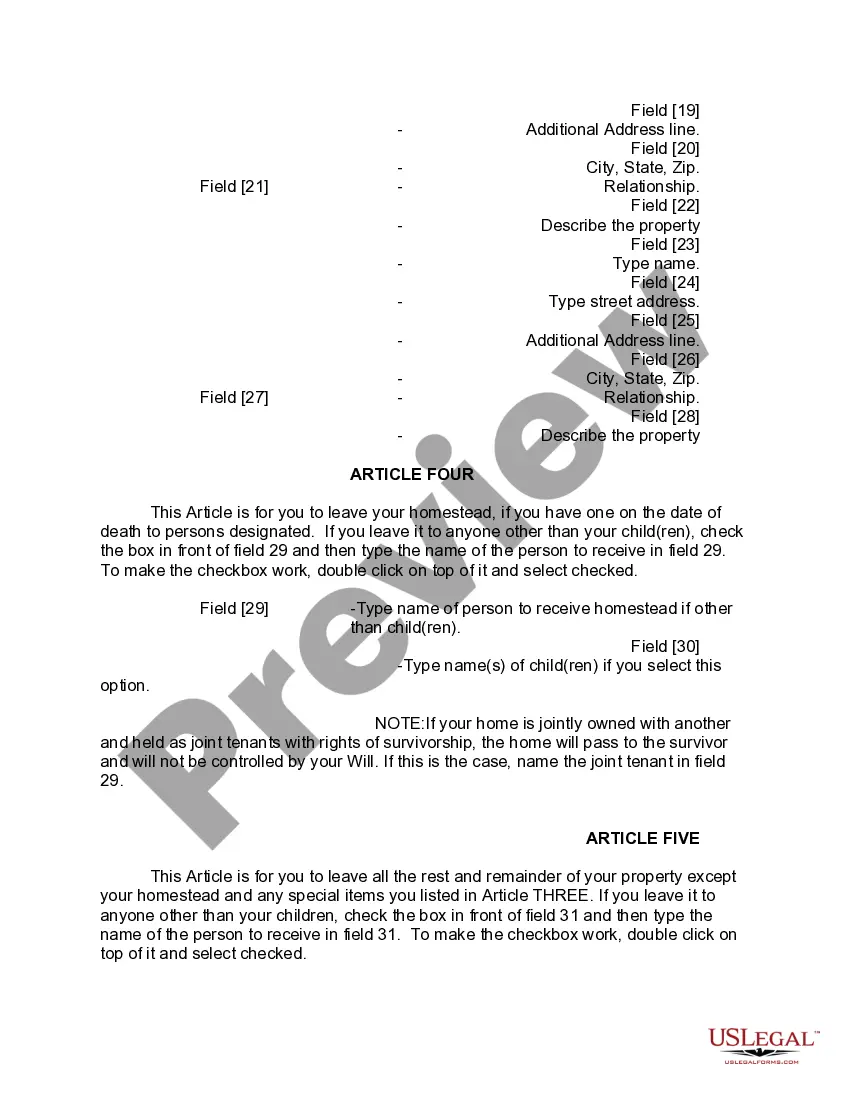
- Detail specific bequests of property or assets to friends, family, or charities.
- Designate a guardian for your minor children and a personal representative to manage the estate.
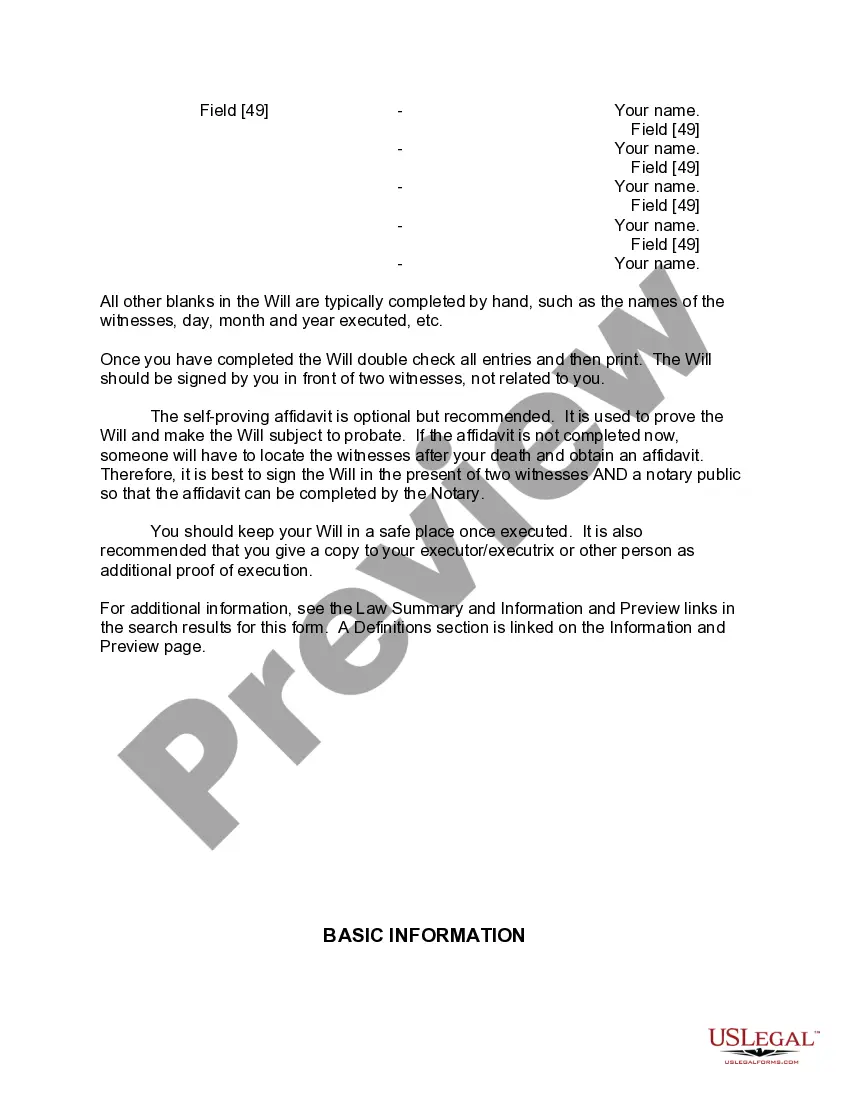
- Sign the will in the presence of two witnesses, ensuring they are not beneficiaries of the will.
Does this form need to be notarized?
Yes, this form must be notarized to be legally valid. Each party, along with the witnesses, should sign the wills in the presence of a notary public to ensure their enforceability under Florida law.
Get your form ready online
Our built-in tools help you complete, sign, share, and store your documents in one place.
Make edits, fill in missing information, and update formatting in US Legal Forms—just like you would in MS Word.
Download a copy, print it, send it by email, or mail it via USPS—whatever works best for your next step.
Sign and collect signatures with our SignNow integration. Send to multiple recipients, set reminders, and more. Go Premium to unlock E-Sign.
If this form requires notarization, complete it online through a secure video call—no need to meet a notary in person or wait for an appointment.
We protect your documents and personal data by following strict security and privacy standards.

Make edits, fill in missing information, and update formatting in US Legal Forms—just like you would in MS Word.

Download a copy, print it, send it by email, or mail it via USPS—whatever works best for your next step.

Sign and collect signatures with our SignNow integration. Send to multiple recipients, set reminders, and more. Go Premium to unlock E-Sign.

If this form requires notarization, complete it online through a secure video call—no need to meet a notary in person or wait for an appointment.

We protect your documents and personal data by following strict security and privacy standards.
Common mistakes
- Not having the wills signed by the required number of witnesses.
- Failing to keep copies of the wills in a secure location.
- Not updating the wills following major life changes, like receiving new property or having more children.
- Neglecting to specify what happens if a beneficiary predeceases the testator.
Benefits of completing this form online
- Convenience of having legally sound wills ready for immediate download.
- Editability allows partners to customize the document to fit their needs.
- Reliability, as forms are drafted and reviewed by licensed attorneys.
- Peace of mind knowing that your wishes are documented and legally binding.
Key takeaways
Key takeaways:
- This form allows unmarried couples to create mutual wills to protect each other's interests.
- It ensures that minor children are considered in the estate planning process.
- Proper completion and notarization are crucial for legal validity in Florida.
- Clear communication about the terms of the wills is necessary to avoid disputes.
Looking for another form?

Form popularity
FAQ
In Florida, a surviving spouse may have certain rights that can conflict with the designated beneficiaries in a will. Specifically in cases involving Florida Mutual Wills or Last Will and Testaments for Man and Woman living together, not Married with Minor Children, understanding these rights is crucial. If a spouse is not adequately provided for, they might have grounds to contest the will. To ensure that your wishes are clear and legally sound, consider using US Legal Forms to draft your will.
If your spouse dies while you are separated, the situation can get complex. Generally, in Florida, you may still retain rights to your spouse's estate, which includes benefits from Florida Mutual Wills or Last Will and Testaments for Man and Woman living together, not Married with Minor Children. However, if there are legal documents indicating otherwise, they may take precedence. Consulting with an attorney or utilizing US Legal Forms can provide clarity on your specific situation.
In Florida, a living spouse does have certain rights that can impact a will, particularly regarding Florida Mutual Wills or Last Will and Testaments for Man and Woman living together, not Married with Minor Children. If the will does not adequately account for the spouse, they may make a claim against the estate. This means it’s essential to address your partner's rights in your will to avoid disputes. Using a platform like US Legal Forms can help you create a will that meets these needs.
No, an attorney does not have to prepare a will in Florida, but it is highly recommended. Drafting Florida Mutual Wills or Last Will and Testaments for Man and Woman living together, not Married with Minor Children can be complex, and legal guidance can help you navigate the stipulations effectively. Utilizing platforms like USLegalForms provides you with templates and instructions that can simplify the process if you choose to create your own will without legal assistance.
In Florida, a last will and testament must be in writing, signed by the testator, and witnessed by at least two individuals. This is particularly important when creating Florida Mutual Wills or Last Will and Testaments for Man and Woman living together, not Married with Minor Children. Additionally, the witnesses cannot be beneficiaries of the will to remain unbiased. Following these requirements ensures that your will is legally enforceable.
No, a will does not need to be registered in Florida to be valid. However, to ensure that your wishes are effectively executed, especially when dealing with Florida Mutual Wills or Last Will and Testaments for Man and Woman living together, not Married with Minor Children, it is advisable to inform loved ones about its location. Managing your will properly can save time and stress during probate. Using online platforms can simplify this process.
Unmarried partners in Florida have limited rights regarding inheritance and property, unlike married couples. It's crucial for those in a relationship, especially in the context of Florida Mutual Wills or Last Will and Testaments for Man and Woman living together, not Married with Minor Children, to ensure their wishes are clearly documented in a will. Without a will, the state’s intestacy laws may not honor your partner’s claims. Thus, drafting a clear will is essential.
In Florida, a will does not need to be notarized to be valid, although notarization can help speed up the probate process. However, for Florida Mutual Wills or Last Will and Testaments for Man and Woman living together, not Married with Minor Children, including a self-proving affidavit can be beneficial. This affidavit is a notarized statement that serves as evidence of the will’s validity. Using platforms like USLegalForms can help you create a will that incorporates these helpful features easily.
Yes, you can be a beneficiary in a will even if you are not married to the individual creating the will. Florida Mutual Wills or Last Will and Testaments for Man and Woman living together, not Married with Minor Children can include friends, relatives, or partners as beneficiaries. It's important for the individual drafting the will to clearly name these beneficiaries to ensure their intentions are honored. Proper drafting can help avoid confusion and disputes after one's passing.
Wills for married couples in Florida typically address how their assets will be divided upon death. When drafting Florida Mutual Wills or Last Will and Testaments for Man and Woman living together, not Married with Minor Children, it's essential to specify the intentions clearly. These wills can include provisions that outline the rights of each spouse and any arrangements for minor children. Therefore, clear communication and documentation can prevent disputes later.