Florida Quitclaim Life Estate Deed - Individual to Individual
What this document covers
The Quitclaim Life Estate Deed is a legal document that allows an individual, known as the Grantor, to convey their life estate interest in a property to another individual, referred to as the Grantee. Unlike other types of deeds, a quitclaim deed transfers whatever interest the Grantor has without guaranteeing its validity. This form is particularly useful in situations where the exact ownership of the property is uncertain, making it different from a warranty deed which provides assurances about the title.
Key components of this form
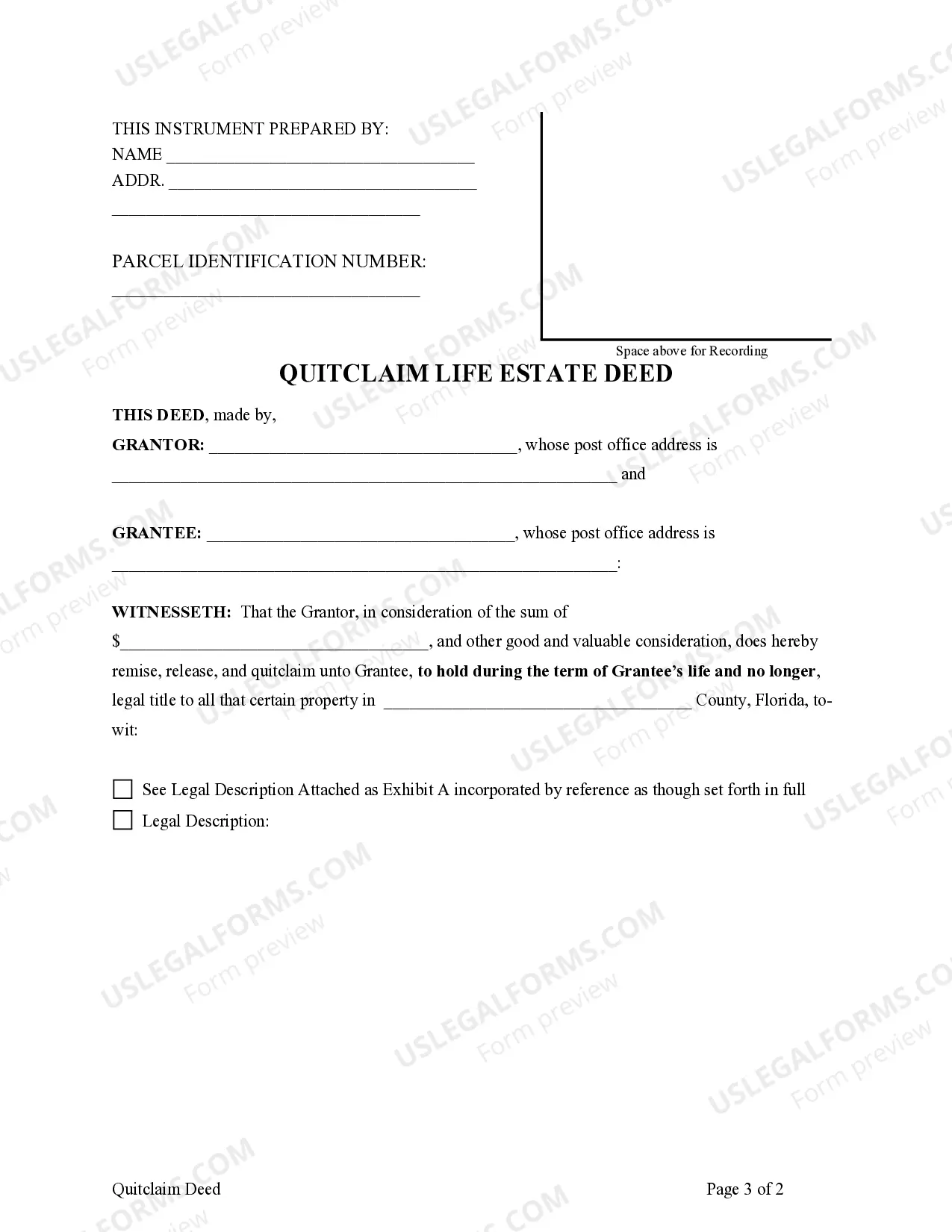
- Identification of the Grantor and Grantee: Clearly states the names of the parties involved.
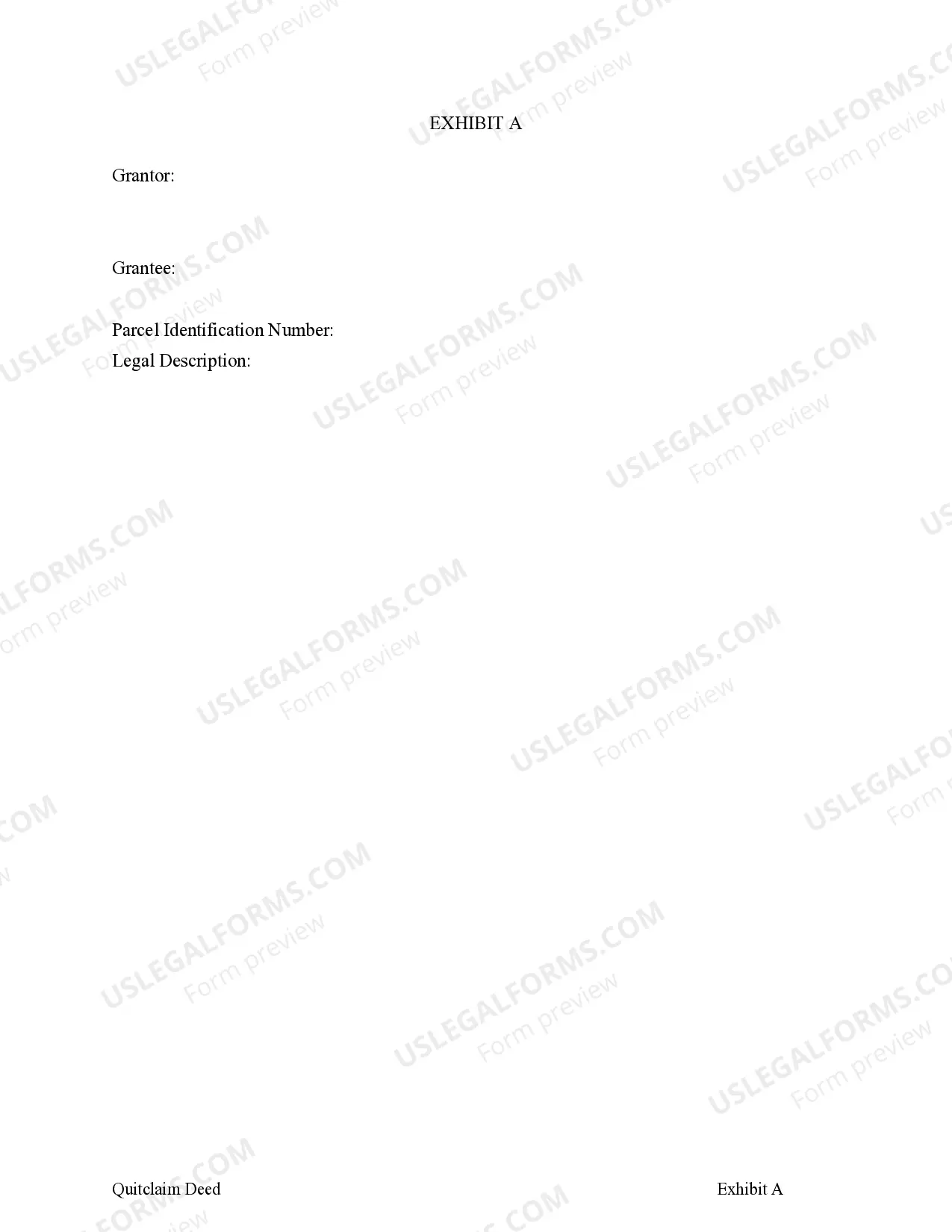
- Description of the Property: Provides the legal description of the property being conveyed.
- Statement of Life Estate Interest: Specifies that the Grantor is transferring a life estate interest.
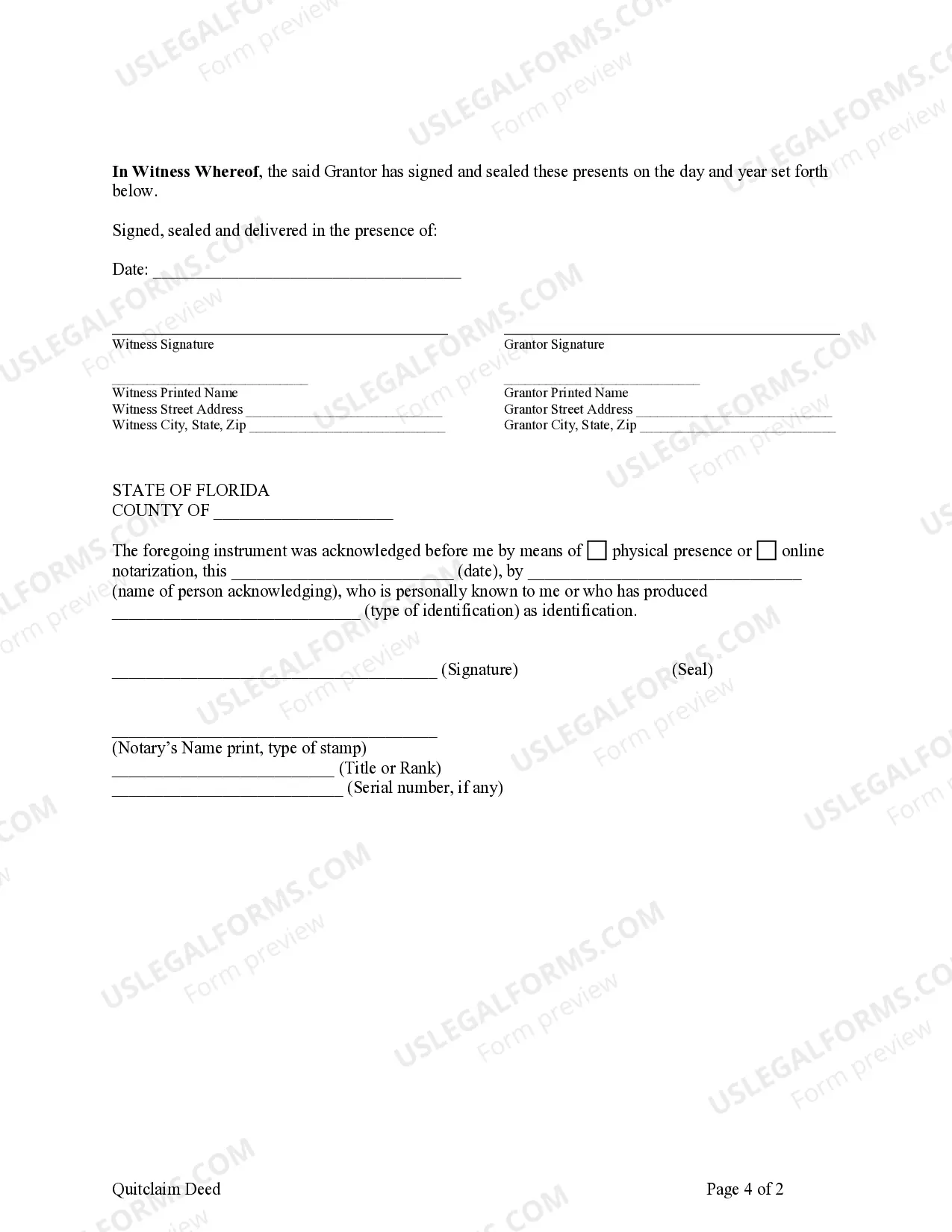
- Signatures: Requires the signature of the Grantor to validate the transfer.
- Date of Execution: Captures the date when the deed is signed and executed.



When to use this form
Use the Quitclaim Life Estate Deed in situations such as transferring property among family members, clarifying ownership during estate planning, or when an individual wishes to gift their life interest in real estate to another person. This form is commonly utilized during divorce settlements or when one party wants to relinquish their claim to a property without the formalities of a warranty deed.
Who this form is for
This form is suitable for:
- Individuals looking to transfer their life estate interest in a property.
- Family members or friends making informal property arrangements.
- Individuals involved in estate planning or settling an estate.
Steps to complete this form
- Identify the parties: Enter the names of the Grantor and Grantee clearly at the top of the form.
- Specify the property: Provide the legal description of the property being transferred including boundaries and dimensions.
- State the life estate interest: Clearly indicate that the interest being conveyed is a life estate.
- Sign the form: The Grantor must sign the deed in the designated area to validate the transfer.
- Enter the date: Write the date on which the form is executed.
Does this form need to be notarized?
This form must be notarized to be legally valid. US Legal Forms provides secure online notarization powered by Notarize, allowing you to complete the process through a verified video call.
Get your form ready online
Our built-in tools help you complete, sign, share, and store your documents in one place.
Make edits, fill in missing information, and update formatting in US Legal Forms—just like you would in MS Word.
Download a copy, print it, send it by email, or mail it via USPS—whatever works best for your next step.
Sign and collect signatures with our SignNow integration. Send to multiple recipients, set reminders, and more. Go Premium to unlock E-Sign.
If this form requires notarization, complete it online through a secure video call—no need to meet a notary in person or wait for an appointment.
We protect your documents and personal data by following strict security and privacy standards.

Make edits, fill in missing information, and update formatting in US Legal Forms—just like you would in MS Word.

Download a copy, print it, send it by email, or mail it via USPS—whatever works best for your next step.

Sign and collect signatures with our SignNow integration. Send to multiple recipients, set reminders, and more. Go Premium to unlock E-Sign.

If this form requires notarization, complete it online through a secure video call—no need to meet a notary in person or wait for an appointment.

We protect your documents and personal data by following strict security and privacy standards.
Common mistakes to avoid
- Not properly identifying the property, which can lead to confusion about which property is being conveyed.
- Failing to sign the document, rendering it invalid.
- Not including the legal description of the property, which is crucial for accurate conveyance.
Advantages of online completion
- Convenience: Downloadable forms can be completed from the comfort of your home.
- Editability: Fill out the form easily using your computer, enabling mistake-free entries.
- Reliability: Forms drafted by licensed attorneys ensure compliance with legal standards.
Looking for another form?
Form popularity
FAQ
Yes, you can change a life estate deed in Florida, but this usually requires the consent of all parties involved. The changes often need to be documented and filed with the local courthouse for the new deed to be valid. Utilizing a Florida Quitclaim Life Estate Deed - Individual to Individual allows for flexibility in estate planning, making it easier to navigate property interests as family circumstances evolve.
If a husband dies and the house is solely in his name in Florida, the property typically goes through probate unless it is covered by a beneficiary designation or trust. The widow may need to initiate the probate process to transfer ownership. In some cases, using a Florida Quitclaim Life Estate Deed - Individual to Individual could simplify future transfers and avoid complications.
Yes, you can record a deed after someone dies in Florida; however, the process may differ based on the type of deed and ownership structure. If the property was jointly owned, a new deed can be recorded to reflect the current ownership. If the property is part of an estate, it may involve probate. Understanding the implications of a Florida Quitclaim Life Estate Deed - Individual to Individual can ensure proper handling in these situations.
When one person on a deed dies in Florida, the remaining owner typically continues to hold the property, depending on the deed's terms. If the deed includes a right of survivorship, the surviving owner automatically receives full ownership. Otherwise, the property may become part of the deceased's estate and require probate. This highlights the importance of understanding how a Florida Quitclaim Life Estate Deed - Individual to Individual operates.
To remove a deceased person from a deed in Florida, you will usually need to file a new deed that reflects the remaining owner. This often involves presenting a death certificate and obtaining documentation that shows the transfer of ownership, such as a Florida Quitclaim Life Estate Deed - Individual to Individual. Once completed, this new deed must be recorded with the county clerk's office. This process can clarify ownership and streamline title transfers.
When one person on a deed dies in Florida, the ownership of the property typically transfers to the surviving co-owner or heirs according to the terms of the deed. If the property is held as a joint tenancy, the surviving owner automatically receives full ownership through the right of survivorship. However, if the property is part of an estate, it may go through probate, depending on the circumstances. Understanding these rules is crucial when dealing with a Florida Quitclaim Life Estate Deed - Individual to Individual.
Filling out a quitclaim deed in Florida involves several steps. Begin by stating the names of both the grantor and grantee, then provide a clear description of the property. Don’t overlook the need for notarization before submitting the deed to the county clerk's office. If at any point you're uncertain, resources available through US Legal Forms can make this process easier, especially for the Florida Quitclaim Life Estate Deed - Individual to Individual.
To transfer a life estate deed, complete a quitclaim deed that specifies the current life tenant and the new recipient. Ensure both parties sign the document in front of a notary public. Once signed, file the deed with your local county office. This process is an efficient method to create a Florida Quitclaim Life Estate Deed - Individual to Individual, and using US Legal Forms can simplify your experience.
Filling out a quitclaim deed in Florida requires gathering essential information about the property and the parties involved. Begin by identifying the grantor and grantee, followed by a detailed description of the property. After the document is completed, it must be notarized and filed with the county clerk. For added ease, you might explore US Legal Forms for templates specific to the Florida Quitclaim Life Estate Deed - Individual to Individual.
To properly fill out a quit claim deed in Florida, start by including the names of the grantor and grantee. Clearly describe the property being transferred and state the intention to transfer ownership. Also, remember to sign and date the document in front of a notary public. Consider using resources from US Legal Forms to avoid common mistakes and ensure your Florida Quitclaim Life Estate Deed - Individual to Individual is valid.