Notice to Vacate for Holding Over
What is this form?
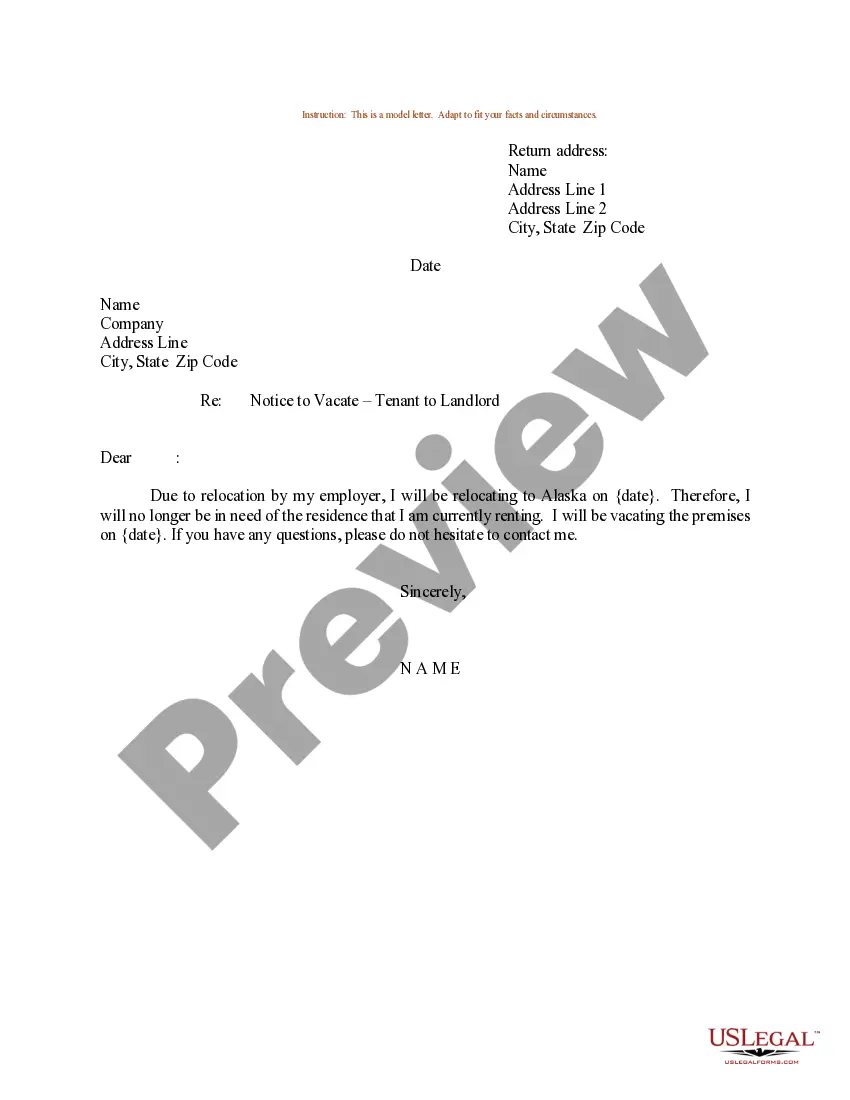
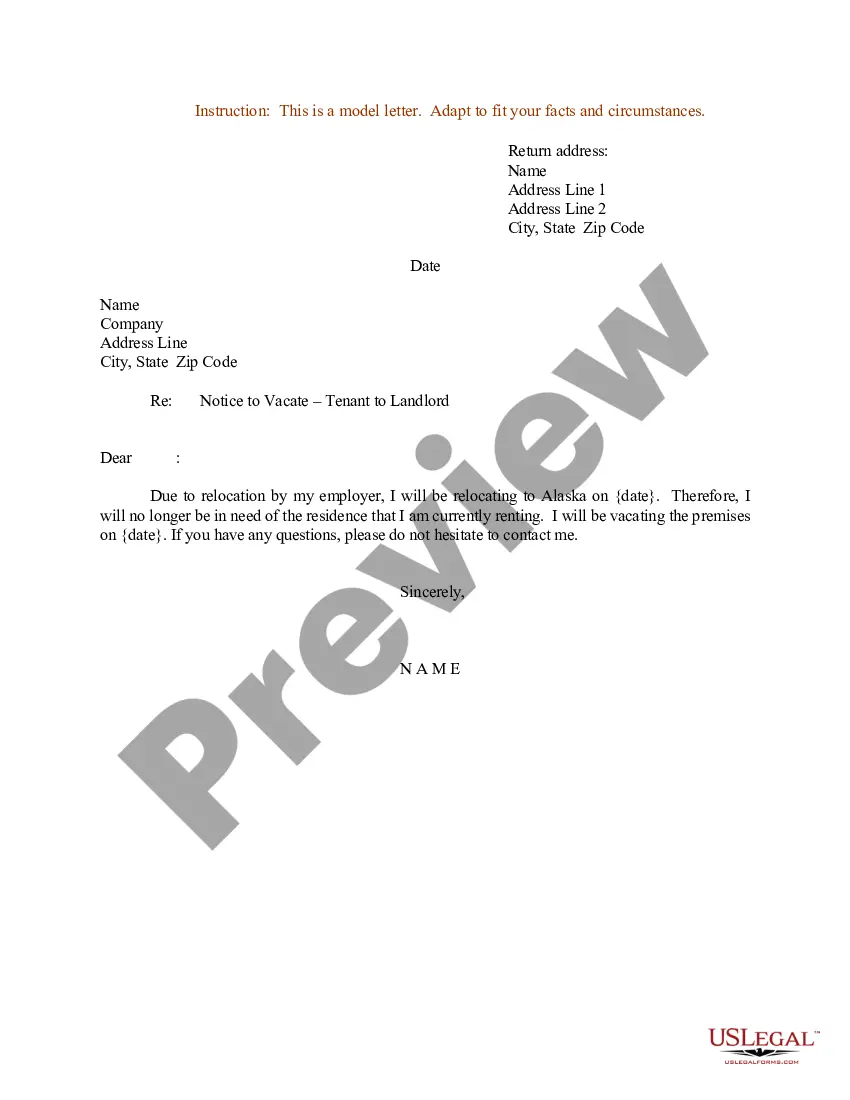
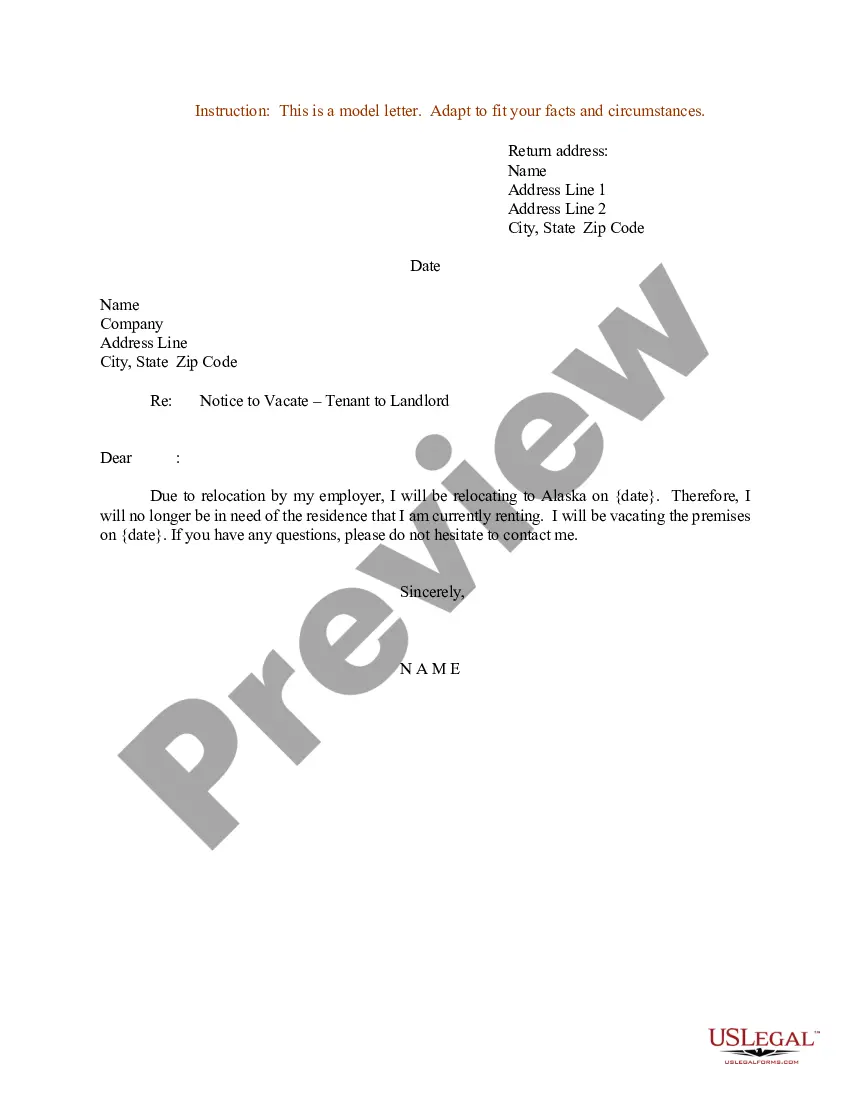
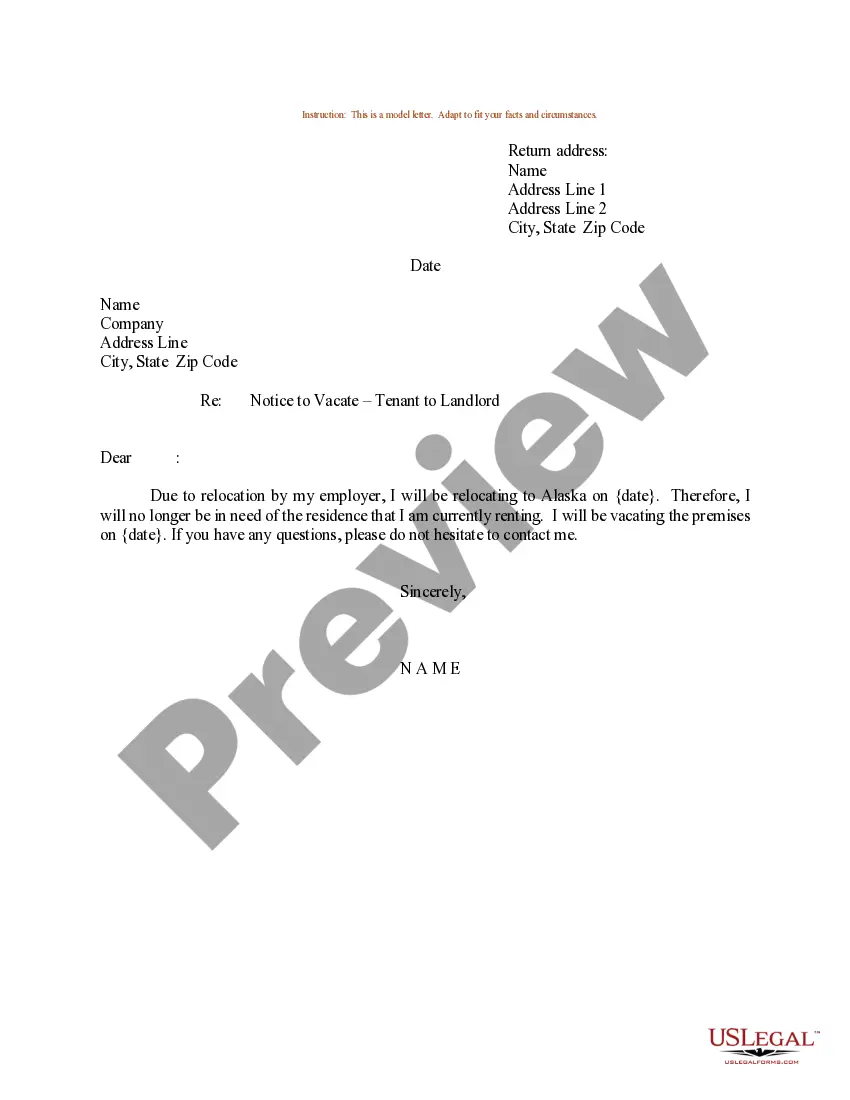
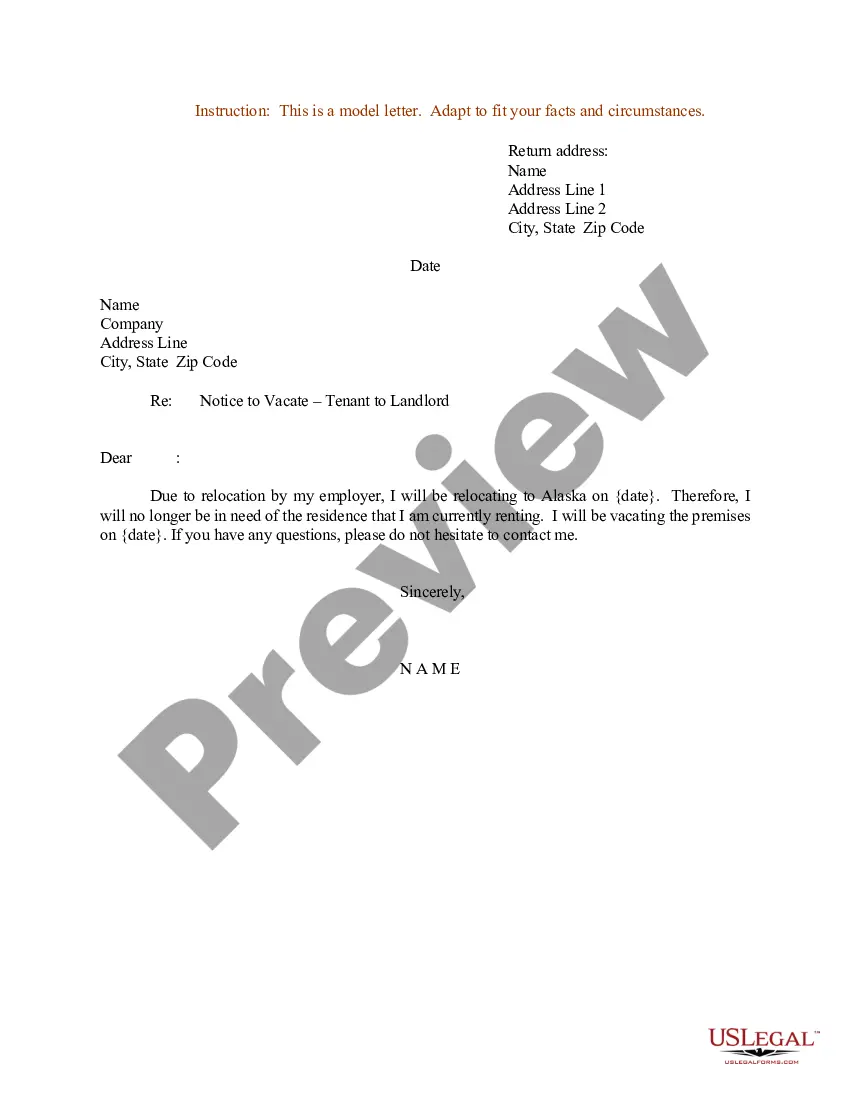
The Notice to Vacate for Holding Over is a formal communication from a tenant to a landlord, declaring the tenant's intention to vacate the rental property. This document specifies the termination of the tenancy, which is essential in ensuring that both parties are aware of the departure timeline. Unlike other lease termination notices, this form is specifically geared towards situations where the tenant is leaving due to circumstances such as employment relocation or other personal reasons.
What’s included in this form
- Return address of the tenant
- Name and address of the landlord
- Date of the notice
- Statement of intent to vacate
- Specific dates for relocation and vacancy
- Contact information for any questions
Common use cases
This form should be used when a tenant needs to formally notify their landlord of their intention to vacate the premises. It is particularly necessary in scenarios such as relocating for a job, needing a larger space, or moving out for personal reasons. Proper use of this form helps fulfill legal obligations and provides a written record of the tenant's intent to leave.
Who should use this form
- Tenant currently leasing a rental property
- Individuals planning to vacate their residence for any reason
- Those looking to ensure compliance with lease agreements
Instructions for completing this form
- Identify the parties: Enter your name and address as the tenant.
- Specify the landlord: Include the name and address of your landlord.
- Enter the date of the notice: Clearly indicate the date you are sending this notice.
- Detail your relocation plans: State the reason for moving and provide the intended vacate date.
- Add contact information: Include a phone number or email for any follow-up questions.
- Sign the letter: Ensure to sign off with your name at the conclusion of the letter.
Notarization guidance
This form does not typically require notarization unless specified by local law. It is advisable to check local regulations to ensure compliance.
Get your form ready online
Our built-in tools help you complete, sign, share, and store your documents in one place.
Make edits, fill in missing information, and update formatting in US Legal Forms—just like you would in MS Word.
Download a copy, print it, send it by email, or mail it via USPS—whatever works best for your next step.
Sign and collect signatures with our SignNow integration. Send to multiple recipients, set reminders, and more. Go Premium to unlock E-Sign.
If this form requires notarization, complete it online through a secure video call—no need to meet a notary in person or wait for an appointment.
We protect your documents and personal data by following strict security and privacy standards.

Make edits, fill in missing information, and update formatting in US Legal Forms—just like you would in MS Word.

Download a copy, print it, send it by email, or mail it via USPS—whatever works best for your next step.

Sign and collect signatures with our SignNow integration. Send to multiple recipients, set reminders, and more. Go Premium to unlock E-Sign.

If this form requires notarization, complete it online through a secure video call—no need to meet a notary in person or wait for an appointment.

We protect your documents and personal data by following strict security and privacy standards.
Mistakes to watch out for
- Not providing the correct notice period as specified in the lease agreement.
- Failing to include all partiesâ names or addresses.
- Not signing the document.
- Leaving out contact information for follow-up communication.
Benefits of using this form online
- Convenience of accessing and downloading the form immediately.
- Ability to edit the document to tailor it to your specific situation.
- Reliability of using templates drafted by licensed attorneys.
Summary of main points
- A Notice to Vacate for Holding Over is crucial for officially communicating your intent to leave a rental property.
- Ensure you provide adequate notice as per your lease terms.
- Customize the letter to reflect your personal circumstances correctly.
Looking for another form?

Form popularity
FAQ
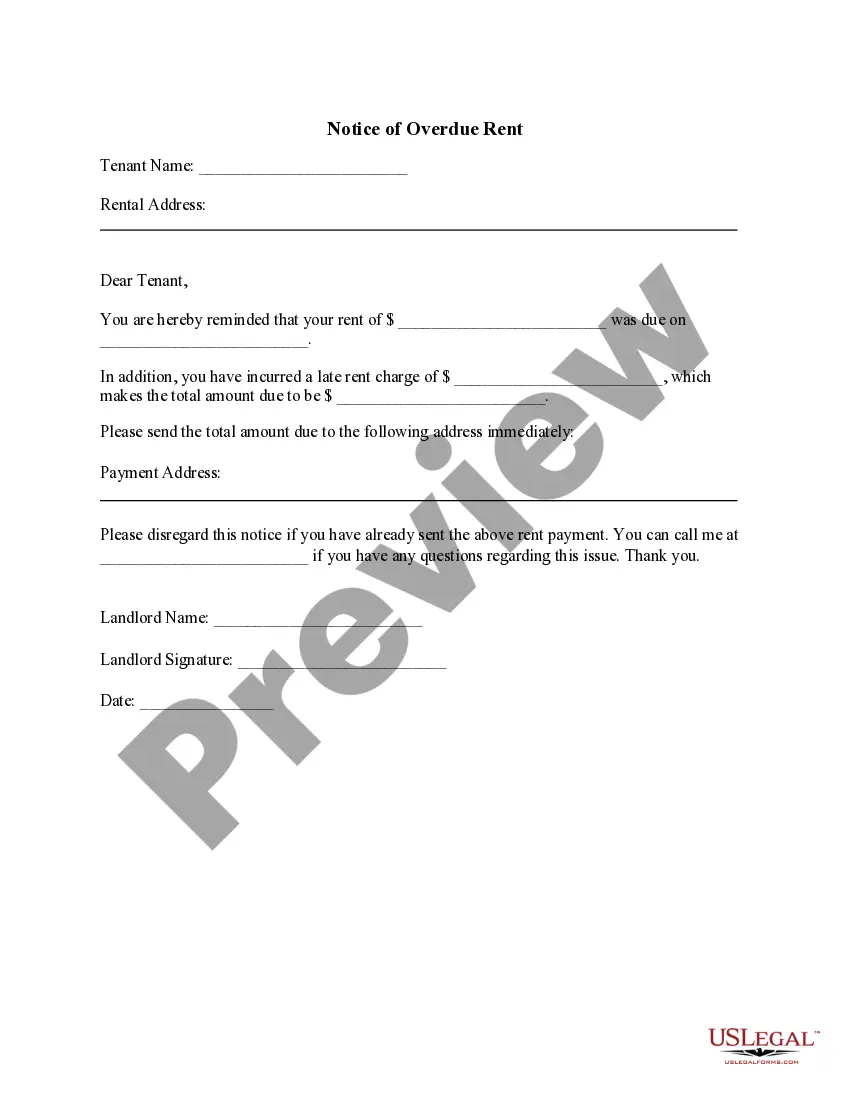
The holdover clause in a commercial real estate lease generally says that if the tenant stays in the space it is leasing after the lease expires, then the tenant must pay an increased rent above the rental rate at the time of lease expiration.
Let the tenant stay. A landlord who continues to accept monthly rent and allows the tenant to stay cannot later seek to evict the tenant on the basis of the holdover. Treat the tenant as a trespasser and seek eviction.
A tenant who remains beyond the end of a lease is considered a "holdover tenant," not a trespasser. Moreover, a tenant's refusal to pay rent may be a breach of the lease for which the landlord may recover damages, but it is not a trespass.The trespass laws provide no exception for relatives of the complainant.
As mentioned, if a Tenant holds over under its current business lease, the Landlord is not entitled to ask the Tenant to leave unless he has served a notice to quit of not less than six months and not more than 12 months and has proved one of the grounds for ending the arrangement under the 1954 Act, but what if the
Tenants in California can stay in a rental past their lease end date.But some tenants remain in their rental beyond the end of their lease and become what's known as holdover tenants. When that happens, landlords can choose to either evict them or accept the rent and let them stay as a month-to-month tenant.
Holding over is simply a tenant remaining in occupation of premises once the original term of their letting has come to an end. Holding over the risks. Holding over principally presents risks as a result of the lack of clarity on the legal position of the parties that it creates.
If the lease expired and the tenant won't leave you'll need to either file an eviction or let the tenant be. If you do nothing than the tenant will become a holdover tenant as discussed earlier in this post. If you're going to proceed forward with an eviction be sure to follow all the proper legal procedures.
A holdover tenant is a renter who remains in a property after the expiration of the lease. If the landlord continues to accept rent payments, the holdover tenant can continue to legally occupy the property, and state laws and court rulings determine the length of the holdover tenant's new rental term.