Release of Liability Form for Hunting
Overview of this form
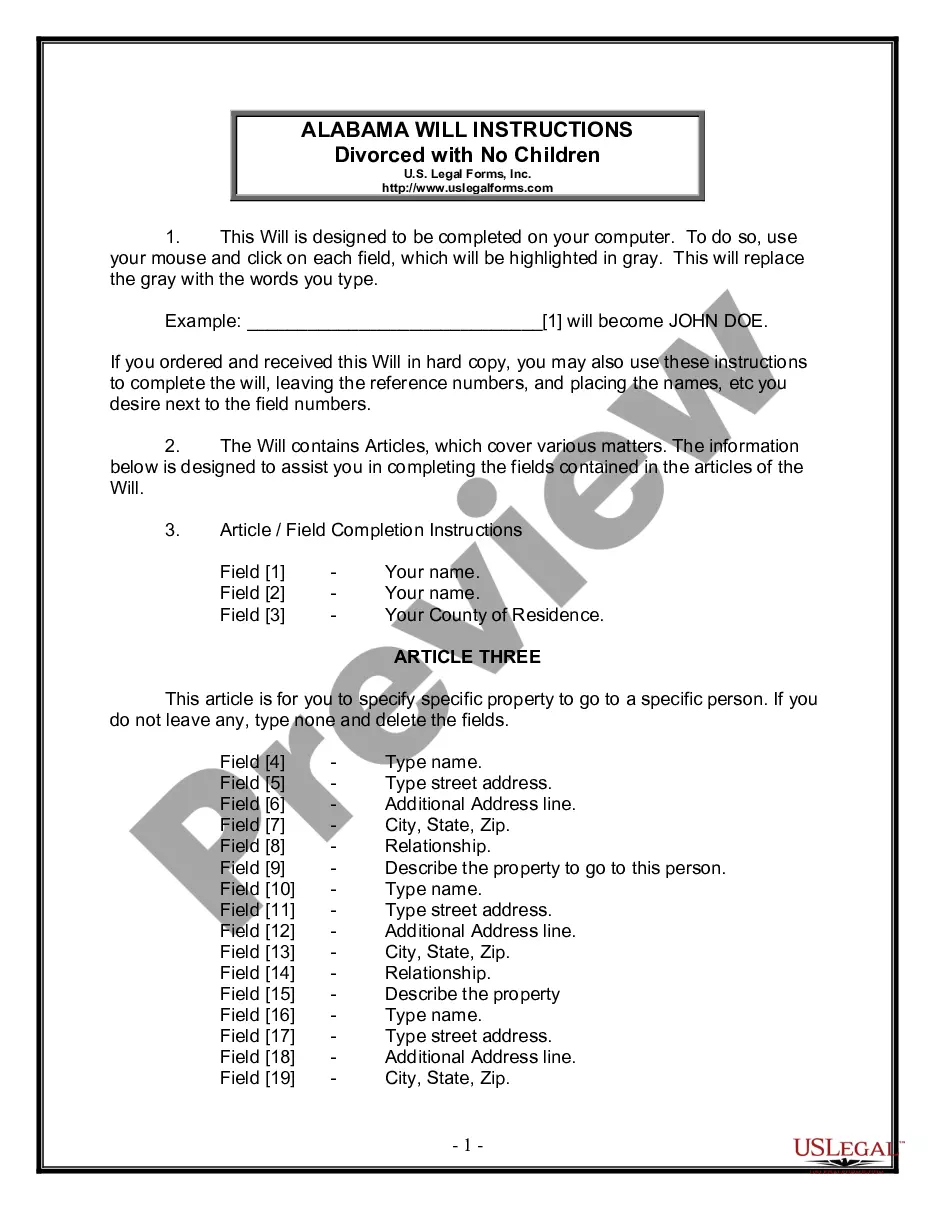
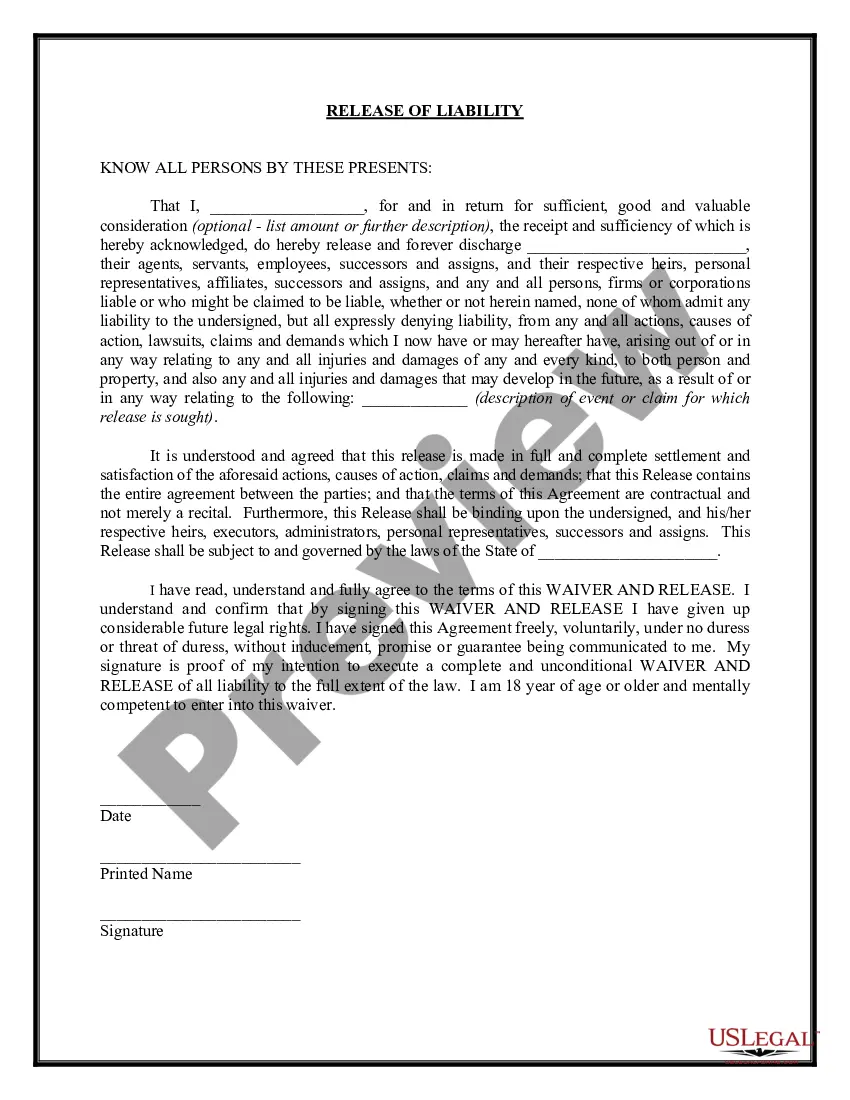
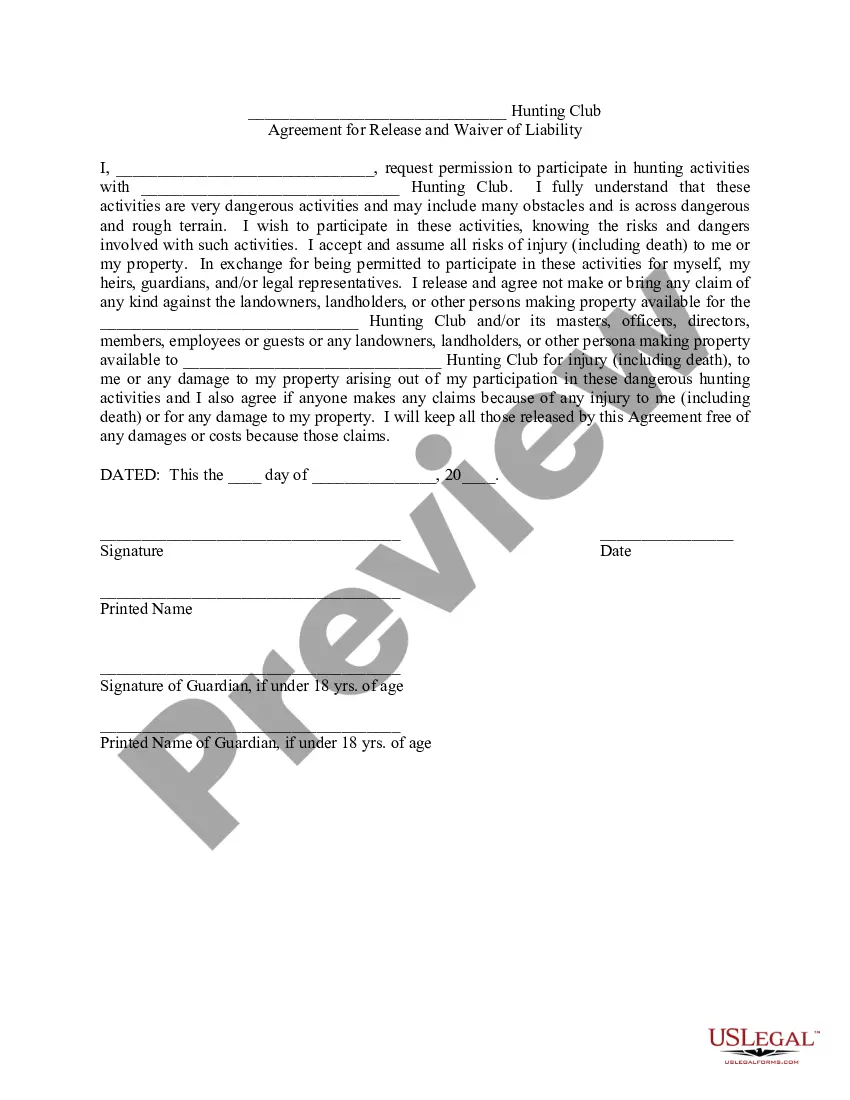
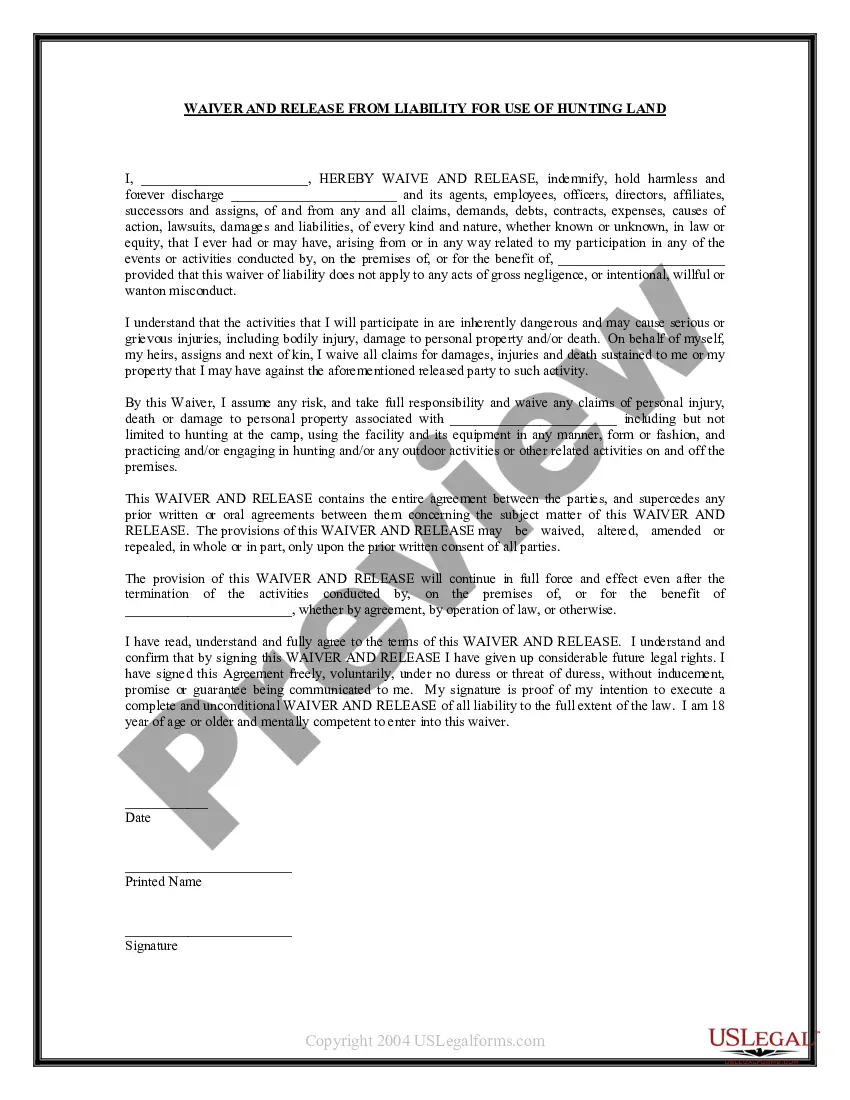
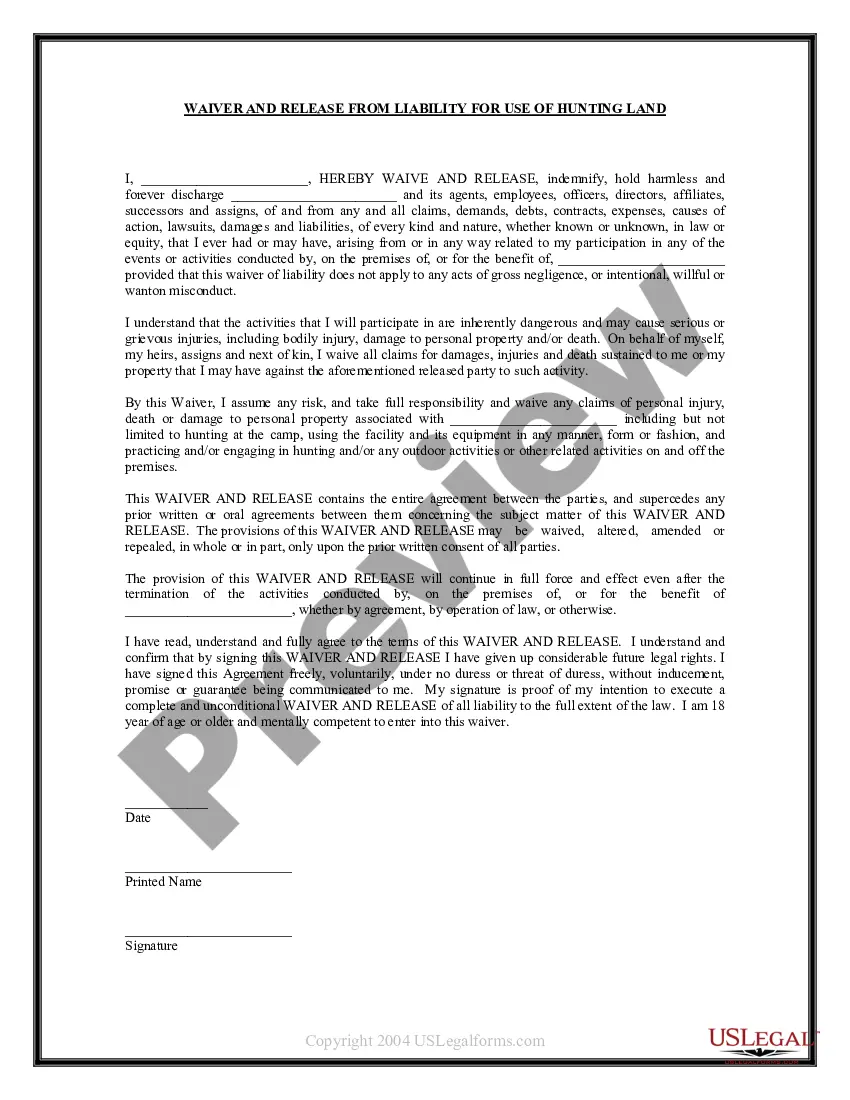
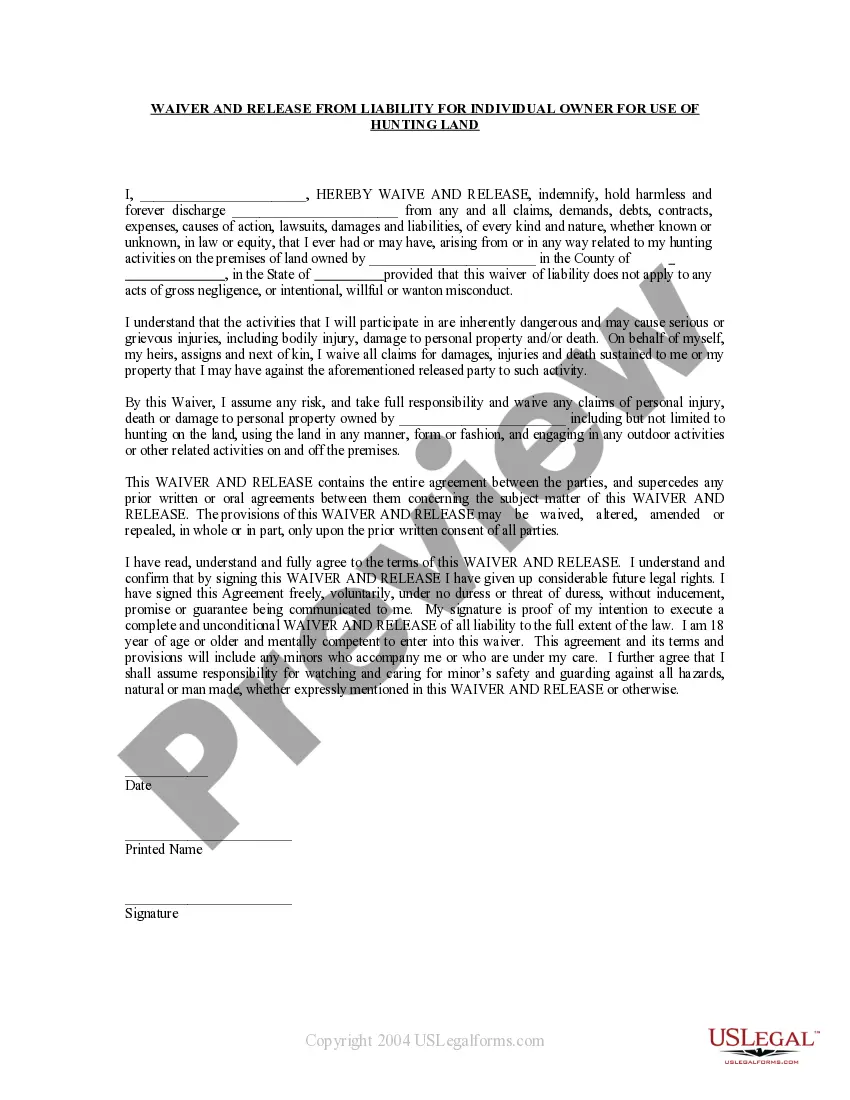
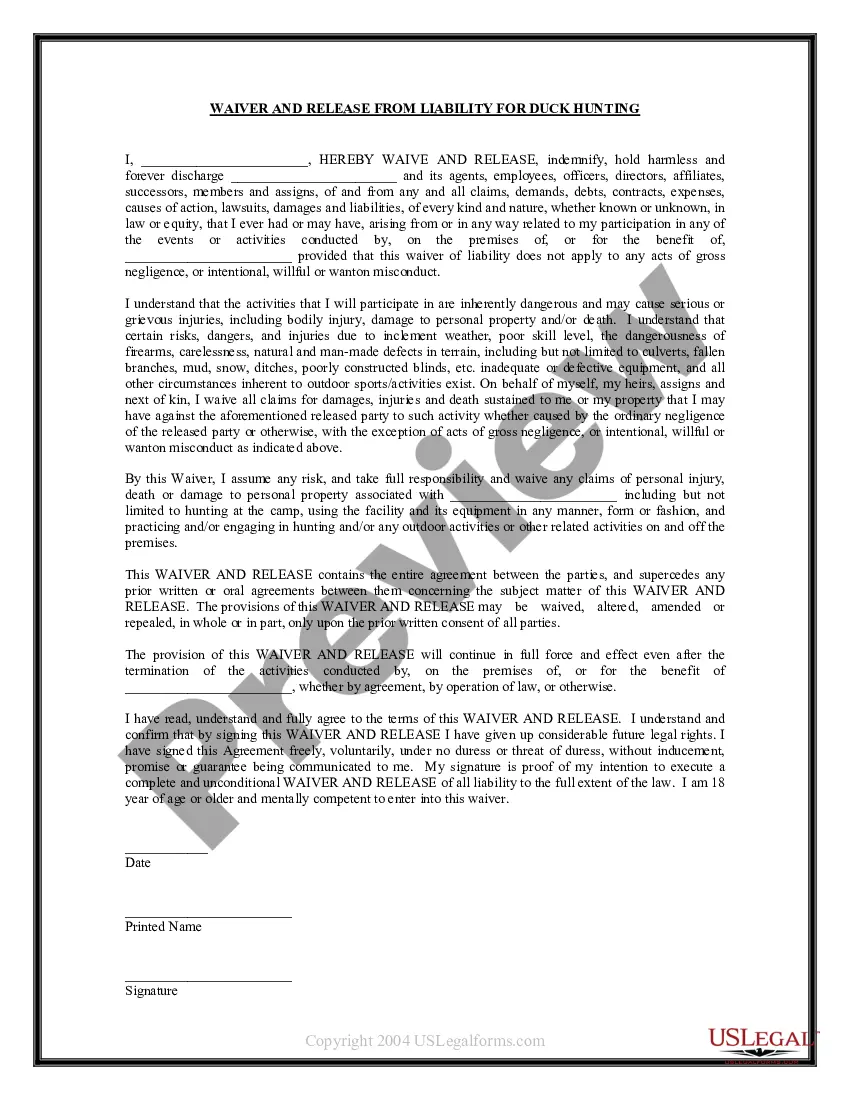
The Release of Liability Form for Hunting is a legal document that protects hunting organizers and property owners from claims related to injuries or damages that may occur during a hunting event. By signing this form, individuals acknowledge the risks associated with hunting and agree to waive their rights to hold the organizers or property owners responsible in case of an incident, making it a crucial tool for ensuring safety and legal clarity in hunting activities.
What’s included in this form
- Identification of parties involved, including releasor (the individual releasing liability) and releasee (the entity being released from liability).
- A clear description of the event or activity related to hunting for which liability is being released.
- Provisions detailing that the release applies to present and future claims related to injuries or damages.
- Statement affirming that the releasor understands the rights they are giving up by signing the form.
- Signature, printed name, and date for the releasor to formally complete the document.
When to use this form
This form should be used prior to participating in any hunting activities. It is particularly important for hunting clubs, event coordinators, or landowners who want to ensure that all participants acknowledge the risks associated with hunting and agree not to hold them liable for any potential injuries or damages that may occur. Utilizing this release helps prevent potential legal disputes and protects all parties involved.
Who should use this form
- Individuals participating in hunting activities who want to protect themselves legally.
- Hunting event organizers or club managers seeking to safeguard against liability claims.
- Landowners who allow hunting on their property, ensuring participants do not hold them accountable for mishaps.
- Any organization facilitating hunting events that wish to maintain a legal record of participant acknowledgment of risk.
Completing this form step by step
- Identify yourself as the releasor by filling in your name in the designated space.
- Complete the name of the releasee, which may include the organization or property owner.
- Describe the specific hunting event or conditions under which the release is applicable.
- Sign and date the form to confirm your understanding and acceptance of the liability waiver.
- Print your name legibly for clarity in documentation.
Does this form need to be notarized?
This form does not typically require notarization unless specified by local law. Participants should check local regulations to determine if notarization is necessary for their specific situation.
Get your form ready online
Our built-in tools help you complete, sign, share, and store your documents in one place.
Make edits, fill in missing information, and update formatting in US Legal Forms—just like you would in MS Word.
Download a copy, print it, send it by email, or mail it via USPS—whatever works best for your next step.
Sign and collect signatures with our SignNow integration. Send to multiple recipients, set reminders, and more. Go Premium to unlock E-Sign.
If this form requires notarization, complete it online through a secure video call—no need to meet a notary in person or wait for an appointment.
We protect your documents and personal data by following strict security and privacy standards.

Make edits, fill in missing information, and update formatting in US Legal Forms—just like you would in MS Word.

Download a copy, print it, send it by email, or mail it via USPS—whatever works best for your next step.

Sign and collect signatures with our SignNow integration. Send to multiple recipients, set reminders, and more. Go Premium to unlock E-Sign.

If this form requires notarization, complete it online through a secure video call—no need to meet a notary in person or wait for an appointment.

We protect your documents and personal data by following strict security and privacy standards.
Common mistakes
- Failing to accurately describe the event or activity related to the release.
- Not signing the form or forgetting to date it.
- Using outdated versions of the form that may not comply with current legal standards.
- Assuming verbal agreements substitute for written releases.
Why complete this form online
- Convenience of instant download for immediate use without the need for physical paperwork.
- Editability allows for customization based on specific hunting circumstances.
- Access to legally vetted templates ensures compliance with up-to-date legal standards.
- Simplifies the process of gathering signatures through digital means.
Legal use & context
- The release serves as a legal defense for organizers in case of claims related to hunting injuries.
- It is enforceable as long as it is clear, unambiguous, and signed voluntarily by competent individuals.
- Local courts may scrutinize the specificity and clarity of the release when evaluating its enforceability.
Key takeaways
- The Release of Liability Form for Hunting is essential for protecting hunting organizers and property owners from legal claims.
- Participants must fully understand their rights and the risks involved before signing.
- Accuracy in completing the form is crucial for its legal validity.
Looking for another form?
Form popularity
FAQ
Get help. Writing a waiver should not be complicated. Use the correct structure. Proper formatting. Include a subject line. Include a caution! Talk about the activity risks. Do not forget an assumption of risk. Hold harmless.
Purchase/Lease a Plot of Land. The first step to forming your very own hunting club is purchasing or leasing a piece of property if you do not already have one. Decide on the Members. Organize an Initial Meeting. Treat the Hunting Club Like a Business. Get An Insurance Policy.
Greeting and Introduction. After a greeting that uses the landowner's name, explain who you are and where you're from in the first paragraph. Mention Bowhunting, Make Your Ask. Agree to Follow Rules. State Your Intentions. Offer to Give Back. Share Contact Information. Next Steps.
Get help. Writing a waiver should not be complicated. Use the correct structure. Proper formatting. Include a subject line. Include a caution! Talk about the activity risks. Do not forget an assumption of risk. Hold harmless.
A hunting lease is an agreement between you (the lessor) and hunters or anglers (the lessees) that allows them to visit and hunt on your land for a specified time period. Your lessees pay you per acre or per lessee for their hunting experience.
A Release of Liability, or 'Hold Harmless Agreement', is a legal document that indemnifies an individual or business entity from legal and/or financial responsibility.If the release is being signed after the event took place, such as a car accident, the releasor may be paid money to sign such an agreement.
Limit the agreement to the people and lands involved. State the price of the lease and the kind(s) of animal(s) the lessee may hunt. Describe the land to be leased. Prevent the lessee(s) from subleasing the property. Clearly state which rights are included in the lease.