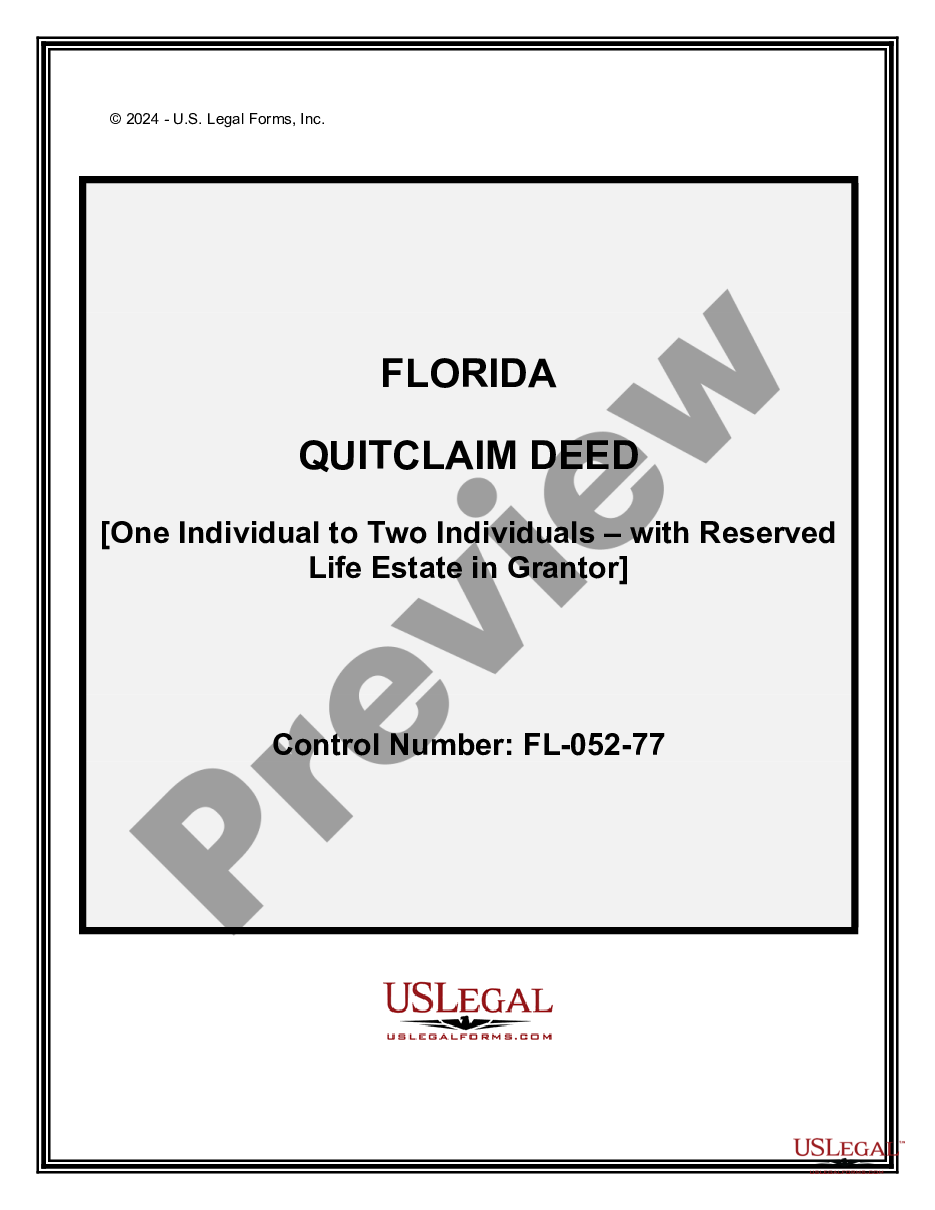
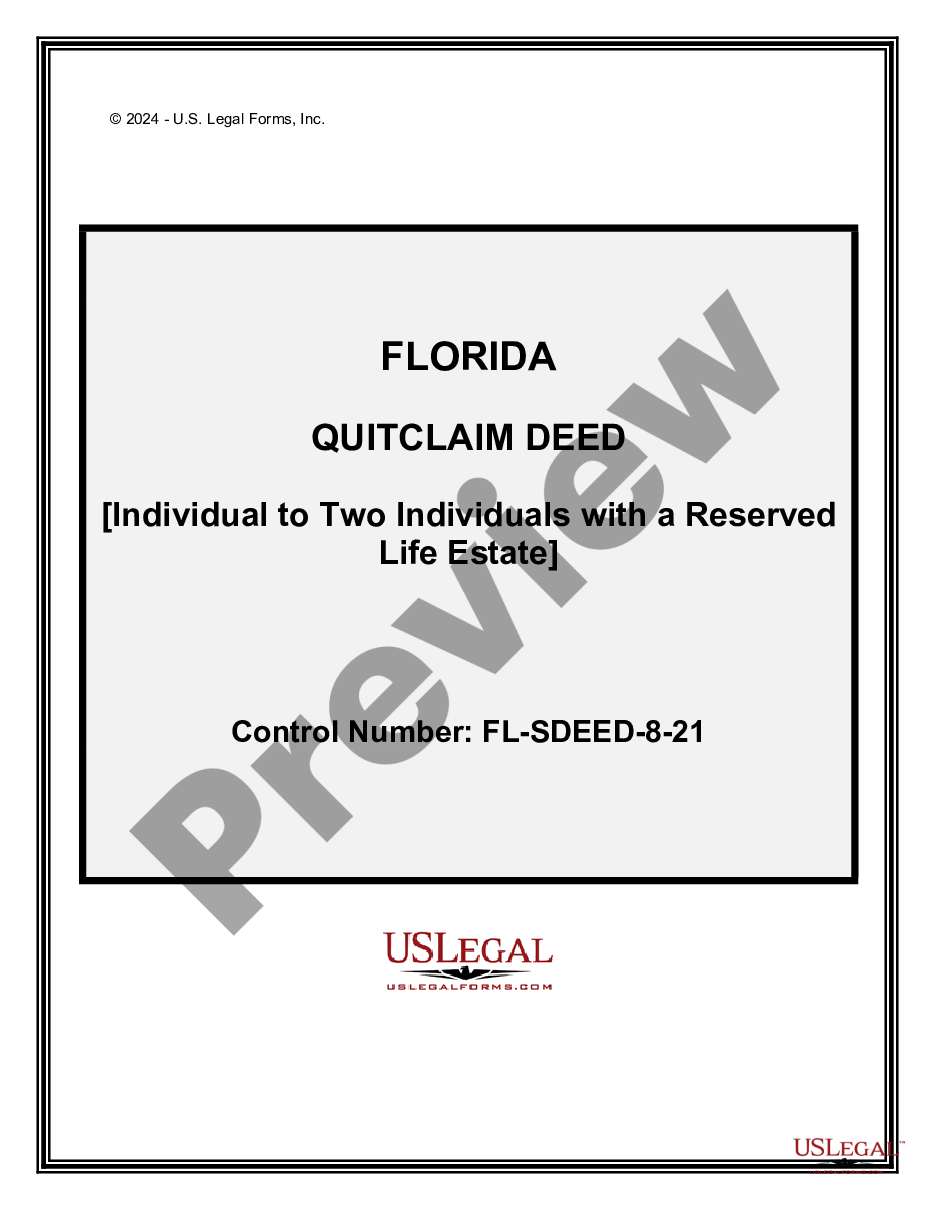
Florida Quitclaim Deed - One Individual to Two Individuals with Grantor Retaining a Life Estate
What this document covers
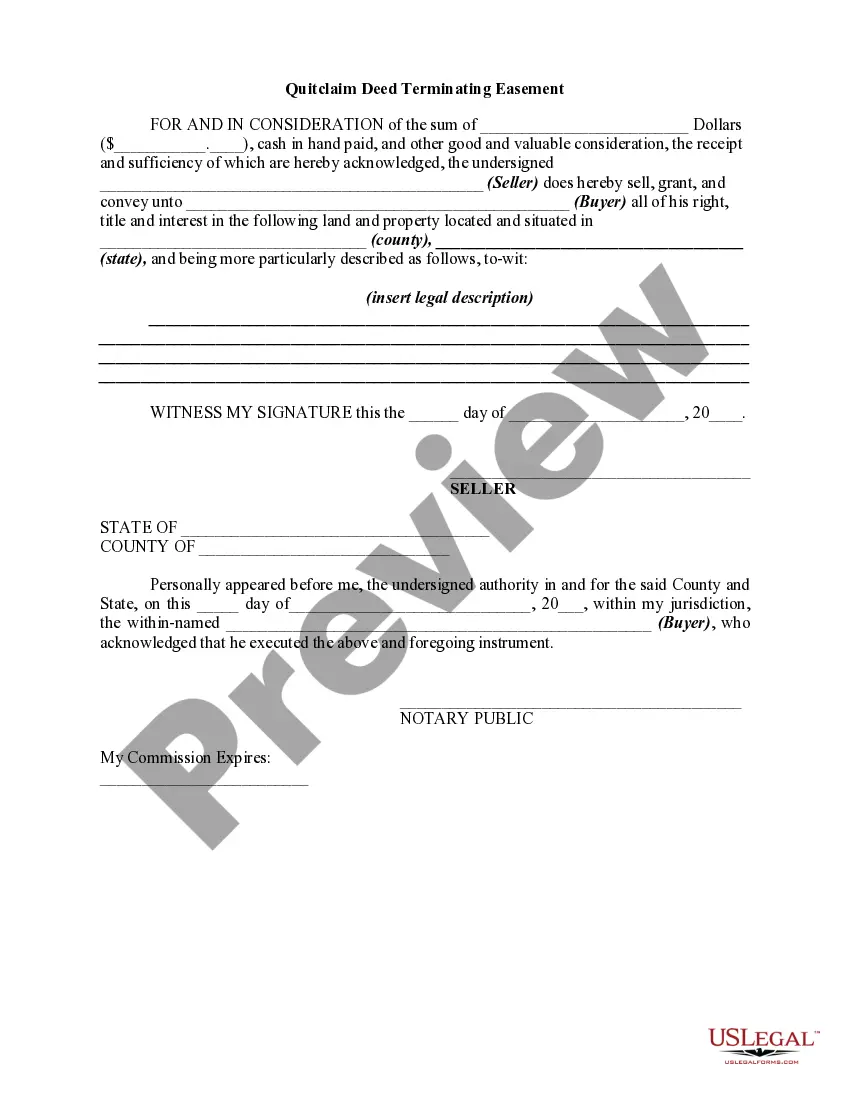
This Quitclaim Deed allows an individual (the Grantor) to transfer property ownership to two individuals (the Grantees) while retaining a life estate. This means that the Grantor maintains the right to live on or use the property for the rest of their life. The Grantees will hold the property as tenants in common, joint tenants with right of survivorship, or as tenants by the entirety. This deed complies with all applicable state laws, ensuring a smooth transfer of property ownership.
Key parts of this document
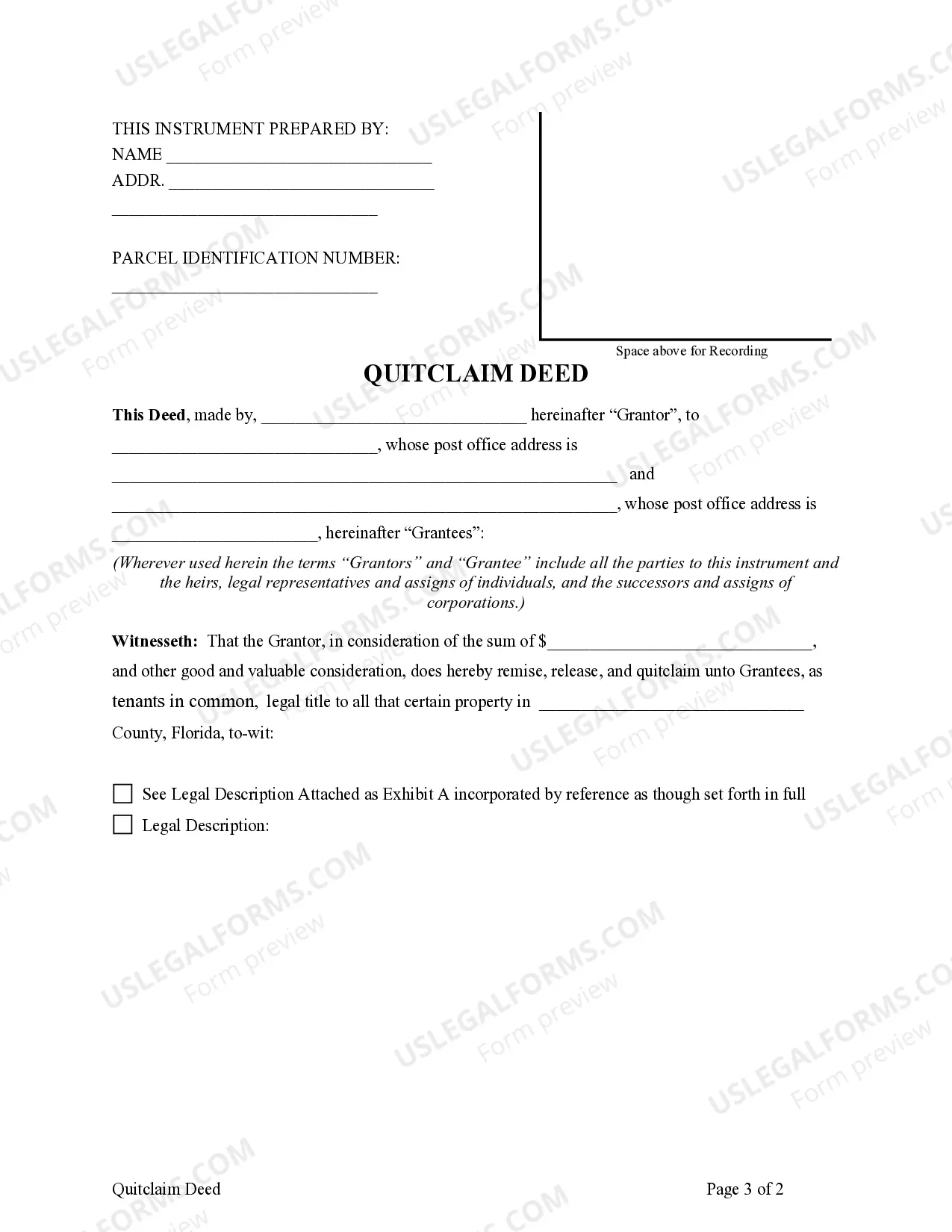
- Details of the Grantor and Grantees: Information about the individual transferring the property and the individuals receiving it.
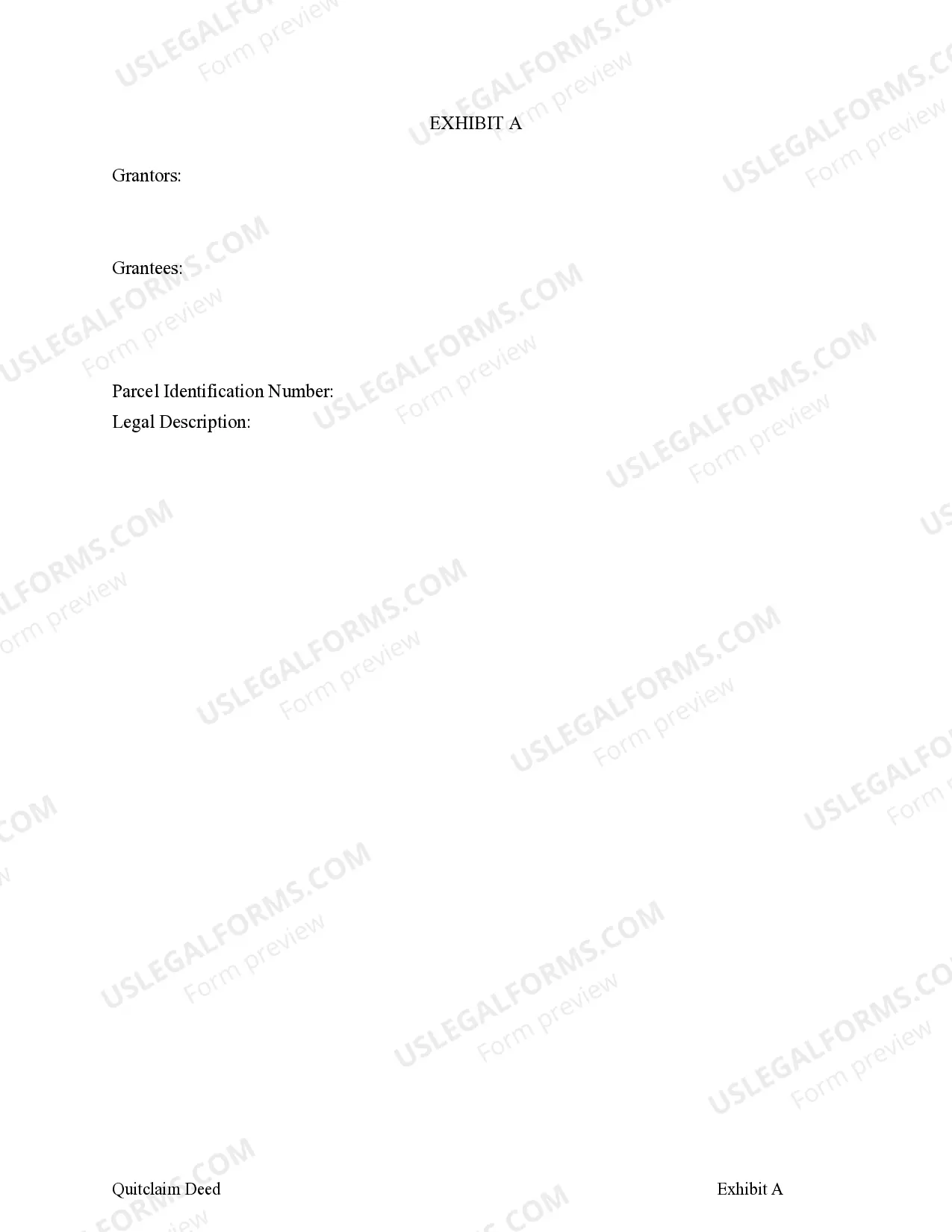
- Description of the property: Specific identification of the property being conveyed.
- Retention of a life estate: Clauses outlining the rights of the Grantor to use the property for their lifetime.
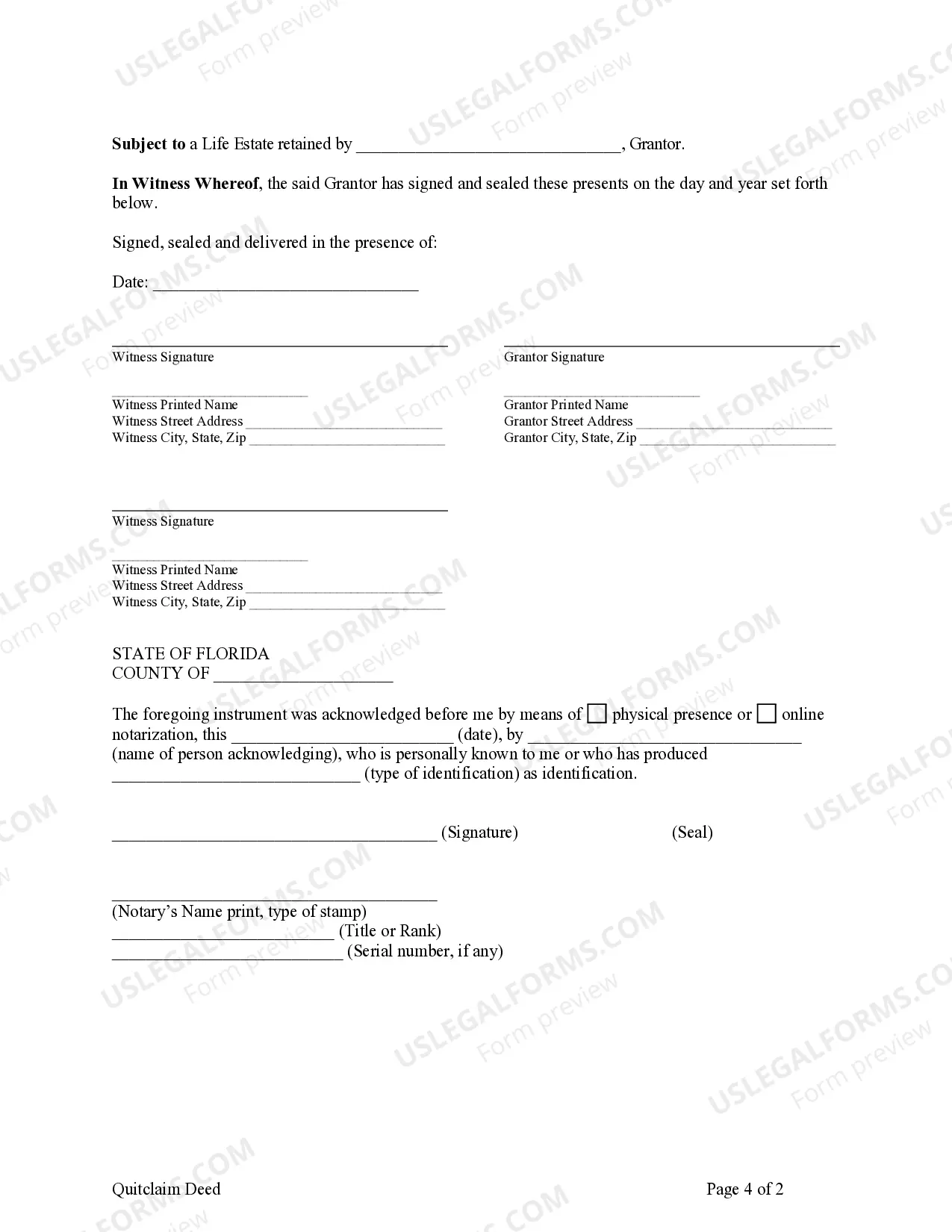
- Signatures and notarization: Requirements for the Grantor's signature and the involvement of a notary public for validation.
- Consideration: The monetary or other forms of value exchanged for the property transfer.

When this form is needed
This form is useful in situations where an individual wants to transfer property to multiple parties while still retaining the right to live on or use the property. This scenario often arises in family situations, such as when a parent wants to pass property to children while maintaining their residence there until death. It is also beneficial in estate planning, allowing for a smoother transition of property ownership upon the Grantor's passing.
Intended users of this form
- Individuals transferring property to two or more persons.
- Grantors wishing to retain a life estate in the property.
- Families involved in estate planning to manage property distribution.
- Anyone needing a clear legal document for property transfer in compliance with state law.
Steps to complete this form
- Identify the parties: Fill in the names of the Grantor and the Grantees.
- Specify the property: Clearly describe the property being transferred, including its legal description.
- Enter consideration: State the monetary value or other consideration for the property transfer.
- Sign the document: The Grantor must sign the deed in the presence of a notary public.
- Have the form notarized: Ensure the notary public completes their section to validate the deed.
Notarization requirements for this form
This form needs to be notarized to ensure legal validity. US Legal Forms provides secure online notarization powered by Notarize, allowing you to complete the process through a verified video call, available anytime.
Get your form ready online
Our built-in tools help you complete, sign, share, and store your documents in one place.
Make edits, fill in missing information, and update formatting in US Legal Forms—just like you would in MS Word.
Download a copy, print it, send it by email, or mail it via USPS—whatever works best for your next step.
Sign and collect signatures with our SignNow integration. Send to multiple recipients, set reminders, and more. Go Premium to unlock E-Sign.
If this form requires notarization, complete it online through a secure video call—no need to meet a notary in person or wait for an appointment.
We protect your documents and personal data by following strict security and privacy standards.

Make edits, fill in missing information, and update formatting in US Legal Forms—just like you would in MS Word.

Download a copy, print it, send it by email, or mail it via USPS—whatever works best for your next step.

Sign and collect signatures with our SignNow integration. Send to multiple recipients, set reminders, and more. Go Premium to unlock E-Sign.

If this form requires notarization, complete it online through a secure video call—no need to meet a notary in person or wait for an appointment.

We protect your documents and personal data by following strict security and privacy standards.
Mistakes to watch out for
- Failing to include a complete legal description of the property.
- Not having the document notarized, which can invalidate the transfer.
- Leaving out the names or signatures of the Grantees.
- Using unclear or vague language in the retention of life estate clause.
Benefits of completing this form online
- Convenience: Complete the form from the comfort of your home without needing to visit a lawyer's office.
- Editability: Easily update and customize the document as needed before printing.
- Reliability: Access legally compliant forms prepared by licensed attorneys to ensure validity.
Looking for another form?
Form popularity
FAQ
Yes, you can sell a property with a life estate in Florida, but the process involves specific legal considerations. The life tenant holds the right to sell the interests they have, but they typically require the consent of remaindermen. It is wise to consult with uslegalforms or a legal professional to navigate this process smoothly if you are dealing with the Florida Quitclaim Deed - One Individual to Two Individuals with Grantor Retaining a Life Estate.
Yes, in Florida, a ladybird deed is also referred to as an enhanced life estate deed. This unique type of deed allows the grantor to retain control over the property during their lifetime while ensuring a straightforward transfer to heirs. This feature makes it very effective for those looking to utilize the Florida Quitclaim Deed - One Individual to Two Individuals with Grantor Retaining a Life Estate.
A life estate deed is not categorized as a quitclaim deed, despite some overlapping functions regarding property ownership. A life estate deed allows one to live in and use a property until death, after which it transfers to named beneficiaries. In contrast, a quitclaim deed simply transfers any interest the grantor has in the property without guarantees, making each deed unique in its application.
While it is not strictly necessary to hire a lawyer to file a quitclaim deed in Florida, it is often advisable. A lawyer can help ensure that your document meets legal requirements and protects your interests, particularly when dealing with the complexities of the Florida Quitclaim Deed - One Individual to Two Individuals with Grantor Retaining a Life Estate. Websites like uslegalforms can provide valuable resources and templates as well.
Yes, a Florida Enhanced life estate deed is often considered a type of ladybird deed or a quitclaim deed with specific enhancements. This deed allows the grantor to continue living in the property while ensuring that it automatically transfers to beneficiaries upon death. This seamless transition eliminates the need for probate, making it a favorable choice for those using the Florida Quitclaim Deed - One Individual to Two Individuals with Grantor Retaining a Life Estate.
While both a life estate deed and a ladybird deed involve retaining certain rights during the grantor's lifetime, they function differently. A life estate deed limits the owner's authority, usually requiring the permission of remaindermen for any transactions. On the other hand, a ladybird deed allows the grantor to retain full control and flexibility, which is not typically present in a life estate deed.
A ladybird deed and a quitclaim deed are not the same, although they share some similarities. The Florida Quitclaim Deed - One Individual to Two Individuals with Grantor Retaining a Life Estate allows for the transfer of property without warranting title. In contrast, a ladybird deed provides the benefit of retaining ownership rights during the grantor's lifetime, allowing for a smooth transfer to beneficiaries upon death.
To fill out a Florida quit claim deed, start by capturing all required information, such as the grantor’s details, the recipients’ details, and specific property information. Ensure you use the correct format and include legal language typically found in a Florida Quitclaim Deed - One Individual to Two Individuals with Grantor Retaining a Life Estate. For ease, consider utilizing US Legal Forms for templates and step-by-step instructions to guide you through the process.
In a life estate arrangement, the individual holding the life estate retains the right to use and benefit from the property for their lifetime. In the case of a Florida Quitclaim Deed - One Individual to Two Individuals with Grantor Retaining a Life Estate, after the grantor passes away, ownership automatically transfers to the two individuals named in the deed. This plan provides clarity on property rights and helps avoid complications down the line.
Yes, you can prepare your own quit claim deed in Florida. However, it is essential to ensure that you understand the legal requirements for the Florida Quitclaim Deed - One Individual to Two Individuals with Grantor Retaining a Life Estate. For added confidence, consider using platforms like US Legal Forms, which offer templates and guidance to help you create an accurate deed.