Florida Quitclaim Deed from one Individual to Two Individuals as Joint Tenants or Tenants in Common Grantor Reserves Life Estate
About this form
This Quitclaim Deed is a legal document that allows an individual (the grantor) to transfer property ownership to two individuals (the grantees) as either joint tenants or tenants in common. This form is useful when the grantor wishes to give away full interest in the property while reserving a life estate, meaning they can continue to live in the property until they pass away. It differs from other deeds as it does not guarantee that the title is free of defects, making it essential to understand your rights and responsibilities ahead of the transfer.
What’s included in this form
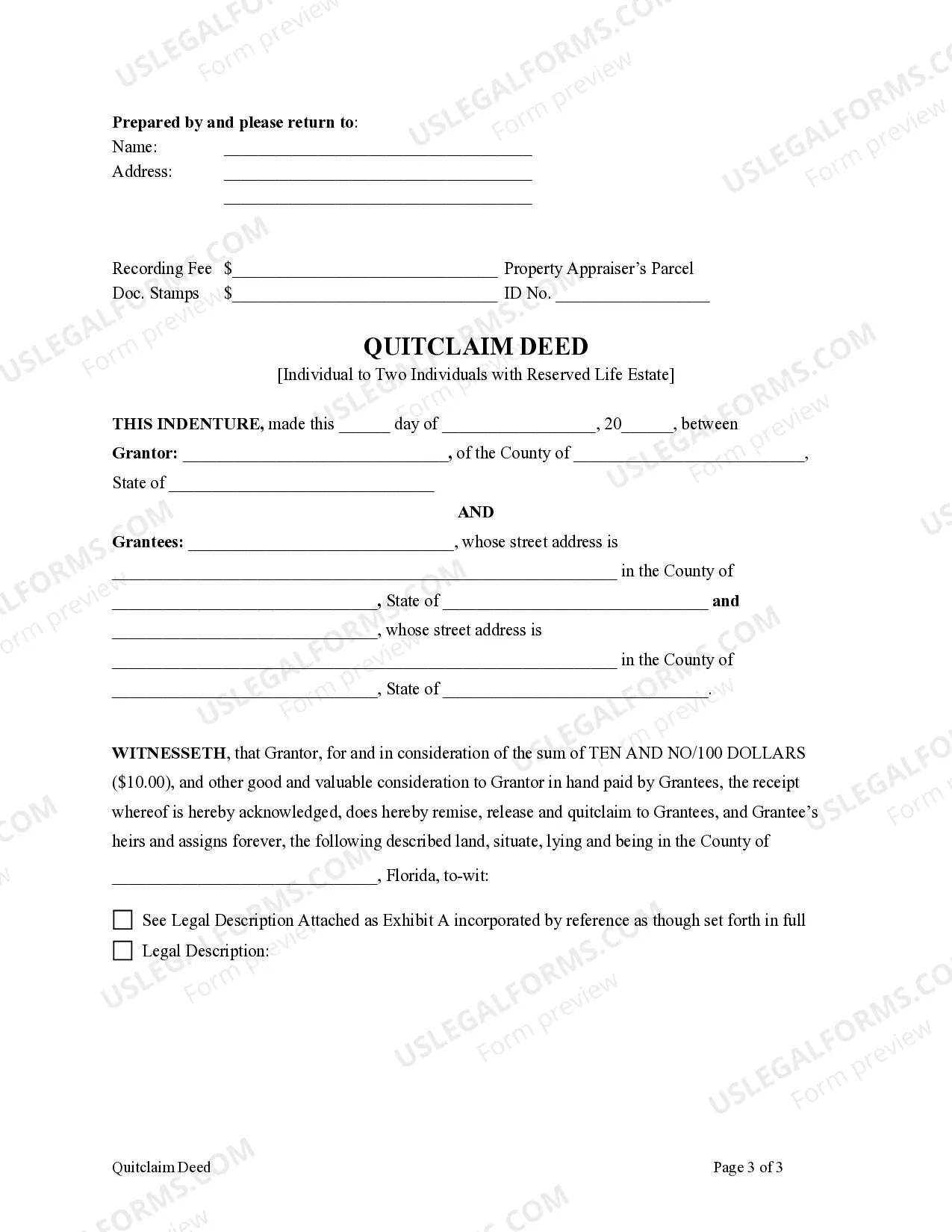
- Identification of the grantor and grantees
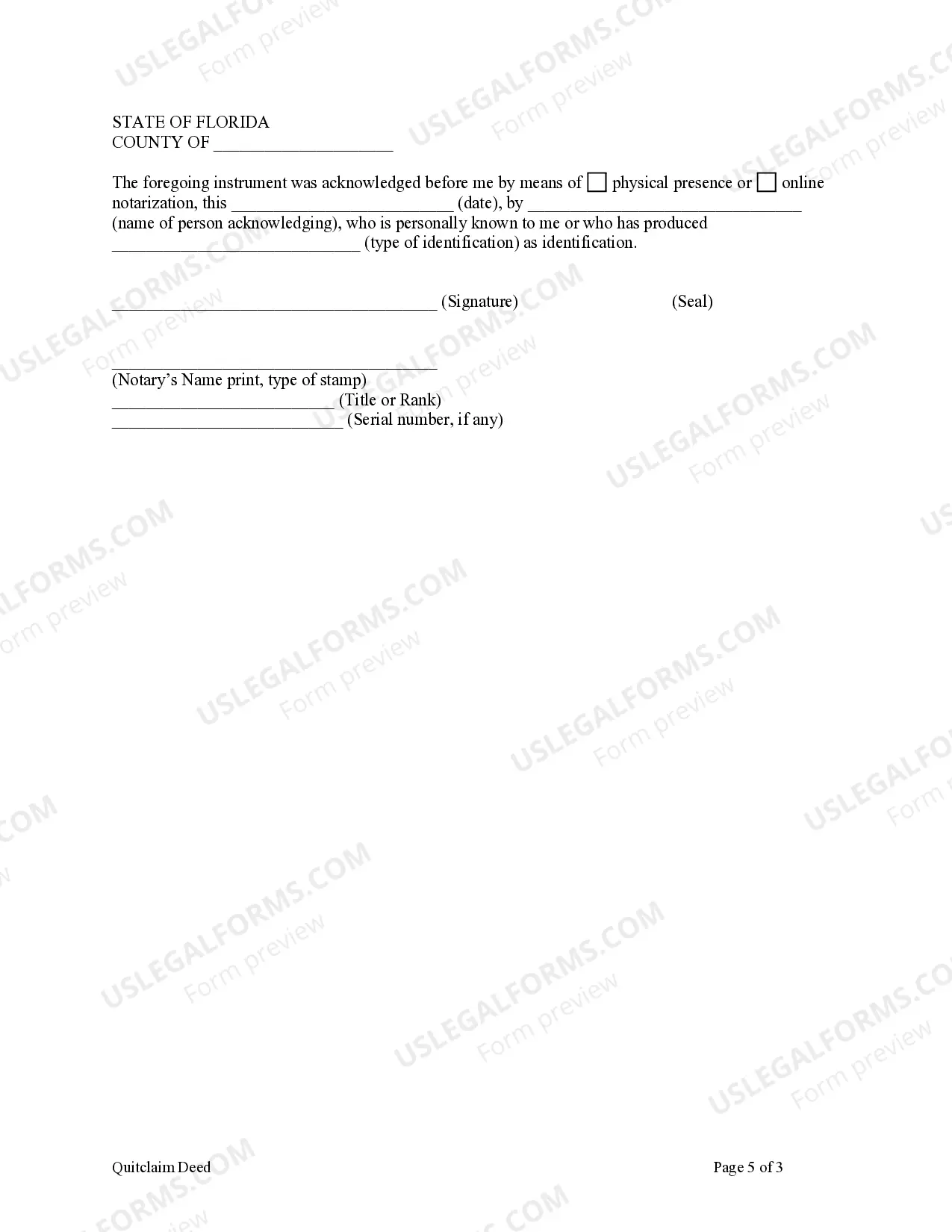
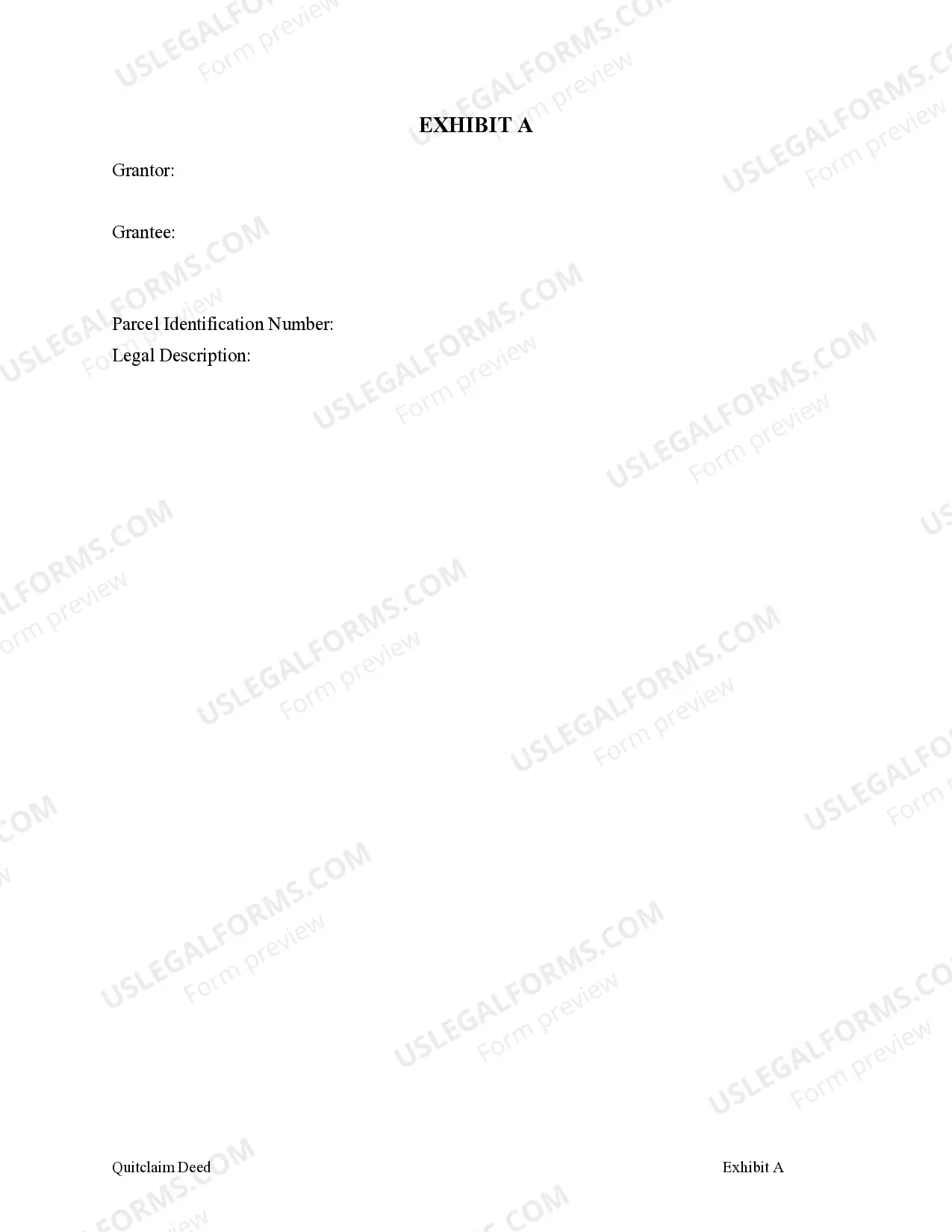
- Description of the property being transferred
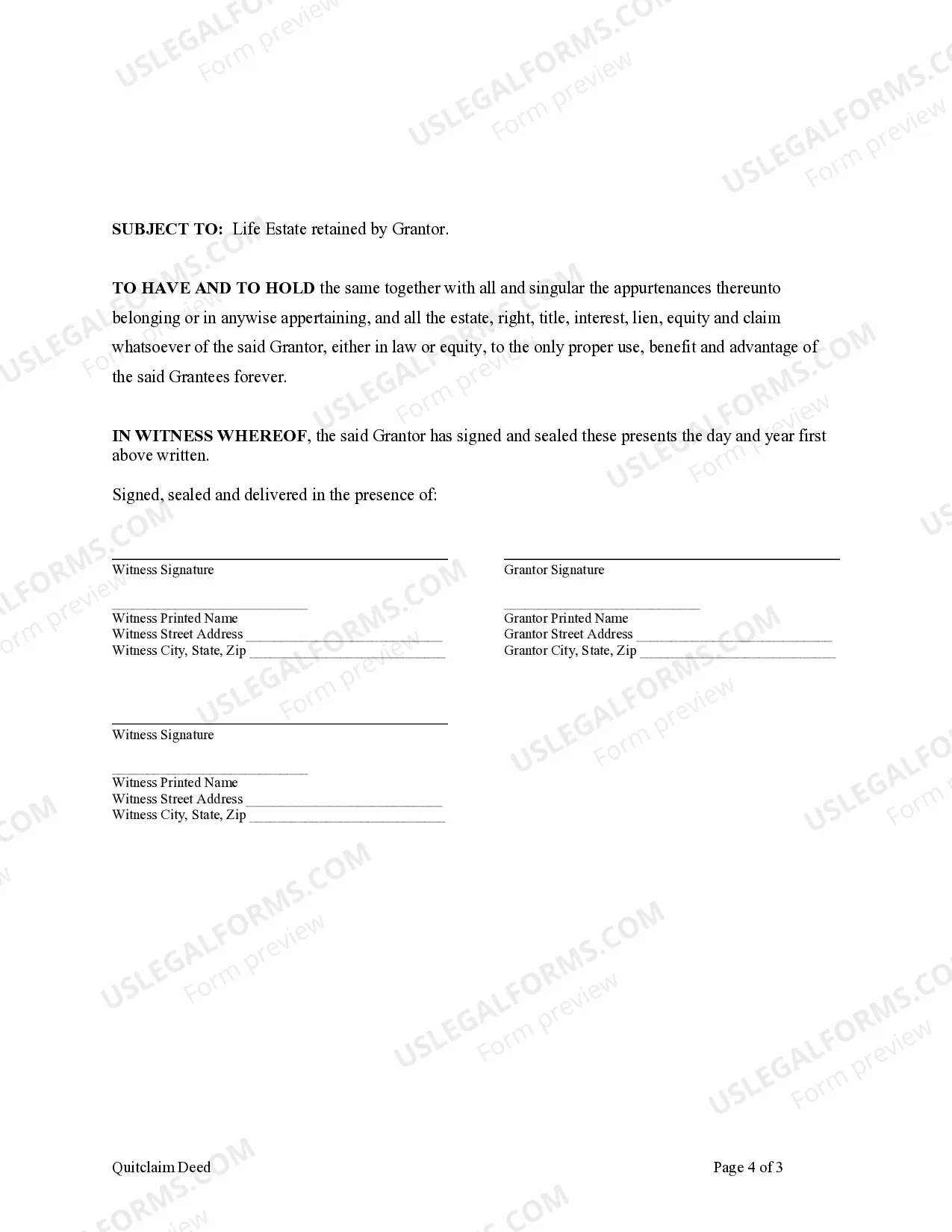
- Declaration of the life estate reserved by the grantor
- Statement indicating how the grantees will hold title (as joint tenants or tenants in common)
- Signatures of the grantor and witnesses



When to use this document
This form should be used when an individual wants to transfer property to two other individuals while retaining the right to live in the property for the duration of their life. Common scenarios include passing family property to heirs, transferring property as part of an estate plan, or facilitating ownership changes in business partnerships.
Intended users of this form
This form is intended for:
- Individuals looking to transfer their property to family members or friends
- Co-owners who wish to formalize their joint ownership rights
- Individuals wishing to maintain a life estate while changing ownership arrangements
How to complete this form
- Identify the grantor and the grantees by entering their legal names.
- Describe the property accurately, including its address and legal description.
- Specify the type of ownership the grantees will hold: joint tenants or tenants in common.
- Clearly state that the grantor reserves a life estate.
- Ensure all required signatures are collected in the presence of witnesses.
Notarization requirements for this form
Notarization is required for this form to take effect. Our online notarization service, powered by Notarize, lets you verify and sign documents remotely through an encrypted video session, available 24/7.
Get your form ready online
Our built-in tools help you complete, sign, share, and store your documents in one place.
Make edits, fill in missing information, and update formatting in US Legal Forms—just like you would in MS Word.
Download a copy, print it, send it by email, or mail it via USPS—whatever works best for your next step.
Sign and collect signatures with our SignNow integration. Send to multiple recipients, set reminders, and more. Go Premium to unlock E-Sign.
If this form requires notarization, complete it online through a secure video call—no need to meet a notary in person or wait for an appointment.
We protect your documents and personal data by following strict security and privacy standards.

Make edits, fill in missing information, and update formatting in US Legal Forms—just like you would in MS Word.

Download a copy, print it, send it by email, or mail it via USPS—whatever works best for your next step.

Sign and collect signatures with our SignNow integration. Send to multiple recipients, set reminders, and more. Go Premium to unlock E-Sign.

If this form requires notarization, complete it online through a secure video call—no need to meet a notary in person or wait for an appointment.

We protect your documents and personal data by following strict security and privacy standards.
Avoid these common issues
- Not providing complete legal names of all parties involved.
- Failing to include a precise description of the property.
- Not specifying whether the grantees are joint tenants or tenants in common.
- Neglecting to sign the form in front of witnesses.
Advantages of online completion
- Convenient access allows you to complete the form from home.
- Edit and save your progress, avoiding mistakes.
- Instant availability ensures you have the necessary forms when you need them.
Looking for another form?
Form popularity
FAQ
Yes, a non-attorney can prepare a deed in Florida, including a Florida Quitclaim Deed from one Individual to Two Individuals as Joint Tenants or Tenants in Common Grantor Reserves Life Estate. While it is permissible, it is wise to use a platform like US Legal Forms to access accurate forms and instructions, ensuring you meet all the legal requirements without any complications.
You do not necessarily need a lawyer to file a Florida Quitclaim Deed from one Individual to Two Individuals as Joint Tenants or Tenants in Common Grantor Reserves Life Estate. While it is possible to handle the paperwork yourself, consulting a legal professional can help ensure everything is in order, especially if you are unsure about the complexities involved.
Yes, you can complete a Florida Quitclaim Deed from one Individual to Two Individuals as Joint Tenants or Tenants in Common Grantor Reserves Life Estate yourself. However, ensure you understand the legal requirements and implications before proceeding. Using a reliable resource, like US Legal Forms, can simplify the process, providing templates and guidance tailored to your situation.
To fill out a Florida quitclaim deed, you need to include the names and addresses of the grantor and grantee, a legal description of the property, and detail the type of ownership, whether joint tenants or tenants in common. It is crucial to specify any reservations, like a life estate for the grantor. For guidance, platforms like USLegalForms can provide templates and detailed instructions to ensure that your Florida Quitclaim Deed from one Individual to Two Individuals as Joint Tenants or Tenants in Common Grantor Reserves Life Estate is correctly filled out and legally binding.
A quitclaim deed with rights of survivorship in Florida allows joint tenants to automatically receive the deceased tenant's share of the property. This is important in a Florida Quitclaim Deed from one Individual to Two Individuals as Joint Tenants or Tenants in Common Grantor Reserves Life Estate, as it simplifies the transfer of ownership upon death. This type of arrangement ensures that the surviving owner retains full ownership without additional probate processes.
Yes, you can prepare your own quit claim deed in Florida. However, you should ensure that the document meets specific requirements to be valid and enforceable. Using a platform like USLegalForms can help you create a Florida Quitclaim Deed from one Individual to Two Individuals as Joint Tenants or Tenants in Common Grantor Reserves Life Estate that meets all legal standards, making the process easier for you.
When two or more individuals take title to real estate through the same instrument, it is known as joint tenancy. This concept is particularly relevant in the context of a Florida Quitclaim Deed from one Individual to Two Individuals as Joint Tenants or Tenants in Common Grantor Reserves Life Estate. Joint tenancy ensures that all tenants have equal rights to the property, and it also provides automatic transfer of ownership in case of a tenant's death.
The grantor on a deed is the individual who transfers ownership of the property. In the context of a Florida Quitclaim Deed from one Individual to Two Individuals as Joint Tenants or Tenants in Common Grantor Reserves Life Estate, the grantor holds the property while deciding to transfer it to the new owners. Understanding the role of the grantor is essential for anyone looking to engage in property transfer, as this person is responsible for signing the deed.
While hiring an attorney for a quitclaim deed in Florida is not legally required, it can be beneficial to ensure all aspects of the transfer are properly handled. An attorney can provide legal advice, help draft the deed, and ensure compliance with local laws. If you opt for a Florida Quitclaim Deed from one Individual to Two Individuals as Joint Tenants or Tenants in Common Grantor Reserves Life Estate, engaging with a legal expert can alleviate potential issues and streamline the process. Additionally, USLegalForms offers resources and templates that make the deed creation easier.
A quitclaim deed and a ladybird deed serve different purposes in property transfer. The quitclaim deed conveys ownership without warranties, making it straightforward but less secure. Conversely, a ladybird deed allows the grantor to retain control over the property during their lifetime while still facilitating transfer upon death. If you're considering a Florida Quitclaim Deed from one Individual to Two Individuals as Joint Tenants or Tenants in Common Grantor Reserves Life Estate, understanding these differences will help you choose the right option for your needs.