Florida Life Estate Release Deed
What is this form?
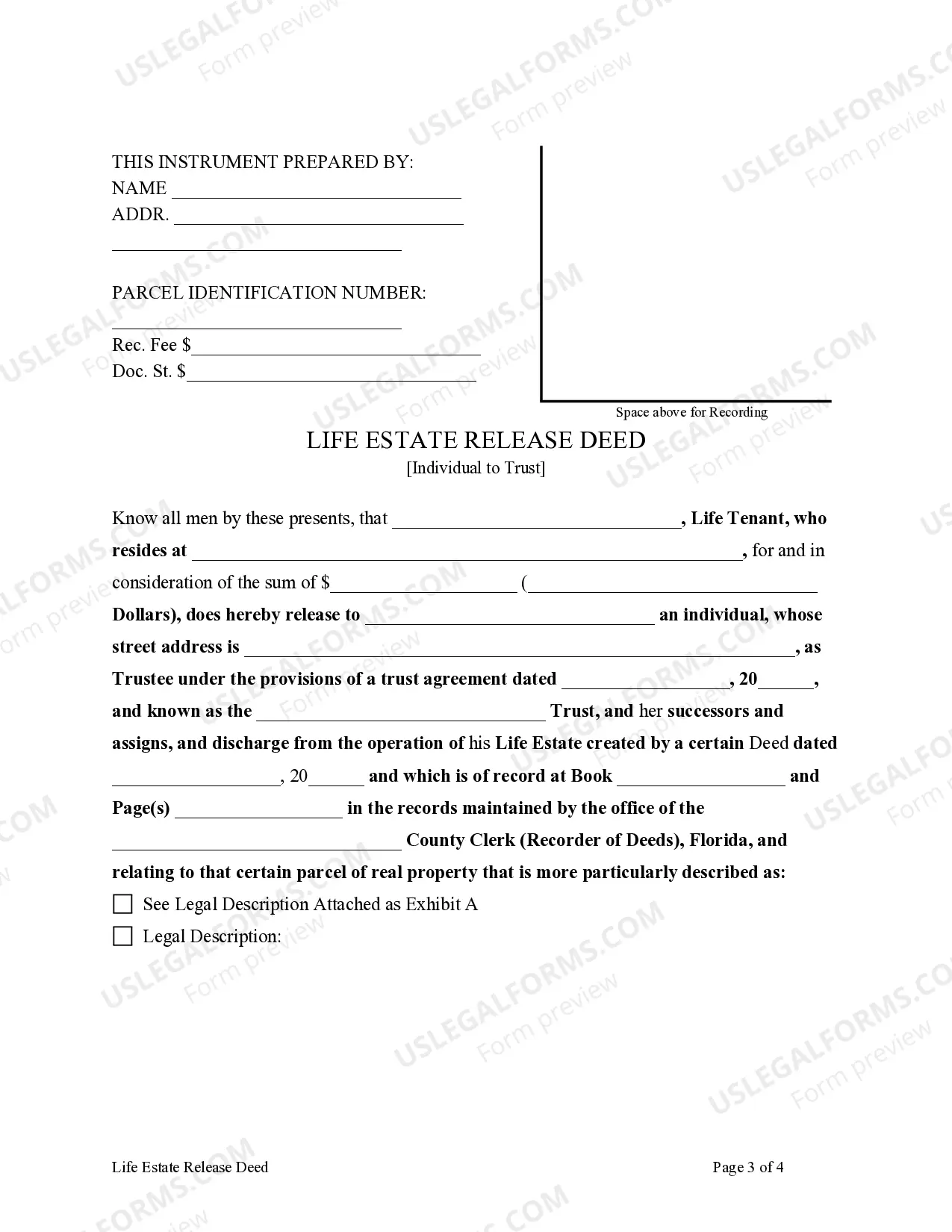
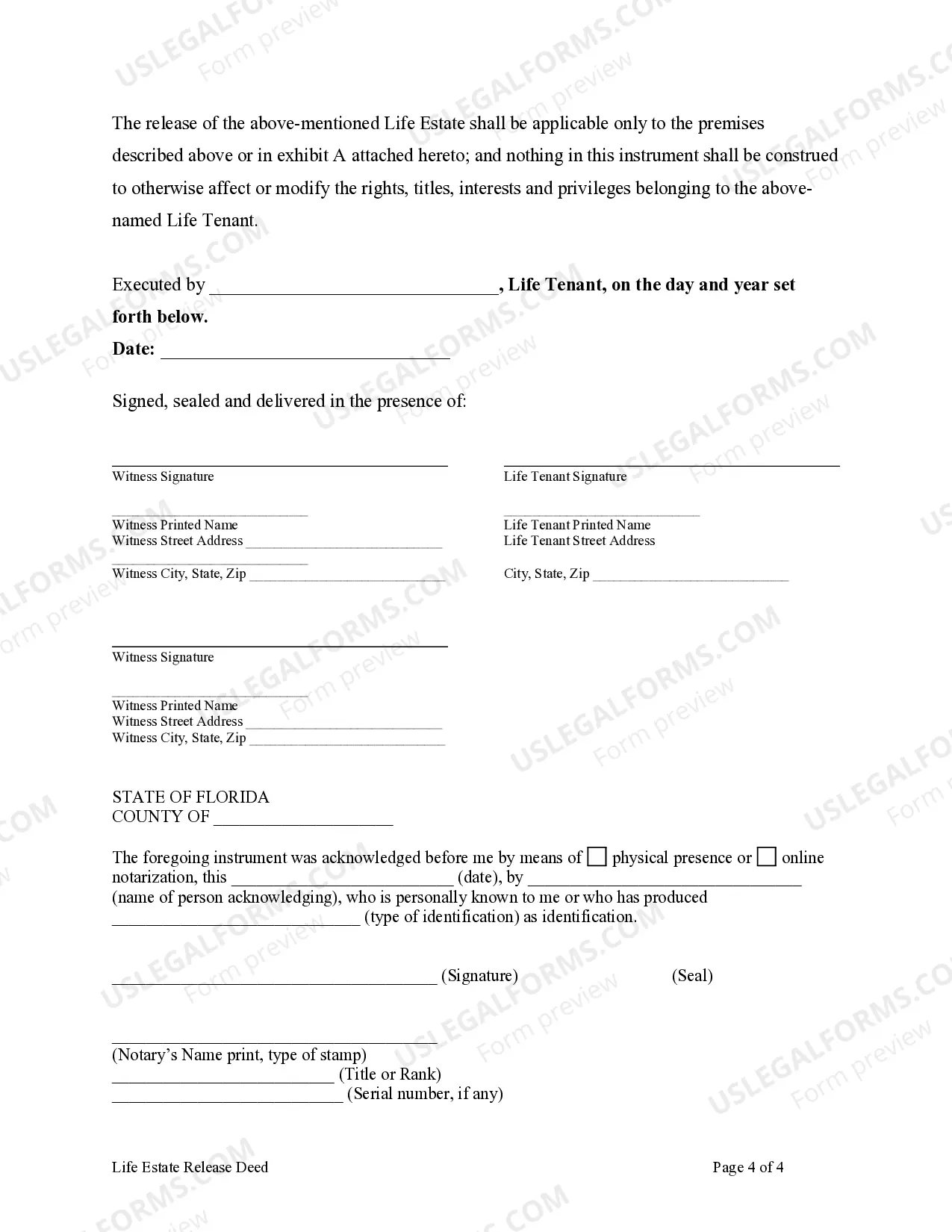
The Life Estate Release Deed is a legal document used when a grantor, who is a life tenant, transfers their life estate interest to a grantee, typically a trust. This form effectively releases the grantor's rights associated with the life estate, allowing the trust to take over the property management entirely. This document is essential for individuals looking to transfer their rights in a property while ensuring that their estate planning objectives are met. Unlike general deeds, the Life Estate Release Deed specifically caters to the unique situation of life tenants.
Form components explained
- Identification of the grantor and grantee.
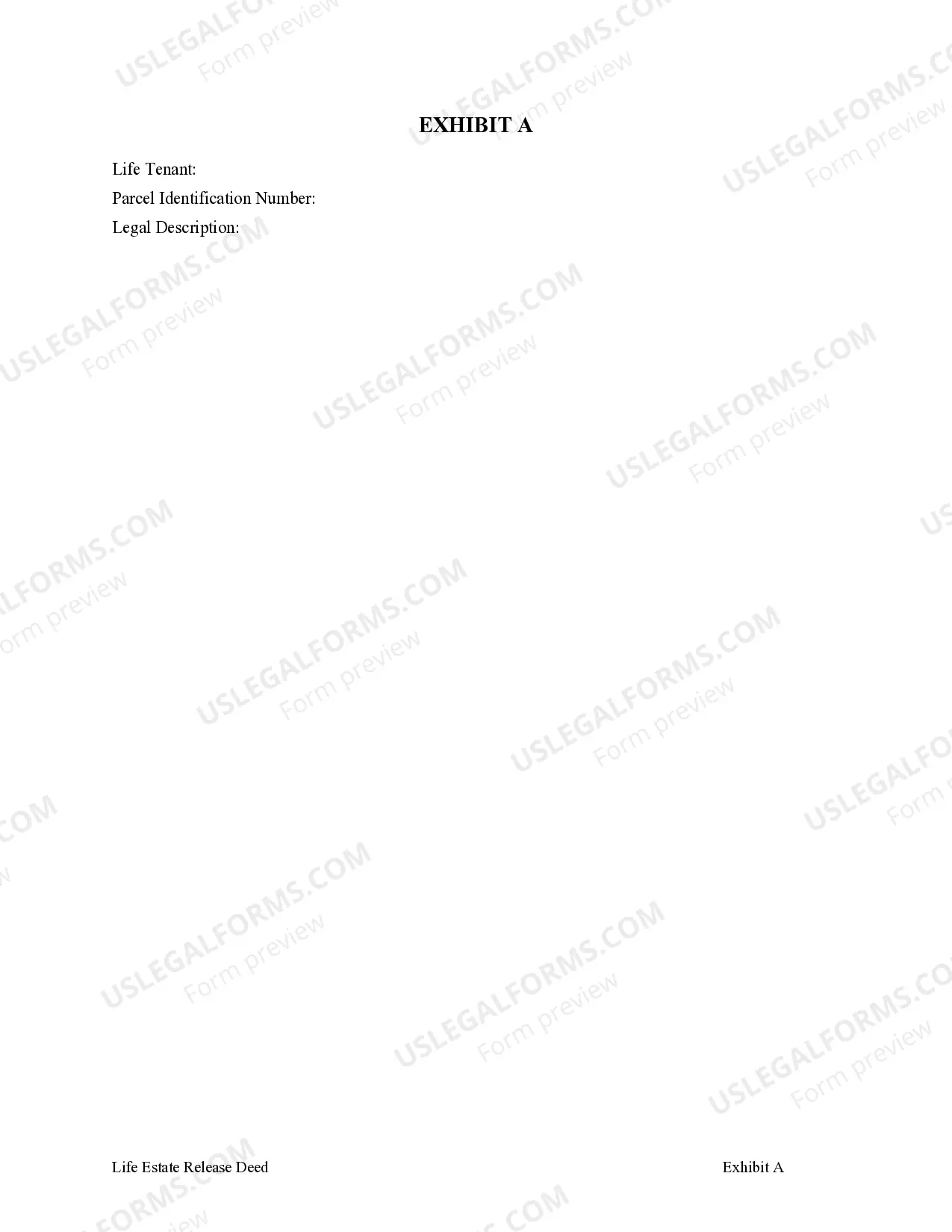
- Description of the property involved in the transfer.
- Statement confirming the release of the life estate interest.
- Signatures of the parties involved.
- Date of execution for the deed.

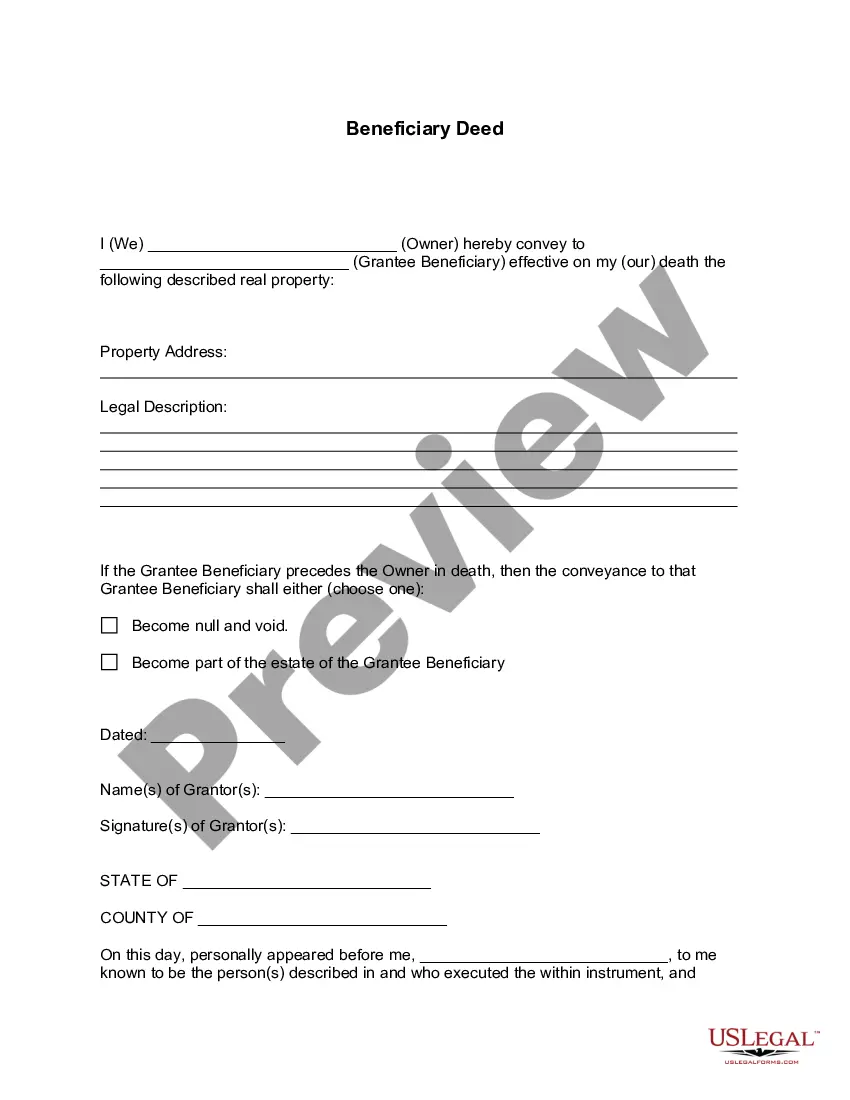
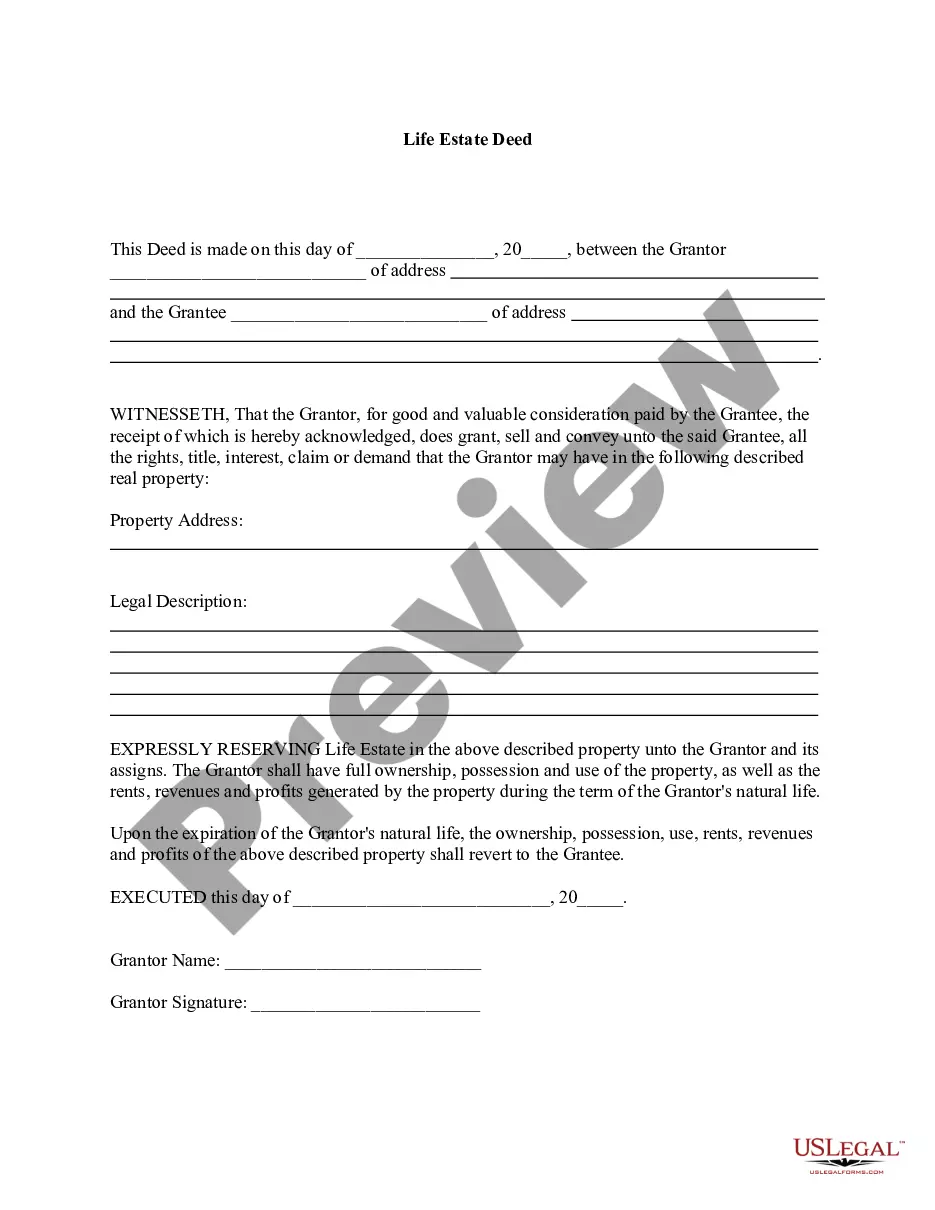
When to use this document
This form is commonly used in estate planning when a life tenant wishes to relinquish their life estate rights, often to facilitate management by a trust or to simplify future property transfers. It can be particularly useful in situations where the original owner of the property has passed away and the life tenant needs to formalize the transition of property rights to designated beneficiaries.
Who can use this document
This form is intended for:
- Life tenants who wish to transfer their life estate rights to a trust or another party.
- Trustees who are managing property that includes life estates.
- Individuals involved in estate planning and property transfer processes.
How to prepare this document
- Identify the parties involved: the grantor and grantee.
- Clearly describe the property being transferred, including its legal description.
- Input the date of execution to document when the transfer takes place.
- Ensure proper signatures are added by both the grantor and grantee.
- If required, record the deed with the appropriate state or county office.
Does this document require notarization?
This form does not typically require notarization unless specified by local law. However, we recommend confirming local requirements to ensure validity, as some jurisdictions may have specific regulations regarding property deeds.
Get your form ready online
Our built-in tools help you complete, sign, share, and store your documents in one place.
Make edits, fill in missing information, and update formatting in US Legal Forms—just like you would in MS Word.
Download a copy, print it, send it by email, or mail it via USPS—whatever works best for your next step.
Sign and collect signatures with our SignNow integration. Send to multiple recipients, set reminders, and more. Go Premium to unlock E-Sign.
If this form requires notarization, complete it online through a secure video call—no need to meet a notary in person or wait for an appointment.
We protect your documents and personal data by following strict security and privacy standards.

Make edits, fill in missing information, and update formatting in US Legal Forms—just like you would in MS Word.

Download a copy, print it, send it by email, or mail it via USPS—whatever works best for your next step.

Sign and collect signatures with our SignNow integration. Send to multiple recipients, set reminders, and more. Go Premium to unlock E-Sign.

If this form requires notarization, complete it online through a secure video call—no need to meet a notary in person or wait for an appointment.

We protect your documents and personal data by following strict security and privacy standards.
Common mistakes
- Failing to use correct legal descriptions of the property.
- Not having the document signed by both parties.
- Neglecting to date the form or not signing on the correct date.
- Forgetting to check state-specific recording requirements.
Why complete this form online
- Convenient access to legal documents at any time.
- Edit and customize the form to meet specific needs easily.
- Downloadable formats for both digital and print use.
- Assurance of compliance with state laws through professionally drafted forms.
Legal use & context
- This form is legally binding once properly completed and recorded.
- It is essential to ensure that all legal requirements are fulfilled to avoid disputes.
- Incorrectly completed forms may lead to future legal complications in property rights.
Quick recap
- The Life Estate Release Deed allows life tenants to transfer their rights to a grantee.
- It is crucial to complete the form accurately to ensure enforceability.
- Local laws may require special attention to valid execution and recording of the deed.
Looking for another form?
Form popularity
FAQ
Yes, Florida has a legal mechanism known as a life estate deed. This type of deed allows a person to retain rights to a property during their lifetime while designating a beneficiary to inherit the property upon their death. The Florida Life Estate Release Deed provides clarity on ownership and ensures that your wishes for property transfer are honored. Many people find this approach beneficial for estate planning.
A will generally cannot override a life estate deed. When you establish a life estate, the property automatically transfers to the designated beneficiaries after your death, regardless of what is mentioned in your will. This can lead to unintended outcomes if your will indicates different intentions for your property. To navigate these complexities, consider leveraging a Florida Life Estate Release Deed to clarify your property intentions ahead of time.
Removing someone from a life estate deed is possible, but it usually requires the consent of all parties involved. The process can involve creating a Florida Life Estate Release Deed, which serves to formalize the removal and clarify ownership. It's essential to consult with a legal expert to ensure you're following the required procedures while protecting everyone's interests. This way, you can simplify the transfer and management of the property.
A life estate can limit your flexibility in managing the property, as you cannot sell or mortgage it without the consent of the remainder beneficiaries. Additionally, after your passing, the property automatically transfers to the beneficiaries, which may not align with your original wishes. Moreover, unforeseen circumstances like creditor claims can complicate the situation. Understandably, using a Florida Life Estate Release Deed might be a preferable option to address these concerns.
There are several reasons for terminating a life estate, including the death of the life tenant, mutual agreement between the parties, or a Florida Life Estate Release Deed. Other circumstances may involve the life tenant's incapacity or a seller wanting to sell the property. Understanding these reasons can help you make informed decisions about your property management. For those looking for guidance, the US Legal Forms platform offers valuable resources for navigating these legal processes.
Yes, you can get out of a life estate deed using a Florida Life Estate Release Deed. This legal document allows the life tenant to relinquish their interest in the property, thereby transferring their rights to the remainderman. By completing this process, you can regain control over your property and eliminate the constraints that a life estate imposes. If you need assistance, consider using the US Legal Forms platform to create a Florida Life Estate Release Deed efficiently.
Filing a life estate deed involves preparing the appropriate documentation and recording it with your local county clerk. You'll need to include key information about the property and the parties involved in the deed. For a smoother process, consider using US Legal Forms, where you can find resources and templates to assist you in filing the Florida Life Estate Release Deed.
In Florida, a life estate deed allows a property owner to transfer ownership while retaining the right to use the property during their lifetime. Once the life tenant passes away, the property automatically transfers to the remainderman. This mechanism can help avoid probate, making it an efficient estate planning tool.
To file a life estate deed in Florida, you will need to prepare the deed, which includes specific language and information regarding the property and the parties involved. Once completed, you must submit the deed to the appropriate county clerk’s office for recording. Utilizing a platform like US Legal Forms can simplify this process by providing templates and guidance for filing.
Releasing a life estate typically involves executing a Florida Life Estate Release Deed, which allows the life tenant to relinquish their interest in the property. This process requires both the life tenant and the remainderman to agree to the release. It's essential to draft this document accurately to ensure that all parties understand their rights and obligations.