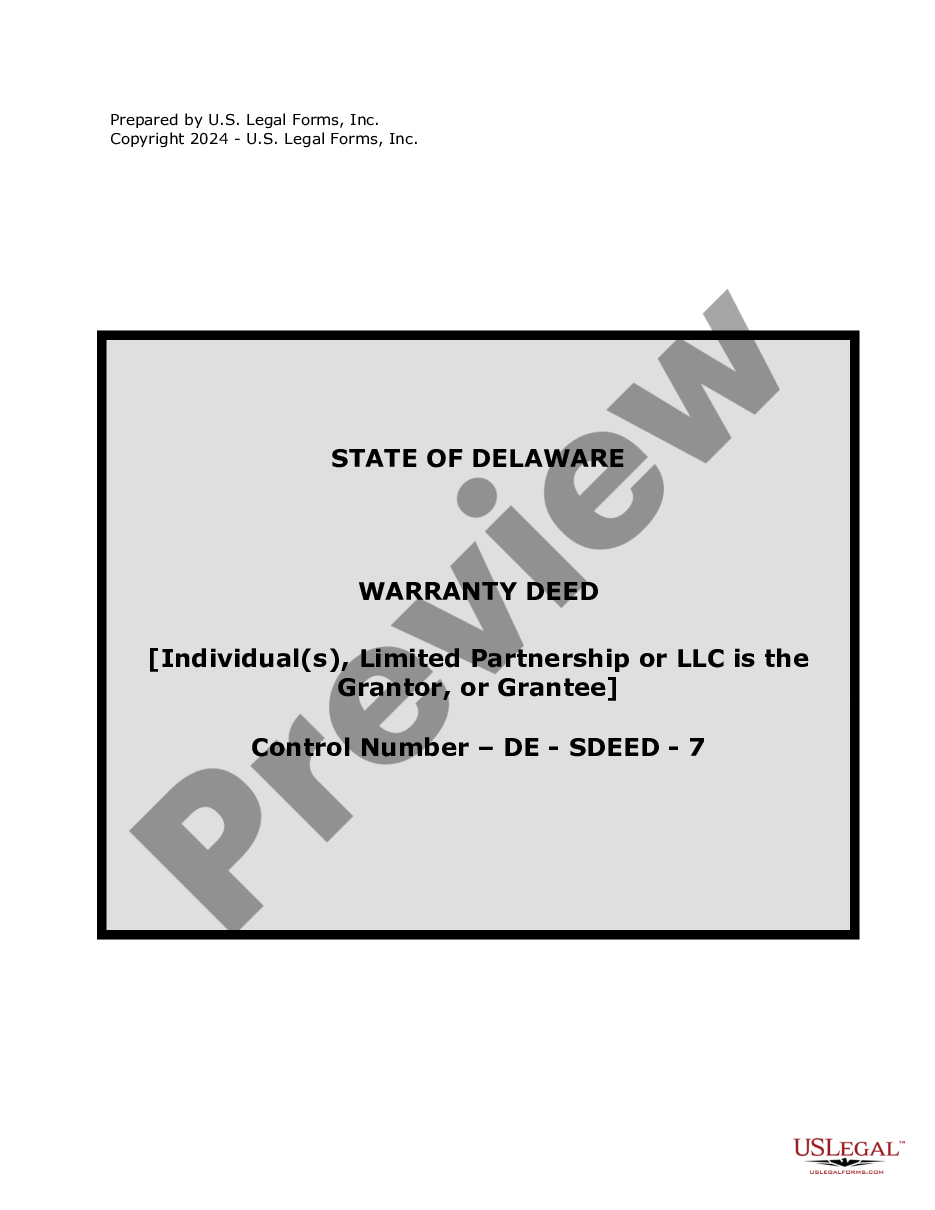
Delaware Warranty Deed from Individuals, Limited Partnership or LLC is the Grantor or Grantee
About this form
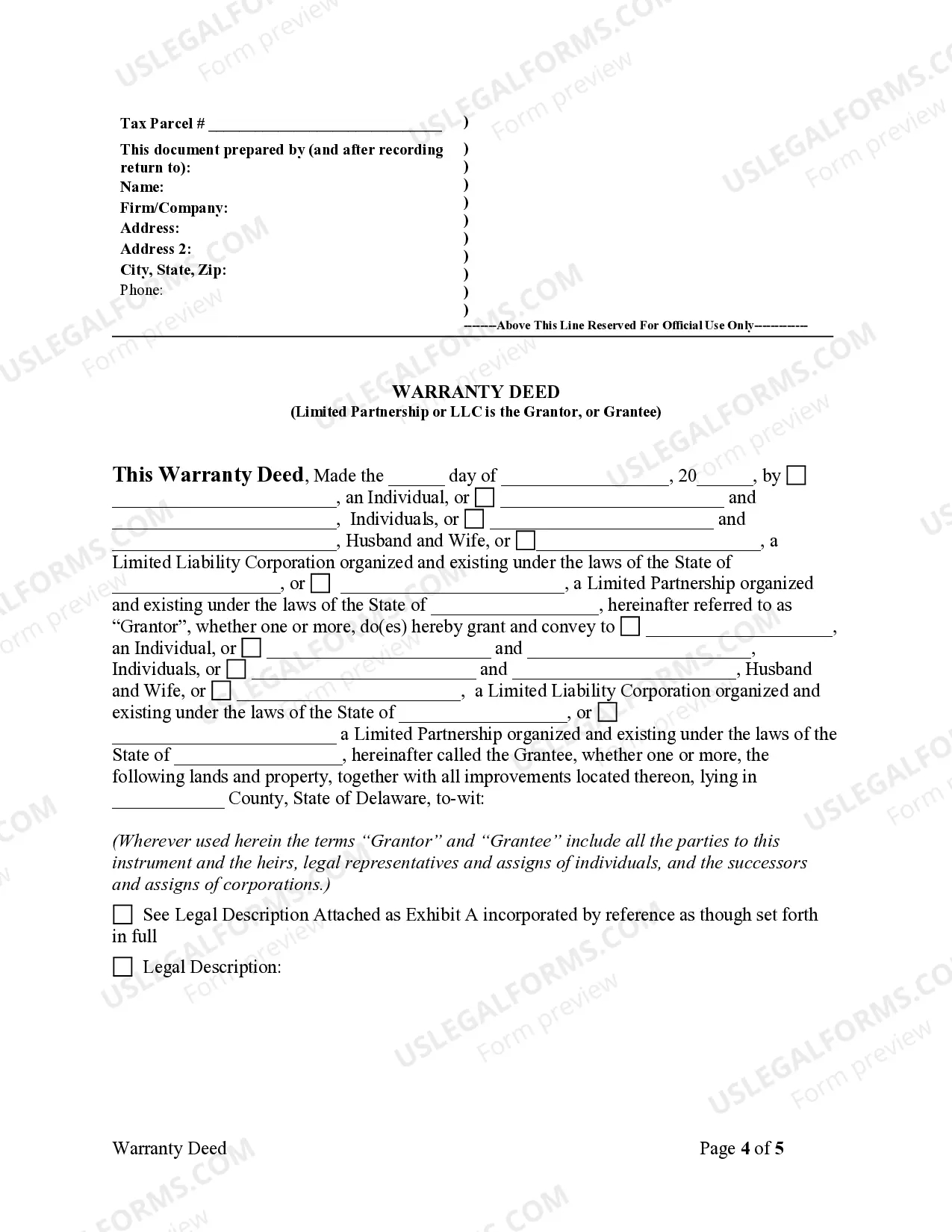
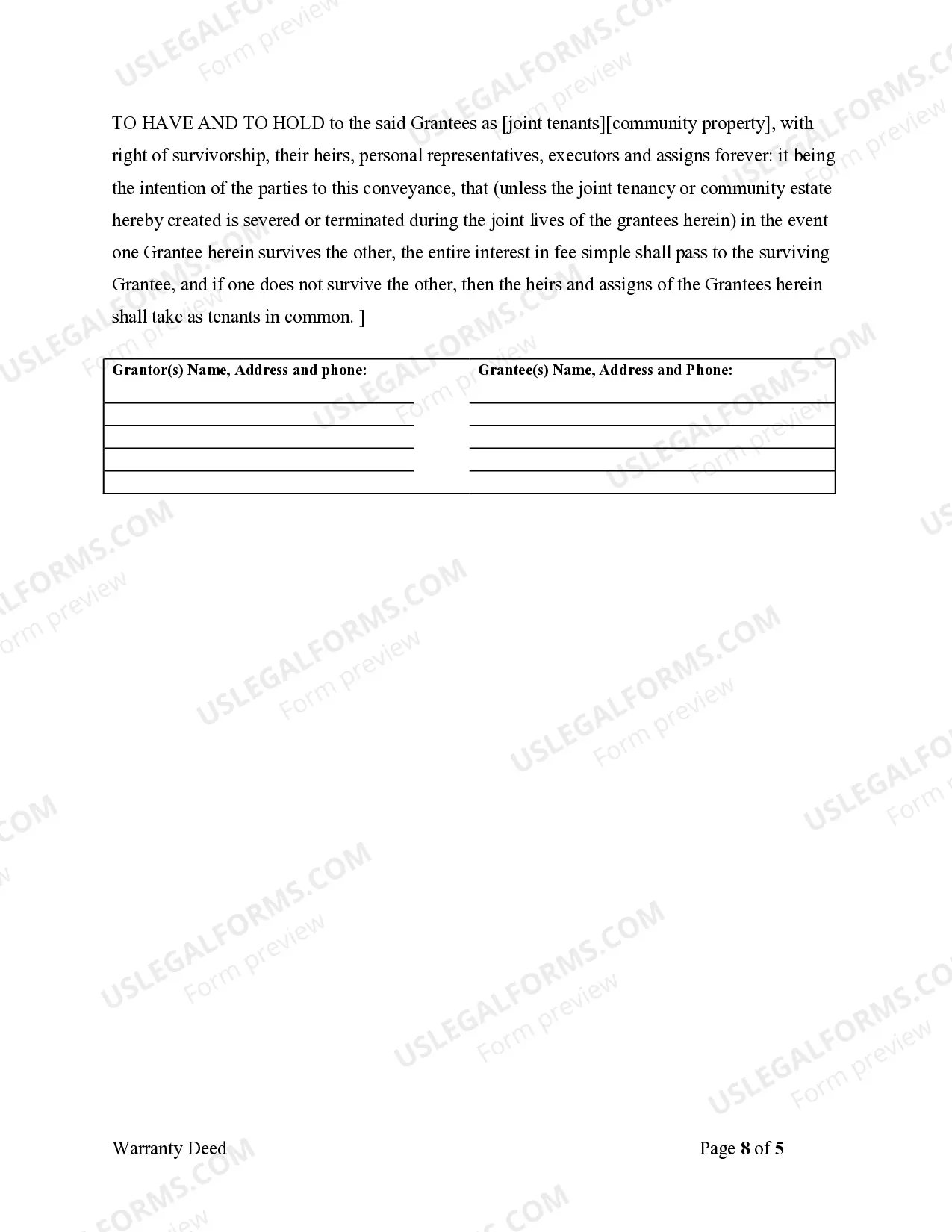
The Warranty Deed from Individuals, Limited Partnership, or LLC is a legal document that transfers ownership of real property. This form is unique because it accommodates multiple types of grantors, including individuals, limited partnerships, and limited liability companies (LLCs). It ensures that the title to the property is conveyed with a warranty, meaning the grantor guarantees a clear title, free of encumbrances, except as specified. This distinguishes it from other types of deeds that might not provide such guarantees.
Key parts of this document
- Identification of grantor(s) and grantee(s): Includes spaces for individuals, partnerships, and LLCs.
- Property description: Specifies the lands and property being conveyed.
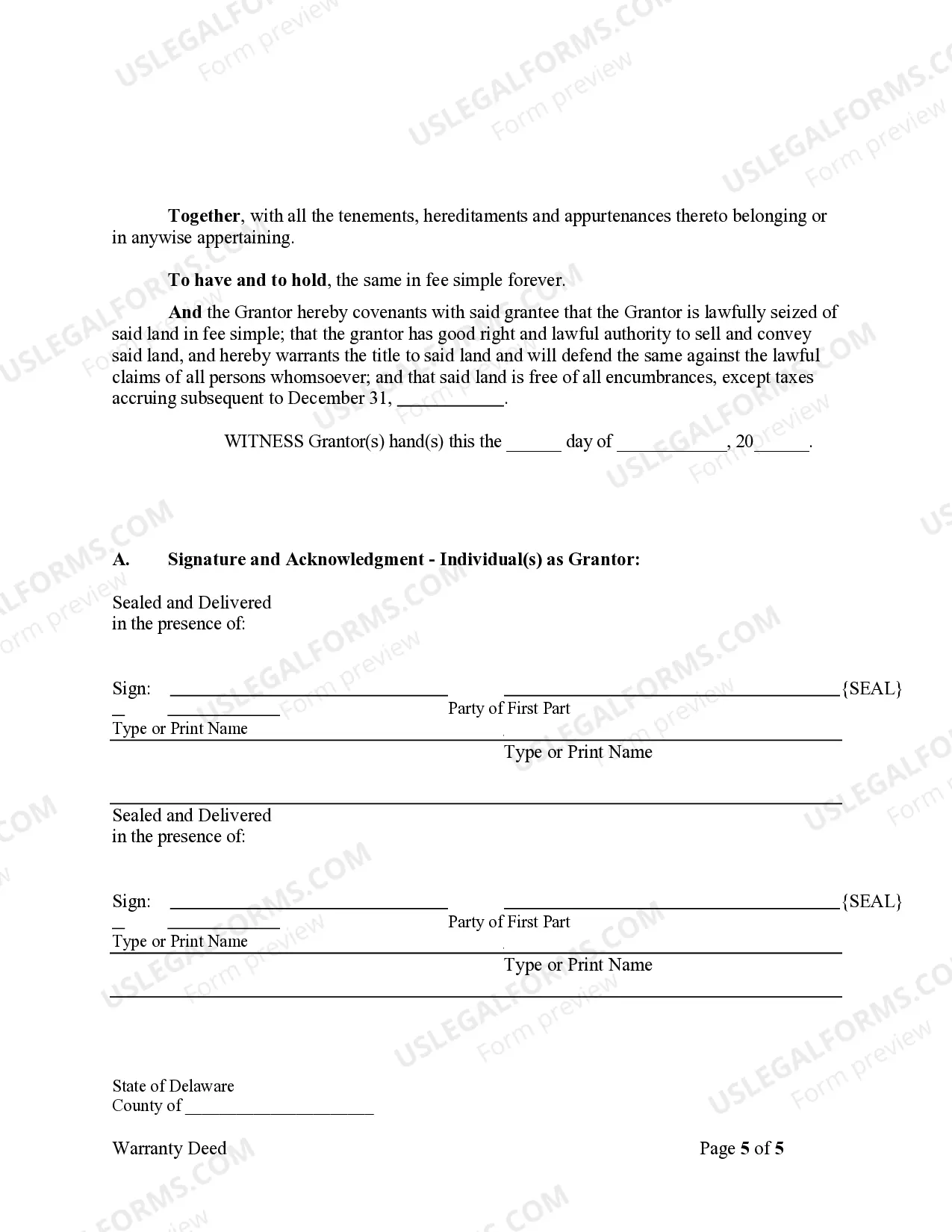
- Covenant of warranty: Assures the grantee that the grantor holds clear title to the property.
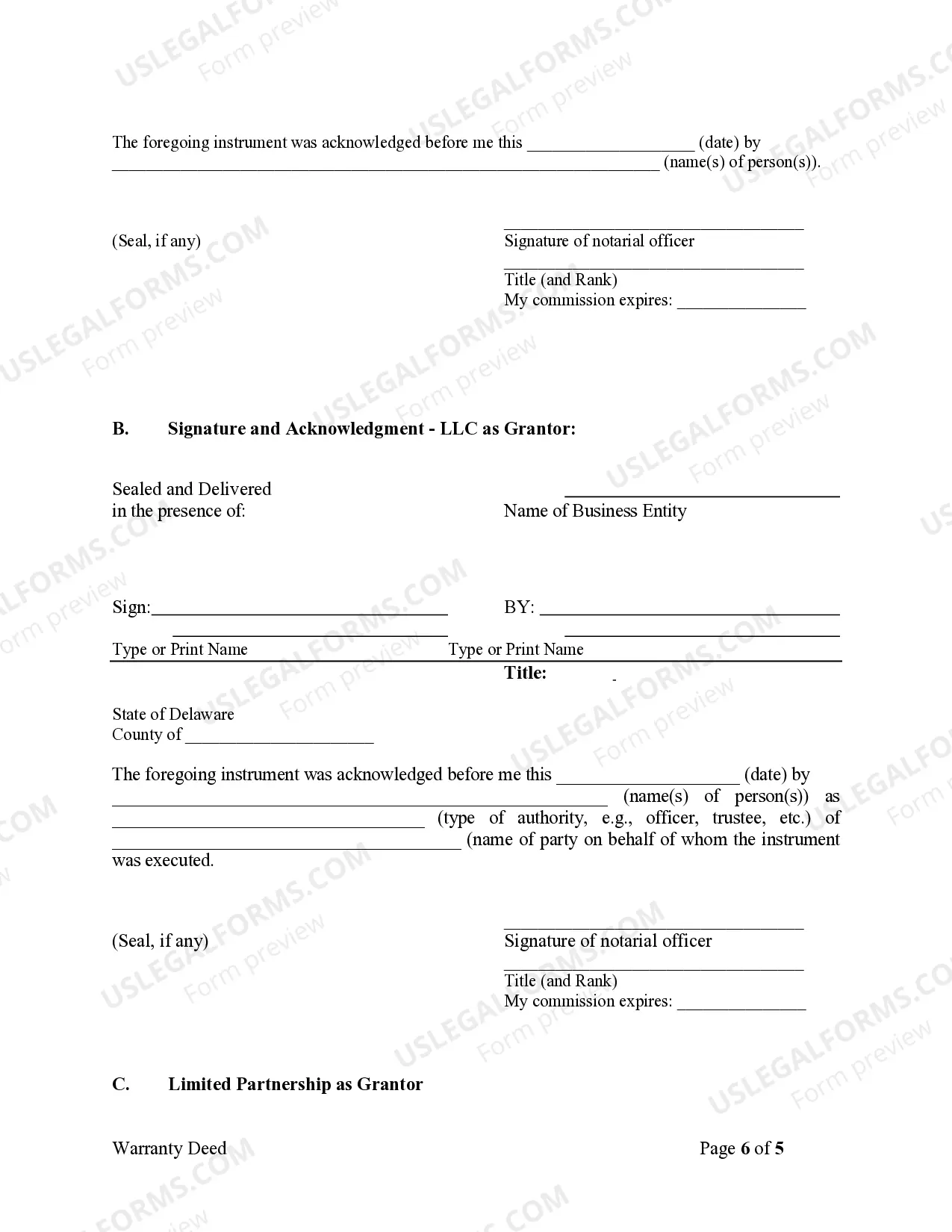
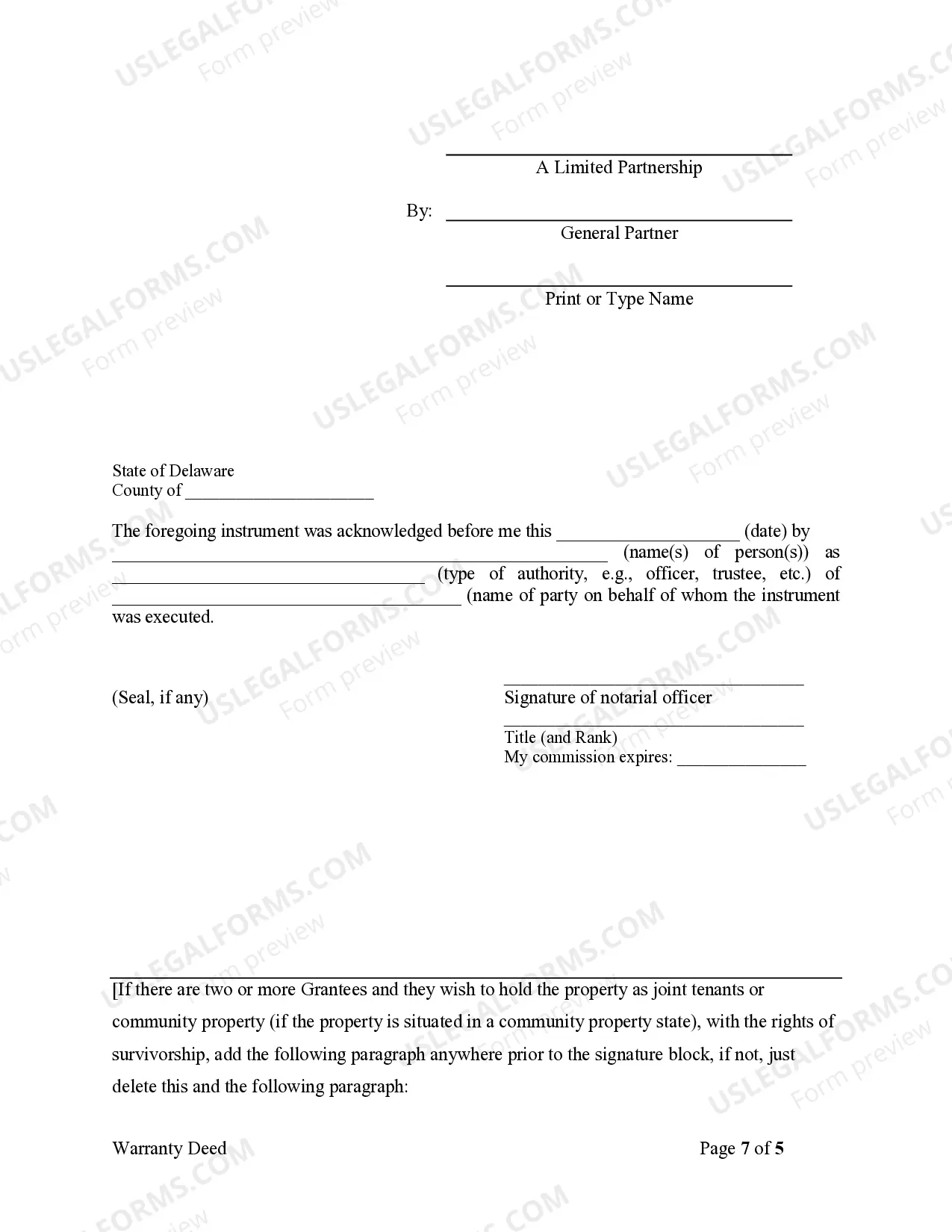
- Notarization clause: Details the requirement for notarization of the deed.
- Signature lines: Spaces for grantor and grantee signatures, along with a notary acknowledgment.






When this form is needed
This Warranty Deed form should be used when an individual, limited partnership, or LLC wishes to transfer property ownership to another party. It is particularly useful in real estate transactions involving commercial as well as residential properties, ensuring that the buyer receives full protection regarding the title of the property. It is often utilized when selling property, gifting it, or transferring interests among family members or partners.
Who should use this form
- Individuals transferring ownership of real estate.
- Limited partnerships involved in real estate transactions.
- Limited liability companies (LLCs) transferring property.
- Buyers and sellers seeking a legally binding document that proves ownership transfer.
How to prepare this document
- Identify the grantor(s) by entering their names and designations (individual, LLC, or limited partnership).
- Enter the grantee(s) information, specifying the names and categories.
- Provide a detailed description of the property being transferred, including its location.
- Include the sale price or any other consideration in the appropriate field.
- Sign and date the document in the designated areas, ensuring notarization to validate the deed.
Does this document require notarization?
This form needs to be notarized to ensure legal validity. US Legal Forms provides secure online notarization powered by Notarize, allowing you to complete the process through a verified video call, available anytime.
Get your form ready online
Our built-in tools help you complete, sign, share, and store your documents in one place.
Make edits, fill in missing information, and update formatting in US Legal Forms—just like you would in MS Word.
Download a copy, print it, send it by email, or mail it via USPS—whatever works best for your next step.
Sign and collect signatures with our SignNow integration. Send to multiple recipients, set reminders, and more. Go Premium to unlock E-Sign.
If this form requires notarization, complete it online through a secure video call—no need to meet a notary in person or wait for an appointment.
We protect your documents and personal data by following strict security and privacy standards.

Make edits, fill in missing information, and update formatting in US Legal Forms—just like you would in MS Word.

Download a copy, print it, send it by email, or mail it via USPS—whatever works best for your next step.

Sign and collect signatures with our SignNow integration. Send to multiple recipients, set reminders, and more. Go Premium to unlock E-Sign.

If this form requires notarization, complete it online through a secure video call—no need to meet a notary in person or wait for an appointment.

We protect your documents and personal data by following strict security and privacy standards.
Common mistakes
- Failing to provide a complete property description, which can lead to confusion.
- Not obtaining the required notarization, which may invalidate the deed.
- Entering incorrect names for grantor(s) or grantee(s), which can complicate the transfer.
- Omitting dates or signatures, rendering the document incomplete.
Why complete this form online
- Convenient access to the form anytime and from anywhere.
- Editable fields in a word processor make it easier to fill out accurately.
- Instant download provides immediate availability for urgent transactions.
- Security features to ensure your document remains intact and unaltered after completion.
Looking for another form?
Form popularity
FAQ
The grantee on a warranty deed is the party who receives the property from the grantor. This can be an individual, a limited partnership, or an LLC. With a Delaware Warranty Deed from Individuals, Limited Partnership or LLC, it is vital for the grantee to understand their rights and obligations once the deed is transferred.
The title on the warranty deed will be in the name of the grantee, the individual or entity receiving the property. This can include individuals, partnerships, or LLCs, depending on the transaction. To better understand how to establish clear titles using a Delaware Warranty Deed, check US Legal Forms for easy-to-use templates and guidance.
Yes, a warranty deed is a legal document that confirms ownership of the property. It included guarantees from the grantor regarding the title and protects the grantee against any future claims. If you are using a Delaware Warranty Deed from Individuals, Limited Partnership or LLC, it becomes crucial to ensure the deed accurately reflects ownership.
Yes, having a title is essential even if you possess a warranty deed. The warranty deed provides a promise of clear title, but it does not replace the need for title insurance, which protects against potential claims. You can find title services and more through US Legal Forms, assisting you in safeguarding your property rights.
The primary parties to a warranty deed include the grantor and the grantee. The grantor conveys the property, making assurances about the title, while the grantee accepts the property, which could include individuals, partnerships, or LLCs. If you're considering a Delaware Warranty Deed from Individuals, Limited Partnership or LLC, knowing the roles of these parties can help in making informed decisions in real estate transactions.
In a warranty deed, the grantor is the individual or entity that conveys the property, while the grantee is the person or entity receiving it. This deed assures that the grantor holds clear title to the property and has the right to transfer it. Understanding the roles of the grantor and grantee is crucial when dealing with a Delaware Warranty Deed from Individuals, Limited Partnership or LLC, ensuring all parties understand their rights and responsibilities.
The grantor on a quit claim deed is the individual or entity that transfers their interest in the property to another party. In this case, the Delaware Warranty Deed from Individuals, Limited Partnership or LLC serves as a legal document that can clarify ownership during the transfer. If you seek to understand your rights as a grantor, our platform, US Legal Forms, provides detailed resources to guide you through the process.
Yes, in Delaware, a limited partnership is regarded as a separate legal entity. This means that the partnership can own property, enter contracts, and carry out business activities independently of its partners. Understanding this aspect is critical when creating a Delaware Warranty Deed from Individuals, Limited Partnership or LLC as the Grantor or Grantee, as it differentiates the partnership's obligations and rights from those of its individual partners.
No, limited partnerships are not exempt from registration in Delaware. All limited partnerships must comply with state regulations and file the appropriate documents to operate legally. This requirement plays a significant role when drafting a Delaware Warranty Deed from Individuals, Limited Partnership or LLC as the Grantor or Grantee, ensuring that the partnership adheres to the established legal framework.
Absolutely, limited partnerships must be registered with the Delaware Secretary of State. Registration involves filing a Certificate of Limited Partnership, which provides the state with essential information about the partnership. This registration is crucial for establishing a solid legal foundation, especially when dealing with a Delaware Warranty Deed from Individuals, Limited Partnership or LLC as the Grantor or Grantee.