Delaware Stormwater Conveyance Easement
What this document covers
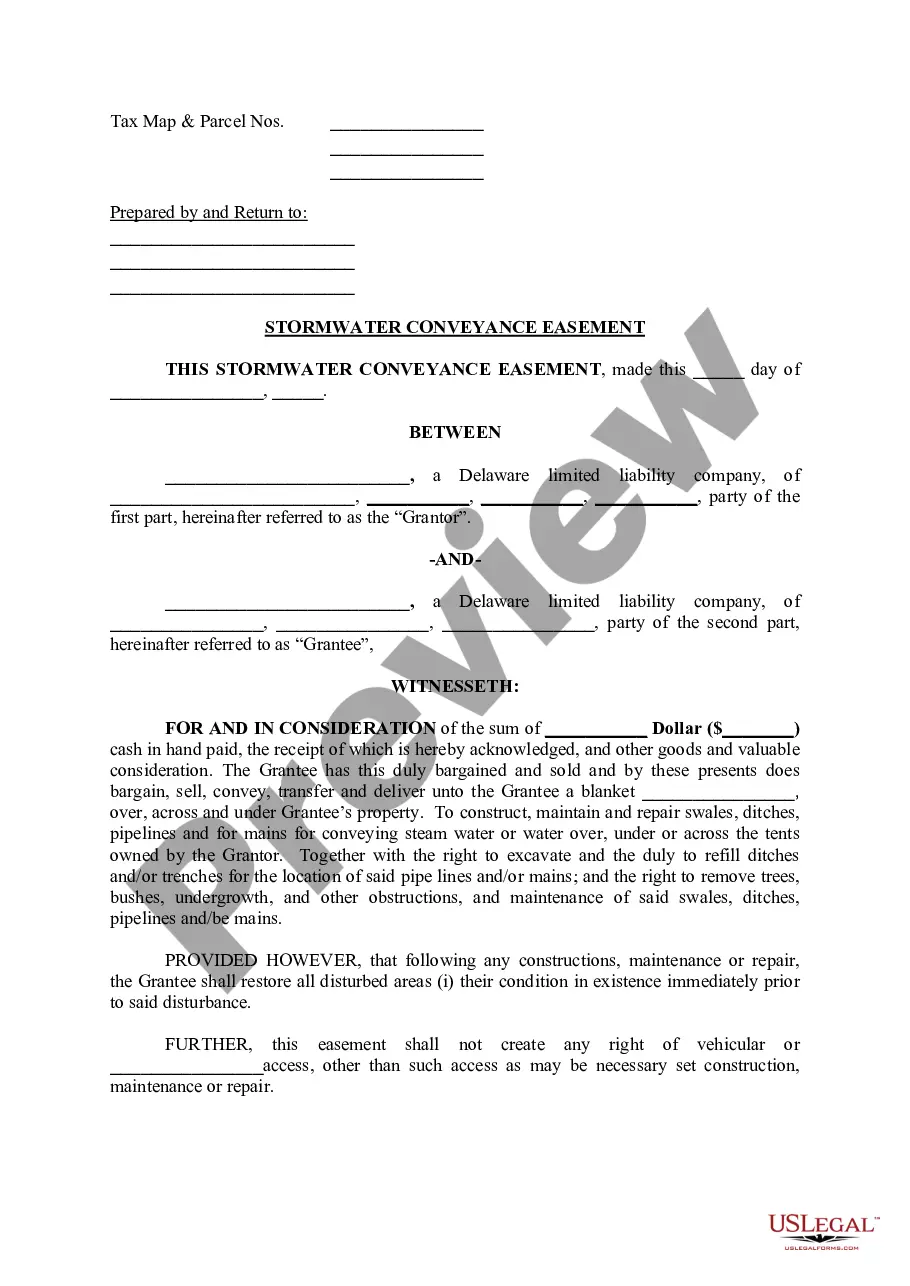
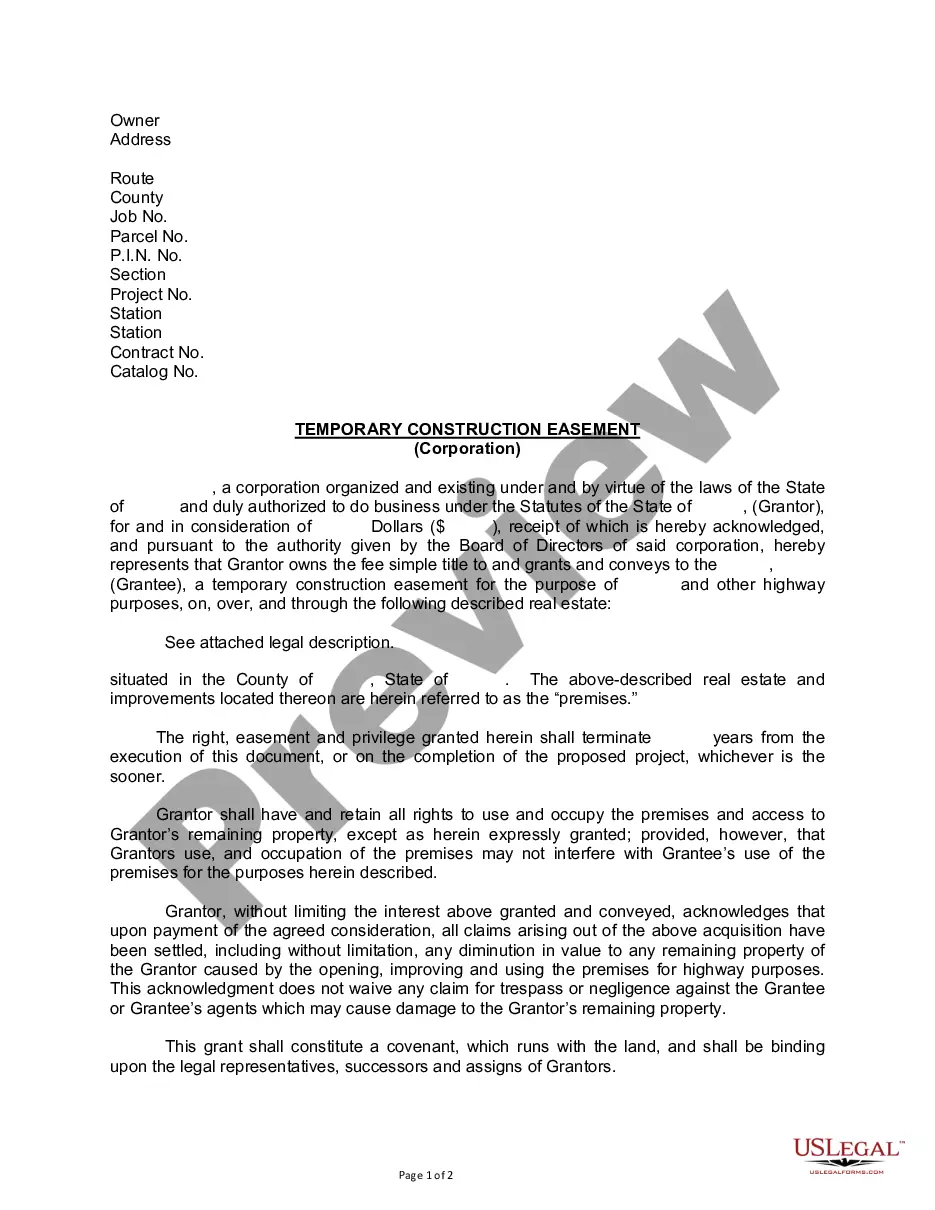
The Stormwater Conveyance Easement is a legal document that allows property owners to grant permission for the installation and maintenance of stormwater management facilities on their land. This form is essential for establishing the rights of a grantee to construct, maintain, and inspect stormwater conveyance systems, such as pipes and ditches, ensuring proper water flow and management. Unlike other easements, this form specifically addresses stormwater infrastructure and the responsibilities associated with it.
Main sections of this form
- Tax Map and Parcel Numbers: Identifies the property involved in the easement.
- Parties Involved: Clearly states the names and designations of the Grantor and Grantee.
- Consideration Clause: Outlines the compensation exchanged for the easement.
- Easement Description: Details the scope of the easement, including rights to maintain and repair stormwater facilities.
- Restoration Obligation: Specifies that the Grantee must restore any disturbed areas.
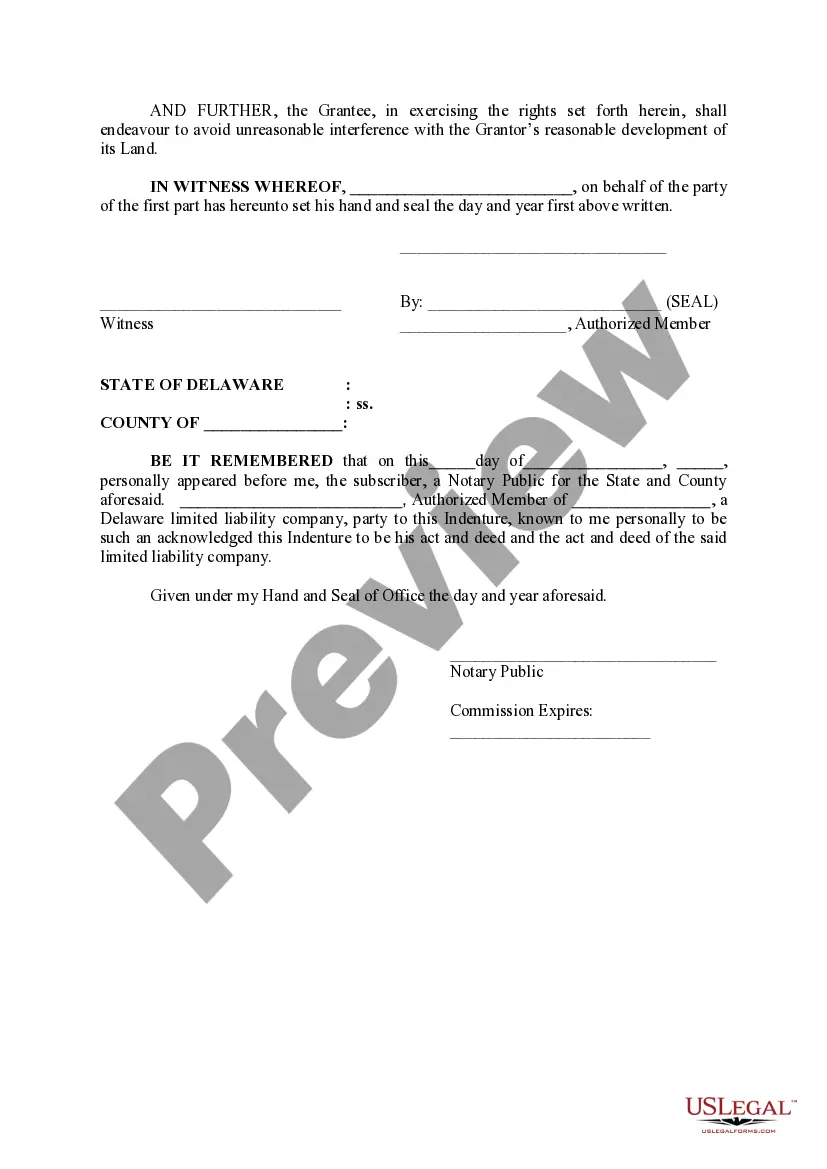
- Notary Clause: Provides a space for a notary public to validate the document.

When this form is needed
This form is utilized when a property owner (Grantor) allows another party (Grantee) to access their land for the purpose of constructing and maintaining stormwater management systems. Use this form when planning construction projects that may affect stormwater flow, or when an existing system requires modifications that necessitate access to adjacent properties.
Who this form is for
- Property owners looking to grant an easement for stormwater infrastructure.
- Developers and contractors needing access to land for stormwater management purposes.
- Municipalities or organizations responsible for environmental management and protection.
How to prepare this document
- Identify the parties: Fill in the names and addresses of both the Grantor and Grantee.
- Specify the property: Enter the Tax Map and Parcel Numbers for the affected property.
- Detail the consideration: State the numerical value or terms of payment for the easement.
- Outline the scope: Clearly describe the areas covered by the easement and rights granted to the Grantee.
- Obtain signatures: Ensure all parties sign and date the document in the appropriate sections.
- Notarize the form: If required, have the document notarized to verify its authenticity.
Does this document require notarization?
Yes, this form must be notarized to be legally valid. Having the form notarized affirms the identities of those signing and ensures the proper execution of the document in accordance with state laws.
Get your form ready online
Our built-in tools help you complete, sign, share, and store your documents in one place.
Make edits, fill in missing information, and update formatting in US Legal Forms—just like you would in MS Word.
Download a copy, print it, send it by email, or mail it via USPS—whatever works best for your next step.
Sign and collect signatures with our SignNow integration. Send to multiple recipients, set reminders, and more. Go Premium to unlock E-Sign.
If this form requires notarization, complete it online through a secure video call—no need to meet a notary in person or wait for an appointment.
We protect your documents and personal data by following strict security and privacy standards.

Make edits, fill in missing information, and update formatting in US Legal Forms—just like you would in MS Word.

Download a copy, print it, send it by email, or mail it via USPS—whatever works best for your next step.

Sign and collect signatures with our SignNow integration. Send to multiple recipients, set reminders, and more. Go Premium to unlock E-Sign.

If this form requires notarization, complete it online through a secure video call—no need to meet a notary in person or wait for an appointment.

We protect your documents and personal data by following strict security and privacy standards.
Common mistakes to avoid
- Failing to accurately identify the property with the correct Tax Map and Parcel Numbers.
- Not clearly defining the scope of the easement or rights granted, leading to confusion later.
- Inadequate signatures or missing notary validation, which could impact enforceability.
- Neglecting to specify restoration obligations, which can result in disputes over land condition post-work.
Why complete this form online
- Convenience of filling out the form from anywhere with internet access.
- Editability allows users to tailor the document to specific needs before downloading.
- Reliability of templates drafted by licensed attorneys, ensuring compliance with legal standards.
Legal use & context
- The Stormwater Conveyance Easement is a legally binding agreement that must comply with state laws.
- Enforceability may vary based on local jurisdiction, particularly regarding environmental regulations.
- Careful attention to detail is crucial to avoid disputes related to land use and maintenance responsibilities.
What to keep in mind
- The Stormwater Conveyance Easement establishes essential rights for managing stormwater on property.
- Accurate completion of the form is necessary to ensure legality and prevent future disputes.
- Notarization is required for the document to have legal validity.
Looking for another form?

Form popularity
FAQ
A stormwater management easement is a legal right that allows designated entities to manage and maintain stormwater on specific properties. This easement ensures that stormwater flows are handled according to regulations, helping to protect both the environment and property owners. By establishing a Delaware Stormwater Conveyance Easement, property owners can secure their rights and responsibilities regarding stormwater management. You can learn more about these easements through the resources available on the UsLegalForms platform.
Stormwater conveyance refers to the systems and methods used to transport rainwater and melted snow away from streets and properties. These systems can include drains, ditches, pipes, and other infrastructure designed to manage water flow. Proper stormwater conveyance is essential for preventing flooding and water damage. Understanding the Delaware Stormwater Conveyance Easement is crucial for property owners to ensure compliance and effective management of their stormwater systems.
In Delaware, certain land disturbing activities are not exempt from sediment and stormwater regulations. For example, activities such as land clearing, grading, or excavation that exceed specific thresholds must comply with these regulations. This includes projects that impact drainage patterns or increase runoff. It is essential for property owners to understand their obligations to avoid potential fines and ensure proper management of their Delaware Stormwater Conveyance Easement.
The purpose of stormwater detention is to manage excess water runoff, particularly during heavy rainfall. By creating a Delaware Stormwater Conveyance Easement, property owners can effectively control the flow of stormwater, reducing the risk of flooding. This practice helps improve water quality and protects local ecosystems, ensuring that water is slowly released back into the environment. Engaging with a platform like US Legal Forms can guide you in establishing these easements correctly to comply with local regulations.