Delaware Marital Legal Separation and Property Settlement Agreement no Children parties may have Joint Property or Debts where Divorce Action Filed
Overview of this form
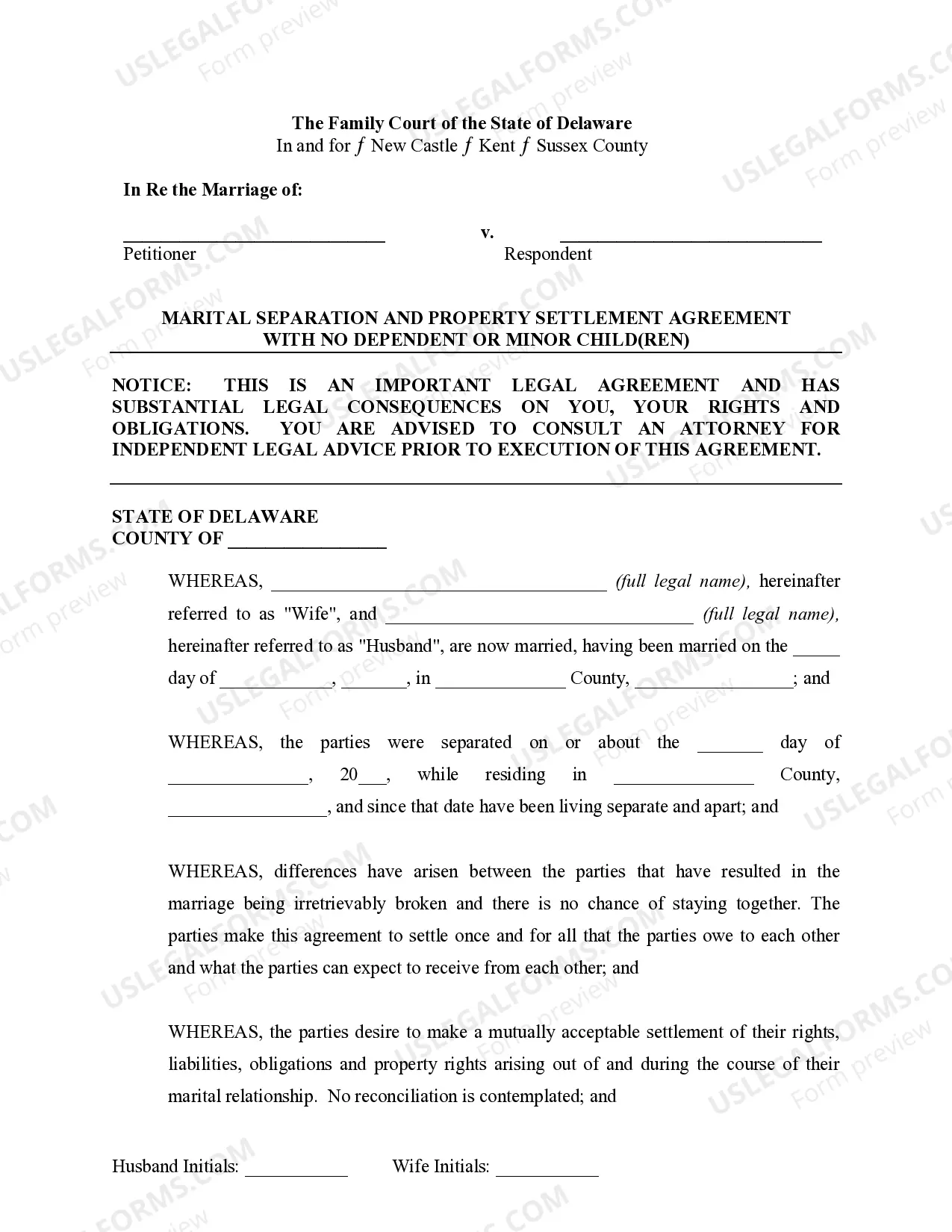
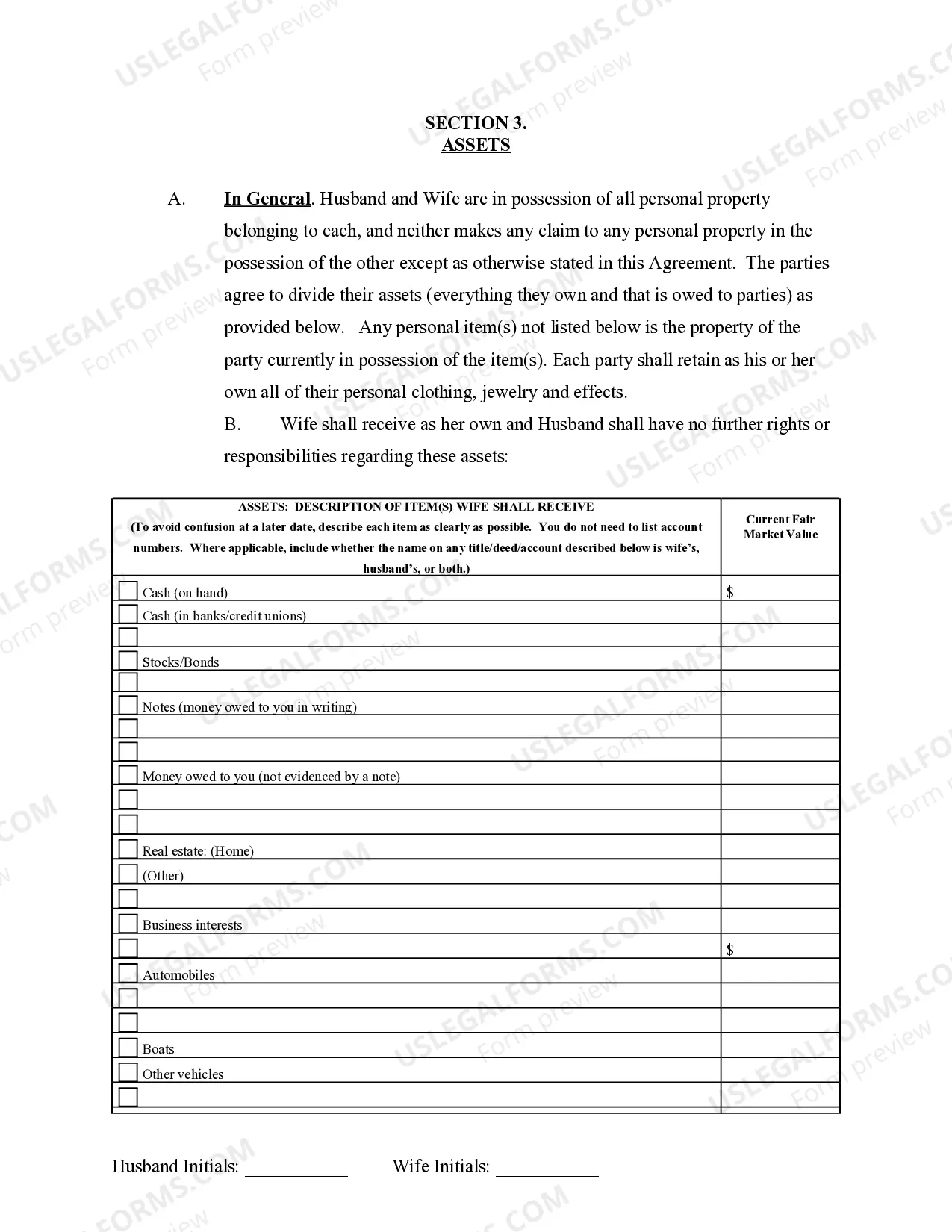
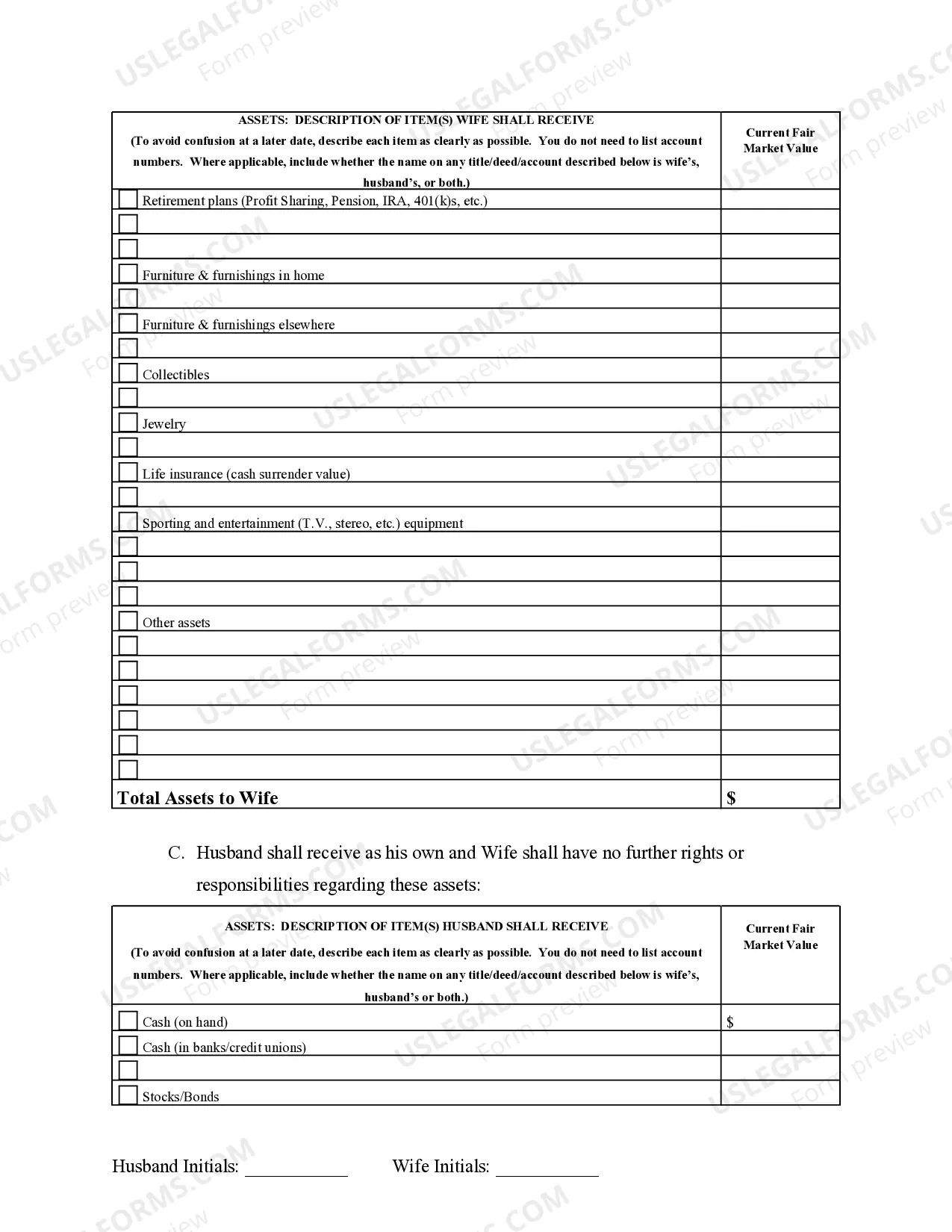
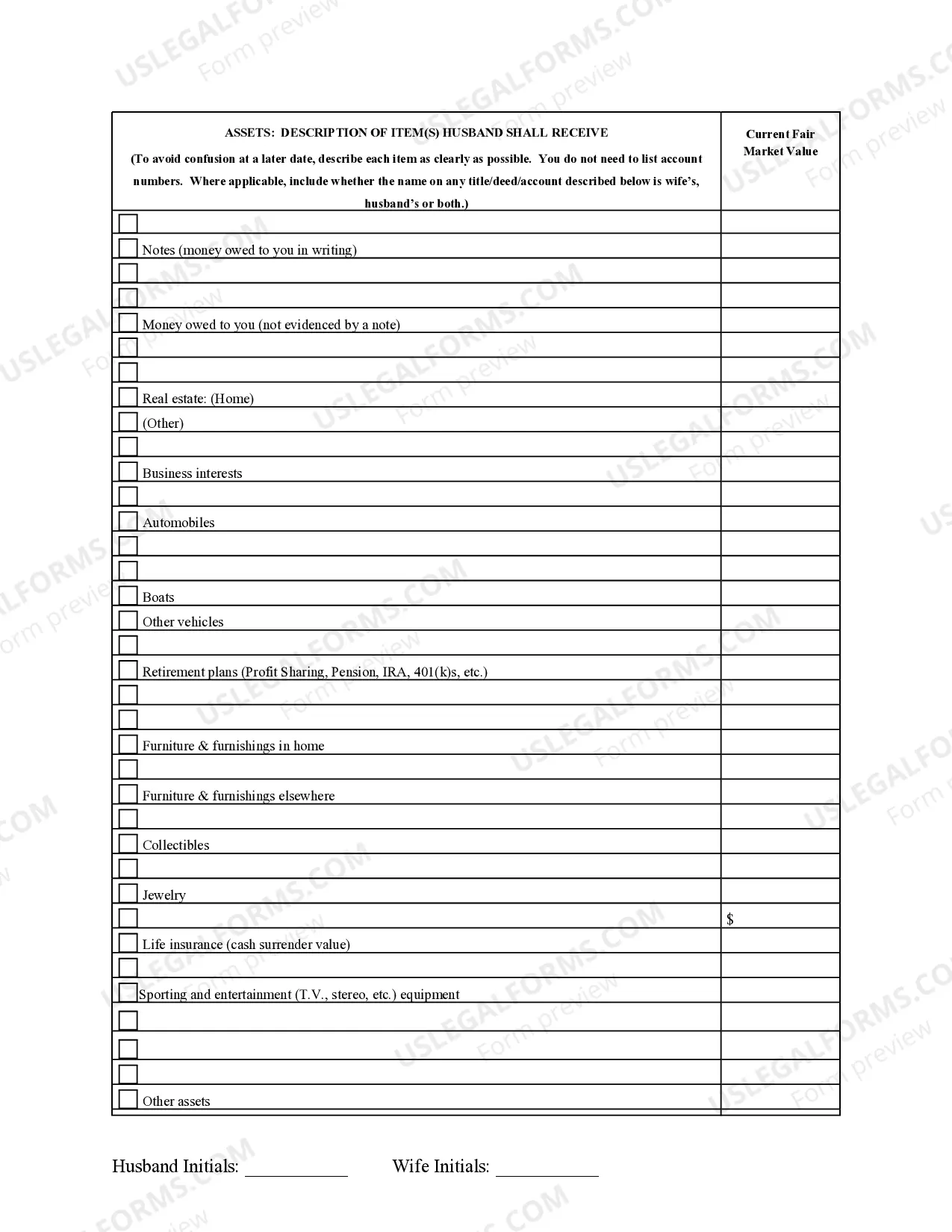
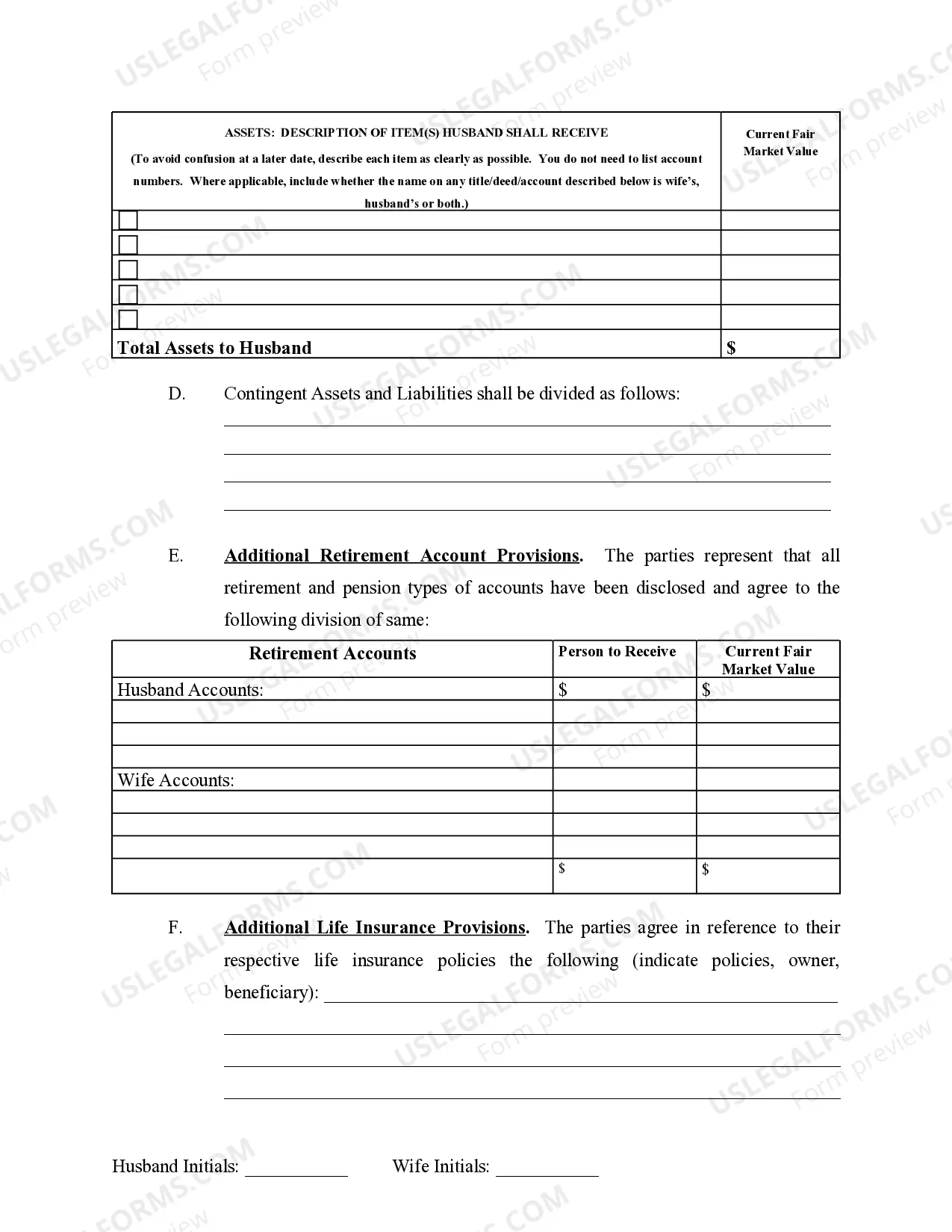
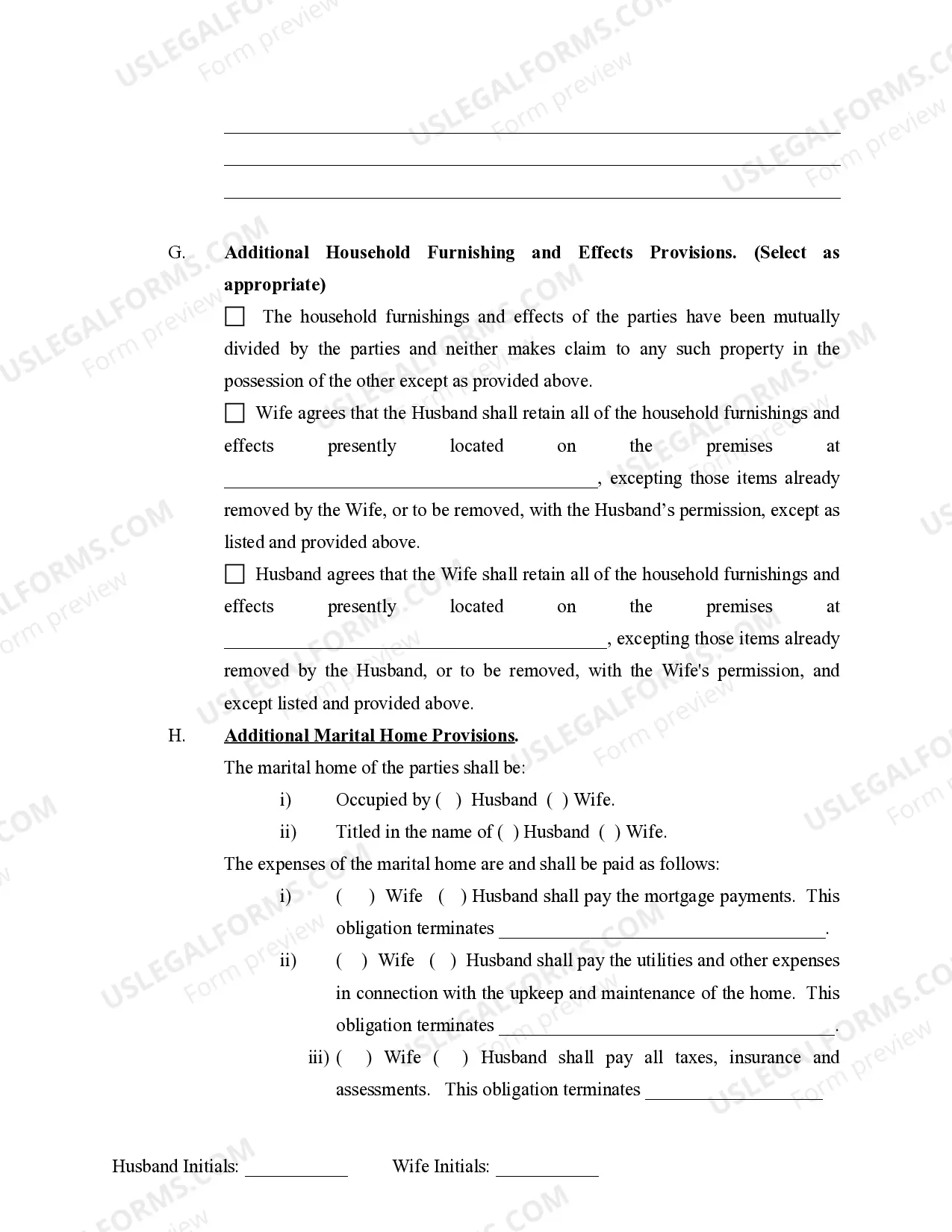
This Marital Legal Separation and Property Settlement Agreement is specifically designed for couples who are seeking a separation without children and with joint property or debts. This form serves the purpose of solidifying the terms of separation while a divorce action is either pending or will be filed in the future. Unlike other separation agreements, it includes detailed provisions for the division of assets and liabilities, ensuring both parties clearly understand their rights and obligations.
Form components explained
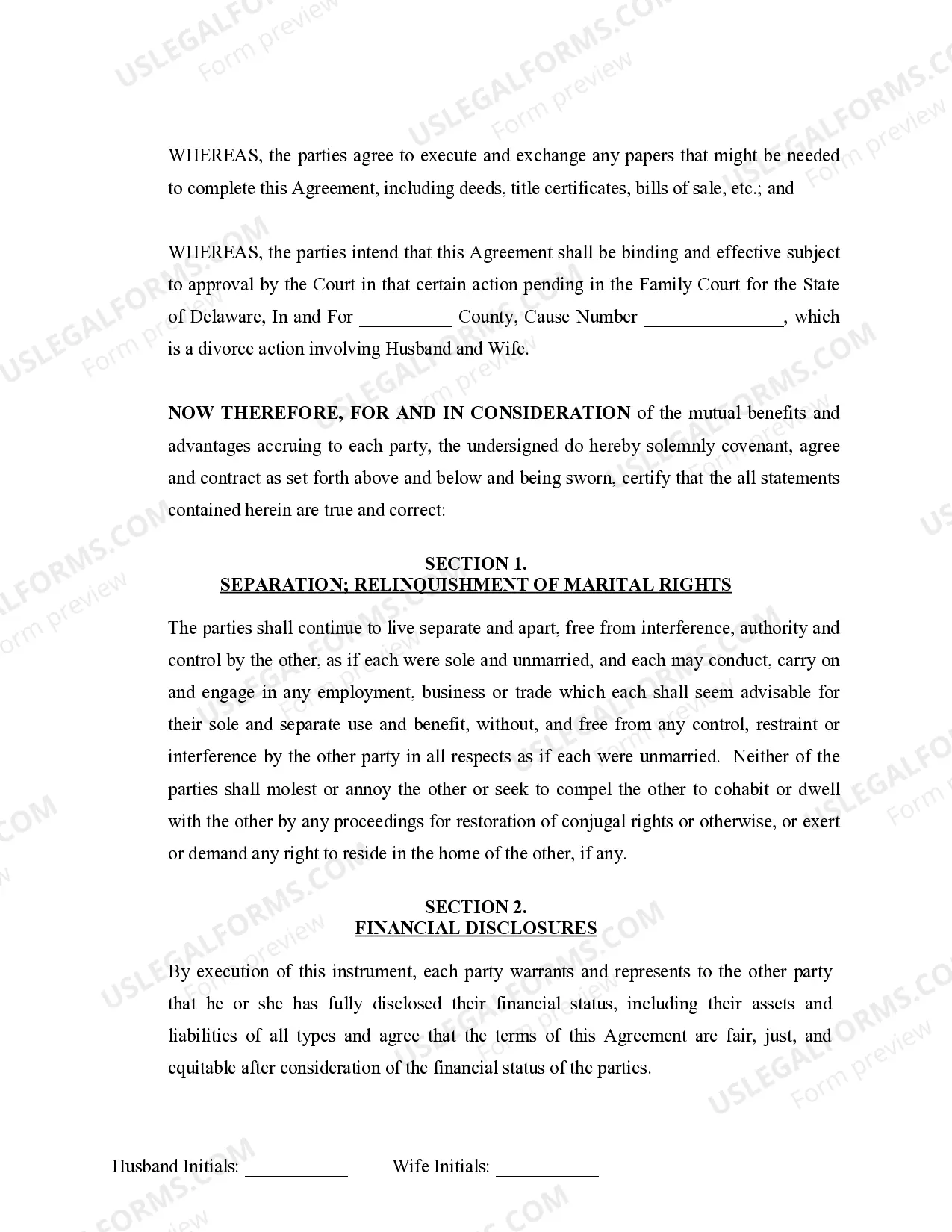
- Separation relinquishment of marital rights, allowing each party to live independently.
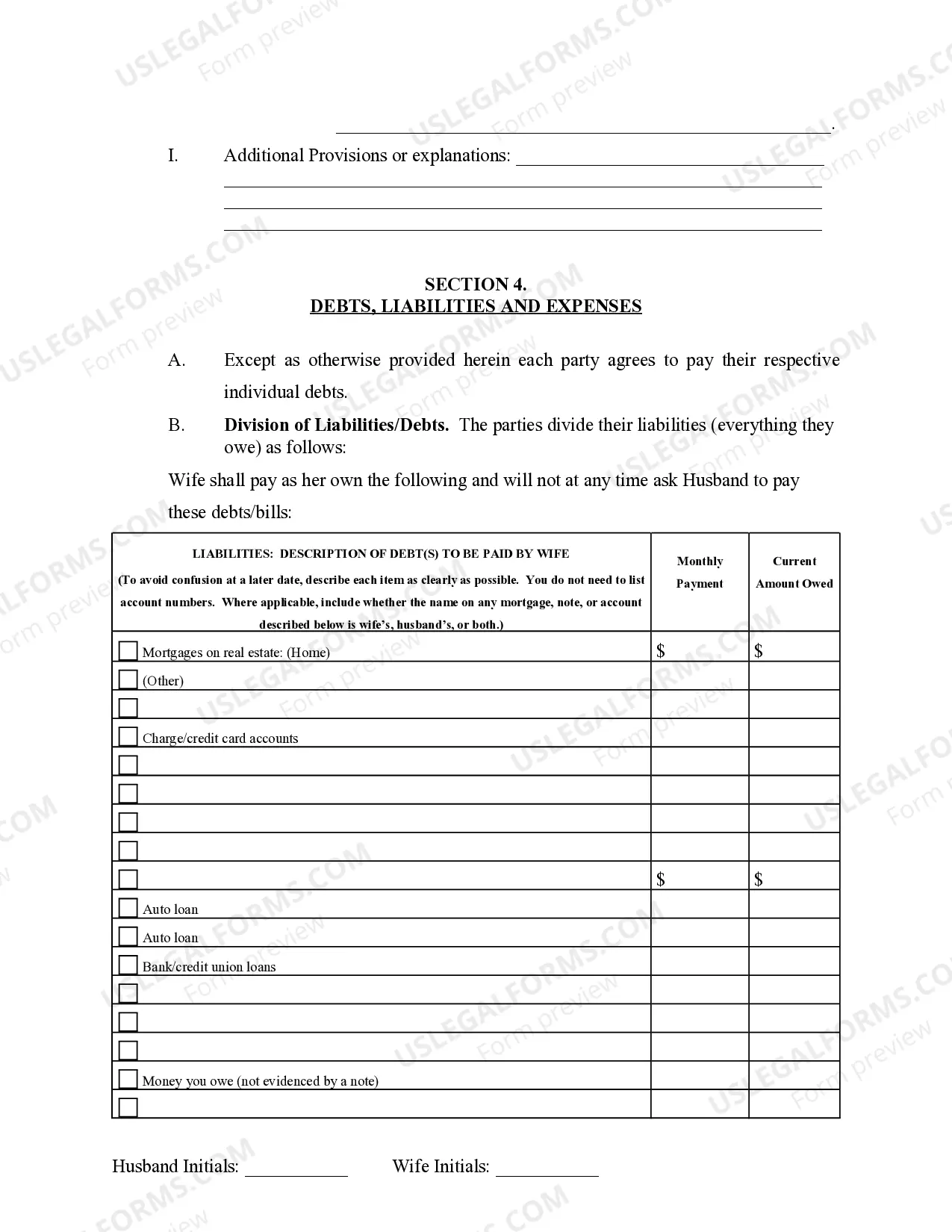
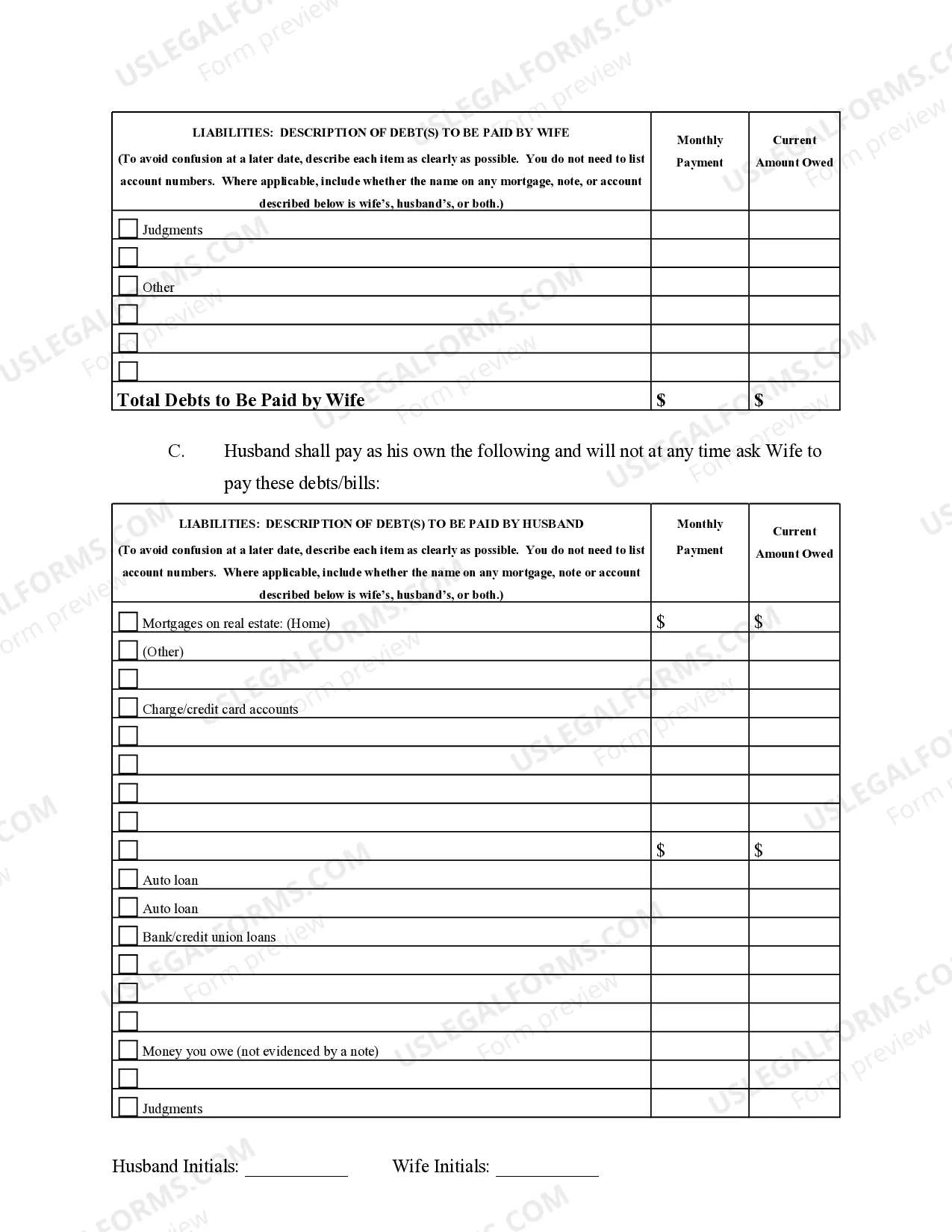
- Financial disclosures detailing the assets and liabilities of each party.
- Provisions for the division of property and debts between the parties.
- Clauses related to spousal support (alimony), if applicable.
- Legal language ensuring that the agreement is binding and enforceable in the State of Delaware.
- Notarization requirements to validate the agreement.


When this form is needed
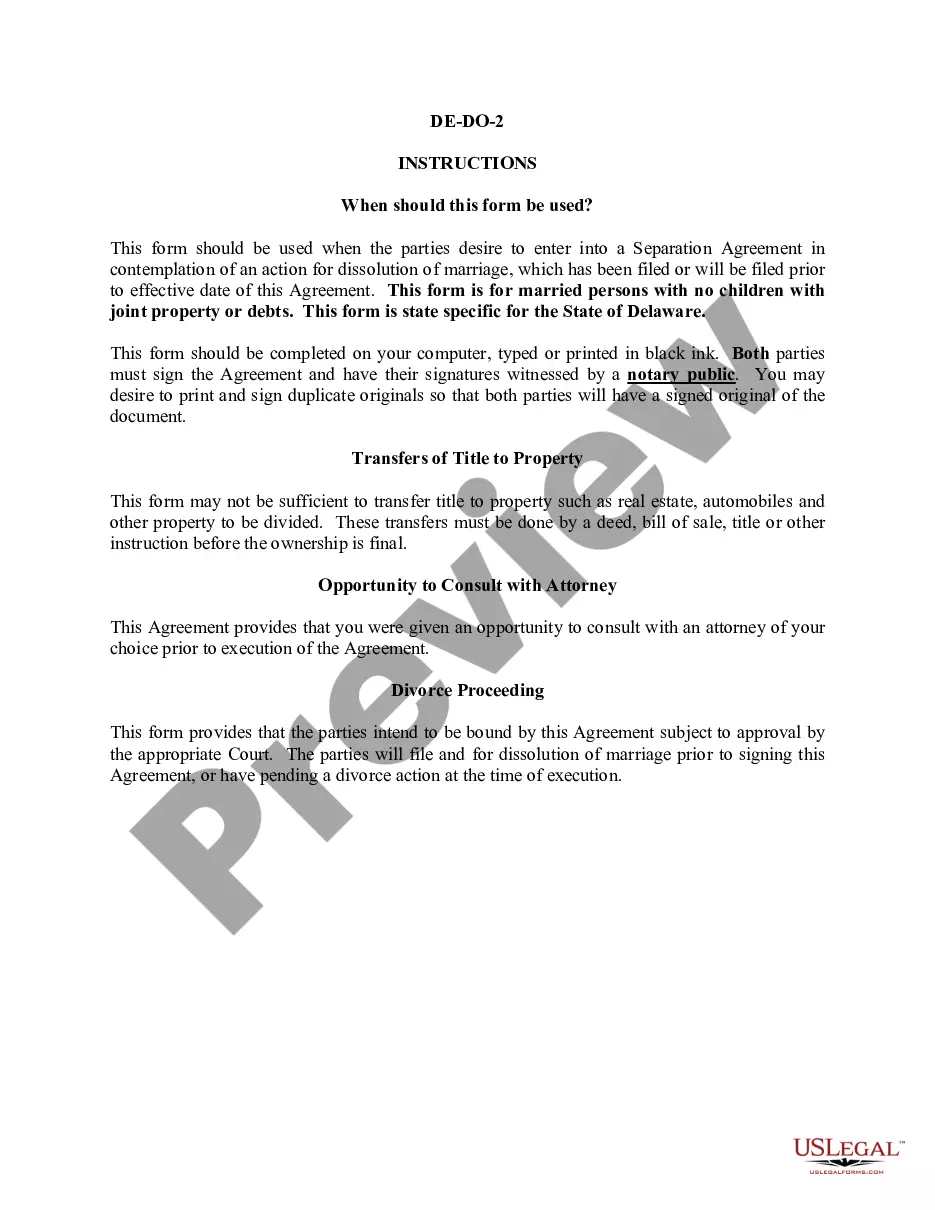
This form should be used when spouses wish to formalize their separation in anticipation of a divorce. It is particularly relevant for couples without dependent children who possess joint property or debts. Utilizing this agreement helps clarify financial responsibilities and property rights during the separation process.
Intended users of this form
- Married couples in Delaware without children.
- Couples with joint property or debts seeking a separation agreement.
- Individuals who have filed or intend to file for divorce.
- Parties looking for a clear and enforceable division of assets and liabilities.
Instructions for completing this form
- Identify the parties involved, clearly stating full legal names.
- Detail the joint property and debts, including descriptions and values.
- Specify who will retain which assets and the arrangements for shared liabilities.
- Have both parties sign the agreement in the presence of a notary public.
- Ensure copies are made for both parties for their records.
Does this form need to be notarized?
Notarization is required for this form to take effect. Our online notarization service, powered by Notarize, lets you verify and sign documents remotely through an encrypted video session, available 24/7.
Get your form ready online
Our built-in tools help you complete, sign, share, and store your documents in one place.
Make edits, fill in missing information, and update formatting in US Legal Forms—just like you would in MS Word.
Download a copy, print it, send it by email, or mail it via USPS—whatever works best for your next step.
Sign and collect signatures with our SignNow integration. Send to multiple recipients, set reminders, and more. Go Premium to unlock E-Sign.
If this form requires notarization, complete it online through a secure video call—no need to meet a notary in person or wait for an appointment.
We protect your documents and personal data by following strict security and privacy standards.

Make edits, fill in missing information, and update formatting in US Legal Forms—just like you would in MS Word.

Download a copy, print it, send it by email, or mail it via USPS—whatever works best for your next step.

Sign and collect signatures with our SignNow integration. Send to multiple recipients, set reminders, and more. Go Premium to unlock E-Sign.

If this form requires notarization, complete it online through a secure video call—no need to meet a notary in person or wait for an appointment.

We protect your documents and personal data by following strict security and privacy standards.
Mistakes to watch out for
- Failing to fully disclose all assets and debts, which could lead to disputes later.
- Not having the agreement notarized, compromising its enforceability.
- Overlooking details in the division of property or spousal support terms.
- Assuming the agreement is final without court approval.
Why use this form online
- Convenient access to legally drafted forms that can be completed and downloaded anytime.
- Editable templates that allow customization to fit both parties' needs.
- Peace of mind knowing the form has been created by licensed attorneys.
- Fast and efficient processing without the need for in-person meetings.
Legal use & context
- This form serves as a binding contract between the parties regarding their separation and property division.
- It must be approved by the court as part of the divorce proceedings to ensure enforceability.
- Failure to adhere to the terms outlined could result in legal disputes in the future.
Key takeaways
- This form is essential for couples seeking to formalize a separation in Delaware without children.
- Signatures of both parties must be notarized for legal validity.
- The document clearly outlines the rights and obligations regarding property and debts.
- Utilizing this form online offers convenience and legal assurance to users.
Looking for another form?
Form popularity
FAQ
Yes, you can proceed with a divorce without child support if there are no minor children involved. In cases where a Delaware Marital Legal Separation and Property Settlement Agreement no Children is established, you can specifically address the division of Joint Property or Debts. This clarity can simplify the divorce process significantly. However, consulting a legal expert will always provide the best guidance tailored to your circumstances.
In a Delaware divorce, property is divided using equitable distribution, meaning each spouse receives a fair share, although not necessarily equal. This division includes examining Joint Property or Debts under the framework of a Delaware Marital Legal Separation and Property Settlement Agreement no Children. The court considers various factors, including each spouse's financial situation, to ensure fairness. Preparing relevant documents can streamline this process.
To successfully navigate a divorce, focus on clear communication and maintaining a positive mindset. Support from friends, family, or professional counselors can significantly aid your emotional well-being. Utilizing a Delaware Marital Legal Separation and Property Settlement Agreement no Children may provide clarity on financial matters, such as Joint Property or Debts. Remember, taking time for self-reflection can lead to better decisions.
Assets in a Delaware divorce are typically divided based on equitable distribution, which considers factors like the duration of marriage and contributions of both spouses. You should understand that Joint Property or Debts may complicate this process. It's valuable to engage with tools and resources, such as the Delaware Marital Legal Separation and Property Settlement Agreement no Children, to navigate this division effectively. Taking proactive steps ensures a fair outcome.
The amount a wife is entitled to during a divorce in Delaware varies significantly based on the marital assets and debts involved. Each couple's situation is unique, which means the equitable distribution is determined case by case. A detailed assessment is essential to outline the Joint Property or Debts under the Delaware Marital Legal Separation and Property Settlement Agreement no Children. Consulting legal advice can clarify any uncertainties.
In a Delaware divorce, a wife typically retains rights to equitable distribution of marital property, meaning she may receive a fair share of the joint assets. This distribution depends on factors such as the length of the marriage and each spouse's contribution. Moreover, parties may have Joint Property or Debts under a Delaware Marital Legal Separation and Property Settlement Agreement no Children. Understanding these rights is crucial for a smoother transition.
Legal separation can have several disadvantages. One primary concern is that it may become more complicated later if you decide to pursue divorce. Additionally, while separated, you may still be responsible for joint debts, which can lead to financial strain. Moreover, the Delaware Marital Legal Separation and Property Settlement Agreement no Children parties may have Joint Property or Debts where Divorce Action Filed does not provide the same legal benefits as a divorce, leaving your marital status unchanged.
To write a legal separation agreement, begin by outlining the terms of the Delaware Marital Legal Separation and Property Settlement Agreement no Children parties may have Joint Property or Debts where Divorce Action Filed. Start with the names of both parties and date of separation. Clearly specify the division of assets, debts, and any additional agreements relevant to both parties. It's often wise to consult a legal professional to ensure your agreement complies with state laws and protects your rights.
A settlement agreement and a separation agreement have similar purposes but serve slightly different functions. A separation agreement outlines terms for separating from your spouse, while a settlement agreement concludes pending disputes, often regarding the division of property and responsibilities. Knowing these nuances is vital for ensuring compliance with legal requirements, especially in a Delaware Marital Legal Separation and Property Settlement Agreement no Children parties may have Joint Property or Debts where Divorce Action Filed.
Creating a separation plan involves identifying your assets, debts, and personal aspirations. It can be beneficial to work systematically through your financial obligations and living arrangements. For a thorough approach, consider employing a Delaware Marital Legal Separation and Property Settlement Agreement no Children parties may have Joint Property or Debts where Divorce Action Filed as part of your plan.