Employer Training Memo - Payroll Deductions
What this document covers
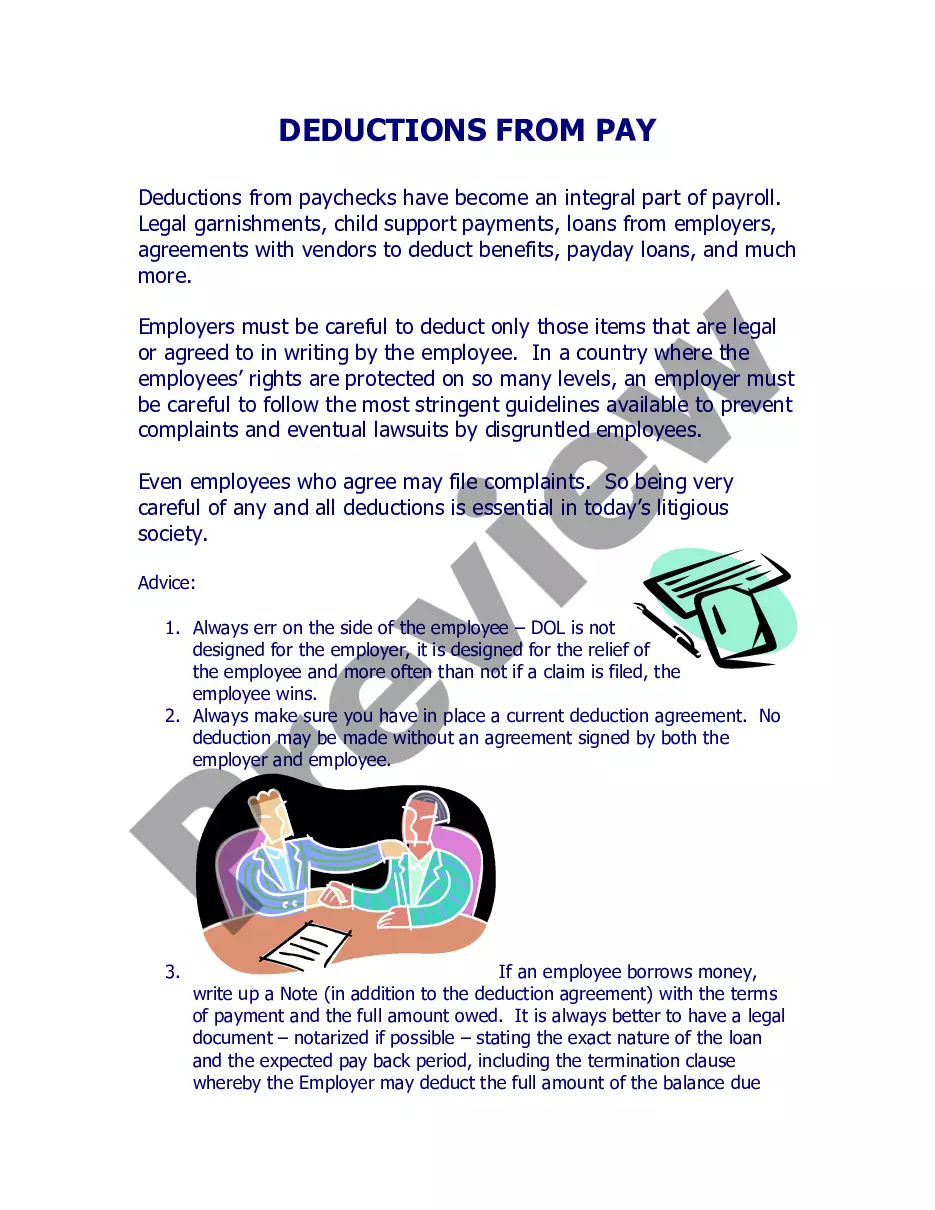
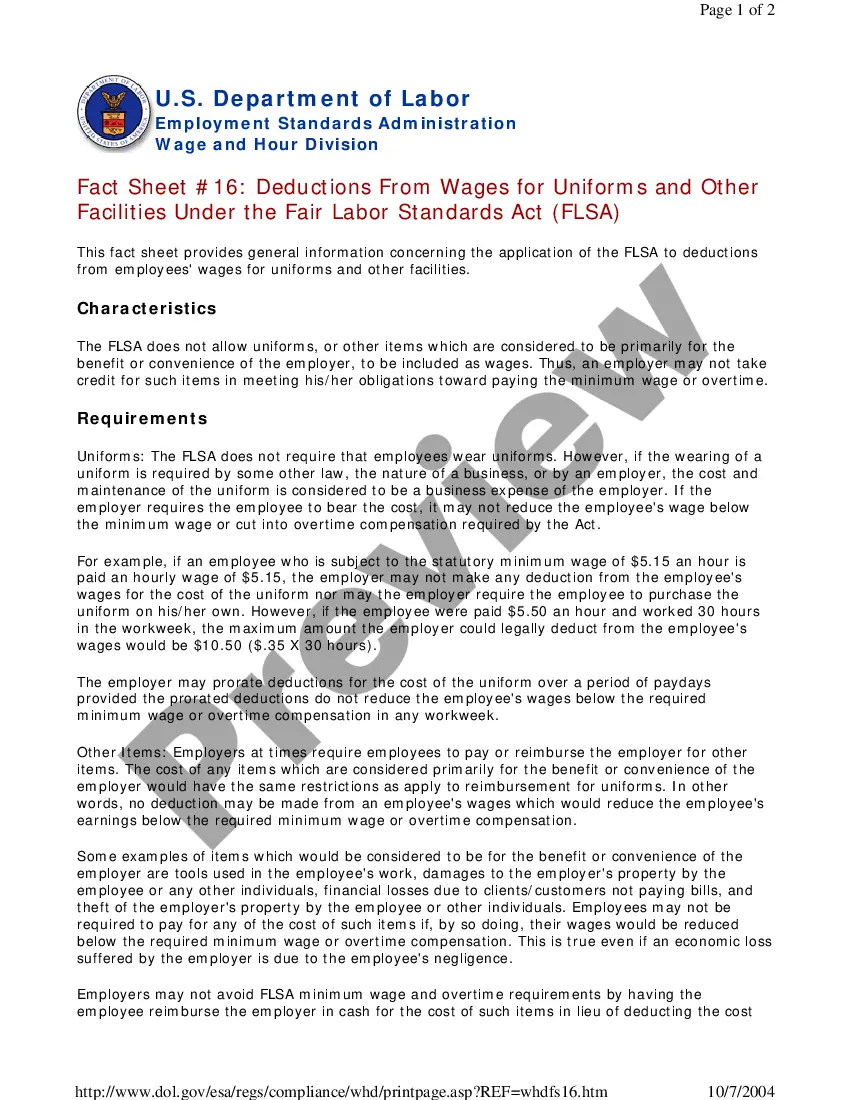
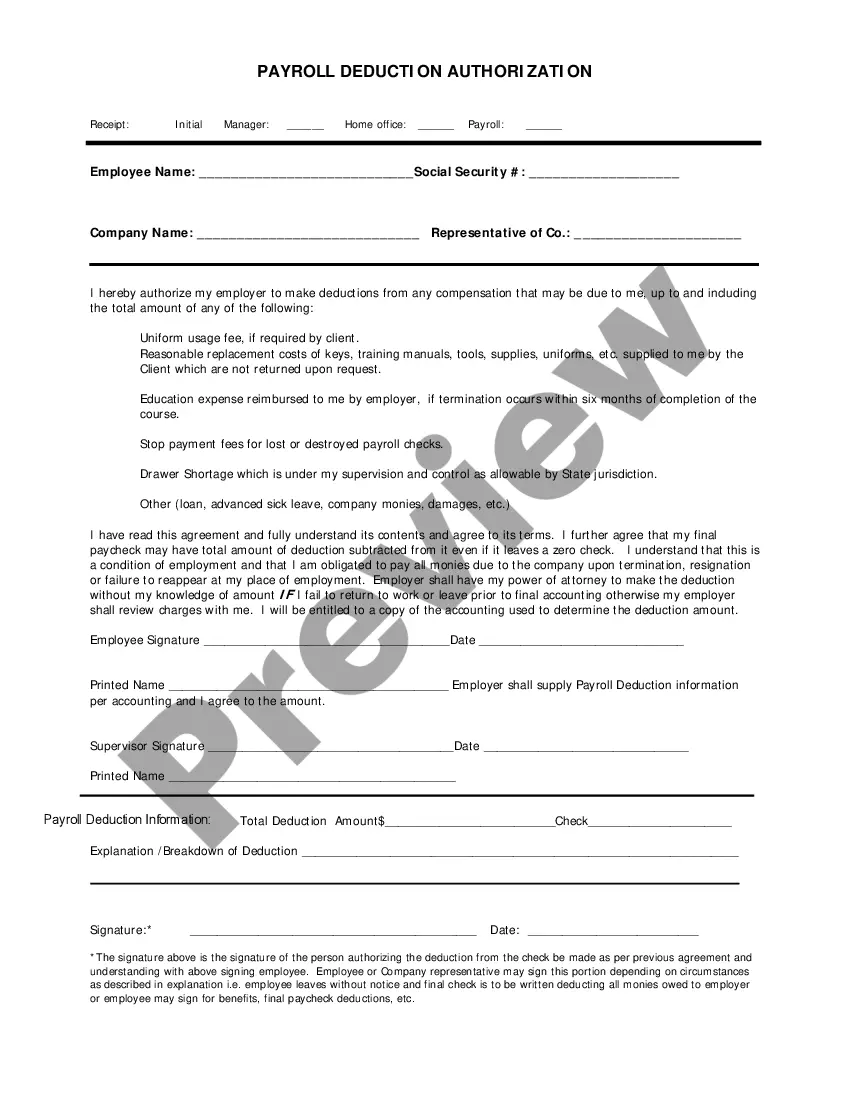
The Employer Training Memo - Payroll Deductions is a document designed for employers to understand the legal aspects of making deductions from employee paychecks. It outlines best practices, legal requirements, and recommendations to ensure that deductions comply with applicable laws, safeguarding both employer and employee rights. This memo differs from other payroll forms by specifically addressing the intricacies of payroll deductions, including when and how they can be applied, preventing potential disputes and legal issues.
Key parts of this document
- Definition of legal deductions from employee wages
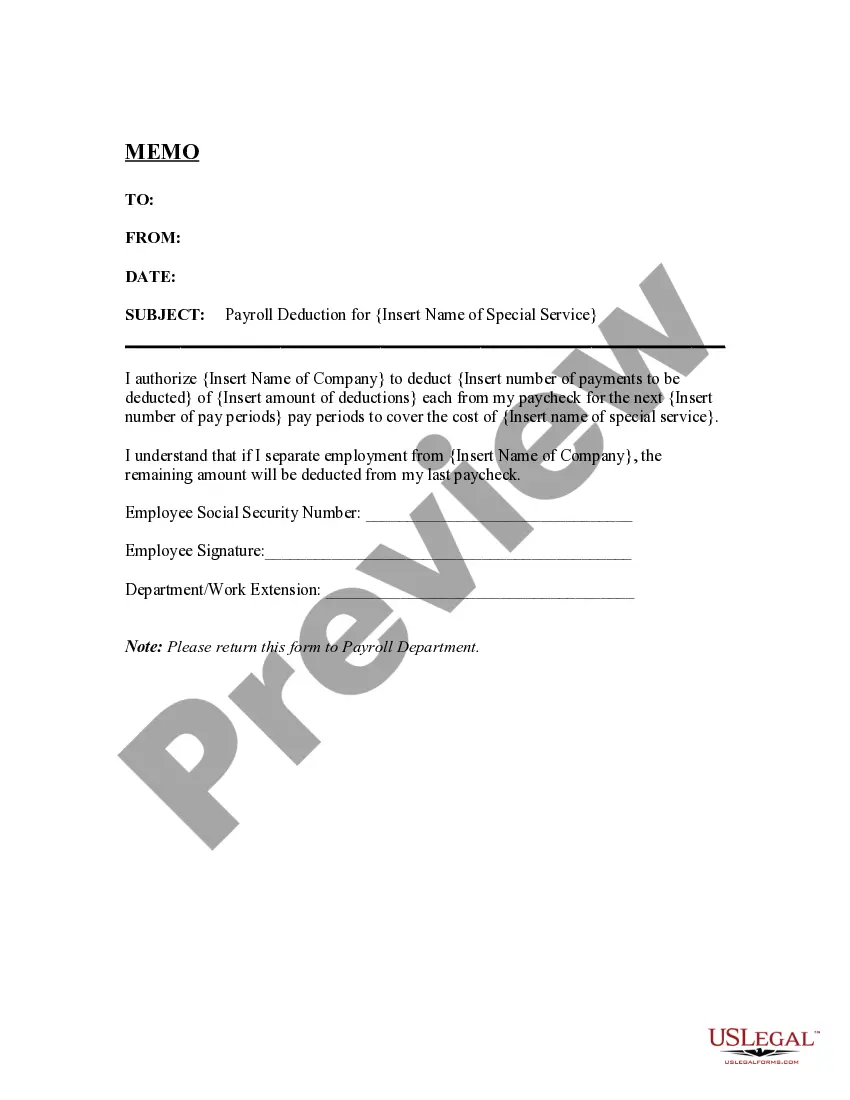
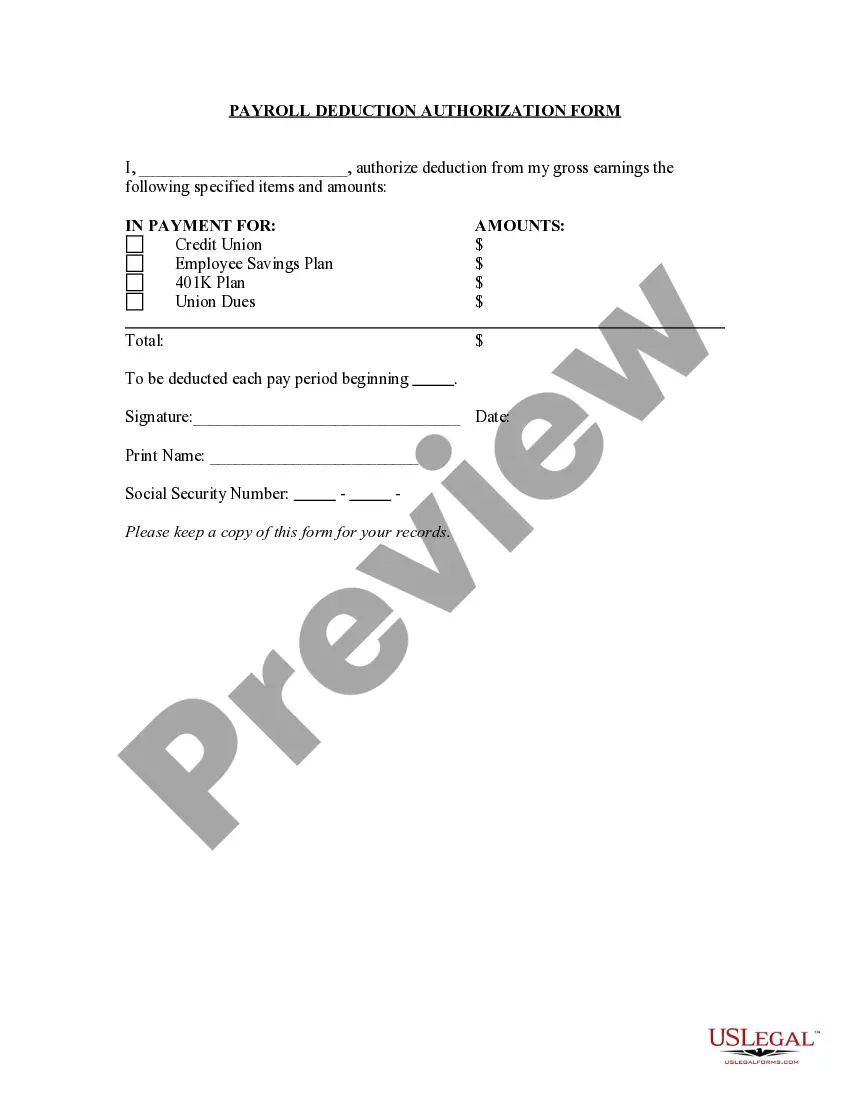
- Guidelines for creating written agreements for deductions
- Advice on managing employer loans and deductions
- Recommendations for reviewing current deduction practices
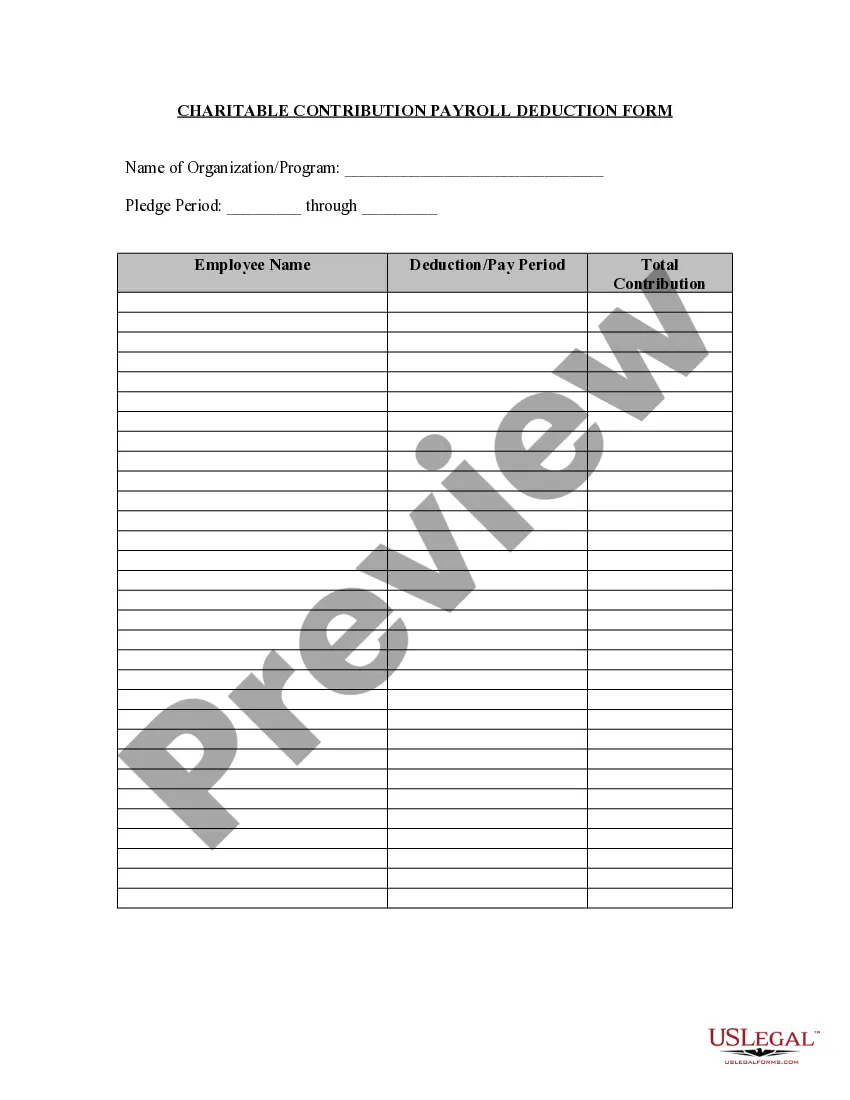
- Sample agreements and templates
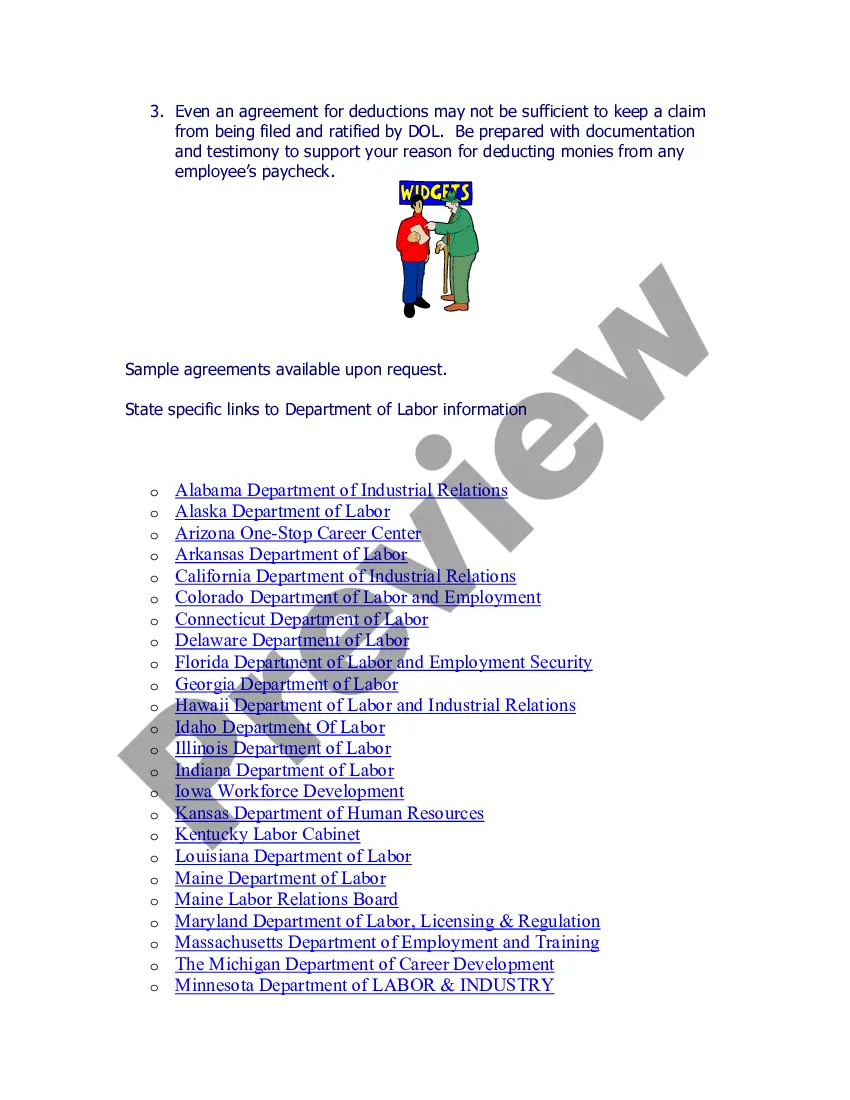
- Links to state-specific Department of Labor resources




When to use this form
This form is essential for employers when establishing or reviewing payroll deduction practices. It should be used in situations where salary deductions are necessary, such as for garnishments, loans, or benefit contributions. Employers facing potential legal challenges related to deductions, or those planning to update their policies, can utilize this memo to ensure compliance with federal and state laws.
Who this form is for
- Employers and HR professionals handling payroll
- Business owners looking to understand payroll deduction laws
- Managers responsible for reviewing employee deduction agreements
- Legal advisors focusing on labor and employment law
How to prepare this document
- Review the memo to understand the types of permissible deductions.
- Create a written agreement for any deductions, signed by both the employer and employee.
- Document any loans or salary advances with clear terms, including repayment schedules.
- Regularly evaluate all deductions being made from paychecks to ensure compliance with regulations.
- Familiarize yourself with state-specific labor laws and incorporate them into your practices.
Does this form need to be notarized?
In most cases, this form does not require notarization. However, some jurisdictions or signing circumstances might. US Legal Forms offers online notarization powered by Notarize, accessible 24/7 for a quick, remote process.
Get your form ready online
Our built-in tools help you complete, sign, share, and store your documents in one place.
Make edits, fill in missing information, and update formatting in US Legal Forms—just like you would in MS Word.
Download a copy, print it, send it by email, or mail it via USPS—whatever works best for your next step.
Sign and collect signatures with our SignNow integration. Send to multiple recipients, set reminders, and more. Go Premium to unlock E-Sign.
If this form requires notarization, complete it online through a secure video call—no need to meet a notary in person or wait for an appointment.
We protect your documents and personal data by following strict security and privacy standards.

Make edits, fill in missing information, and update formatting in US Legal Forms—just like you would in MS Word.

Download a copy, print it, send it by email, or mail it via USPS—whatever works best for your next step.

Sign and collect signatures with our SignNow integration. Send to multiple recipients, set reminders, and more. Go Premium to unlock E-Sign.

If this form requires notarization, complete it online through a secure video call—no need to meet a notary in person or wait for an appointment.

We protect your documents and personal data by following strict security and privacy standards.
Typical mistakes to avoid
- Not having written agreements for all payroll deductions.
- Failing to review and comply with state-specific laws regarding deductions.
- Deducting amounts that can lead to employees receiving less than minimum wage.
- Neglecting to keep clear records of deduction agreements and communications.
Why complete this form online
- Immediate access to up-to-date legal information on payroll deductions.
- Easy customization to fit specific employment scenarios.
- Streamlined process for creating legally compliant deduction agreements.
- Secure storage and easy retrieval of documents.
Legal use & context
- This memo is a guideline that aids employers in ensuring compliance with regulations regarding payroll deductions.
- Employers must be aware that certain deductions may lead to disputes if not properly documented and justified.
- Compliance with the Fair Labor Standards Act is crucial to avoid legal ramifications.
Looking for another form?





Form popularity
FAQ
The primary payroll journal entry is for the initial recordation of a payroll. This entry records the gross wages earned by employees, as well as all withholdings from their pay, and any additional taxes owed to the government by the company.
Debit "Wages Expense" for the full amount the company must pay for the pay period. Credit "Net Payroll Payable" and any deductions required. Add the total number of debits and then add the total number of credits.
Box A: Employee's Social Security number. Box B: Employer Identification Number (EIN) Box C: Employer's name, address, and ZIP code. Box D: Boxes E and F: Employee's name, address, and ZIP code. Box 1: Wages, tips, other compensation. Box 2: Federal income tax withheld. Box 3: Social Security wages.
Taxes that are withheld from an employee paycheck are entered as a debit to your salary expense account and a credit to your payable account. Debit the payable account and credit your cash account when you file your quarterly payroll taxes and issue the payment to the IRS.
Debit "Wages Expense" for the full amount the company must pay for the pay period. Credit "Net Payroll Payable" and any deductions required. Add the total number of debits and then add the total number of credits.
Can employers deduct your pay for training? If the employer is relying on a contract provision or written consent from the employee, the answer is Yes. If the deduction for training occurred without such authority, then the deduction would be illegal and the employee may have a potential employment claim.
Create a journal entry to record the total payroll: Debit the salary expense account for the total amount of the payroll. Credit the tax payable accounts for the total amount withheld from employee paychecks. Credit the cash account for the amount issued to the employees as net pay.
Payroll Withholdings are Liabilities (The taxes withheld from employees are not an expense of the company that withheld them.) The payroll taxes that are not withheld from employees are expenses of the employer and are liabilities until the amounts are remitted.
Box A: Employee's Social Security number. Box B: Employer Identification Number (EIN) Box C: Employer's name, address, and ZIP code. Box D: Boxes E and F: Employee's name, address, and ZIP code. Box 1: Wages, tips, other compensation. Box 2: Federal income tax withheld. Box 3: Social Security wages.