Delaware Amendment to Postnuptial Property Agreement
Understanding this form
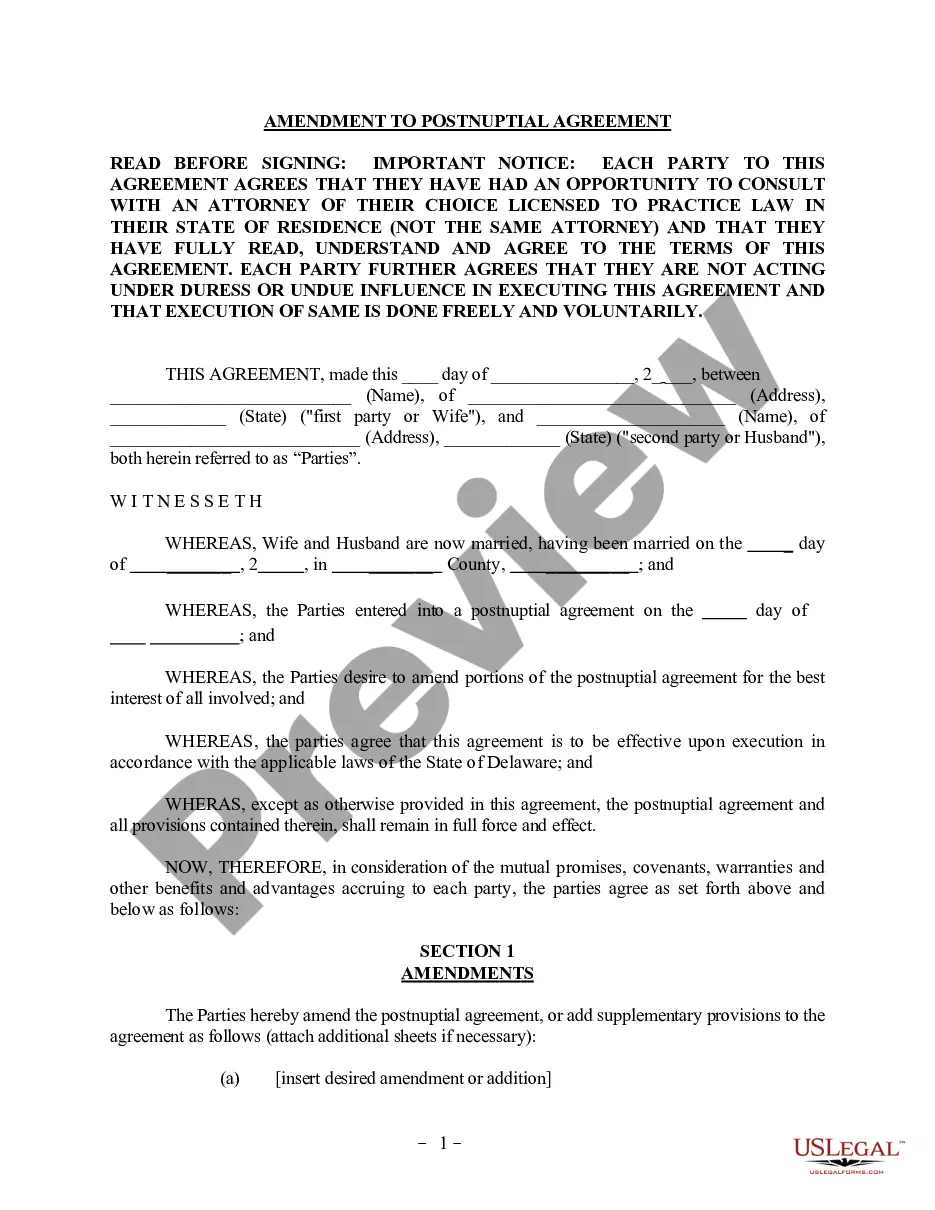
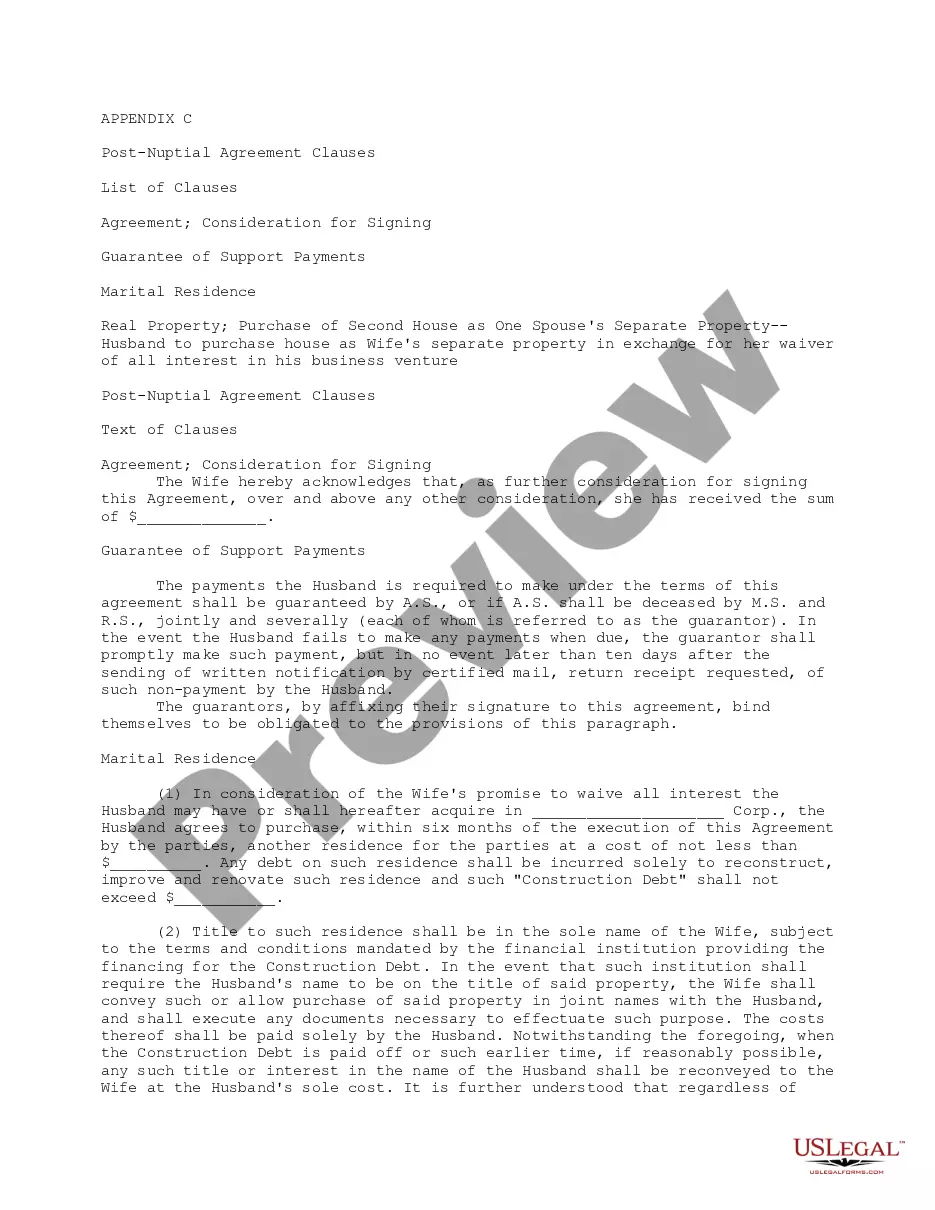
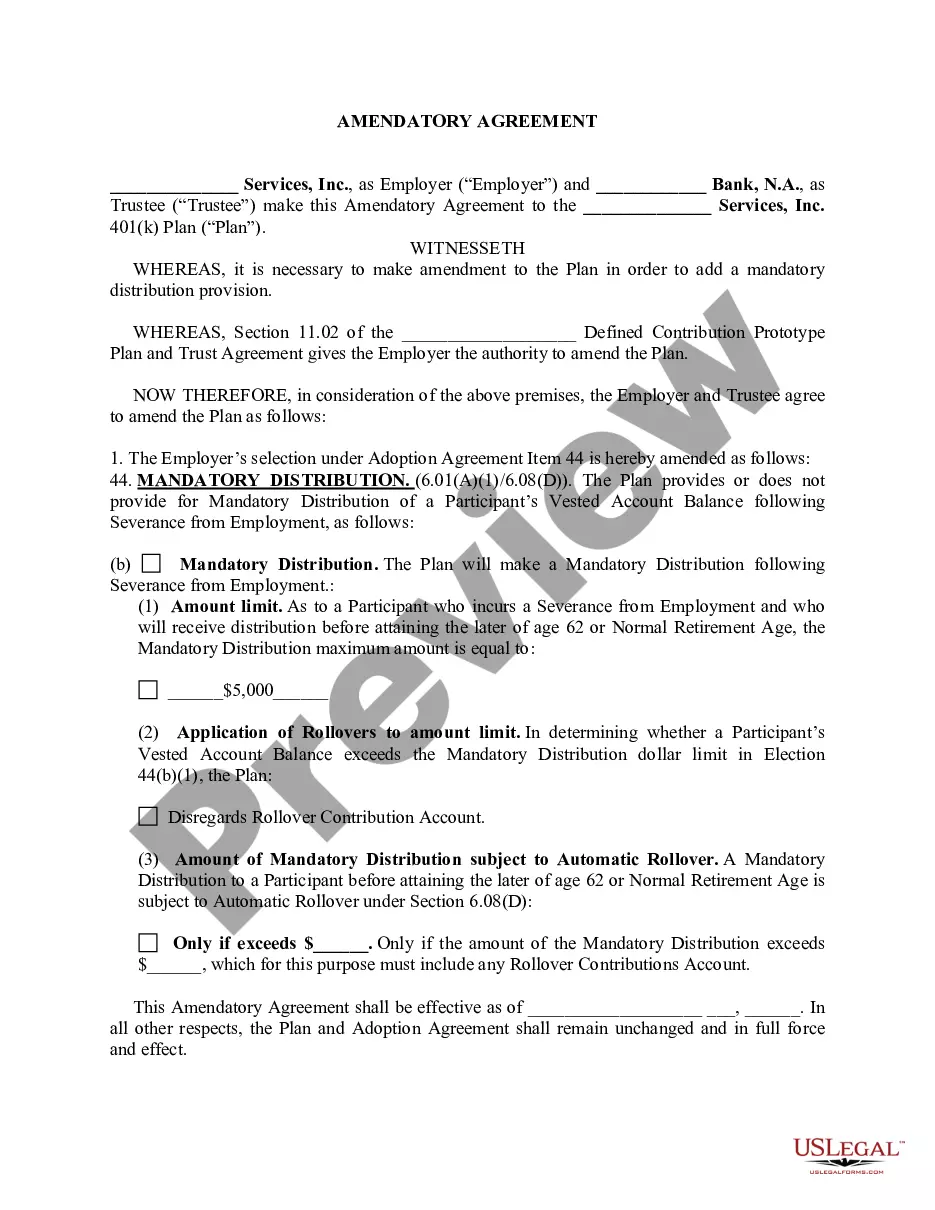
The Amendment to Postnuptial Property Agreement is a legal document used by married couples to make changes to an existing postnuptial agreement. This form allows the parties to modify or add conditions regarding their property rights and obligations, ensuring that both spouses have a clear understanding of their financial arrangements. Unlike a postnuptial agreement, which establishes the terms at the time of marriage, this amendment is specifically for adjusting those terms at a later date.
Key components of this form
- Identification of the parties involved in the agreement.
- Effective date of the amendment and reference to the original postnuptial agreement.
- Specific amendments or additions to the existing agreement.
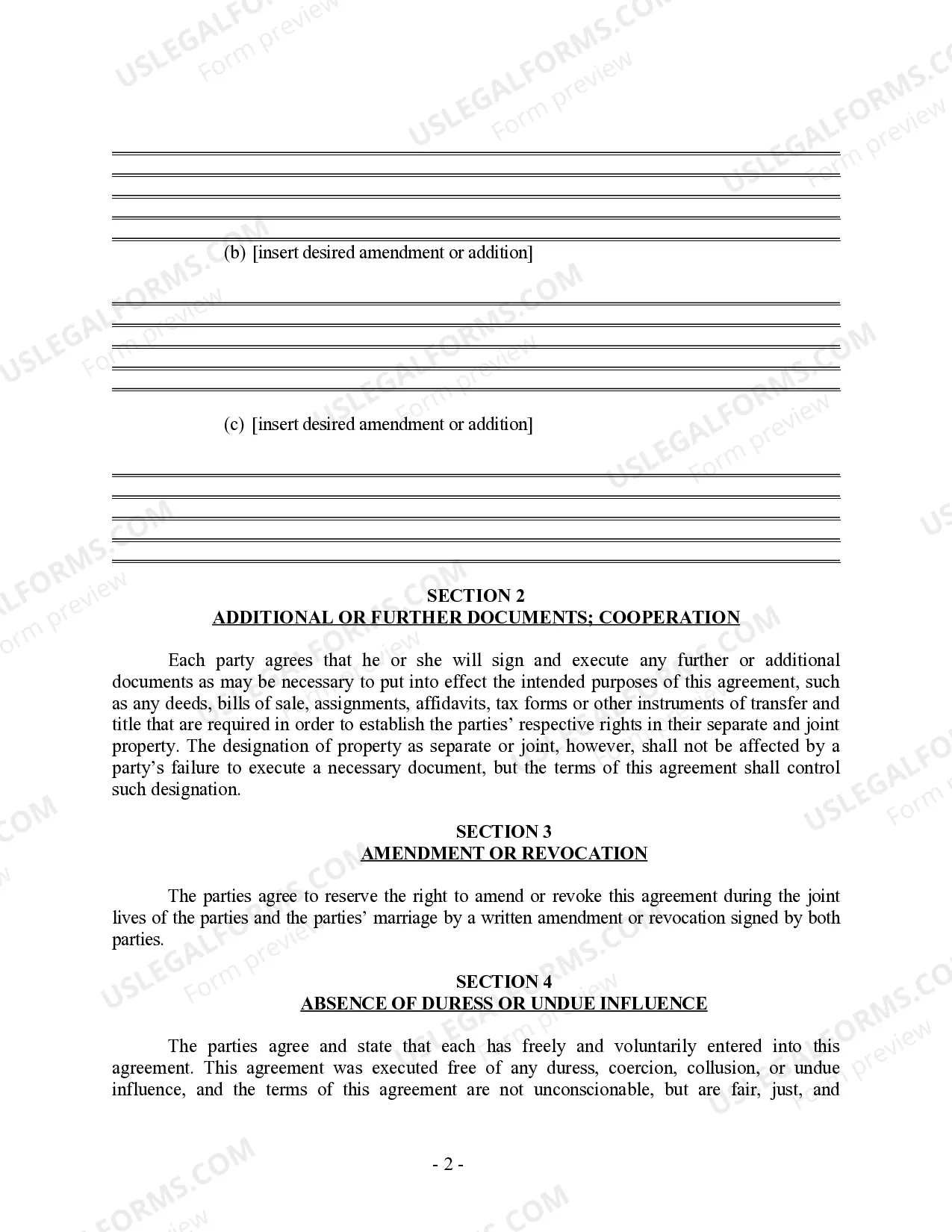
- Cooperation clause requiring both parties to execute further documents as necessary.
- Terms on the amendment or revocation of the agreement during the marriage.
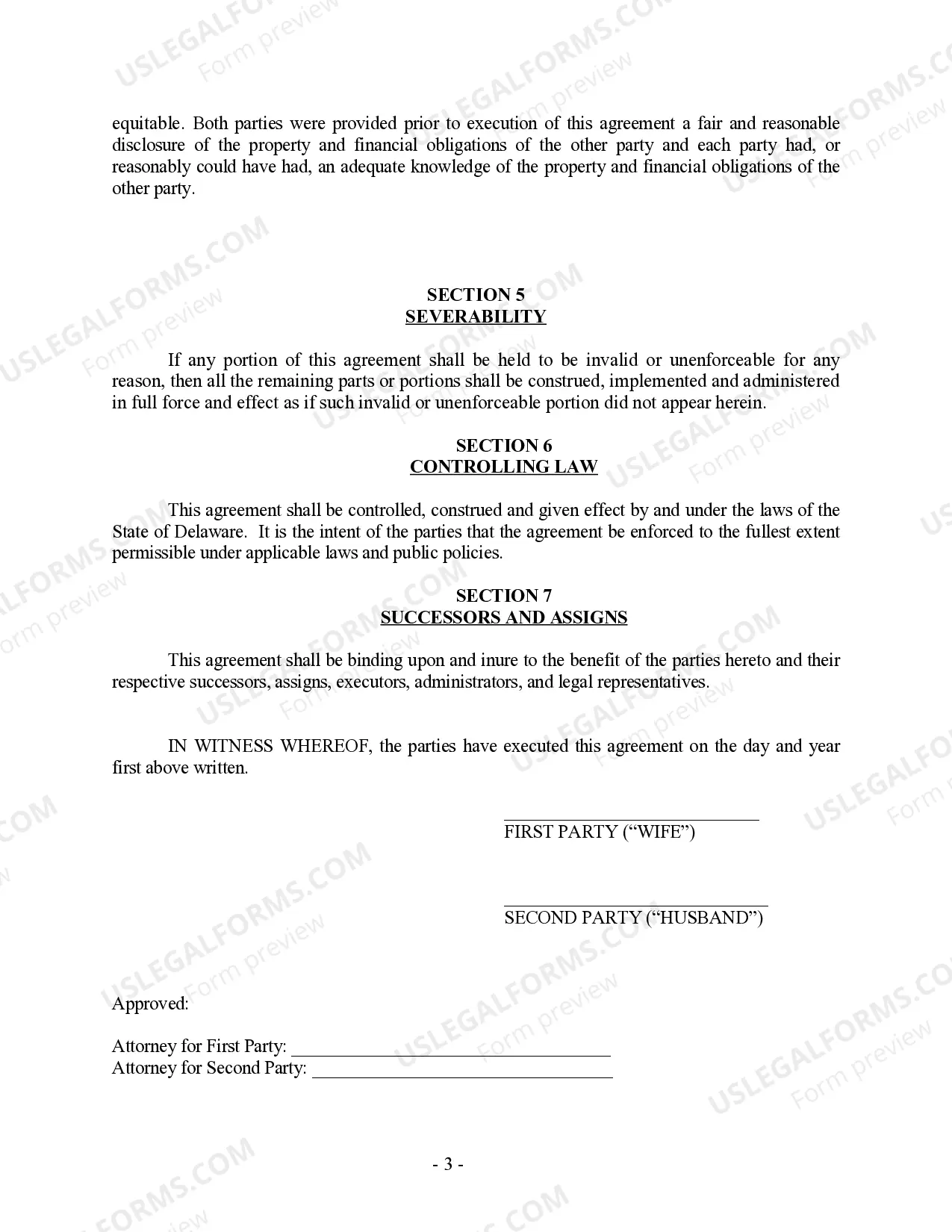
- Disclaimer confirming the absence of duress or undue influence in signing.
- Clauses on severability and controlling law governed by the State of Delaware.
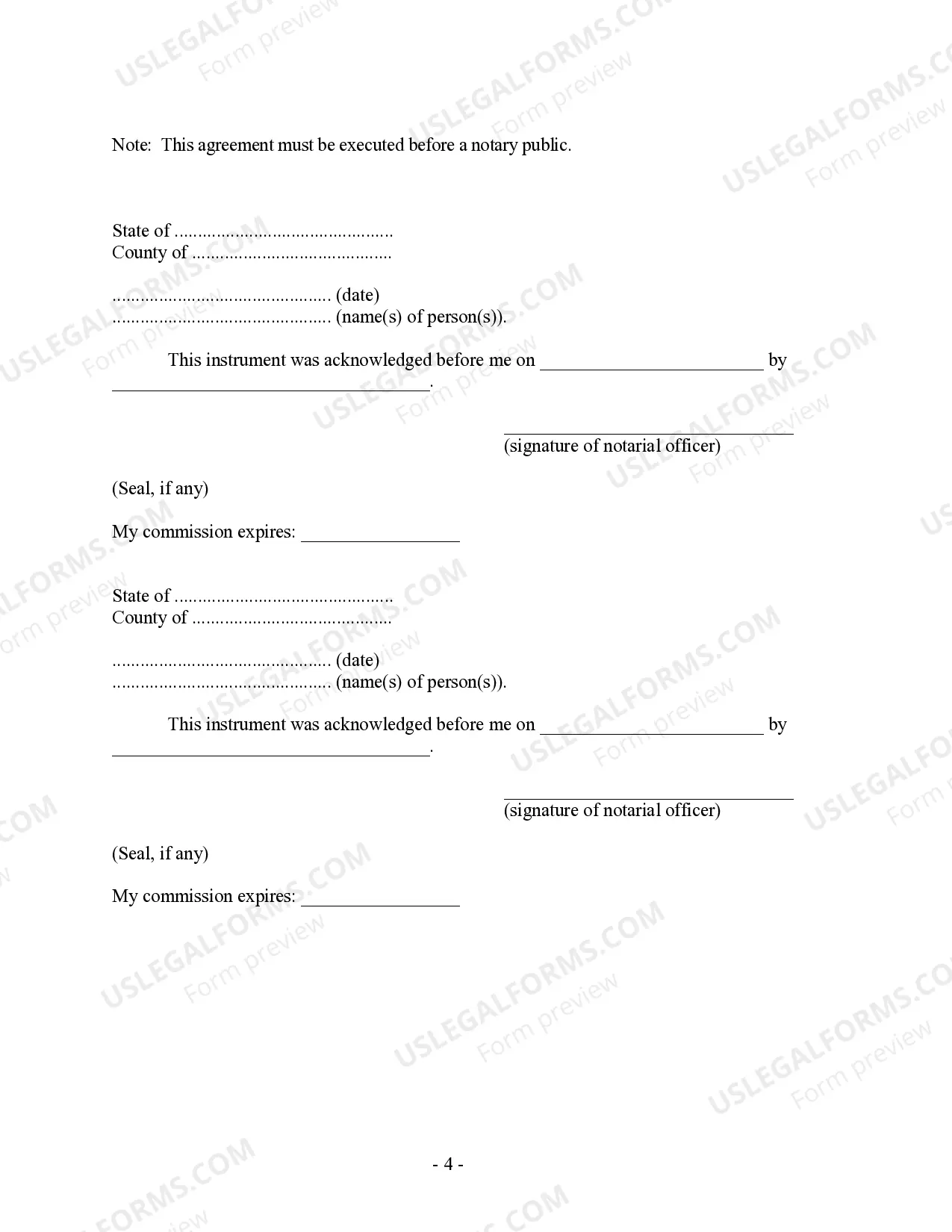
- Notarization requirements to validate the form.
When to use this document
This form is typically used when married couples wish to update their existing postnuptial property agreement due to changes in their financial situation, life circumstances, or mutual agreements. Common examples include adding new property acquired after the initial agreement, modifying the terms of asset distribution, or clarifying rights related to joint or separate property.
Who needs this form
- Couples who have previously entered into a postnuptial property agreement.
- Married individuals seeking to update their financial arrangements.
- Parties looking to clarify or modify property division terms.
- Those who want to ensure that the legal documentation reflects their current intentions regarding their assets.
Steps to complete this form
- Identify the parties by entering their full names and addresses at the start of the form.
- Specify the effective date of the amendment and reference the original postnuptial agreement.
- Insert the desired amendments or additions where indicated in the form.
- Ensure both parties sign the amendment in the presence of a notary public.
- Complete all required notarization sections to validate the form.
Does this form need to be notarized?
Notarization is required for this form to take effect. Our online notarization service, powered by Notarize, lets you verify and sign documents remotely through an encrypted video session, available 24/7.
Get your form ready online
Our built-in tools help you complete, sign, share, and store your documents in one place.
Make edits, fill in missing information, and update formatting in US Legal Forms—just like you would in MS Word.
Download a copy, print it, send it by email, or mail it via USPS—whatever works best for your next step.
Sign and collect signatures with our SignNow integration. Send to multiple recipients, set reminders, and more. Go Premium to unlock E-Sign.
If this form requires notarization, complete it online through a secure video call—no need to meet a notary in person or wait for an appointment.
We protect your documents and personal data by following strict security and privacy standards.

Make edits, fill in missing information, and update formatting in US Legal Forms—just like you would in MS Word.

Download a copy, print it, send it by email, or mail it via USPS—whatever works best for your next step.

Sign and collect signatures with our SignNow integration. Send to multiple recipients, set reminders, and more. Go Premium to unlock E-Sign.

If this form requires notarization, complete it online through a secure video call—no need to meet a notary in person or wait for an appointment.

We protect your documents and personal data by following strict security and privacy standards.
Avoid these common issues
- Failing to notarize the document, which may make it unenforceable.
- Not updating all necessary information or leaving sections incomplete.
- Signing the amendment without consulting a separate attorney.
- Not discussing changes with each other prior to signing.
Why complete this form online
- Convenience of downloading and completing the form at your own pace.
- Editability allows for customizing the amendment to fit your unique needs.
- Access to legal forms drafted by licensed attorneys, ensuring compliance with legal standards.
- Safe storage and retrieval options for future use and reference.
Legal use & context
- The amendment to the postnuptial property agreement serves to modify previously established legal agreements.
- It must be drafted and executed in accordance with state laws to be enforceable.
- Proper use includes a full review and understanding of all assets and obligations from both parties.
Main things to remember
- The form allows for modifications to existing postnuptial agreements.
- Both parties must agree to the changes and sign in front of a notary.
- Understanding and clarity of the terms are essential for enforceability.
- Consultation with a licensed attorney is recommended to ensure fairness and legality.
Looking for another form?

Form popularity
FAQ
While post-nuptial agreements offer clarity, they also have some disadvantages. They may lead to uncomfortable discussions about finances, which can strain a marriage. Additionally, a poorly drafted Delaware Amendment to Postnuptial Property Agreement may face legal challenges in the future. To avoid pitfalls, seeking professional guidance from US Legal Forms can help you draft a comprehensive and effective agreement.
nuptial agreement can be deemed invalid for several reasons. For instance, if one spouse coercively pressured the other into signing, it is likely to fall apart in court. Furthermore, if both parties did not fully disclose their financial assets, the Delaware Amendment to Postnuptial Property Agreement may be considered unenforceable. Using US Legal Forms can help ensure your agreement meets all legal standards.
Yes, post-nuptial agreements can hold up in court if they meet certain legal requirements. A Delaware Amendment to Postnuptial Property Agreement must be fair and equitable to both parties involved. Additionally, both spouses should provide full disclosure of their assets and liabilities. For those looking for guidance, US Legal Forms offers templates and resources to create a strong post-nuptial agreement.
To write a postnuptial agreement, start by identifying the assets and debts of both spouses. Clearly outline how you want to divide these in case of separation or divorce. It’s important to consult a legal expert who understands the Delaware Amendment to Postnuptial Property Agreement, as they can guide you through the specific requirements for your state. Using a platform like US Legal Forms can simplify this process, providing templates and resources tailored to your needs.
To make a postnuptial agreement legal, both spouses must voluntarily agree to its terms. It's essential to ensure that the agreement is written and signed by both parties. Furthermore, each spouse should have independent legal counsel to guarantee that their rights are protected. Finally, if you are considering a Delaware Amendment to Postnuptial Property Agreement, make sure to follow Delaware laws to ensure its enforceability.
Yes, postnuptial agreements are enforceable in Delaware, provided they meet certain legal conditions. These agreements must be fair, entered into voluntarily, and include a full disclosure of each party's financial situation. Utilizing a well-crafted Delaware Amendment to Postnuptial Property Agreement can protect your interests, making it essential to use trusted resources like uslegalforms to ensure compliance with Delaware law.
Definitely, a postnup can be overturned if specific legal requirements are not met. Factors like undue influence, misrepresentation, or changes in marital circumstances can render the agreement unenforceable. When reviewing the implications of a Delaware Amendment to Postnuptial Property Agreement, it is advisable to work with an attorney who understands your unique situation and the law.
To invalidate a postnuptial agreement, you must demonstrate that it lacks essential elements of validity, such as full disclosure of assets or fair terms. Evidence of unfair pressure or lack of understanding by one party can also support your case for invalidation. In cases involving the Delaware Amendment to Postnuptial Property Agreement, consulting a legal professional can help you gather necessary documentation and present your case properly.
Yes, a postnuptial agreement can be overturned in certain circumstances. If either party can prove coercion, fraud, or that the agreement was not entered into voluntarily, a court may invalidate the agreement. Additionally, if significant changes in circumstances occur, the Delaware Amendment to Postnuptial Property Agreement may be challenged. It’s essential to seek legal advice to navigate these complexities effectively.