District of Columbia Transfer on Death Deed or TOD - Beneficiary Deed for Husband and Wife to Business Entity
About this form
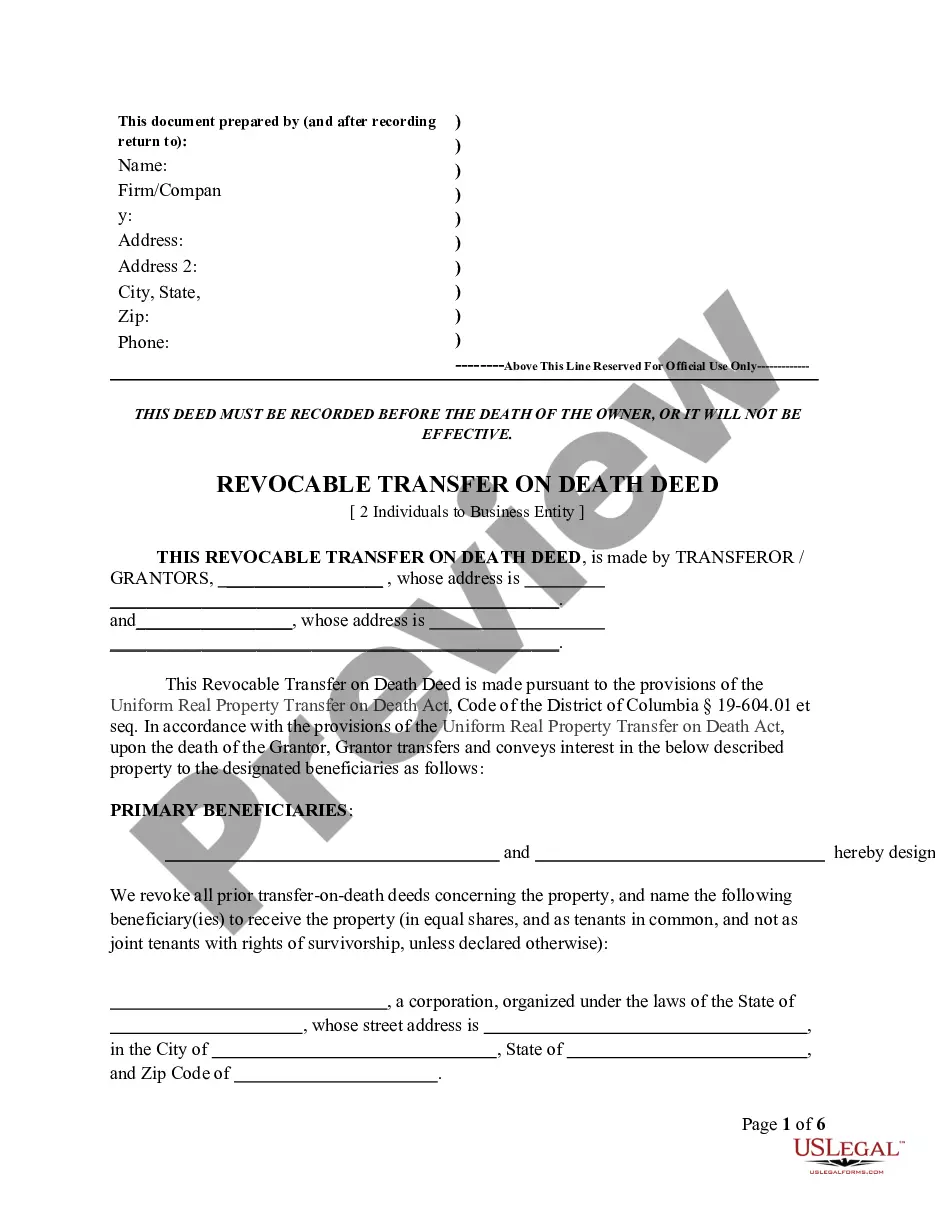
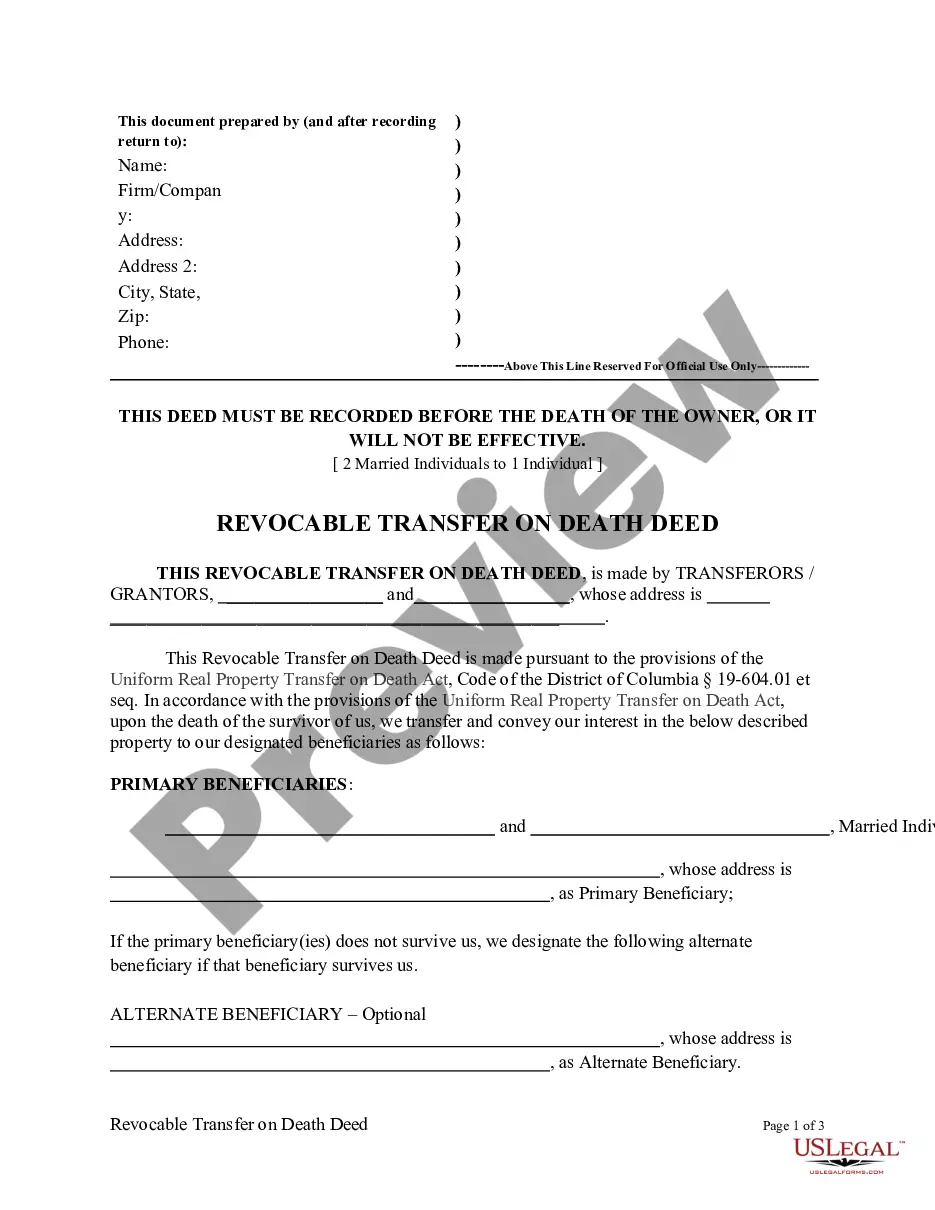
The Transfer on Death Deed (TOD) is a legal document used by married couples to transfer ownership of real property to a business entity upon the death of both spouses. Unlike traditional deeds, this form does not transfer any present ownership interest and remains revocable during the owners' lifetimes. Once enacted, properties are conveyed to the designated business beneficiaries, simplifying the process of asset transfer after death.
Main sections of this form
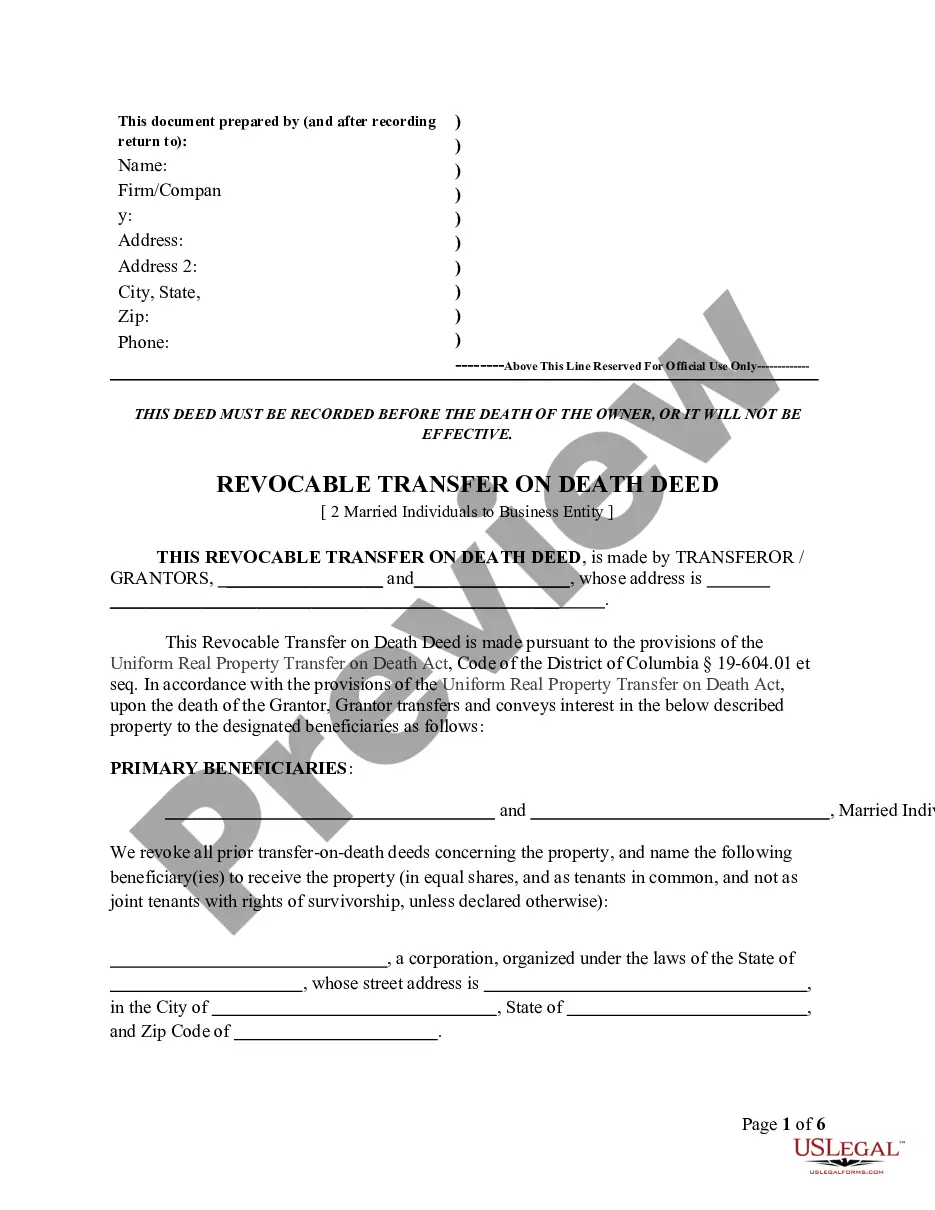
- Grantees: Specifies the business entity designated to receive the property posthumously.
- Primary beneficiaries: Details the names and addresses of the primary business beneficiary and their jurisdiction.
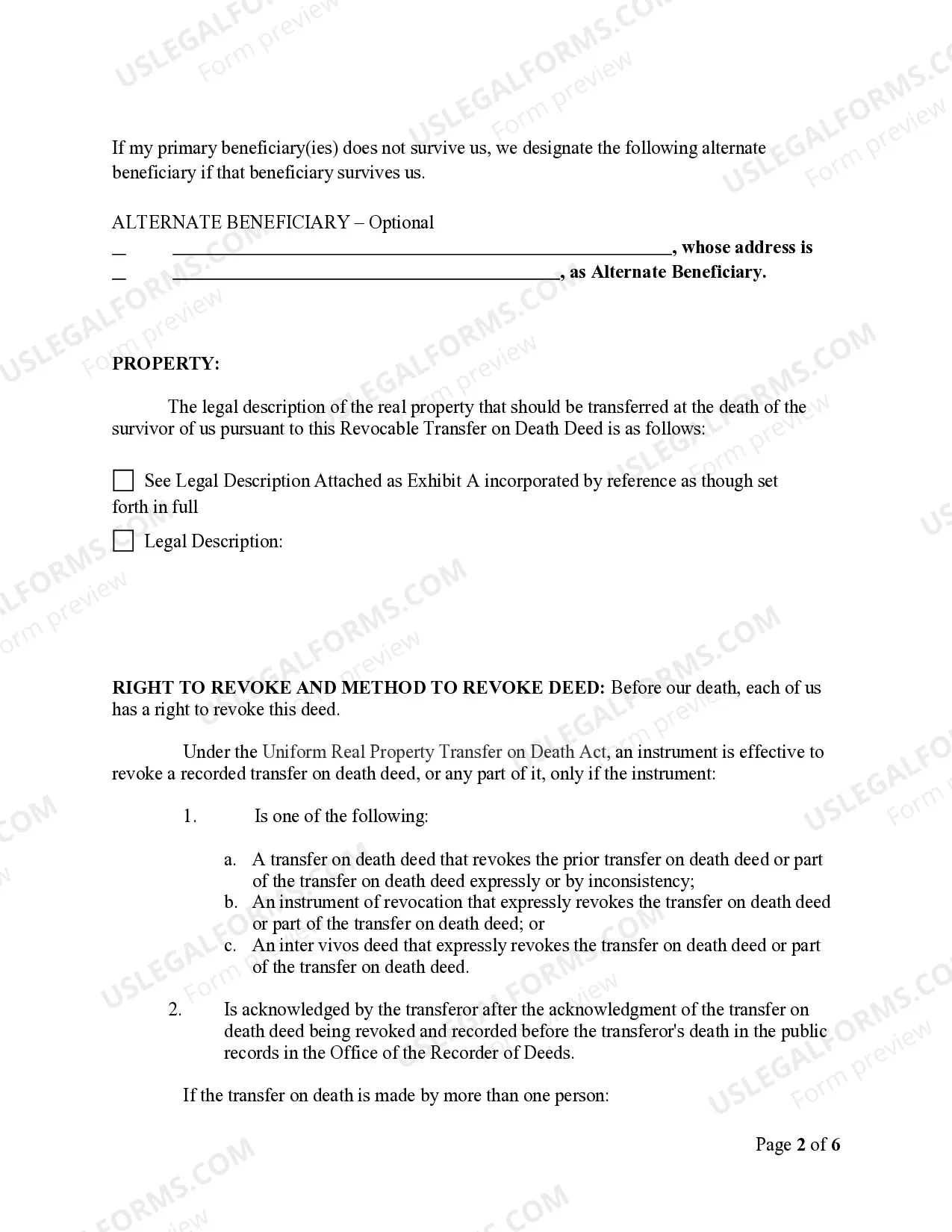
- Revocation clause: Outlines the method for revoking the deed before death and specifies that all prior deeds are revoked.
- Legal description: Provides a detailed description of the property being transferred.
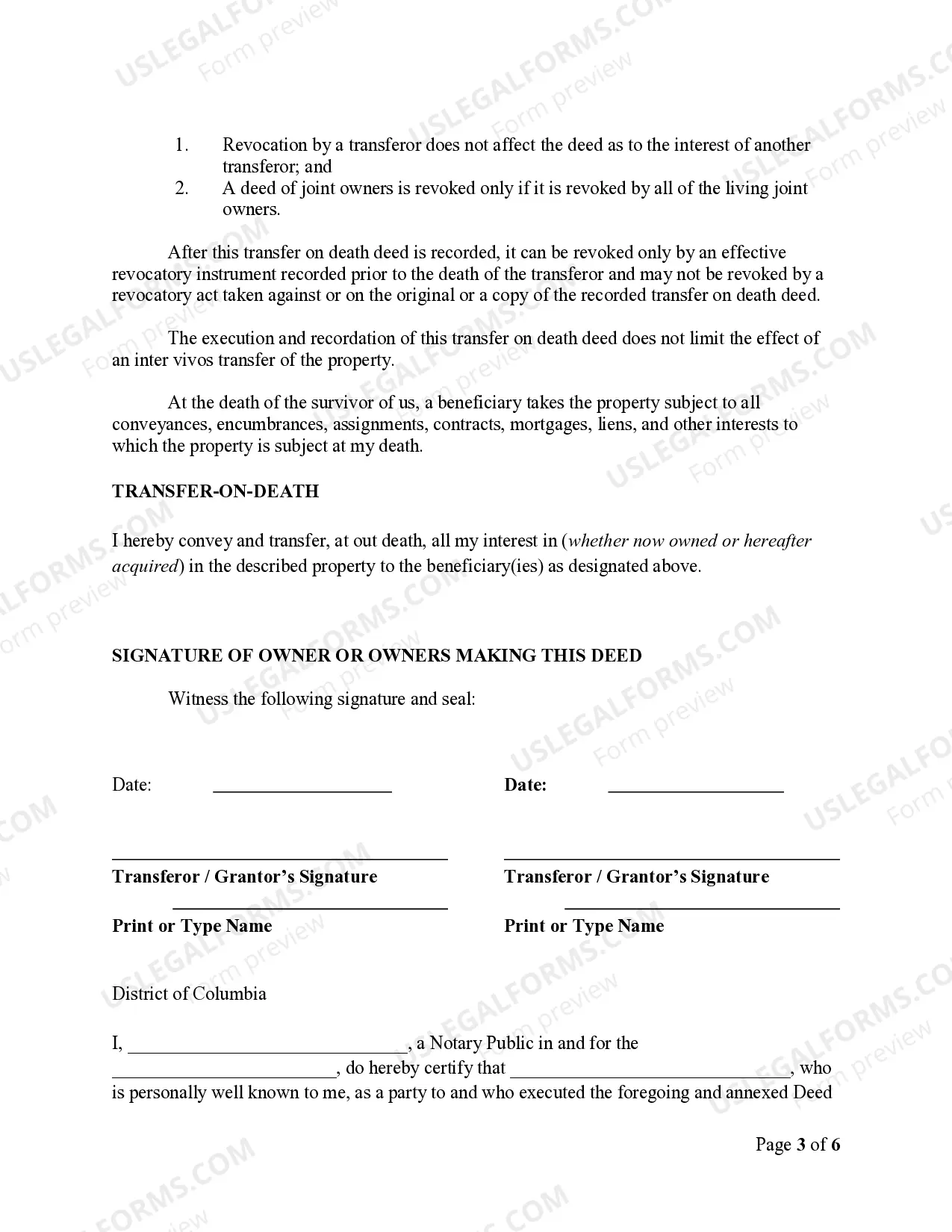
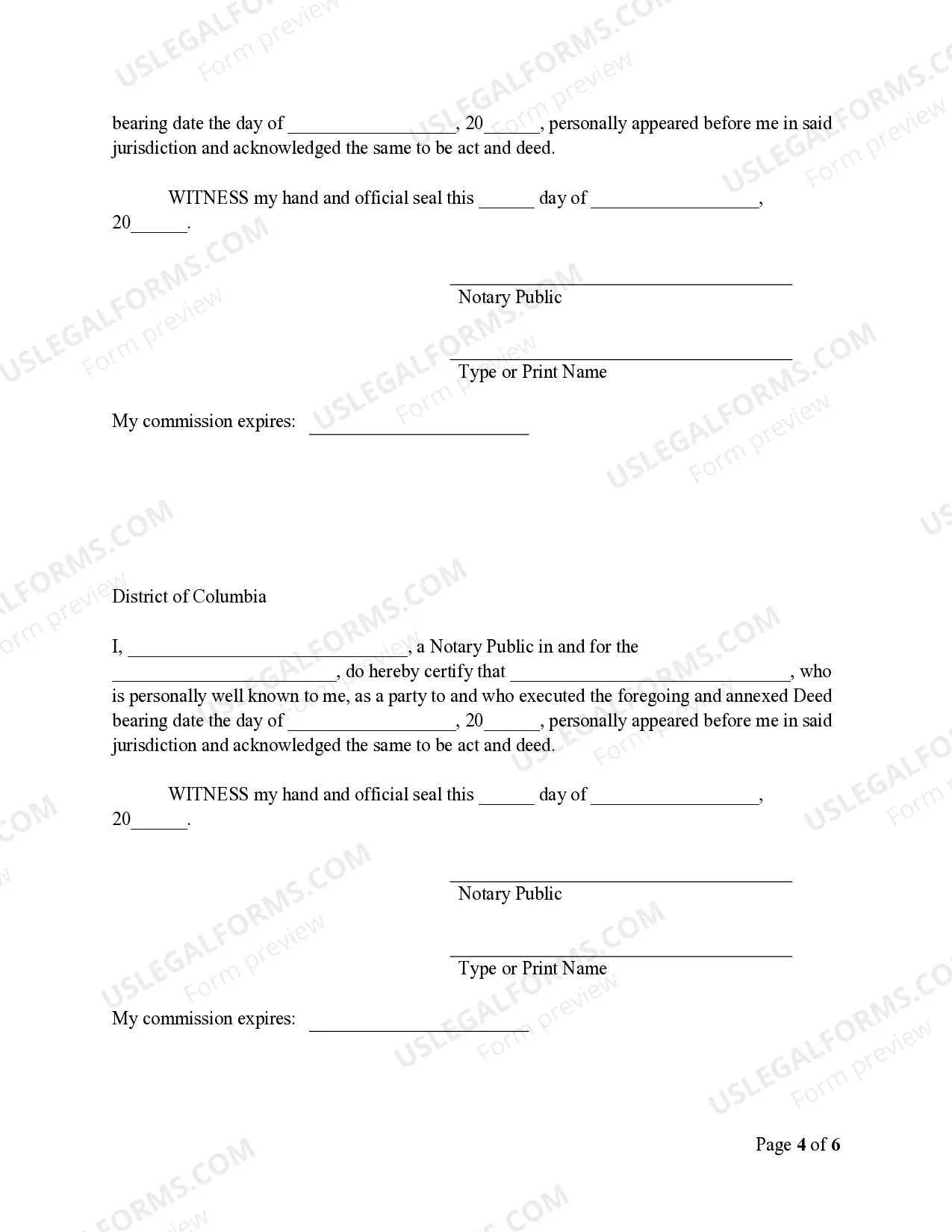
- Witness and notary sections: Includes areas for signatures and seals of witnesses and notaries to validate the document.




Common use cases
This form is suitable when a married couple wants to ensure that their property is automatically transferred to a specified business entity after both of their deaths. It can be used as part of estate planning to avoid probate and to streamline the transfer of property, ensuring that it goes directly to the intended business without complications.
Intended users of this form
- Married couples owning real estate who wish to simplify the transfer of property.
- Those who want to designate a business entity as the beneficiary of their property after death.
- Individuals seeking a flexible, revocable option for transferring property to avoid probate.
Completing this form step by step
- Identify the parties: Enter the names and addresses of all grantors (owners).
- Specify the property: Include a detailed legal description of the real property being transferred.
- Designate beneficiaries: Clearly state the name and address of the business entity that will receive the property.
- Include revocation details: Confirm that all previous deeds are revoked and outline the method for revoking this deed if needed.
- Sign and notarize: Both spouses should sign the deed and have it notarized before recording it at the local office.
Notarization requirements for this form
Yes, this form must be notarized to be legally valid. US Legal Forms provides integrated online notarization services, allowing you to complete the process through secure video calls at your convenience.
Get your form ready online
Our built-in tools help you complete, sign, share, and store your documents in one place.
Make edits, fill in missing information, and update formatting in US Legal Forms—just like you would in MS Word.
Download a copy, print it, send it by email, or mail it via USPS—whatever works best for your next step.
Sign and collect signatures with our SignNow integration. Send to multiple recipients, set reminders, and more. Go Premium to unlock E-Sign.
If this form requires notarization, complete it online through a secure video call—no need to meet a notary in person or wait for an appointment.
We protect your documents and personal data by following strict security and privacy standards.

Make edits, fill in missing information, and update formatting in US Legal Forms—just like you would in MS Word.

Download a copy, print it, send it by email, or mail it via USPS—whatever works best for your next step.

Sign and collect signatures with our SignNow integration. Send to multiple recipients, set reminders, and more. Go Premium to unlock E-Sign.

If this form requires notarization, complete it online through a secure video call—no need to meet a notary in person or wait for an appointment.

We protect your documents and personal data by following strict security and privacy standards.
Typical mistakes to avoid
- Failing to record the deed before the death of the grantors, making it ineffective.
- Not including a complete legal description of the property, which can lead to future disputes.
- Omitting signatures from both spouses, rendering the document invalid.
Advantages of online completion
- Convenient download: Access and complete the form from anywhere without the need for in-person visits.
- Editability: Easily fill out the form with specific details relevant to your situation.
- Reliability: Use a template drafted by licensed attorneys to ensure compliance with legal standards.
Looking for another form?
Form popularity
FAQ
Yes, Washington D.C. does permit the use of the District of Columbia Transfer on Death Deed or TOD - Beneficiary Deed for Husband and Wife to Business Entity. This allows property owners to designate beneficiaries who can receive the property directly upon the owner's death without going through probate. It simplifies the passing of property to loved ones and can help avoid lengthy legal processes. For more detailed information, consider visiting uslegalforms for resources tailored to your needs.
Currently, several states recognize the District of Columbia Transfer on Death Deed or TOD - Beneficiary Deed for Husband and Wife to Business Entity. States such as Arizona, California, and Tennessee have implemented similar laws to facilitate property transfer without the need for probate. However, it’s crucial to check local regulations since the specifics can vary widely. Always consult a legal expert or use a resource like uslegalforms for tailored guidance.
The District of Columbia Transfer on Death Deed or TOD - Beneficiary Deed for Husband and Wife to Business Entity may have several disadvantages. First, this deed does not offer any tax benefits; instead, the property may still be subject to estate taxes. Additionally, if the beneficiary faces financial issues or a legal dispute, creditors may claim the property. Finally, the deed may not provide a comprehensive solution for complex family situations, so you might want to consider other estate planning tools.
A transfer on death deed can carry some disadvantages. One concern is that it may not avoid probate for certain assets, and beneficiaries cannot access the property until the owner's death. Additionally, if property laws change or if beneficiaries do not align with your current wishes, it can create legal complexities and confusion down the line.
Filling out a transfer on death designation affidavit is straightforward but requires attention to detail. Start by entering the name of the property owner, the property address, and the names of the beneficiaries. Make sure to sign the document, and if necessary, have it notarized to comply with the requirements of the District of Columbia Transfer on Death Deed or TOD - Beneficiary Deed for Husband and Wife to Business Entity.
To complete an affidavit of death and heirship for a District of Columbia Transfer on Death Deed, begin by collecting necessary information about the deceased. Fill in details like their full name, date of death, and information about the heirs. Ensure to sign the document in the presence of a notary, confirming its accuracy and legality, which helps in establishing rightful ownership.
While it is not mandatory to hire a lawyer for executing a District of Columbia Transfer on Death Deed or TOD - Beneficiary Deed for Husband and Wife to Business Entity, consulting one can provide clarity. Legal assistance can ensure you understand all requirements and implications. Therefore, it may be beneficial to seek guidance, especially if your situation involves complicated assets or multiple beneficiaries.
Yes, accounts held under a District of Columbia Transfer on Death Deed or TOD - Beneficiary Deed for Husband and Wife to Business Entity avoid probate. This feature allows beneficiaries to access the asset directly upon the owner's death, streamlining the process. Utilizing resources like U.S. Legal Forms can help you set up your accounts correctly to ensure a smooth transition.
Yes, Washington, D.C., does allow for a District of Columbia Transfer on Death Deed or TOD - Beneficiary Deed for Husband and Wife to Business Entity. This legal option provides a quick and easy way to transfer property outside of probate, benefiting many residents. Always check the latest regulations and consider professional advice to ensure compliance.
Choosing between a District of Columbia Transfer on Death Deed or TOD - Beneficiary Deed for Husband and Wife to Business Entity and naming a beneficiary depends on your individual needs. TOD allows you to retain control during your lifetime while ensuring seamless transfer upon death. However, designating a beneficiary through a different method might provide greater flexibility in some situations.