District of Columbia Transfer on Death Deed or TOD - Beneficiary Deed for Husband and Wife to a Business Entity
About this form
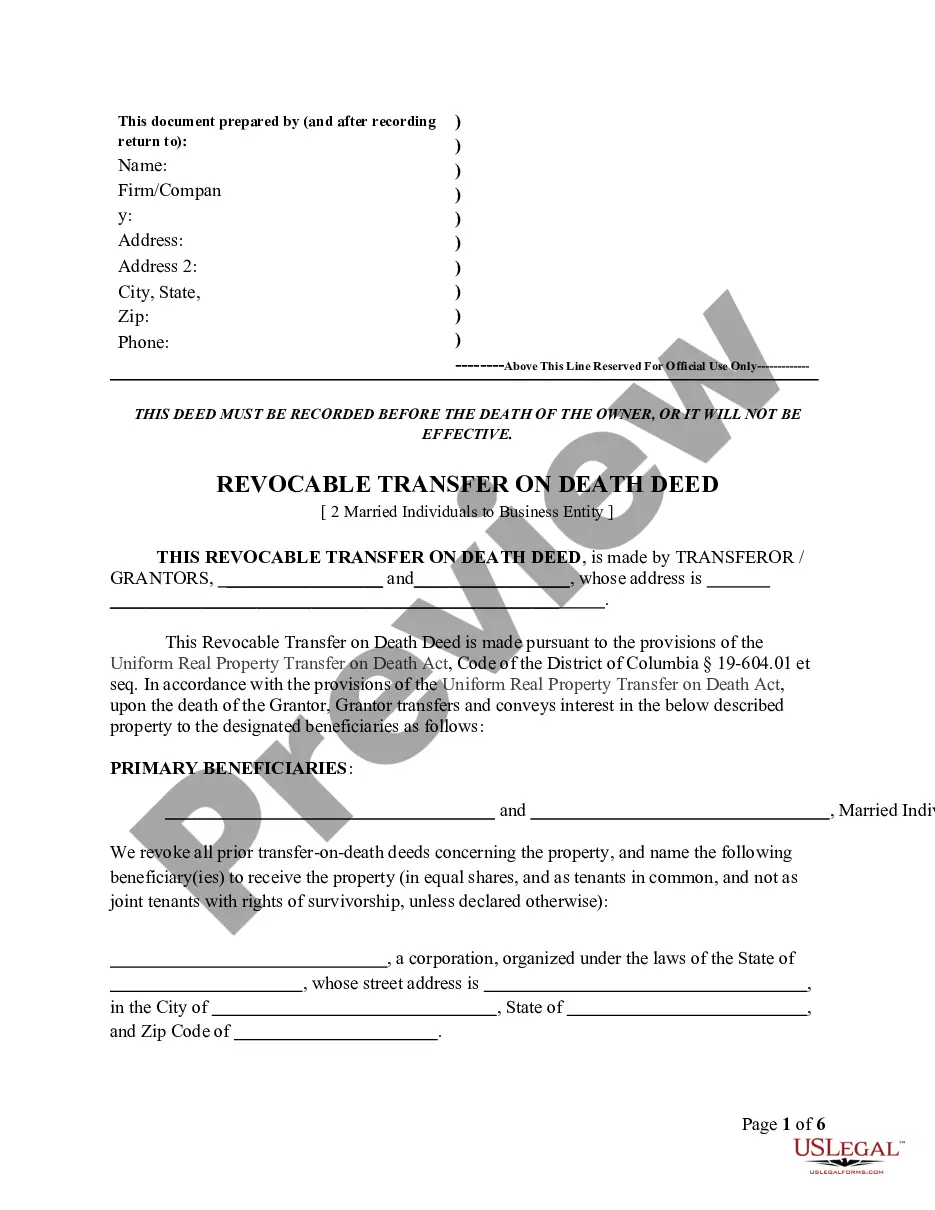
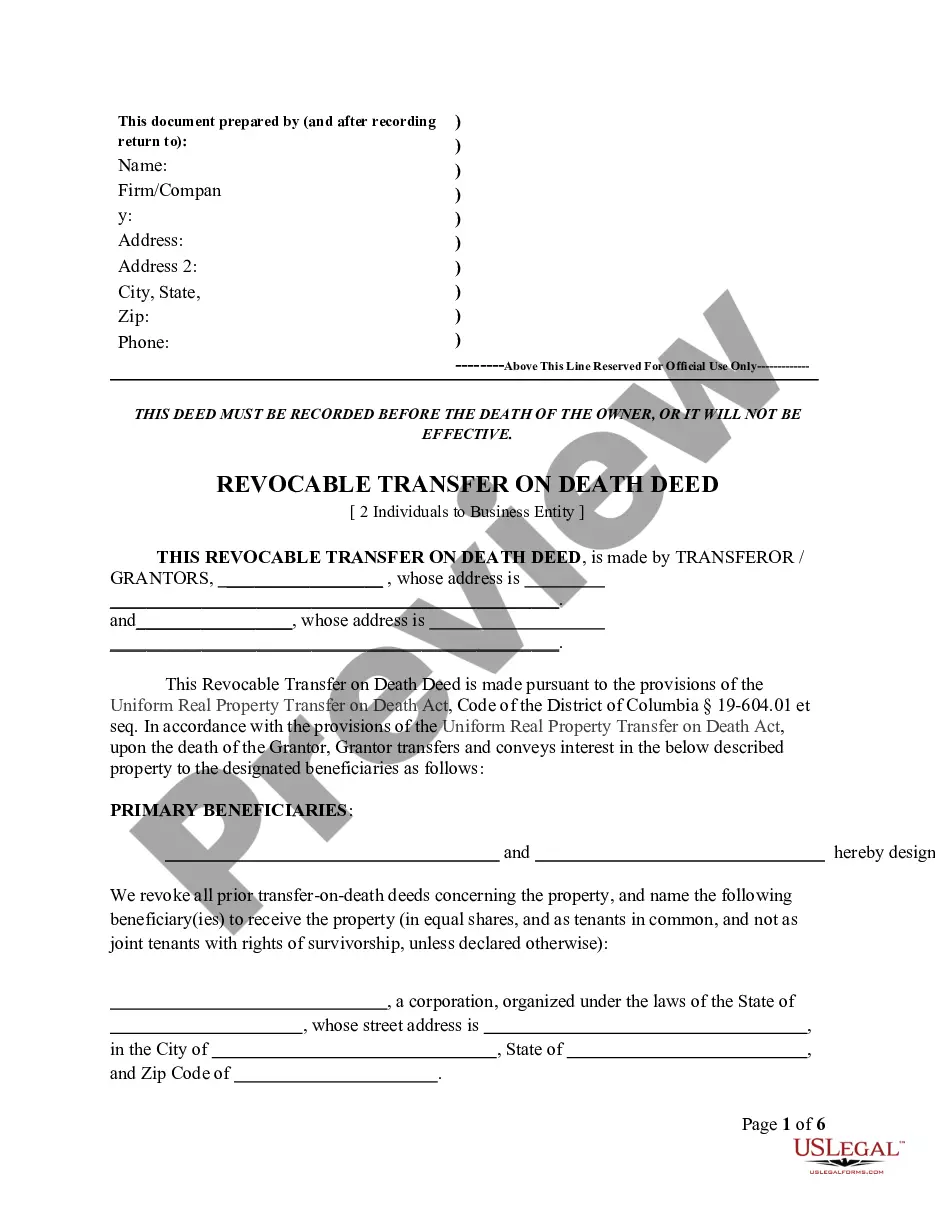
The Transfer on Death Deed (TOD) is a legal document that allows married couples to designate a business entity as the beneficiary of real property. Upon the death of the last surviving grantor, ownership of the property transfers to the specified business without going through probate. Unlike other property transfer methods, the TOD deed does not transfer any current ownership interest and can be revoked at any time while the grantors are alive. This flexibility makes it an effective estate planning tool for couples looking to ensure their property is managed according to their wishes after death.
What’s included in this form
- Parties involved: Names and addresses of the grantors (husband and wife).
- Primary beneficiaries: Designation of a business entity that will receive the property upon death.
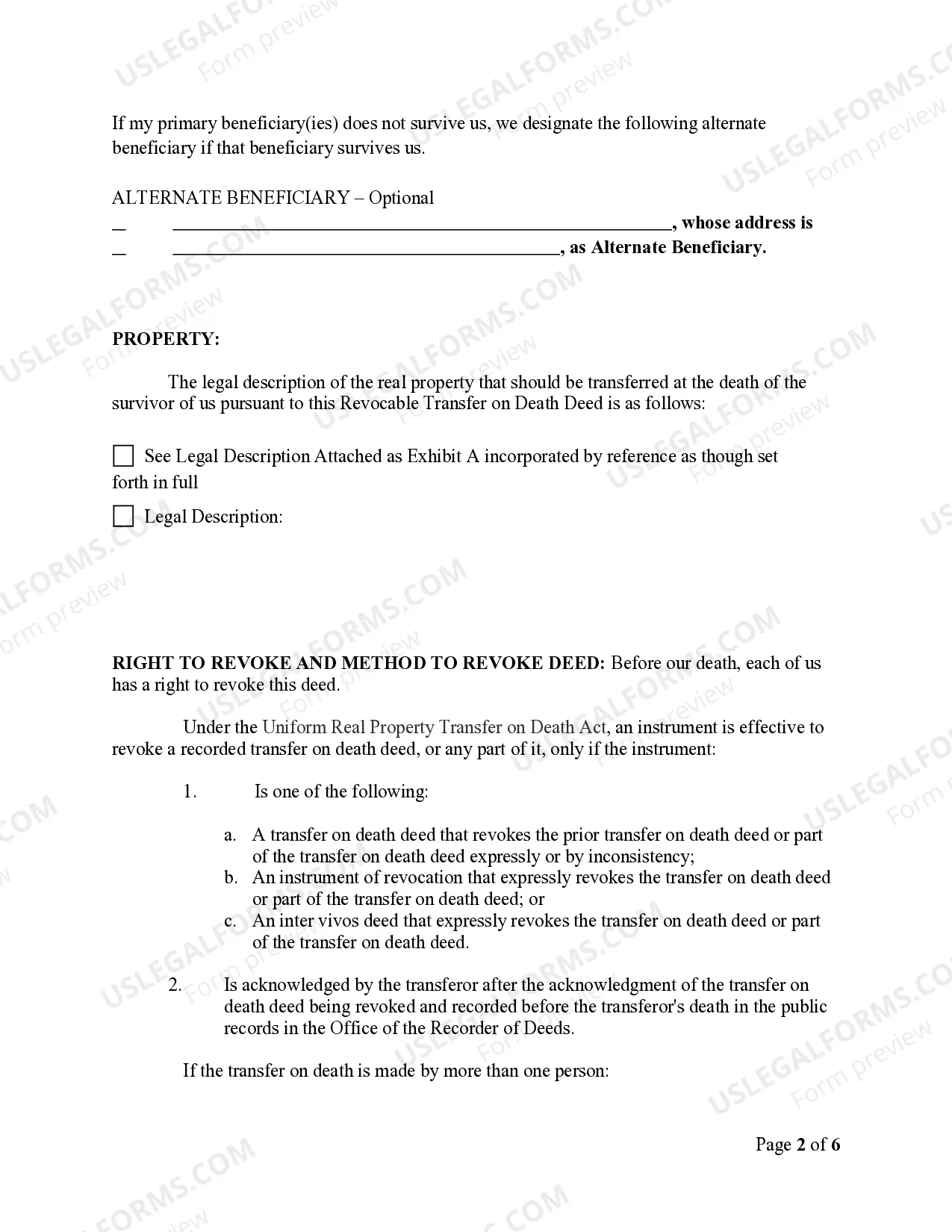
- Revocation clause: Instructions on how to revoke the deed if needed.
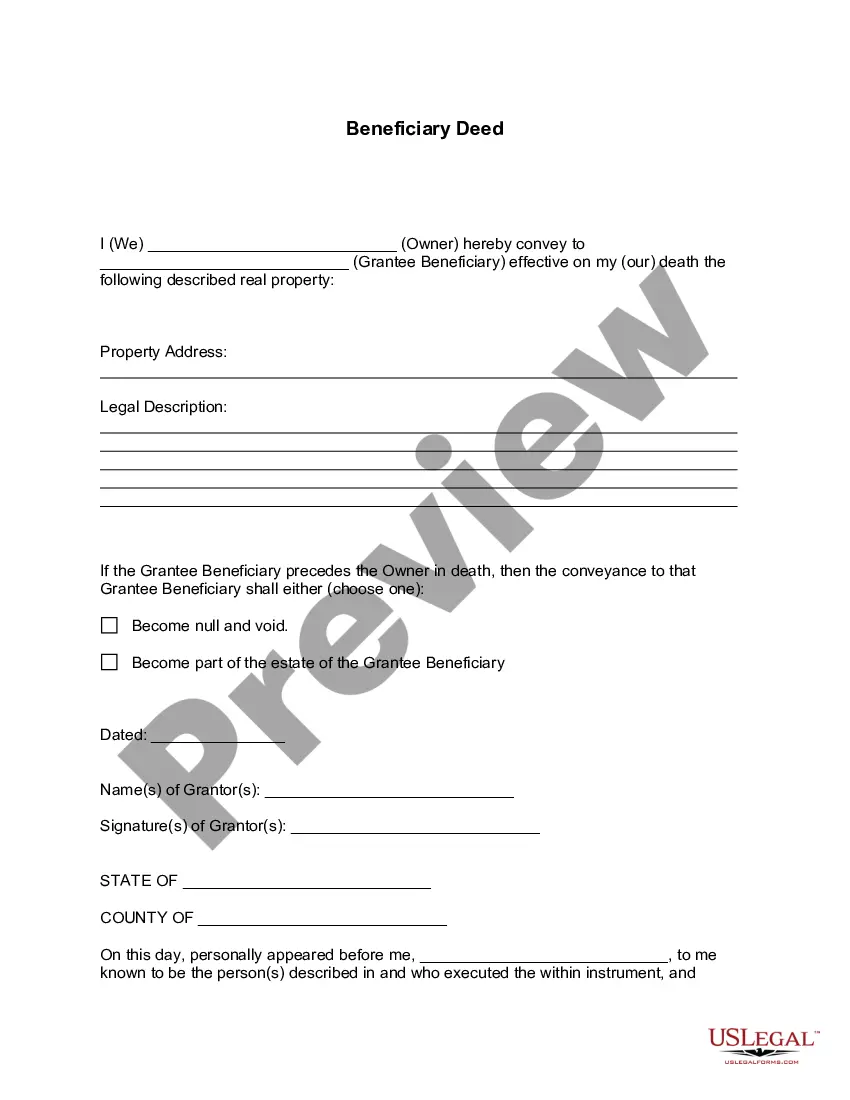
- Legal description: Detailed information about the property being transferred.
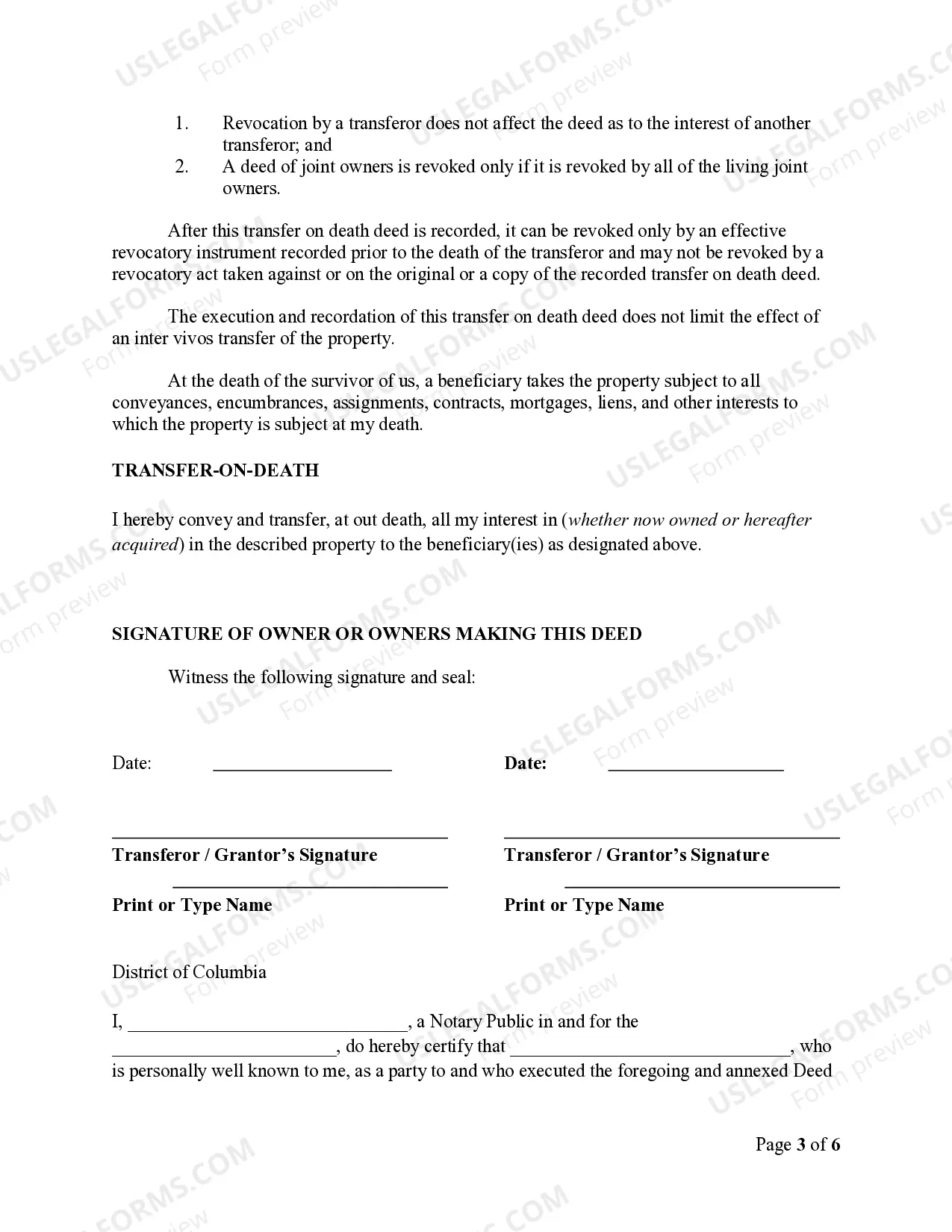
- Notary section: Area for signatures and notarization to validate the deed.






Situations where this form applies
This form is ideal for married couples who wish to designate a business entity to inherit their property after both partners have passed away. It is particularly useful when estate planning for future generations or when couples want to prevent the property from going through the probate process, ensuring an orderly and immediate transfer of ownership. Additionally, it provides flexibility as grantors can change their minds about the beneficiaries or revoke the deed at any time during their lifetime.
Who this form is for
This form is suitable for:
- Married couples looking to transfer property ownership after death.
- Individuals who prefer a seamless transfer to a business entity instead of family heirs.
- Homeowners in jurisdictions that allow a Transfer on Death Deed under the Uniform Real Property Transfer on Death Act.
- Those seeking to create a clear estate plan without immediate tax implications.
Steps to complete this form
- Identify the parties: Fill in the names and addresses of the husband and wife as grantors.
- Specify the beneficiary: Indicate the name and address of the business entity designated as the primary beneficiary.
- Detail the property: Provide the legal description of the property being transferred, referring to Exhibit A if necessary.
- Sign the document: Both grantors must sign in the presence of a notary public.
- Record the deed: Ensure the deed is recorded with the local office to take effect upon the death of the last surviving grantor.
Is notarization required?
Yes, this form must be notarized to be legally valid. The signatures of the grantors must be acknowledged before a notary public to ensure the document is enforceable. Using US Legal Forms' integrated online notarization allows you to secure notarization via a safe video call at any time, making the process convenient without the need for in-person meetings.
Get your form ready online
Our built-in tools help you complete, sign, share, and store your documents in one place.
Make edits, fill in missing information, and update formatting in US Legal Forms—just like you would in MS Word.
Download a copy, print it, send it by email, or mail it via USPS—whatever works best for your next step.
Sign and collect signatures with our SignNow integration. Send to multiple recipients, set reminders, and more. Go Premium to unlock E-Sign.
If this form requires notarization, complete it online through a secure video call—no need to meet a notary in person or wait for an appointment.
We protect your documents and personal data by following strict security and privacy standards.

Make edits, fill in missing information, and update formatting in US Legal Forms—just like you would in MS Word.

Download a copy, print it, send it by email, or mail it via USPS—whatever works best for your next step.

Sign and collect signatures with our SignNow integration. Send to multiple recipients, set reminders, and more. Go Premium to unlock E-Sign.

If this form requires notarization, complete it online through a secure video call—no need to meet a notary in person or wait for an appointment.

We protect your documents and personal data by following strict security and privacy standards.
Common mistakes
- Failing to record the deed: Not recording it before the death of the grantor can invalidate the transfer.
- Incomplete legal description: Omitting critical property details can lead to issues in the transfer process.
- Not clearly identifying beneficiaries: Confusing beneficiary designations may delay the transfer process.
- Neglecting to revoke previous deeds: Overlapping deeds can create legal complications and disputes among beneficiaries.
Why use this form online
- Convenience of preparing the form online and customizing it to fit specific needs.
- Editability allows users to make changes easily before finalizing the document.
- Reliability of using legally drafted forms prepared by licensed attorneys.
Quick recap
- A Transfer on Death Deed allows for a seamless transfer of property to a designated business entity upon death.
- The deed is revocable during the grantors' lifetime, providing flexibility in estate planning.
- Proper completion and recording of this form is crucial to ensure its legal effectiveness.
- Notarization is required for validity and is easily accessible through online services.
Looking for another form?
Form popularity
FAQ
To fill out a transfer on death designation affidavit for the District of Columbia Transfer on Death Deed or TOD - Beneficiary Deed for Husband and Wife to a Business Entity, start by gathering all necessary information regarding the property and beneficiaries. Follow the instructions provided with the form carefully to ensure accuracy. If you have any questions, consider using resources from US Legal Forms to guide you through the process.
You can obtain a TOD deed from various sources, including online legal services or state government websites. For a District of Columbia Transfer on Death Deed or TOD - Beneficiary Deed for Husband and Wife to a Business Entity, platforms like US Legal Forms offer easy access to compliant forms. These services often include instructions, making it easier for you to manage your estate planning.
Yes, you can transfer a deed without an attorney when dealing with a District of Columbia Transfer on Death Deed or TOD - Beneficiary Deed for Husband and Wife to a Business Entity. However, ensure that you follow all legal procedures correctly to avoid complications. Resources like US Legal Forms provide templates and guidance that can make this process straightforward and prevent common mistakes.
One disadvantage of the District of Columbia Transfer on Death Deed or TOD - Beneficiary Deed for Husband and Wife to a Business Entity is that it does not provide protection from creditors. Additionally, if the property appreciates significantly, it may lead to a larger tax liability for beneficiaries. Understanding these implications is crucial, so consider discussing them with a legal expert.
You do not need an attorney for a Transfer on Death deed in the District of Columbia, but having one can simplify the process. An attorney can assist with understanding the legal terminology and ensuring that the beneficiaries are properly named. While you can do it yourself through available resources, professional help often clarifies nuances that could impact your estate.
While it's not legally required to have a lawyer for a District of Columbia Transfer on Death Deed or TOD - Beneficiary Deed for Husband and Wife to a Business Entity, seeking legal advice can be beneficial. A lawyer can help ensure that the document meets all legal requirements and handles any complexities that may arise. This guidance can provide peace of mind and may prevent issues in the future.
While you do not technically need an attorney to execute a transfer on death deed, seeking legal advice is highly recommended. An attorney ensures that the deed complies with local laws and aligns with your overall estate plan. The District of Columbia Transfer on Death Deed or TOD - Beneficiary Deed for Husband and Wife to a Business Entity can be complex, and expert guidance helps avoid mistakes. UsLegalForms provides resources and templates to simplify the process if you choose to proceed without an attorney.
Several states recognize transfers on death deeds, offering similar provisions to the District of Columbia Transfer on Death Deed or TOD - Beneficiary Deed for Husband and Wife to a Business Entity. As of now, states like Indiana, Nevada, and Texas have laws permitting such deeds. This recognition varies by state, so it is important to check local laws. Many individuals use these deeds as an efficient estate planning strategy across various jurisdictions.
Yes, the District of Columbia allows the use of transfer on death deeds, also known as the District of Columbia Transfer on Death Deed or TOD - Beneficiary Deed for Husband and Wife to a Business Entity. This form of deed enables individuals to transfer property to beneficiaries upon their death without going through probate. Utilizing this deed offers a straightforward way to ensure your property goes directly to your chosen beneficiaries. It is a valuable tool for estate planning in D.C.
The primary difference between a Transfer on Death deed and a beneficiary designation lies in their application. A TOD deed specifically transfers real estate, while beneficiary designations apply to financial accounts and certain assets. Understanding how a District of Columbia Transfer on Death Deed functions can help you make informed decisions when planning inheritance for a husband and wife to a business entity. Each serves its purpose, so evaluate your options.