District of Columbia Transfer on Death Deed or TOD - Beneficiary Deed for Individual to a Husband and Wife Beneficiaries
What this document covers
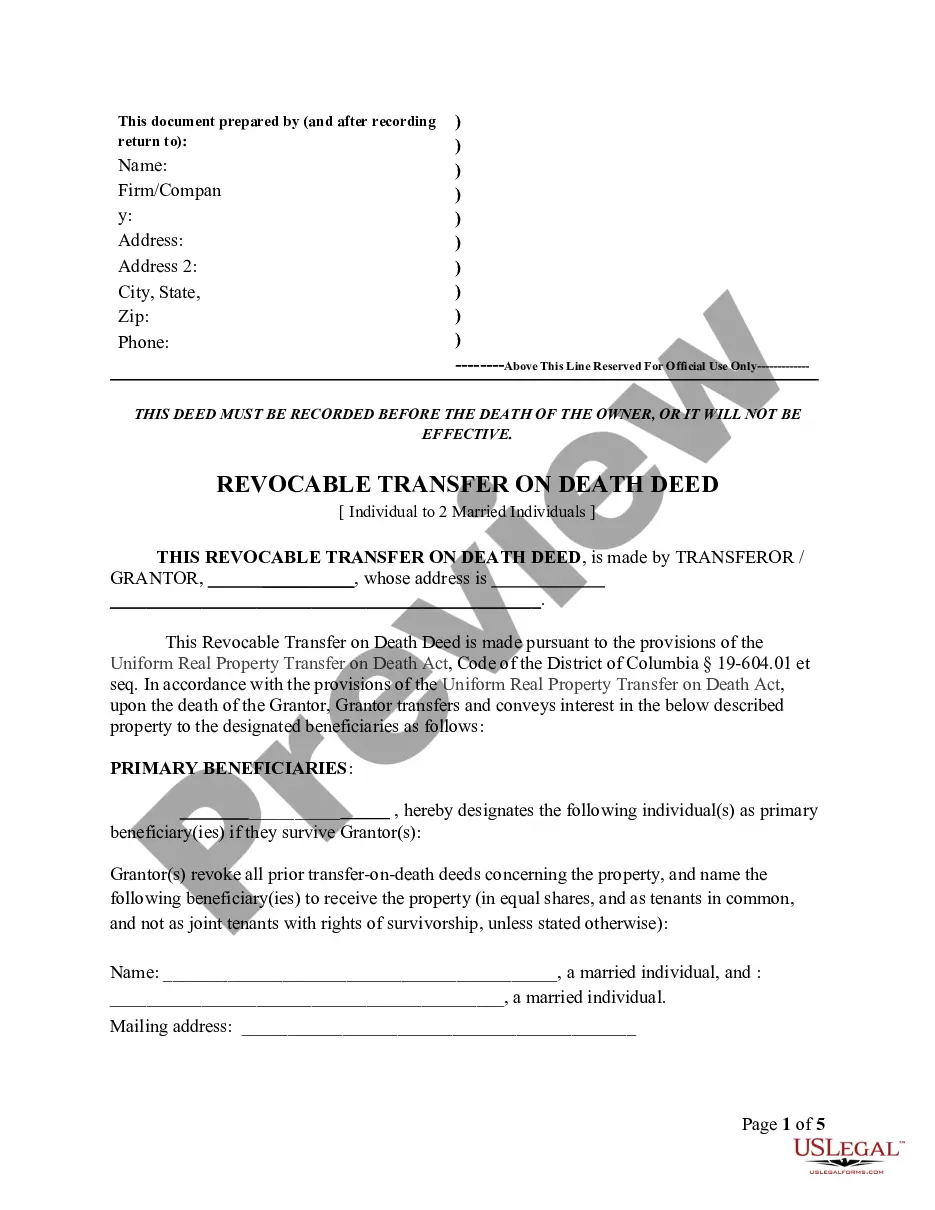
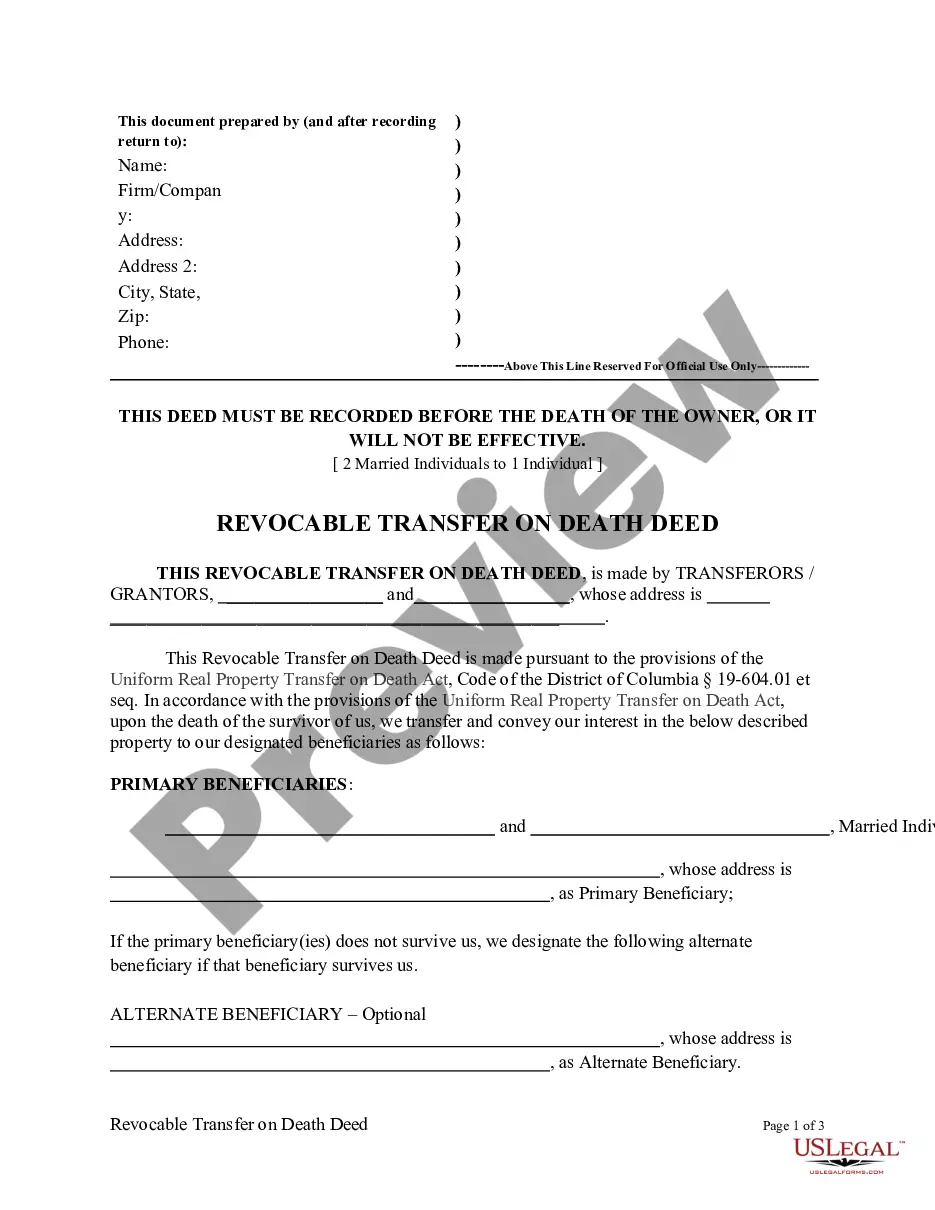
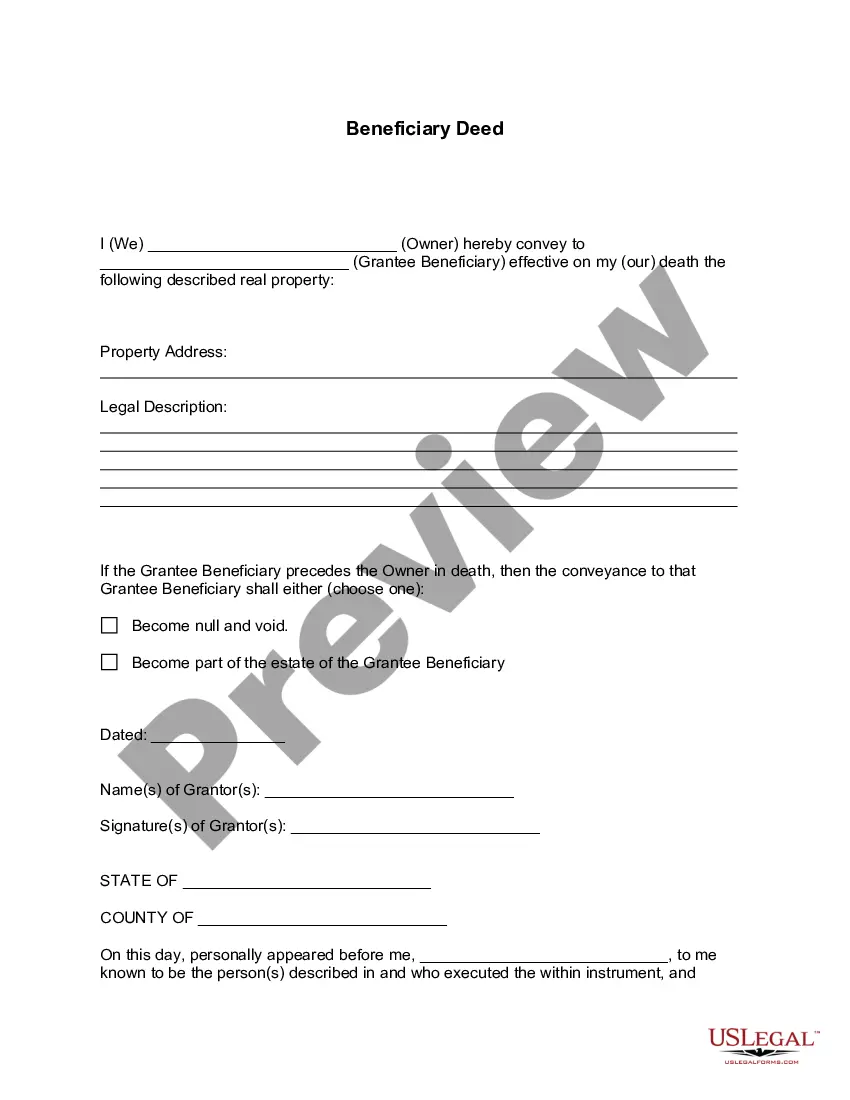
The Transfer on Death Deed (TOD) for individual to a husband and wife beneficiaries is a legal document that allows a property owner (the Grantor) to designate beneficiaries to receive the property upon their death. This transfer does not take effect until the Grantor passes away, and the Grantor retains full control over the property during their lifetime. This form is distinct from a traditional deed as it does not transfer ownership during the Grantor's life and can be revoked at any time prior to death.
Form components explained
- Grantor Information: The name and address of the individual transferring the property.
- Primary Beneficiaries: Designation of husband and wife beneficiaries who will inherit the property upon the Grantorâs death.
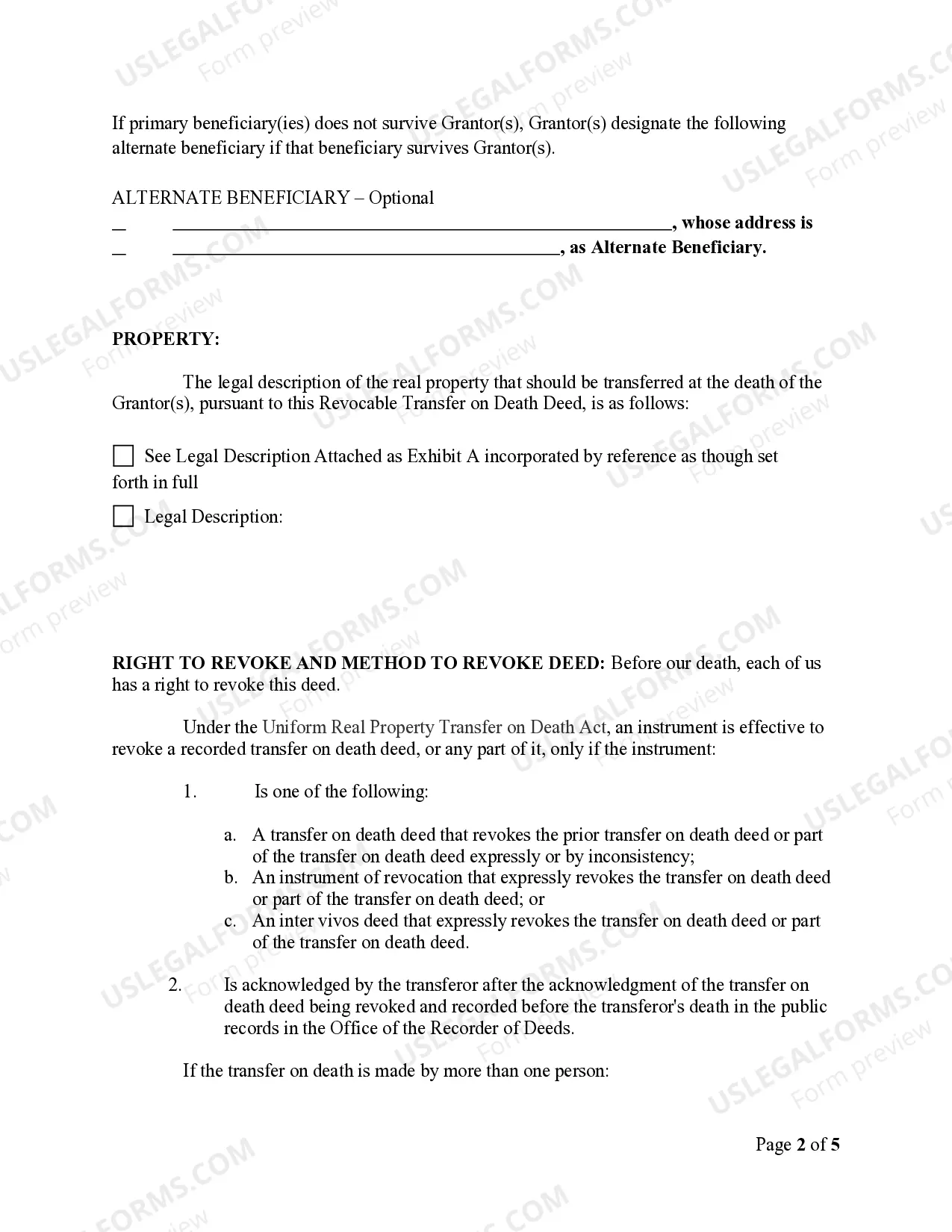
- Alternate Beneficiary: An optional section for naming alternate beneficiaries if the primary ones do not survive the Grantor.
- Property Description: A legal description of the real estate to be transferred, attached as Exhibit A.
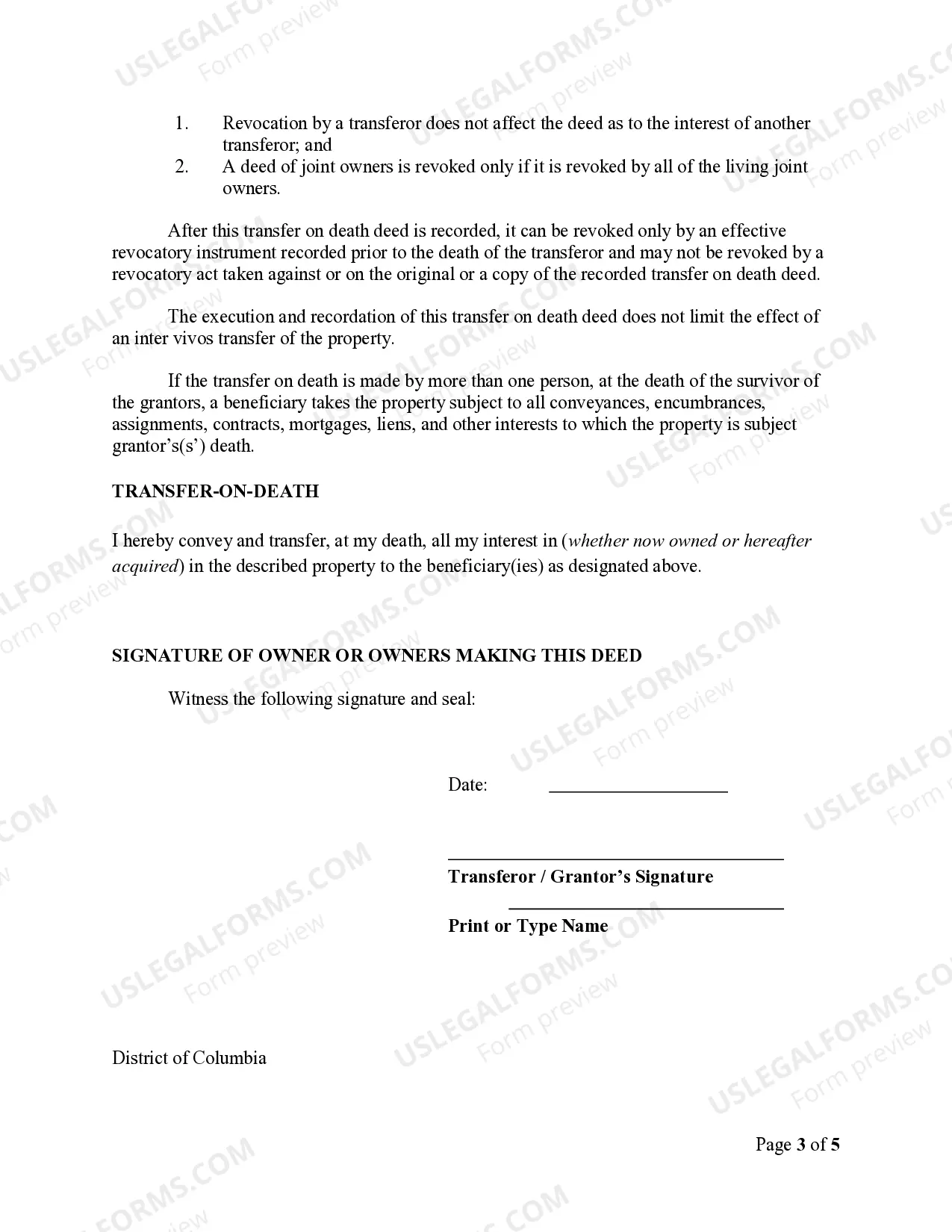
- Revocation Clause: Details on how the Grantor can revoke the deed while still alive.
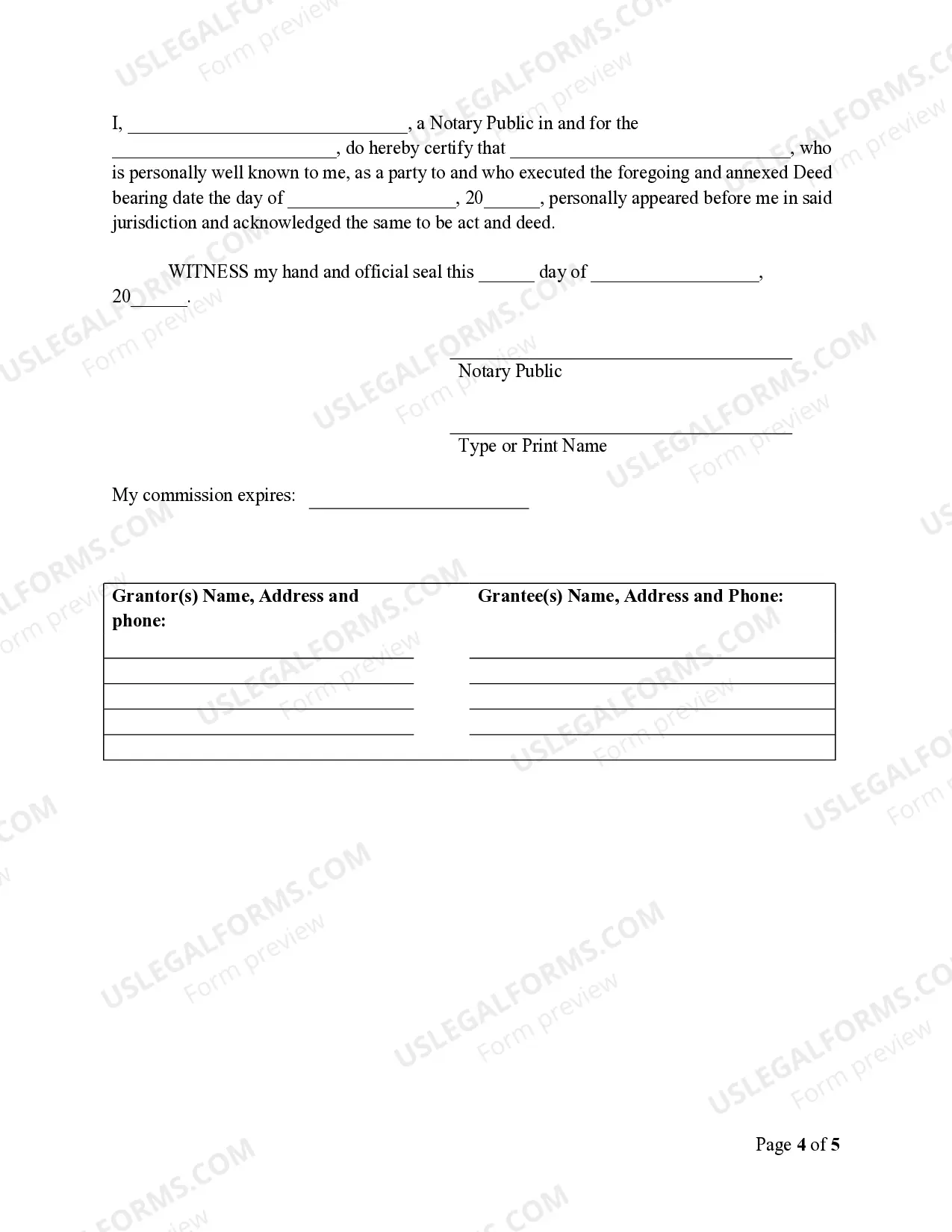
- Notarization Requirement: Information on the necessity for notarization to validate the deed.



Situations where this form applies
This form is essential when a property owner wants to ensure that their real property automatically transfers to their designated beneficiariesâspecifically a husband and wifeâ upon their death. It is useful for individuals looking to avoid probate processes, as it allows for a smooth transition of property ownership without immediate transfer during the ownerâs lifetime.
Who should use this form
- Individuals who own real estate and want to designate beneficiaries for after their death.
- Married couples who wish to transfer ownership of property directly to each other or to their children as joint beneficiaries.
- Property owners seeking a simple estate planning tool to bypass probate.
- Anyone wishing to retain control of their property until death while still ensuring future transfers are streamlined.
Instructions for completing this form
- Identify the Grantor: Enter the name and address of the person transferring the property.
- Designate Primary Beneficiaries: List the names of the husband and wife beneficiaries who will inherit the property upon the Grantorâs passing.
- Complete Property Description: Provide the legal description of the property being transferred.
- Fill in Alternate Beneficiary (if necessary): Optionally specify an alternate beneficiary in case the primary beneficiaries do not survive the Grantor.
- Sign the Deed: The Grantor must sign the deed in the presence of a notary public.
- Record the Deed: Submit the completed deed to the appropriate government office to ensure it is recorded before the Grantor's death.
Notarization guidance
Yes, this form must be notarized to be legally valid. It is important to have the signature of the Grantor witnessed by a notary public, ensuring authenticity and compliance with legal standards. US Legal Forms offers integrated online notarization services, providing secure and convenient options available 24/7.
Get your form ready online
Our built-in tools help you complete, sign, share, and store your documents in one place.
Make edits, fill in missing information, and update formatting in US Legal Forms—just like you would in MS Word.
Download a copy, print it, send it by email, or mail it via USPS—whatever works best for your next step.
Sign and collect signatures with our SignNow integration. Send to multiple recipients, set reminders, and more. Go Premium to unlock E-Sign.
If this form requires notarization, complete it online through a secure video call—no need to meet a notary in person or wait for an appointment.
We protect your documents and personal data by following strict security and privacy standards.

Make edits, fill in missing information, and update formatting in US Legal Forms—just like you would in MS Word.

Download a copy, print it, send it by email, or mail it via USPS—whatever works best for your next step.

Sign and collect signatures with our SignNow integration. Send to multiple recipients, set reminders, and more. Go Premium to unlock E-Sign.

If this form requires notarization, complete it online through a secure video call—no need to meet a notary in person or wait for an appointment.

We protect your documents and personal data by following strict security and privacy standards.
Common mistakes to avoid
- Failing to record the deed before the Grantor's death, rendering it ineffective.
- Not including a complete legal description of the property.
- Neglecting to designate alternate beneficiaries, which could lead to confusion or disputes later.
- Overlooking the notarization requirement, which is necessary for the deed to be considered valid.
Benefits of using this form online
- Convenience of downloading and filling out the form at your own pace.
- Editability allows for quick adjustments as needed before finalizing.
- Access to legal templates drafted by licensed attorneys to ensure compliance with state laws.
- Reduction of legal fees, as online forms are generally more cost-effective than hiring a lawyer for simple transfers.
Looking for another form?

Form popularity
FAQ
Choosing between a TOD and a beneficiary designation depends on your personal circumstances and the type of asset involved. Generally, a District of Columbia Transfer on Death Deed or TOD - Beneficiary Deed for Individual to a Husband and Wife Beneficiaries is often advantageous because it simplifies the process and avoids probate. However, it's wise to consult with a legal expert to evaluate which option aligns best with your estate planning goals.
A Transfer on Death Deed (TOD) specifically refers to the legal document that facilitates the transfer of property upon the death of the owner. On the other hand, a beneficiary is the person designated to receive that property. In this case, once a valid District of Columbia Transfer on Death Deed or TOD - Beneficiary Deed for Individual to a Husband and Wife Beneficiaries is executed, the named beneficiaries gain rights to the property after the owner's passing.
Yes, Washington, D.C. allows for the implementation of the Transfer on Death Deed or TOD - Beneficiary Deed for Individual to a Husband and Wife Beneficiaries. This legal instrument enables property owners to designate beneficiaries who will automatically receive the property upon their death, thereby avoiding probate. This can simplify the transfer of property and make the process much more efficient for your loved ones.
TOD accounts can be a beneficial financial tool for transferring assets smoothly upon death. They allow account holders to maintain control while alive and bypass the lengthy probate process. However, it's crucial to evaluate your unique financial situation and perhaps consult with a financial advisor or a legal expert to determine the best approach for your needs, including the District of Columbia Transfer on Death Deed or TOD - Beneficiary Deed for Individual to a Husband and Wife Beneficiaries.
One disadvantage of a District of Columbia Transfer on Death Deed or TOD is that it only transfers property upon the death of the owner, leaving no benefits while the owner is alive. Additionally, if the property value increases significantly, heirs may face estate tax implications. It is also important to consider that while a TOD deed avoids probate, it does not protect against creditors' claims against the estate.
While it's not legally required to have an attorney for a District of Columbia Transfer on Death Deed or TOD - Beneficiary Deed for Individual to a Husband and Wife Beneficiaries, it is often advisable. An attorney can help ensure that all legal aspects are correctly addressed, reducing the risks of errors or complications later on. Professionals can also explain the implications of the deed and guide you through the filing process, providing peace of mind.
Transfer on death deeds have several disadvantages to consider. For instance, they do not provide protection against creditors, meaning debts could impact the property after the owner passes. Moreover, if the beneficiary cannot accept the property for any reason, complications may arise. When choosing a District of Columbia Transfer on Death Deed or TOD - Beneficiary Deed for Individual to a Husband and Wife Beneficiaries, weighing these factors is essential. For more insights, consider consulting uslegalforms.
One significant disadvantage of a transfer on death deed is that it cannot be used to transfer property if the owner is unable to execute the deed due to incapacity. Additionally, any changes in the law could impact its effectiveness. Understanding these limitations is crucial when considering a District of Columbia Transfer on Death Deed or TOD - Beneficiary Deed for Individual to a Husband and Wife Beneficiaries. Engaging with uslegalforms can help clarify specifics for your situation.
While it is not a legal requirement to hire a lawyer to create a transfer on death deed, consulting with one can offer benefits. A lawyer can ensure your District of Columbia Transfer on Death Deed or TOD - Beneficiary Deed for Individual to a Husband and Wife Beneficiaries adequately meets legal standards and reflects your wishes. Additionally, they can help navigate any specific considerations related to your situation. You can also utilize uslegalforms for helpful templates.
Several states recognize transfer on death deeds as a means of property transfer, including but not limited to states like Arizona, California, and Nevada. These designated forms provide a seamless transfer option similar to the District of Columbia Transfer on Death Deed or TOD - Beneficiary Deed for Individual to a Husband and Wife Beneficiaries. Always check local laws, as they may vary widely. For tailored documentation, uslegalforms can guide you.