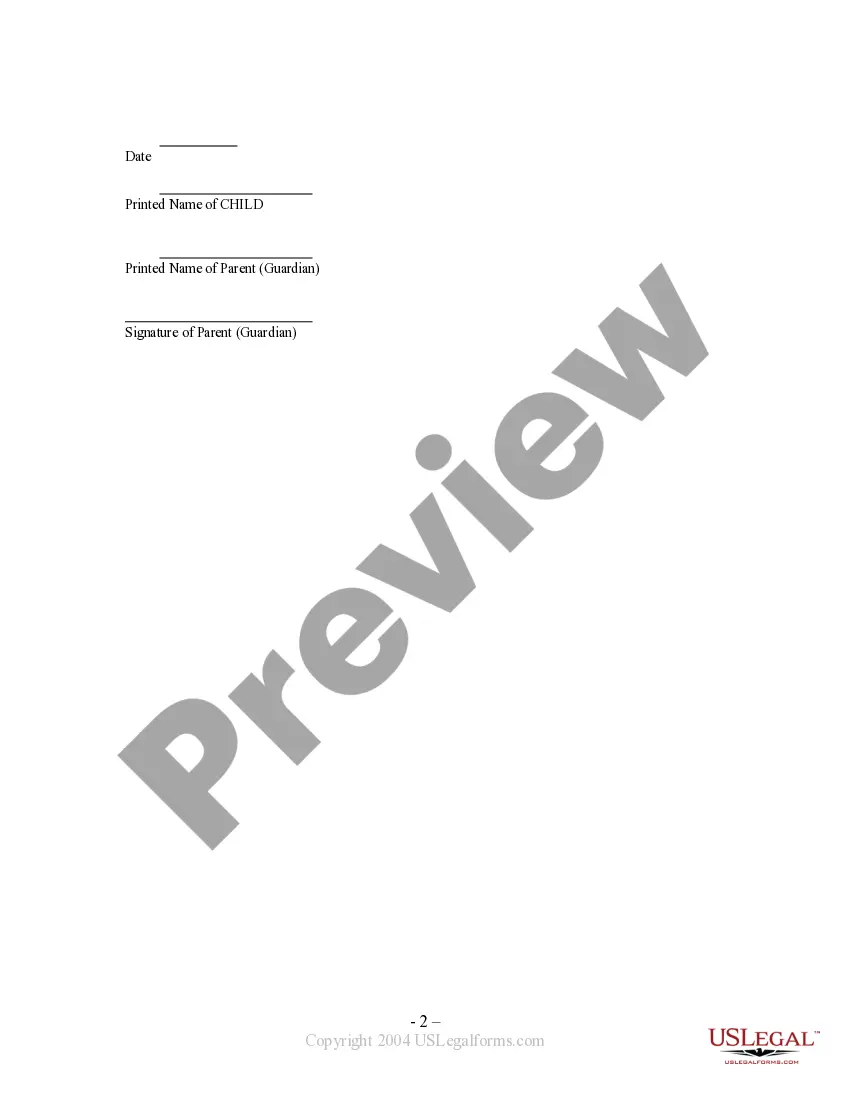
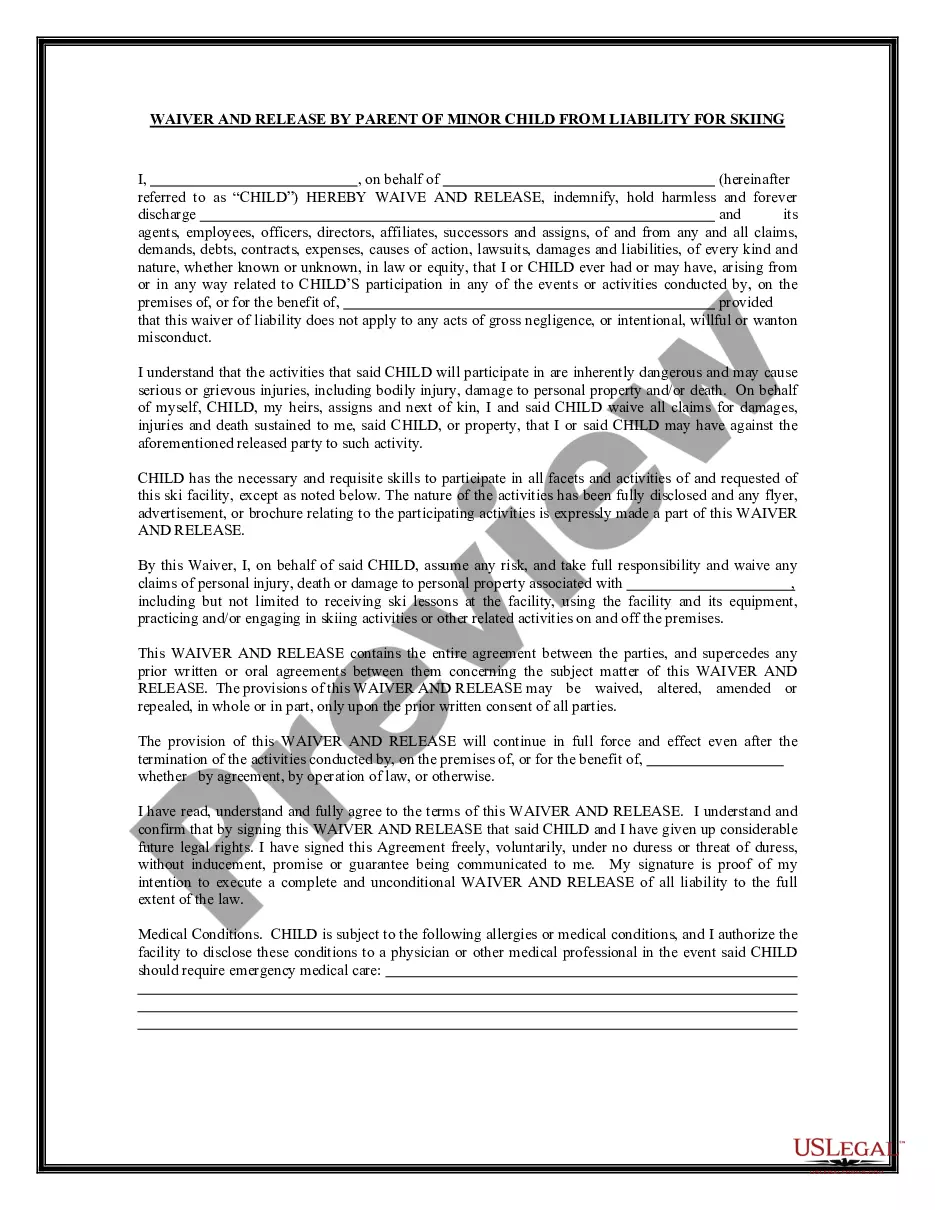
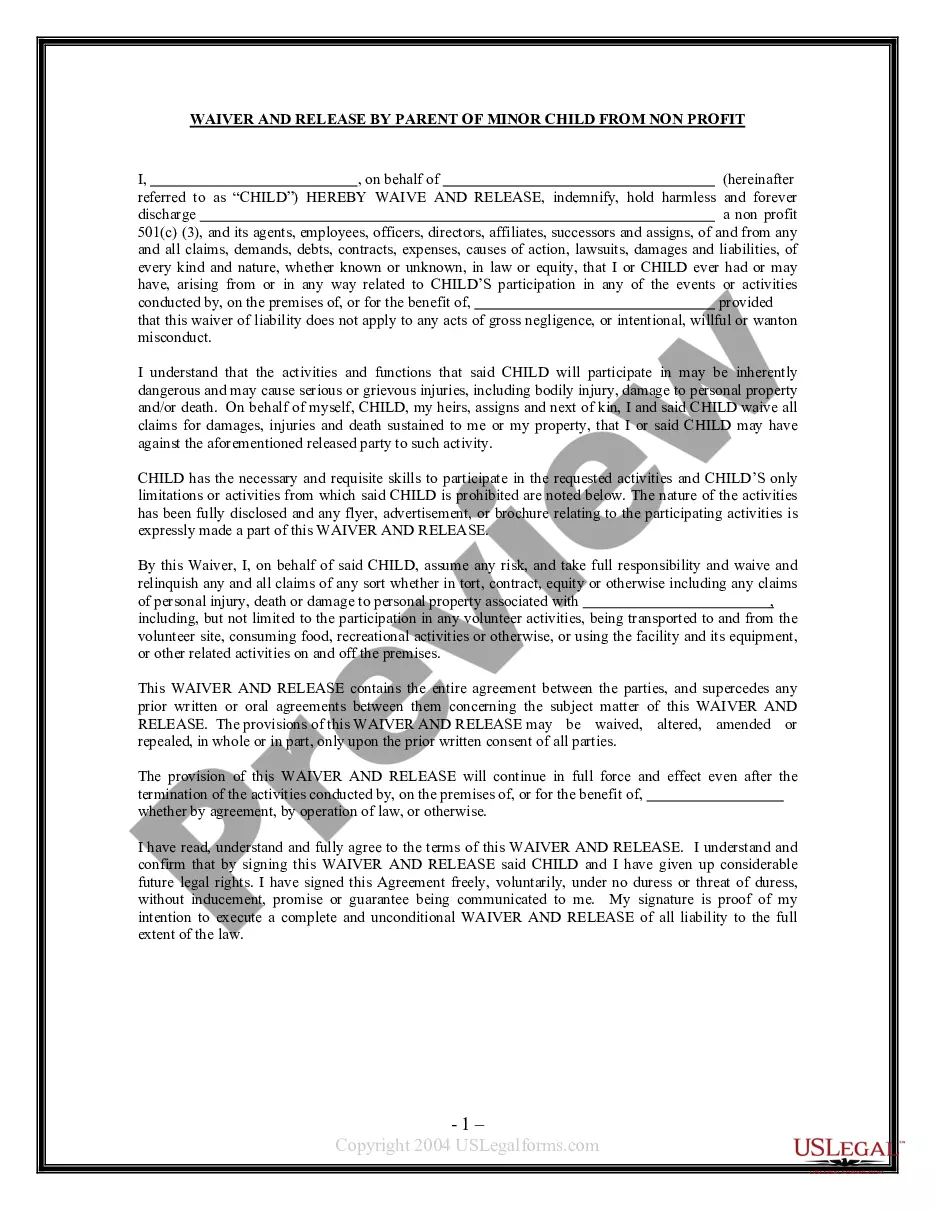
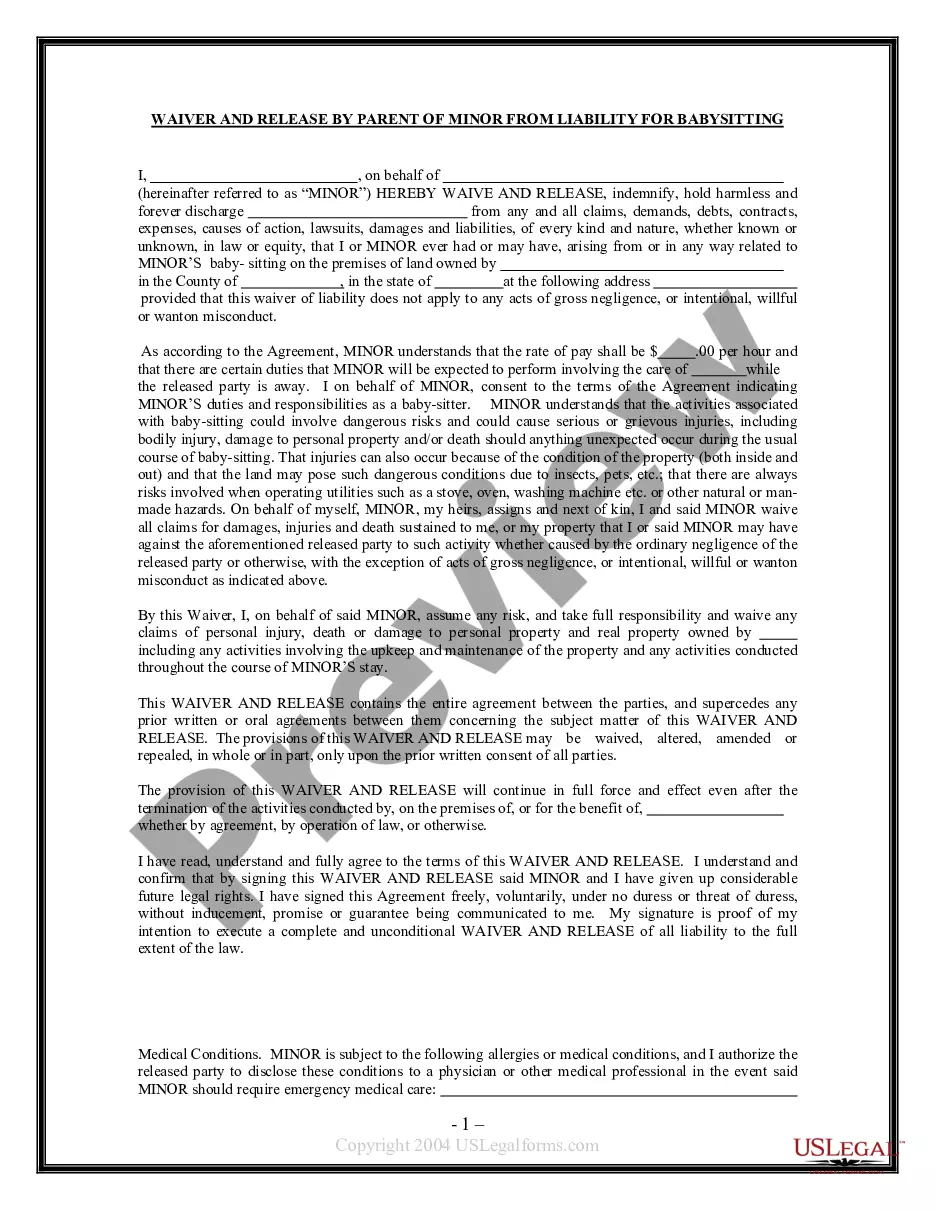
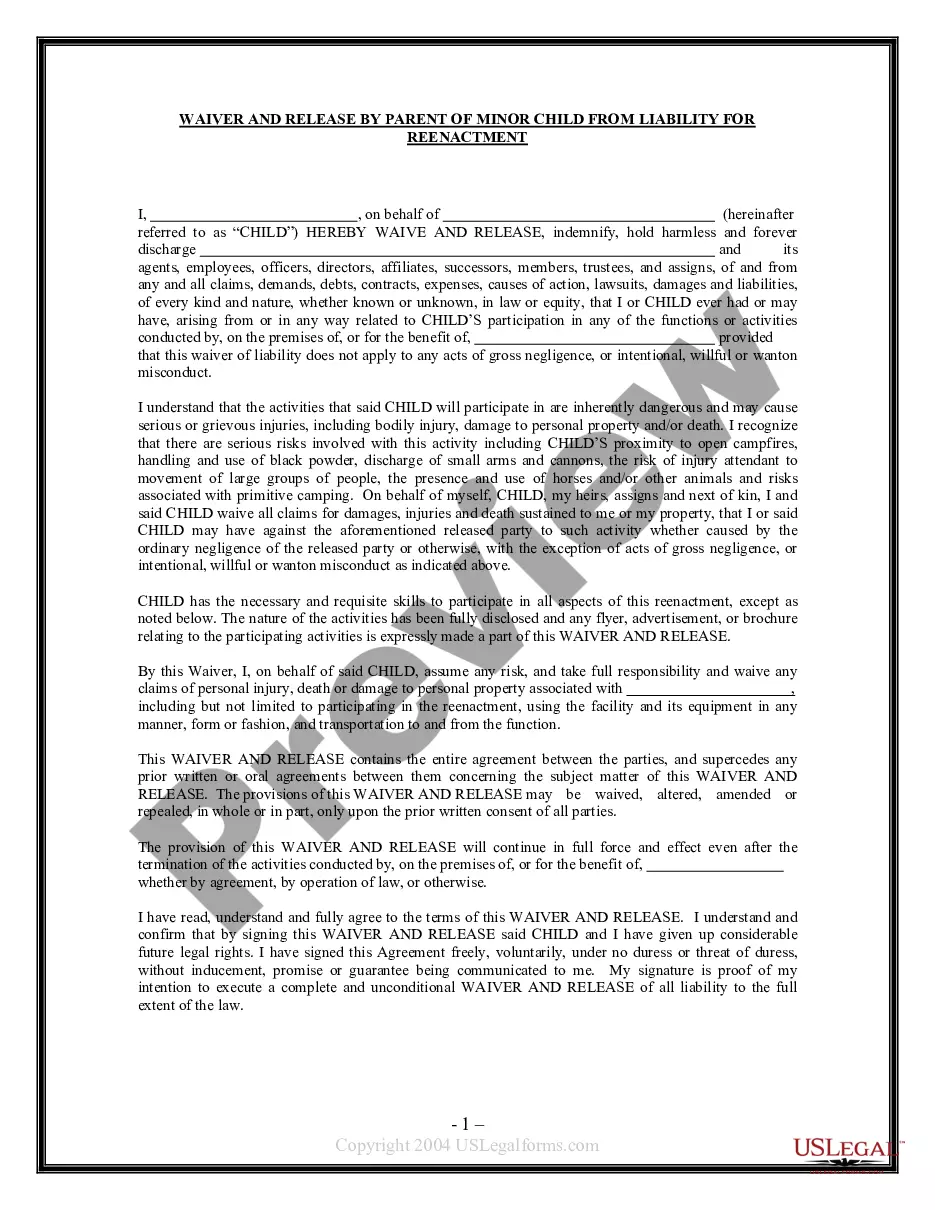
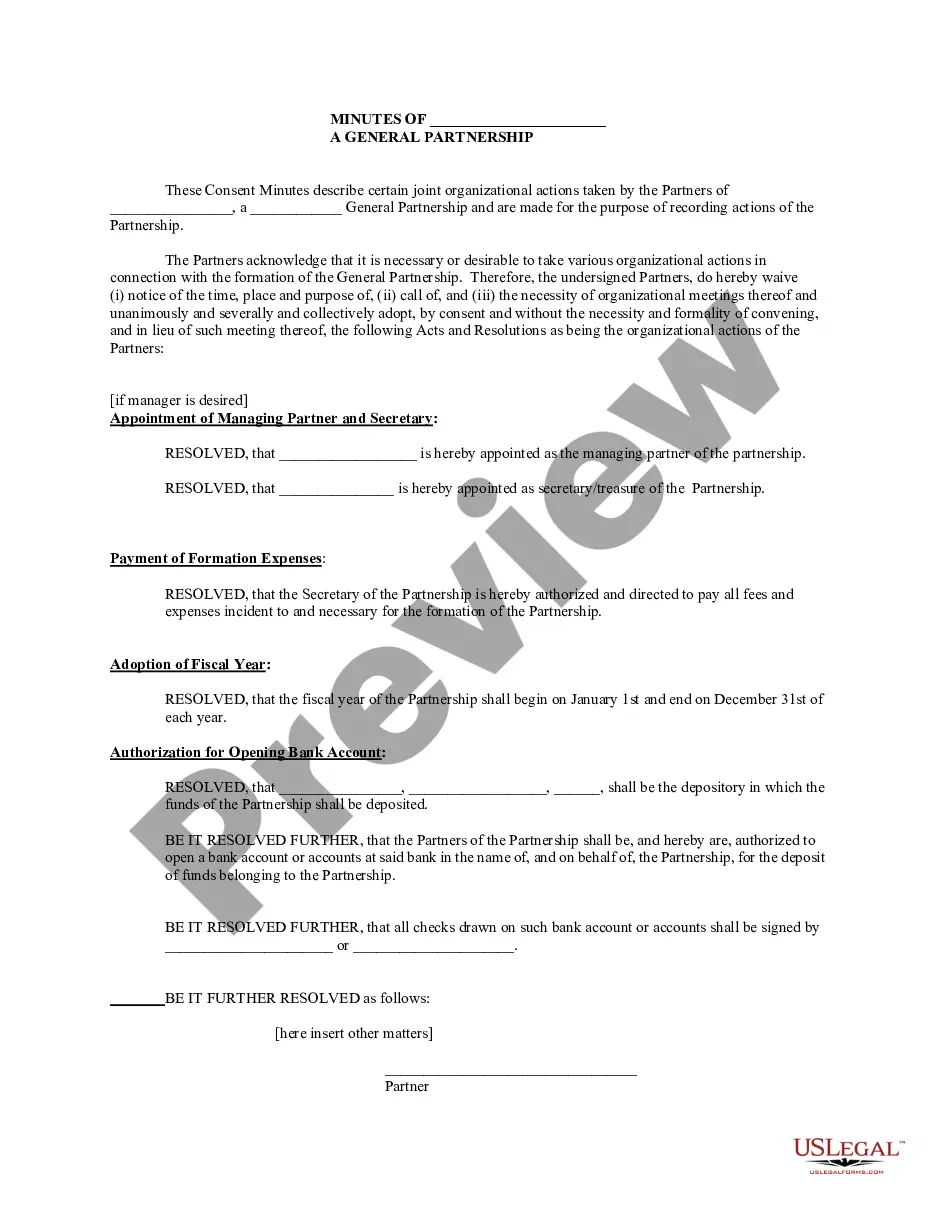
This form allows a parent or guardian to release a minor for home health care from liability for injuries which may be incurred by a minor child while on the premises, taking part in activities, etc.
District of Columbia Waiver and Release From Liability For Minor Child for Healthcare
Category:
State:
Multi-State
Control #:
US-WAV-78M
Format:
Word;
Rich Text
Instant download
Description
Free preview

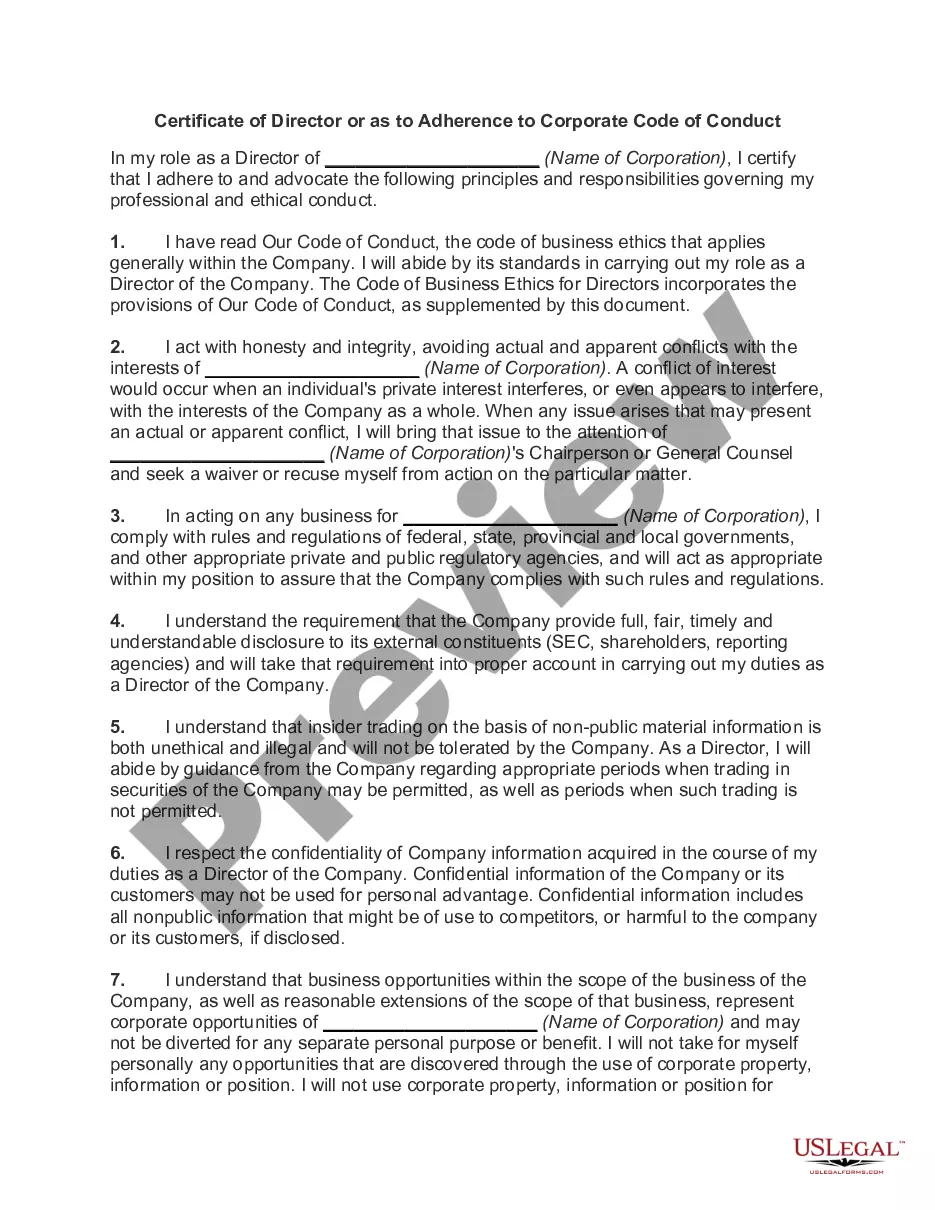

How to fill out Waiver And Release From Liability For Minor Child For Healthcare?
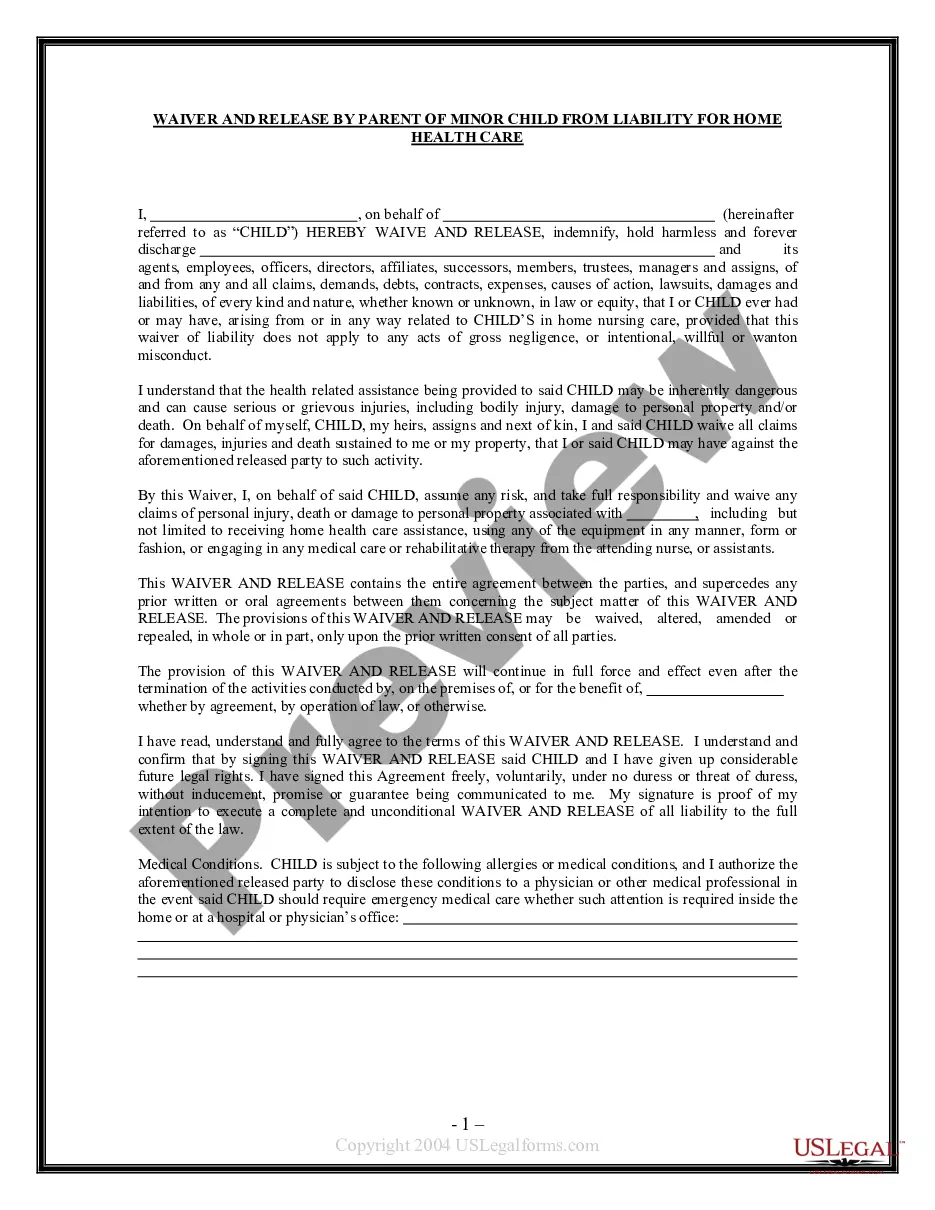
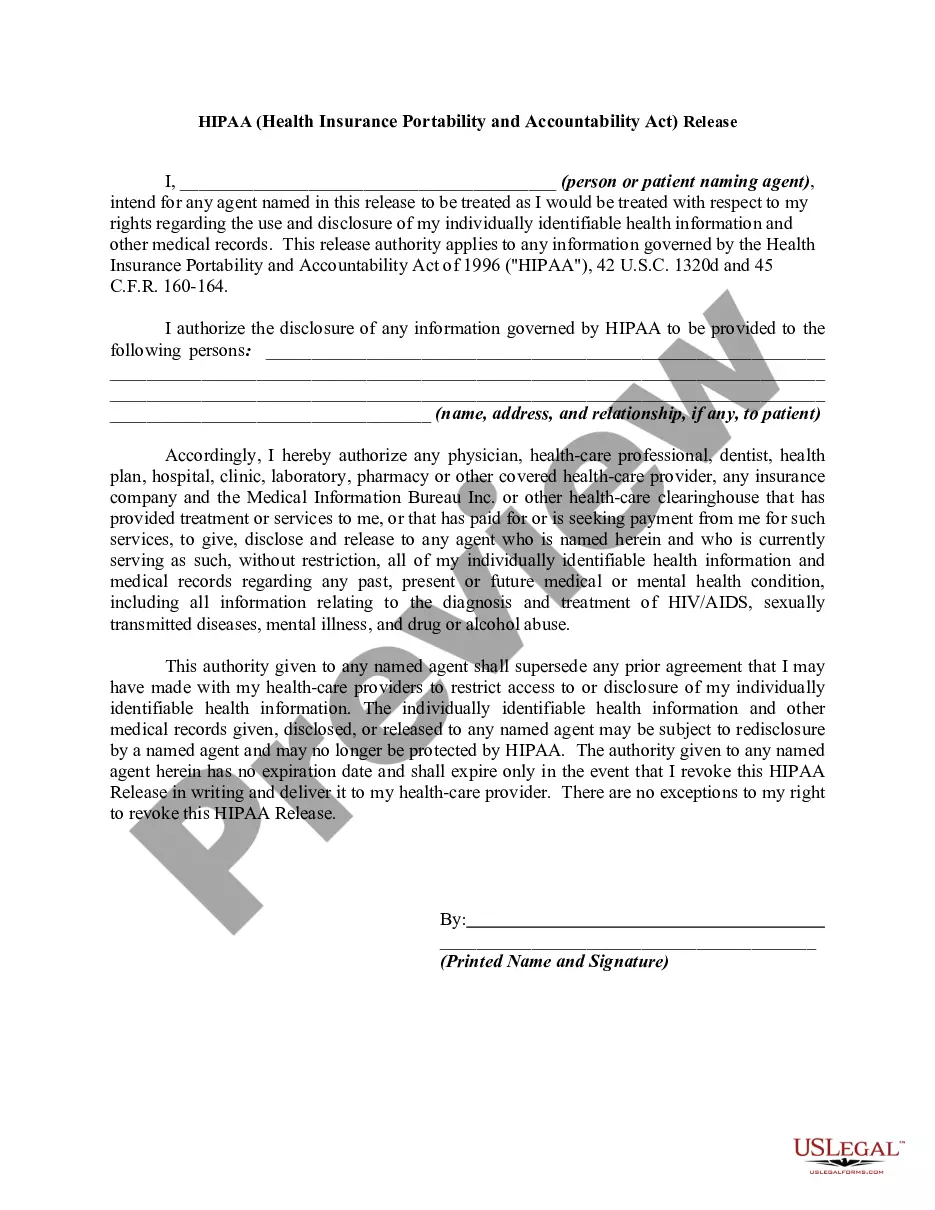
Selecting the appropriate legal document format can be challenging. Clearly, there are numerous templates available online, but how can you find the legal form you require? Use the US Legal Forms website. The service offers thousands of templates, such as the District of Columbia Waiver and Release From Liability For Minor Child for Healthcare, which can be utilized for both business and personal needs. All forms are verified by professionals and comply with state and federal regulations.
If you are already a registered user, Log In to your account and click on the Download button to retrieve the District of Columbia Waiver and Release From Liability For Minor Child for Healthcare. Use your account to browse the legal forms you have previously purchased. Go to the My documents tab in your account and obtain another copy of the document you need.
If you are a new user of US Legal Forms, here are simple steps you should follow: First, ensure you have selected the correct form for your locality. You can explore the form using the Preview button and review the form details to confirm it is suitable for you. If the form does not meet your requirements, use the Search field to find the right form. Once you are confident that the form is appropriate, click the Buy now button to purchase the form. Choose the pricing plan you prefer and enter the necessary information. Create your account and pay for your order using your PayPal account or credit card. Select the file format and download the legal document to your device. Finally, complete, modify, print, and sign the received District of Columbia Waiver and Release From Liability For Minor Child for Healthcare.
- US Legal Forms is the largest collection of legal documents that offers various file formats.
- Utilize the service to download professionally crafted paperwork that adheres to state requirements.
Form popularity
FAQ
To write a liability waiver form, start by clearly stating the purpose of the document and identifying the parties involved. Include a detailed description of the activities, the inherent risks, and the specific rights being waived. When creating a District of Columbia Waiver and Release From Liability For Minor Child for Healthcare, make sure to use straightforward language and avoid legal jargon. Consider using templates from USLegalForms, which can streamline the process and help you create an effective waiver.
An example of a waiver of liability is a document that a parent signs to allow their child to participate in a healthcare program while acknowledging the potential risks. This waiver typically specifies the activities involved, the nature of the risks, and the agreement to release the provider from liability. For those seeking the District of Columbia Waiver and Release From Liability For Minor Child for Healthcare, having a clear example can guide you in drafting your own document. Utilizing USLegalForms can provide you with sample waivers to reference.
Yes, you can write your own liability waiver, but it is important to ensure that it meets legal requirements. A well-crafted waiver should clearly outline the risks involved and the rights being waived. For the District of Columbia Waiver and Release From Liability For Minor Child for Healthcare, it is advisable to include specific language that complies with local laws. USLegalForms offers resources and templates that can help you create a comprehensive waiver while ensuring it is legally sound.
A parental consent release and waiver of liability is a legal document that protects healthcare providers from claims related to the care of a minor child. This document ensures that parents understand the risks involved in healthcare activities and agree to release the provider from liability. In the context of the District of Columbia Waiver and Release From Liability For Minor Child for Healthcare, it is crucial for parents to recognize their responsibilities. Using a platform like USLegalForms can simplify this process by providing templates tailored to your needs.
Contents. People aged 16 or over are entitled to consent to their own treatment. This can only be overruled in exceptional circumstances. Like adults, young people (aged 16 or 17) are presumed to have sufficient capacity to decide on their own medical treatment, unless there's significant evidence to suggest otherwise.
Prior to giving consent for a health or social care intervention, the minor should be informed by the health or social care provider that confidentiality cannot be assured as his/her parent(s)/legal guardian(s) may have rights to access the minor's medical/other records under the Freedom of Information Act 199720.
A provider is legally permitted, but not required, to provide confidential care to a minor. A health-care provider may decide, with or without consent of the minor, to advise the parent or guardian of the treatment given or needed, with the exception of some family planning services (25 TAC § 56.15).
You can provide medical treatment to a child or young person with their consent if they are competent, or with the consent of a parent or the court. You can provide emergency treatment without consent to save the life of, or prevent serious deterioration in the health of, a child or young person.
The age by which you have automatic confidentiality rights is: 14 years and over in the Northern Territory. 16 and over in New South Wales and South Australia. 18 and over everywhere else in Australia.
By law, any child under the age of 18 years old cannot be seen by a doctor without consent from a parent or legal guardian.