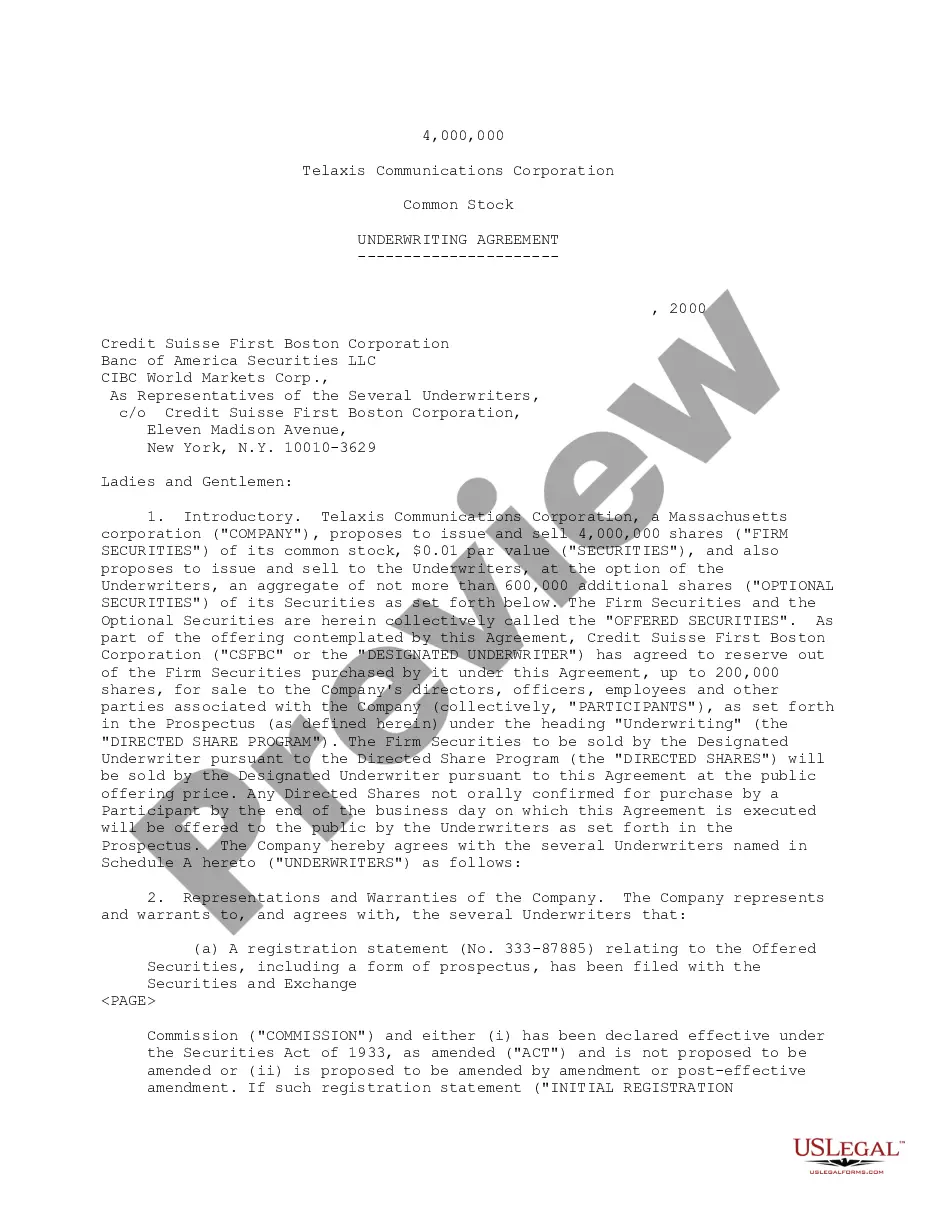
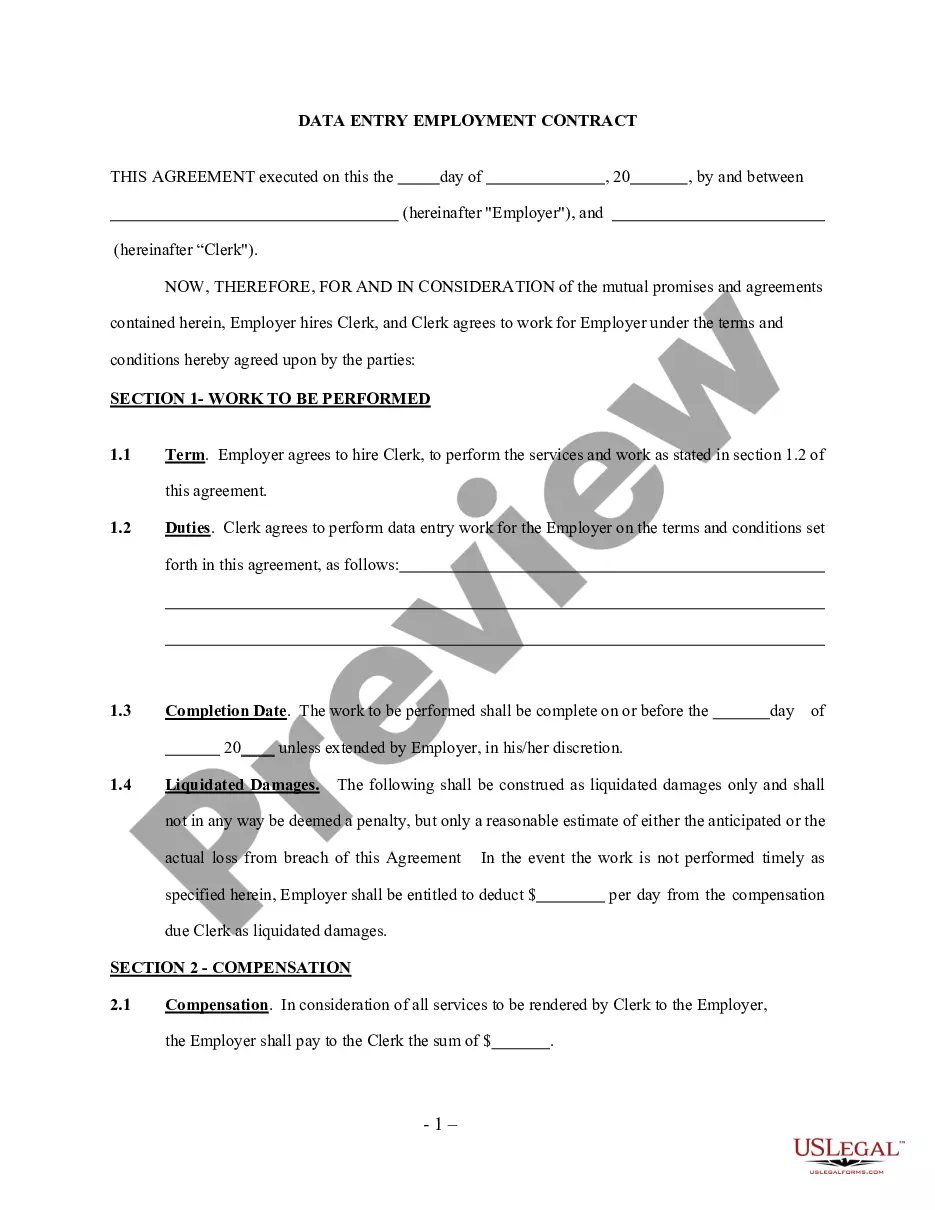
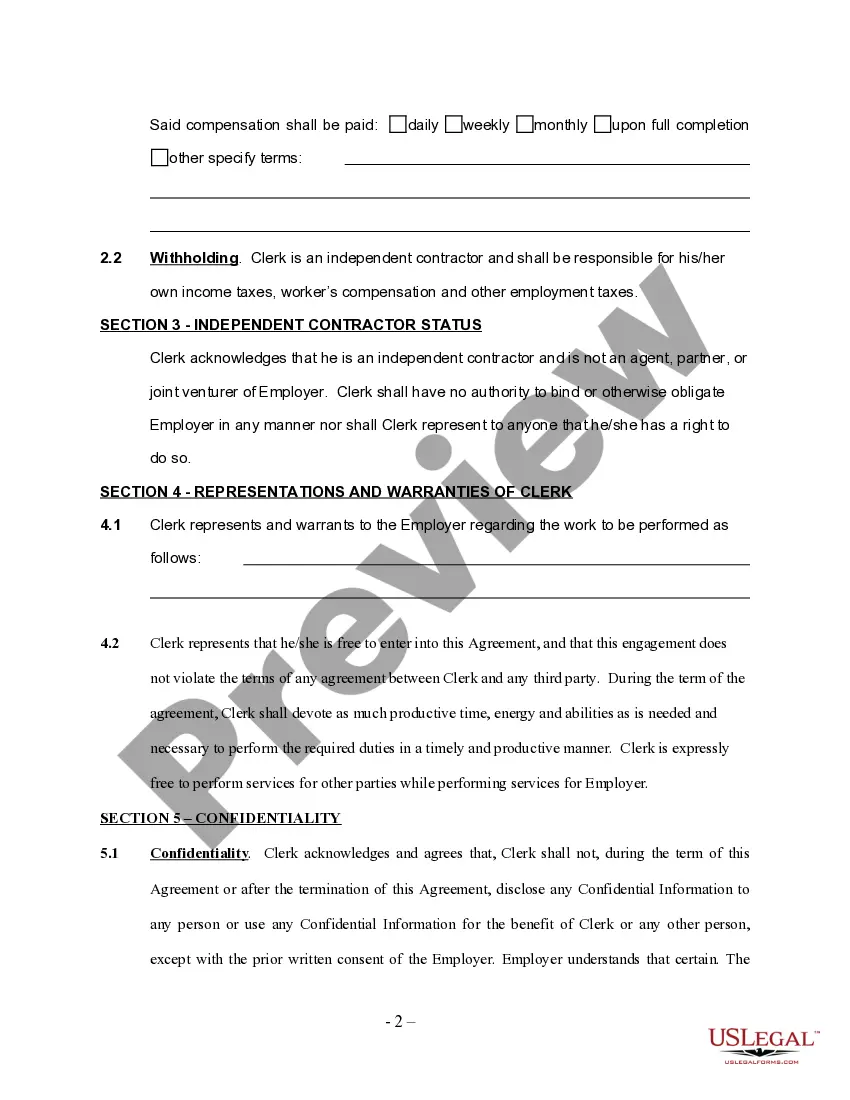
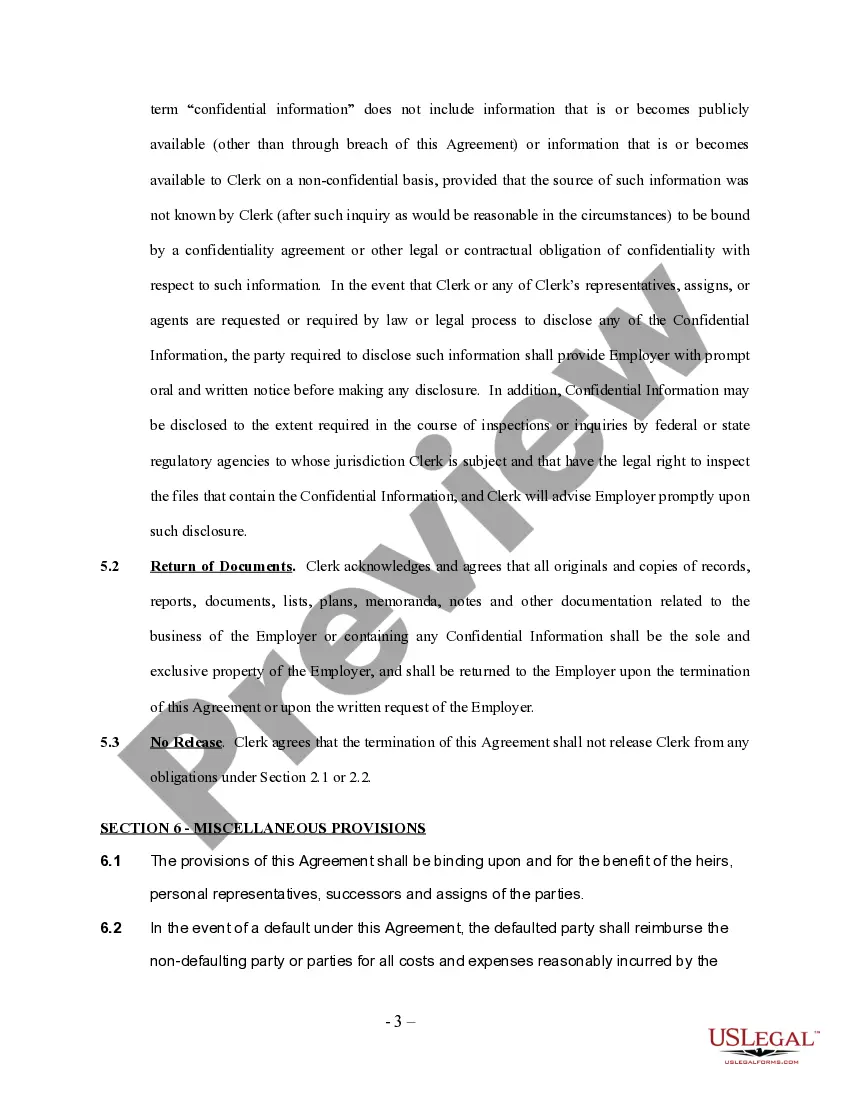
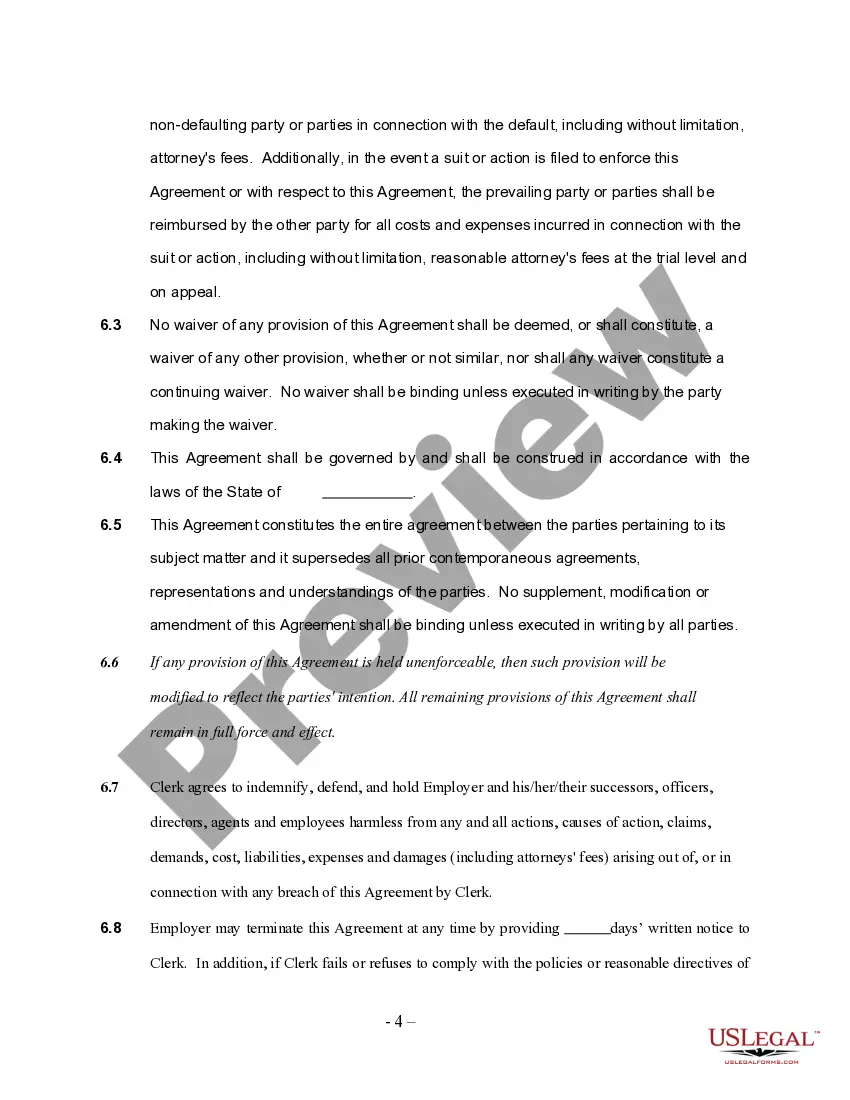
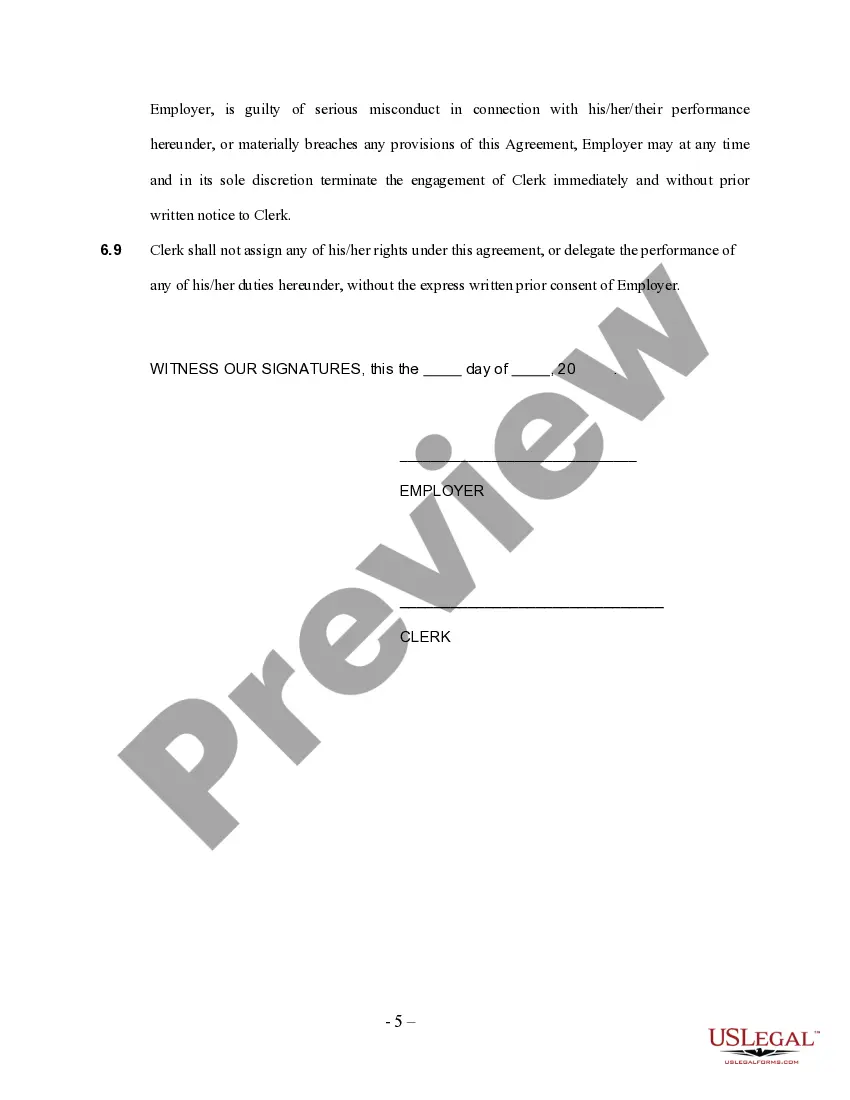
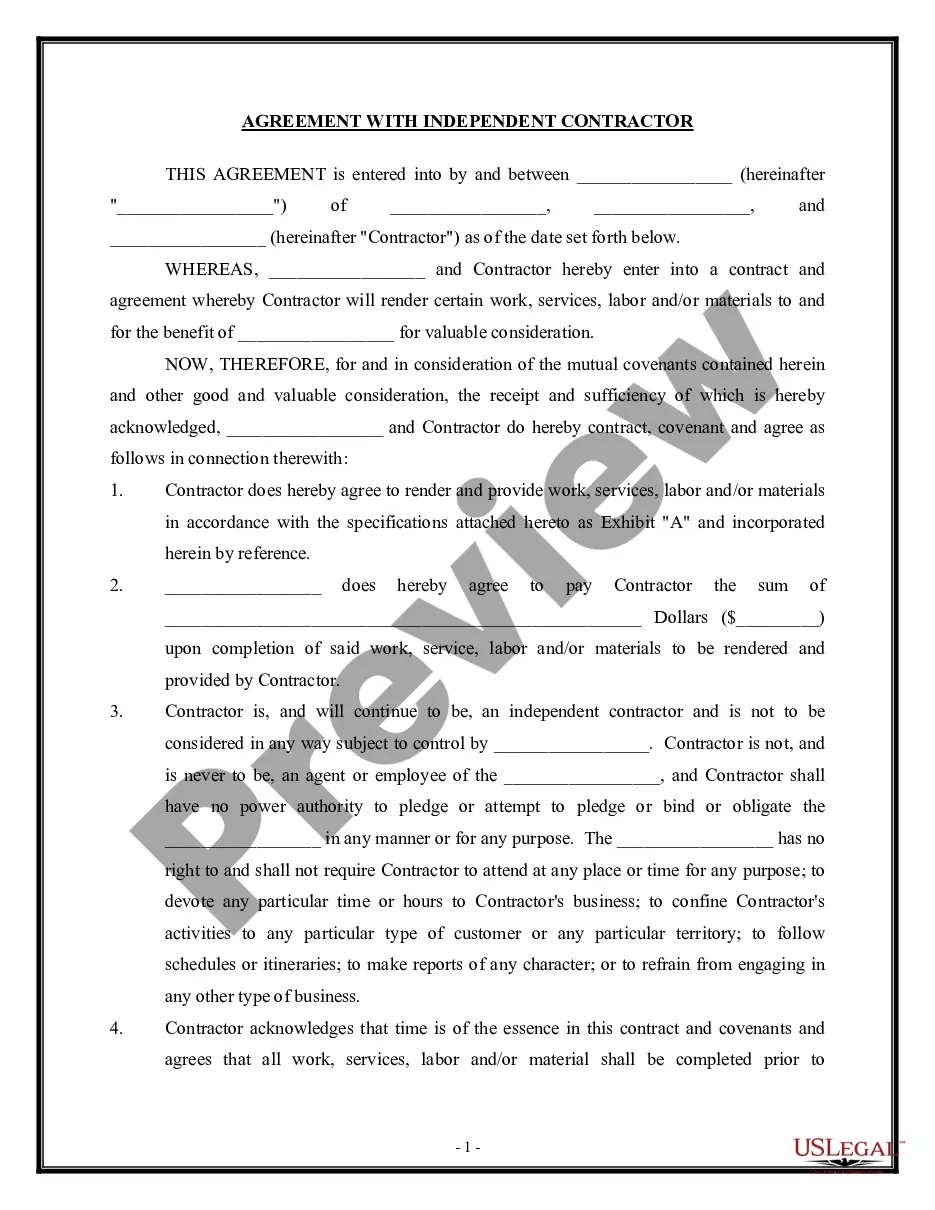
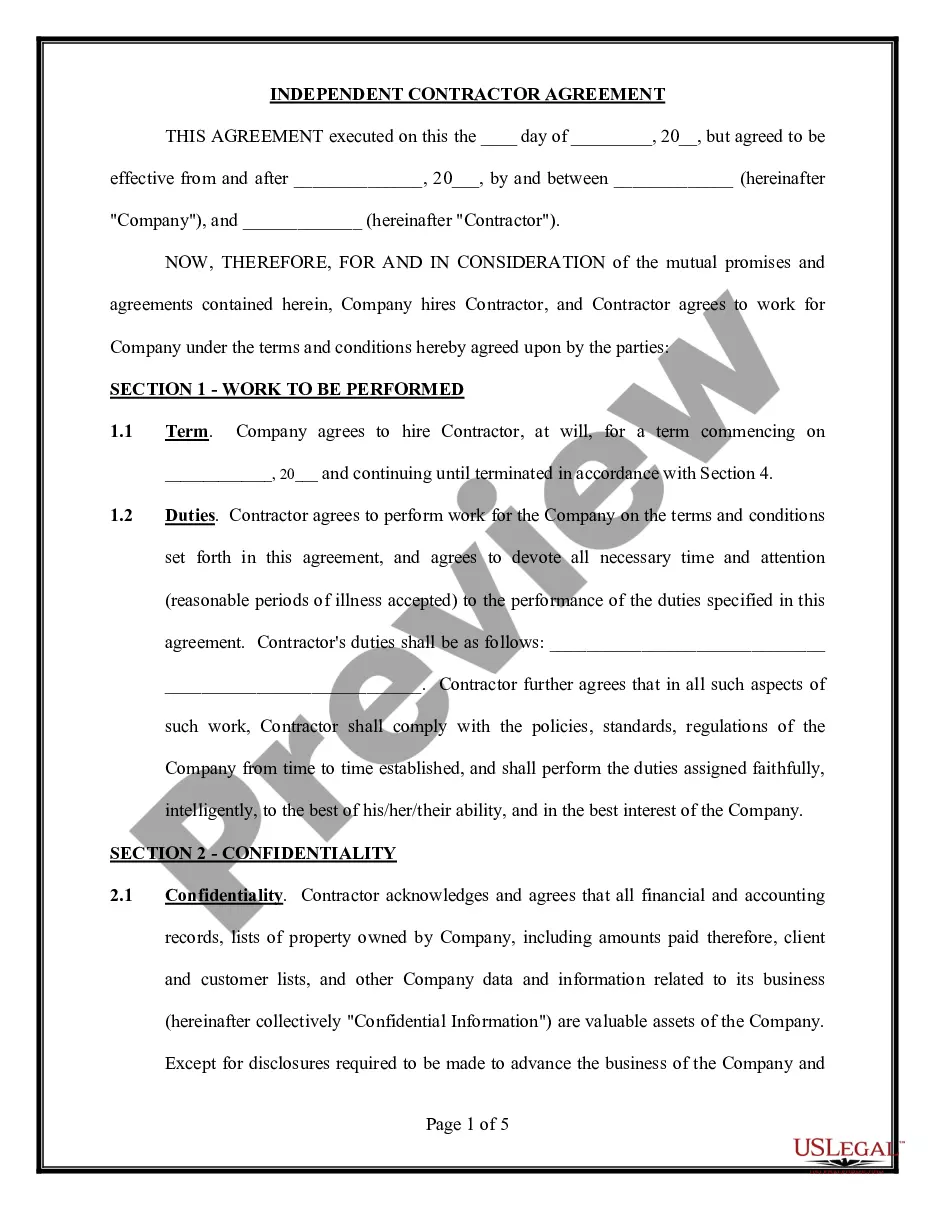
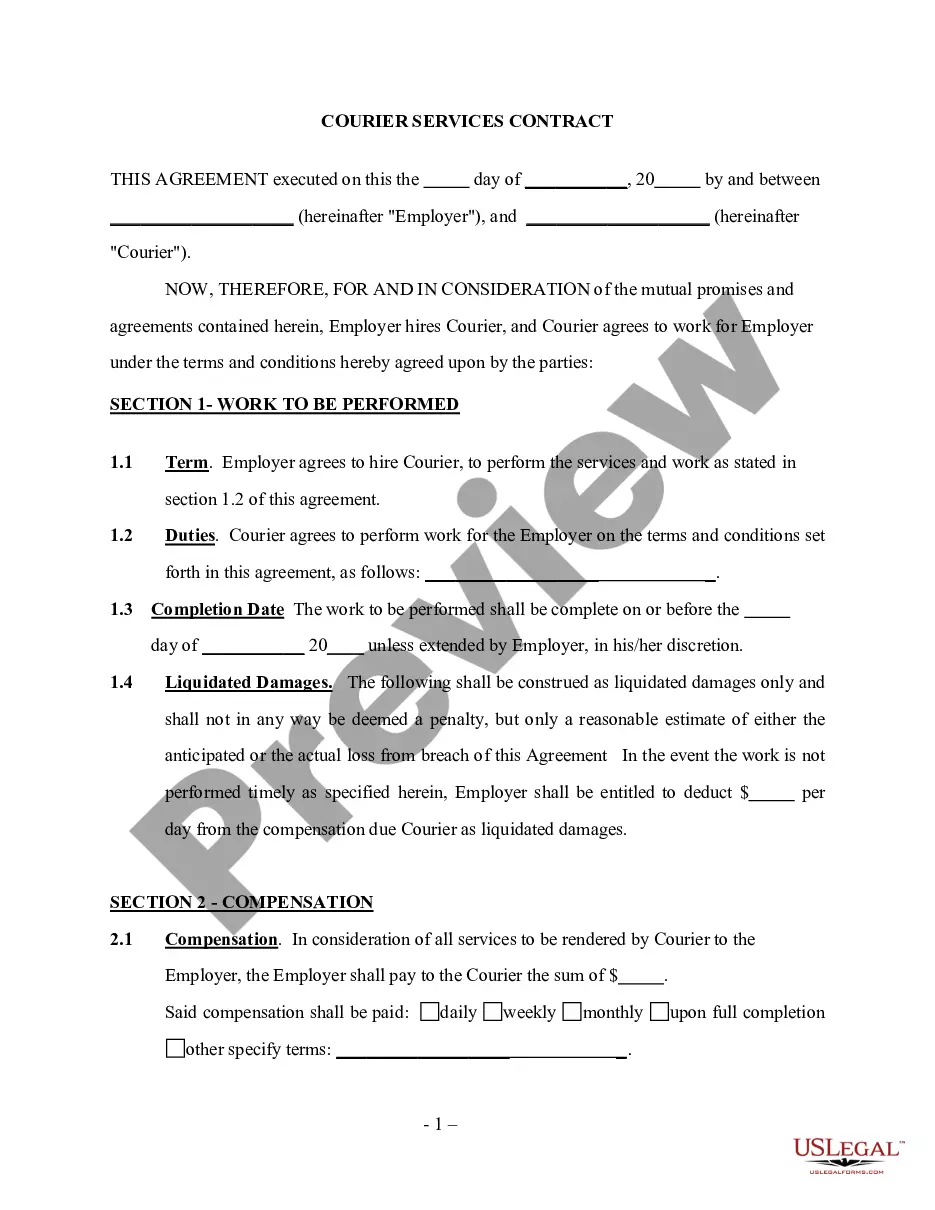
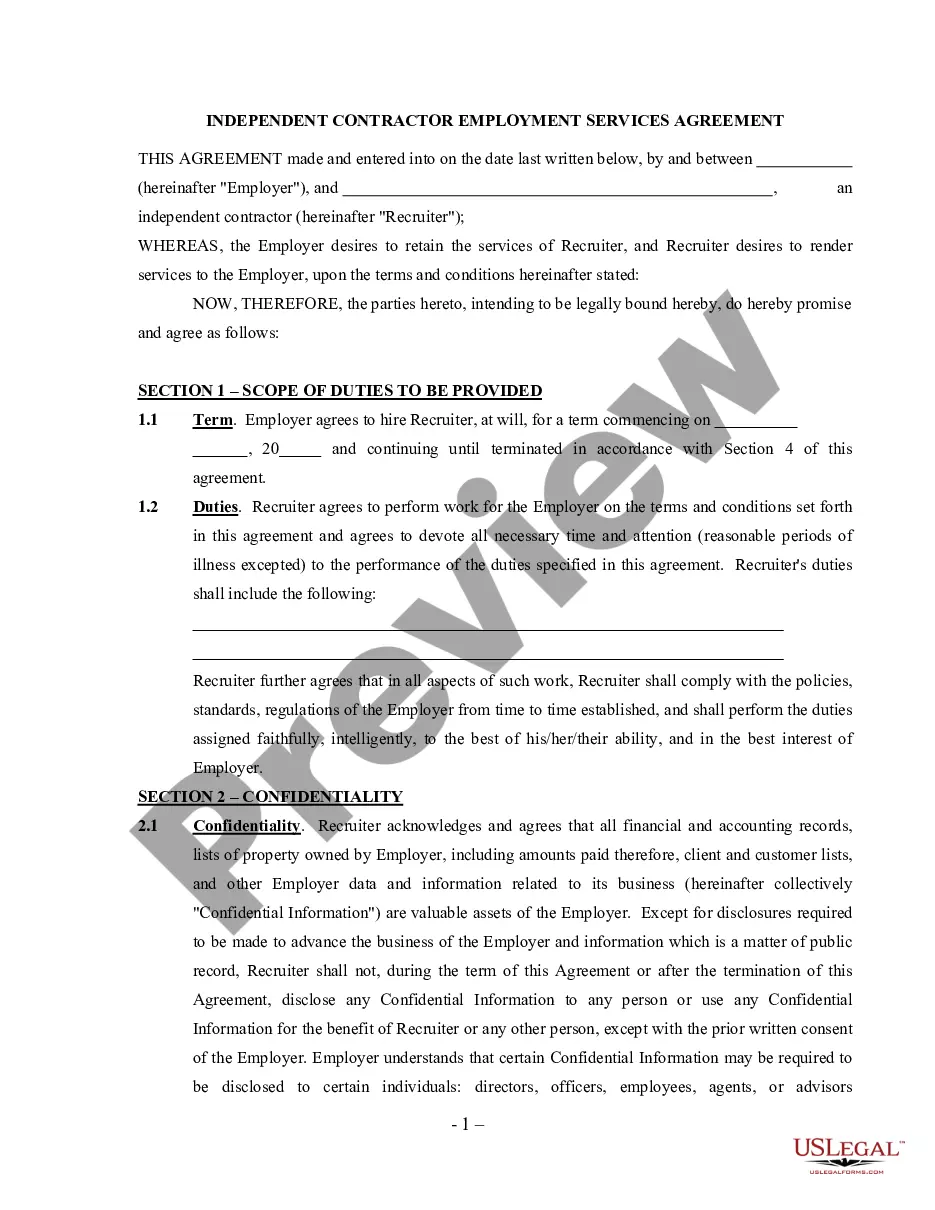
This is contract between an employer and an independent contractor to perform data entry services for employer.
District of Columbia Data Entry Employment Contract - Self-Employed Independent Contractor
State:
Multi-State
Control #:
US-INDC-10
Format:
Word;
Rich Text
Instant download
Description
Free preview
Get your form ready online
Our built-in tools help you complete, sign, share, and store your documents in one place.
Built-in online Word editor
Make edits, fill in missing information, and update formatting in US Legal Forms—just like you would in MS Word.
Export easily
Download a copy, print it, send it by email, or mail it via USPS—whatever works best for your next step.
E-sign your document
Sign and collect signatures with our SignNow integration. Send to multiple recipients, set reminders, and more. Go Premium to unlock E-Sign.
Notarize online 24/7
If this form requires notarization, complete it online through a secure video call—no need to meet a notary in person or wait for an appointment.
Store your document securely
We protect your documents and personal data by following strict security and privacy standards.

Make edits, fill in missing information, and update formatting in US Legal Forms—just like you would in MS Word.

Download a copy, print it, send it by email, or mail it via USPS—whatever works best for your next step.

Sign and collect signatures with our SignNow integration. Send to multiple recipients, set reminders, and more. Go Premium to unlock E-Sign.

If this form requires notarization, complete it online through a secure video call—no need to meet a notary in person or wait for an appointment.

We protect your documents and personal data by following strict security and privacy standards.
Looking for another form?




How to fill out Data Entry Employment Contract - Self-Employed Independent Contractor?
If you require to obtain, download, or print sanctioned document templates, utilize US Legal Forms, the leading collection of legal forms accessible online.
Employ the website's straightforward and user-friendly search to locate the documents you need.
A selection of templates for business and personal purposes are categorized by types and states, or keywords.
Step 3. If you are not satisfied with the form, use the Search field at the top of the screen to find alternative versions of the legal form template.
Step 4. Once you have found the form you need, click on the Purchase now button. Select your preferred pricing plan and provide your details to create an account.
- Utilize US Legal Forms to find the District of Columbia Data Entry Employment Agreement - Self-Employed Independent Contractor in just a few clicks.
- If you are already a US Legal Forms member, Log Into your account and click the Download button to acquire the District of Columbia Data Entry Employment Agreement - Self-Employed Independent Contractor.
- You can also access forms you have previously obtained in the My documents section of your account.
- If you are new to US Legal Forms, follow the instructions below.
- Step 1. Ensure you have chosen the form for the correct city/state.
- Step 2. Use the Preview option to browse through the form's content. Don't forget to read the description.
Form popularity
FAQ
In the United States, if you earn $600 or more during the tax year as an independent contractor, you will receive a 1099 form from your client. This applies to income generated from services performed under a district of Columbia data entry employment contract - self-employed independent contractor. If you earn below this threshold, you may not receive a 1099, but you are still required to report that income when filing your taxes. It’s essential to keep track of your earnings regardless of the 1099 status.
To prove you are an independent contractor, you can present a district of Columbia data entry employment contract - self-employed independent contractor. This contract should detail your work arrangement, including the nature of the services you provide and the terms of payment. Keep records of your business activities and any communications with clients to support your independent status. More importantly, the contract helps clarify your relationship with the client, distinguishing it from an employee-employer relationship.
Yes, being a contractor does count as self-employed. Independent contractors do not typically receive a regular paycheck and are responsible for their taxes and expenses, much like any self-employed individual. If you are entering into agreements such as the District of Columbia Data Entry Employment Contract - Self-Employed Independent Contractor, you operate under this self-employed category.
Certainly, having a contract as a self-employed individual is not only possible, but it is also advisable. A contract like the District of Columbia Data Entry Employment Contract - Self-Employed Independent Contractor clearly defines the scope of work and payment terms. This clarity helps to build positive relationships with your clients and ensures everyone understands their responsibilities.
To prove your income as an independent contractor, you should keep detailed records of your earnings and contracts. Documentation such as invoices, bank statements, and the District of Columbia Data Entry Employment Contract - Self-Employed Independent Contractor can serve as evidence. This organized approach benefits you when applying for loans or other financial services.
The new rules for self-employed individuals often revolve around tax regulations and benefits. It's essential to understand how these changes, especially those related to the District of Columbia Data Entry Employment Contract - Self-Employed Independent Contractor, may affect your earnings and deductions. Staying informed ensures you can take advantage of available resources while remaining compliant.
Yes, you can absolutely be self-employed and have a contract. Many self-employed individuals enter into contracts for their services, including the District of Columbia Data Entry Employment Contract - Self-Employed Independent Contractor. This agreement outlines the terms and conditions of the work, protecting both the contractor and the client.
Filling out an independent contractor agreement for your District of Columbia Data Entry Employment Contract - Self-Employed Independent Contractor requires attention to detail. Begin with both parties’ names and contact information, followed by the scope of work and payment terms. Clearly state the duration of the contract and any conditions for termination. Using a platform like US Legal Forms can simplify this process and ensure you include all necessary legal elements.
Writing an independent contractor agreement for your District of Columbia Data Entry Employment Contract - Self-Employed Independent Contractor involves several steps. Start by outlining the project details, including specific tasks and deadlines. Next, include payment terms, confidentiality clauses, and any other conditions that protect both you and the client. A well-structured agreement can prevent misunderstandings and enhance your working relationship.
To fill out an independent contractor form for your District of Columbia Data Entry Employment Contract - Self-Employed Independent Contractor, you will need to provide your personal information, business name, and the services you offer. Ensure that you carefully read any sections about payment terms and deadlines. This document acts as a binding agreement, so be precise and clear when disclosing your terms and needs.