District of Columbia Protecting Deceased Persons from Identity Theft
What this form package covers
This District of Columbia Protecting Deceased Persons from Identity Theft form package is designed to help families and executors secure the personal information of a deceased individual after death. It provides essential documents needed to notify various entities, such as creditors and government agencies, about the death and protect against identity theft involving the deceased's personal information. With this package, users can take proactive steps to limit the risk of identity theft and respond effectively if it occurs.
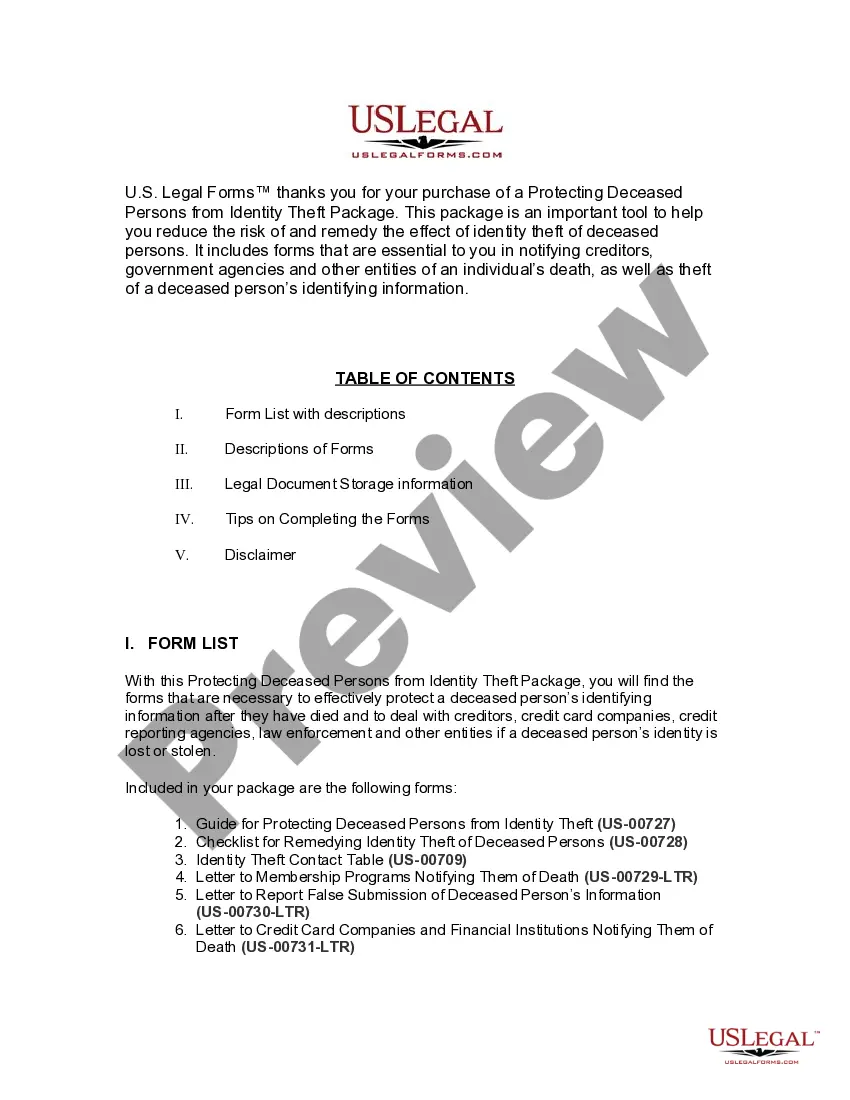
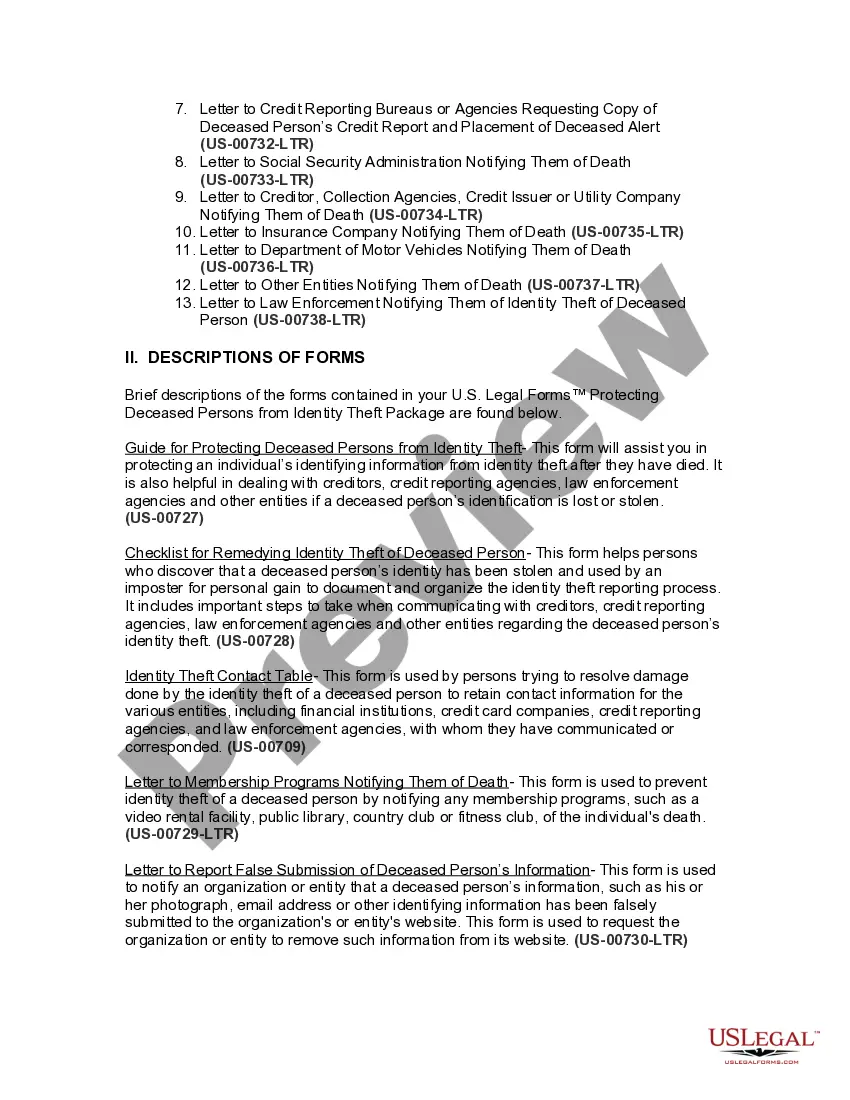
Forms you’ll find in this package
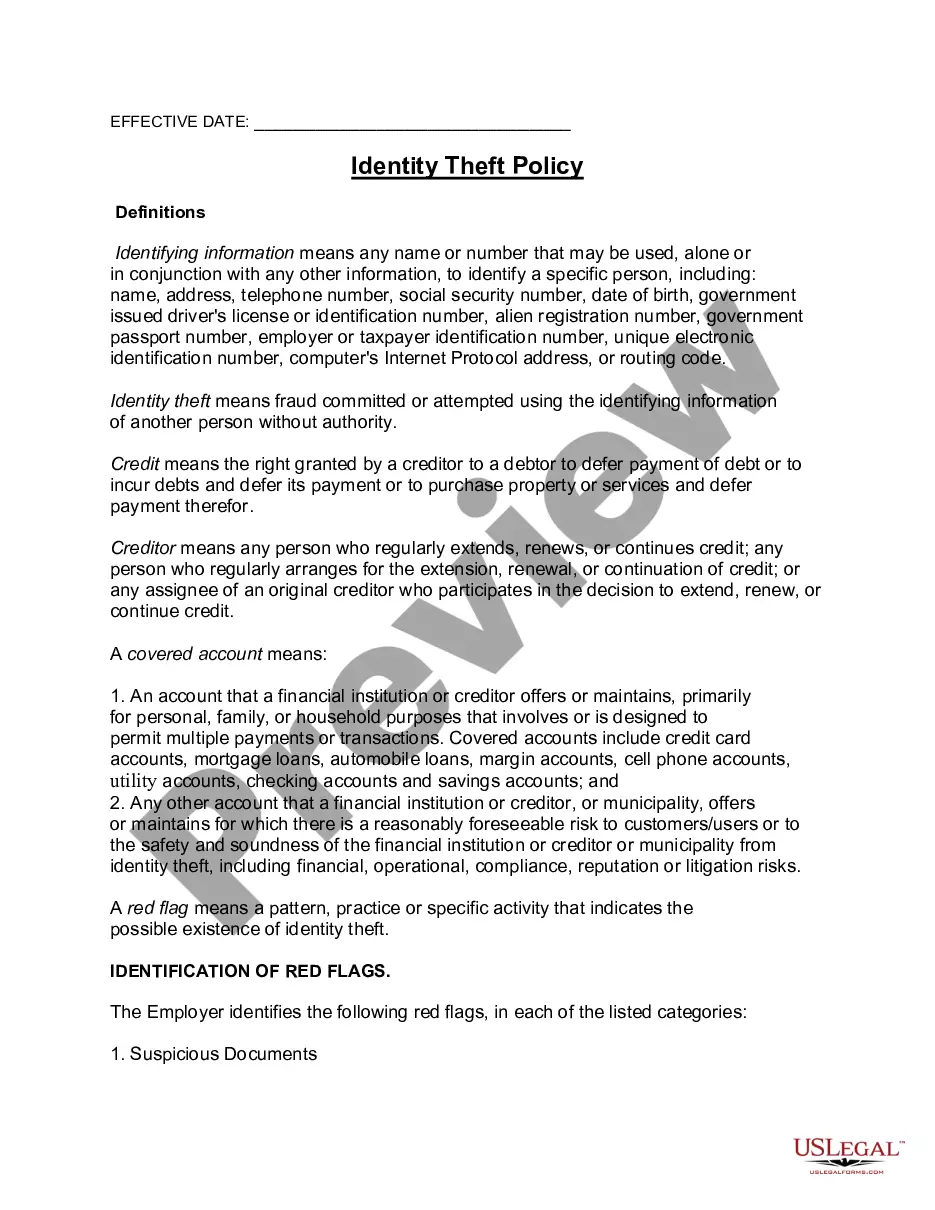
- Identity Theft Contact Table
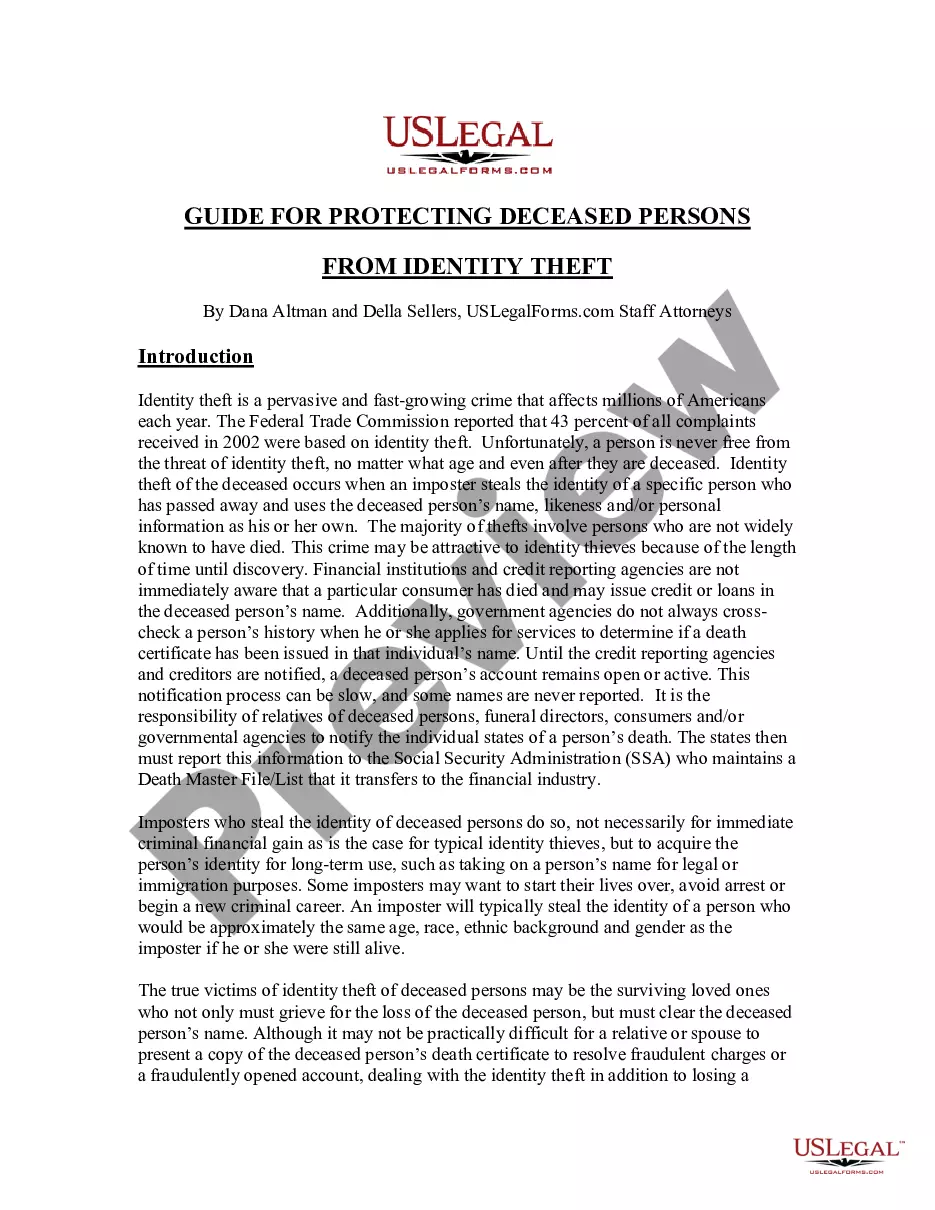
- Guide for Protecting Deceased Persons from Identity Theft
- Checklist for Remedying Identity Theft of Deceased Persons
- Letter to Membership Programs Notifying Them of Death
- Letter to Report False Submission of Deceased Person's Information
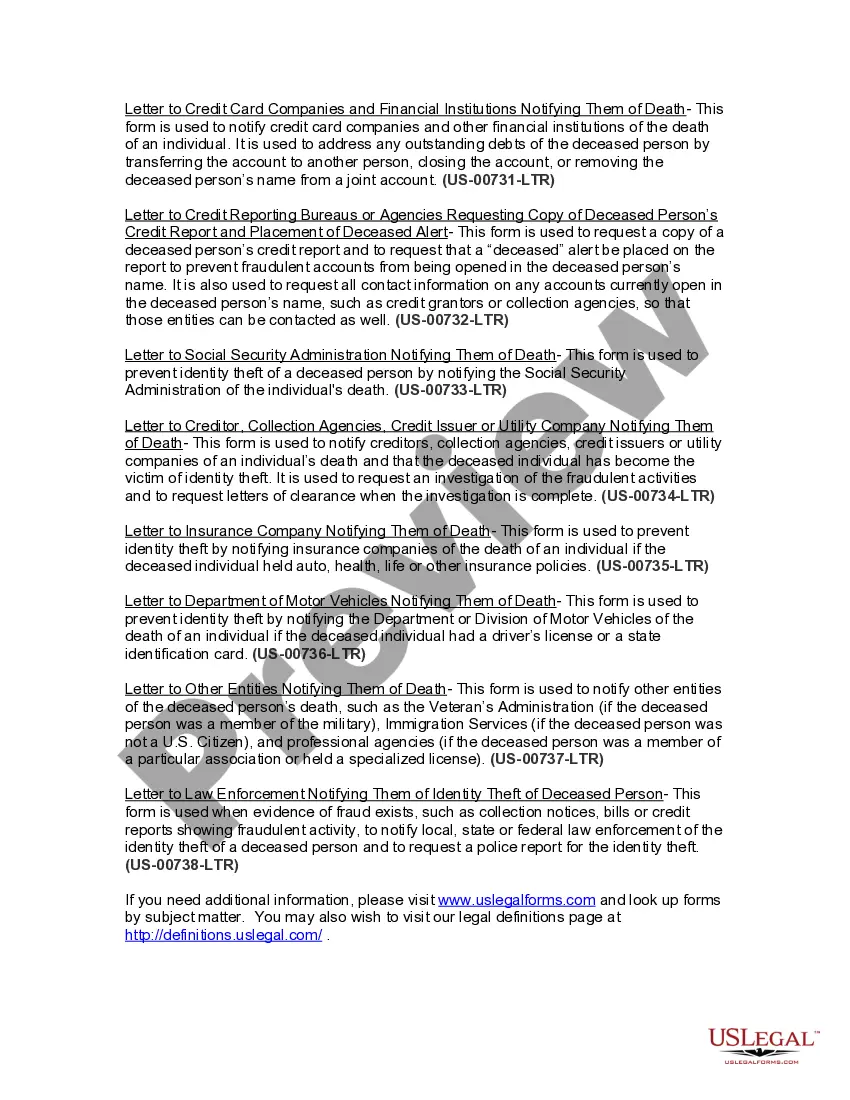
- Letter to Credit Card Companies and Financial Institutions Notifying Them of Death
- Letter to Credit Reporting Bureaus or Agencies Requesting Copy of Deceased Person's Credit Report and Placement of Deceased Alert
- Letter to Social Security Administration Notifying Them of Death
- Letter to Creditor, Collection Agencies, Credit Issuer or Utility Company Notifying Them of Death
- Letter to Insurance Company Notifying Them of Death
- Letter to Department of Motor Vehicles Notifying Them of Death
- Letter to Other Entities Notifying Them of Death
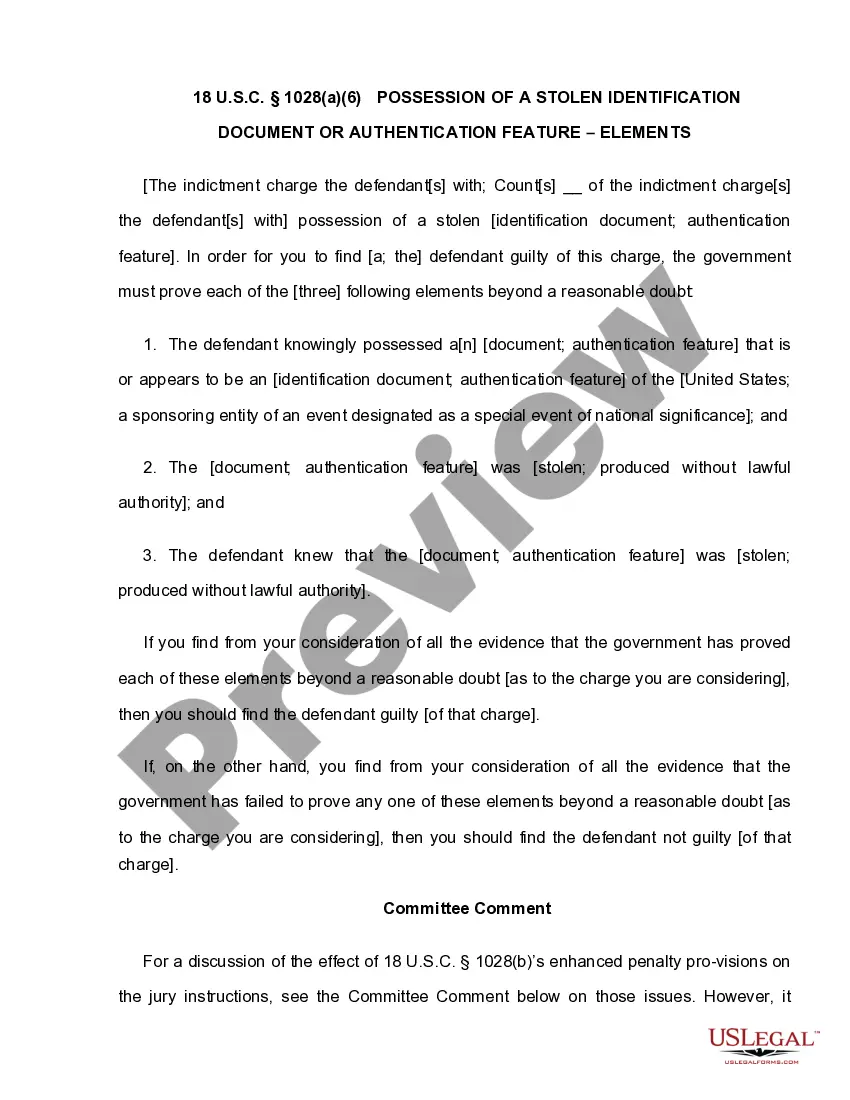
- Letter to Law Enforcement Notifying Them of Identity Theft of Deceased Person
When to use this document
This form package should be used in the following situations:
- When a loved one has passed away and you need to notify creditors and agencies about their death.
- To address instances of identity theft involving personal information that may have been used fraudulently after the individual's death.
- When you want to ensure that all necessary parties are informed to prevent unauthorized use of the deceased's identity.
- If you need to manage outstanding debts or accounts of the deceased by contacting financial institutions.
Who needs this form package
- Family members of a deceased individual.
- Executors or administrators of the deceased person's estate.
- Legal representatives involved in settling the estate.
- Individuals who have experienced identity theft after a loved one's death.
How to complete these forms
- Review all included forms to understand their purpose and functionality.
- Identify the deceased individual's information that needs to be communicated to various entities.
- Fill out the forms, ensuring that all required fields are completed accurately.
- Gather any necessary documentation that may support your notifications, such as death certificates.
- Send the completed forms to the relevant parties as specified in each document.
Notarization guidance for this package
Notarization is not commonly needed for forms in this package. However, if your state’s laws require it, our notarization service, powered by Notarize, allows you to finalize documents online 24/7 without in-person visits.
Get your form ready online
Our built-in tools help you complete, sign, share, and store your documents in one place.
Make edits, fill in missing information, and update formatting in US Legal Forms—just like you would in MS Word.
Download a copy, print it, send it by email, or mail it via USPS—whatever works best for your next step.
Sign and collect signatures with our SignNow integration. Send to multiple recipients, set reminders, and more. Go Premium to unlock E-Sign.
If this form requires notarization, complete it online through a secure video call—no need to meet a notary in person or wait for an appointment.
We protect your documents and personal data by following strict security and privacy standards.

Make edits, fill in missing information, and update formatting in US Legal Forms—just like you would in MS Word.

Download a copy, print it, send it by email, or mail it via USPS—whatever works best for your next step.

Sign and collect signatures with our SignNow integration. Send to multiple recipients, set reminders, and more. Go Premium to unlock E-Sign.

If this form requires notarization, complete it online through a secure video call—no need to meet a notary in person or wait for an appointment.

We protect your documents and personal data by following strict security and privacy standards.
Avoid these common issues
- Failing to notify all necessary creditors and agencies about the death.
- Not keeping copies of all sent notifications and responses for your records.
- Incorrectly filling out forms, leading to delays in processing notifications.
- Overlooking the importance of placing a deceased alert on the credit report.
Why complete this package online
- Convenient access to legally drafted forms that are easy to download and fill out.
- Edit and customize forms as needed based on your situation.
- Reliable, attorney-drafted documents that comply with District of Columbia regulations.
- Faster turnaround for managing posthumous identity theft and notifications.
Looking for another form?

Form popularity
FAQ
The primary D.C. code for identity theft is D.C. Code 28 3310, which explicitly defines the crime and its penalties. This code highlights why it is crucial to be aware of identity theft laws, allowing for better protection strategies. Services like UsLegalForms can assist in navigating these legal complexities, ensuring compliance with the District of Columbia Protecting Deceased Persons from Identity Theft frameworks.
D.C. Code 22 402 outlines the laws concerning fraud and forgery in the District of Columbia. This code encompasses various forms of fraudulent activities, including identity theft and the misuse of personal information. Understanding this code is essential for combating identity theft and reinforces the efforts under District of Columbia Protecting Deceased Persons from Identity Theft.
D.C. Code 47 2851.02 A relates to the protection of personal information, especially regarding deceased individuals. This legislation focuses on preventing unauthorized access and use of sensitive data. By understanding this code, families and guardians can better protect against threats like identity theft, reinforcing the importance of District of Columbia Protecting Deceased Persons from Identity Theft.
D.C. Code 28 3310 addresses the criminal offense of identity theft in the District of Columbia. It defines identity theft and outlines the penalties associated with such crimes. This code is crucial for ensuring the safety of personal information, including that of deceased persons, in the framework of District of Columbia Protecting Deceased Persons from Identity Theft.
The best process for reporting identity theft begins with gathering all relevant evidence, such as unauthorized accounts and transactions. Next, you should contact local law enforcement and file a report in the District of Columbia Protecting Deceased Persons from Identity Theft. Additionally, notify your bank and other financial institutions to mitigate losses. For a streamlined approach, consider using the tools provided by uslegalforms, which can guide you in documenting and submitting your report effectively.
When you report identity theft, authorities initiate an investigation into the fraudulent activities linked to your information. In the case of the District of Columbia Protecting Deceased Persons from Identity Theft, your report aids in safeguarding the identities of deceased individuals. You'll receive guidance on further steps to secure your identity and prevent further misuse. Reporting also helps build a record that can support future actions against identity theft.
Beating identity theft requires proactive steps, including monitoring your accounts and regularly checking your credit reports. If you notice suspicious activity, act immediately by disputing charges and reporting to your financial institutions. Educating yourself about identity theft and using prevention tools can empower you. For effective measures related to District of Columbia Protecting Deceased Persons from Identity Theft, consider using platforms that offer step-by-step guidance and resources.
The highest rated identity theft protection services offer comprehensive monitoring, alerts, and recovery assistance. These services often include features such as credit monitoring, identity restoration, and fraud insurance. Researching user reviews and comparisons can provide insights into which service stands out in the District of Columbia Protecting Deceased Persons from Identity Theft. Remember, choosing the right service can make a significant difference in maintaining security.
To effectively protect a deceased person from identity theft, first, notify relevant institutions such as banks and credit bureaus of their passing. This action can help freeze any accounts and prevent new accounts from being opened in their name. Additionally, consider placing a death notice in the public record and monitoring any unexpected credit activity. Utilizing resources like USLegalForms can guide you through these essential steps for District of Columbia Protecting Deceased Persons from Identity Theft.
The best defense against identity theft combines vigilance and proactive measures. Stay informed about the latest scams and regularly update your passwords. Additionally, using strong authentication methods for online accounts greatly enhances your protection. These strategies are essential for anyone concerned about the District of Columbia Protecting Deceased Persons from Identity Theft.