District of Columbia Assignment of Lease and Rent from Borrower to Lender
About this form
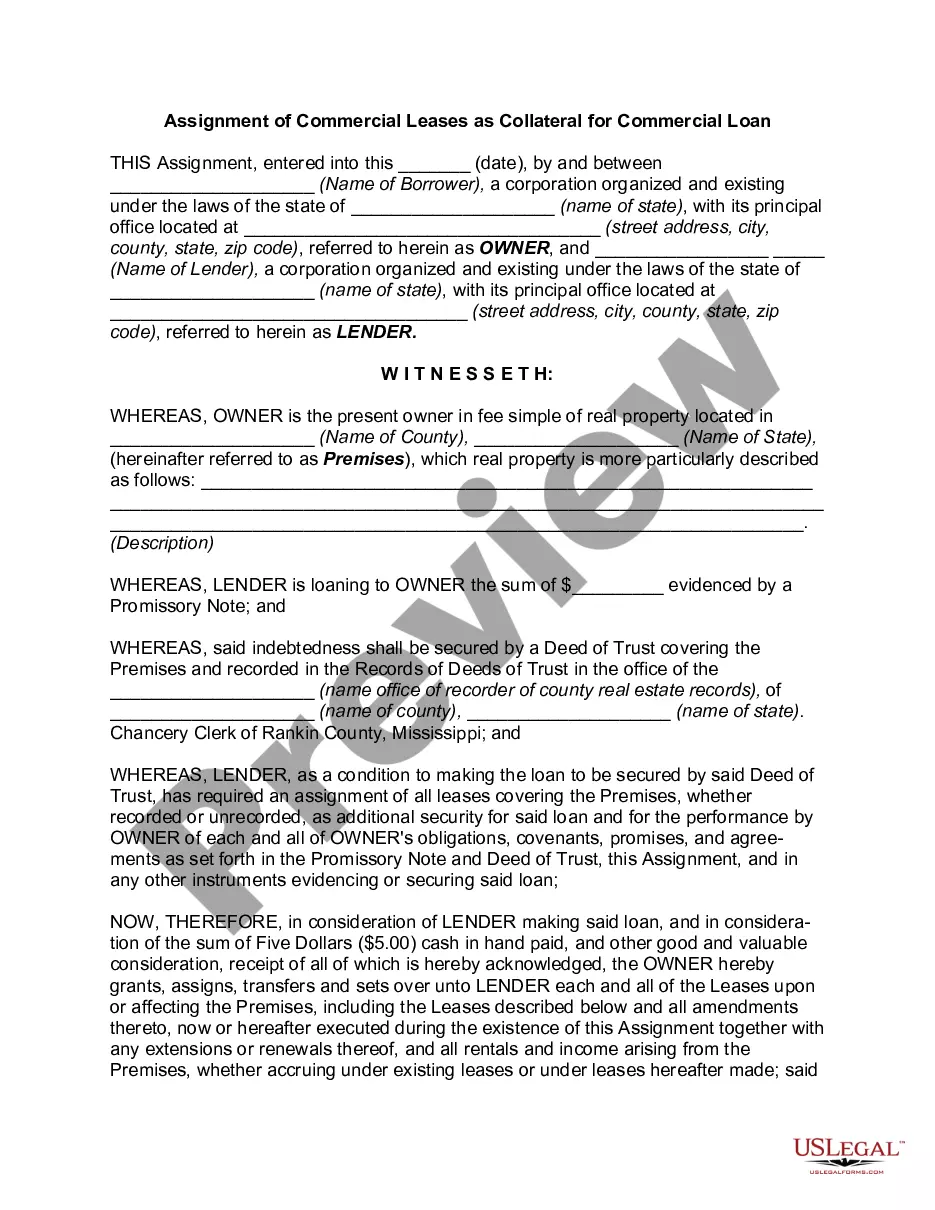
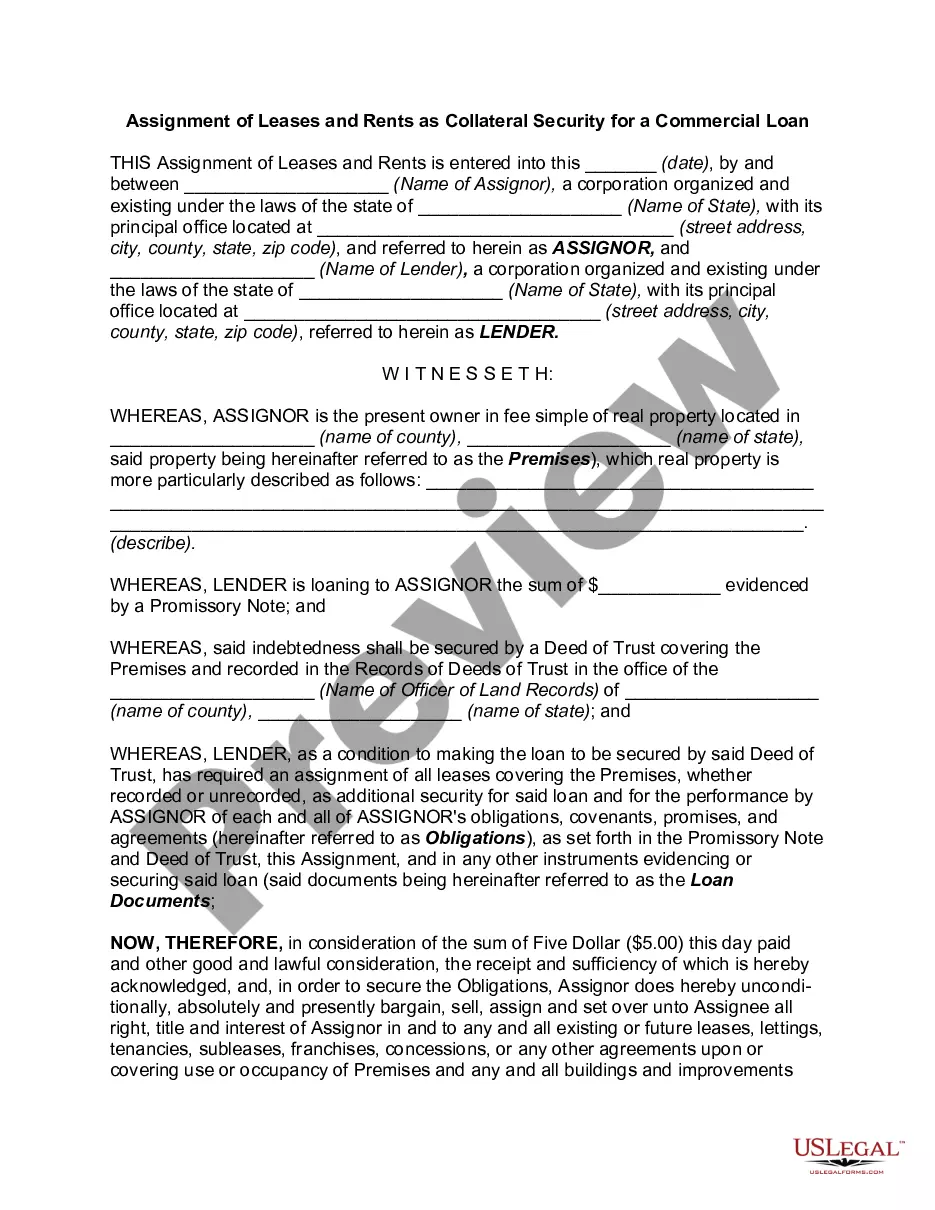
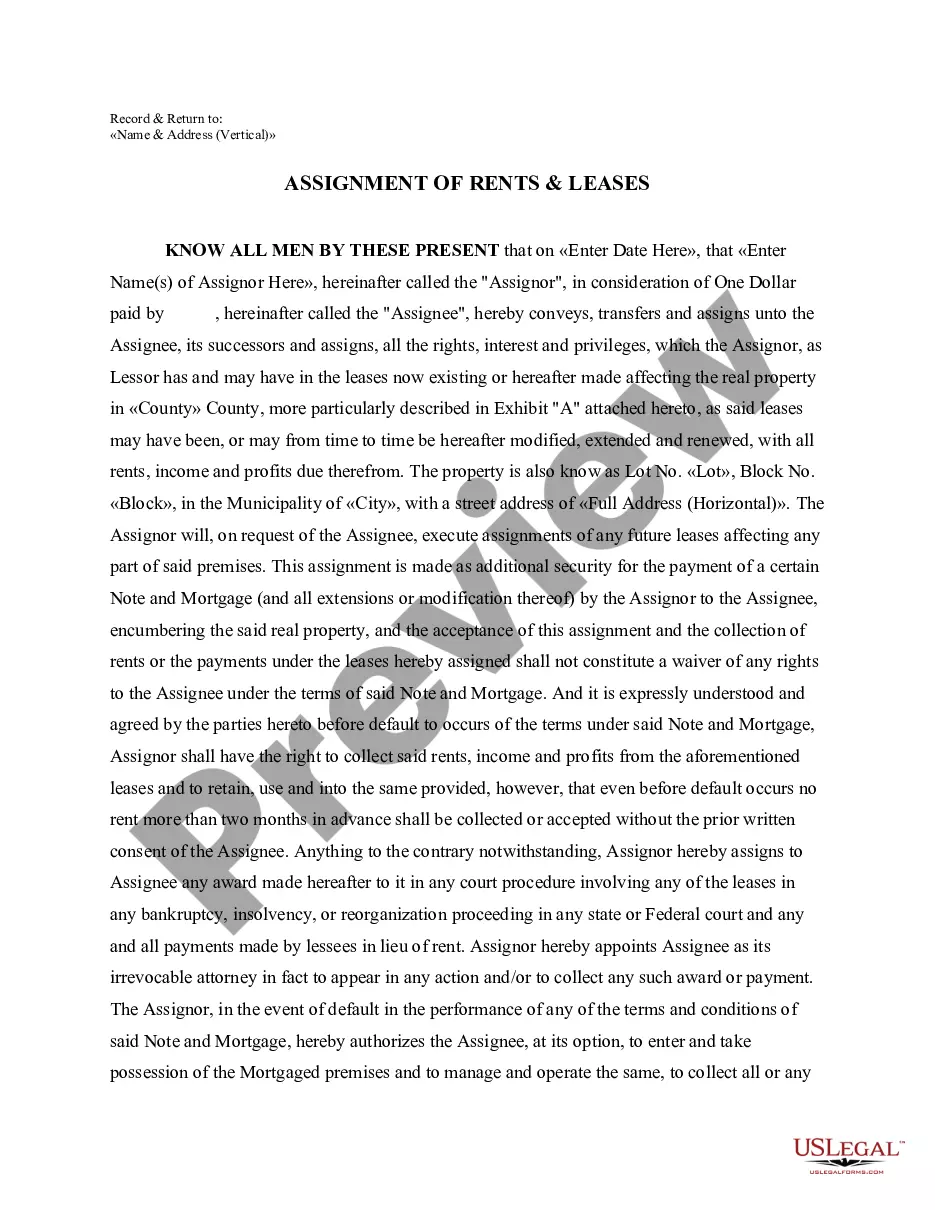
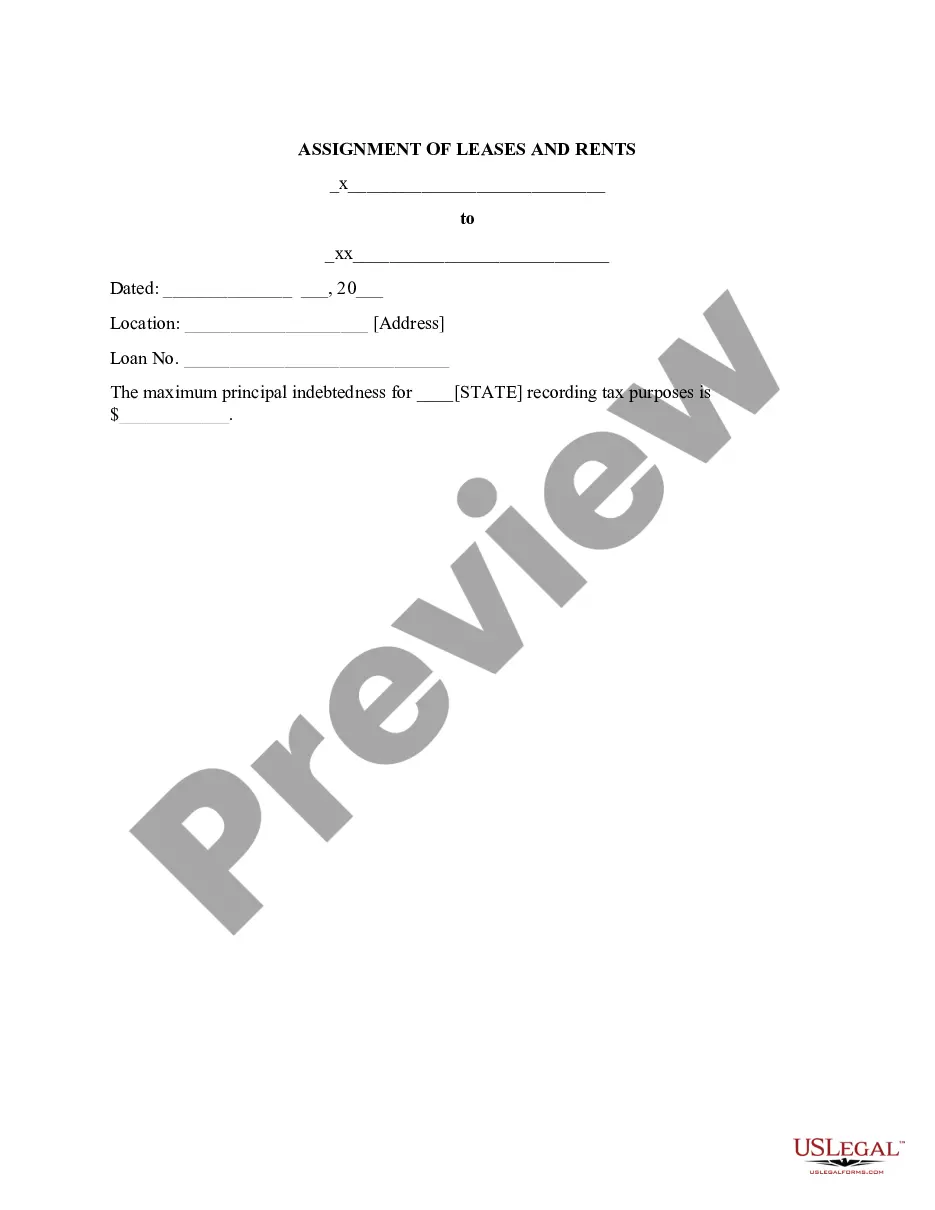
The Assignment of Lease and Rent from Borrower to Lender is a legal document utilized to transfer rights to leases and rental payments from a borrower (Assignor) to a lender (Assignee) as part of a loan agreement. This form serves as a means for the Assignor to repay their debt to the Assignee and includes specifics on the assignment of both current and future rental income derived from property leases. It is distinct from other agreements by focusing specifically on the transfer of rights rather than property ownership itself.
Form components explained
- Parties involved: Identification of the borrower and lender.
- Loan details: Information about the loan amount and terms.
- Assignment specifics: Transfer of leases, rents, and related rights.
- Authority for rent collection: Permission for the lender to collect rents directly.
- Representations and warranties: Assurances by the Assignor about the validity of the leases.
- Covenants: Actions that the Assignor agrees to undertake post-assignment.

Common use cases
This form is used when a borrower wants to assign their lease agreements and rights to rental income to a lender as security for a loan. Common scenarios include commercial real estate financing, refinancing existing loans, or when a borrower faces financial difficulties and seeks to provide additional collateral to the lender. Utilizing this form helps ensure that the lender has a claim on the rental income in case of default.
Intended users of this form
- Property owners looking to secure a loan against rental income.
- Lenders requiring additional collateral in the form of lease assignments.
- Borrowers who are in commercial or residential real estate transactions.
- Real estate investors needing to guarantee loan repayment through rental cash flow.
Instructions for completing this form
- Identify the borrower (Assignor) and lender (Assignee) by entering their full names.
- Specify the loan agreement details, including dates and amounts.
- Detail the property address and attach any necessary legal descriptions.
- Ensure the Assignor grants permission to the Assignee for the collection of rent payments.
- Both parties should sign and date the form, potentially in the presence of a notary.
Notarization requirements for this form
This form does not typically require notarization unless specified by local law. If notarization is needed for your jurisdiction, it's recommended to consult with a legal professional to ensure the document meets all necessary legal standards.
Get your form ready online
Our built-in tools help you complete, sign, share, and store your documents in one place.
Make edits, fill in missing information, and update formatting in US Legal Forms—just like you would in MS Word.
Download a copy, print it, send it by email, or mail it via USPS—whatever works best for your next step.
Sign and collect signatures with our SignNow integration. Send to multiple recipients, set reminders, and more. Go Premium to unlock E-Sign.
If this form requires notarization, complete it online through a secure video call—no need to meet a notary in person or wait for an appointment.
We protect your documents and personal data by following strict security and privacy standards.

Make edits, fill in missing information, and update formatting in US Legal Forms—just like you would in MS Word.

Download a copy, print it, send it by email, or mail it via USPS—whatever works best for your next step.

Sign and collect signatures with our SignNow integration. Send to multiple recipients, set reminders, and more. Go Premium to unlock E-Sign.

If this form requires notarization, complete it online through a secure video call—no need to meet a notary in person or wait for an appointment.

We protect your documents and personal data by following strict security and privacy standards.
Common mistakes
- Failing to include all necessary parties in the agreement.
- Not specifying the correct property address or legal description.
- Leaving out important details about the loan agreement.
- Neglecting to sign and date the document appropriately.
- Ignoring state-specific requirements that may apply.
Advantages of online completion
- Easy access: Download the form anytime and from anywhere.
- Editability: Customize the template based on your specific needs.
- Legal reliability: Forms are drafted by licensed attorneys to ensure compliance.
- Time-saving: Complete and print the form quickly without waiting.
Legal use & context:
- Enables lenders to secure a borrower's debt through rental income.
- Must comply with state laws governing assignments and security interests.
- Can help prevent disputes between parties regarding rental payments and lease terms.
- Serves as an official record of the assignment for legal purposes.
Looking for another form?
Form popularity
FAQ
An assignment of lease and rent refers to a legal agreement where a borrower transfers their rights to rental income from a property to a lender. This arrangement ensures that lenders receive payments directly in case of default. It essentially acts as a safety net for lenders, securing their investment. Understanding the District of Columbia Assignment of Lease and Rent from Borrower to Lender can enhance your financial strategies.
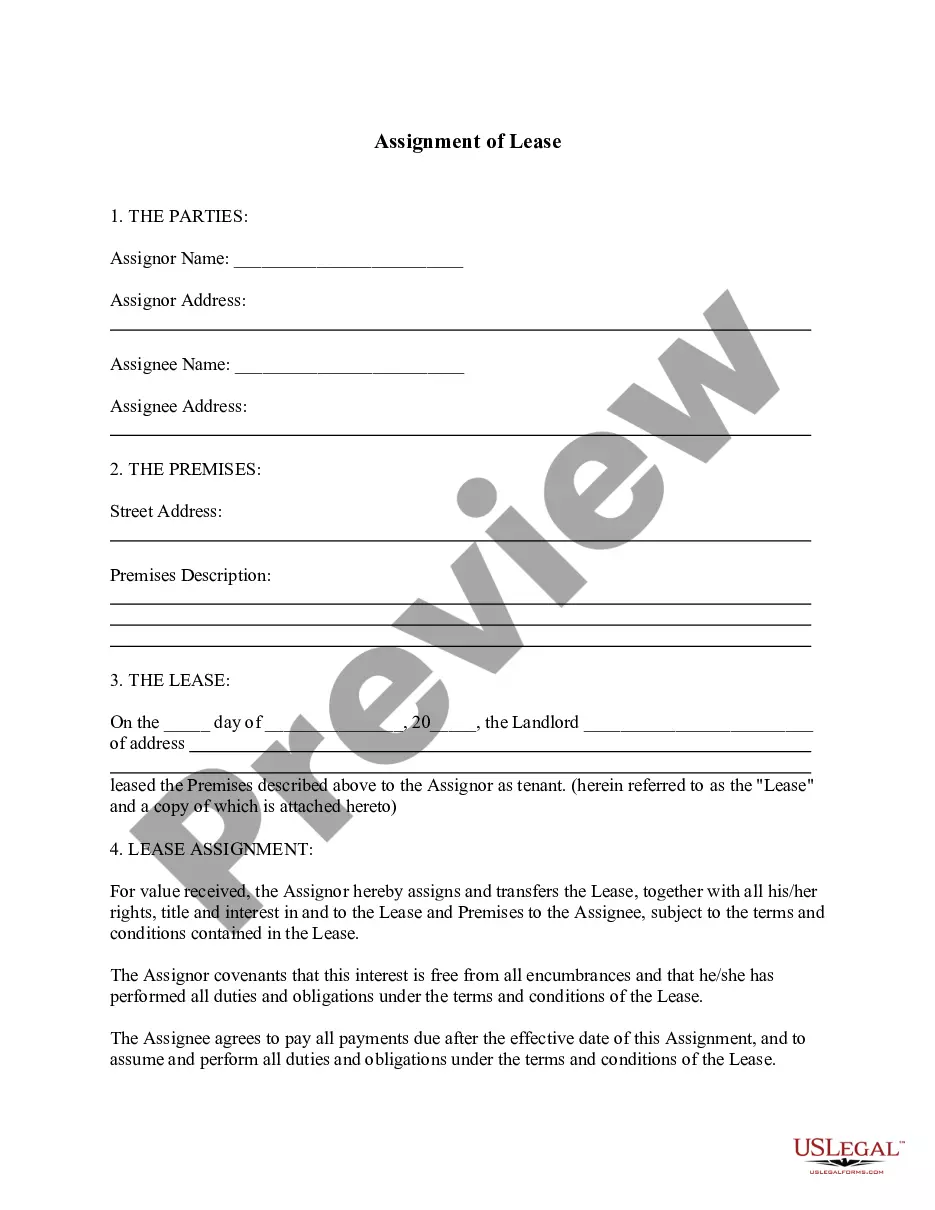
The form for assignment of lease by a landlord typically documents the transfer of lease rights to a new party. It should detail the terms of the assignment, including the names of the tenant and the new leaseholder, and clearly define rights and obligations. Utilizing platforms like US Legal Forms can facilitate obtaining the correct District of Columbia Assignment of Lease and Rent from Borrower to Lender form, ensuring all legal requirements are met.
A collateral assignment of leases and rents refers to a legal arrangement where a borrower gives their rental income from properties as security to a lender. This District of Columbia Assignment of Lease and Rent from Borrower to Lender ensures that if the borrower defaults, the lender can collect the rent directly. This process offers protection for the lender while allowing the borrower to maintain their property usage. Understanding this assignment can help you make informed decisions regarding financing options.
The assignment of leases and rents document is a legal instrument that enables a lender to collect rental income directly if the borrower defaults on their mortgage. It is a key component of the District of Columbia Assignment of Lease and Rent from Borrower to Lender process, ensuring that lenders have access to rental revenues. This document outlines the rights granted to the lender, providing security and clarity for all parties involved. Utilizing platforms like uslegalforms can simplify the process of creating this essential document.
The right of transfer or assignment allows a mortgage lender to transfer their interests under a mortgage to another party. In the context of a District of Columbia Assignment of Lease and Rent from Borrower to Lender, this means the lender can assign the lease and rent rights to obtain payment directly from the tenants. This process creates security for the lender and ensures they receive the rental income if the borrower defaults. Understanding this right is crucial for both lenders and borrowers to navigate their agreements effectively.
Sometimes called Assignment of Leases, Rents and Profits or simply Assignment of Rents, this is a document attached to a mortgage loan agreement which entitles the lender to any income (from leases, rents, etc.) derived from the property once the owner defaults on the loan.
An assignment of a Commercial Lease is where a new tenant steps into the shoes of the original tenant and takes over the lease going forward.
This might include financial statements, business history and professional references; and. there is an agreement about who is liable for the costs of the deed of assignment. The landlord's lawyer usually prepares the agreement. However, the outgoing tenant or the incoming tenant pays these costs, not the landlord.
An assignment is the transfer of the a party's entire interest in a lease. When a tenant assigns its lease, the assignee takes over the tenant's obligations under the lease and deals directly with the landlord.A sublease is the transfer of all or a portion of the premises for less than the entire term of the lease.