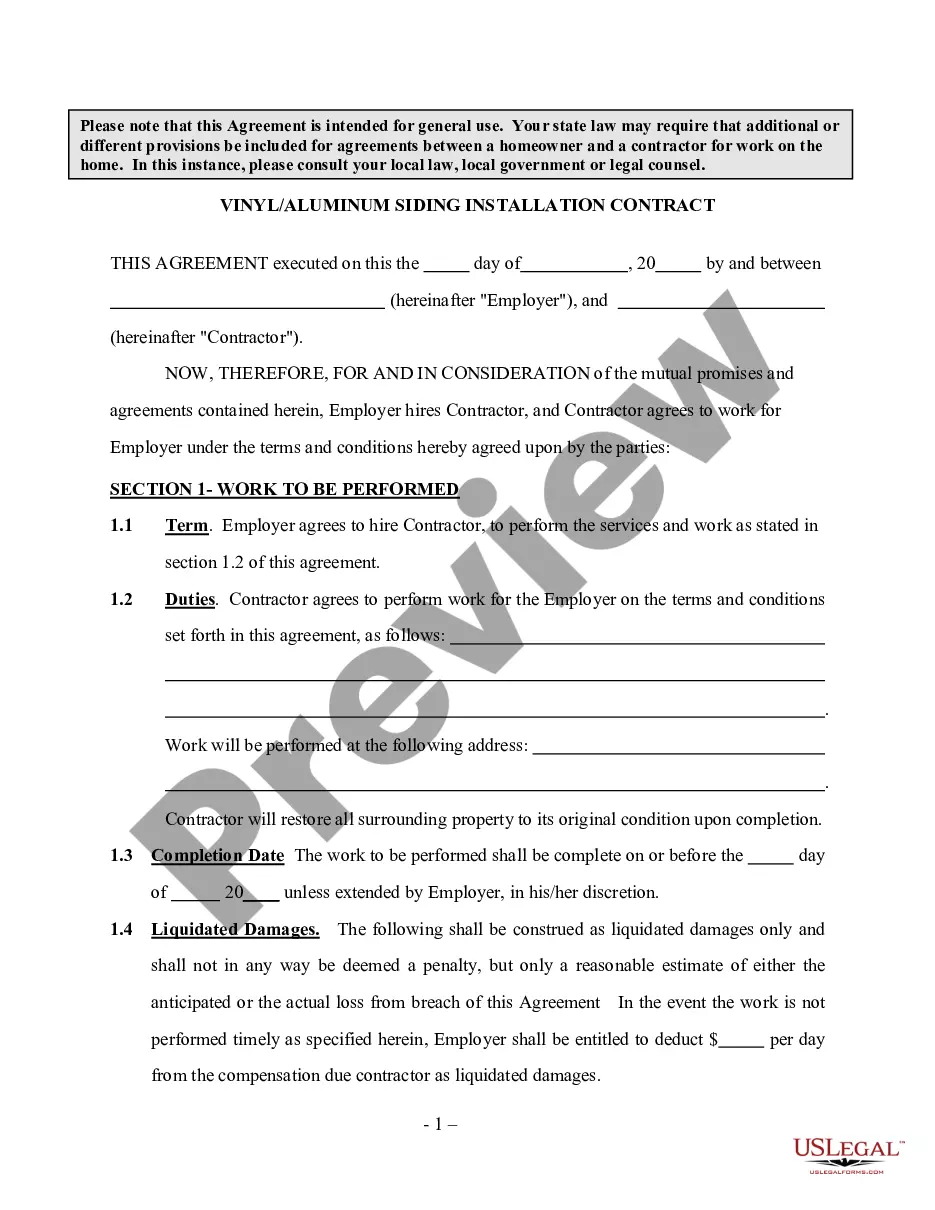
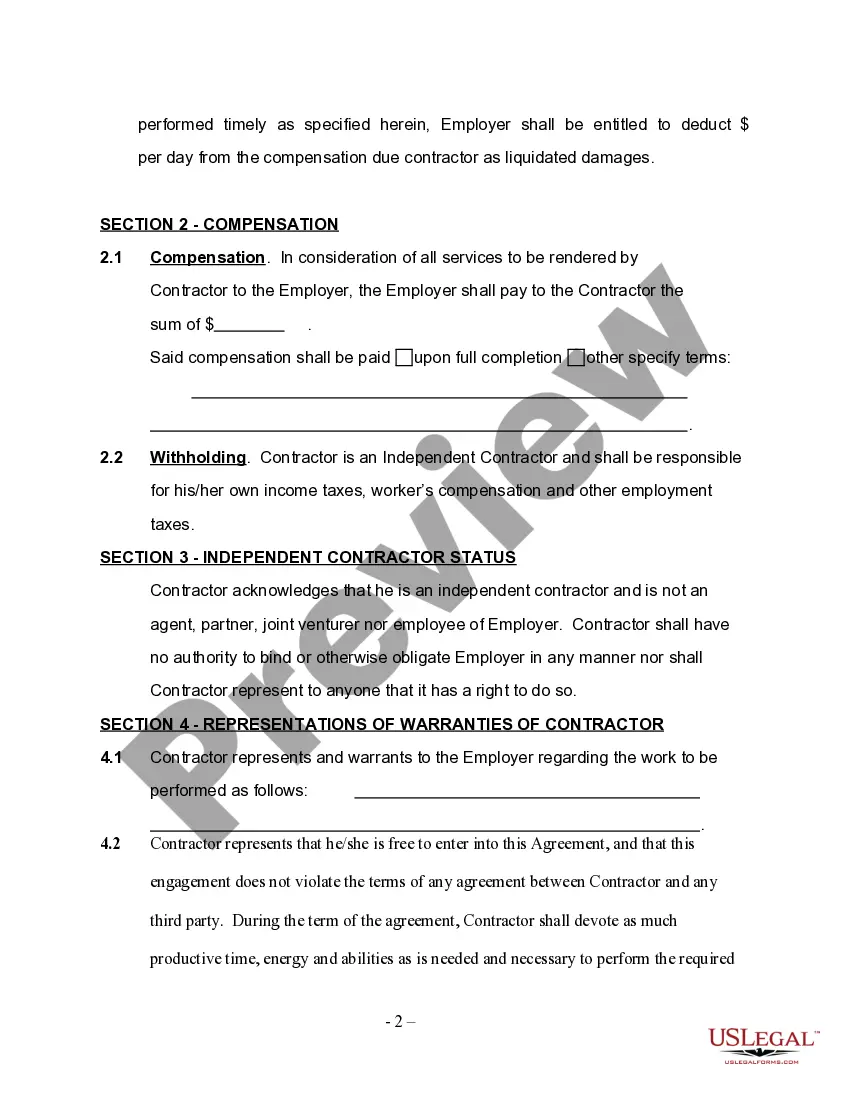
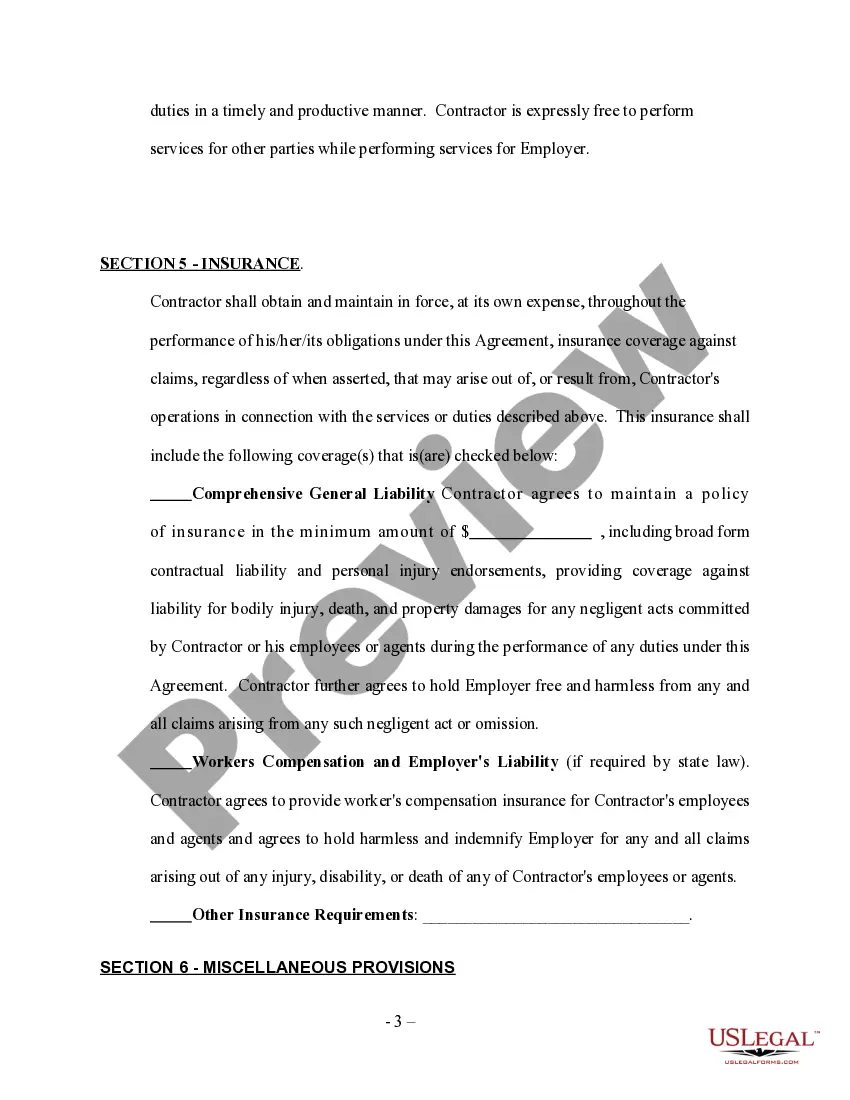
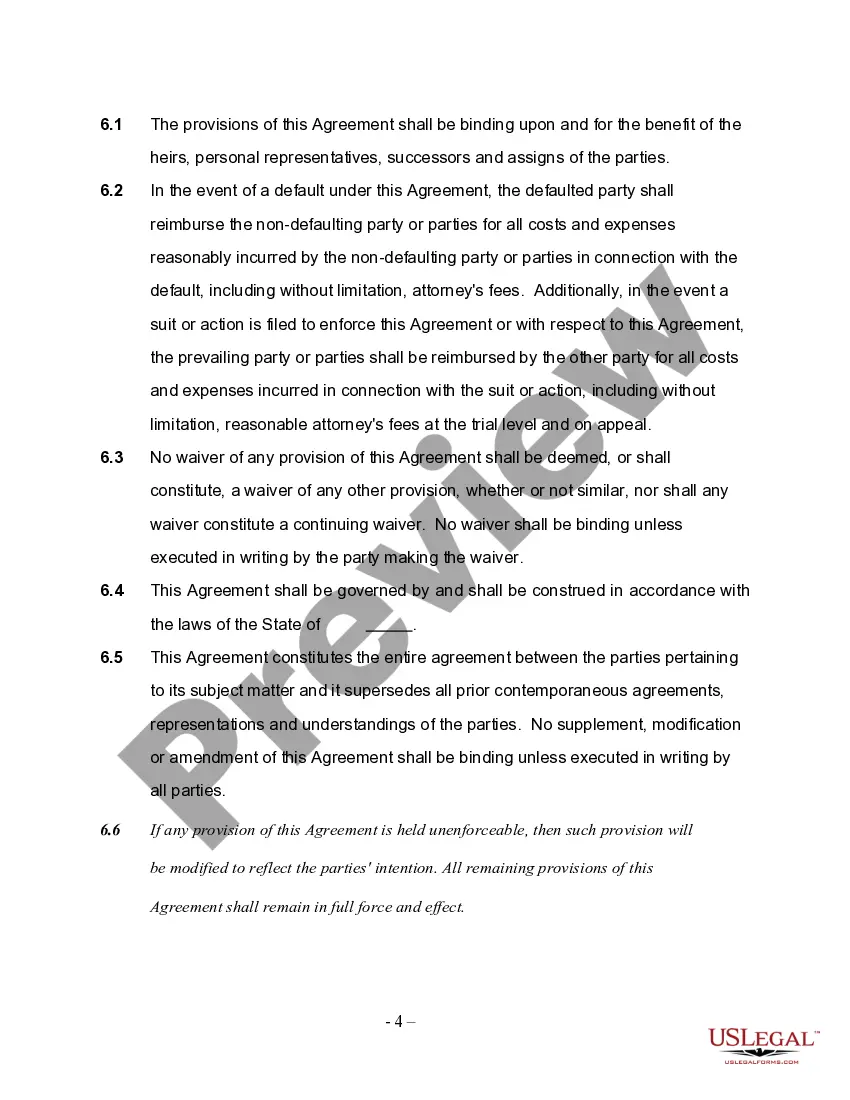
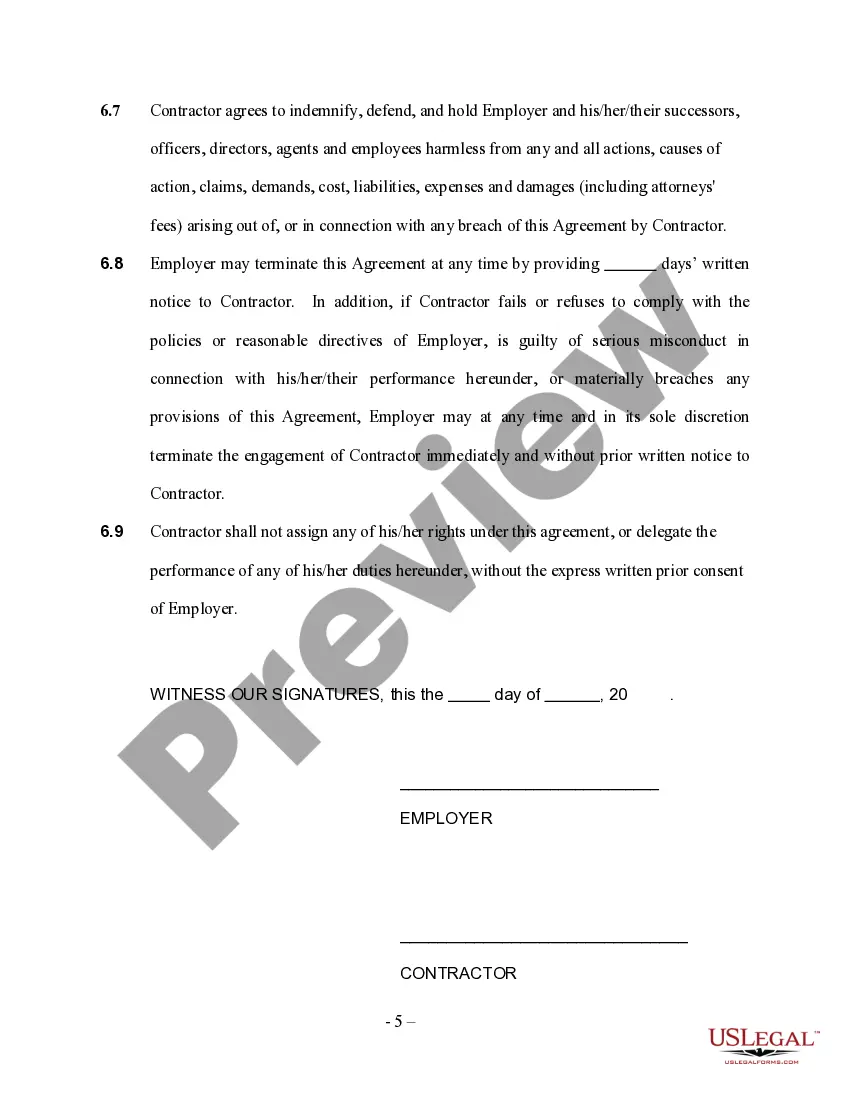
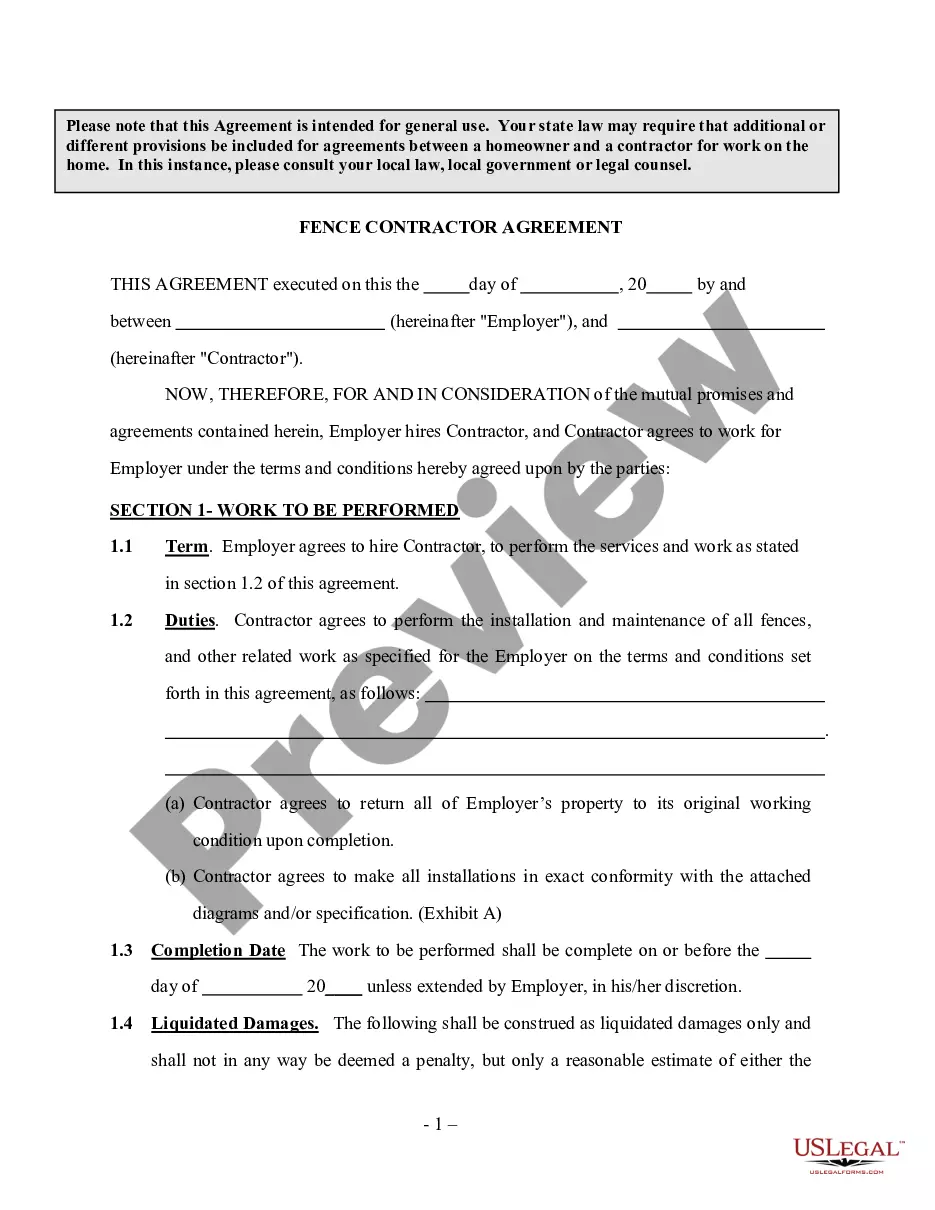
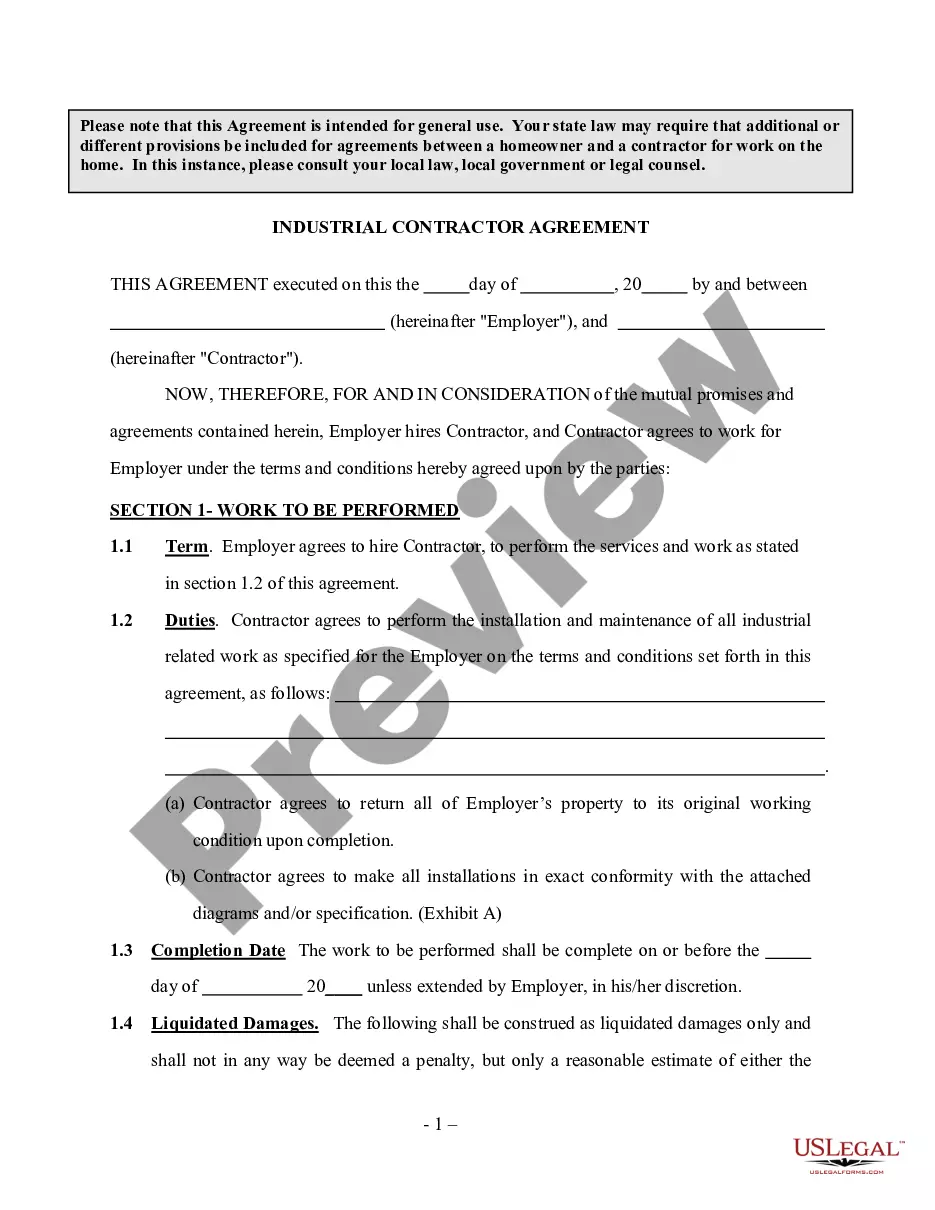
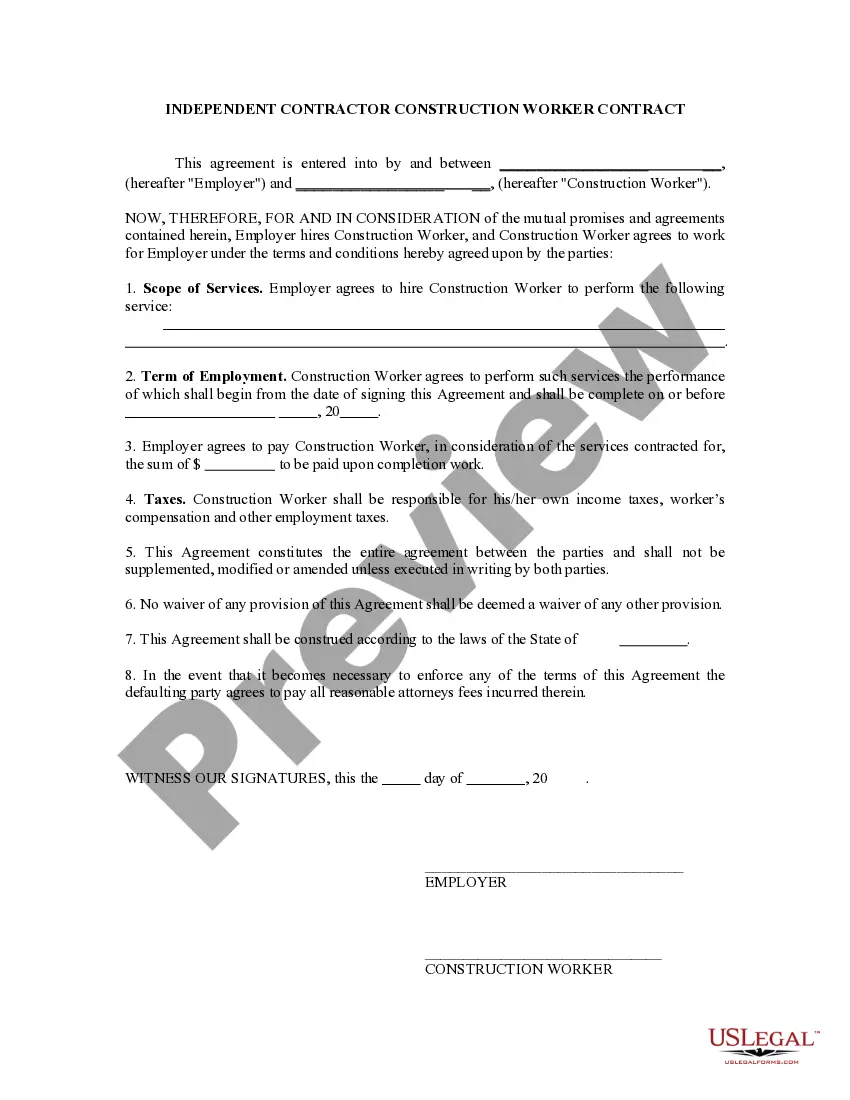
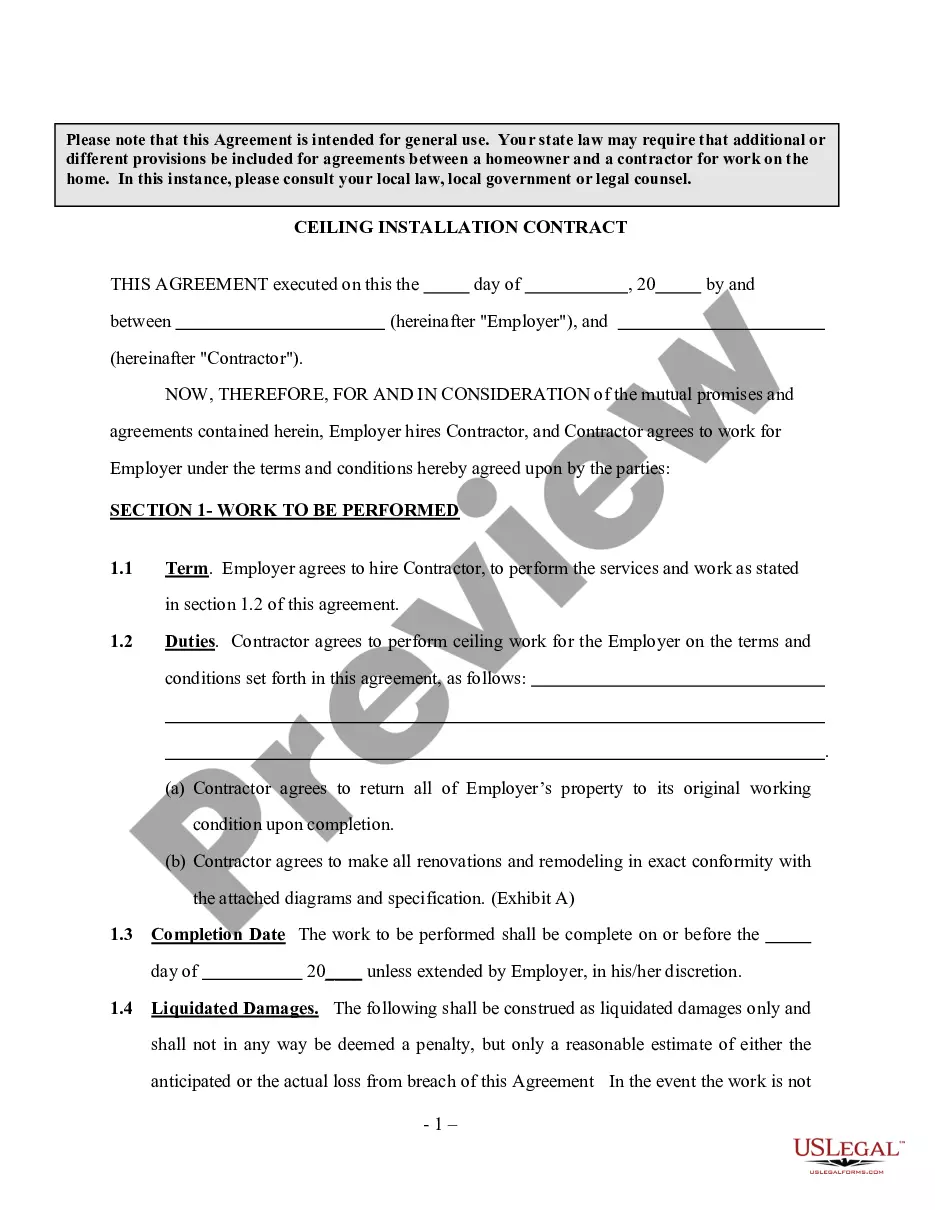
Employer contracts with an individual or company who is hired as an independent contractor to install siding to the exterior of a building. Please note that this Agreement is intended for general use. Your state law may require that additional or different provisions be included for agreements between a homeowner and a contractor for work on the home. In this instance, please consult your local law, local government or legal counsel.
Connecticut Self-Employed Vinyl Aluminum Siding Installation Contract
State:
Multi-State
Control #:
US-INDC-84
Format:
Word;
Rich Text
Instant download
Description
Free preview

Get your form ready online
Our built-in tools help you complete, sign, share, and store your documents in one place.
Built-in online Word editor
Make edits, fill in missing information, and update formatting in US Legal Forms—just like you would in MS Word.
Export easily
Download a copy, print it, send it by email, or mail it via USPS—whatever works best for your next step.
E-sign your document
Sign and collect signatures with our SignNow integration. Send to multiple recipients, set reminders, and more. Go Premium to unlock E-Sign.
Notarize online 24/7
If this form requires notarization, complete it online through a secure video call—no need to meet a notary in person or wait for an appointment.
Store your document securely
We protect your documents and personal data by following strict security and privacy standards.

Make edits, fill in missing information, and update formatting in US Legal Forms—just like you would in MS Word.

Download a copy, print it, send it by email, or mail it via USPS—whatever works best for your next step.

Sign and collect signatures with our SignNow integration. Send to multiple recipients, set reminders, and more. Go Premium to unlock E-Sign.

If this form requires notarization, complete it online through a secure video call—no need to meet a notary in person or wait for an appointment.

We protect your documents and personal data by following strict security and privacy standards.
Looking for another form?





How to fill out Self-Employed Vinyl Aluminum Siding Installation Contract?
US Legal Forms - one of the most important collections of legal documents in the USA - provides a variety of legal document templates that you can download or create.
By using the website, you can find thousands of forms for business and personal purposes, organized by categories, states, or keywords. You can find the latest versions of forms like the Connecticut Self-Employed Vinyl Aluminum Siding Installation Contract in just minutes.
If you already have a subscription, Log In and download the Connecticut Self-Employed Vinyl Aluminum Siding Installation Contract from the US Legal Forms library. The Download button will appear on every form you view. You can access all previously downloaded forms from the My documents section of your account.
Complete the purchase. Use a credit card or PayPal account to finalize the transaction.
Select the format and download the form onto your device. Edit. Fill out, modify, print, and sign the downloaded Connecticut Self-Employed Vinyl Aluminum Siding Installation Contract. Each template you've added to your account does not have an expiration date and belongs to you indefinitely. To download or create another copy, simply go to the My documents section and click on the form you need. Access the Connecticut Self-Employed Vinyl Aluminum Siding Installation Contract with US Legal Forms, the most comprehensive collection of legal document templates. Utilize thousands of professional and state-specific templates that fulfill your business or personal requirements.
- Make sure you have selected the correct form for the area/county.
- Click the Preview button to review the form’s content.
- Check the form description to ensure you have chosen the right one.
- If the form does not meet your needs, use the Search field at the top of the screen to find one that does.
- If you are satisfied with the form, confirm your choice by clicking the Buy now button.
- Then, choose the pricing plan you prefer and provide your details to register for an account.
Form popularity
FAQ
You can certainly make your own contract, but it’s important to ensure it includes all necessary legal elements. A Connecticut Self-Employed Vinyl Aluminum Siding Installation Contract should specify the services, payment terms, and any contingencies. Using a resource like uslegalforms can help you create a comprehensive contract that protects both you and your clients, ensuring clarity and mutual understanding.
A contractor's HIC number refers to the Home Improvement Contractor number, which is required for contractors in Connecticut. This number ensures that contractors are registered and comply with state regulations. If you are pursuing a Connecticut Self-Employed Vinyl Aluminum Siding Installation Contract, having this number is crucial for building trust with your clients and operating legally.
Yes, you can create your own legally binding contract as long as it meets the necessary legal requirements. For a Connecticut Self-Employed Vinyl Aluminum Siding Installation Contract, include essential elements such as the parties involved, the scope of work, payment terms, and dispute resolution methods. Using platforms like uslegalforms can simplify this process by providing templates tailored to your specific needs.
Quoting a siding job begins with assessing the project site, measuring the area, and determining the materials required. For a Connecticut Self-Employed Vinyl Aluminum Siding Installation Contract, consider labor costs, material prices, and any additional expenses. Provide a detailed breakdown to your client, ensuring transparency and clear communication. This approach helps clients understand the value of your service.
To write a simple contract agreement, start by defining the parties involved in the agreement. Clearly outline the services to be provided, such as those related to a Connecticut Self-Employed Vinyl Aluminum Siding Installation Contract. Include payment terms, deadlines, and any warranties or guarantees. Finally, ensure both parties sign and date the contract to make it legally binding.
Yes, homeowners can act as their own contractor in Connecticut, allowing them to oversee projects directly. This approach can be beneficial for those familiar with home improvements, including a Connecticut Self-Employed Vinyl Aluminum Siding Installation Contract. However, it is essential to understand the legal responsibilities and ensure compliance with local regulations. Tools like US Legal Forms can provide helpful templates and resources for navigating this process.
In Connecticut, an independent contractor operates their own business, while an employee works under the control of an employer. Independent contractors typically have more flexibility in their work and can enter into contracts, such as a Connecticut Self-Employed Vinyl Aluminum Siding Installation Contract, without the same obligations as employees. Understanding this distinction is important for both contractors and homeowners when managing projects.
The Connecticut Home Improvement Contractor Act establishes rules that contractors must follow when working on home improvement projects. This legislation aims to protect consumers by requiring contracts, licenses, and warranties for services, including those related to a Connecticut Self-Employed Vinyl Aluminum Siding Installation Contract. Understanding this act can help you make informed decisions and ensure your project runs smoothly.
Yes, contractors must be licensed in Connecticut to operate legally. This requirement ensures that contractors meet specific standards and regulations, which protects homeowners during projects like a Connecticut Self-Employed Vinyl Aluminum Siding Installation Contract. If you're unsure about the licensing process, resources like the US Legal Forms platform can guide you through the necessary steps to ensure compliance.
Creating a siding contract involves outlining the scope of work, payment terms, and project timelines. You should clearly define the materials to be used, such as vinyl or aluminum, and include any warranties or guarantees. Utilizing a Connecticut Self-Employed Vinyl Aluminum Siding Installation Contract template from US Legal Forms can simplify this process, helping you cover all necessary elements while ensuring compliance with local laws.