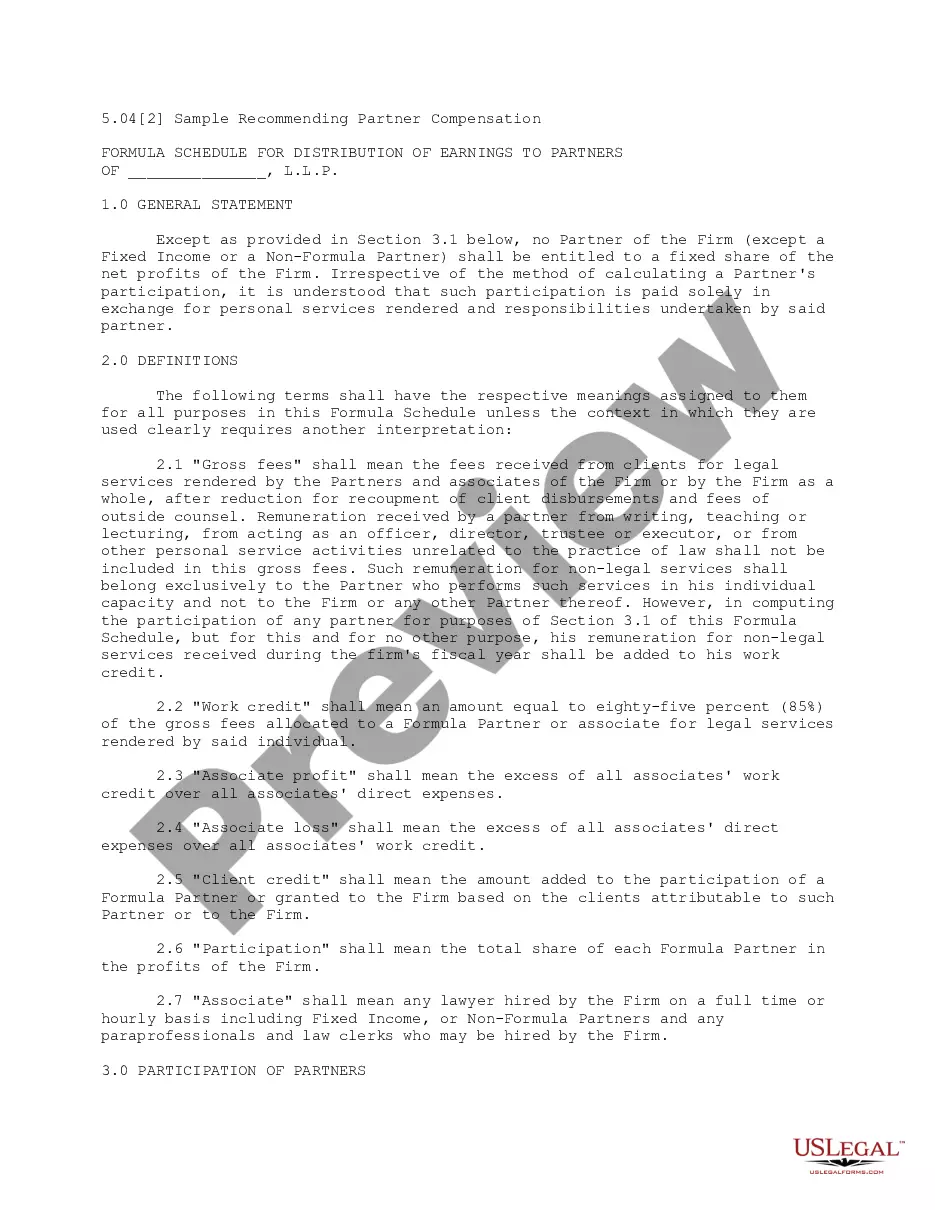
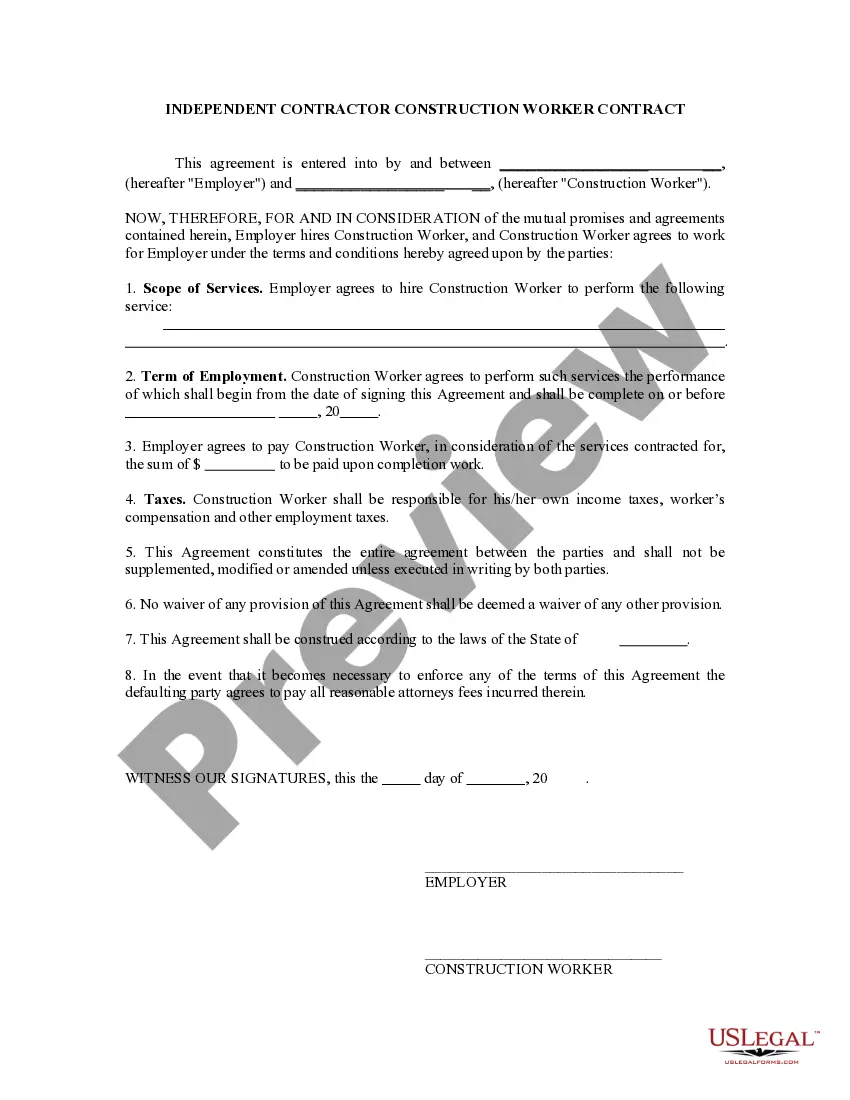
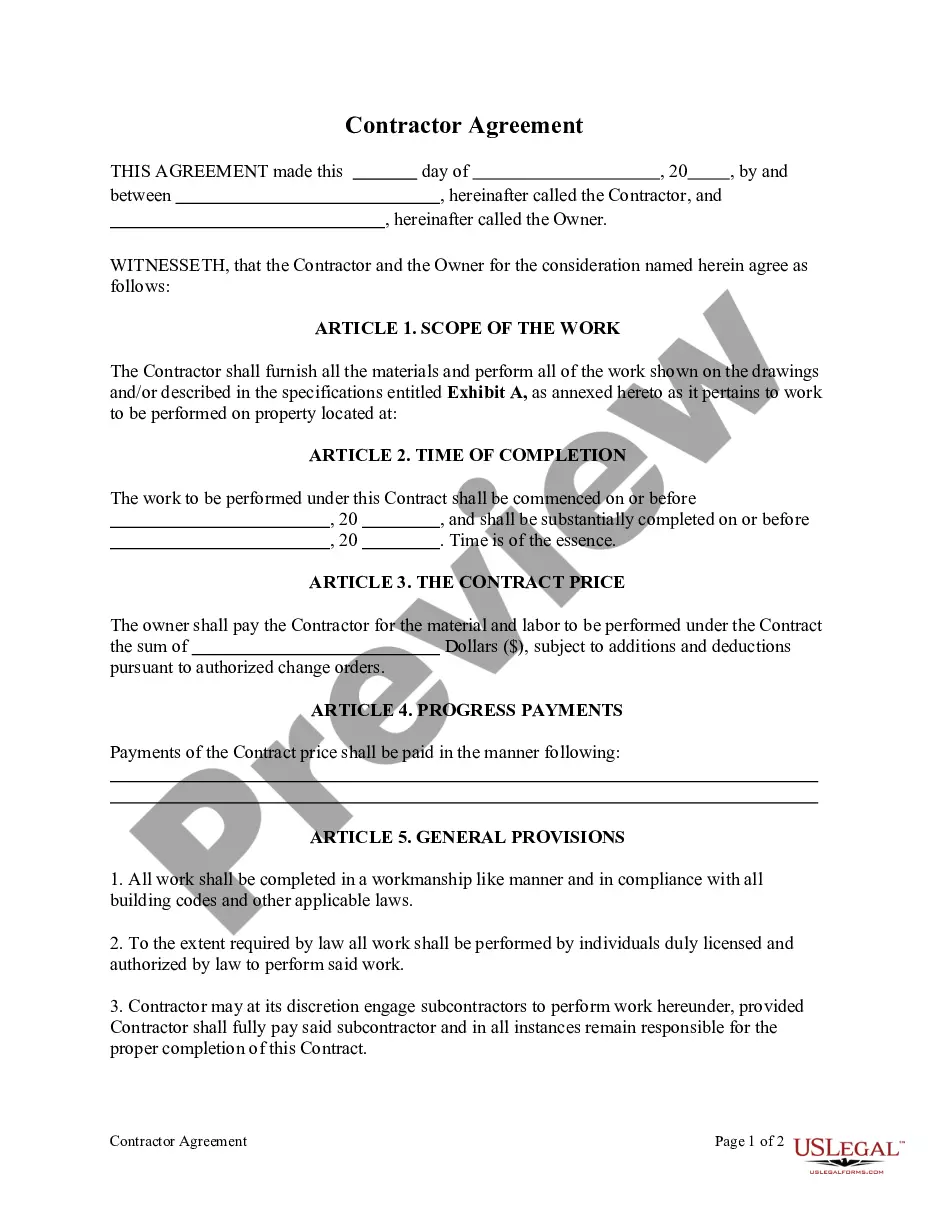
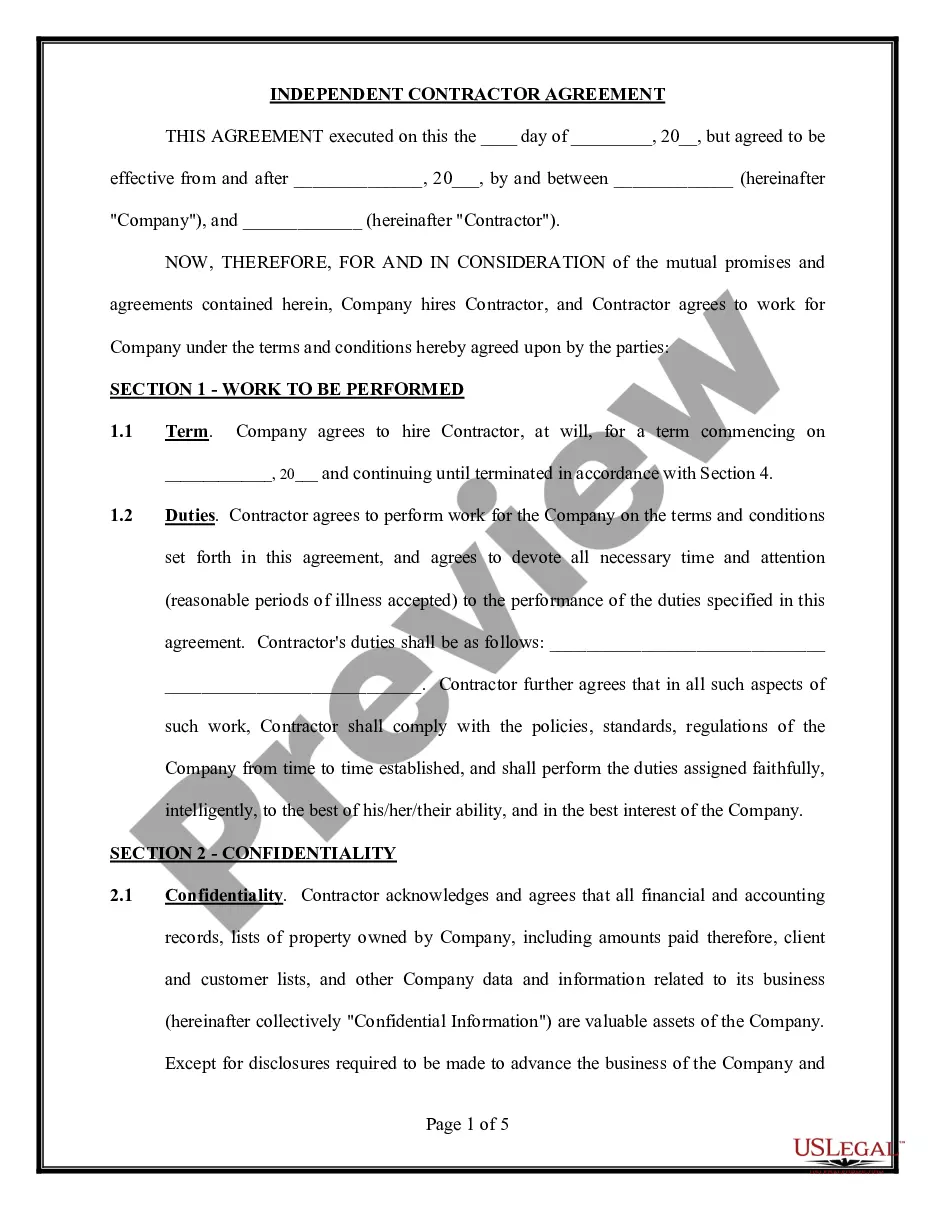
Employer hires a construction worker as an independent contractor to provide various construction help as specified in the Agreement.
Connecticut Self-Employed Independent Contractor Construction Worker Contract
State:
Multi-State
Control #:
US-INDC-178
Format:
Word;
Rich Text
Instant download
Description
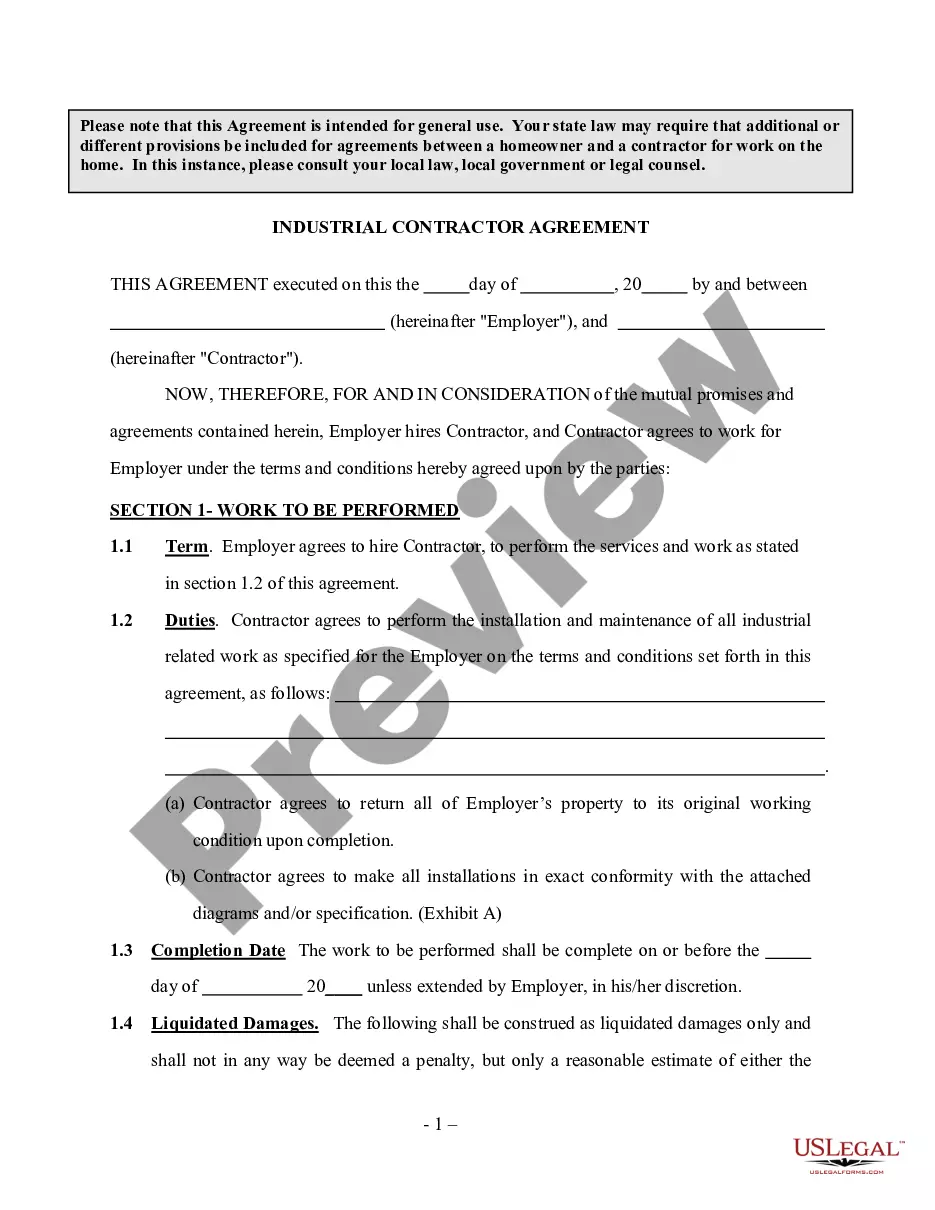
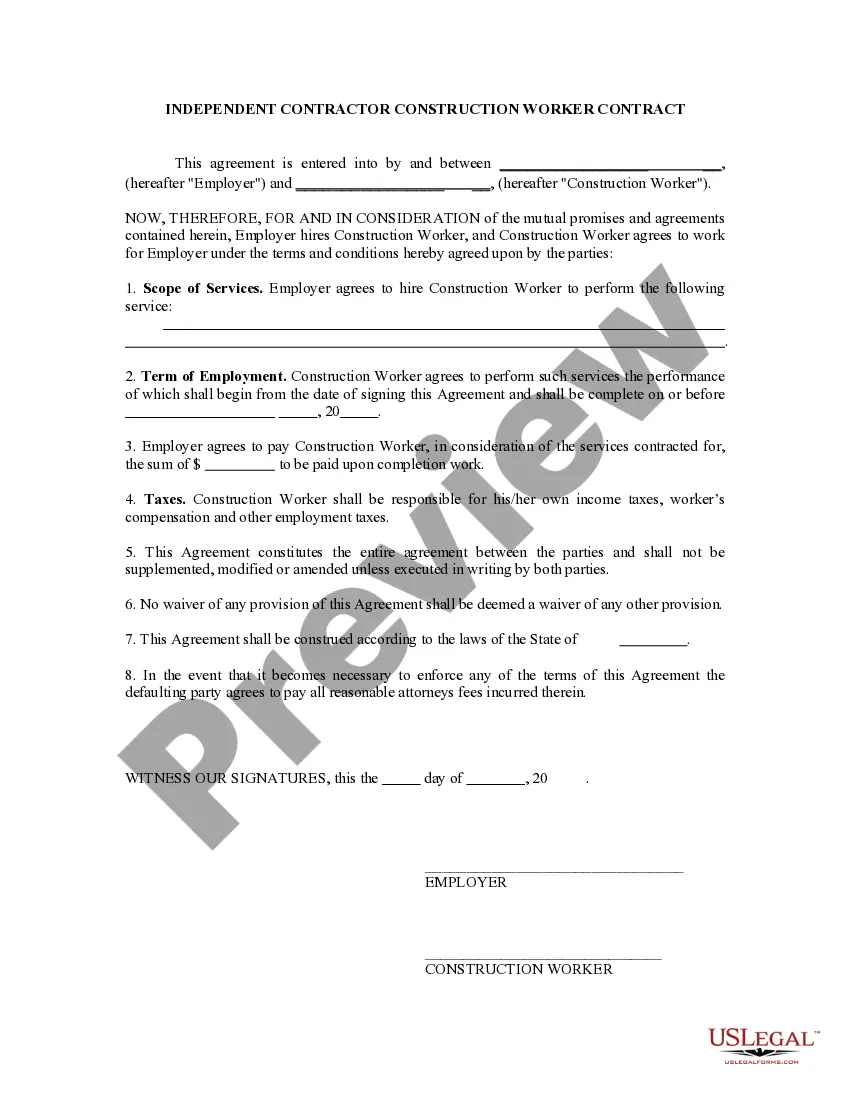
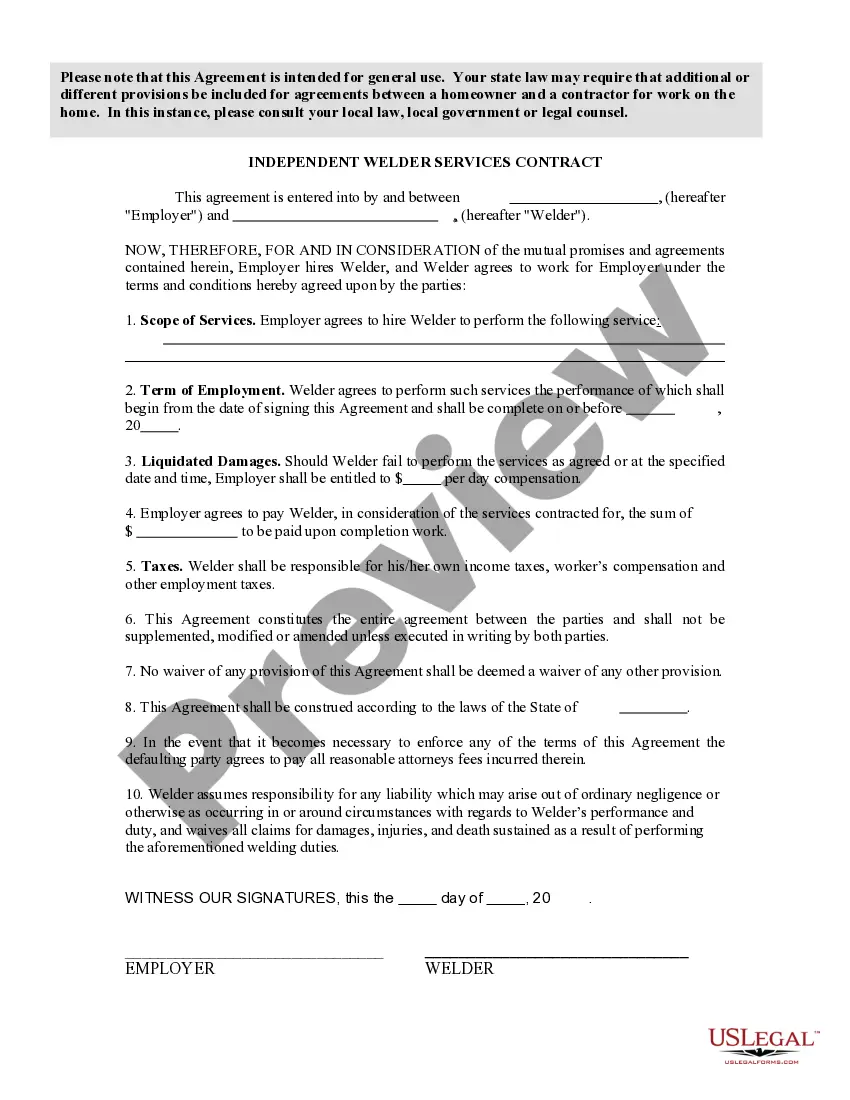
Get your form ready online
Our built-in tools help you complete, sign, share, and store your documents in one place.
Built-in online Word editor
Make edits, fill in missing information, and update formatting in US Legal Forms—just like you would in MS Word.
Export easily
Download a copy, print it, send it by email, or mail it via USPS—whatever works best for your next step.
E-sign your document
Sign and collect signatures with our SignNow integration. Send to multiple recipients, set reminders, and more. Go Premium to unlock E-Sign.
Notarize online 24/7
If this form requires notarization, complete it online through a secure video call—no need to meet a notary in person or wait for an appointment.
Store your document securely
We protect your documents and personal data by following strict security and privacy standards.

Make edits, fill in missing information, and update formatting in US Legal Forms—just like you would in MS Word.

Download a copy, print it, send it by email, or mail it via USPS—whatever works best for your next step.

Sign and collect signatures with our SignNow integration. Send to multiple recipients, set reminders, and more. Go Premium to unlock E-Sign.

If this form requires notarization, complete it online through a secure video call—no need to meet a notary in person or wait for an appointment.

We protect your documents and personal data by following strict security and privacy standards.
Looking for another form?

How to fill out Self-Employed Independent Contractor Construction Worker Contract?
Selecting the optimal authorized document template can be a challenge. Certainly, there are numerous templates accessible online, but how do you locate the legal form you require? Utilize the US Legal Forms website. The service offers thousands of templates, including the Connecticut Self-Employed Independent Contractor Construction Worker Agreement, that can be utilized for both business and personal purposes. All the forms are vetted by professionals and comply with federal and state regulations.
If you are already registered, Log In to your account and click on the Download button to access the Connecticut Self-Employed Independent Contractor Construction Worker Agreement. Use your account to search through the legal forms you have previously purchased. Navigate to the My documents section of your account and obtain another copy of the document you need.
If you are a new user of US Legal Forms, here are simple instructions for you to follow: First, ensure you have chosen the correct form for your locality/region. You can preview the form using the Review option and examine the form details to confirm it is the right one for you. If the form does not meet your expectations, use the Search field to find the appropriate form. Once you are confident that the form is suitable, click the Purchase now button to acquire the form. Select the pricing plan you prefer and enter the required information. Create your account and process the payment using your PayPal account or credit card. Choose the file format and download the legal document template to your device. Complete, modify, and print and sign the acquired Connecticut Self-Employed Independent Contractor Construction Worker Agreement.
By utilizing US Legal Forms, you can simplify the process of finding and obtaining the legal documents you need efficiently.
- US Legal Forms is the largest repository of legal forms where you can find numerous document templates.
- Utilize the service to download professionally crafted papers that adhere to state regulations.
- Ensure to review the form details thoroughly before making a selection.
- Always keep a backup of your downloaded documents for future reference.
- Explore different pricing plans to find the best option for your needs.
- Stay updated with any changes in legal requirements that may affect your forms.
Form popularity
FAQ
Independent contractors in Connecticut must ensure they comply with several legal requirements. They need to register their business and obtain the necessary licenses and permits. Additionally, the Connecticut Self-Employed Independent Contractor Construction Worker Contract should include tax obligations, ensuring proper reporting of earnings. Familiarizing yourself with state laws or using resources from uslegalforms can simplify this process.
While not legally mandated, a contract is highly recommended for self-employed individuals. A solid Connecticut Self-Employed Independent Contractor Construction Worker Contract outlines the project scope, payment terms, and deadlines, which protects both you and your client. It ensures mutual understanding and can help prevent potential disputes. Engaging with a reliable platform like uslegalforms can support you in creating a comprehensive contract.
Even without a written Connecticut Self-Employed Independent Contractor Construction Worker Contract, you still have rights. You may claim compensation for work completed and can pursue any verbal agreements made. Additionally, labor laws may offer you protections, such as minimum wage and safety regulations. It's wise to consult legal resources to clarify your rights.
Becoming an independent contractor in Connecticut involves registering your business and obtaining necessary licenses or permits. You’ll also want to establish a separate business bank account and keep your finances organized. It is advisable to understand your tax obligations and liabilities. Utilizing resources from UsLegalForms can help you navigate the process smoothly, ensuring compliance with Connecticut laws.
Writing a contract as an independent contractor requires clear and specific language to outline the scope of work, payment terms, and deadlines. Include clauses addressing confidentiality and dispute resolution to protect your interests. Templates from platforms like UsLegalForms can assist in creating a solid agreement tailored to a Connecticut Self-Employed Independent Contractor Construction Worker Contract. Clarity in your contract sets the stage for successful business relationships.
In the United States, if you earn $400 or more as an independent contractor, you are required to file taxes. This threshold applies to net earnings after deducting business expenses. Even if you earn below this amount, filing may still be beneficial to claim deductions. Always consult a tax professional or utilize guidance from platforms like UsLegalForms to ensure compliance with Connecticut tax laws.
Independent contractors typically fill out a W9 form to provide their taxpayer identification information. Clients then use this information to issue a 1099 form that reports payments made during the year. The W9 establishes your status as a self-employed independent contractor, which is essential for accurate tax reporting. Understanding these forms is vital for anyone involved in a Connecticut Self-Employed Independent Contractor Construction Worker Contract.
Filing taxes as an independent contractor in Connecticut involves gathering all your income and expenses. You will report your earnings on Schedule C and calculate your net profit or loss. It's crucial to maintain accurate records throughout the year, as this can simplify your tax filing process. Utilizing resources from platforms like UsLegalForms can help you with the necessary documentation.
To become a 1099 independent contractor, first, identify the services you offer and your target market. After that, ensure you register your business and obtain an Employer Identification Number (EIN) if necessary. A Connecticut Self-Employed Independent Contractor Construction Worker Contract is also important for defining your roles and responsibilities. When you work with clients, you will receive a 1099 form at the end of the year for tax reporting purposes.
To become an independent contractor in Connecticut, start by determining your business structure and registering with the state. Next, obtain any necessary licenses and permits relevant to your trade. Moreover, create a Connecticut Self-Employed Independent Contractor Construction Worker Contract that outlines your services and terms. Finally, consider using uslegalforms to streamline the documentation process, ensuring your compliance and professionalism.