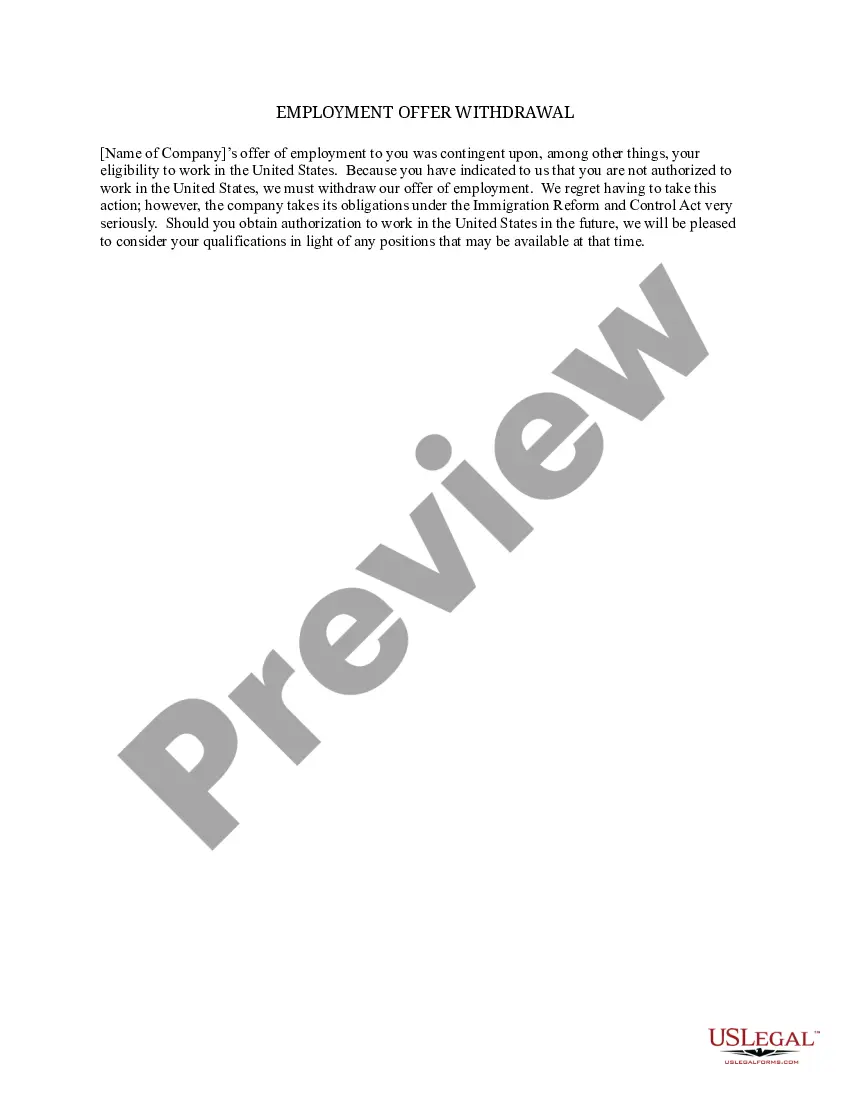
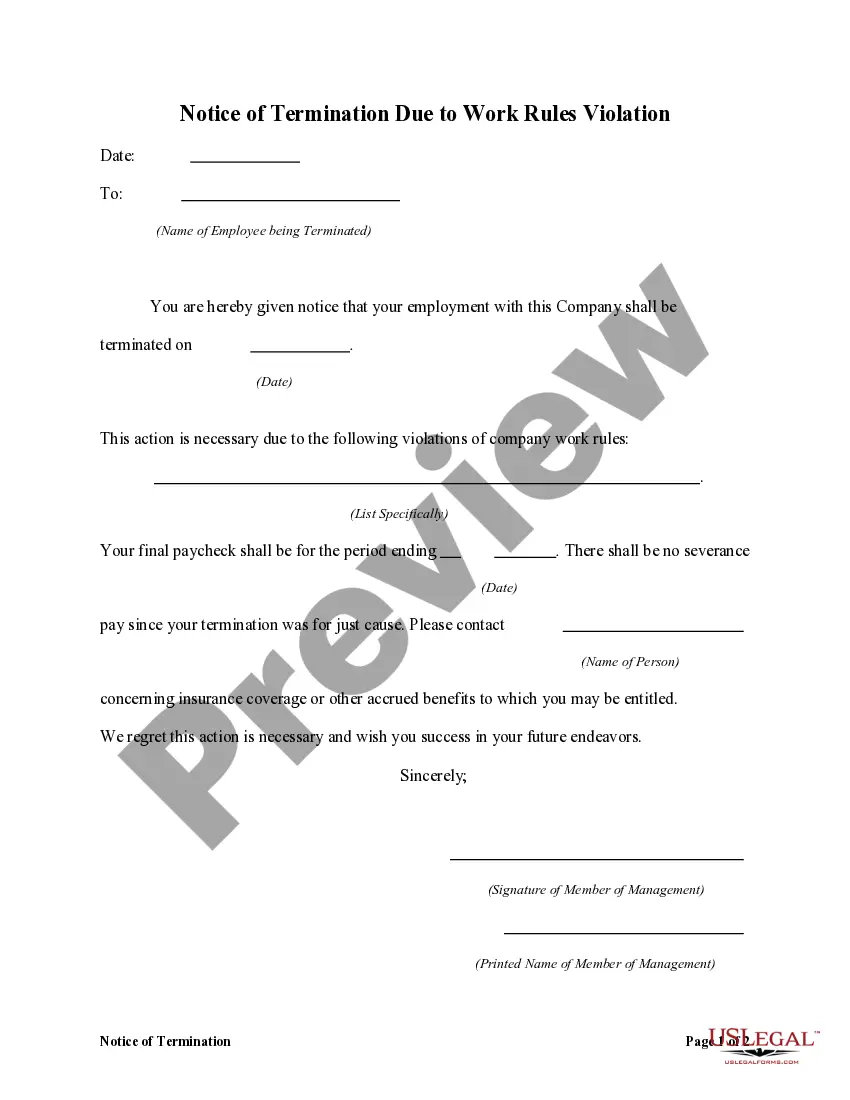
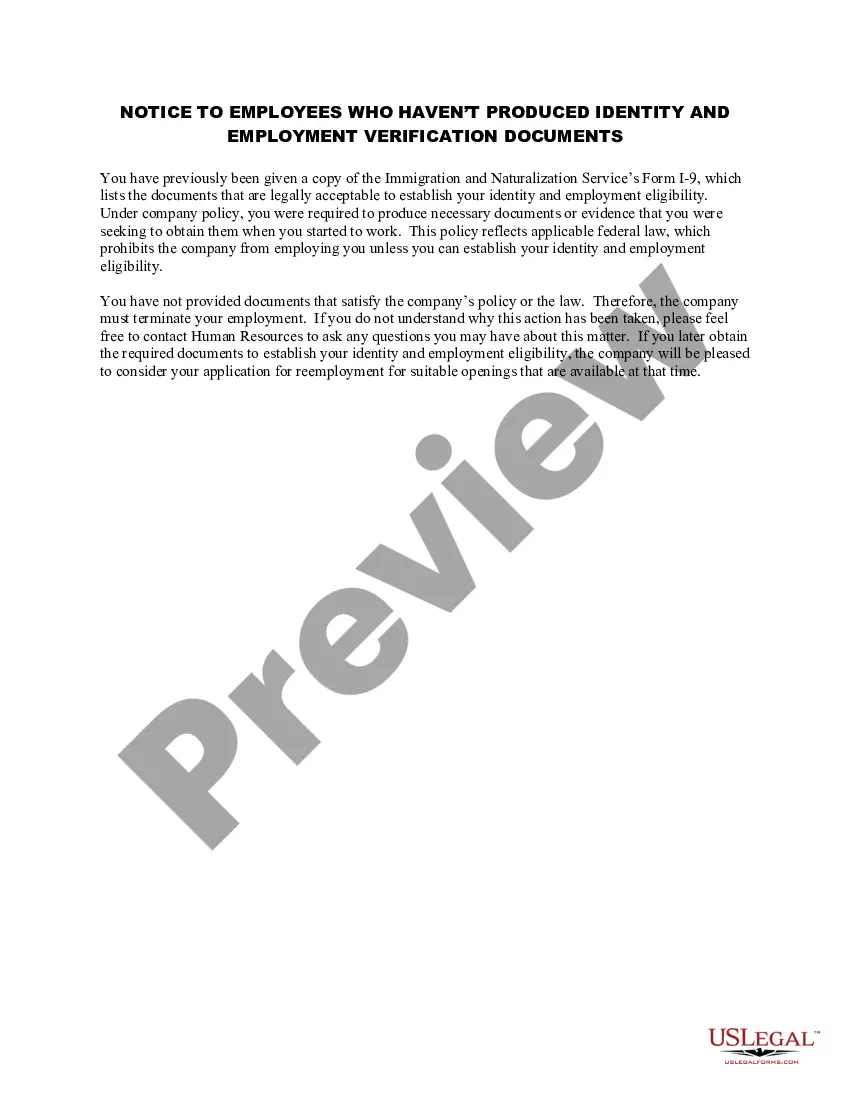
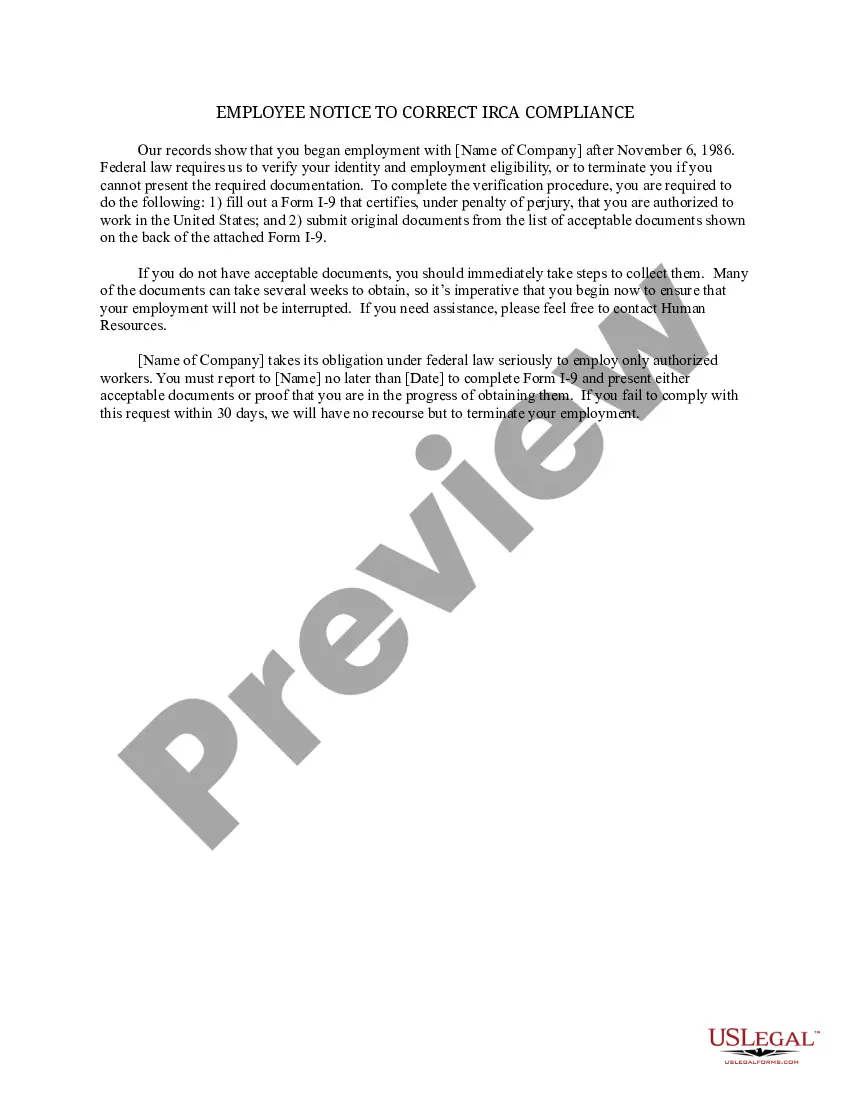
Connecticut Employment Offer Withdrawal
Description
Get your form ready online
Our built-in tools help you complete, sign, share, and store your documents in one place.
Make edits, fill in missing information, and update formatting in US Legal Forms—just like you would in MS Word.
Download a copy, print it, send it by email, or mail it via USPS—whatever works best for your next step.
Sign and collect signatures with our SignNow integration. Send to multiple recipients, set reminders, and more. Go Premium to unlock E-Sign.
If this form requires notarization, complete it online through a secure video call—no need to meet a notary in person or wait for an appointment.
We protect your documents and personal data by following strict security and privacy standards.

Make edits, fill in missing information, and update formatting in US Legal Forms—just like you would in MS Word.

Download a copy, print it, send it by email, or mail it via USPS—whatever works best for your next step.

Sign and collect signatures with our SignNow integration. Send to multiple recipients, set reminders, and more. Go Premium to unlock E-Sign.

If this form requires notarization, complete it online through a secure video call—no need to meet a notary in person or wait for an appointment.

We protect your documents and personal data by following strict security and privacy standards.
Looking for another form?
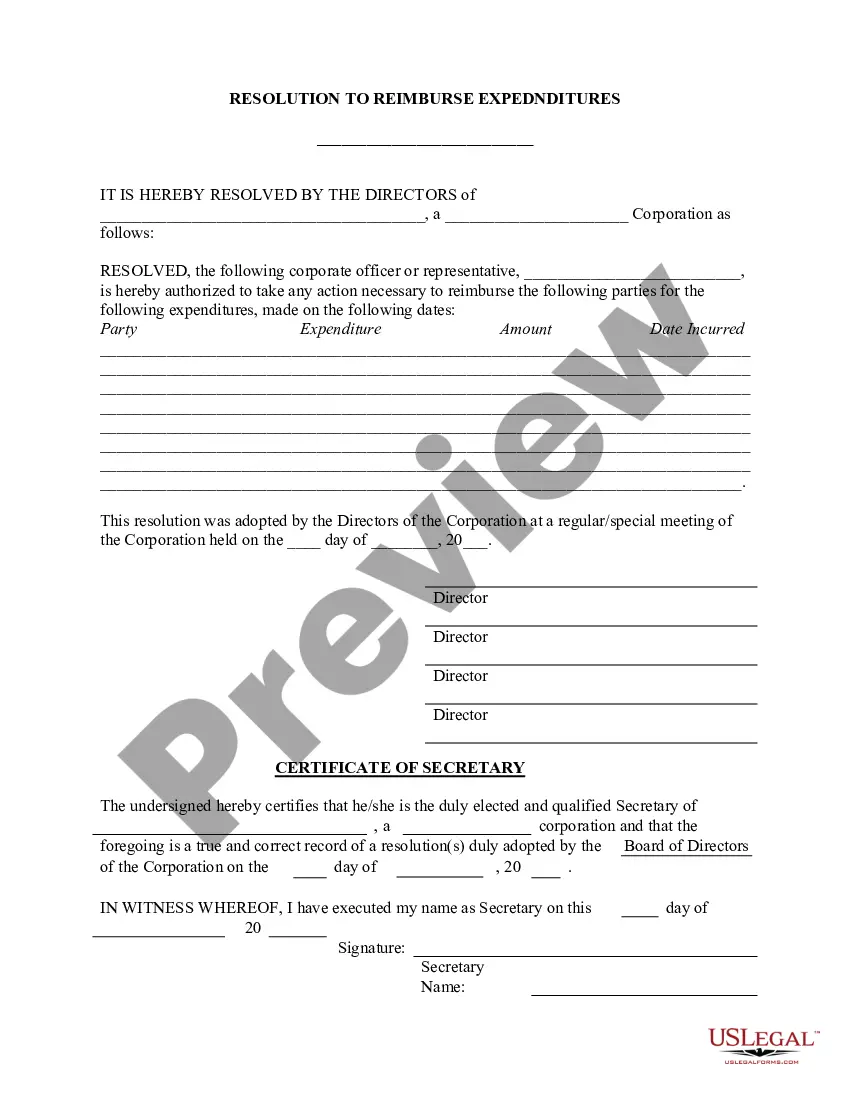
How to fill out Employment Offer Withdrawal?
It is feasible to spend hours on the web attempting to locate the certified document template that aligns with the state and federal standards you require.
US Legal Forms offers a multitude of certified templates that are evaluated by experts.
It is easy to download or print the Connecticut Employment Offer Withdrawal from the service.
If available, utilize the Review button to look through the document template as well.
- If you possess a US Legal Forms account, you may Log In and click on the Acquire button.
- Subsequently, you can complete, modify, print, or sign the Connecticut Employment Offer Withdrawal.
- Every certified document template you acquire is yours indefinitely.
- To obtain another copy of a purchased form, visit the My documents tab and click on the relevant button.
- If you are using the US Legal Forms site for the first time, follow the simple instructions below.
- First, make sure you have selected the correct document template for the locality/region of your choice.
- Review the form description to ensure you have chosen the correct template.
Form popularity
FAQ
Yes. Technically, anyone can turn down a job offer, back out of a job already started, or renege on an acceptance at any point. Most states operate with what is called at will employment. This means the employee and the employer are not in a binding contract. However, there is a caveat to this.
Employers can rescind job offers for almost any reason unless that reason is discriminatory, e.g., based on disability, gender, race, etc. There can be legal consequences for employers for revoking an offer. In some cases, employees may be able to sue for damages if they can prove they've suffered losses as a result.
Sometimes, withdrawing the offer of employment before the prospective employee has started work may expose the employer to liability in an action by the employee for the damages resulting from repudiation of the offer (or, if already accepted, termination prior to commencement of employment).
Sometimes, withdrawing the offer of employment before the prospective employee has started work may expose the employer to liability in an action by the employee for the damages resulting from repudiation of the offer (or, if already accepted, termination prior to commencement of employment).
In Connecticut, employers and employees have an at-will employment relationship unless there is a specific employment contract stating otherwise. As spelled out in Mr. Petitte's offer letter, this means that both employers and employees can terminate their employment at any time for any reason.
By law an employment contract could begin as soon as someone accepts a job offer, even if they only accepted it verbally. So an employer should not withdraw the offer without also ending the contract. The contract should be ended fairly by giving notice and following the contract's terms.
Can you back out of the job offer? Yes. Technically, anyone can turn down a job offer, back out of a job already started, or renege on an acceptance at any point. Most states operate with what is called at will employment. This means the employee and the employer are not in a binding contract.
Yes, but there could be legal consequences, so an attorney's advice should always be sought before rescinding the offer. Even if an employer has stated on all offers that employment is at will and can be terminated at any time, there is the concept of the employer making a "promise" of a job.
Revoking an employment offer is not illegal in most cases, but the decision should be given a full legal review before contacting the candidate.
Once someone has accepted an 'unconditional' job offer, they're in a legally binding contract of employment. However, a 'conditional' job offer can be withdrawn if the person doesn't meet the employer's conditions (eg satisfactory references and health record).