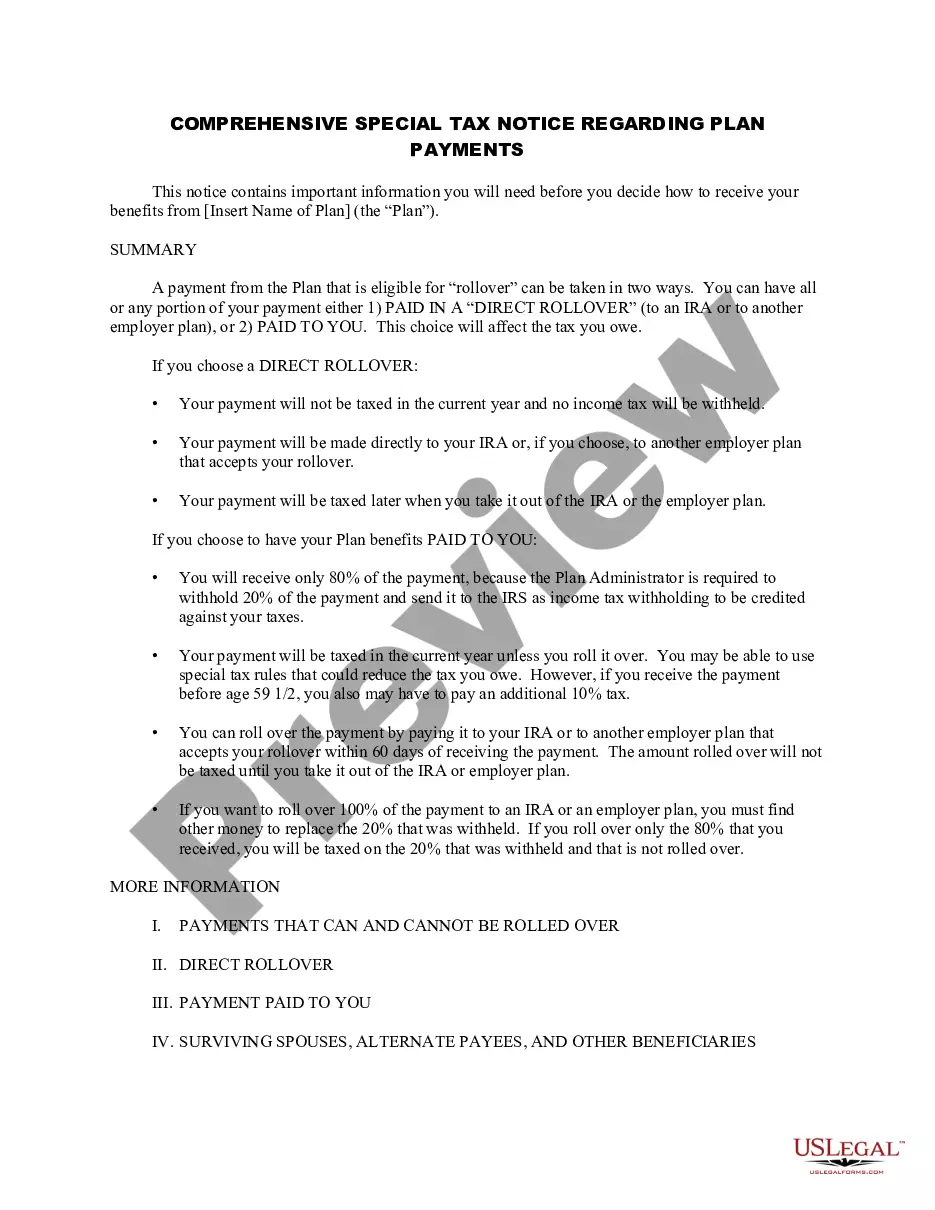
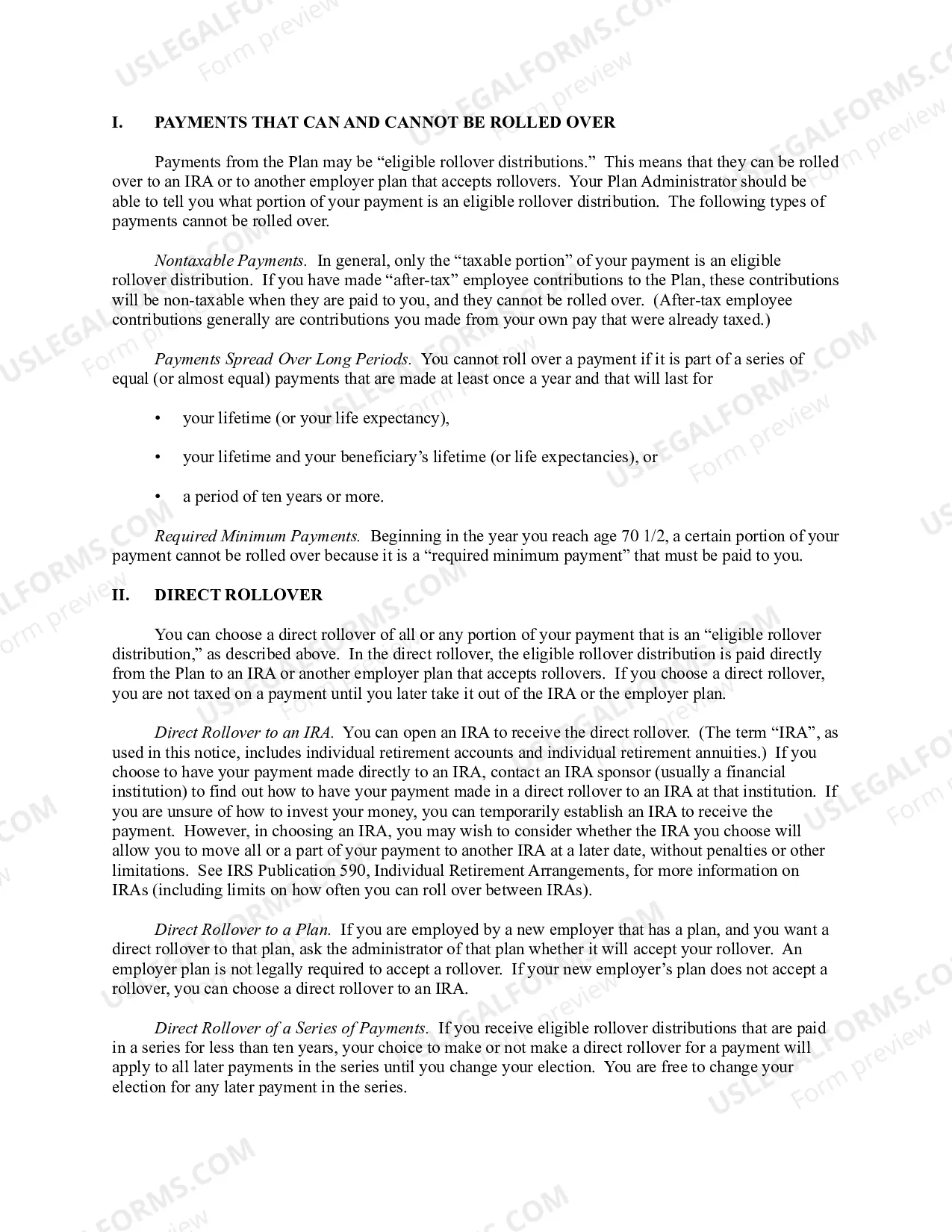
Connecticut Comprehensive Special Tax Notice Regarding Plan Payments
Description

Get your form ready online
Our built-in tools help you complete, sign, share, and store your documents in one place.
Make edits, fill in missing information, and update formatting in US Legal Forms—just like you would in MS Word.
Download a copy, print it, send it by email, or mail it via USPS—whatever works best for your next step.
Sign and collect signatures with our SignNow integration. Send to multiple recipients, set reminders, and more. Go Premium to unlock E-Sign.
If this form requires notarization, complete it online through a secure video call—no need to meet a notary in person or wait for an appointment.
We protect your documents and personal data by following strict security and privacy standards.

Make edits, fill in missing information, and update formatting in US Legal Forms—just like you would in MS Word.

Download a copy, print it, send it by email, or mail it via USPS—whatever works best for your next step.

Sign and collect signatures with our SignNow integration. Send to multiple recipients, set reminders, and more. Go Premium to unlock E-Sign.

If this form requires notarization, complete it online through a secure video call—no need to meet a notary in person or wait for an appointment.

We protect your documents and personal data by following strict security and privacy standards.
Looking for another form?

How to fill out Comprehensive Special Tax Notice Regarding Plan Payments?
Are you presently in a location where you need documents for either professional or personal purposes almost daily.
There are numerous authentic document templates accessible online, but locating reliable ones is not easy.
US Legal Forms provides thousands of form templates, including the Connecticut Comprehensive Special Tax Notice Regarding Plan Payments, which can be printed to fulfill state and federal requirements.
Once you locate the appropriate form, click Buy now.
Select the pricing plan you desire, complete the required information to create your account, and complete the order using your PayPal or Visa or Mastercard. Choose a convenient file format and download your copy. Retrieve all the document templates you've purchased in the My documents section. You can obtain an additional copy of the Connecticut Comprehensive Special Tax Notice Regarding Plan Payments at any time if needed. Simply go through the required form to obtain or print the document template. Use US Legal Forms, the most extensive collection of legitimate forms, to save time and avoid errors. The service offers correctly created legal document templates that you can use for various purposes. Create an account on US Legal Forms and start making your life easier.
- If you are already familiar with the US Legal Forms site and have an account, simply Log In.
- After that, you can obtain the Connecticut Comprehensive Special Tax Notice Regarding Plan Payments template.
- If you do not have an account and want to start using US Legal Forms, follow these steps.
- Obtain the form you need and ensure it is for the correct city/state.
- Use the Review button to verify the form.
- Read the description to ensure that you've selected the correct form.
- If the form isn’t what you’re looking for, use the Search area to find the form that meets your needs and requirements.
Form popularity
FAQ
There are seven tax brackets for most ordinary income for the 2021 tax year: 10 percent, 12 percent, 22 percent, 24 percent, 32 percent, 35 percent and 37 percent.
If you roll over a payment from the Plan to a Roth IRA, a special rule applies under which the amount of the payment rolled over (reduced by any after-tax amounts) will be taxed. In general, the 10% additional income tax on early distributions will not apply.
Connecticut Tax Brackets 2020 - 2021 Tax rate of 3% on the first $10,000 of taxable income. Tax rate of 5% on taxable income between $10,001 and $50,000. Tax rate of 5.5% on taxable income between $50,001 and $100,000. Tax rate of 6% on taxable income between $100,001 and $200,000.
Connecticut Income Tax Rate 2020 - 2021. Connecticut state income tax rate table for the 2020 - 2021 filing season has seven income tax brackets with CT tax rates of 3%, 5%, 5.5%, 6%, 6.5%, 6.9% and 6.99% for Single, Married Filing Jointly, Married Filing Separately, and Head of Household statuses.
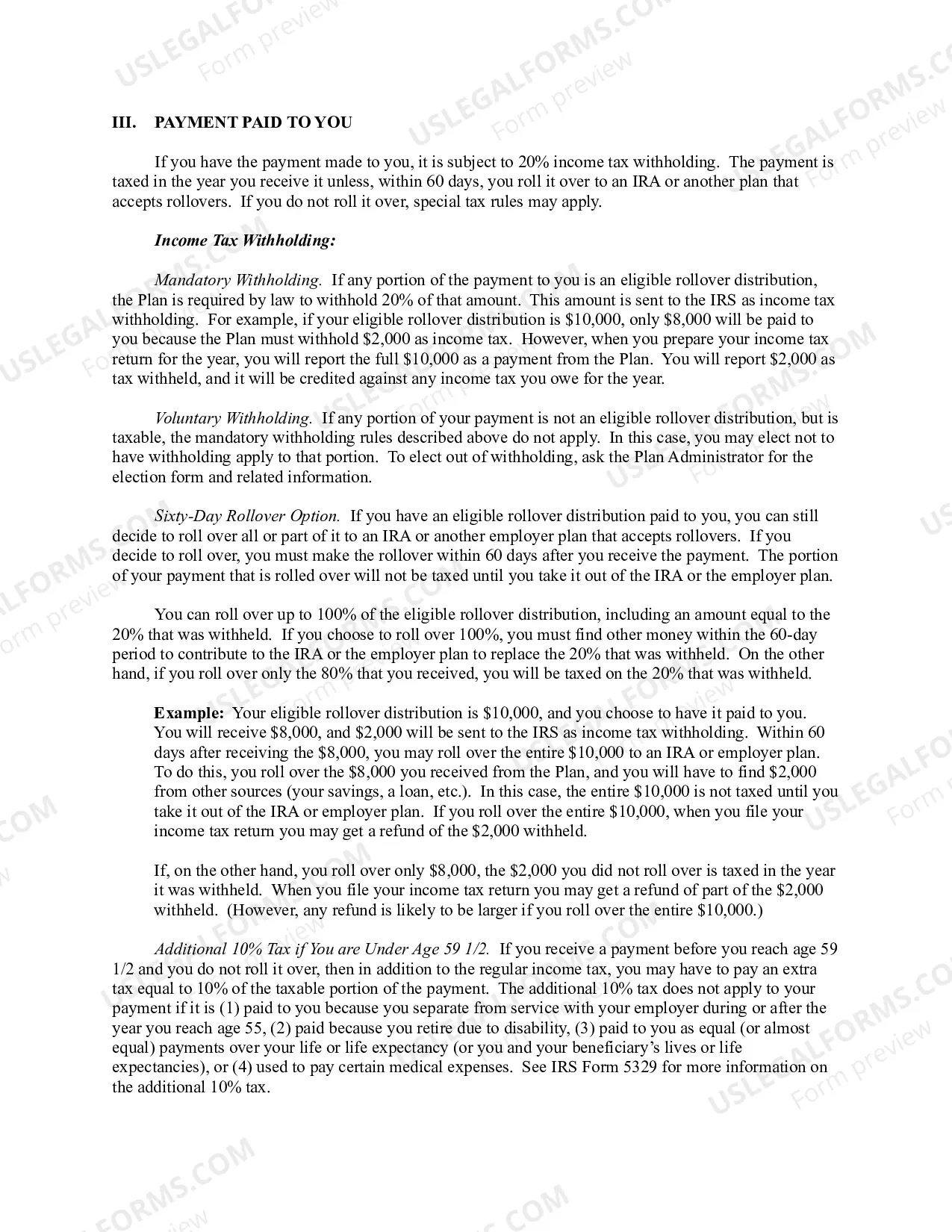
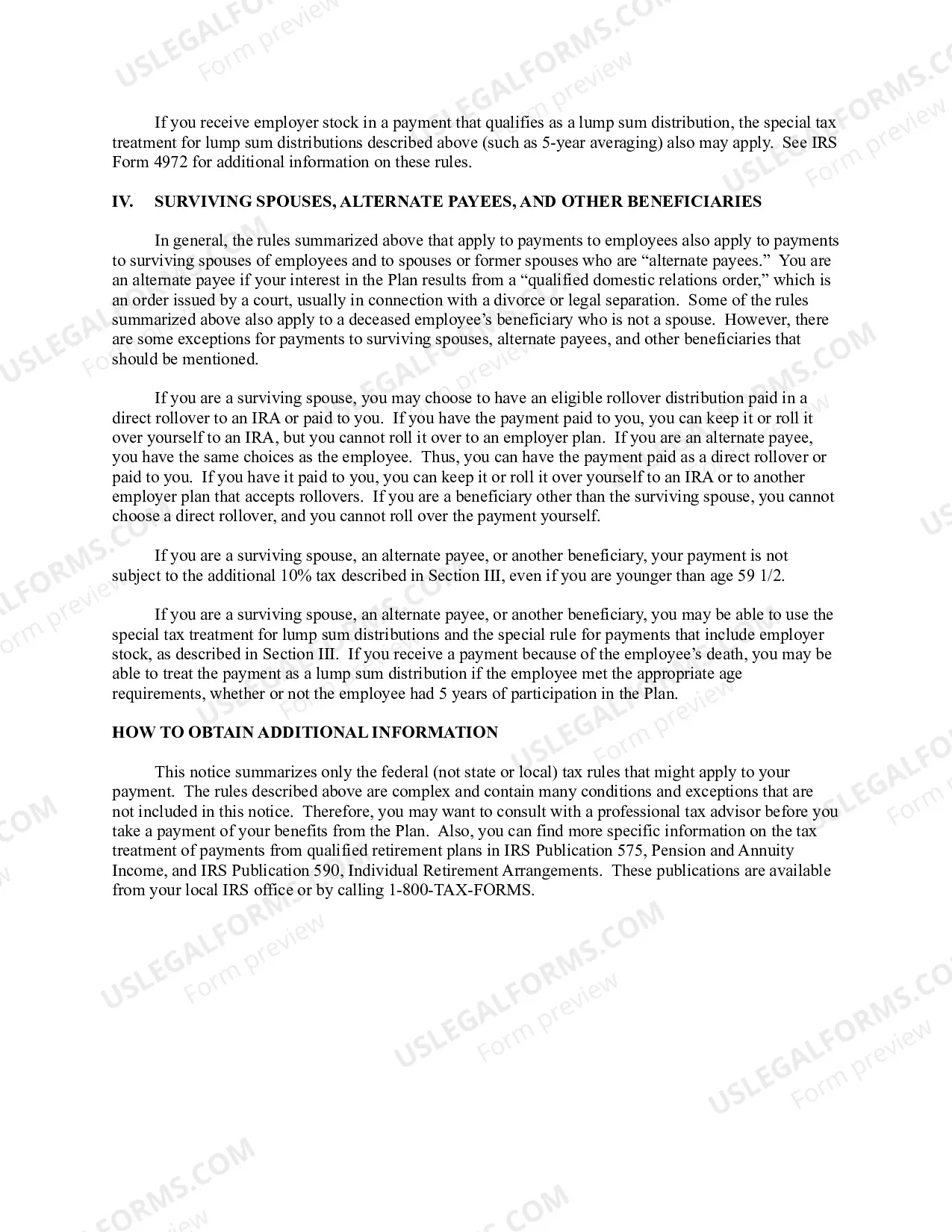
You are receiving this notice because all or a portion of a payment you are receiving from the Plan is eligible to be rolled over to either an IRA or an employer plan; or if your payment is from a Designated Roth Account to a Roth IRA or Designated Roth Account in an employer plan.
A tax is imposed on the Connecticut taxable income of resident individuals, trusts, and estates at a rate of 4.5%. Nonresidents and part-year resident individuals, trusts and estates are also subject to the tax on income derived from or connected with sources within the State.
Under the special rule, the net unrealized appreciation on the stock included in the earnings in the payment will not be taxed when distributed to you from the Plan and will be taxed at capital gain rates when you sell the stock.
The 402(f) notice provides important information about rolling over an eligible rollover distribution (i.e., generally, any lump sum payment or series of installment payments over a period of less than 10 years) to another eligible retirement plan, or individual retirement account (IRA).
New York, New Jersey and Connecticut are among the top 10 states with the highest tax rates, according to WalletHub. Overall, Connecticut ranked second highest tax rate with New York placing behind it for third and New Jersey coming last on the top ten list.
Your rollover is reported as a distribution, even when it is rolled over into another eligible retirement account. Report your gross distribution on line 15a of IRS Form 1040. This amount is shown in Box 1 of the 1099-R. Report any taxable portion of your gross distribution.