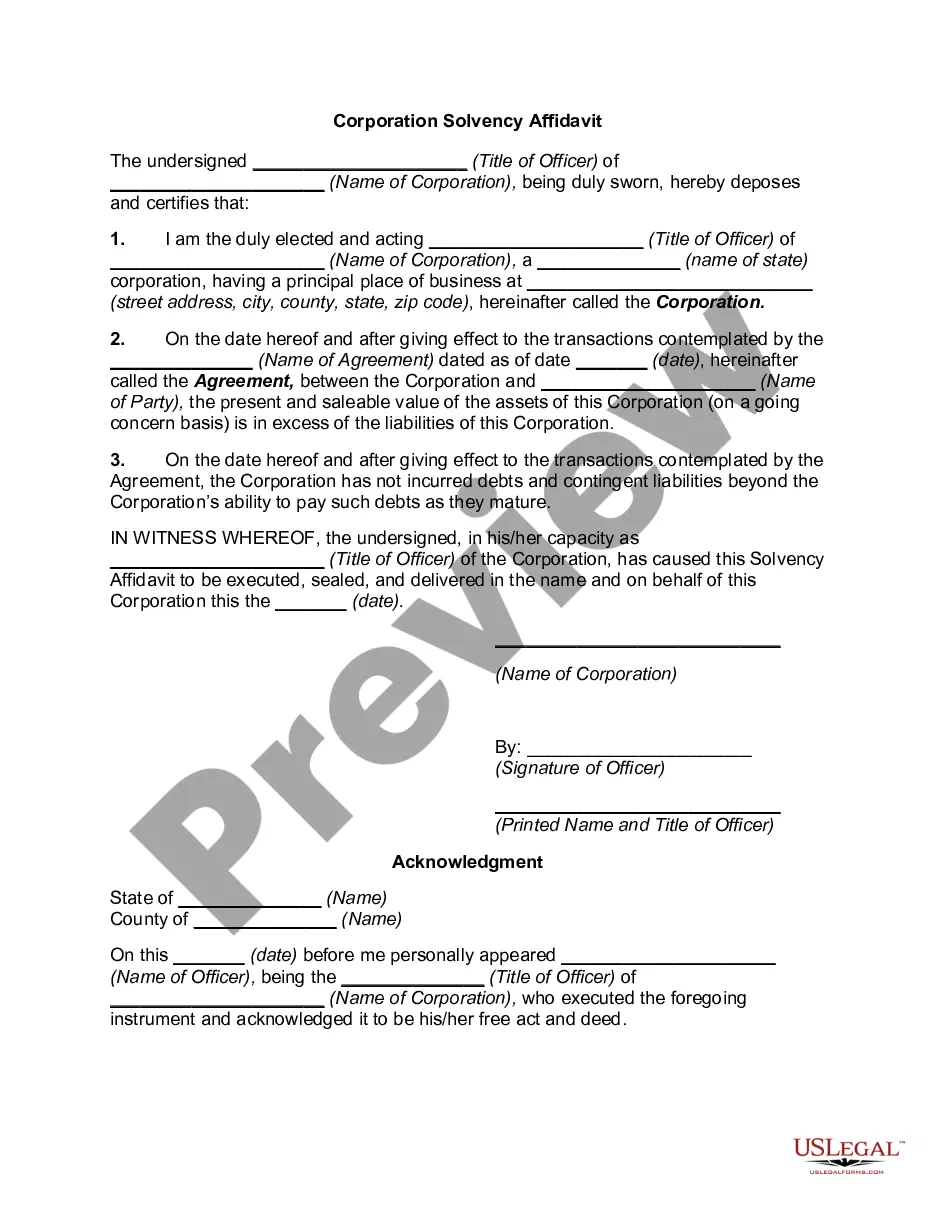
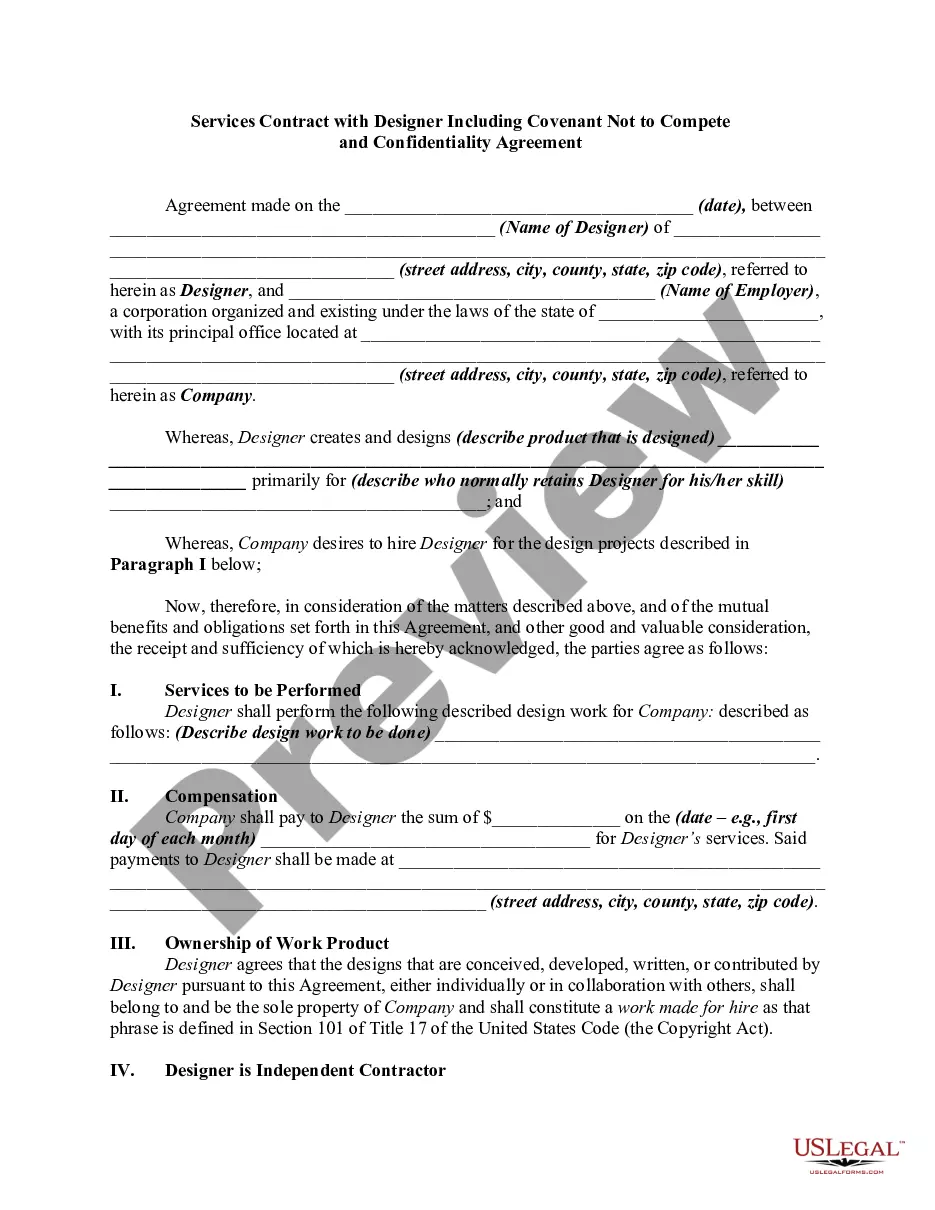
This form is a sample letter in Word format covering the subject matter of the title of the form.
Connecticut Sample Letter to Bank concerning Accounts of Decedent
Category:
State:
Multi-State
Control #:
US-0034LTR
Format:
Word;
Rich Text
Instant download
Description
Free preview





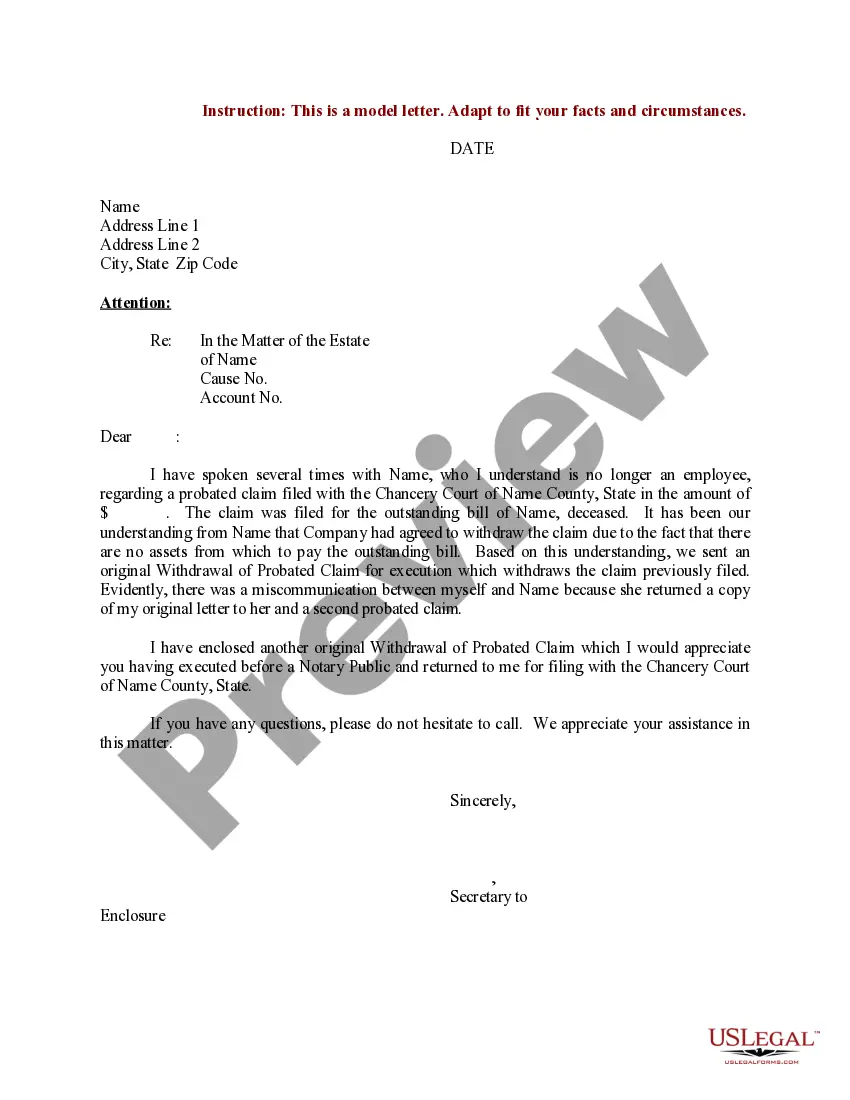
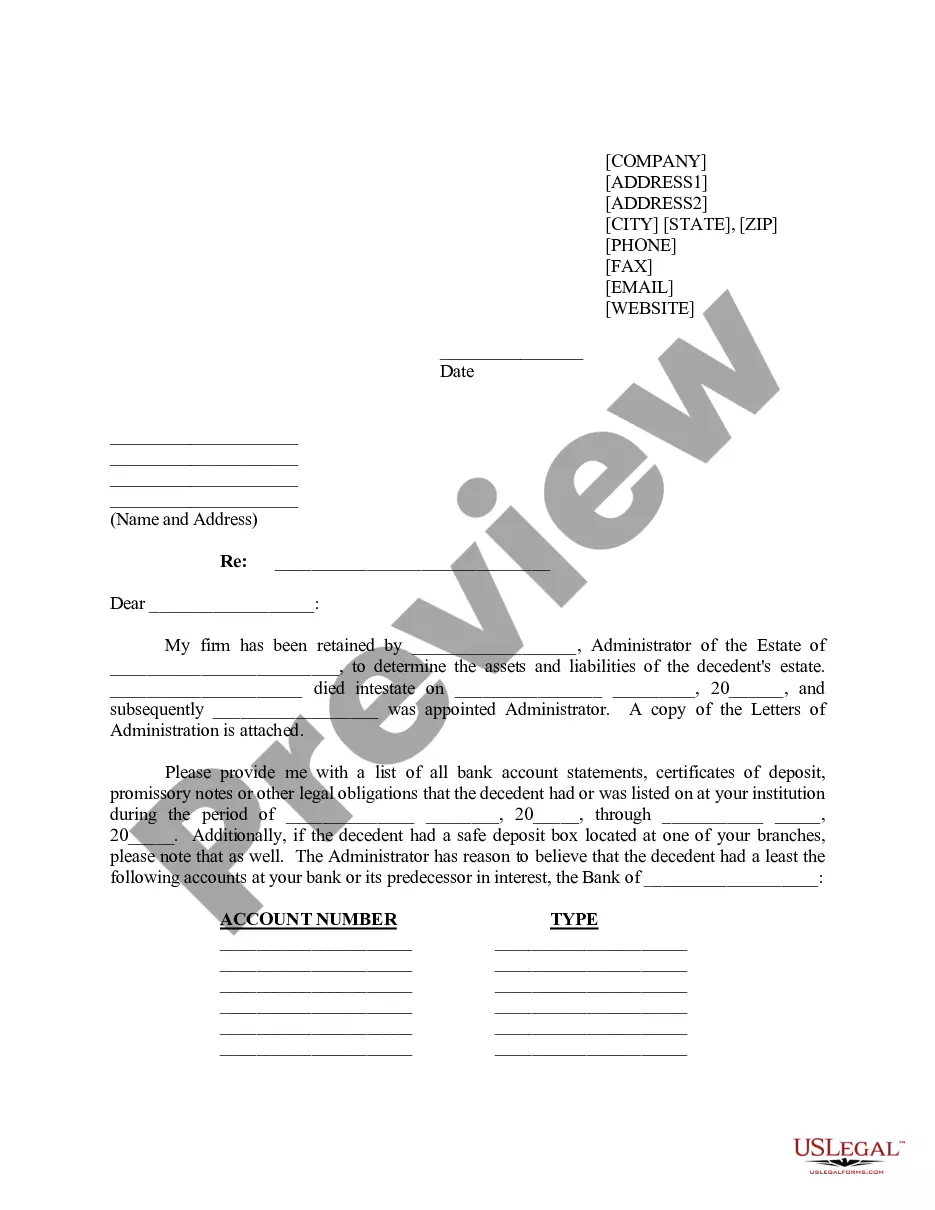
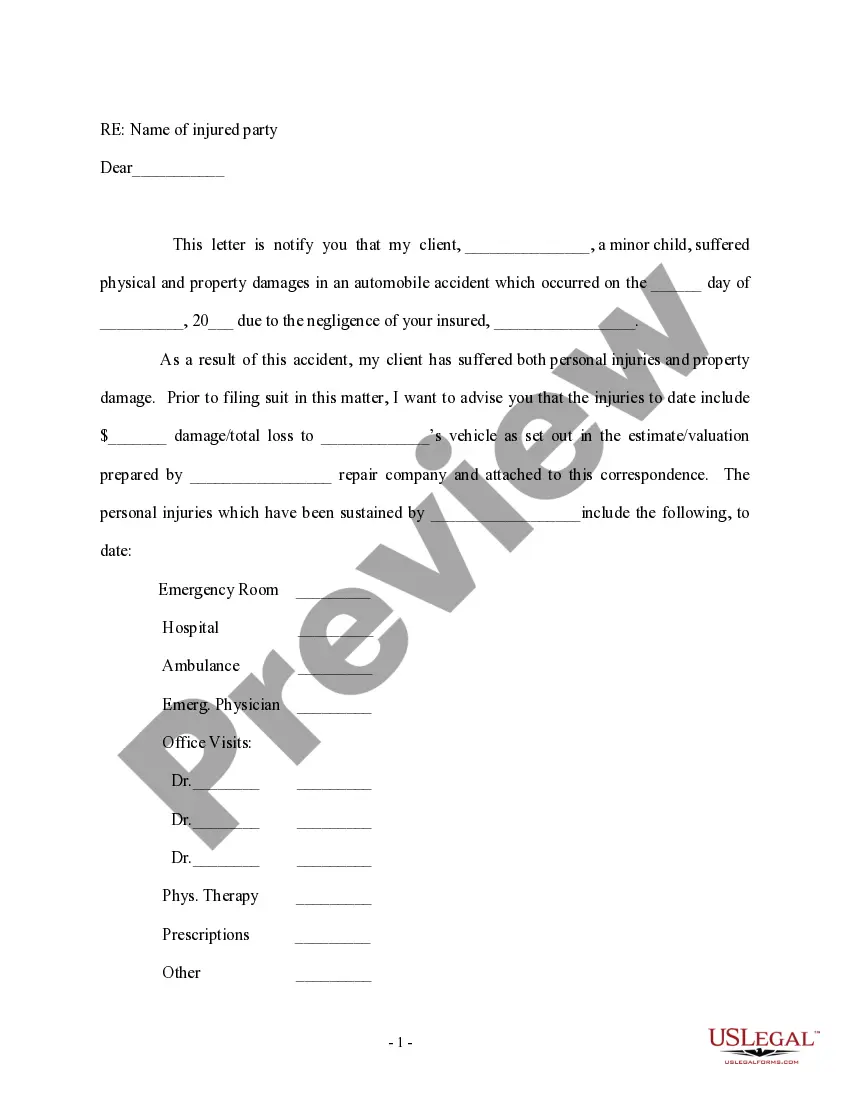
How to fill out Sample Letter To Bank Concerning Accounts Of Decedent?
You can dedicate time online looking for the proper legal document template that meets the federal and state criteria you need. US Legal Forms offers thousands of legal forms that are reviewed by experts.
You can obtain or print the Connecticut Sample Letter to Bank regarding Decedent's Accounts from their service. If you have an account with US Legal Forms, you may Log In and click on the Download button. After that, you can complete, edit, print, or sign the Connecticut Sample Letter to Bank concerning Accounts of Decedent. Every legal document template you receive is yours permanently.
To obtain another copy of the downloaded form, navigate to the My documents tab and click on the appropriate button. If you are using the US Legal Forms website for the first time, follow the simple instructions below: First, ensure that you have selected the correct document template for the state/town of your choice. Review the form description to confirm you have chosen the right form. If available, use the Review button to look through the document template as well.
Utilize professional and state-specific templates to address your business or personal needs.
- If you want to find another version of the form, use the Search field to locate the template that fits your requirements.
- Once you have found the template you need, click on Buy now to proceed.
- Select the pricing plan you want, enter your information, and register for an account on US Legal Forms.
- Complete the purchase. You can use your Visa or Mastercard or PayPal account to pay for the legal document.
- Choose the format of the document and download it to your device.
- Make edits to your document if necessary. You can complete, edit, sign, and print the Connecticut Sample Letter to Bank regarding Decedent's Accounts.
- Download and print thousands of document templates using the US Legal Forms website, which offers the largest selection of legal forms.
Form popularity
FAQ
To gain access to bank accounts after someone's death, you will need to follow specific legal procedures. This usually involves presenting the death certificate, your identification, and any documentation proving your authority to manage the deceased's affairs, such as a will. Utilizing a Connecticut Sample Letter to Bank concerning Accounts of Decedent can streamline the process by providing a template for your request, making it easier for you to navigate the bank's requirements.
A beneficiary letter of instruction to a bank is a document that outlines how you wish the bank to manage the deceased's accounts. This letter typically includes information about beneficiaries, account details, and any specific instructions related to the accounts. Using a Connecticut Sample Letter to Bank concerning Accounts of Decedent can help you craft a comprehensive letter that ensures your wishes are clearly communicated to the bank.
When writing a letter to the bank regarding a deceased account holder, start by clearly stating the account holder's name and account number. Include essential details such as your relationship to the deceased and attach a copy of the death certificate. A Connecticut Sample Letter to Bank concerning Accounts of Decedent can guide you in composing a respectful and effective letter that communicates your request to the bank.
To access a bank account of a deceased person, you typically need to provide the bank with a few documents. These documents often include the death certificate, proof of your identity, and possibly a will or trust that names you as an executor or beneficiary. Additionally, you can use a Connecticut Sample Letter to Bank concerning Accounts of Decedent to formally request access to the account, ensuring that you follow the bank's specific procedures.
Start the letter with your introduction and the reason for writing the letter. Moreover, request the bank manager to settle the deceased account. Additionally, you have to provide details like account numbers and other documents. Signature ? Use ?Faithfully? or ?Sincerely? as signatures and then mention your name.
To sum up, I want to inform you that my husband died in a car accident on 28th July 2022. Moreover, he has a savings bank account in your bank. The account number is 2773615553. Therefore, I want to transfer the amount in his account to my account and close his account.
Dear Sir/Madam, Re: <name of deceased> Date of birth: <deceased's date of birth> Address: <deceased's address> Date of death: <date> Name: <insert your name> Address: <your address> Name: <name of person> Address: <their address>
The next of kin must notify their banks of the death when an account holder dies. This is usually done by delivering a certified copy of the death certificate to the bank, along with the deceased's name and Social Security number, bank account numbers, and other information.
?What that beneficiary has to do is just present a death certificate and ID to the bank. Then that asset will pass directly to who you want it to.? Banks typically don't ask account holders to designate a beneficiary.