Oklahoma Warranty Deed from Two Individuals to an Individual
What this document covers
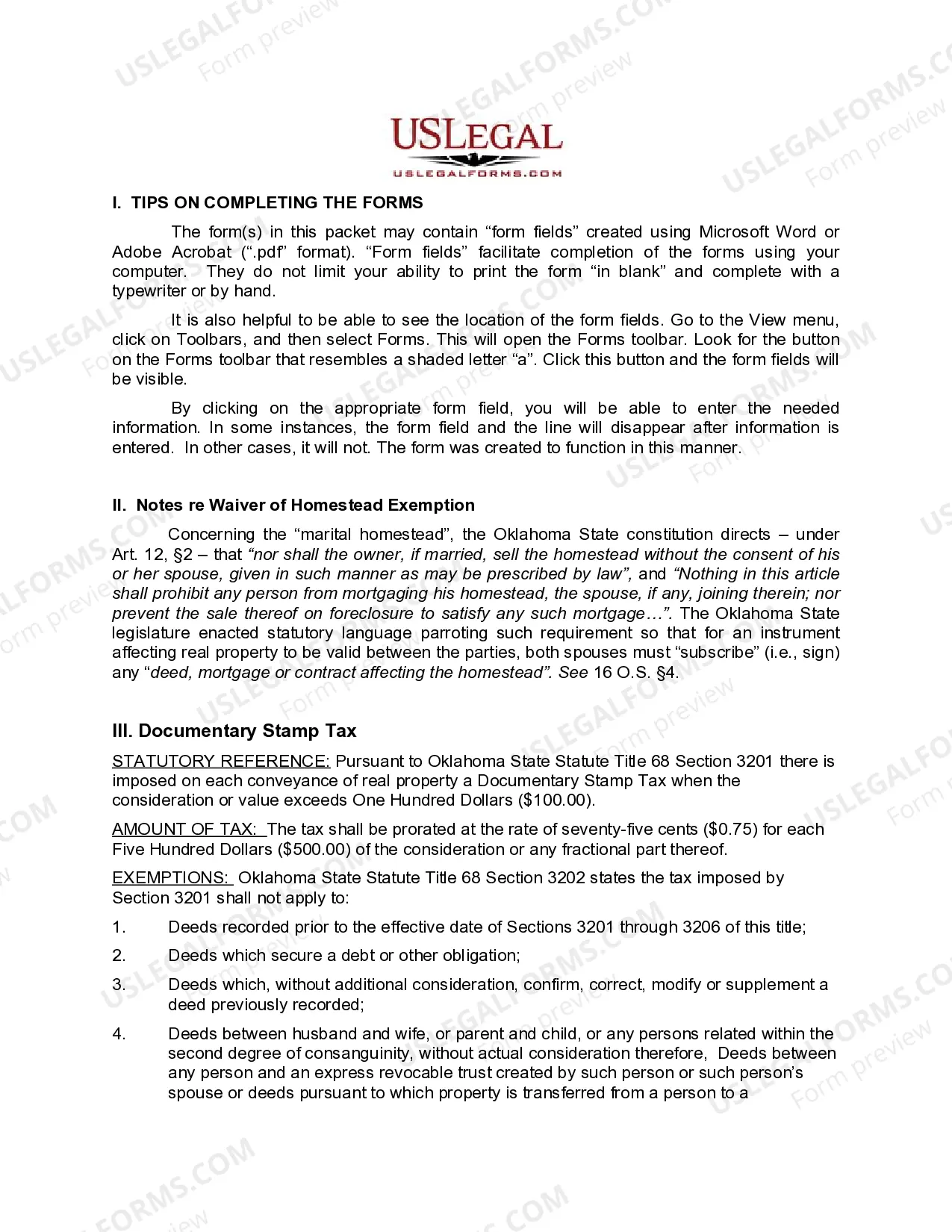
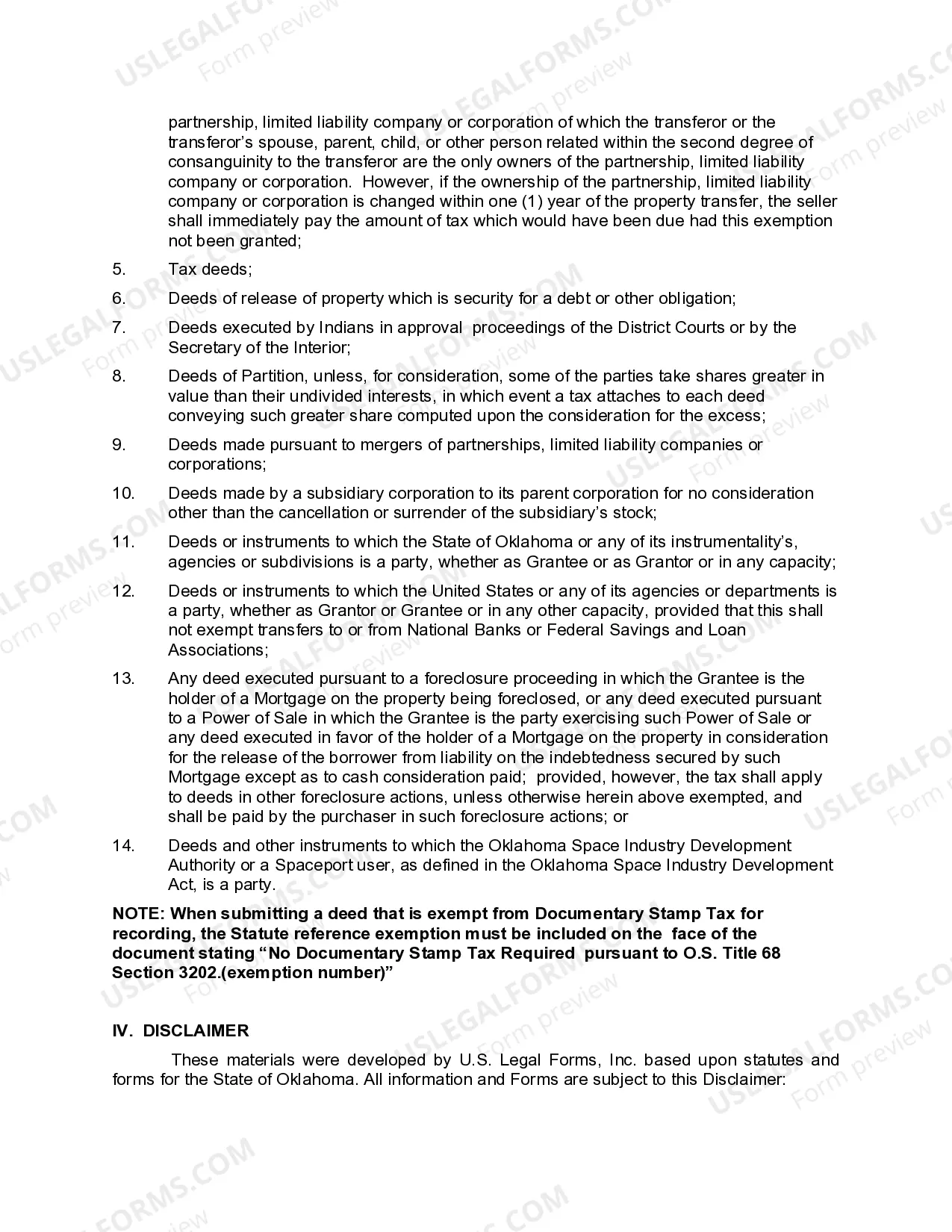
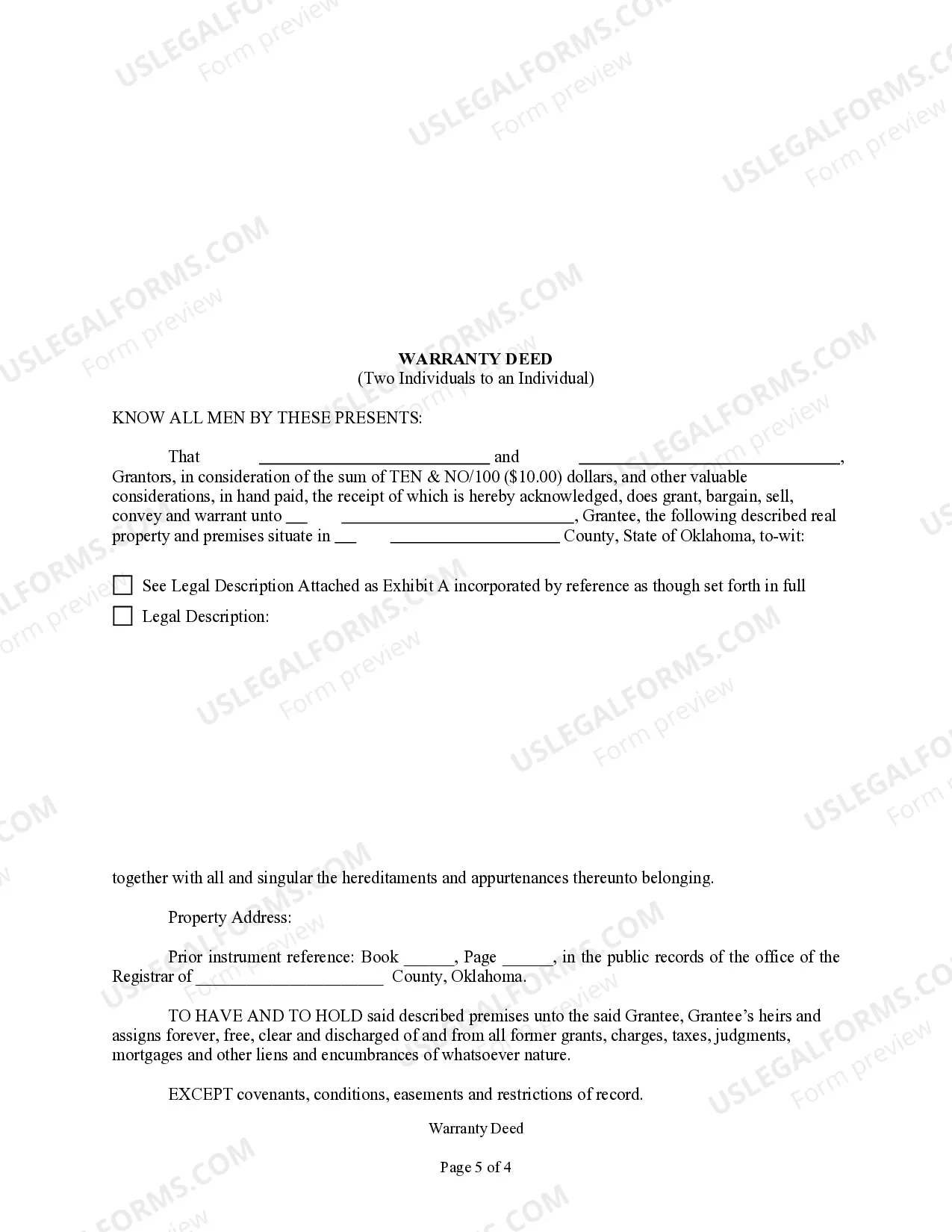
The Warranty Deed from Two Individuals to an Individual is a legal document used to transfer ownership of real property from two grantors to a single grantee. This deed is specifically designed to grant title and ensures that the property is free from all liens and encumbrances, except for certain reservations like mineral rights. Unlike other deeds, this document involves multiple grantors, making it important for situations where joint ownership is being conveyed to one individual.
Main sections of this form
- Identification of Grantors and Grantee: Clearly outlines who is transferring and who is receiving the property.
- Property Description: Details the specific property being transferred, including boundaries and identification.
- Reservation of Rights: Notes any reservations, such as mineral rights, retained by the grantors.
- Legal Language: Contains the necessary legal phrases to comply with state laws.
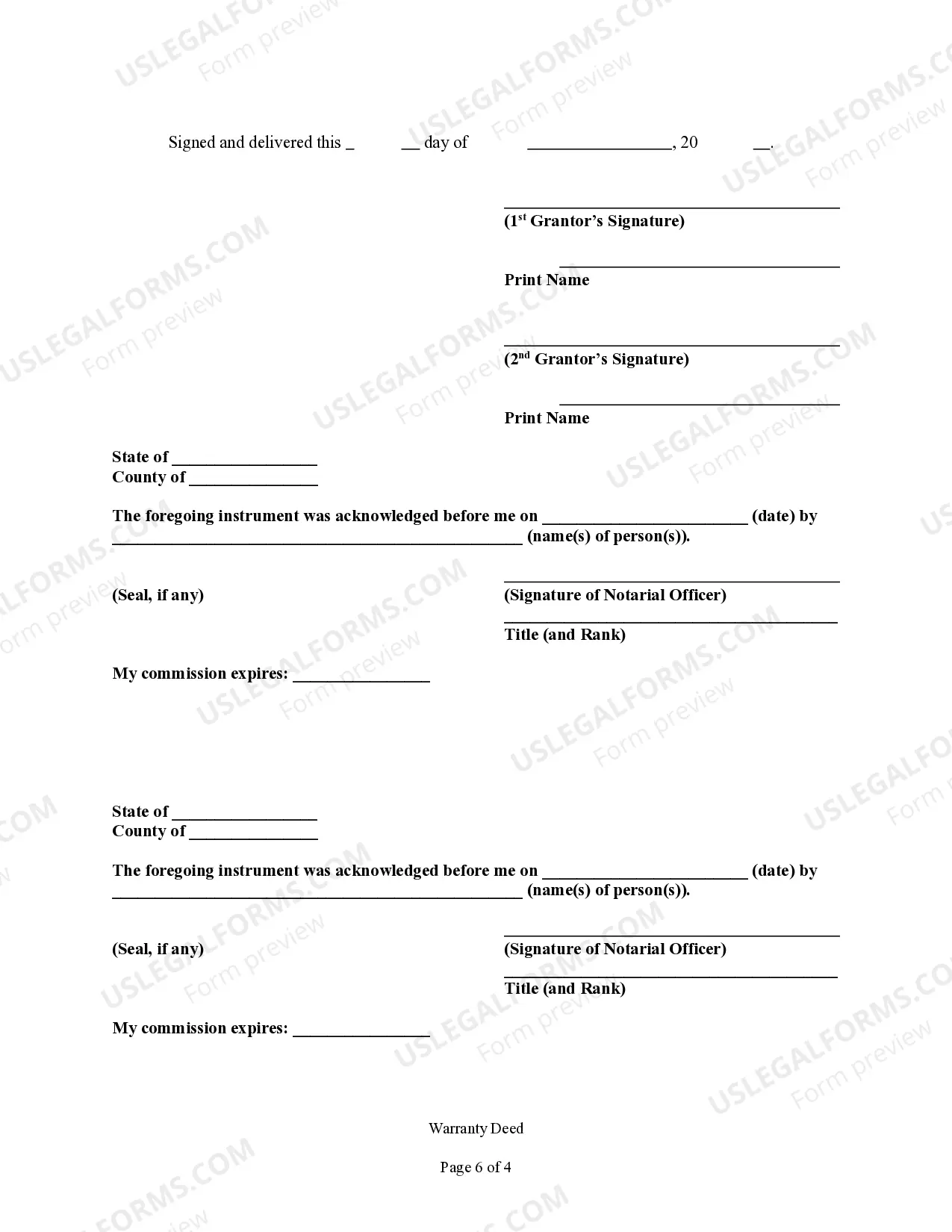
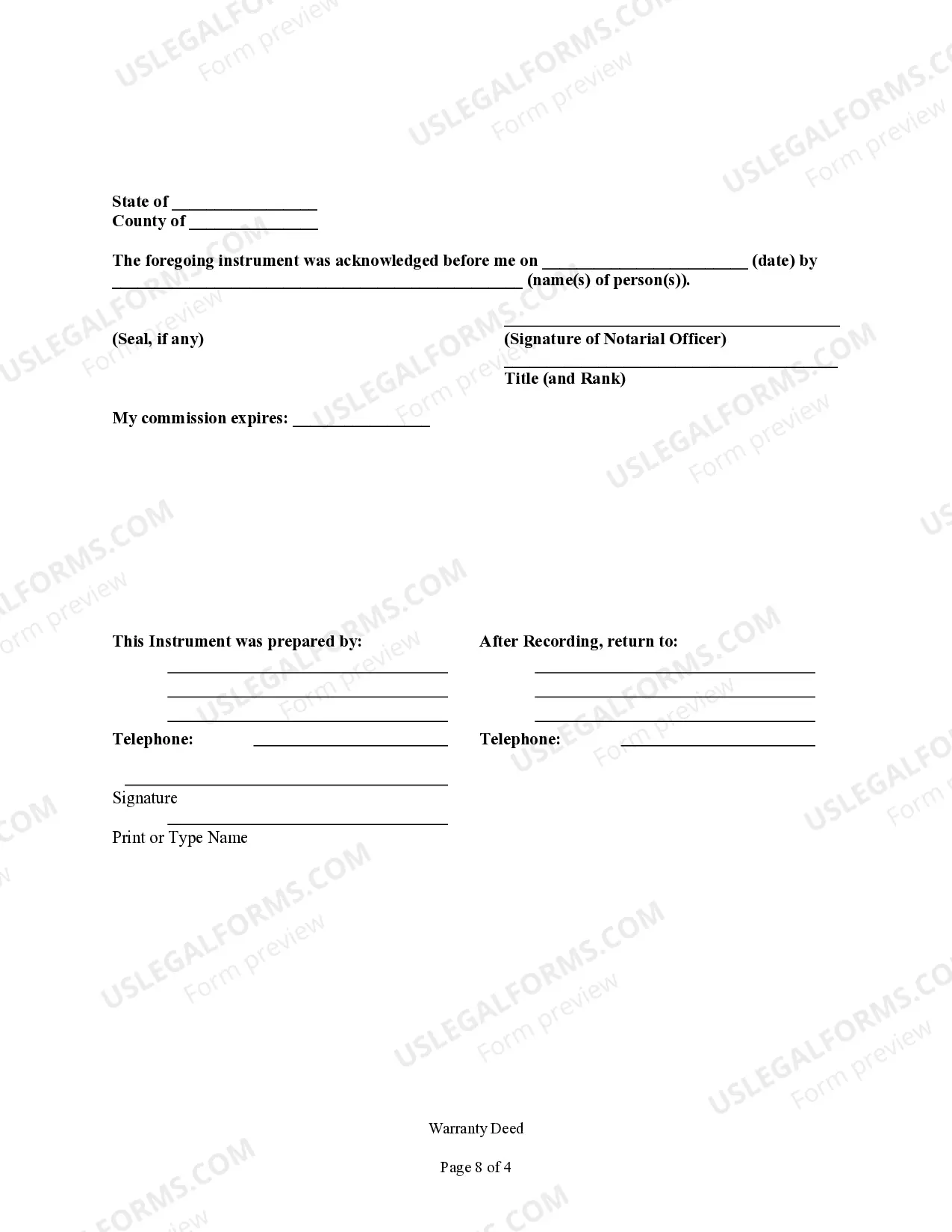
- Signatures: Requires signatures from all parties involved, including any necessary witnesses or notarization.





When this form is needed
This form is utilized when two individuals wish to transfer their jointly owned property to a single person. Typical scenarios include situations like divorce, where one party wishes to relinquish their interest in the property to the other, or the sale of jointly owned land where one owner is buying out the other. It's essential to use this form to ensure a clear transfer of title and legal protection against future claims.
Who needs this form
- Two individuals who jointly own property and want to transfer it to another individual.
- Individuals entering into a property settlement, such as during divorce proceedings.
- Co-owners of real estate looking to simplify ownership by selling or gifting one party's interest to another.
- Anyone seeking to legally formalize the transfer of property with multiple grantors.
How to complete this form
- Identify the parties: Enter the full names and addresses of the grantors and the grantee.
- Specify the property: Complete the detailed description of the property being transferred.
- Indicate any exceptions: Note any reservations, such as oil, gas, or mineral rights, that the grantors wish to retain.
- Collect signatures: Ensure all grantors sign the deed in the presence of a notary public or required witnesses.
- Verify accuracy: Review all entered information for correctness before finalizing the document.
Does this document require notarization?
To make this form legally binding, it must be notarized. Our online notarization service, powered by Notarize, lets you verify and sign documents remotely through an encrypted video session.
Get your form ready online
Our built-in tools help you complete, sign, share, and store your documents in one place.
Make edits, fill in missing information, and update formatting in US Legal Forms—just like you would in MS Word.
Download a copy, print it, send it by email, or mail it via USPS—whatever works best for your next step.
Sign and collect signatures with our SignNow integration. Send to multiple recipients, set reminders, and more. Go Premium to unlock E-Sign.
If this form requires notarization, complete it online through a secure video call—no need to meet a notary in person or wait for an appointment.
We protect your documents and personal data by following strict security and privacy standards.

Make edits, fill in missing information, and update formatting in US Legal Forms—just like you would in MS Word.

Download a copy, print it, send it by email, or mail it via USPS—whatever works best for your next step.

Sign and collect signatures with our SignNow integration. Send to multiple recipients, set reminders, and more. Go Premium to unlock E-Sign.

If this form requires notarization, complete it online through a secure video call—no need to meet a notary in person or wait for an appointment.

We protect your documents and personal data by following strict security and privacy standards.
Mistakes to watch out for
- Not including the legal description of the property, which can lead to title issues.
- Failing to sign the deed or obtain necessary notarization, making it invalid.
- Omitting details about reservations of rights or exceptions, which may cause future disputes.
Benefits of using this form online
- Convenience: Easily download the form at any time and complete it at your own pace.
- Editability: Fill in the details using your computer, ensuring neat and legible information.
- Reliability: Get access to a legally compliant document reviewed by licensed attorneys.
Looking for another form?
Form popularity
FAQ
A special warranty deed to real estate offers protection to the buyer through the seller's guarantee that the title has been free and clear of encumbrances during their ownership of the property. It does not guarantee clear title beyond their ownership.
A quitclaim deed must meet all state and local standards for recorded instruments. Sign the deed in the presence of a notary public and record at the clerk's office in the county where the property is located for a valid transfer. Contact the same office to verify accepted forms of payment.
The Oklahoma general warranty deed is a type of legal document whereby an owner of a piece of property can sell his or her interest to another person.Once deeds are properly filled out and acknowledged by a notary, they are filed with the registrar of deeds in the county in which the property is located.
In Oklahoma, title to real property can be transferred from one party to another by executing a special warranty deed. A special warranty deed conveys an interest in real property to the named grantee with limited warranties of title.Generally, real property is owned in either sole ownership or in co-ownership.
Fill out the "grantor" section of the warranty deed. The grantors are the givers, or current owners, of the property. Use the legal name of each grantor and insert current addresses after each grantor's name.
The name and address of the seller (called the grantor) The name and address of the buyer (called the grantee) A legal description of the property (found on the previous deed) A statement that the grantor is transferring the property to the grantee.
Retrieve your original deed. Get the appropriate deed form. Draft the deed. Sign the deed before a notary. Record the deed with the county recorder. Obtain the new original deed.
Step 1 Fill in the grantor's name and address along with indicating whether or not the grantor is married. Step 2 Enter the consideration to be paid for the property. Step 3 Write in the grantee's name and address and check the box showing how they intend to hold the property.
Contrary to normal expectations, the Deed DOES NOT have to be recorded to be effective or to show delivery, and because of that, the Deed DOES NOT have to be signed in front of a Notary Public. However, if you plan to record it, then it does have to be notarized as that is a County Recorder requirement.