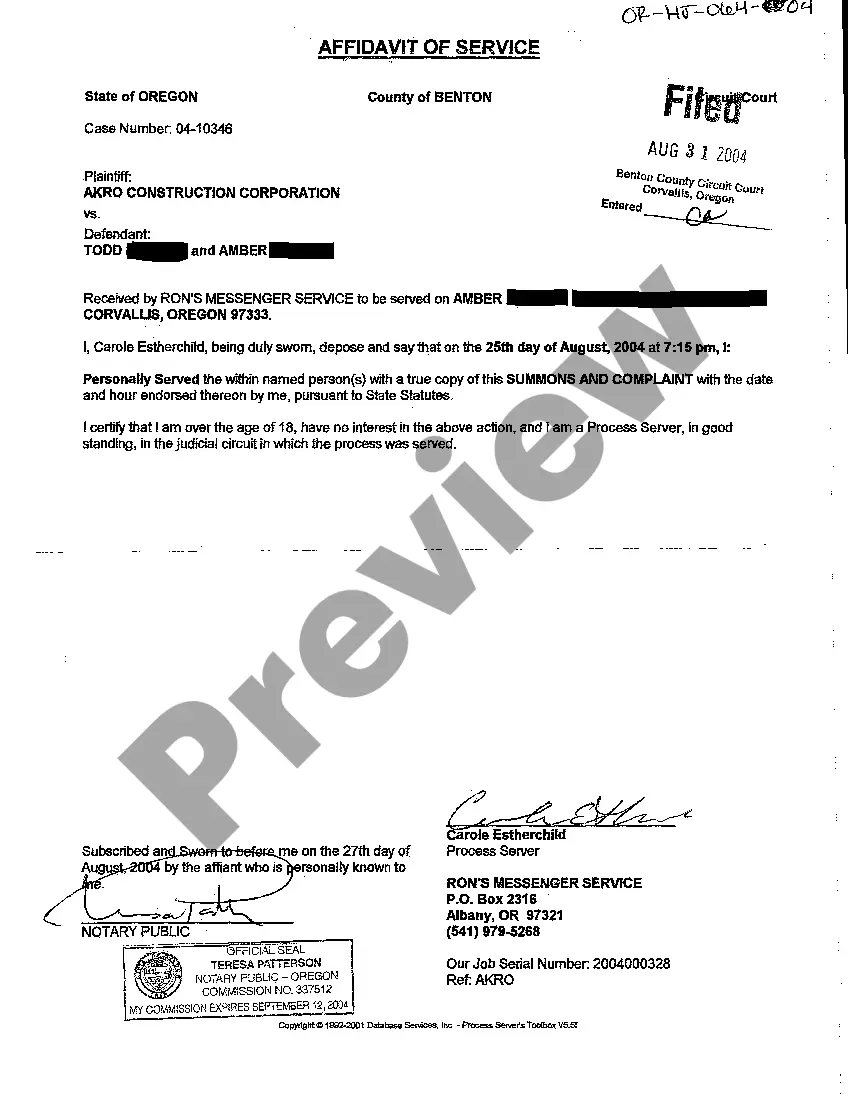
Salt Water Transportation and Disposal Agreement Between Owner of Salt Water Disposal System and A Producer of Salt Water
Understanding this form
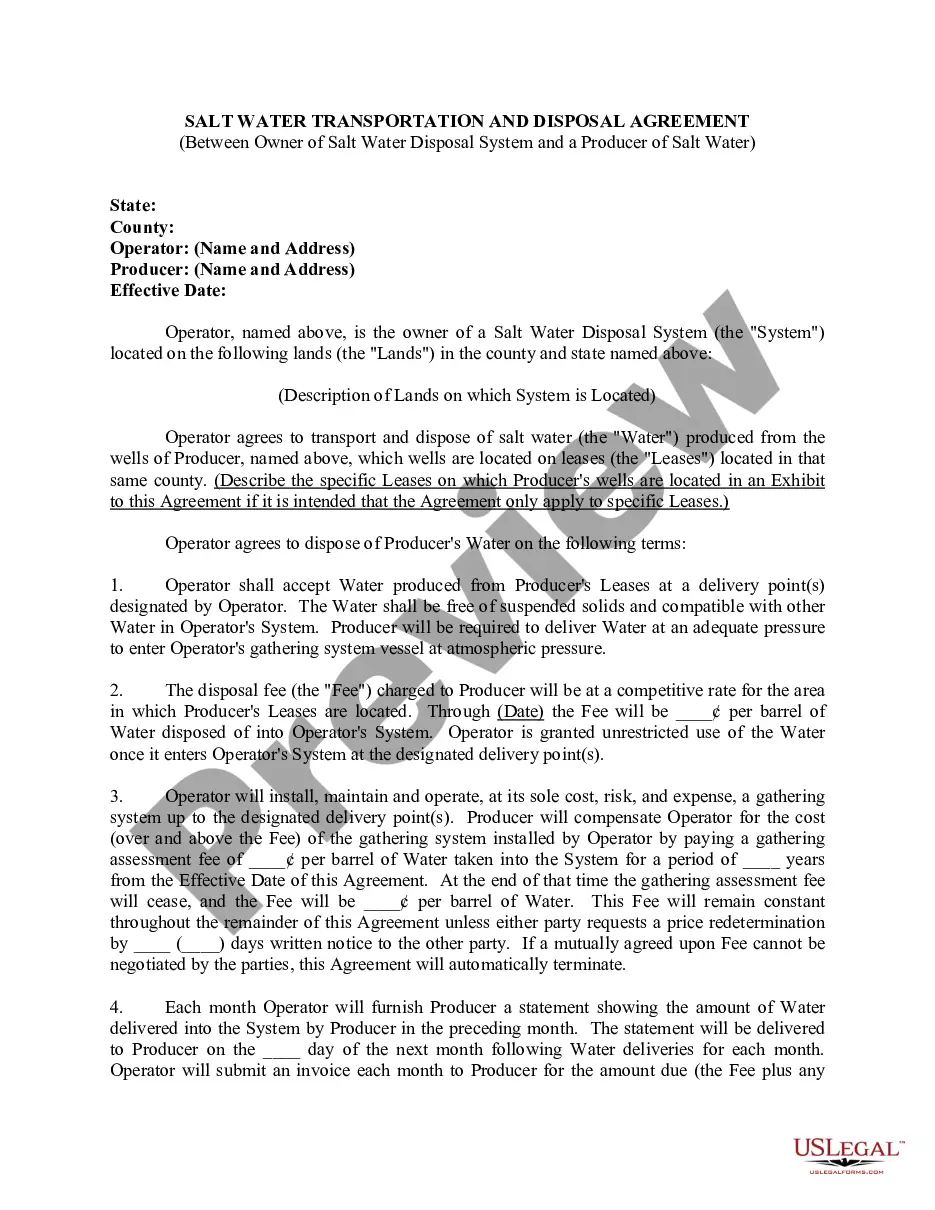
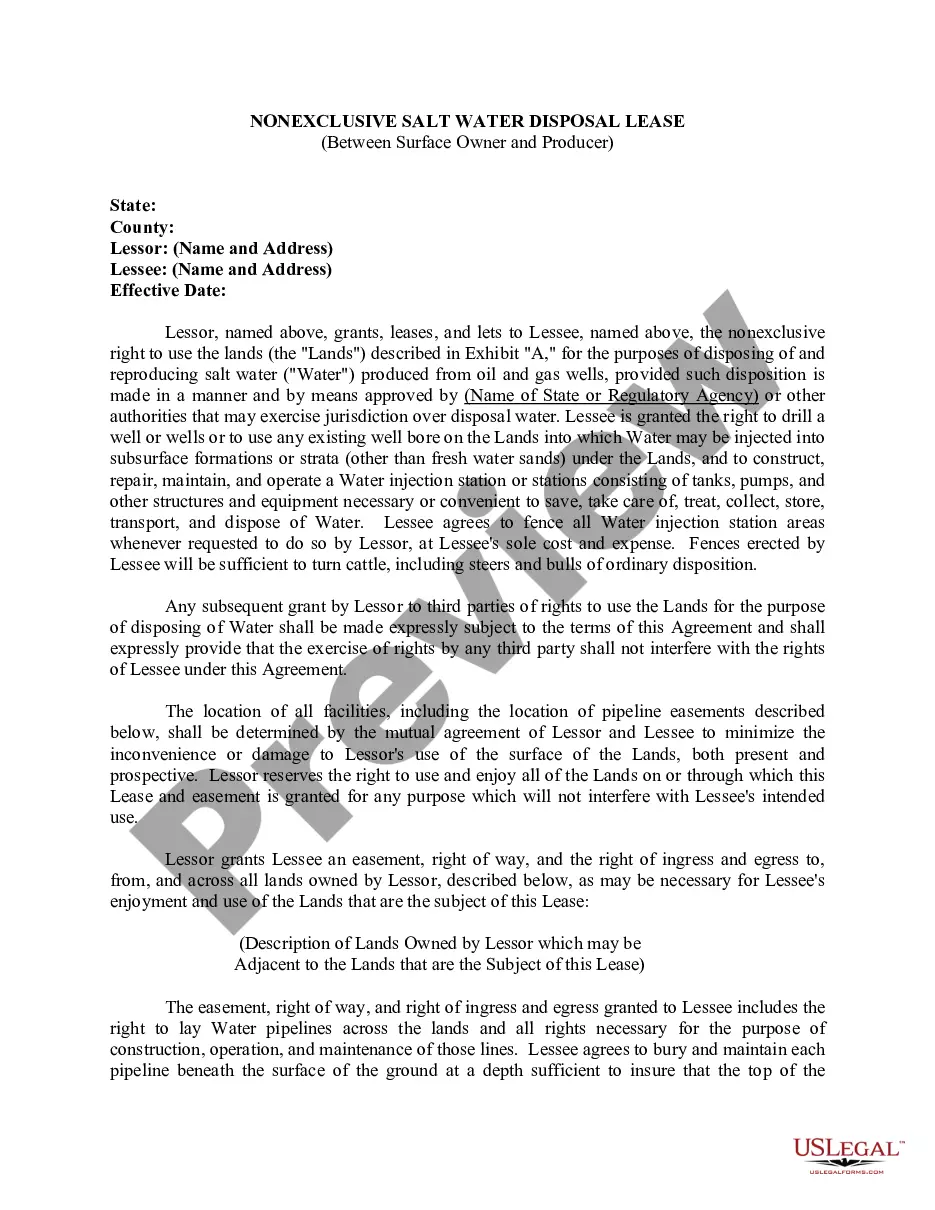
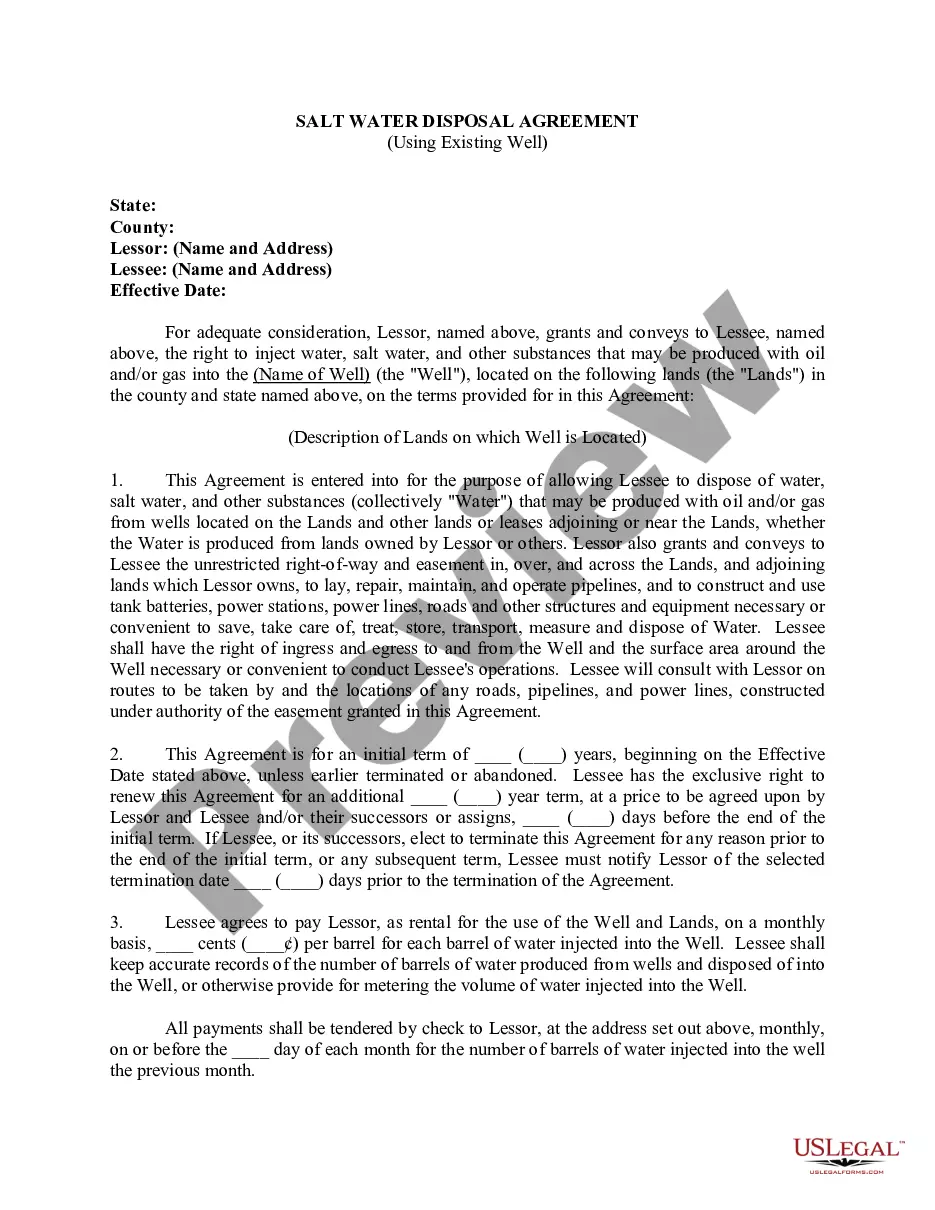
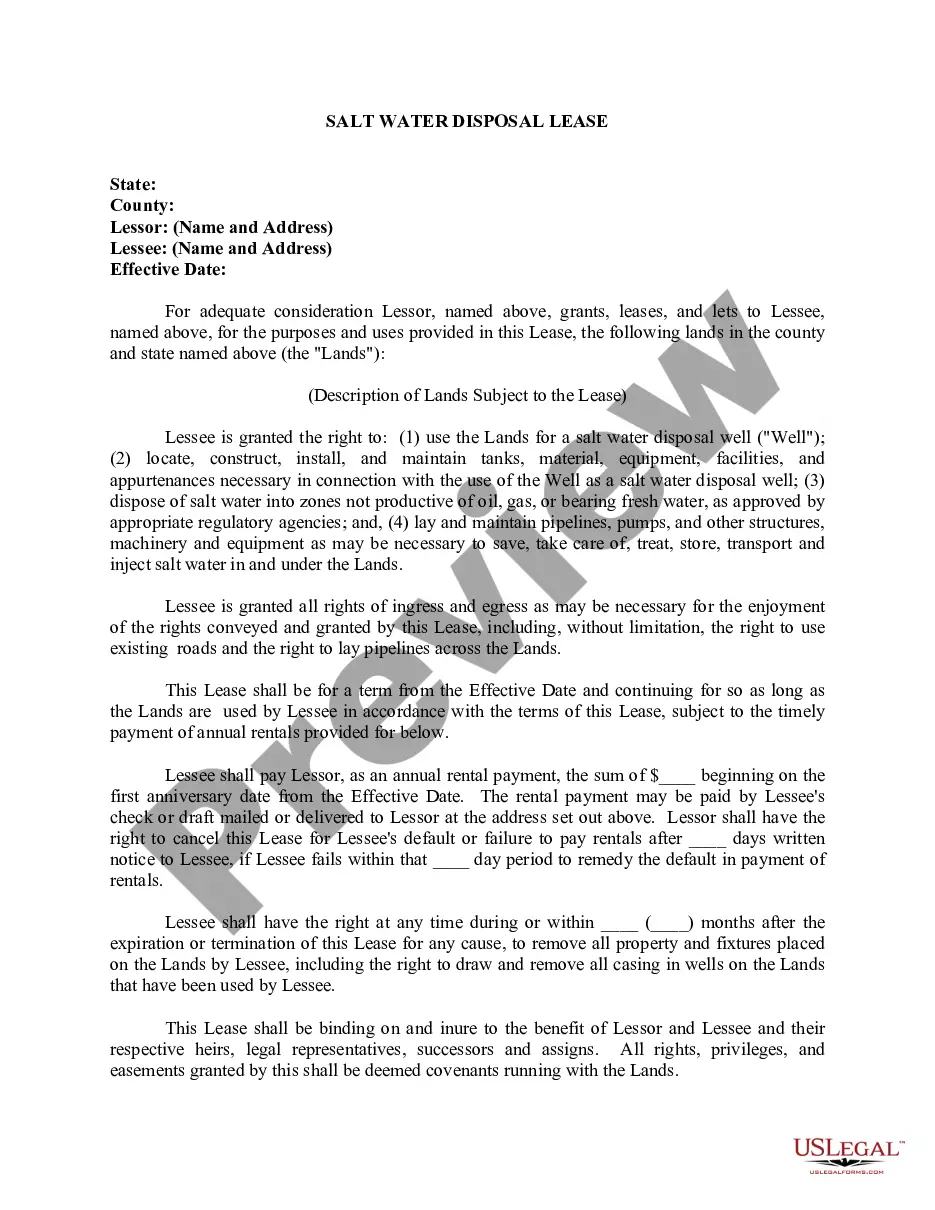
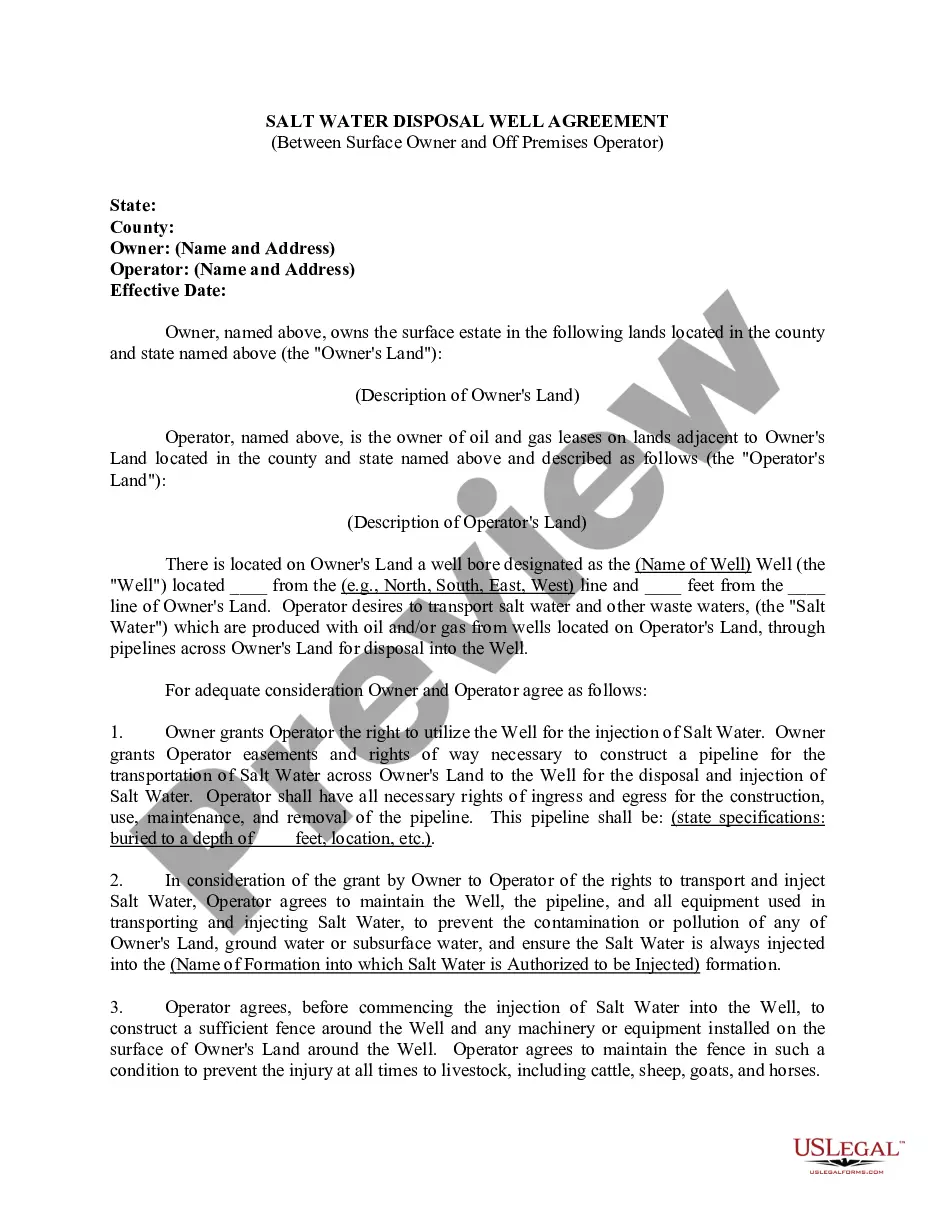
The Salt Water Transportation and Disposal Agreement is a legal document outlining the terms under which an operator will transport and dispose of salt water produced from wells owned by a producer. This form is essential for ensuring that both parties understand their obligations and liabilities regarding the handling of salt water, which is a critical aspect of oil and gas operations. Unlike general contracts, this agreement specifically addresses transportation and disposal responsibilities, fees, and operational considerations unique to salt water management.
Key components of this form
- Identification of the Operator and Producer, including their names and addresses.
- Description of the lands where the salt water disposal system is located.
- Details on the disposal of salt water, including delivery points and acceptable water conditions.
- Specification of disposal fees and gathering assessment fees.
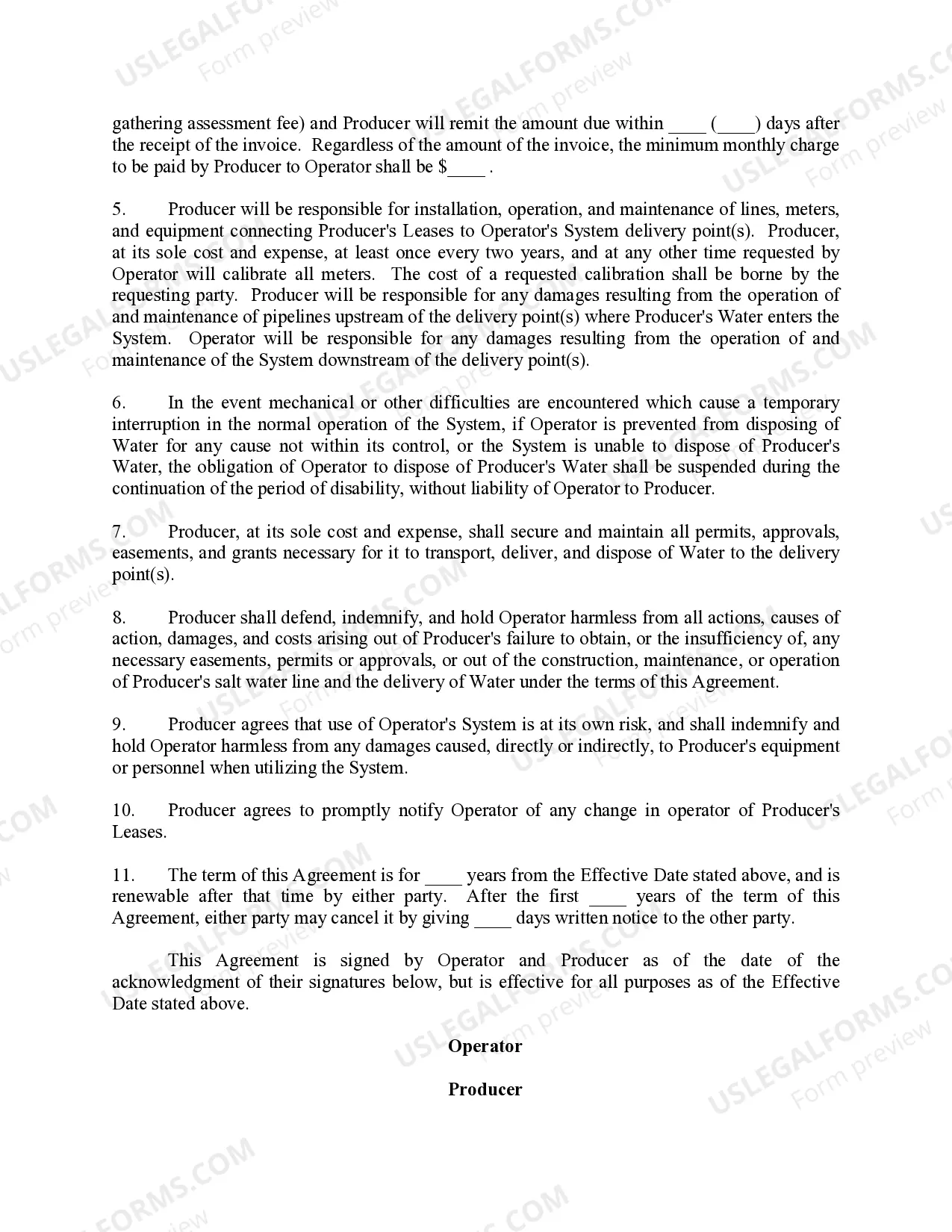
- Responsibilities of the Producer regarding maintenance and calibration of equipment.
- Indemnification clauses protecting each party from liabilities related to their operations.
- Duration of the agreement and clauses regarding potential termination.
When this form is needed
This form is needed when an operator agrees to manage the salt water produced from the oil and gas wells of a producer. It is particularly relevant in situations where both parties operate within the same county and agree on the logistics of salt water transportation and disposal. This agreement helps to prevent disputes by clearly defining terms and responsibilities associated with salt water management.
Who should use this form
- Operators who have established a salt water disposal system and are seeking to formalize agreements with producers.
- Producers of salt water from oil and gas wells looking for a structured method to dispose of their product.
- Legal professionals advising clients in the oil and gas industry on regulatory compliance and contract management.
How to complete this form
- Identify and enter the names and addresses of both the Operator and the Producer.
- Provide a description of the land where the salt water disposal system is located.
- Specify the delivery points for transporting the salt water and define acceptable conditions for the water.
- Detail the fees associated with the disposal and any additional gathering assessment fees.
- Outline each party's responsibilities related to operation and maintenance, including indemnification clauses.
- Sign and date the agreement to finalize the terms.
Is notarization required?
This form does not typically require notarization to be legally valid. However, some jurisdictions or document types may still require it. US Legal Forms provides secure online notarization powered by Notarize, available 24/7 for added convenience.
Get your form ready online
Our built-in tools help you complete, sign, share, and store your documents in one place.
Make edits, fill in missing information, and update formatting in US Legal Forms—just like you would in MS Word.
Download a copy, print it, send it by email, or mail it via USPS—whatever works best for your next step.
Sign and collect signatures with our SignNow integration. Send to multiple recipients, set reminders, and more. Go Premium to unlock E-Sign.
If this form requires notarization, complete it online through a secure video call—no need to meet a notary in person or wait for an appointment.
We protect your documents and personal data by following strict security and privacy standards.

Make edits, fill in missing information, and update formatting in US Legal Forms—just like you would in MS Word.

Download a copy, print it, send it by email, or mail it via USPS—whatever works best for your next step.

Sign and collect signatures with our SignNow integration. Send to multiple recipients, set reminders, and more. Go Premium to unlock E-Sign.

If this form requires notarization, complete it online through a secure video call—no need to meet a notary in person or wait for an appointment.

We protect your documents and personal data by following strict security and privacy standards.
Typical mistakes to avoid
- Failing to clearly define the delivery points for salt water transportation.
- Overlooking the specification of fees which can lead to misunderstandings later.
- Not including necessary details regarding equipment maintenance responsibilities.
- Neglecting to provide the effective date, which can affect the start of obligations.
Why complete this form online
- Convenient access to a legally vetted template that saves time in contract preparation.
- Ability to edit and customize the terms to fit specific needs before downloading.
- Reliable format that complies with legal standards in the industry.
Quick recap
- The Salt Water Transportation and Disposal Agreement formalizes the relationship between operators and producers regarding salt water handling.
- Clearly defined responsibilities help mitigate potential disputes between parties.
- Accurate completion of the form ensures compliance with environmental regulations and operational efficiency.
Looking for another form?
Form popularity
FAQ
Who Prepares The Real Estate Purchase Agreement? Typically, the buyer's agent writes up the purchase agreement. However, unless they are legally licensed to practice law, real estate agents generally can't create their own legal contracts.
The identity of the buyer and seller. A description of the property being purchased. The purchase price. The terms as to how and when payment is to be made. The terms as to how, when, and where the goods will be delivered to the purchaser.
Does a Real Estate Purchase Agreement have to be notarized in order to be valid? No, this document does not have to be signed by a notary public since it does not get filed with the County Recorder's Office.
A real estate deal can take a turn for the worst if the contract is not carefully written to include all the legal stipulations for both the buyer and seller.You can write your own real estate purchase agreement without paying any money as long as you include certain specifics about your home.
Step 1: Apply For A Mortgage. Step 2: Research The Neighborhood. Step 3: Find A Property. Step 4: Ask For A Seller's Disclosure. Step 5: Make An Offer. Step 6: Hire A Lawyer And Home Inspector. Step 7: Negotiate. Step 8: Finalize Home Financing And Closing.
A real estate deal can take a turn for the worst if the contract is not carefully written to include all the legal stipulations for both the buyer and seller.You can write your own real estate purchase agreement without paying any money as long as you include certain specifics about your home.
_________/- (Rupees ____________________________), will be received by the FIRST PARTY from the SECOND PARTY, at the time of registration of the Sale Deed, the FIRST PARTY doth hereby agree to grant, convey, sell, transfer and assign all his rights, titles and interests in the said portion of the said property, fully
1 Stating Basic Information in Your Contract. 2 Setting Forth the Payment Terms. 3 Disclosing Important Information to the Buyer. 4 Advising Parties About Closing Procedures.
The identity of the buyer and seller. A description of the property being purchased. The purchase price. The terms as to how and when payment is to be made. The terms as to how, when, and where the goods will be delivered to the purchaser.