Connecticut Interrogatories to Plaintiff for Motor Vehicle Occurrence
Understanding this form
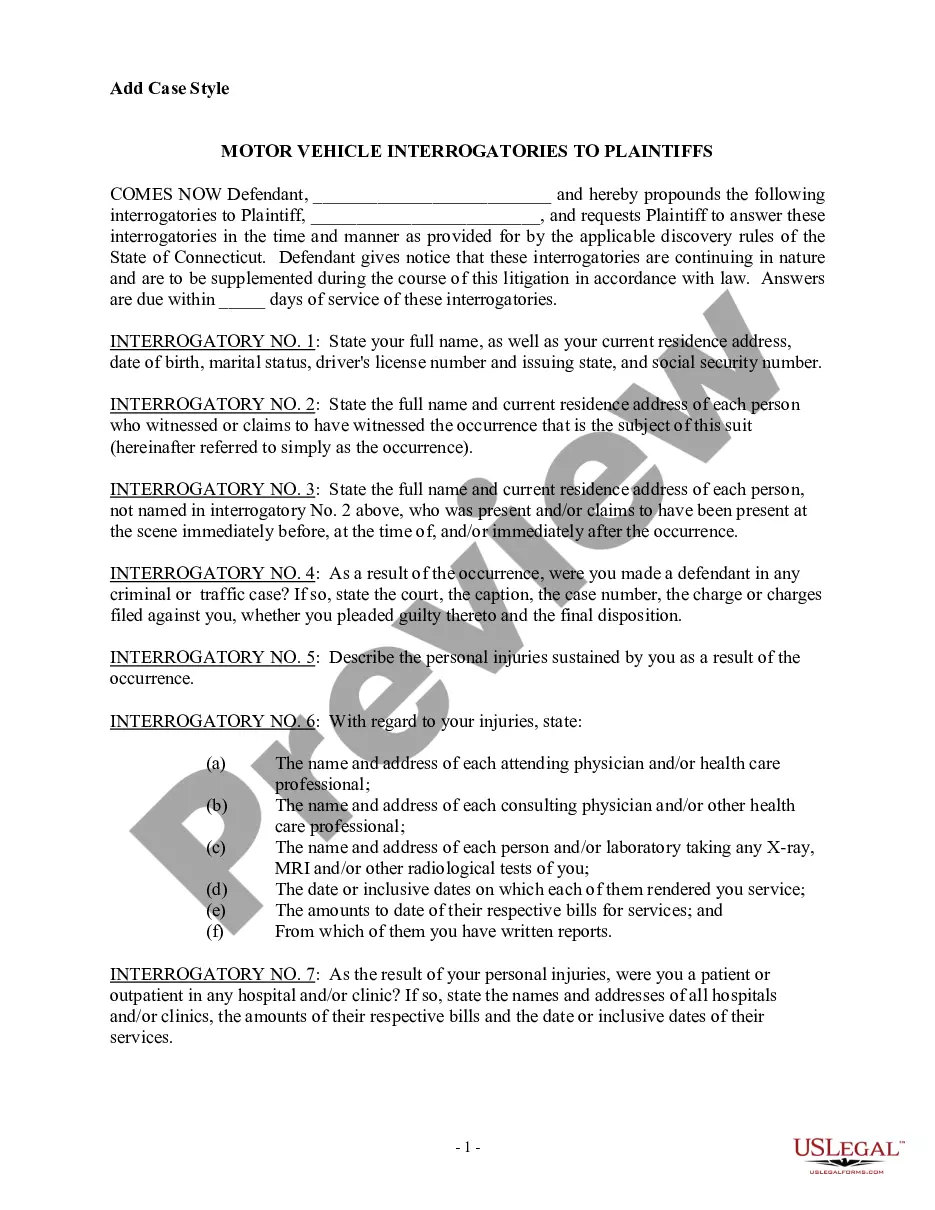
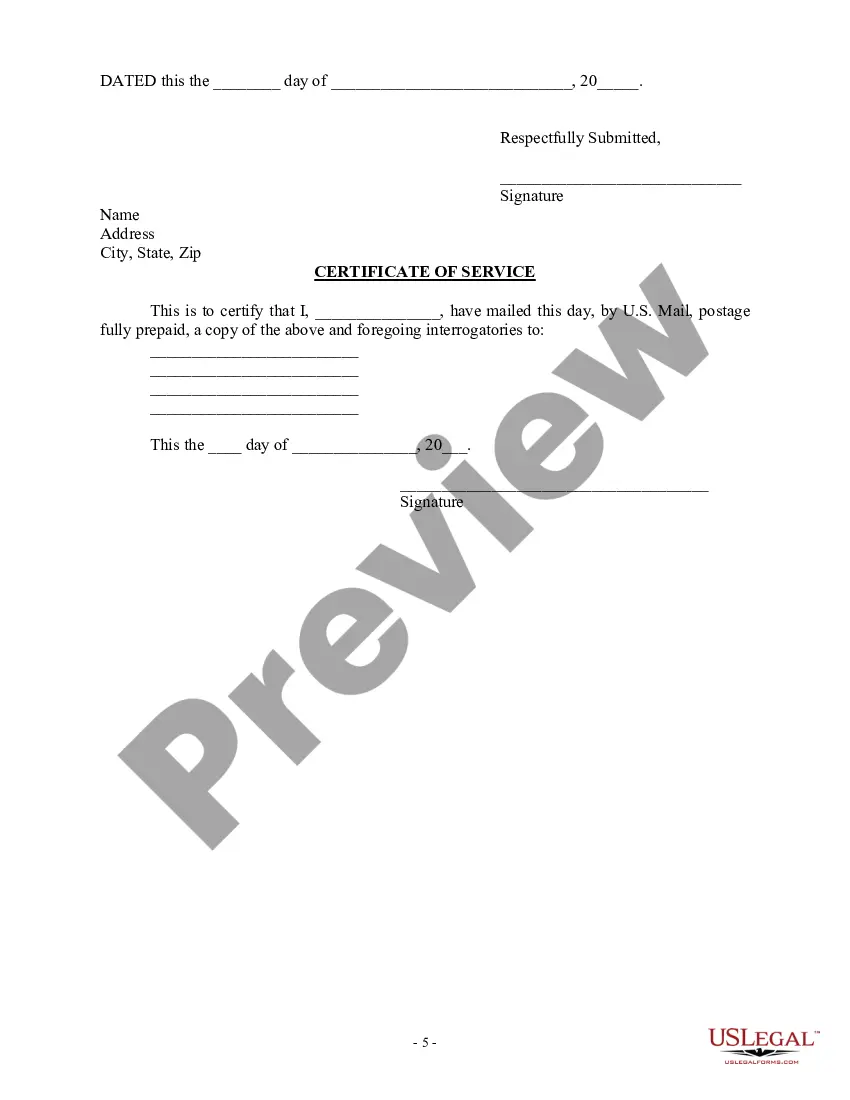
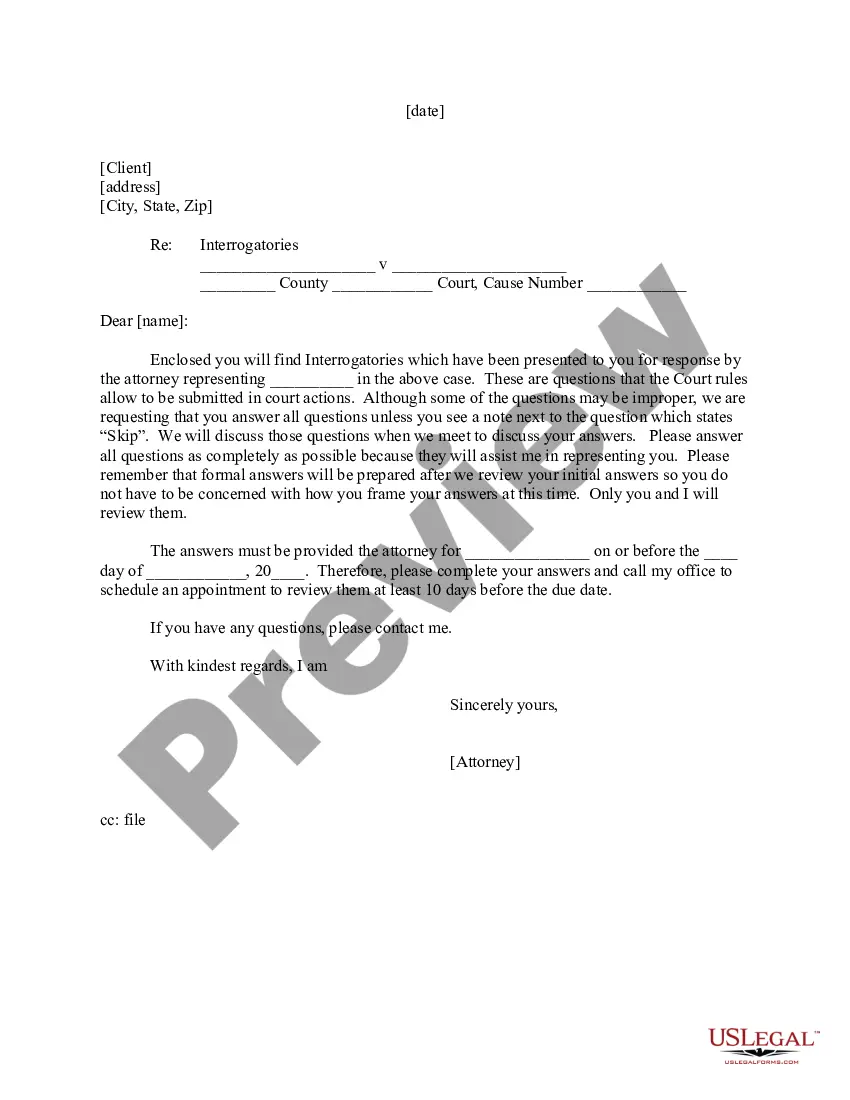
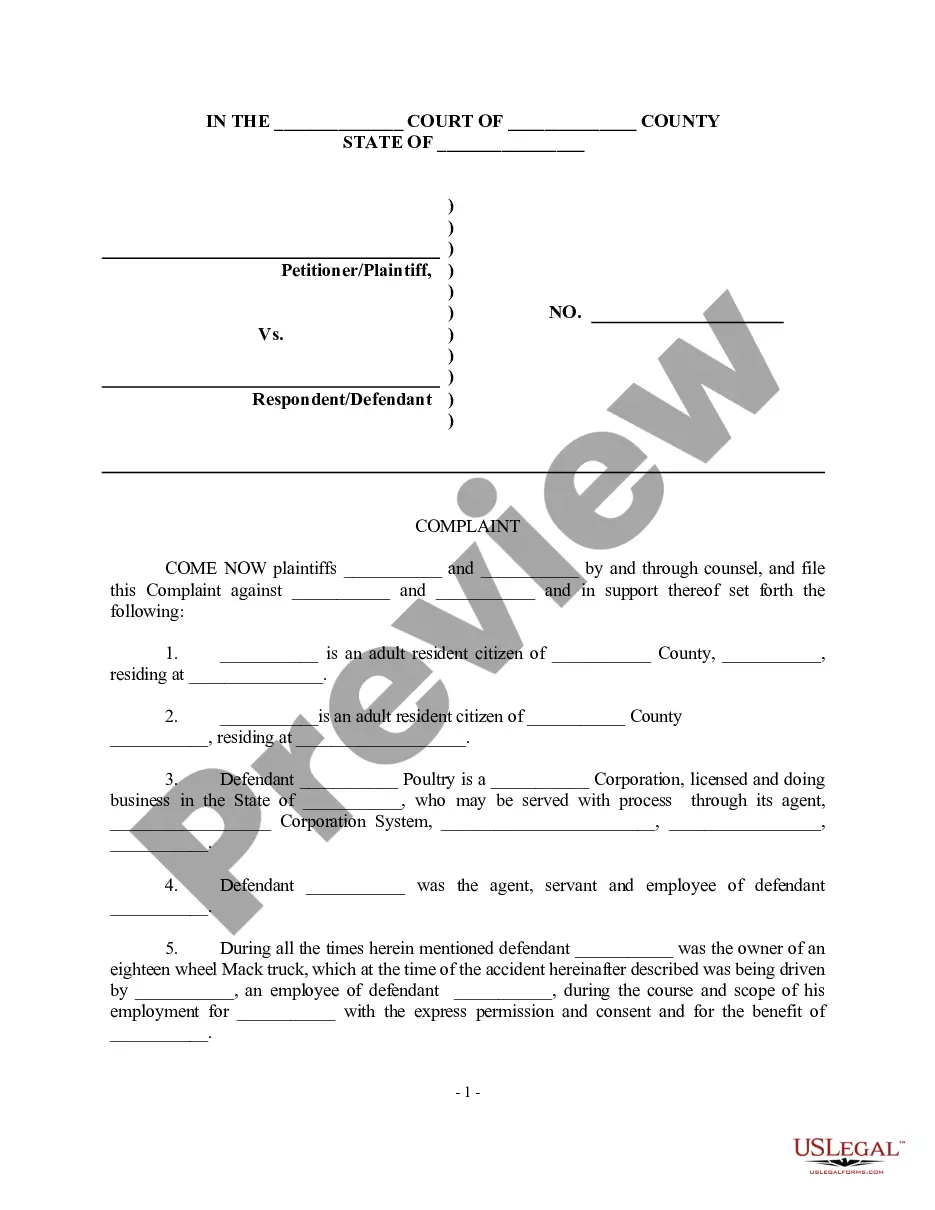
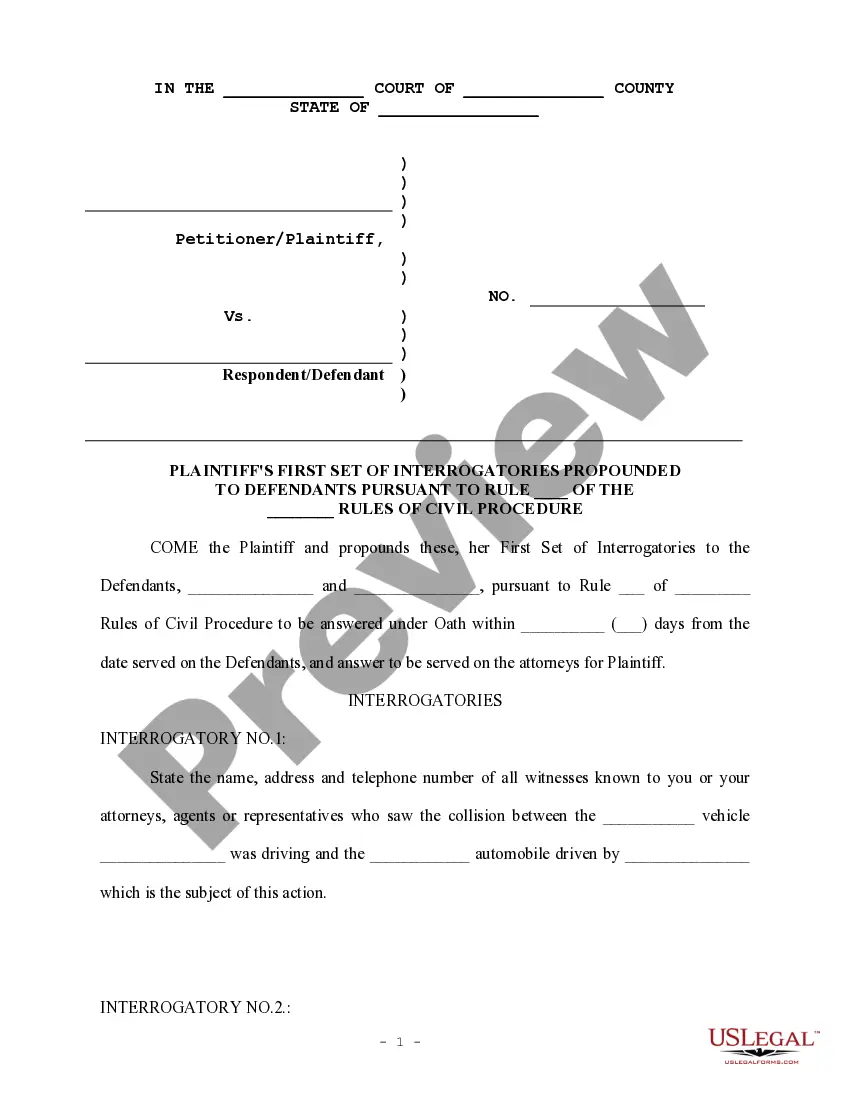
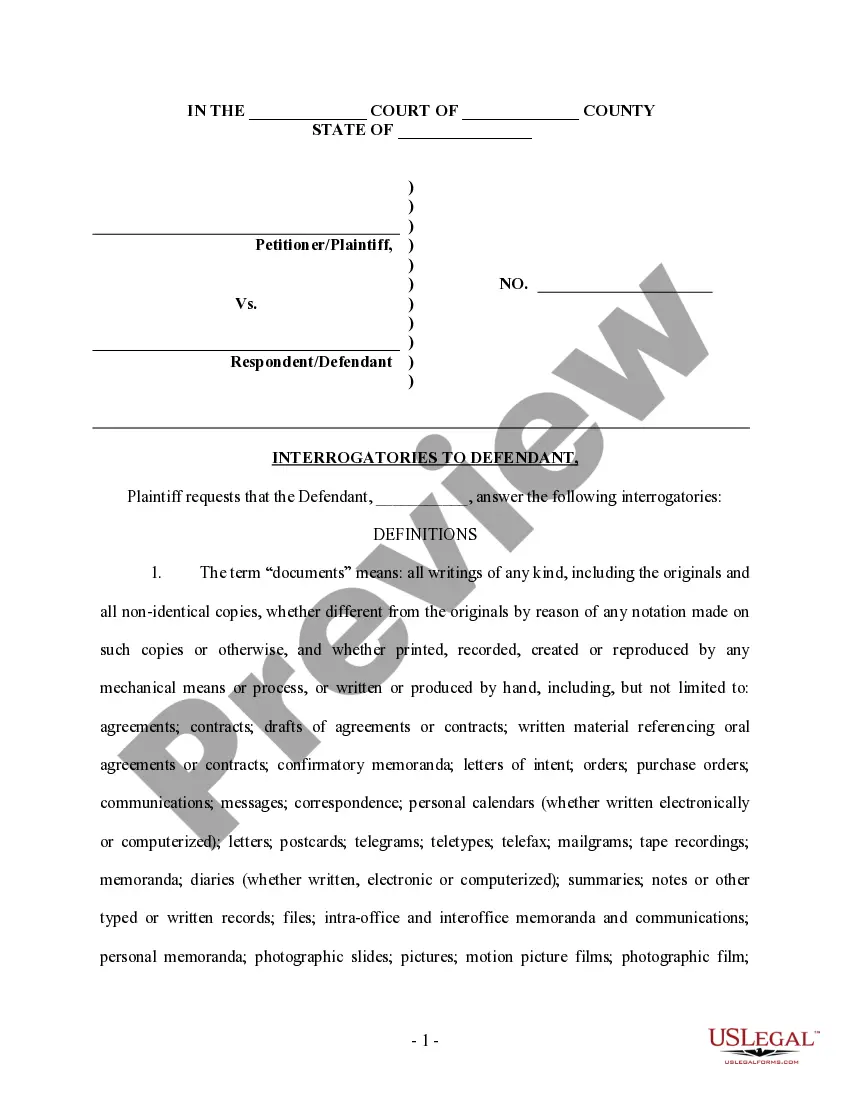
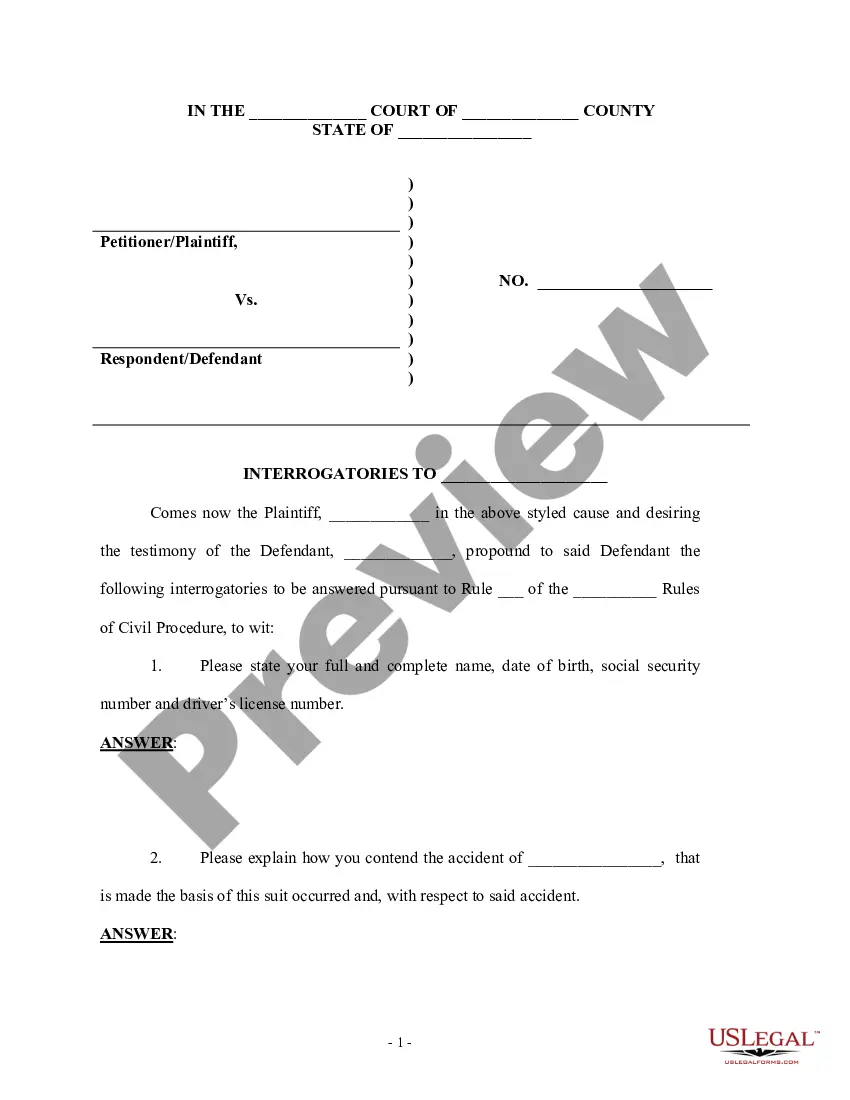
The Interrogatories to Plaintiff for Motor Vehicle Occurrence is a legal document that consists of a set of questions posed by the defendant to the plaintiff in a vehicle accident case. This form aims to gather essential information regarding the incident and the plaintiff's claims, aiding in the discovery process. Unlike similar forms, this set specifically targets aspects related to motor vehicle occurrences and is designed for use in jurisdictions like Connecticut.
What’s included in this form
- Personal information about the plaintiff, including their name and address.
- Details of witnesses to the motor vehicle incident.
- Information on any medical treatment received by the plaintiff due to injuries from the incident.
- Disclosure of any prior injuries or medical conditions relevant to the case.
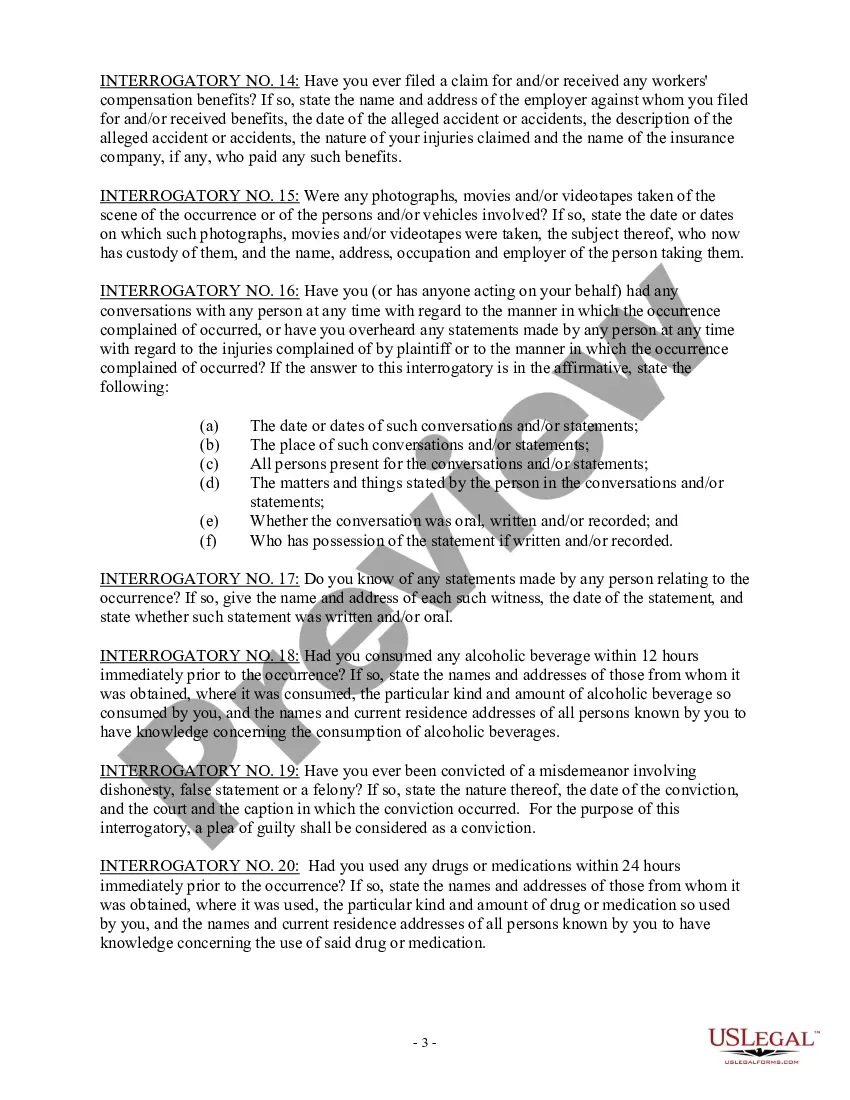
- Documentation of any conversations or statements related to the incident.
- Details concerning any alcohol or drug use prior to the occurrence.
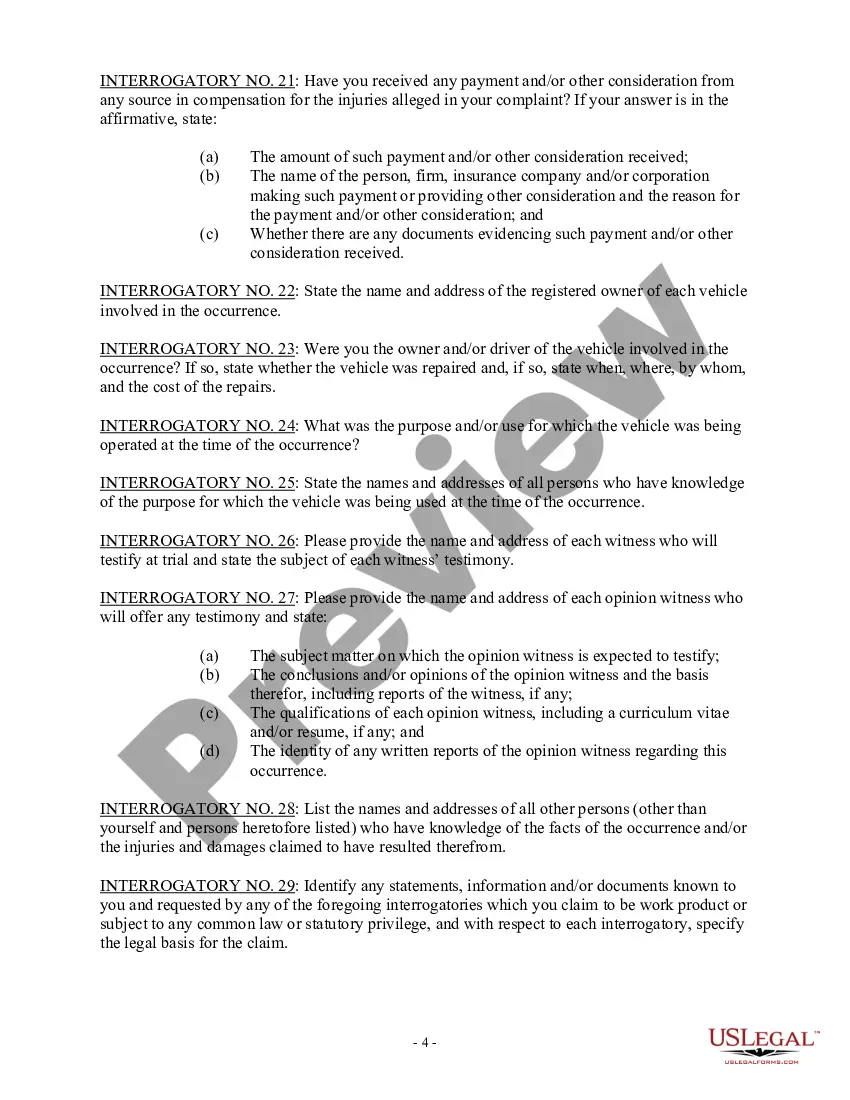
- List of all expenses claimed by the plaintiff due to the incident.

Situations where this form applies
This form should be used in the aftermath of a motor vehicle accident when the defendant needs to gather detailed information from the plaintiff. It is particularly useful during the discovery phase of litigation, where both parties exchange information to prepare for trial. Situations that may require this form include personal injury claims arising from car accidents, disputes over liability, and cases requiring evidence of damages or injuries incurred in a vehicle incident.
Who should use this form
- Defendants in vehicle accident lawsuits seeking to gather information from plaintiffs.
- Legal professionals representing defendants in motor vehicle cases.
- Insurance companies aiming to understand claims made by plaintiffs.
Steps to complete this form
- Fill in the names and addresses of the defendant and plaintiff at the top of the form.
- Answer each interrogatory clearly and completely, providing all requested information.
- Detail any witnesses and their contact information as required.
- List all medical providers and treatments received due to injuries from the incident.
- Provide accurate accounts of any prior injuries or claims, ensuring full disclosure.
- Sign and date the form at the end, certifying that the information provided is true to the best of your knowledge.
Notarization requirements for this form
This form does not typically require notarization to be legally valid. However, some jurisdictions or document types may still require it. US Legal Forms provides secure online notarization powered by Notarize, available 24/7 for added convenience.
Get your form ready online
Our built-in tools help you complete, sign, share, and store your documents in one place.
Make edits, fill in missing information, and update formatting in US Legal Forms—just like you would in MS Word.
Download a copy, print it, send it by email, or mail it via USPS—whatever works best for your next step.
Sign and collect signatures with our SignNow integration. Send to multiple recipients, set reminders, and more. Go Premium to unlock E-Sign.
If this form requires notarization, complete it online through a secure video call—no need to meet a notary in person or wait for an appointment.
We protect your documents and personal data by following strict security and privacy standards.

Make edits, fill in missing information, and update formatting in US Legal Forms—just like you would in MS Word.

Download a copy, print it, send it by email, or mail it via USPS—whatever works best for your next step.

Sign and collect signatures with our SignNow integration. Send to multiple recipients, set reminders, and more. Go Premium to unlock E-Sign.

If this form requires notarization, complete it online through a secure video call—no need to meet a notary in person or wait for an appointment.

We protect your documents and personal data by following strict security and privacy standards.
Typical mistakes to avoid
- Failing to provide complete and accurate contact information for witnesses.
- Not specifying all medical treatments and providers relevant to the case.
- Neglecting to answer all interrogatories, which can lead to delays or legal consequences.
- Using vague language instead of precise details in responses.
Advantages of online completion
- Convenience of completing the form at your own pace.
- Easy access to expert-drafted templates that ensure legal accuracy.
- Editable digital format allows for easy corrections and updates.
- Secure and organized storage of completed forms for later reference.
Legal use & context
- This form is legally binding and is used to collect necessary information in civil litigation.
- Responses to the interrogatories may be used as evidence in court.
- Failure to respond accurately or timely can result in legal penalties or adversely affect your case.
Main things to remember
- The Interrogatories to Plaintiff for Motor Vehicle Occurrence gathers critical information related to an accident.
- Completing the form accurately is vital for the discovery process in litigation.
- Adherence to state-specific legal requirements is crucial for validity.
Looking for another form?
Form popularity
FAQ
Filling out form interrogatories involves completing standardized questions designed for your legal situation. Begin by carefully following the instructions provided for the Connecticut Interrogatories to Plaintiff for Motor Vehicle Occurrence. Make sure to answer each question completely and accurately. If you need support, US Legal Forms offers resources that can guide you through the process, ensuring you submit well-prepared documents.
To answer a plaintiff's interrogatories effectively, start by reviewing the questions thoroughly. Ensure you understand what is being asked, and provide responses that are clear and factual. When dealing with Connecticut Interrogatories to Plaintiff for Motor Vehicle Occurrence, it's beneficial to have all relevant documentation at hand. This approach will help in formulating well-informed answers.
Answering interrogatories requires precision and honesty. You should read each question carefully and respond directly while providing comprehensive information. In the context of Connecticut Interrogatories to Plaintiff for Motor Vehicle Occurrence, it's crucial to maintain accuracy as these answers can impact the case's outcome. Consider seeking assistance from platforms like US Legal Forms for guidance on structuring your responses.
An interrogatory is a written question sent from one party to another during a legal case. For instance, in Connecticut Interrogatories to Plaintiff for Motor Vehicle Occurrence, you might ask the plaintiff to describe the details of the incident. This type of questioning helps gather relevant facts and establishes clarity. It's essential to provide clear examples to facilitate understanding.
The federal rule for interrogatories is outlined in Rule 33 of the Federal Rules of Civil Procedure. This rule details how parties can serve interrogatories and the required responses within a specific timeframe. While you're handling Connecticut Interrogatories to Plaintiff for Motor Vehicle Occurrence, keeping these federal guidelines in mind can help ensure compliance and improve the overall quality of your answers.
To properly respond to interrogatories, ensure that each answer is complete and supported by relevant facts. Try to be as precise as possible, avoiding vague statements while delivering clear information. When working with Connecticut Interrogatories to Plaintiff for Motor Vehicle Occurrence, it is essential to adhere to procedural timelines for submission, thus maintaining the integrity of your responses.
The format for answering interrogatories usually includes a clear and concise layout. Begin with your name and the case title, then respond to each interrogatory in order. Be sure to reference Connecticut Interrogatories to Plaintiff for Motor Vehicle Occurrence specifically so the court can see the relevance of your answers, and consider using standardized formats available from uslegalforms for consistency.
Dealing with interrogatories requires following state-specific guidelines. In Connecticut, you should respond to each interrogatory thoroughly and truthfully, ensuring that your answers align with the motion of the case. Utilizing templates or platforms like uslegalforms can help streamline your response process for Connecticut Interrogatories to Plaintiff for Motor Vehicle Occurrence, ensuring you do not miss any required information.
To properly object to interrogatories, review each question carefully for relevance and specificity. You should articulate your objections clearly, citing the basis such as confidentiality or excessive burden. Importantly, when dealing with Connecticut Interrogatories to Plaintiff for Motor Vehicle Occurrence, make sure to communicate your objections within the allowed time while providing the appropriate legal basis.
Yes, you typically must answer an interrogatory unless it is deemed objectionable. This requirement is crucial in maintaining the flow of information during litigation. By thoroughly addressing Connecticut Interrogatories to Plaintiff for Motor Vehicle Occurrence, you ensure your case has the best chance of success.