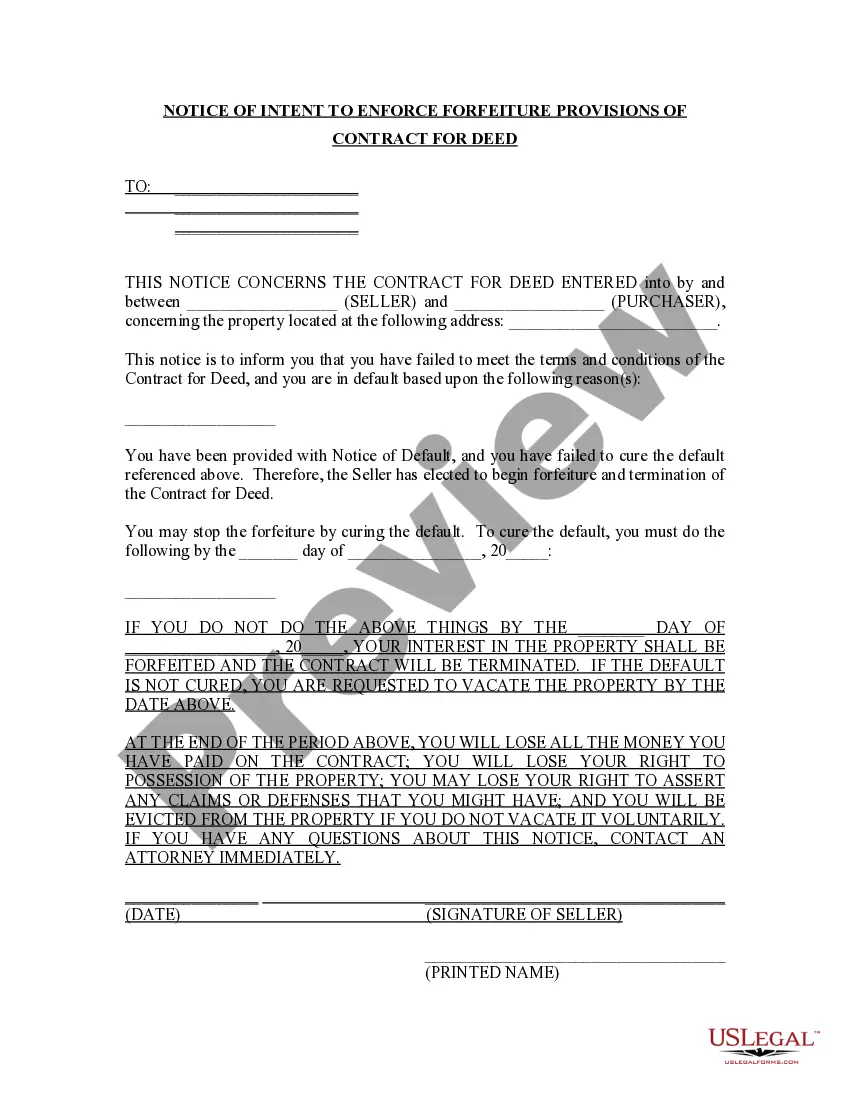
This Notice of Intent to Enforce Forfeiture Provisions of Contract for Deed is an initial notice of Seller's intent to enforce the forfeiture remedy of contract for deed if nonpayment or other breach is not cured. It is used specifically to inform the buyer that he/she has failed to meet the terms and conditions of the Contract for Deed and as a result, are in default based upon the reasons specified.
Connecticut Notice of Intent to Enforce Forfeiture Provisions of Contact for Deed
State:
Connecticut
Control #:
CT-00470-11
Format:
Word;
Rich Text
Instant download
Description
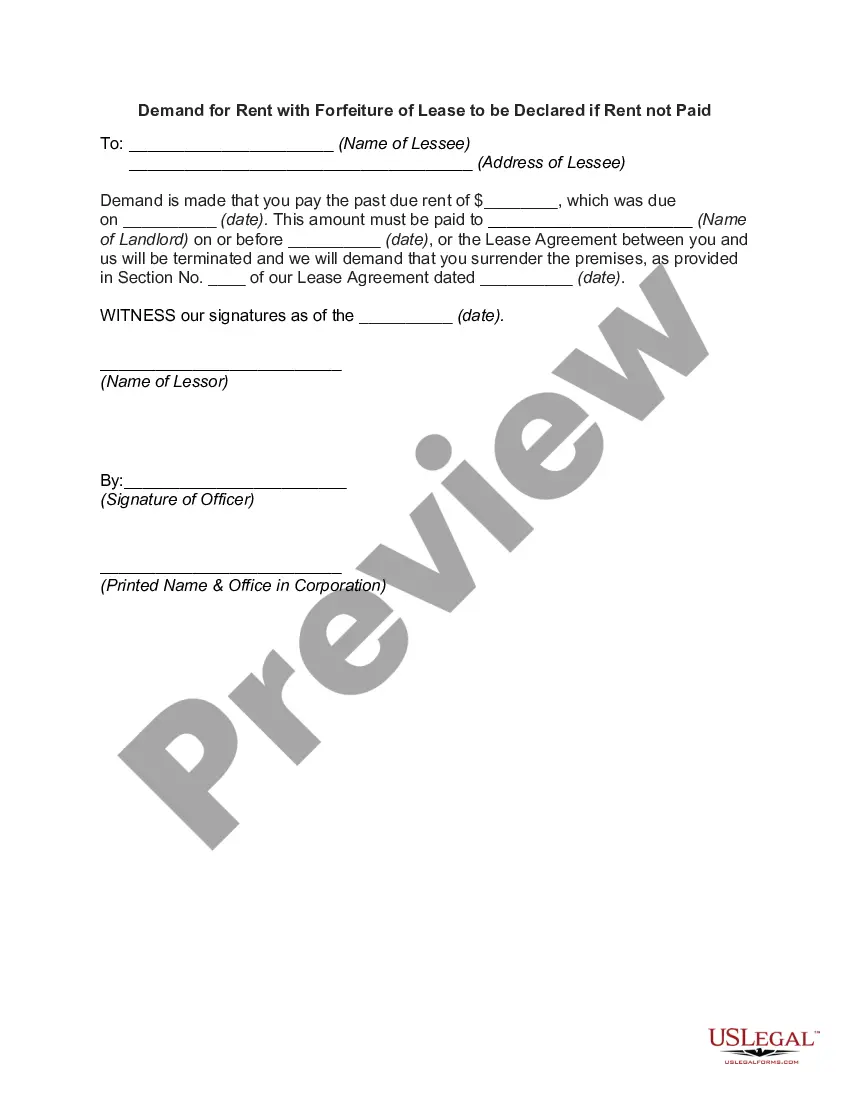
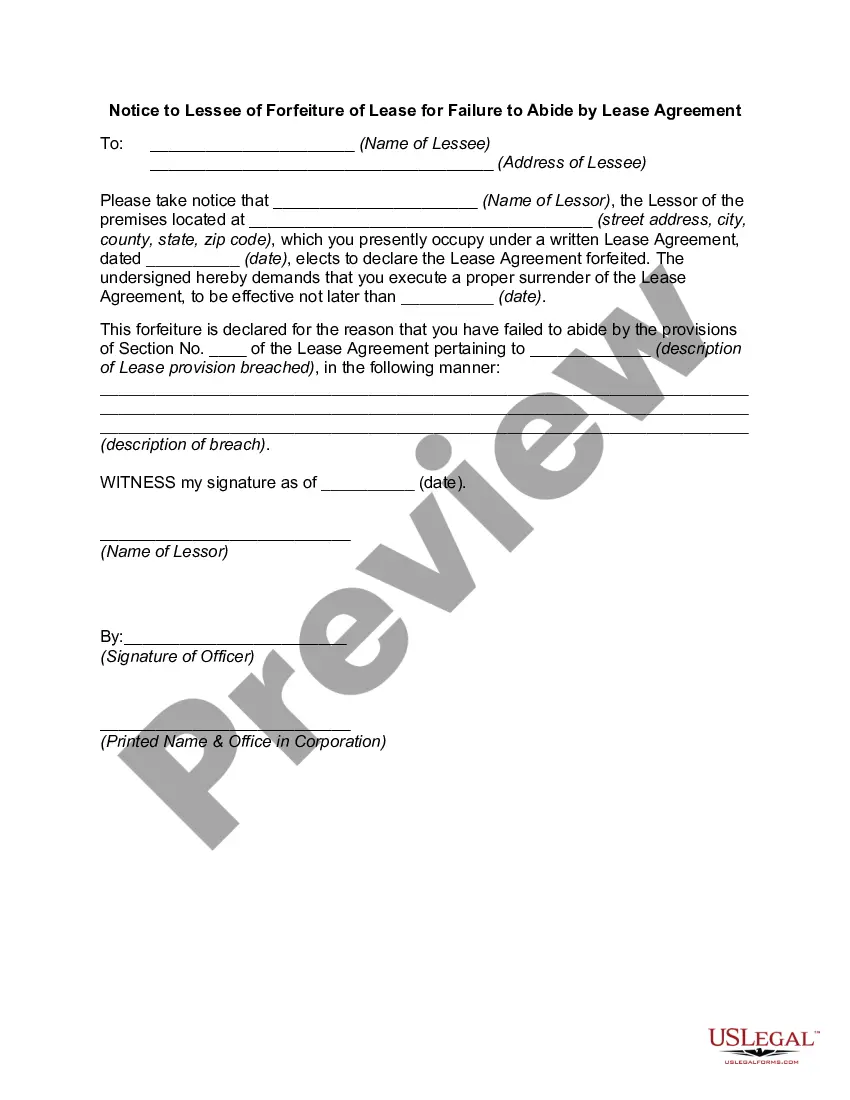
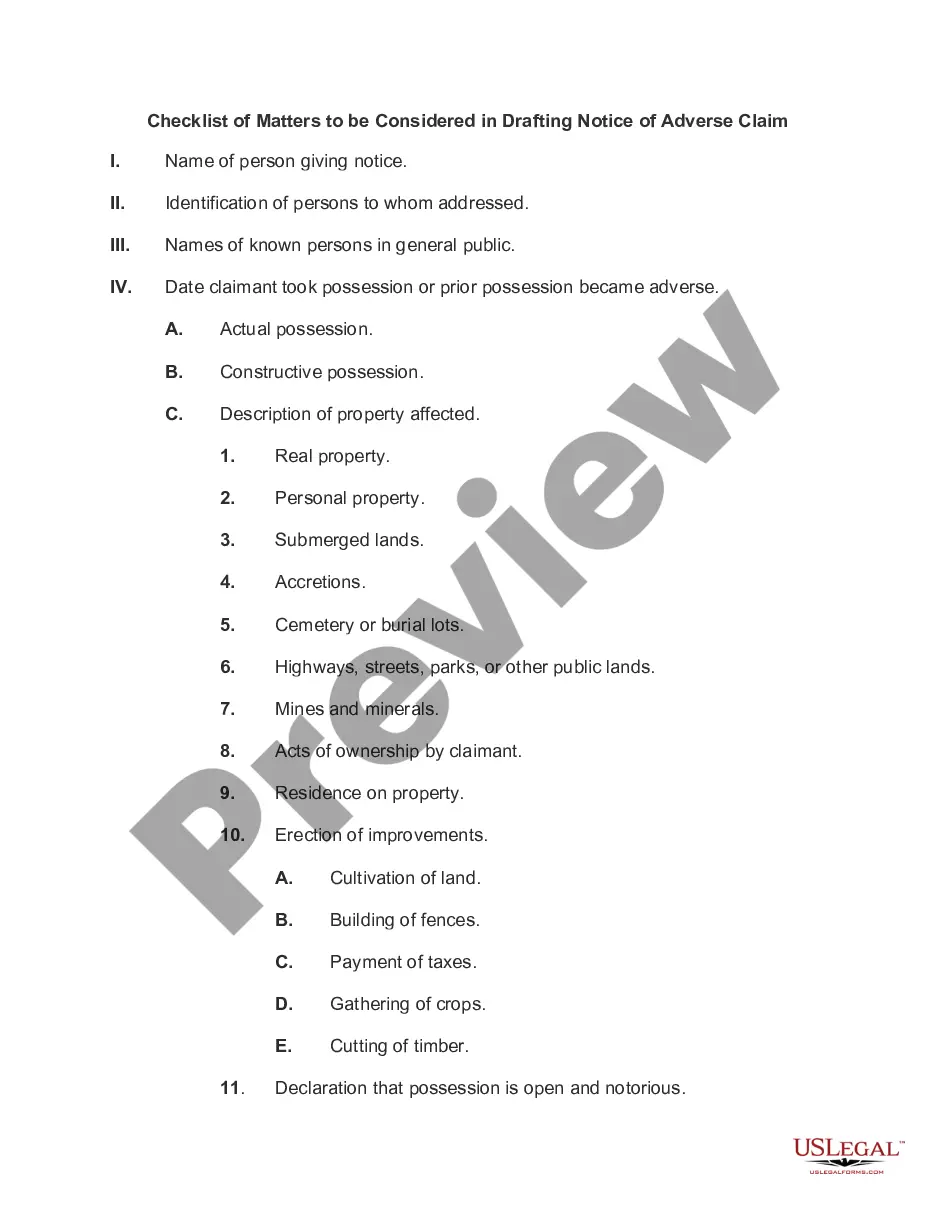




How to fill out Connecticut Notice Of Intent To Enforce Forfeiture Provisions Of Contact For Deed?
Utilize US Legal Forms to obtain a printable Connecticut Notice of Intent to Enforce Forfeiture Conditions of Contract for Deed.
Our court-acceptable forms are crafted and consistently updated by proficient attorneys.
Ours is the most comprehensive Forms collection available online, offering economical and precise templates for individuals, lawyers, and small to medium-sized businesses.
Review the document by examining the description and utilizing the Preview option. Click Buy Now if it’s the form you require. Create your account and complete your payment via PayPal or credit card. Download the form to your device and feel free to use it multiple times. Utilize the search function if you wish to find another document template. US Legal Forms provides an extensive array of legal and tax documents and packages for both business and personal needs, including the Connecticut Notice of Intent to Enforce Forfeiture Conditions of Contract for Deed. Over three million users have successfully employed our service. Choose your subscription plan and acquire high-quality forms with just a few clicks.
- The documents are categorized based on state requirements.
- Certain documents can be previewed prior to downloading.
- To access sample documents, users must have a subscription and Log In to their account.
- Click Download next to any desired template and locate it in My documents.
- For those without a subscription, follow the steps below to efficiently find and download the Connecticut Notice of Intent to Enforce Forfeiture Conditions of Contract for Deed.
- Ensure you select the correct form based on the state it is required for.
Form popularity
FAQ
All deeds must be in writing to be enforceable due to the Statute of Frauds, which exists in every state, including Connecticut. This requirement particularly impacts transactions involving the Connecticut Notice of Intent to Enforce Forfeiture Provisions of Contact for Deed. Utilizing platforms like USLegalForms can provide you with ready-made templates that comply with this requirement, simplifying the process.
A deed must consist of four essential elements: the grantor's name, a clear description of the property, the grantee's name, and the grantor's signature. Each of these elements contributes to the validity and enforceability of the deed, especially under the Connecticut Notice of Intent to Enforce Forfeiture Provisions of Contact for Deed. Keeping these elements in mind will help you avoid potential disputes.
For a deed to be enforceable, it must be in writing, executed by the grantor, and delivered to the grantee. Additionally, it must meet state-specific statutory requirements, particularly those relevant to the Connecticut Notice of Intent to Enforce Forfeiture Provisions of Contact for Deed. Ensuring these requirements are met is crucial in protecting your rights.
Connecticut recognizes several types of deeds, including warranty deeds, quitclaim deeds, and special warranty deeds. Each type serves different purposes and offers varying levels of protection to the buyer, especially in relation to the Connecticut Notice of Intent to Enforce Forfeiture Provisions of Contact for Deed. Familiarizing yourself with these options can aid in selecting the right deed for your transaction.
In the United States, a valid deed requires a clear intent to convey property, a competent grantor, a legal description of the property, and proper execution. Each state may have specific variations, but these basics hold true, particularly when considering the Connecticut Notice of Intent to Enforce Forfeiture Provisions of Contact for Deed. Understanding these requirements helps prevent legal issues down the line.
To make a deed valid, it must identify the parties involved, describe the property accurately, and be signed by the grantor. In Connecticut, compliance with these requirements is essential, especially when relating to the Connecticut Notice of Intent to Enforce Forfeiture Provisions of Contact for Deed. Any errors or omissions can lead to complications during enforcement.