Colorado Last Will and Testament for Domestic Partner with Adult Children
Overview of this form
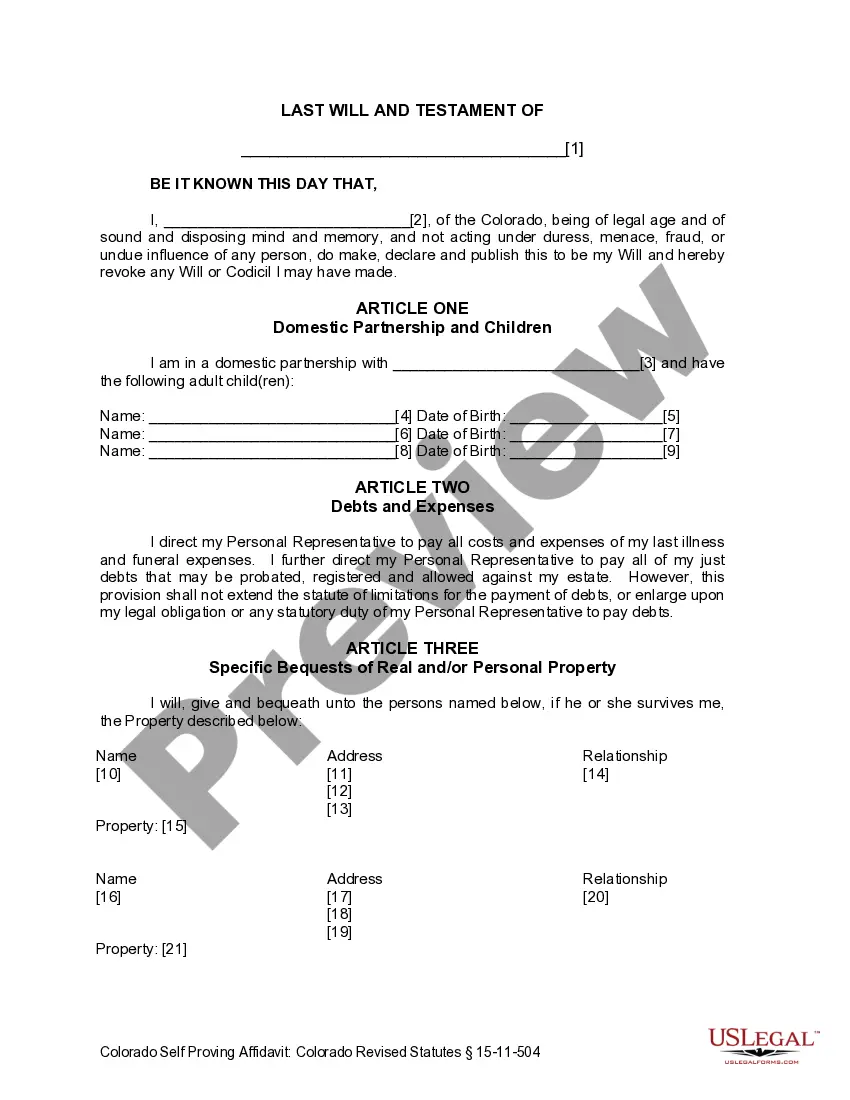
The Last Will and Testament for Domestic Partner with Adult Children is a legal document that outlines how a person wishes to distribute their assets upon death, specifically tailored for individuals in a domestic partnership with adult children. This form includes provisions for appointing a personal representative, specifying the distribution of property, and addressing the needs of adult children. Unlike standard wills, it acknowledges the specifics of domestic partnerships, ensuring that both partnersâ desires are respected and legally enforceable.
Form components explained
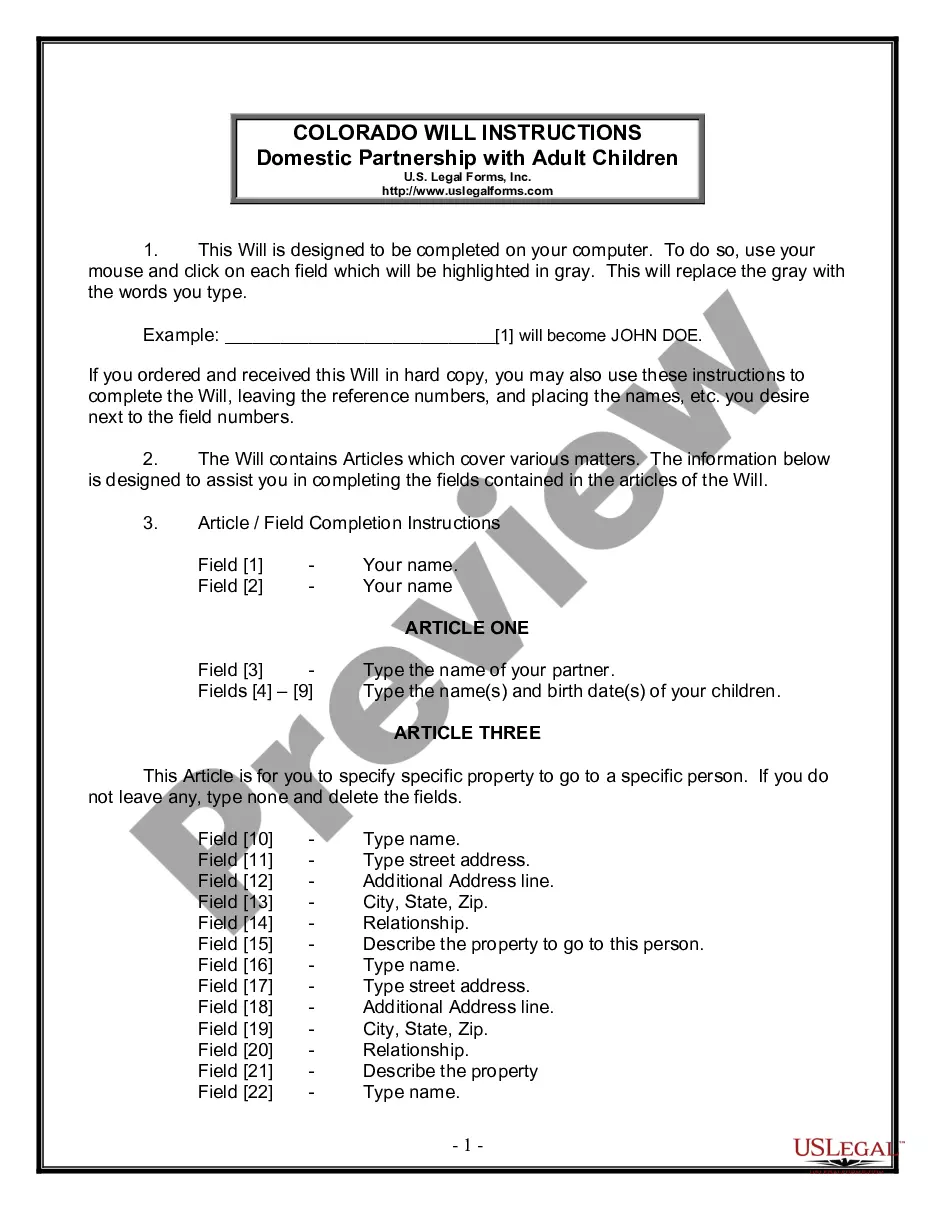
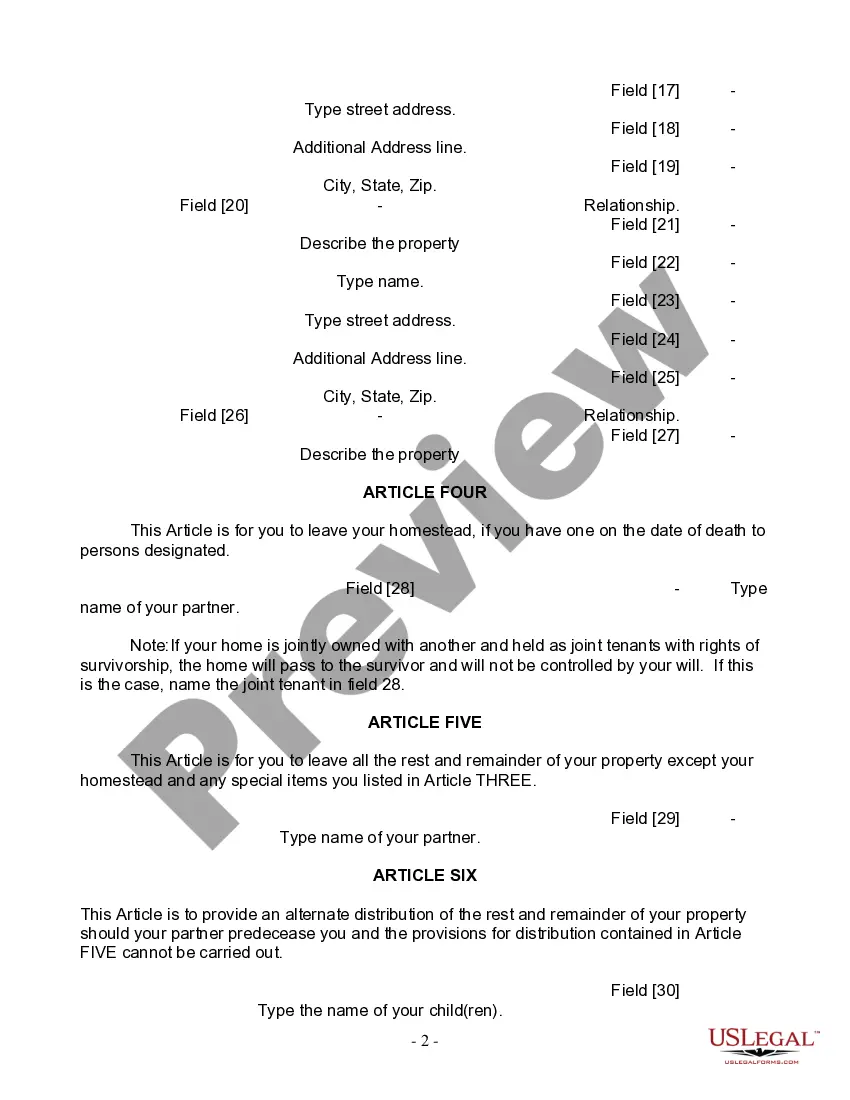
- Article One: Identification of the testator, domestic partner, and adult children.
- Article Three: Provisions for specific bequests of property to designated individuals.
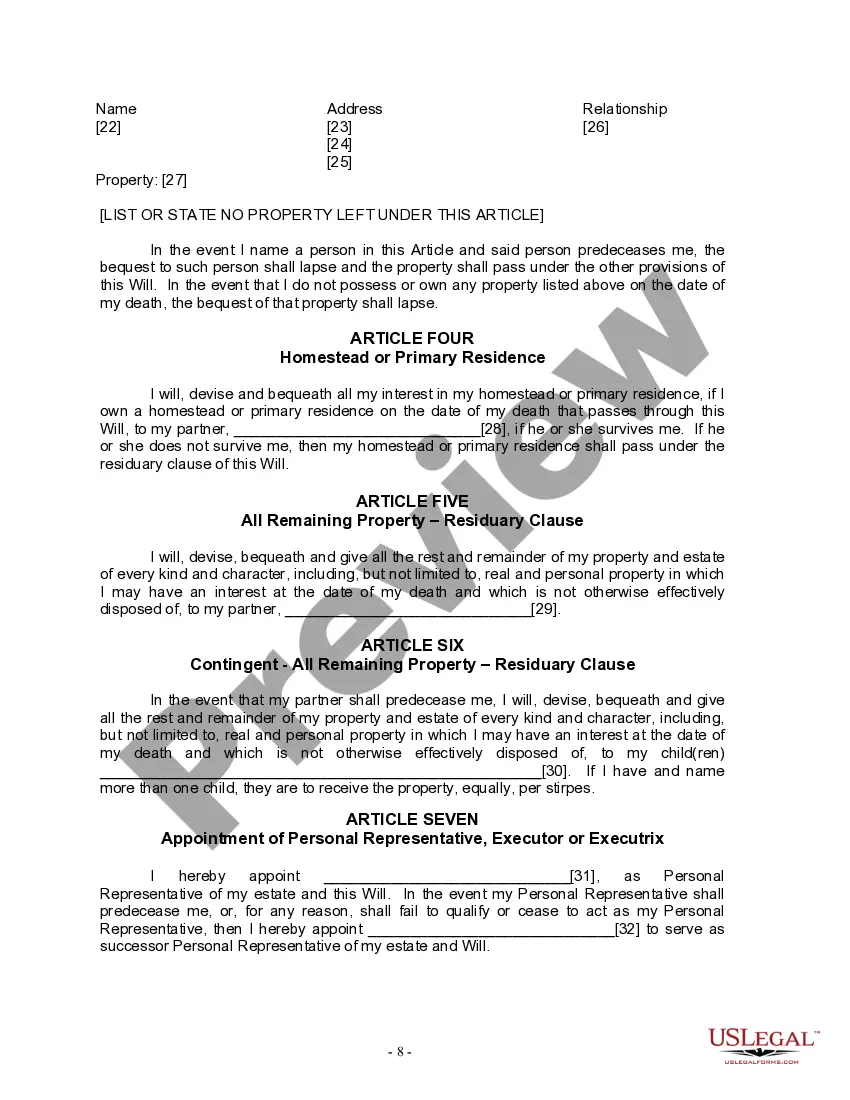
- Article Four: Allocation of the homestead or primary residence.
- Article Five: Distribution of the remaining property.
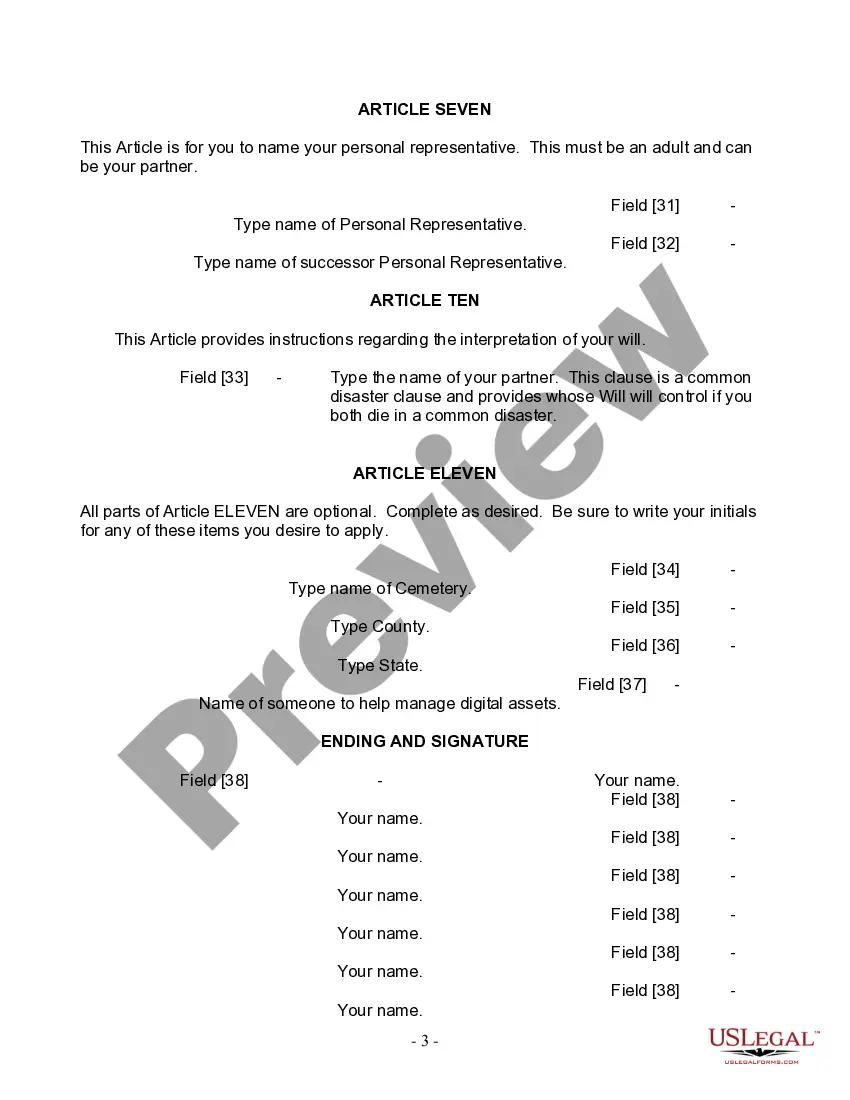
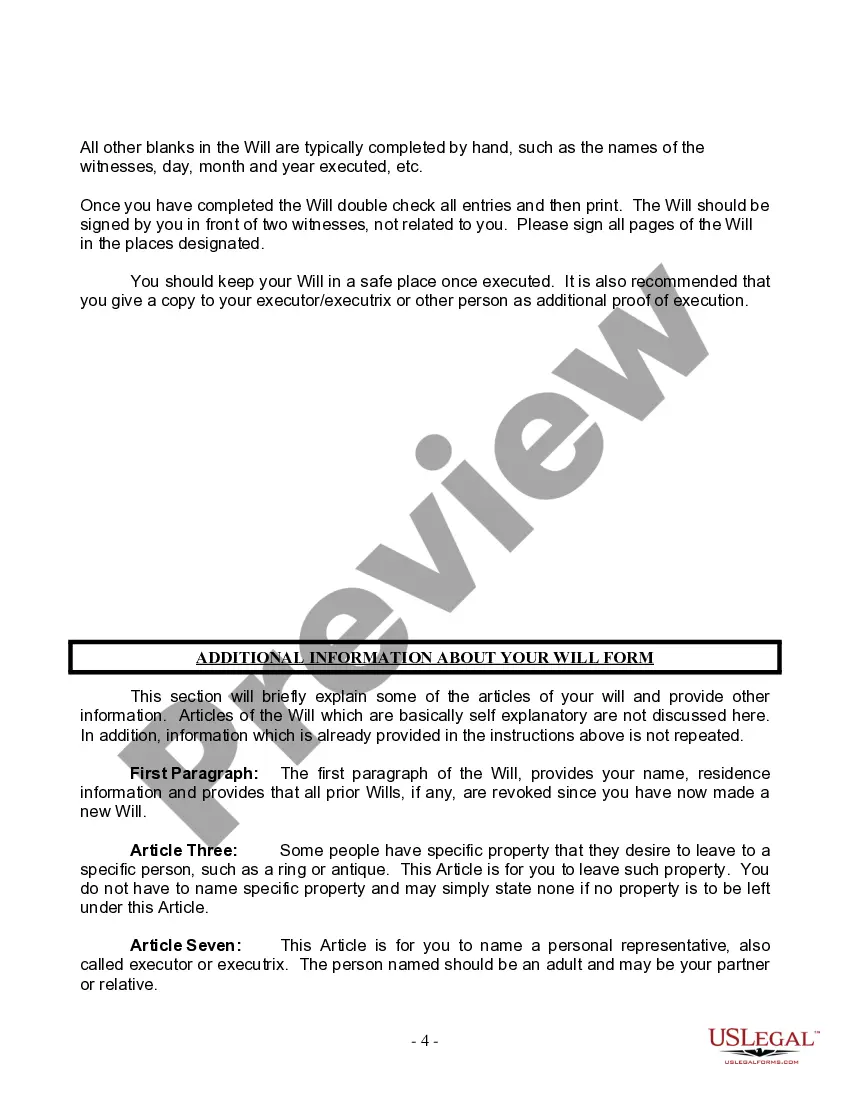
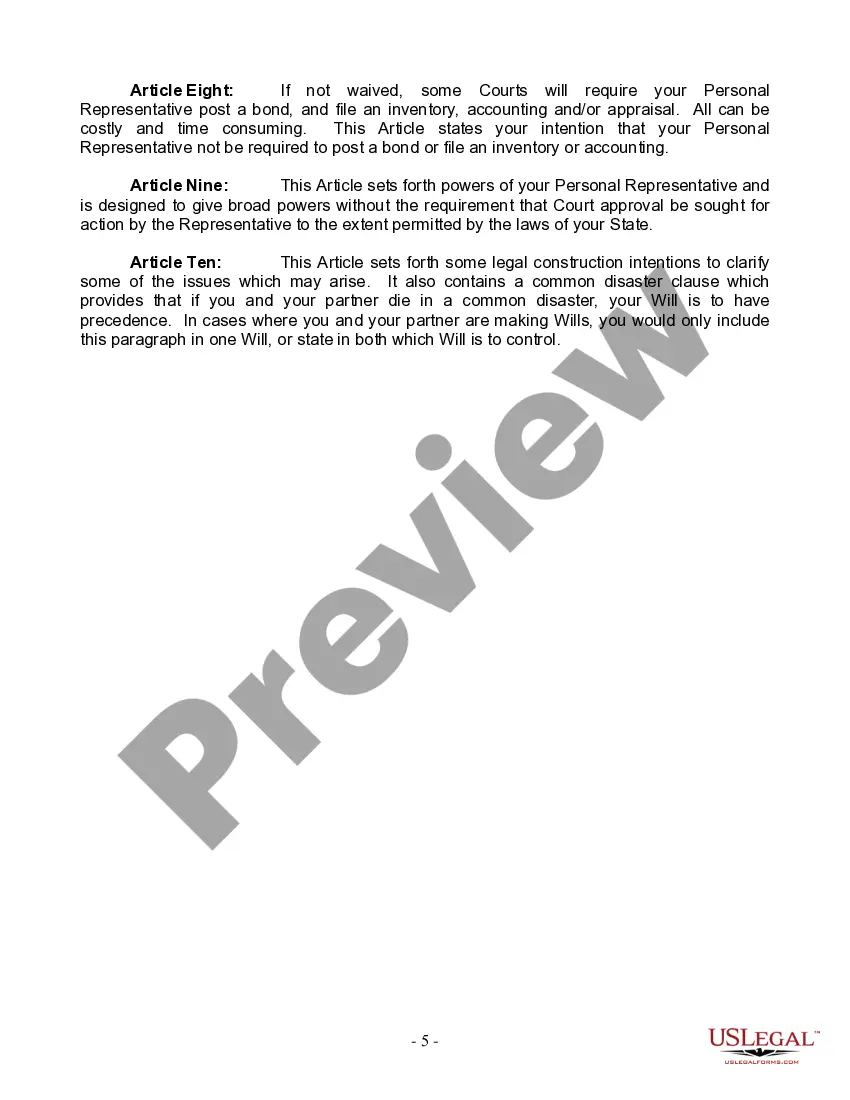
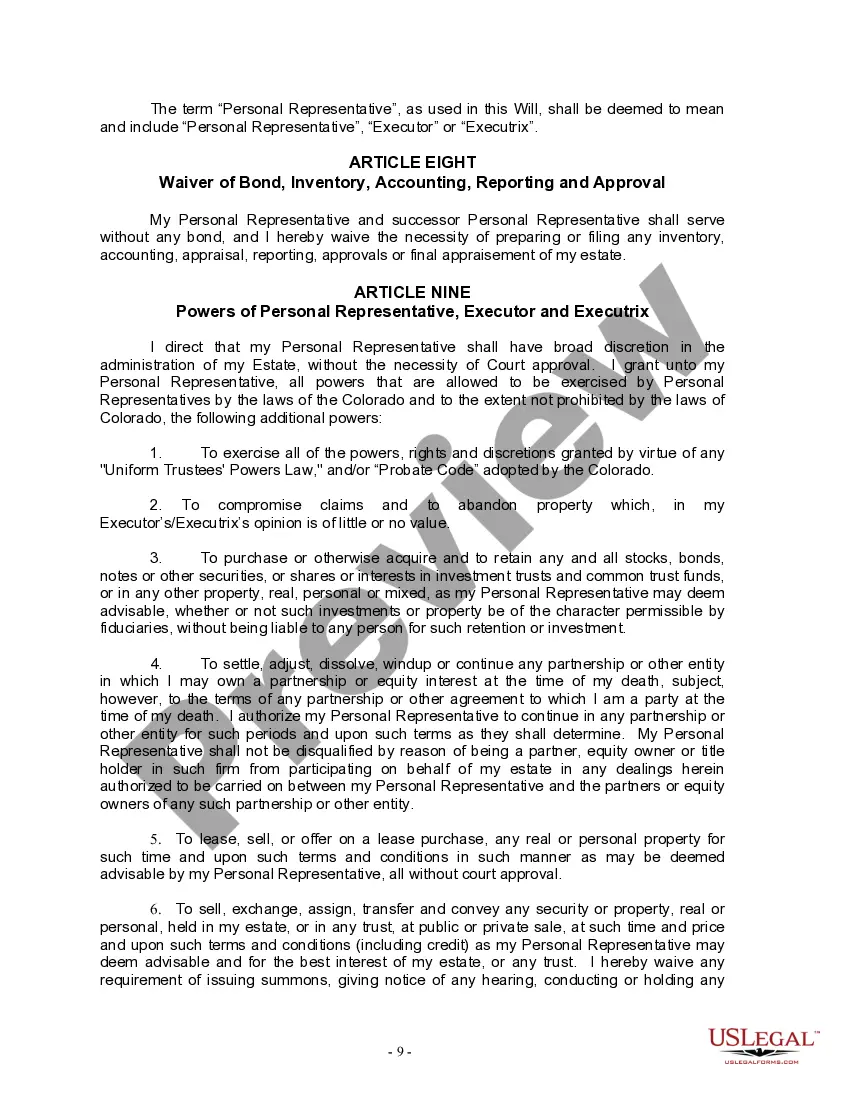
- Article Seven: Appointment of a personal representative to manage the estate.
- Self-proving affidavit: Verification of signatures to simplify the probate process.




When to use this document
This form is needed when creating a legally binding will specifically for individuals in a domestic partnership who have adult children. It is relevant in situations such as ensuring that assets are distributed according to oneâs wishes after death, appointing a trusted personal representative, or clarifying inheritance matters for adult children. It may also be beneficial after significant life changes, such as marriage, divorce, or the expansion of family.
Intended users of this form
- Individuals in a domestic partnership with adult children.
- Partners who want to ensure their assets are distributed as they wish after their death.
- Those seeking to appoint a personal representative or executor.
- Anyone concerned about providing for their adult children in their will.
How to complete this form
- Identify yourself and your domestic partner by entering names and relevant details in the appropriate sections.
- List your adult children along with their birth dates to ensure clear identification.
- Specify any specific property bequests in the designated fields, or denote "none" if applicable.
- Designate the personal representative who will handle your estate after your passing.
- Ensure the document is signed in front of two witnesses who are not related to you or named in the will.
Does this document require notarization?
Yes, this form must be notarized to be legally valid if it includes a self-proving affidavit. This affidavit simplifies the probate process and avoids the need for witnesses to testify about the execution of the will.
Get your form ready online
Our built-in tools help you complete, sign, share, and store your documents in one place.
Make edits, fill in missing information, and update formatting in US Legal Forms—just like you would in MS Word.
Download a copy, print it, send it by email, or mail it via USPS—whatever works best for your next step.
Sign and collect signatures with our SignNow integration. Send to multiple recipients, set reminders, and more. Go Premium to unlock E-Sign.
If this form requires notarization, complete it online through a secure video call—no need to meet a notary in person or wait for an appointment.
We protect your documents and personal data by following strict security and privacy standards.

Make edits, fill in missing information, and update formatting in US Legal Forms—just like you would in MS Word.

Download a copy, print it, send it by email, or mail it via USPS—whatever works best for your next step.

Sign and collect signatures with our SignNow integration. Send to multiple recipients, set reminders, and more. Go Premium to unlock E-Sign.

If this form requires notarization, complete it online through a secure video call—no need to meet a notary in person or wait for an appointment.

We protect your documents and personal data by following strict security and privacy standards.
Mistakes to watch out for
- Failing to have the will signed by two witnesses.
- Not including a personal representative or failing to name a successor.
- Omitting to specify property that needs to be bequeathed.
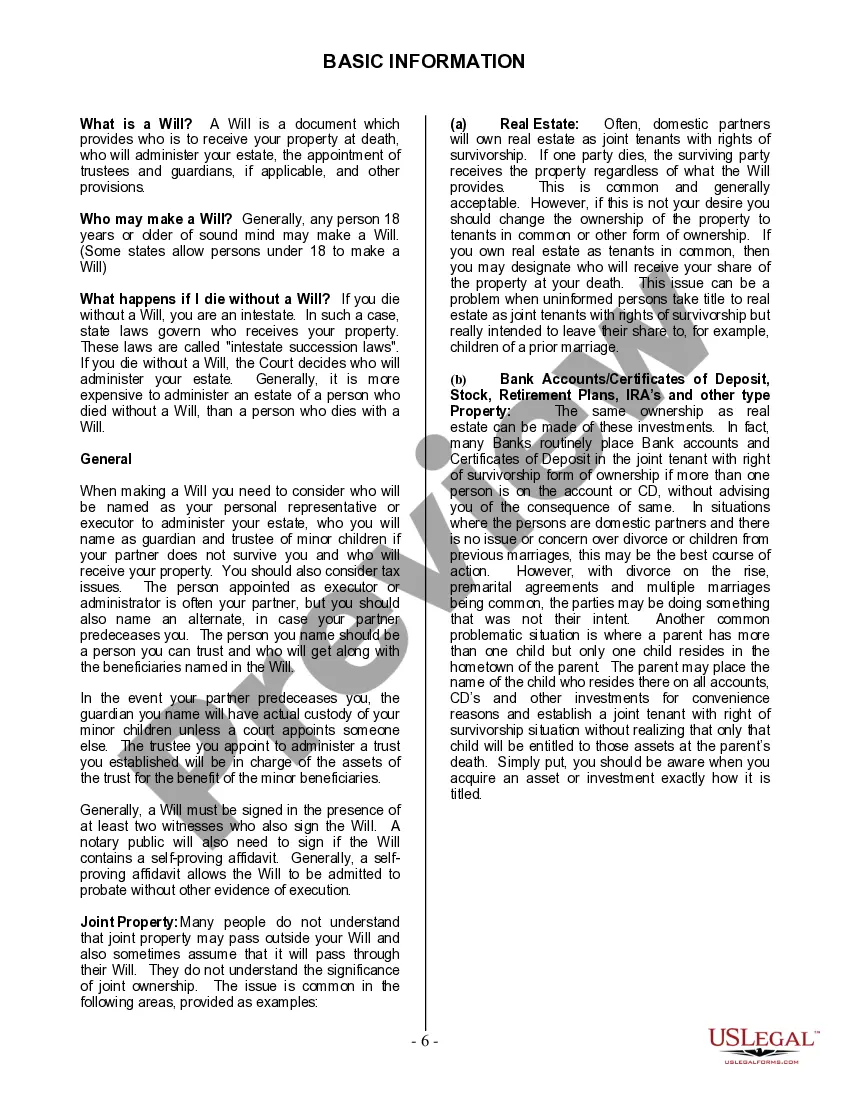
- Assuming joint property will be included in the will.
Benefits of completing this form online
- Convenience of completing the form from any location at your own pace.
- Editability allows for easy updates to your will as your situation changes.
- Reliability, as the forms are drafted by licensed attorneys to meet legal standards.
Quick recap
- Use this form to create a legally binding Last Will and Testament tailored for domestic partners.
- Be mindful of specific signing and witnessing requirements to ensure validity.
- Clearly convey your wishes regarding property distribution, especially concerning adult children.
Looking for another form?
Form popularity
FAQ
Creating a will in Colorado online is straightforward and convenient. Begin by using a reputable online service that specializes in wills, such as uslegalforms. They offer templates tailored for a Colorado Last Will and Testament for Domestic Partner with Adult Children, guiding you through each step. This ensures that your will reflects your wishes accurately while complying with state laws.
In Colorado, you do not need to register your will. However, it is important to keep it in a safe place and inform your loved ones about its location. Having a Colorado Last Will and Testament for Domestic Partner with Adult Children is sufficient, as it becomes effective upon your passing. When the time comes, your executor will present the will to the probate court to initiate the process.
Yes, online wills are legal in Colorado, including a Colorado Last Will and Testament for Domestic Partner with Adult Children. Many residents find it convenient to create their wills using trusted online platforms. These platforms provide user-friendly templates that comply with Colorado laws, ensuring your will is valid. This method allows you to customize your will to your specific needs while ensuring it meets all legal requirements.
Yes, you can write a will without a lawyer in Colorado. Many individuals find great success using tools like USLegalForms to create their Colorado Last Will and Testament for Domestic Partner with Adult Children without legal assistance. These resources provide legally sound templates and guidance, ensuring you accurately express your wishes while saving on legal fees.
In Colorado, a conventional will does not need to be notarized to be valid. However, if you choose to create a self-proving will, which can simplify the probate process, you will need to sign it in front of a notary public. By including a self-proving clause with your Colorado Last Will and Testament for Domestic Partner with Adult Children, you enhance its legitimacy and ease any potential legal challenges.
To make a will legal in Colorado, it must be in writing and signed by you, the testator. You should also have at least two witnesses present when you sign, as their presence helps validate the document. Additionally, ensure that the will clearly states your intentions regarding your assets and beneficiaries, such as including provisions for a Colorado Last Will and Testament for Domestic Partner with Adult Children. This clarity helps prevent disputes among survivors.
In Washington, a will does not need to be notarized to be valid, but it is advisable, as this can help prevent challenges later. It should be signed by the testator and witnessed by at least two individuals. When creating a Colorado Last Will and Testament for a Domestic Partner with Adult Children, it’s wise to understand the specific requirements of your state, and platforms like USLegalForms can guide you effectively.
One of the biggest mistakes people make with wills is failing to update them as circumstances change. This is particularly important for a Colorado Last Will and Testament for a Domestic Partner with Adult Children, where life events like marriage or the birth of additional children can impact your wishes. Keeping your will current ensures your intentions are clear and enforceable.
The best person to draft a will typically includes a licensed attorney who specializes in estate planning. This ensures that your Colorado Last Will and Testament for a Domestic Partner with Adult Children meets legal standards and effectively carries out your intentions. For those seeking a more accessible option, platforms like USLegalForms offer reliable templates that simplify the process.
In Minnesota, a will does not necessarily have to be notarized to be valid. It must, however, be signed by the testator and witnessed according to Minnesota laws. For individuals considering a Colorado Last Will and Testament for a Domestic Partner with Adult Children, understanding the legal requirements in different states is crucial; thus, consulting legal resources is beneficial.