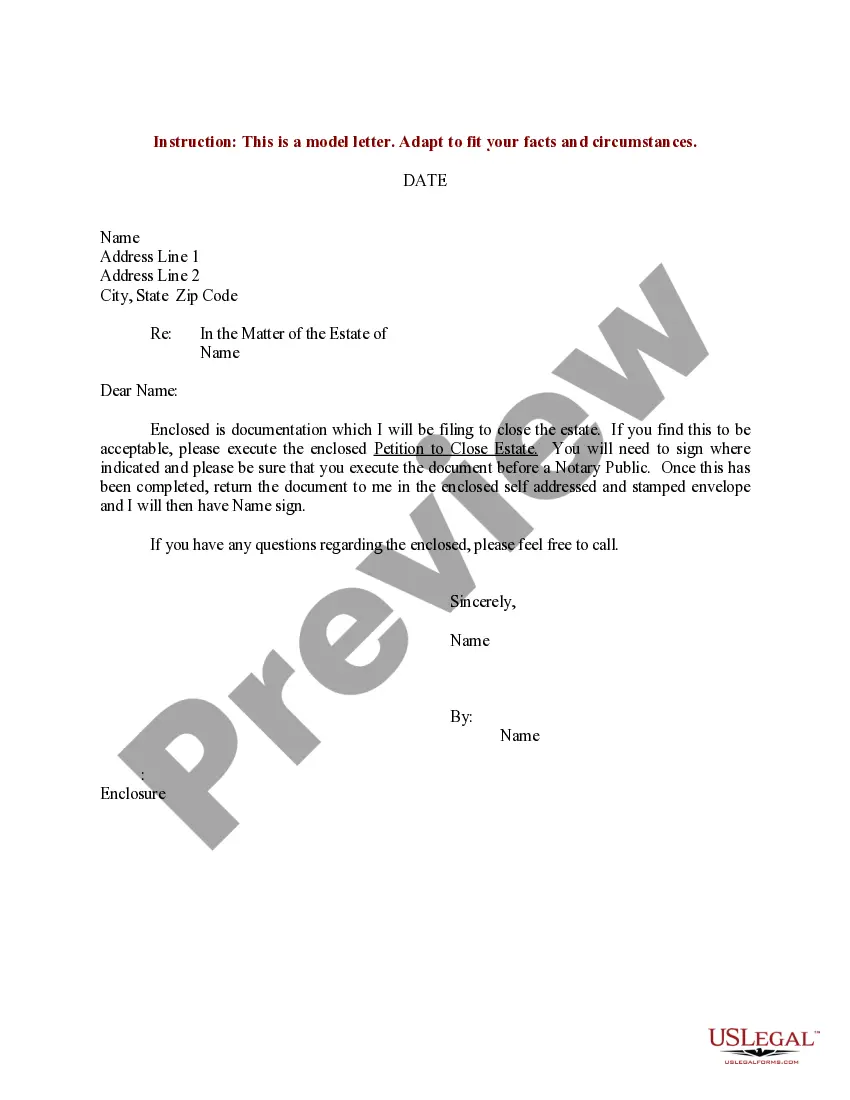
Colorado Salaried Employee Appraisal Guidelines - Employee Specific
Description
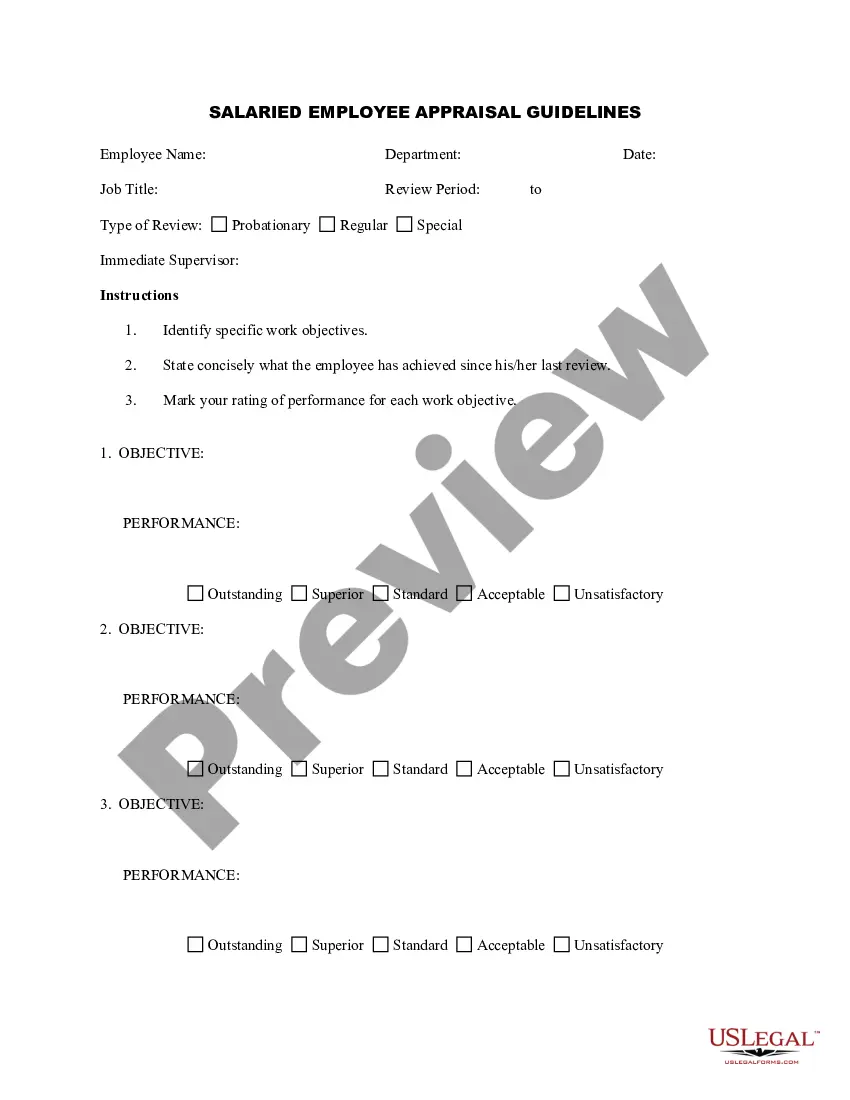
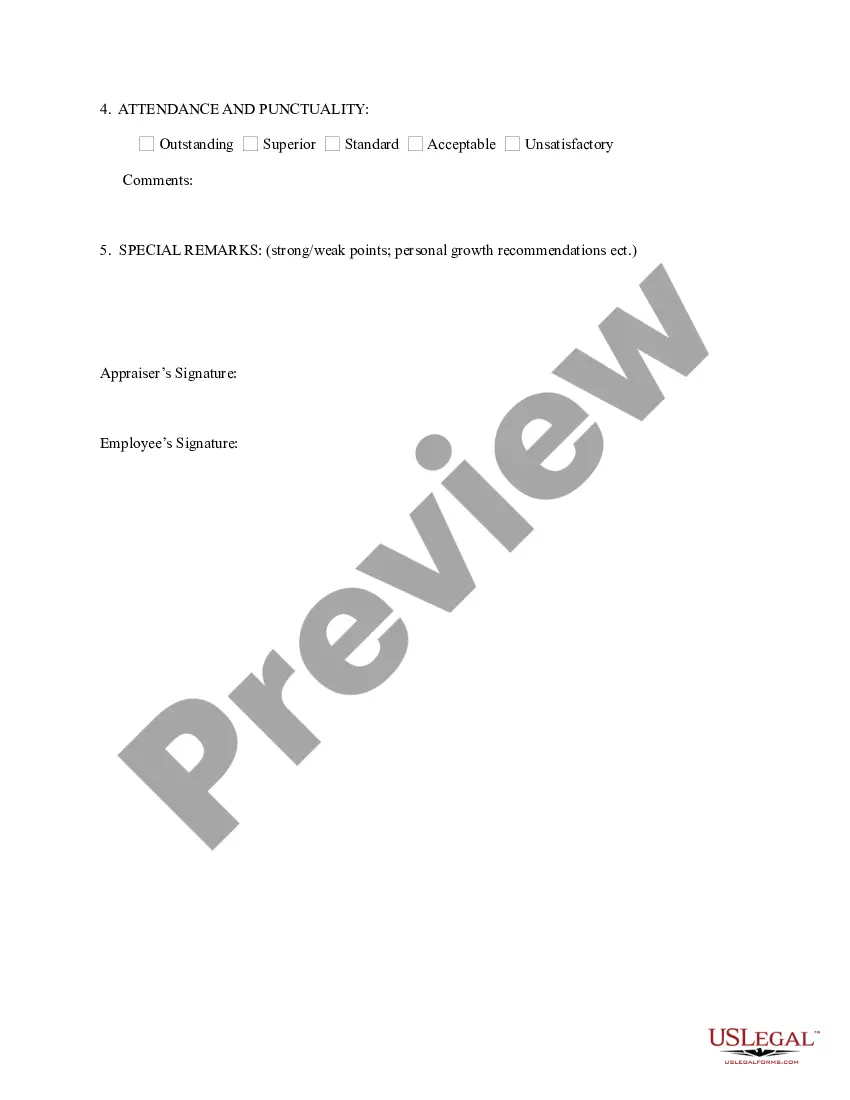
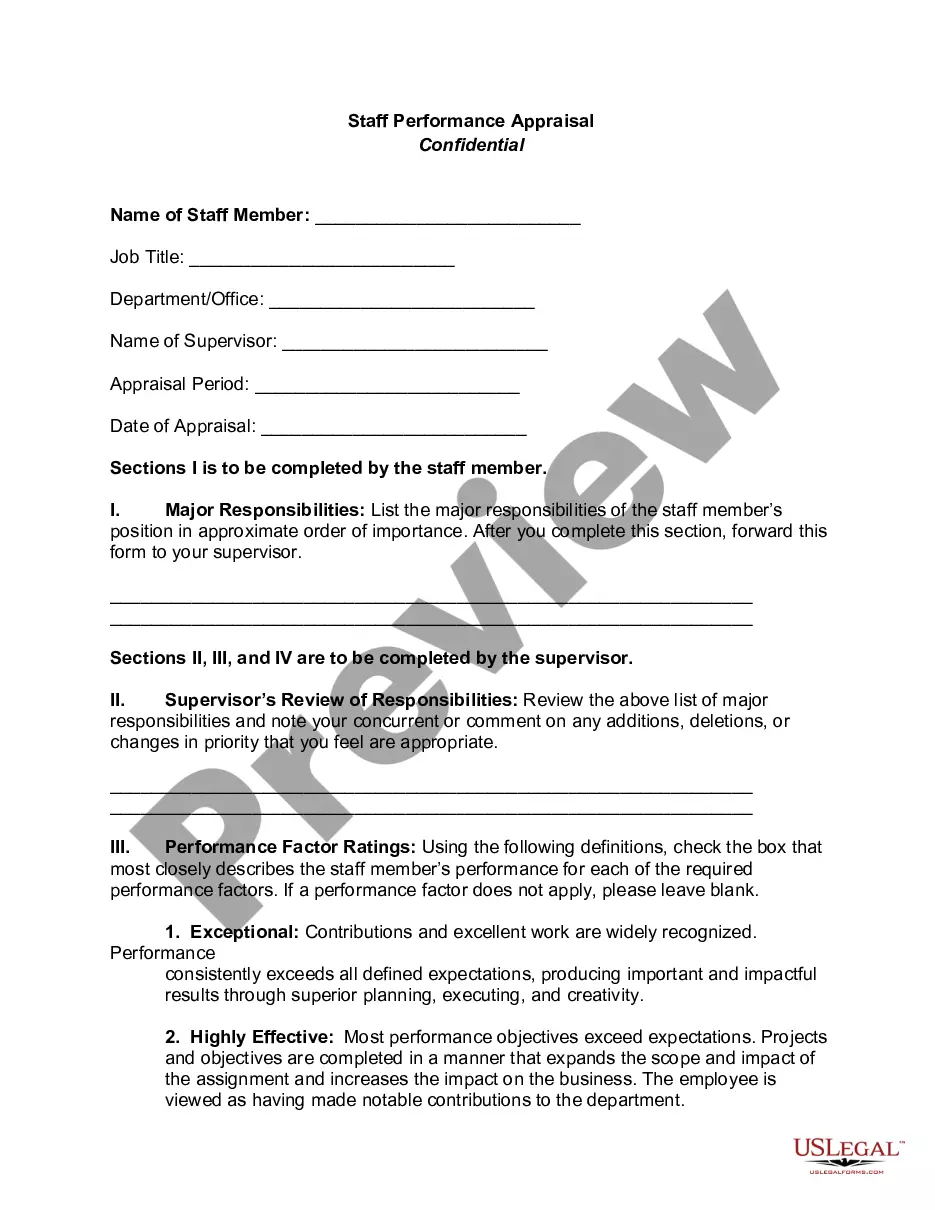
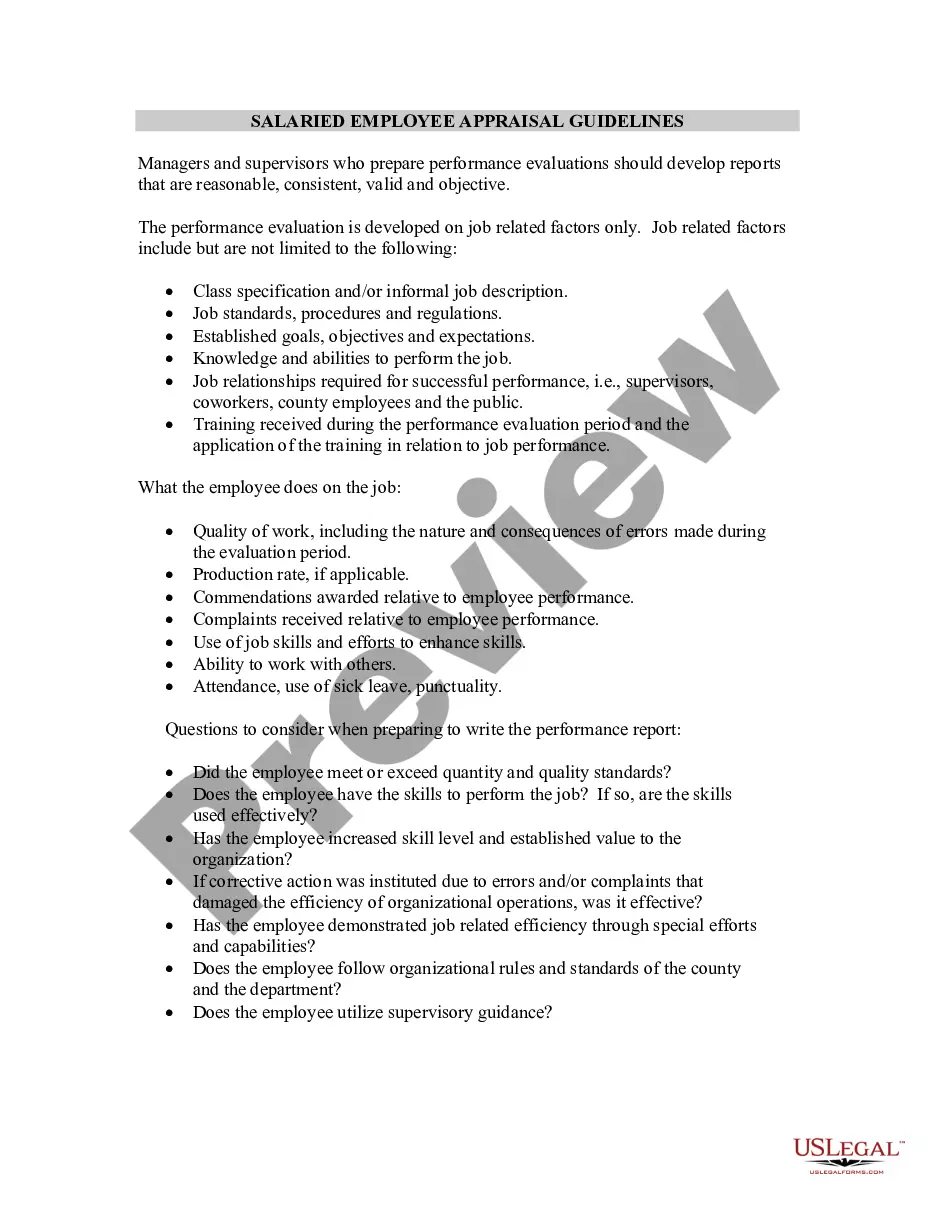
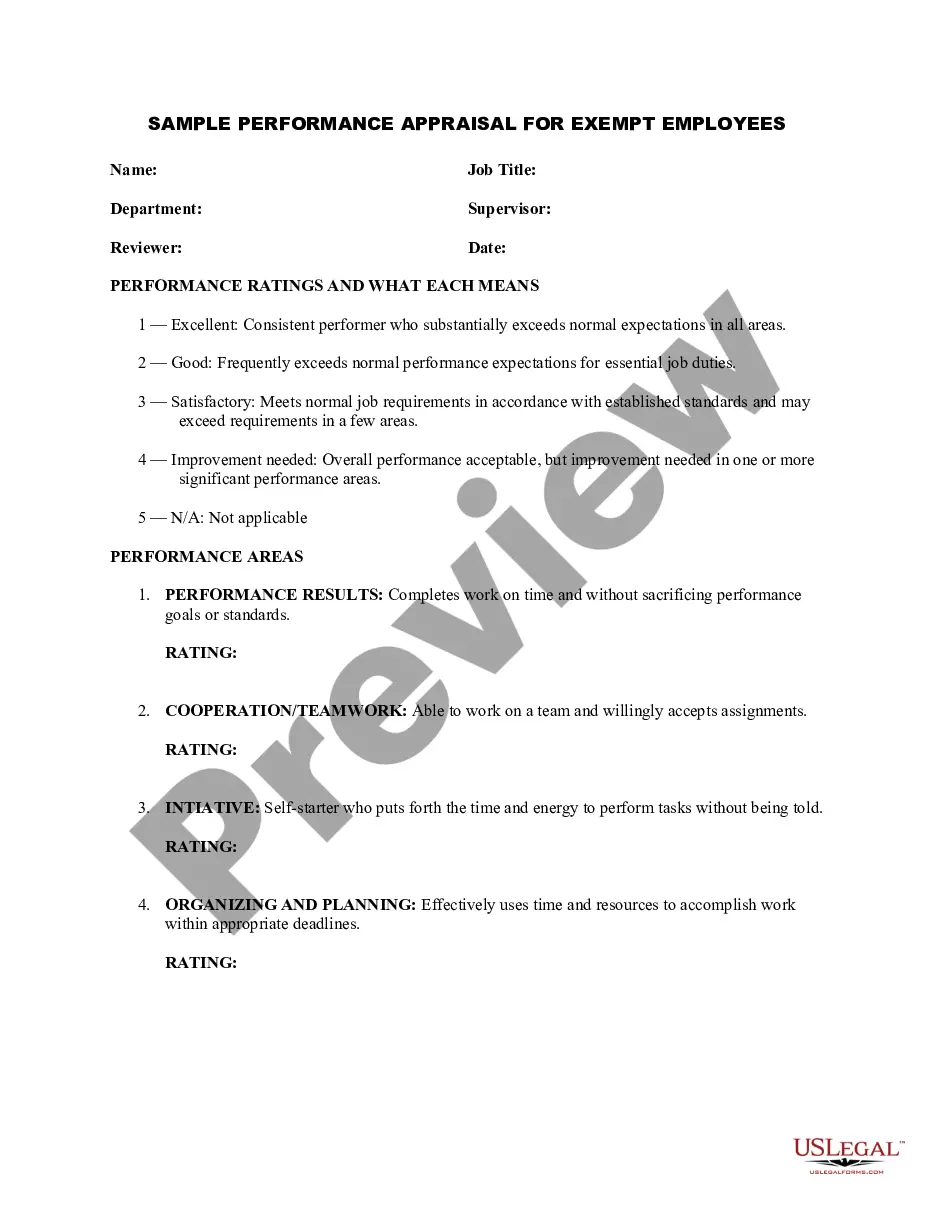
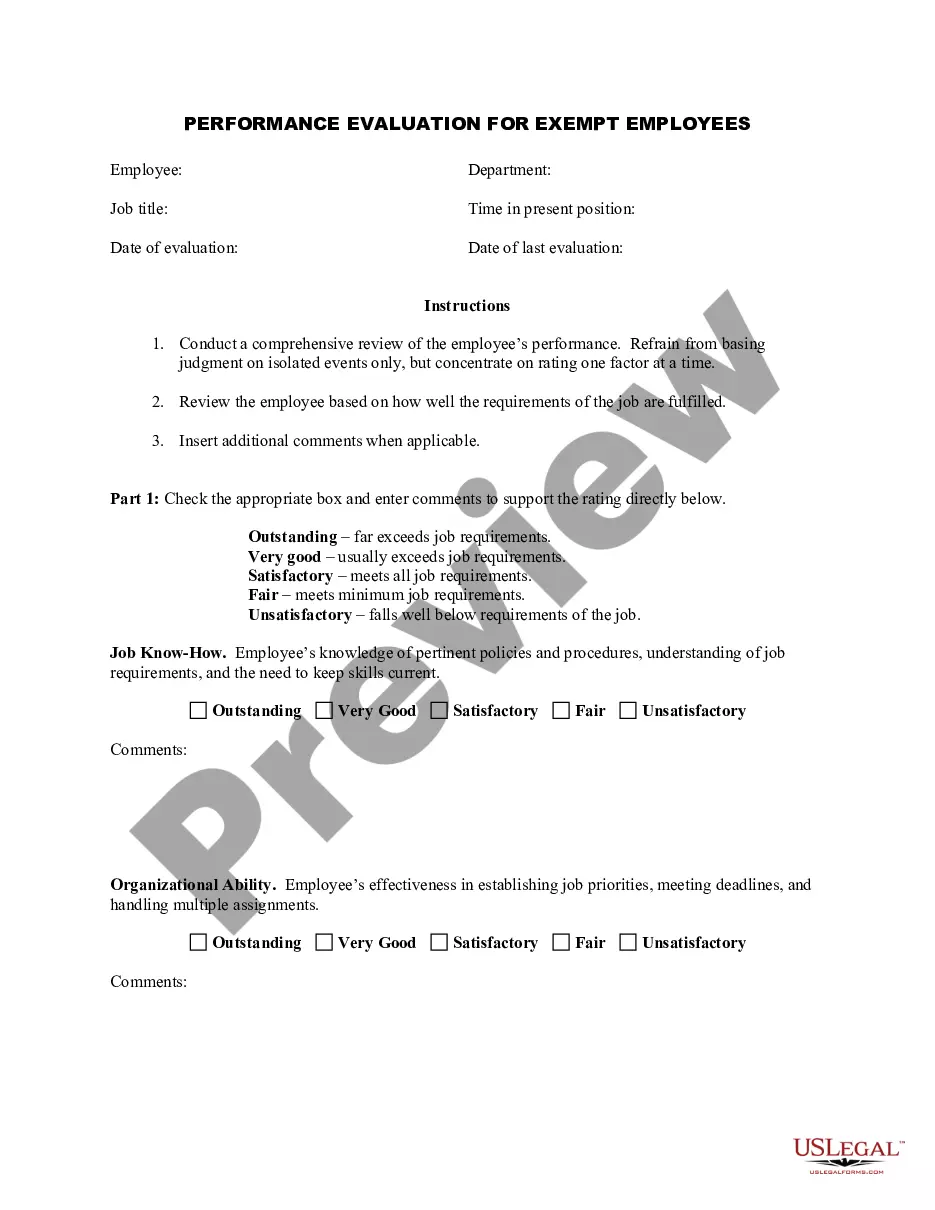
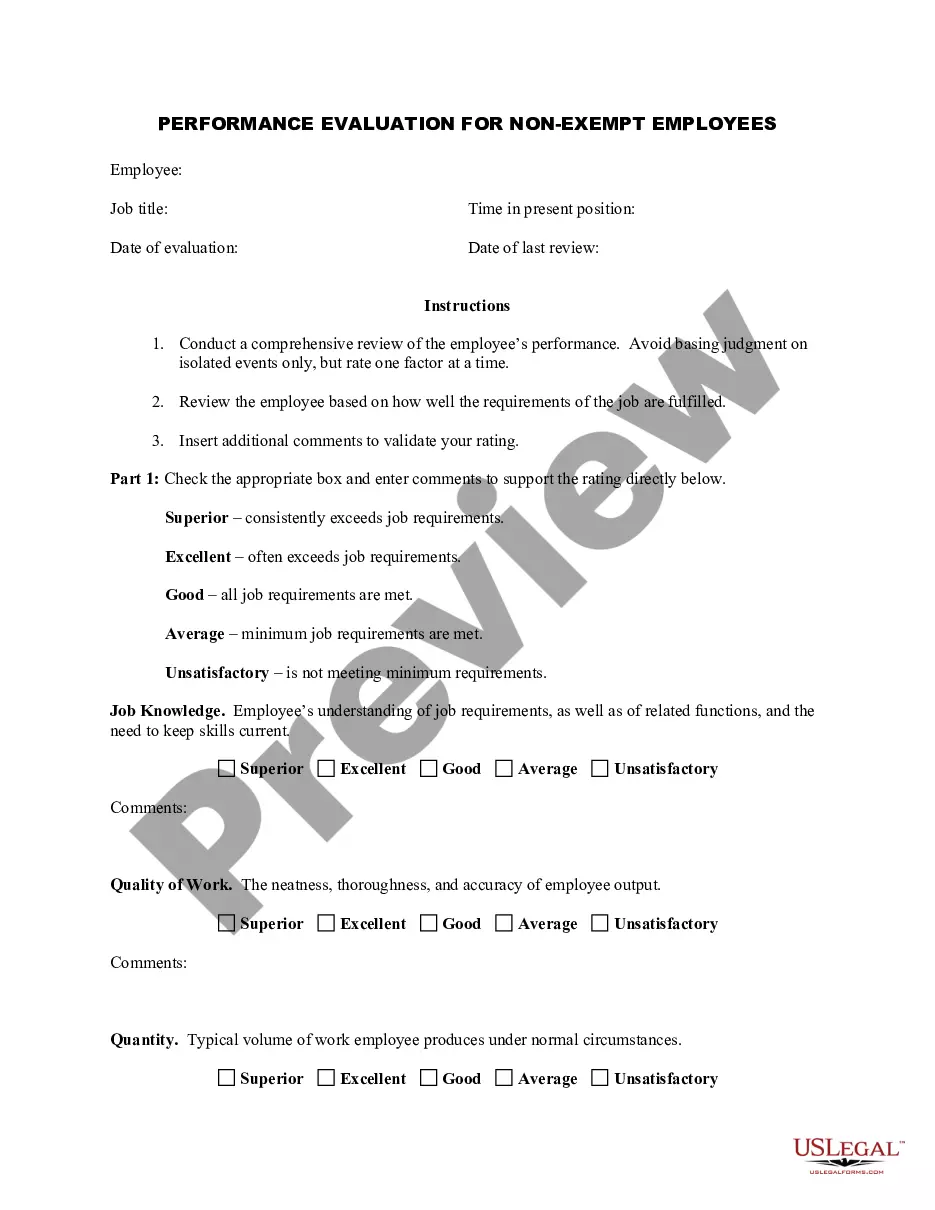
How to fill out Salaried Employee Appraisal Guidelines - Employee Specific?
Are you presently in a situation where you often require documents for business or particular purposes.
There are numerous legal document templates available online, but locating ones you can trust is challenging.
US Legal Forms provides thousands of form templates, such as the Colorado Salaried Employee Appraisal Guidelines - Employee Specific, which are designed to comply with federal and state regulations.
Choose the pricing plan you prefer, provide the necessary information to create your account, and pay for your order using PayPal or a credit card.
Select a suitable file format and download your copy. Access all the document templates you have purchased in the My documents section. You can retrieve an additional copy of the Colorado Salaried Employee Appraisal Guidelines - Employee Specific at any time, if needed. Simply follow the necessary form to download or print the document template. Utilize US Legal Forms, the most extensive collection of legal forms, to save time and prevent mistakes. The platform offers professionally crafted legal document templates that can be used for various purposes. Create an account on US Legal Forms and start making your life simpler.
- If you are already acquainted with the US Legal Forms website and have an account, simply Log In.
- Then, you will be able to download the Colorado Salaried Employee Appraisal Guidelines - Employee Specific template.
- If you do not have an account and wish to start using US Legal Forms, follow these steps.
- Locate the form you need and ensure it is for the right city/region.
- Use the Review button to check the document.
- Examine the description to confirm that you have selected the correct form.
- If the form is not what you are looking for, use the Search field to find the form that matches your needs.
- Once you find the appropriate form, click Get now.
Form popularity
FAQ
The laws surrounding salaried employees focus on compensation, work expectations, and entitlement to benefits. Understanding these laws helps protect both employers and employees. Utilizing the Colorado Salaried Employee Appraisal Guidelines - Employee Specific can provide clarity on legal responsibilities and support effective management strategies.
You cannot forbid employees either verbally or in written policy from discussing salaries or other job conditions among themselves. Discussing salary at work is protected regardless of whether employees are talking to each other in person or through social media.
Asking how much money a job candidate previously made is illegal in a growing number of states and municipalities, and in 2021, Colorado. To combat wage discrimination, the Centennial State will begin enforcing a ban on salary history questions on Jan. 1, 2021.
Under Colorado's break law, certain employers are required to provide a 30-minute meal break to employees who have worked at least five hours in the workday. Although a meal break for employees is required the law doesn't require an employer to pay for employee's meal breaks.
You cannot forbid employees either verbally or in written policy from discussing salaries or other job conditions among themselves. Discussing salary at work is protected regardless of whether employees are talking to each other in person or through social media.
Based upon those two provisions, the National Labor Relations Board (NLRB) has taken the position for decades now that employers may not prohibit employees from discussing their pay and benefits, and that any attempts to do so actually violate the NLRA.
40 hours in one workweek. 12 hours in one workday. 12 consecutive hours, regardless of whether the work period overlaps into a second day.
Under the National Labor Relations Act (NLRA or the Act), employees have the right to communicate with other employees at their workplace about their wages.
Your right to discuss your salary information with your coworkers is protected by the federal government. According to The New York Times, the National Labor Relations Act states that employers can't ban the discussion of salary and working conditions among employees.
An employer may not prohibit an employee from disclosing his or her own wages, discussing the wages of others, inquiring about another employee's wages, or aiding or encouraging any other employee to exercise rights under the Equal Pay Act.