Colorado Living Trust for Individual as Single, Divorced or Widow or Widower with No Children

Understanding this form
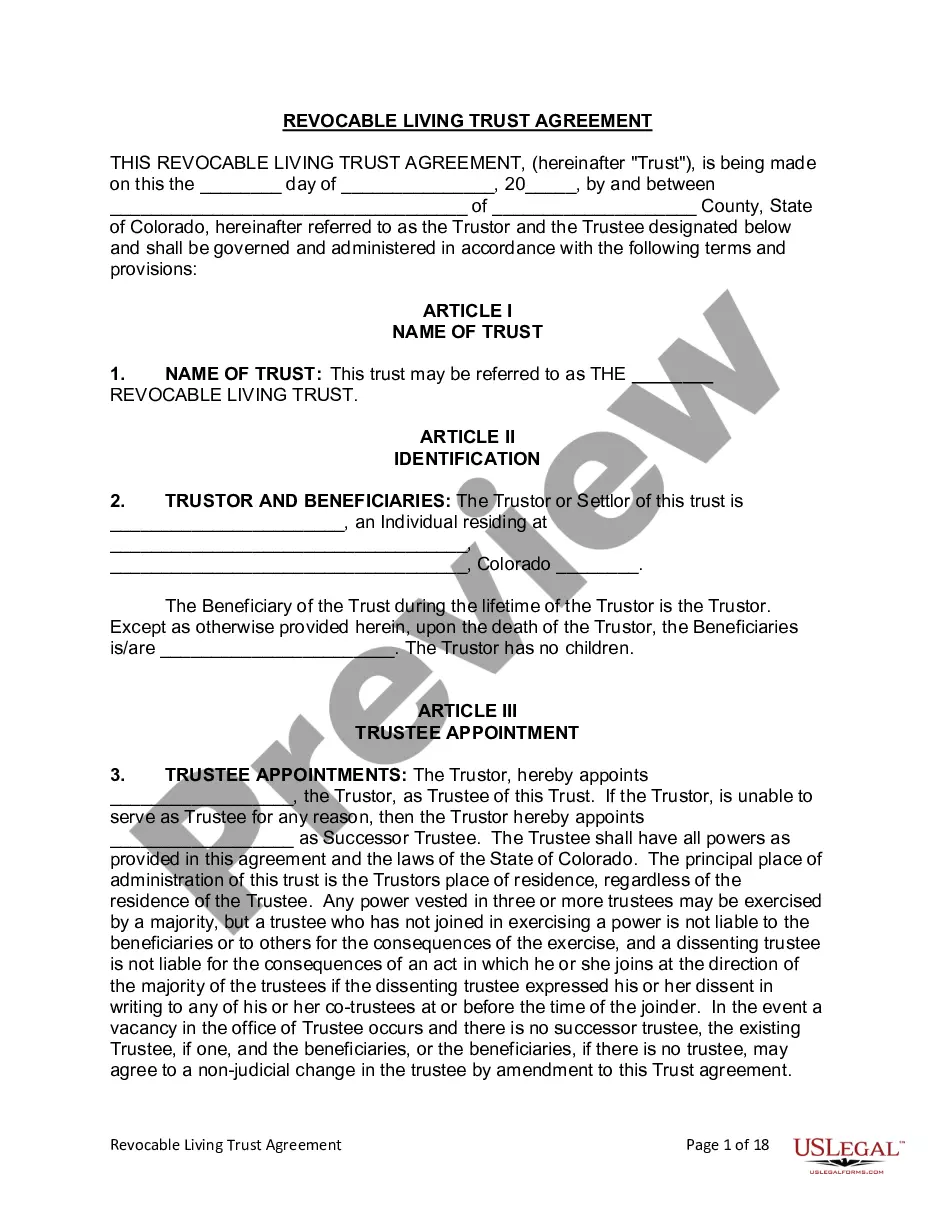
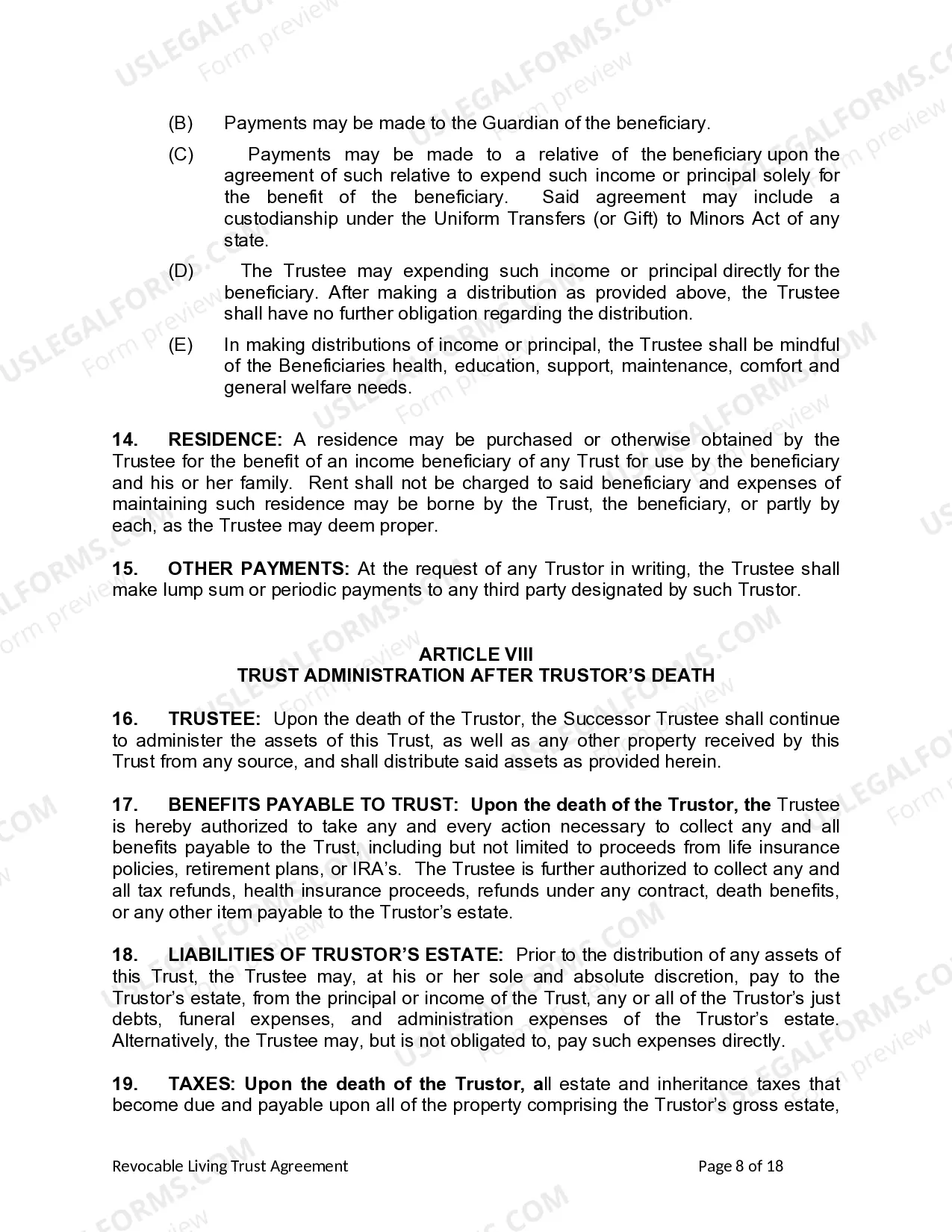
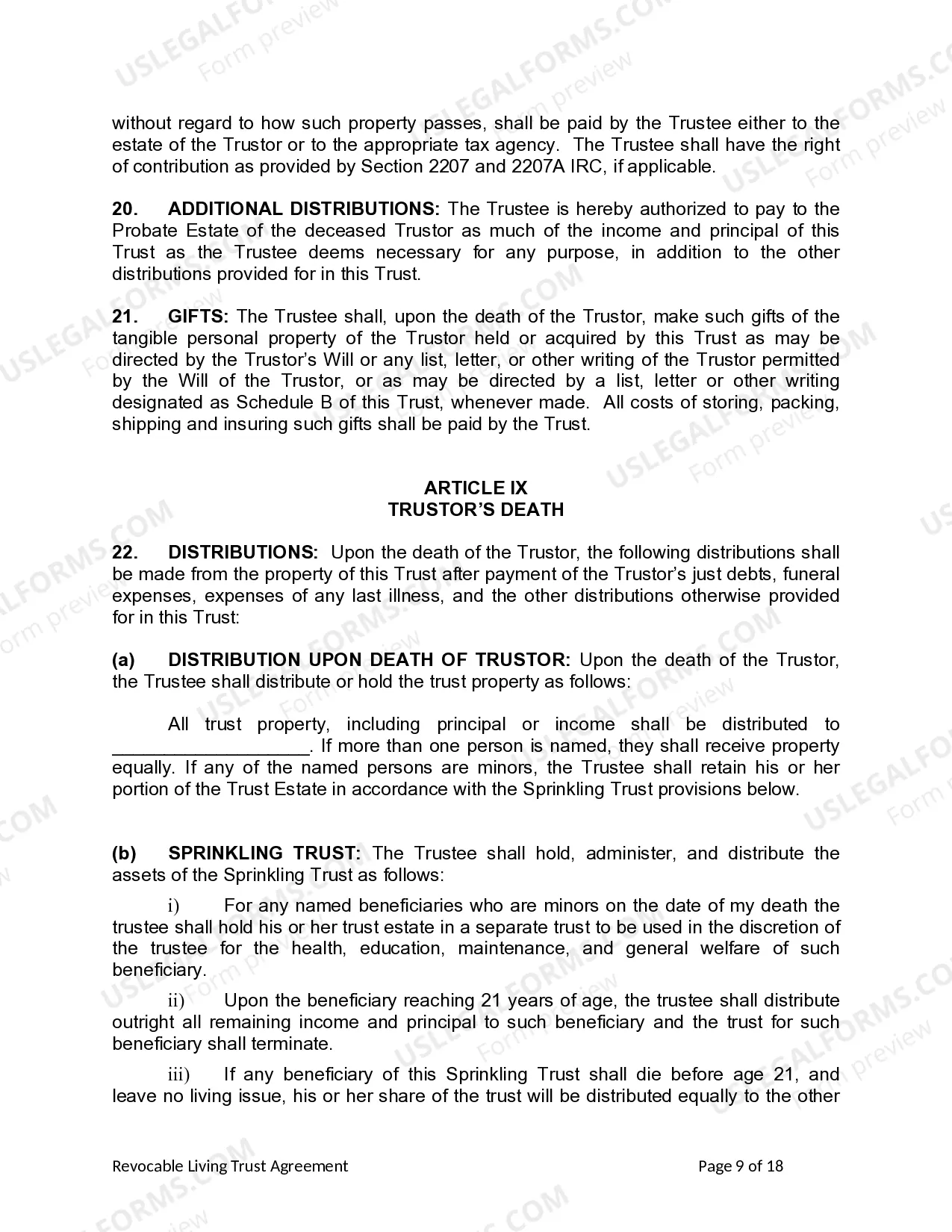
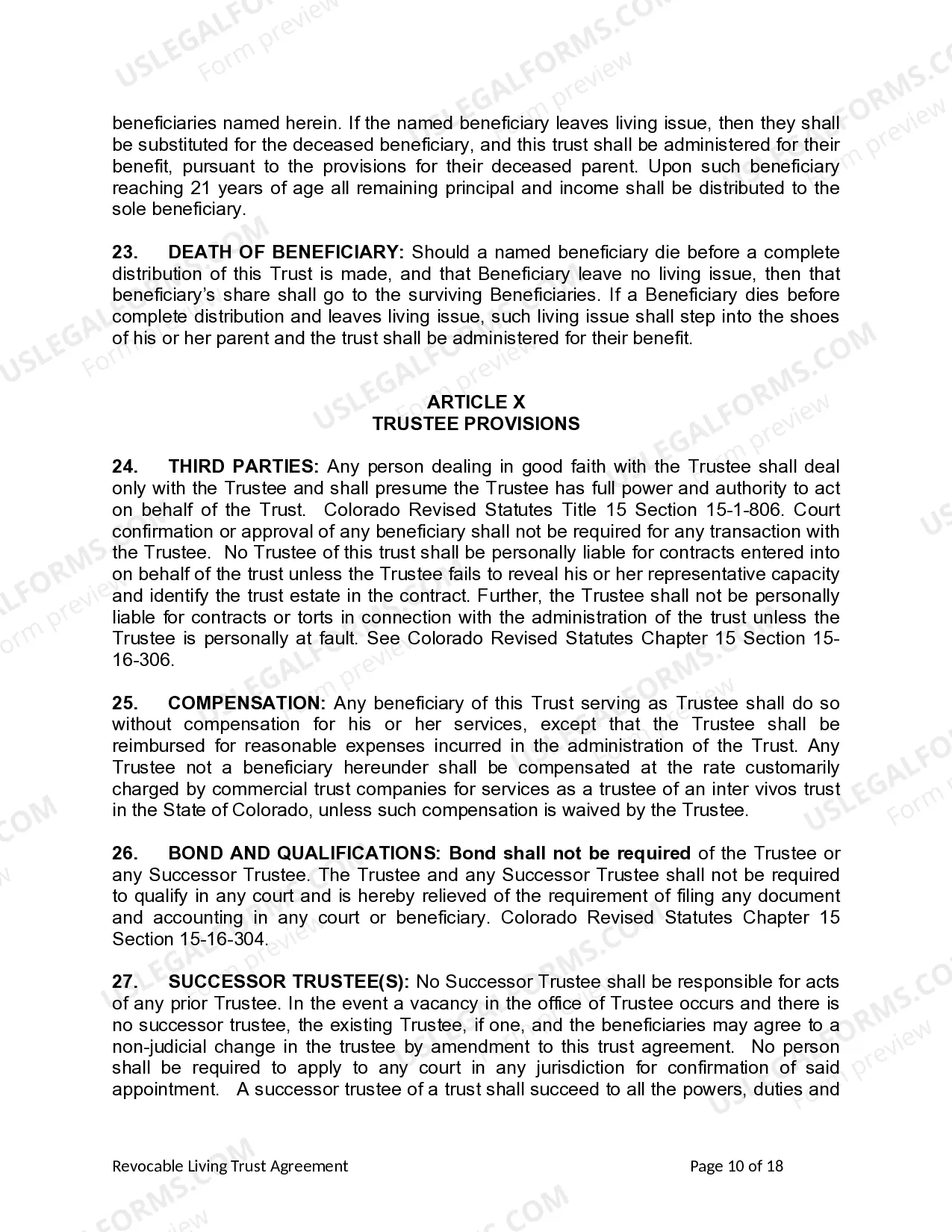
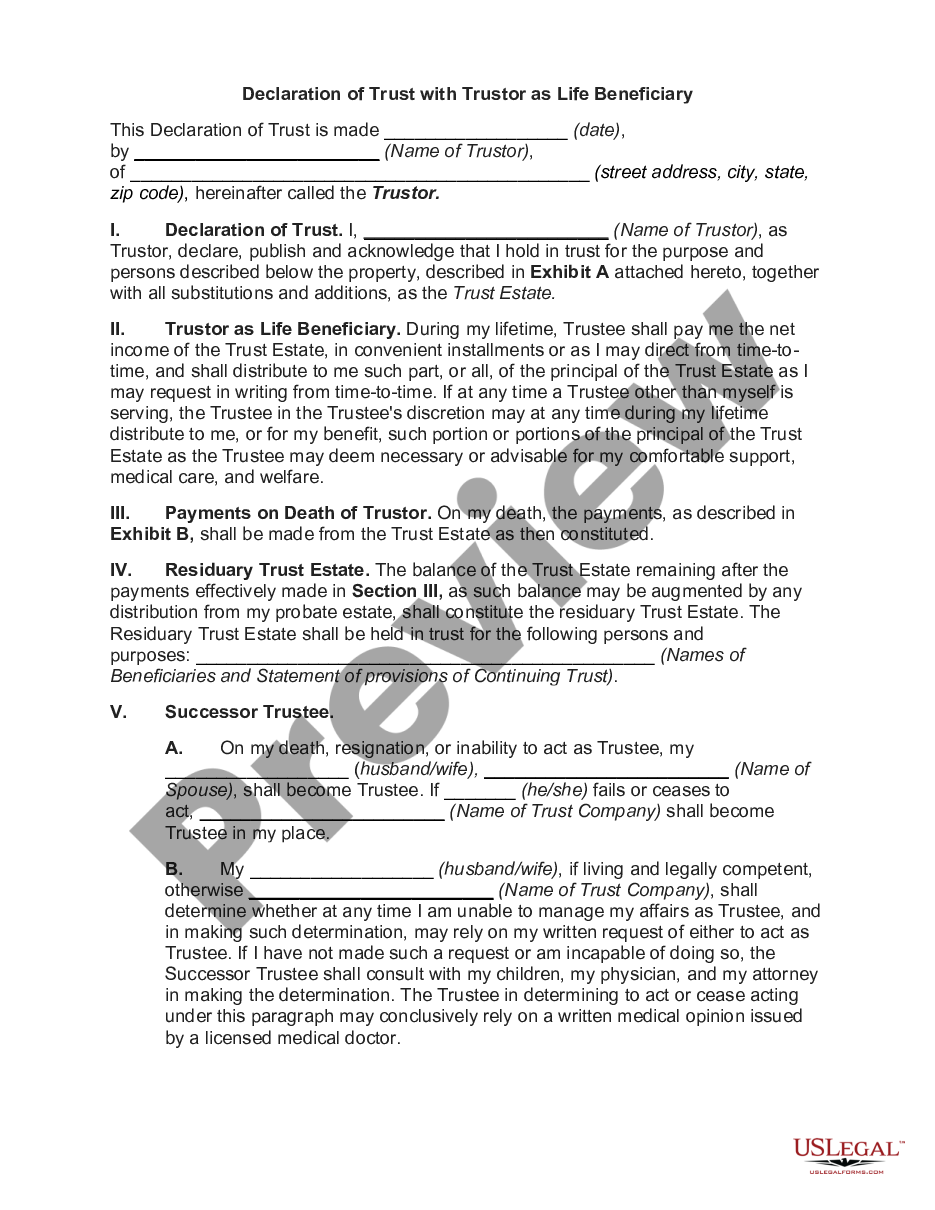
This Living Trust for Individual as Single, Divorced, or Widow(er) with No Children is a legal document designed to manage and safeguard an individual's assets during their lifetime and distribute those assets upon their death without going through probate. Unlike a will, this living trust provides for the efficient transfer of property and may help avoid estate taxes. It specifically addresses the needs of individuals who are single, divorced, or widowed and have no children, providing them with control over their assets while ensuring their wishes are respected after their passing.
Main sections of this form
- Name of Trust: Designates the specific name of the living trust.
- Trustor and Beneficiaries: Identifies the individual creating the trust and the intended beneficiaries.
- Trustee Appointment: Details the appointment of the trustee who will manage the trust.
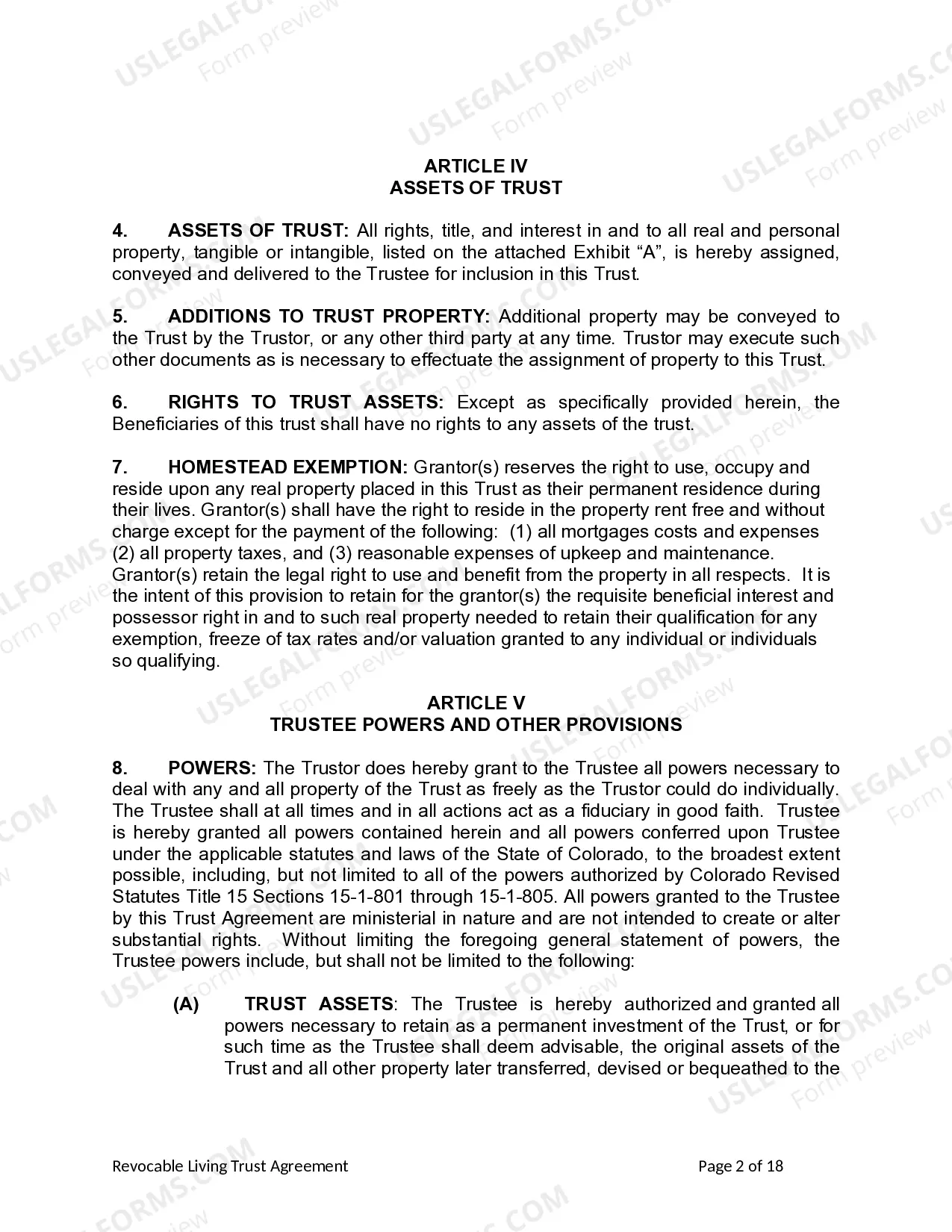
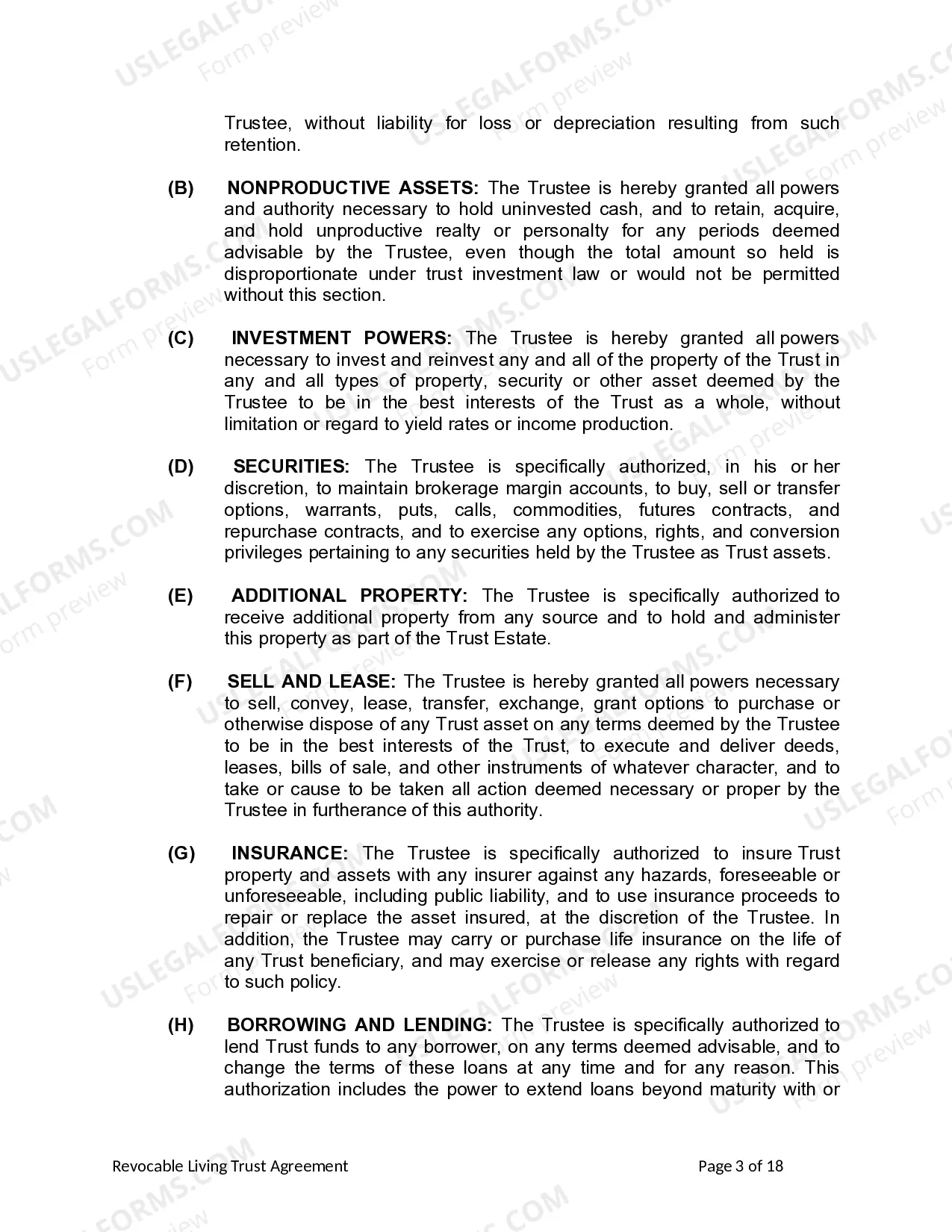
- Assets of Trust: Specifies the property and assets included in the trust.
- Distributions Upon Death: Outlines how and to whom the remaining trust assets will be distributed upon the trustor's death.
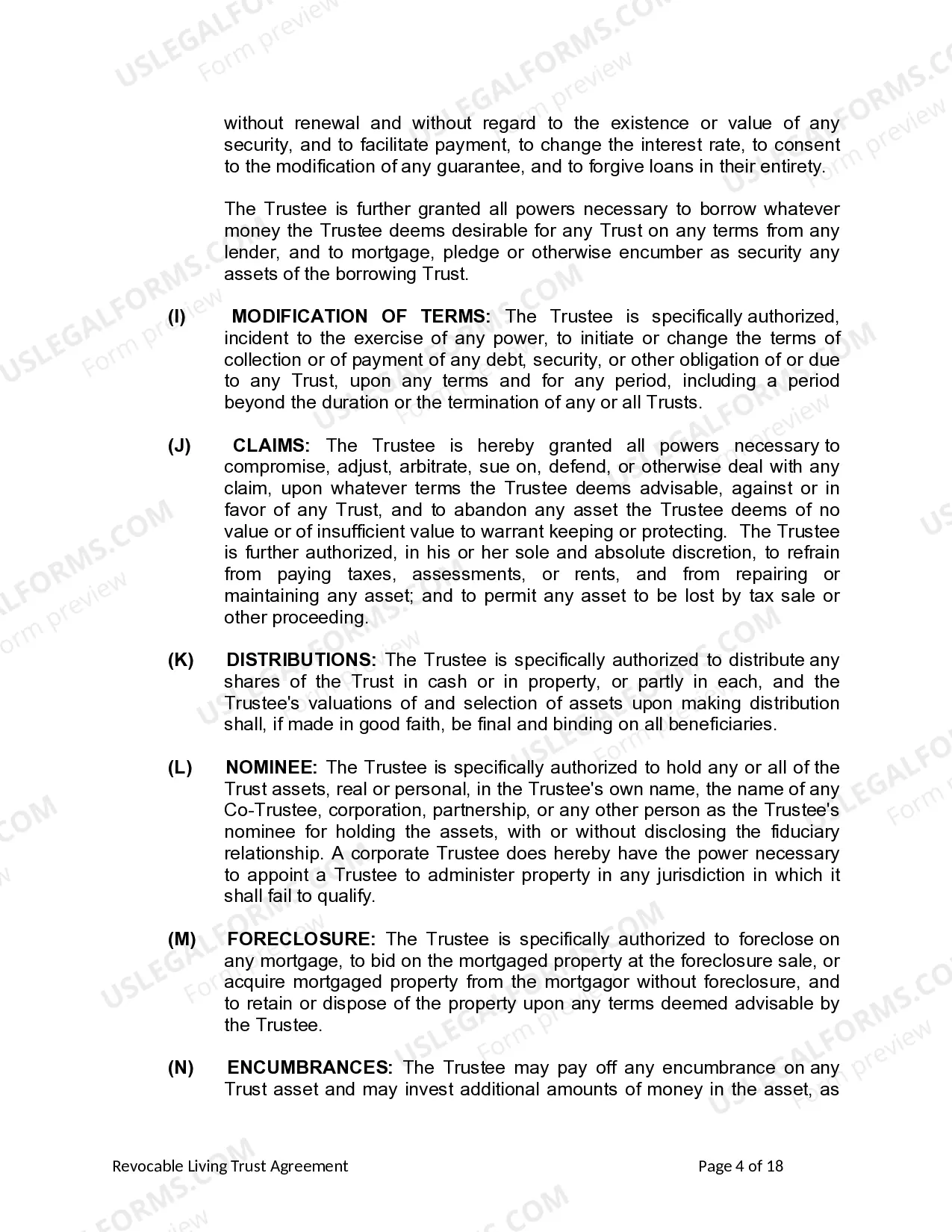
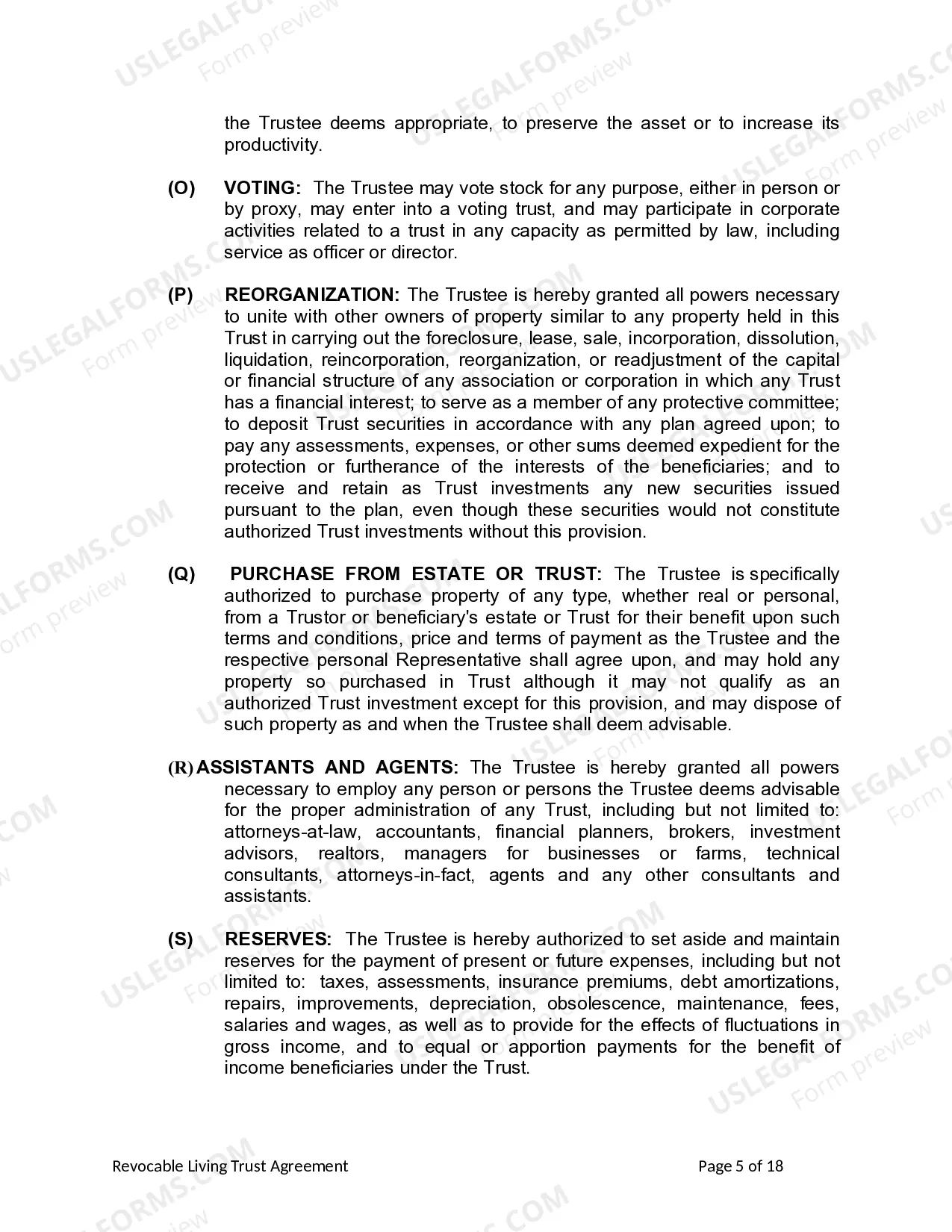
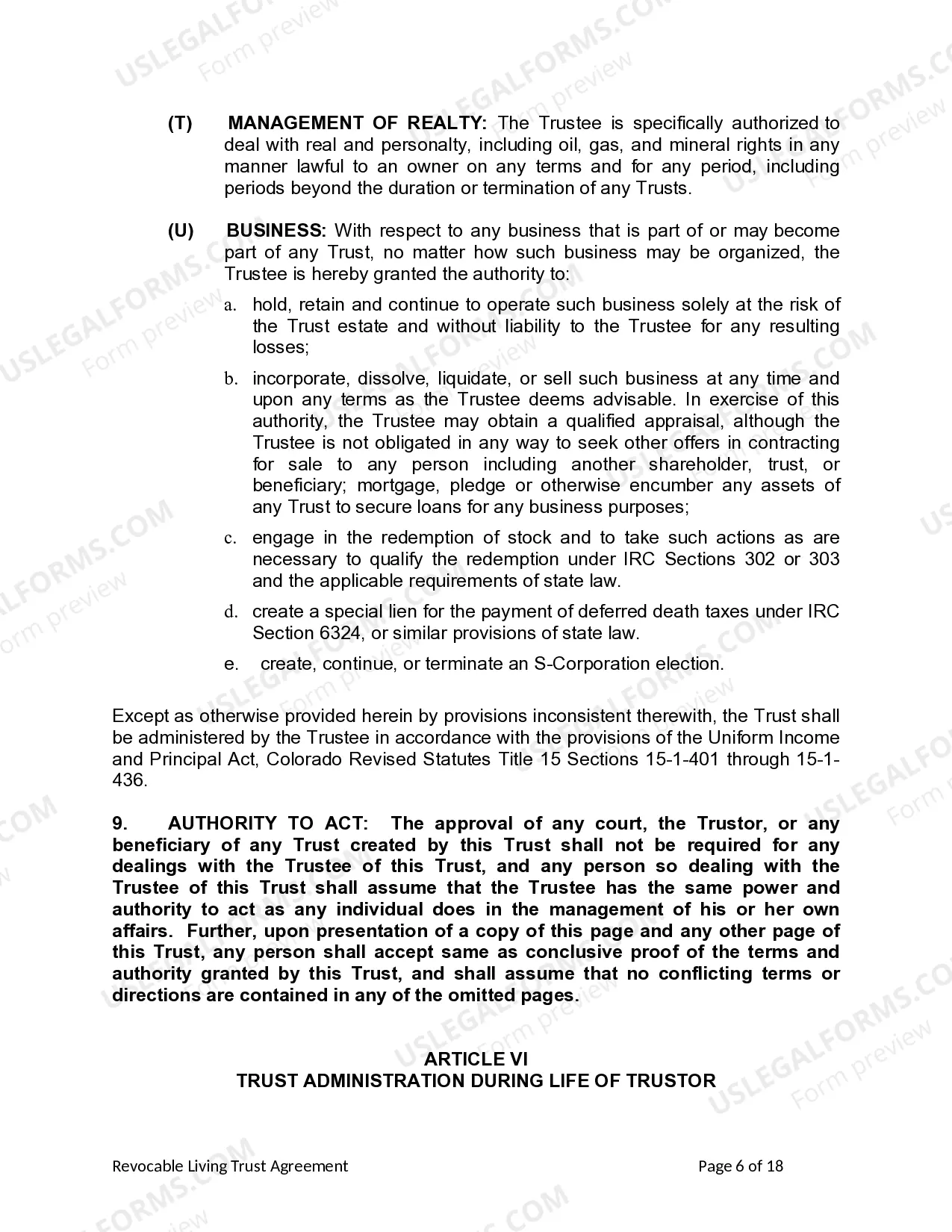
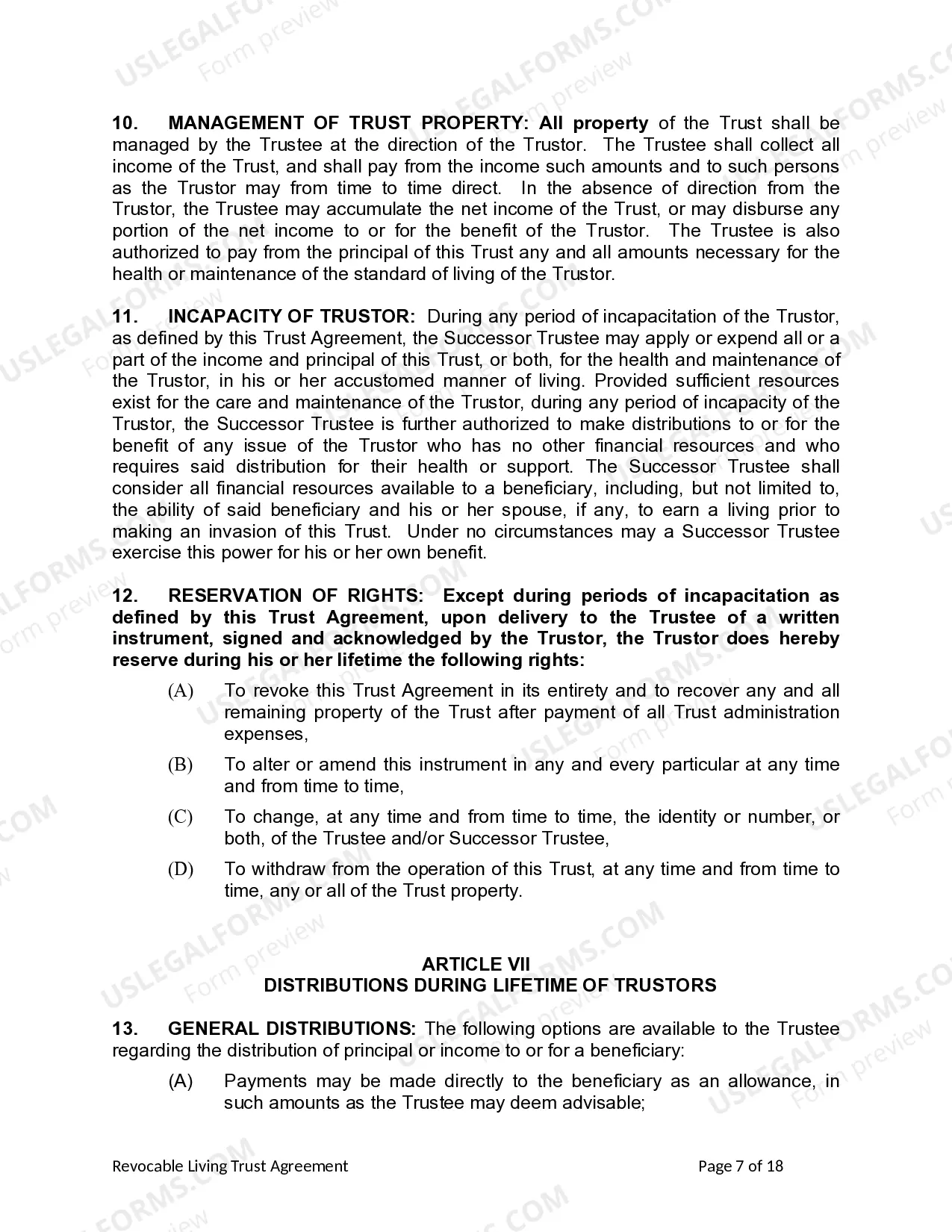




Situations where this form applies
This form is ideal for individuals who wish to establish a living trust to manage their assets without the complexity of probate. It is appropriate for those who are single, divorced, or widowed and do not have children. This trust can help secure your assets for specific beneficiaries, provide a plan for financial management during your lifetime, and address your needs regarding distribution after your passing.
Intended users of this form
- Individuals who are single, divorced, or widowed without children.
- Anyone looking to avoid probate and manage their assets efficiently.
- Individuals wishing to ensure their specific wishes are followed after their death.
Completing this form step by step
- Identify the parties involved: Name yourself as the trustor and as the trustee.
- Specify the name of the trust and any assets being included in the trust.
- Designate any successors or other trustees if necessary.
- Complete the sections concerning beneficiaries who will inherit the trust's assets after your passing.
- Sign and date the document, and ensure witness or notarization where required.
Is notarization required?
Yes, this form must be notarized to be legally valid. US Legal Forms offers integrated online notarization services, available 24/7 through secure video calls, ensuring that your trust is executed correctly without the need for travel.
Get your form ready online
Our built-in tools help you complete, sign, share, and store your documents in one place.
Make edits, fill in missing information, and update formatting in US Legal Forms—just like you would in MS Word.
Download a copy, print it, send it by email, or mail it via USPS—whatever works best for your next step.
Sign and collect signatures with our SignNow integration. Send to multiple recipients, set reminders, and more. Go Premium to unlock E-Sign.
If this form requires notarization, complete it online through a secure video call—no need to meet a notary in person or wait for an appointment.
We protect your documents and personal data by following strict security and privacy standards.

Make edits, fill in missing information, and update formatting in US Legal Forms—just like you would in MS Word.

Download a copy, print it, send it by email, or mail it via USPS—whatever works best for your next step.

Sign and collect signatures with our SignNow integration. Send to multiple recipients, set reminders, and more. Go Premium to unlock E-Sign.

If this form requires notarization, complete it online through a secure video call—no need to meet a notary in person or wait for an appointment.

We protect your documents and personal data by following strict security and privacy standards.
Avoid these common issues
- Failing to name a successor trustee can lead to complications in managing the trust.
- Not clearly identifying all assets included in the trust may result in confusion.
- Filling out the form without current legal guidance could lead to revisions being needed later.
Why complete this form online
- Convenient access allows for swift completion from anywhere.
- Documentation is tailored for your state, ensuring legal compliance.
- Editable features allow you to customize the form easily to fit your needs.
Legal use & context
- A living trust is a legally recognized document that provides a framework for managing assets.
- This form helps avoid the probate process, which can be lengthy and public.
- It allows for seamless asset transfer upon death, ensuring the trustor's wishes are honored.
Summary of main points
- This form provides a way to manage your assets during your lifetime and dictate their distribution after your death.
- A living trust can help avoid probate, providing a faster and less costly transfer of assets.
- Designed specifically for individuals who are single, divorced, or widowed without children.
Looking for another form?
Form popularity
FAQ
Yes, you can write your own living trust in Colorado, especially with resources like uslegalforms that provide templates and guidance. However, creating a legally sound Colorado Living Trust for Individual as Single, Divorced or Widow or Widower with No Children requires a clear understanding of state laws and the specific language needed to ensure your wishes are followed. For peace of mind, consider consulting with a legal professional to review your trust and confirm it meets all legal requirements.
One of the largest mistakes parents make when establishing a trust fund is failing to adequately fund the trust with their assets. Without proper funding, a Colorado Living Trust for Individual as Single, Divorced or Widow or Widower with No Children may not serve its intended purpose of protecting your assets. It's crucial to ensure all eligible assets are transferred into the trust to avoid probate or tax complications. Engaging with a knowledgeable advisor can help you navigate this process successfully.
To place your house in a trust in Colorado, you must first create a Colorado Living Trust for Individual as Single, Divorced or Widow or Widower with No Children that specifies how your property should be managed. Next, you’ll need to draft a deed transferring ownership of your home to the trust. This process typically involves the recording of the new deed at your local county recorder's office. It is advisable to consult with a legal expert or use a service like uslegalforms to make this transaction seamless.
A widow's trust, often referred to as a living trust, is designed to manage and distribute assets for individuals who have lost a spouse. This kind of trust helps ensure that your assets are handled according to your wishes without the complications of probate. Utilizing a Colorado Living Trust for Individual as Single, Divorced or Widow or Widower with No Children can provide clarity and peace of mind during a challenging time. It is prudent to seek legal guidance to understand how this trust can align with your financial goals.
Deciding whether to have a will or a trust depends on your individual circumstances. A Colorado Living Trust for Individual as Single, Divorced or Widow or Widower with No Children typically offers benefits like avoiding probate and greater management of your assets during your lifetime. While a will is simpler to create, a trust can provide more flexibility and control over your assets after your passing. Using US Legal Forms can help you explore both options and find the right choice for your situation.
Yes, you can write your own trust in Colorado. However, it's essential to ensure that the document meets all legal requirements to be valid. A Colorado Living Trust for Individual as Single, Divorced or Widow or Widower with No Children can be a straightforward process if you utilize templates or resources available through US Legal Forms. This approach helps guarantee that your trust is properly structured and protects your interests.
To set up a Colorado Living Trust for Individual as Single, Divorced or Widow or Widower with No Children, you need to determine your assets and decide which ones to place in the trust. Next, you should create a trust document, which outlines the terms and conditions of the trust. You can do this on your own or use a platform like US Legal Forms for guidance. Finally, fund your trust by transferring ownership of your assets to the trust.
The main downside of having a trust often lies in the initial setup expense and the potential complexity it can introduce. A Colorado Living Trust for Individual as Single, Divorced or Widow or Widower with No Children may require ongoing management or amendments as your life changes. However, the advantages, such as avoiding probate and providing clarity about your assets, frequently far outweigh these concerns. A consultation with an estate planning professional can illuminate these details.
Putting your house in a trust in Colorado can be an excellent decision that offers numerous benefits. A Colorado Living Trust for Individual as Single, Divorced or Widow or Widower with No Children allows for predictable management of your property and can streamline the estate process. This ensures your wishes are clear and reduces the burden on your loved ones during a difficult time. Engage with a legal expert to see if this approach aligns with your goals.
One potential downside of placing your house in a trust includes the initial setup costs, which can vary depending on legal fees and resources. Additionally, maintaining the trust may require ongoing administration and paperwork, which could be cumbersome. However, the benefits often outweigh these disadvantages with the proper guidance from professionals in estate planning. A Colorado Living Trust for Individual as Single, Divorced or Widow or Widower with No Children can be a strategic choice when considering these factors.