Colorado Amendment to Postnuptial Property Agreement
What this document covers
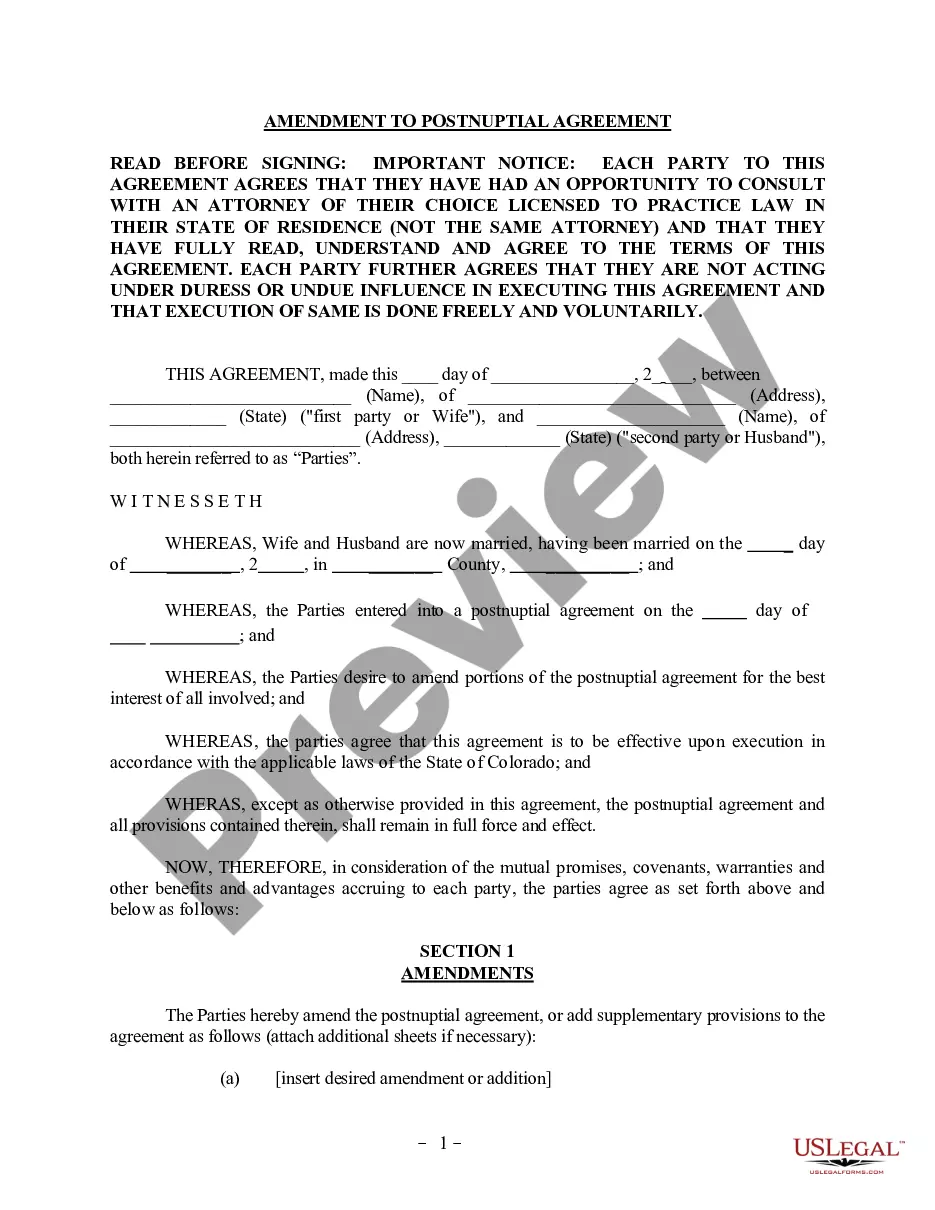
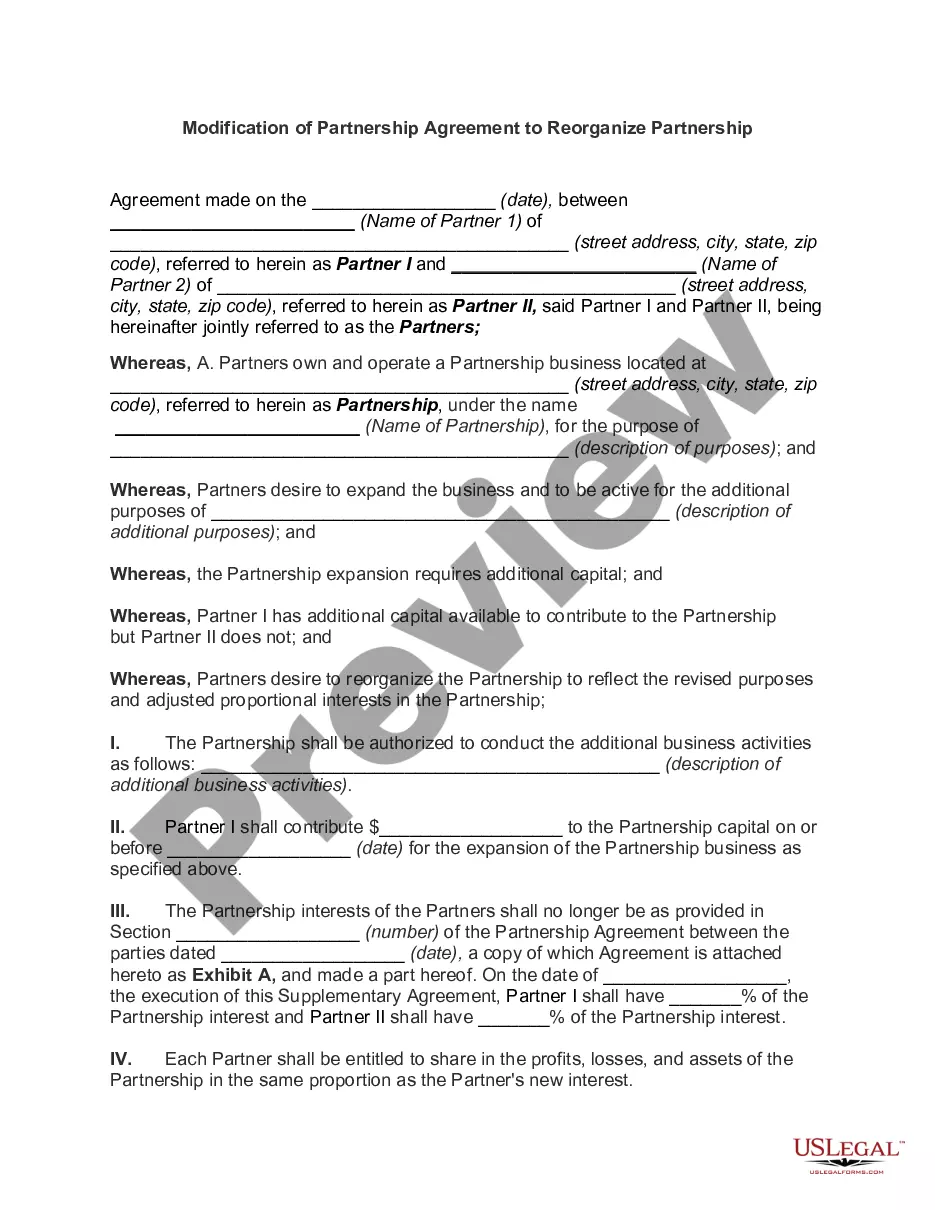
The Amendment to Postnuptial Property Agreement is a legal document that allows married couples to modify their existing postnuptial agreement. This form is essential for couples who wish to amend or add provisions regarding the division of their property and financial obligations, ensuring both parties are in mutual agreement. Unlike a new postnuptial agreement, this amendment addresses changes without needing to create a completely new document, making it a more efficient option for couples looking to update their arrangements.
Key parts of this document
- Effective date: Specifies when the amendment will take effect.
- Amendment details: A section to include specific changes or additions to the original postnuptial agreement.
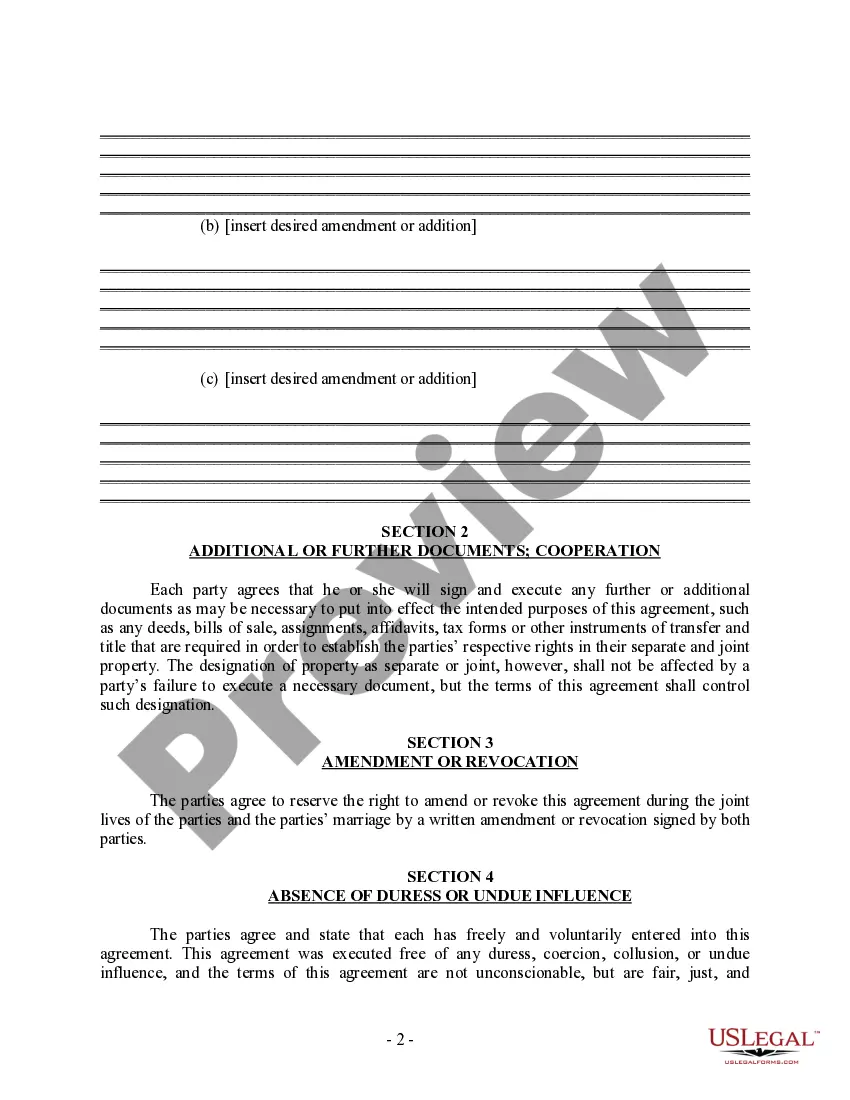
- Cooperation clause: Requires both parties to execute additional documents if necessary to implement the amendment.
- Right to amend: States that the parties reserve the right to further amend or revoke the agreement while they are married.
- Affirmation of voluntary execution: Confirms that both parties are entering the agreement freely and without coercion.
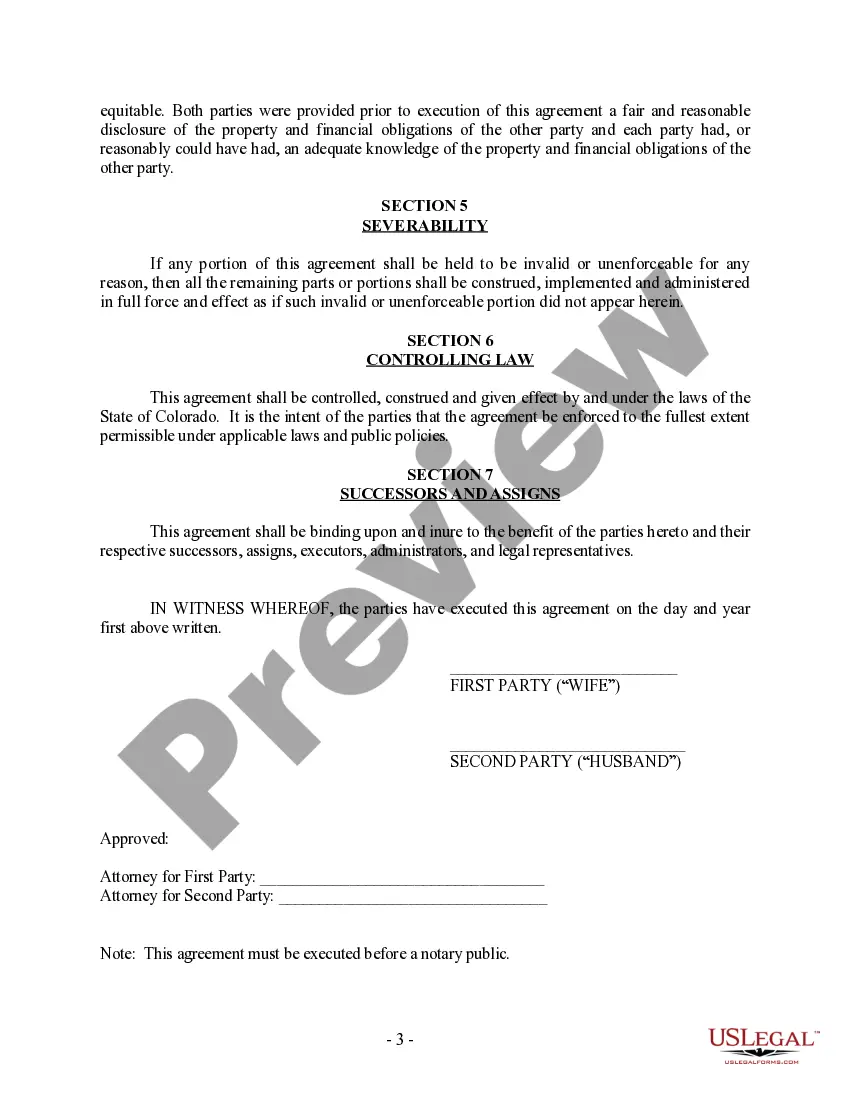
- Severability clause: Ensures that if part of the agreement is deemed invalid, the rest remains enforceable.
- Controlling law: Indicates that the agreement is subject to Colorado laws.

When to use this document
This form is suitable for couples who have an existing postnuptial agreement and want to make specific changes or additions. Common situations include changes in financial circumstances, decisions regarding property distribution, or adjustments to obligations that may arise during the marriage. If you and your spouse agree on new terms that reflect your current relationship and financial situation, this amendment is the appropriate tool to formalize those changes.
Who should use this form
- Married couples with an existing postnuptial agreement.
- Individuals wishing to modify property or financial terms within their current agreement.
- Parties seeking to clarify or update their agreed-upon arrangements.
How to prepare this document
- Identify the parties: Clearly state the names of both spouses involved in the amendment.
- Specify the date: Fill in the date when the amendment is signed by both parties.
- Detail the amendments: Clearly articulate each change or addition to the existing postnuptial agreement in the designated section.
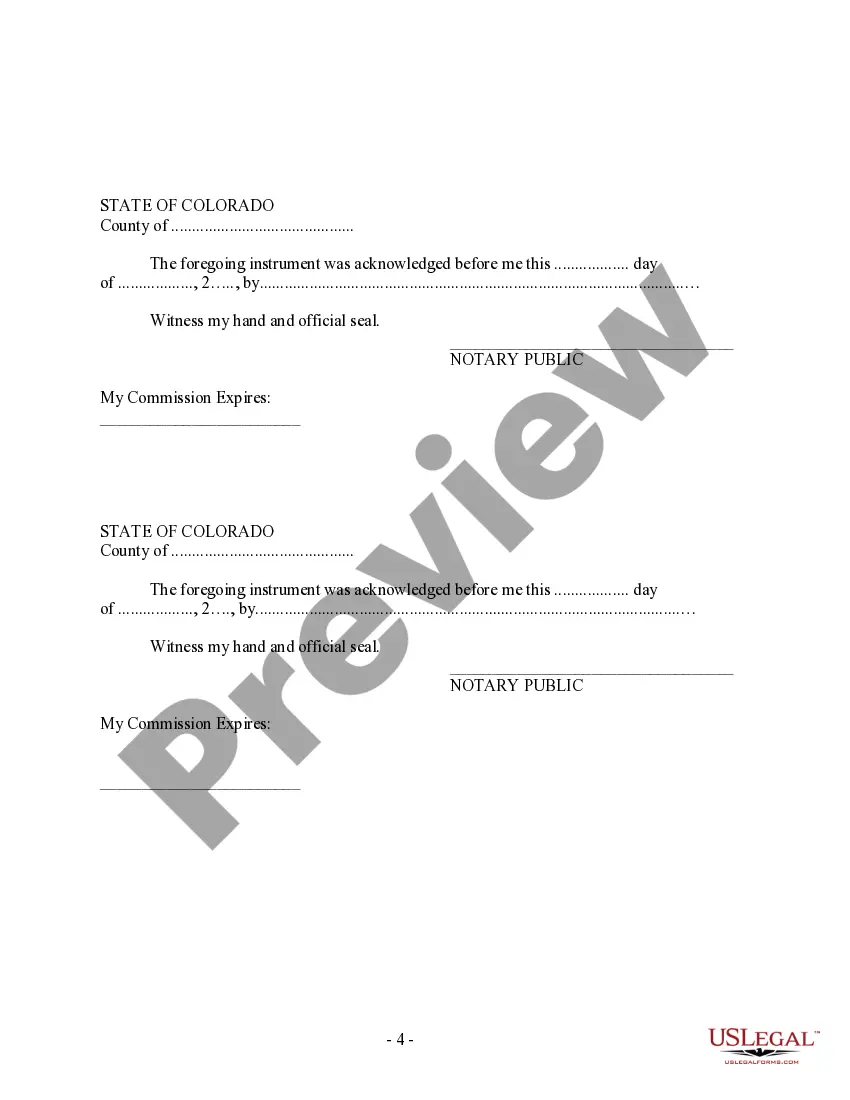
- Sign in the presence of a notary: Both parties must sign the document while being witnessed by a notary public.
- Provide supporting documentation: If required, include any further documents that support the changes being made.
Notarization requirements for this form
Notarization is required for this form to take effect. Our online notarization service, powered by Notarize, lets you verify and sign documents remotely through an encrypted video session, available 24/7.
Get your form ready online
Our built-in tools help you complete, sign, share, and store your documents in one place.
Make edits, fill in missing information, and update formatting in US Legal Forms—just like you would in MS Word.
Download a copy, print it, send it by email, or mail it via USPS—whatever works best for your next step.
Sign and collect signatures with our SignNow integration. Send to multiple recipients, set reminders, and more. Go Premium to unlock E-Sign.
If this form requires notarization, complete it online through a secure video call—no need to meet a notary in person or wait for an appointment.
We protect your documents and personal data by following strict security and privacy standards.

Make edits, fill in missing information, and update formatting in US Legal Forms—just like you would in MS Word.

Download a copy, print it, send it by email, or mail it via USPS—whatever works best for your next step.

Sign and collect signatures with our SignNow integration. Send to multiple recipients, set reminders, and more. Go Premium to unlock E-Sign.

If this form requires notarization, complete it online through a secure video call—no need to meet a notary in person or wait for an appointment.

We protect your documents and personal data by following strict security and privacy standards.
Avoid these common issues
- Failing to specify the date of the amendment.
- Neglecting to sign the document in front of a notary public.
- Not providing clear details on the amendments made.
- Assuming that changes to the agreement can be verbal rather than documented.
Why use this form online
- Convenience: Easily complete the form at your own pace from the comfort of your home.
- Editability: Modify the document as needed before finalizing your amendments.
- Reliability: These forms are drafted by licensed attorneys, ensuring legal accuracy.
Looking for another form?
Form popularity
FAQ
The Colorado Amendment to Postnuptial Property Agreement lets married couples modify an existing postnuptial agreement without drafting a whole new contract. It allows changes to property division and financial obligations, requires an effective date, and typically needs both parties to sign and collaborate on any additional documents to implement the changes. The amendment is governed by Colorado law.
Yes. This amendment provides a structured way to modify an existing postnuptial agreement rather than creating a new one. It requires detailing the specific changes, setting an effective date, and, if necessary, both parties signing and executing any documents needed to implement the amendment. The document and changes are governed by Colorado law.
To obtain this amendment in Colorado, fill out the amendment with the intended changes, specify the effective date, and have both spouses sign. If needed, the form's cooperation clause may require executing additional documents to implement the amendment. The agreement remains subject to Colorado law.
Postnuptial agreements are enforceable in Colorado when entered into voluntarily and in good faith, with terms the parties understand. This amendment reinforces enforceability by requiring a voluntary execution declaration, including a severability clause, and applying Colorado law to govern the agreement.
The cooperation clause requires both parties to sign the amendment and, if necessary, execute additional documents needed to implement the changes. This helps ensure the amendment can be fully enforced and reflects mutual agreement under Colorado law.
This amendment modifies an existing postnuptial agreement rather than creating a brand-new contract. It lists amendment details, an effective date, and a cooperation requirement, while preserving the possibility of future changes while the couple remains married. The document is governed by Colorado law and keeps the original agreement intact except for the stated changes.