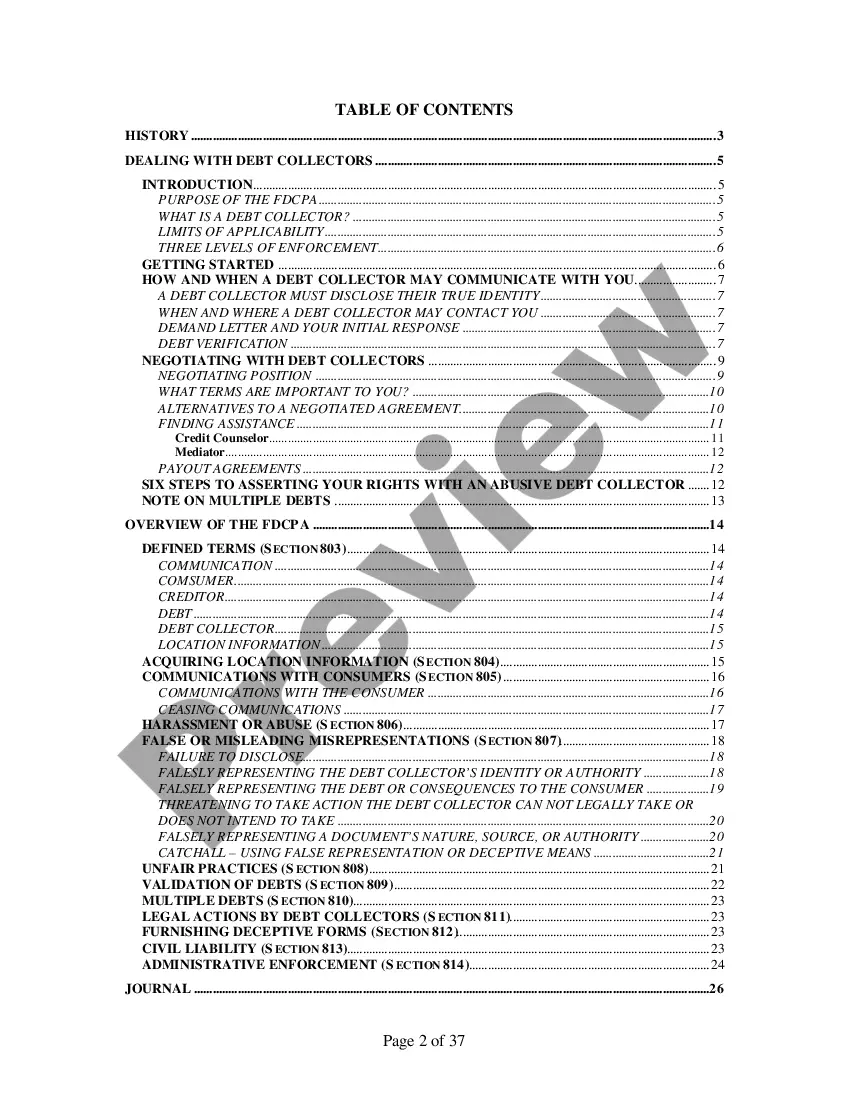
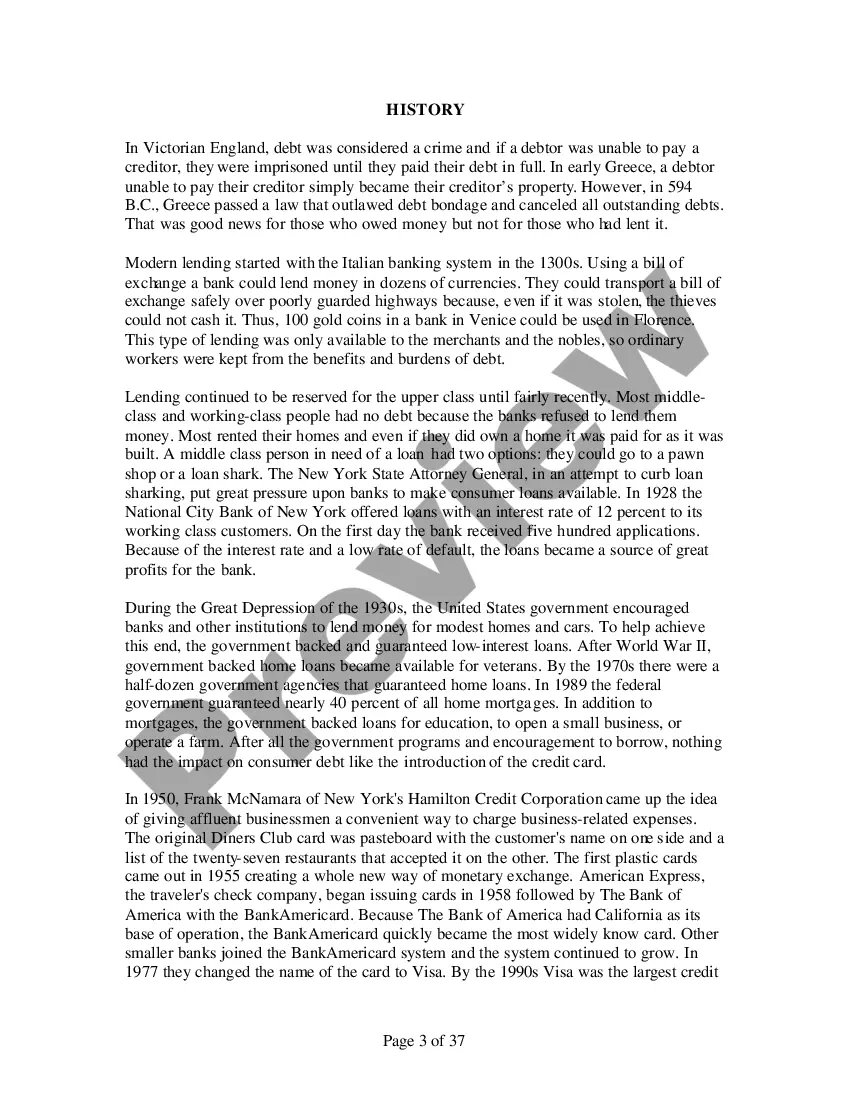
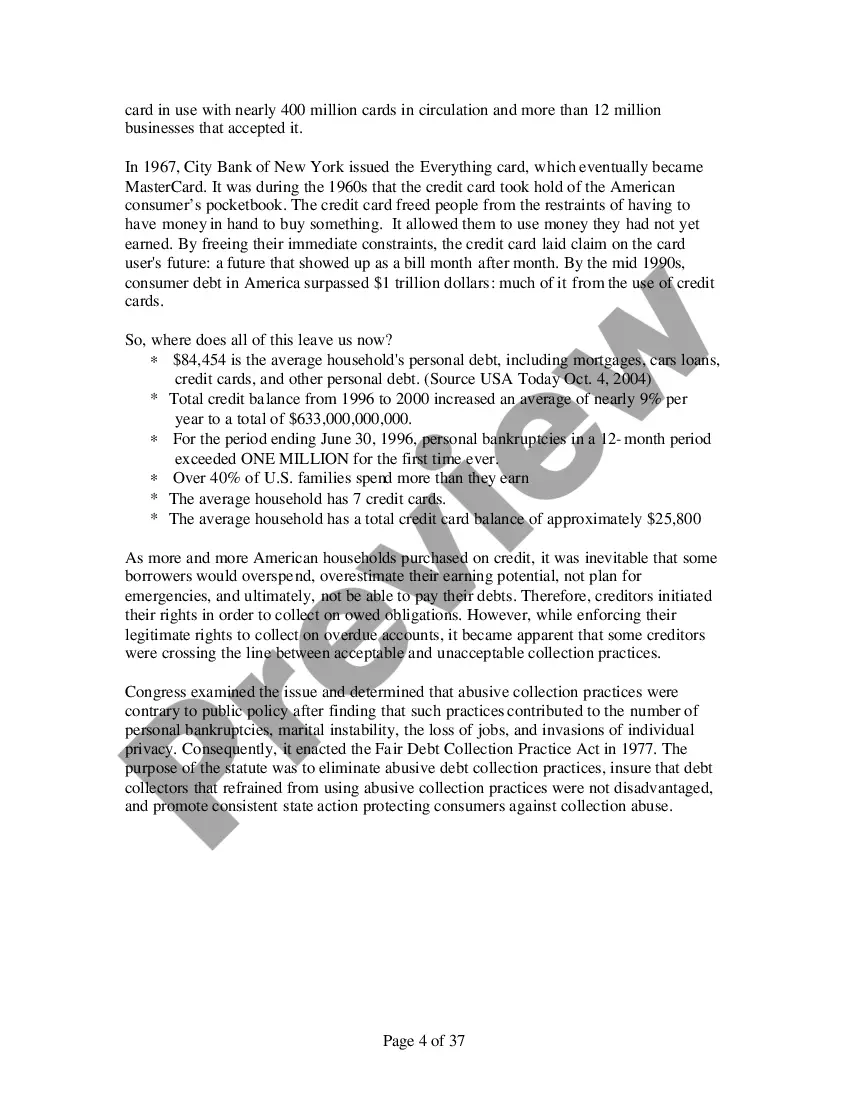
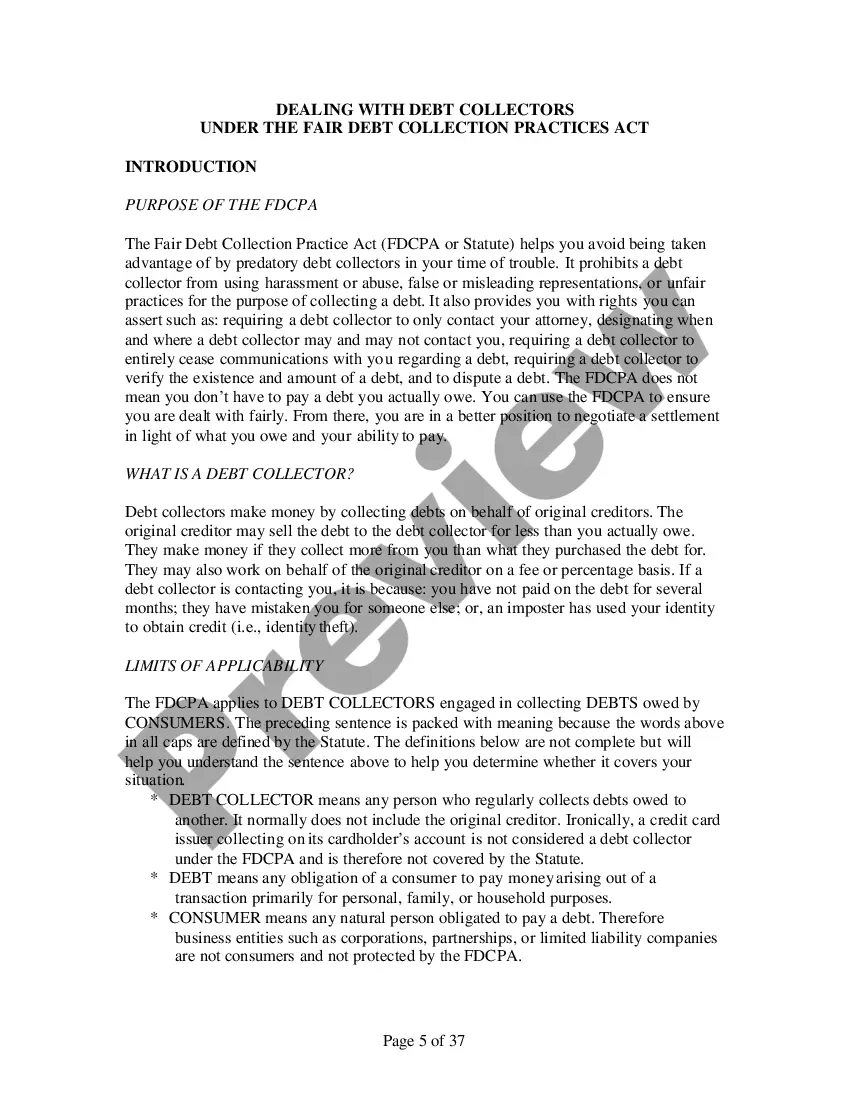
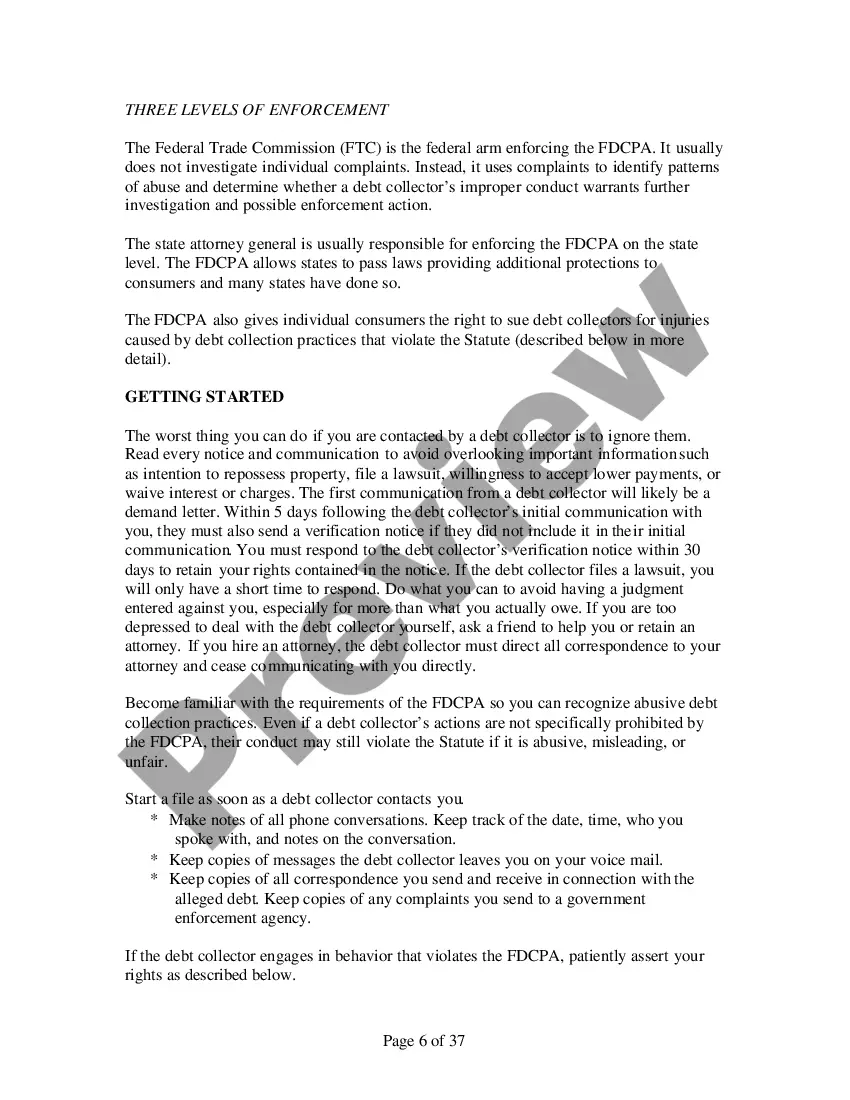
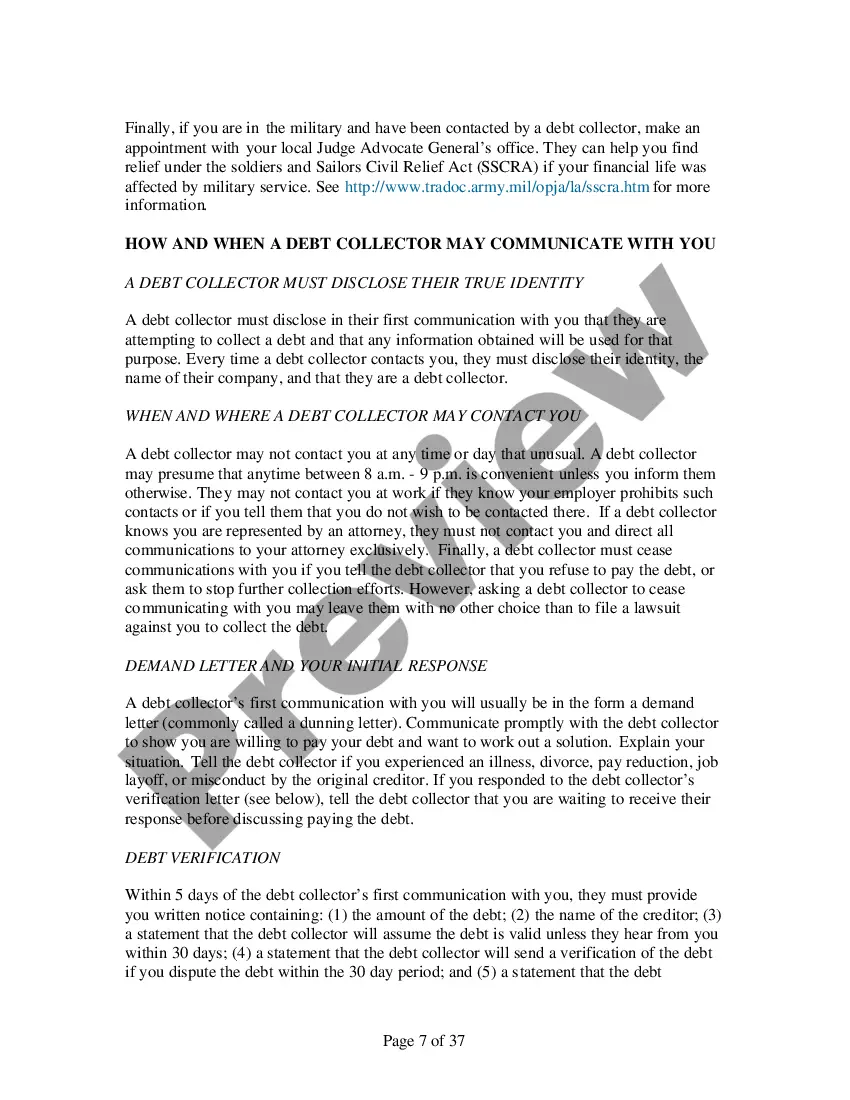
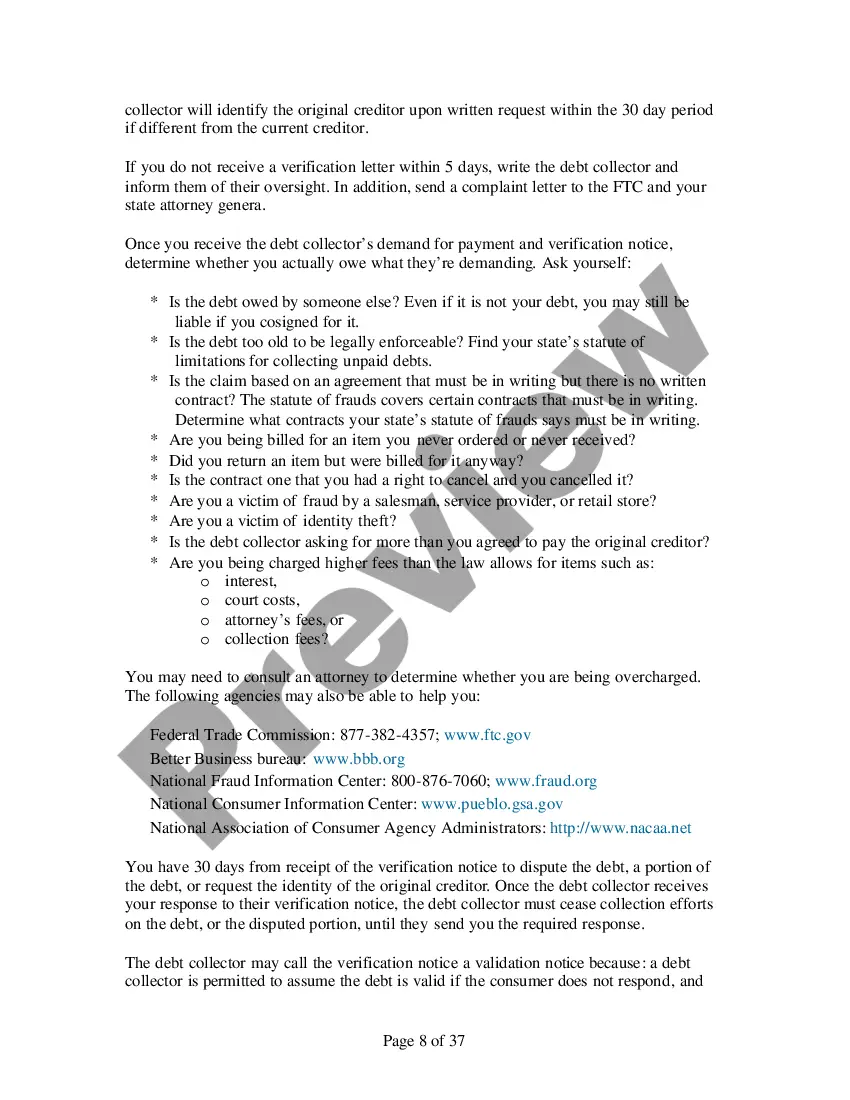
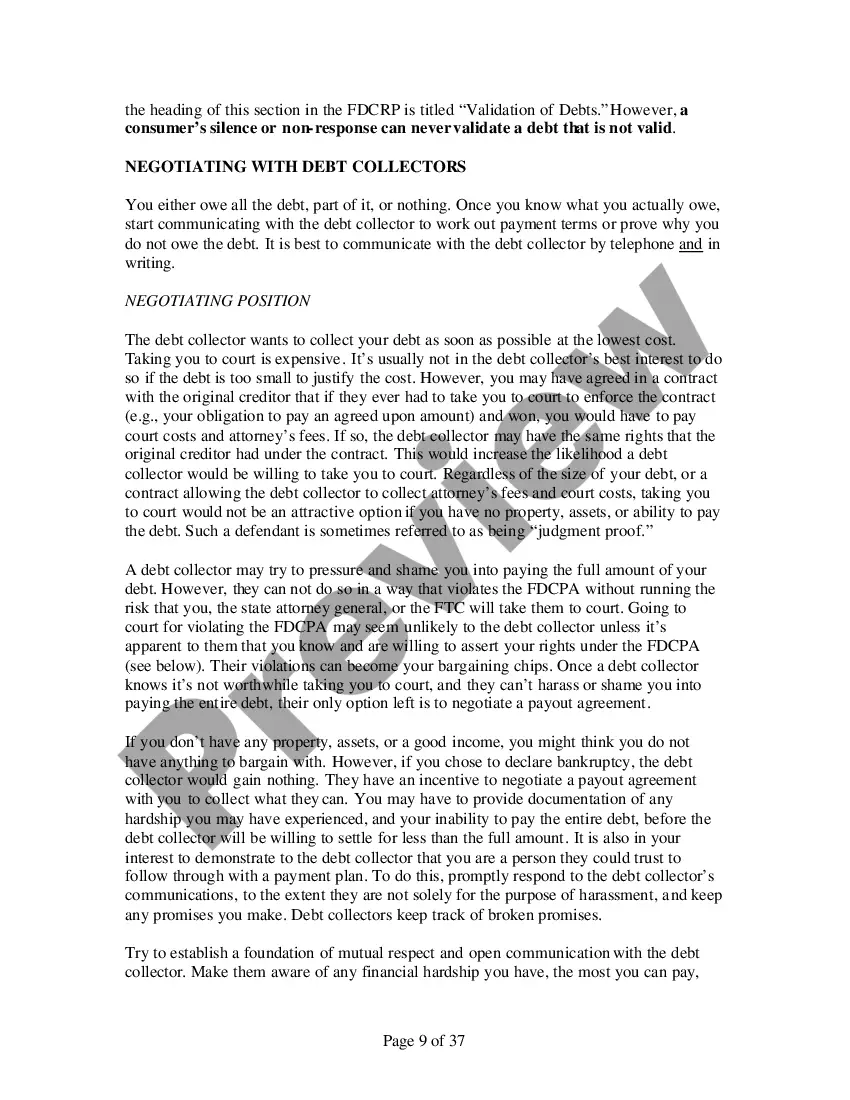
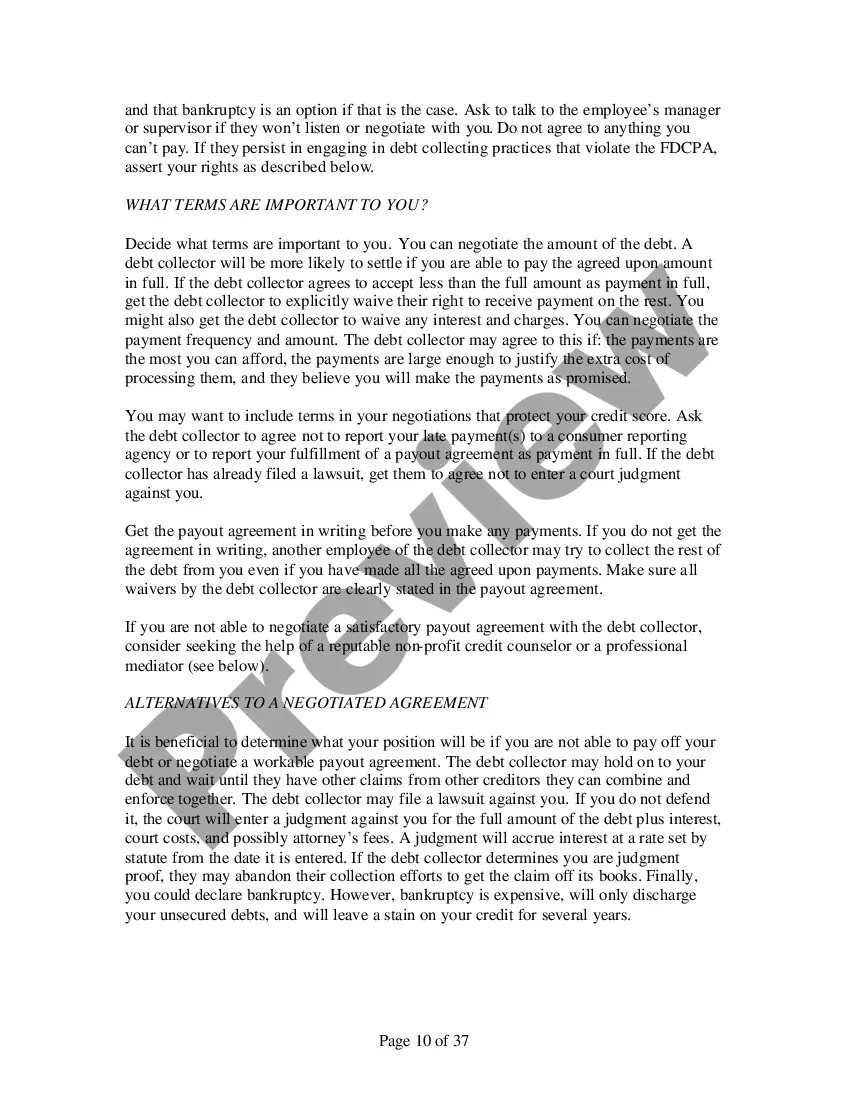
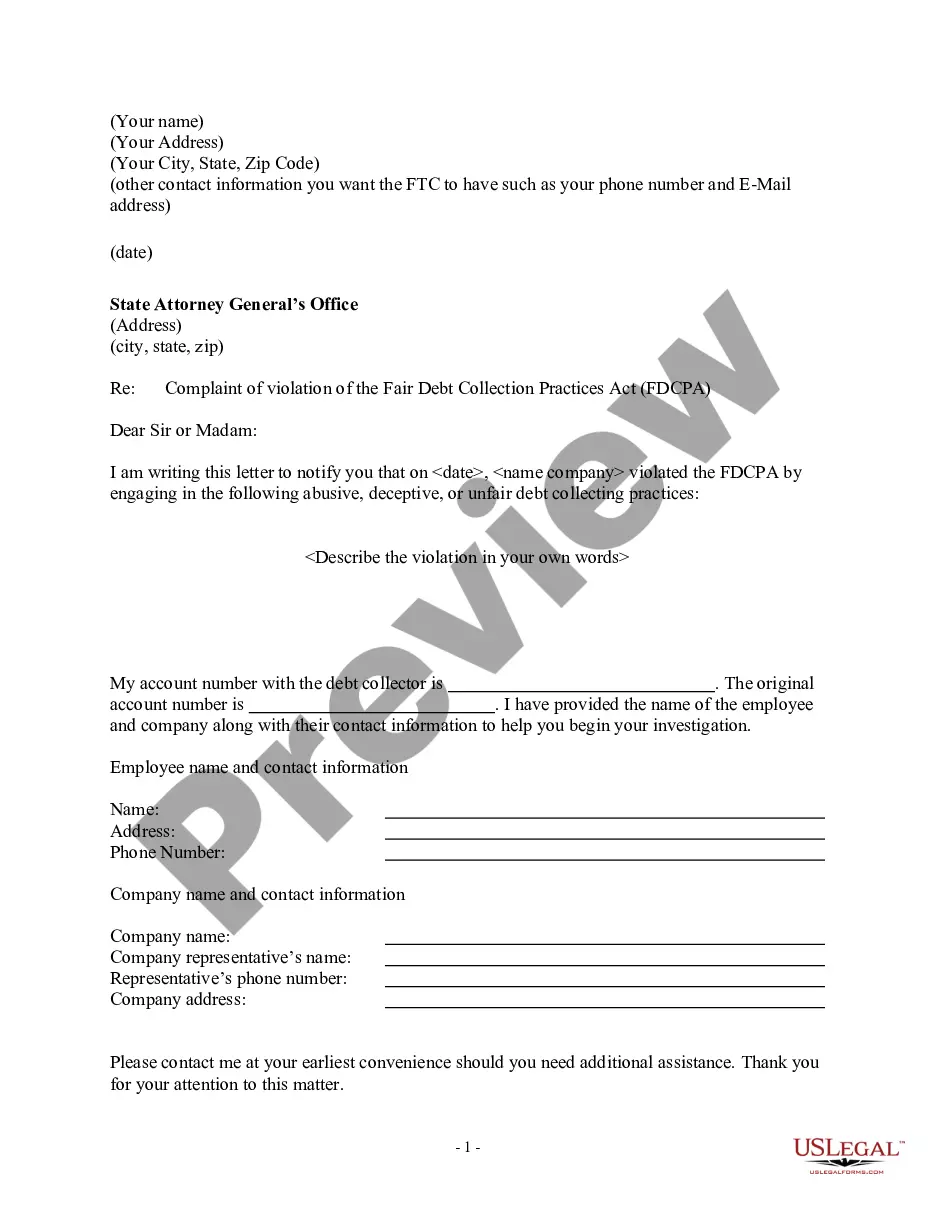
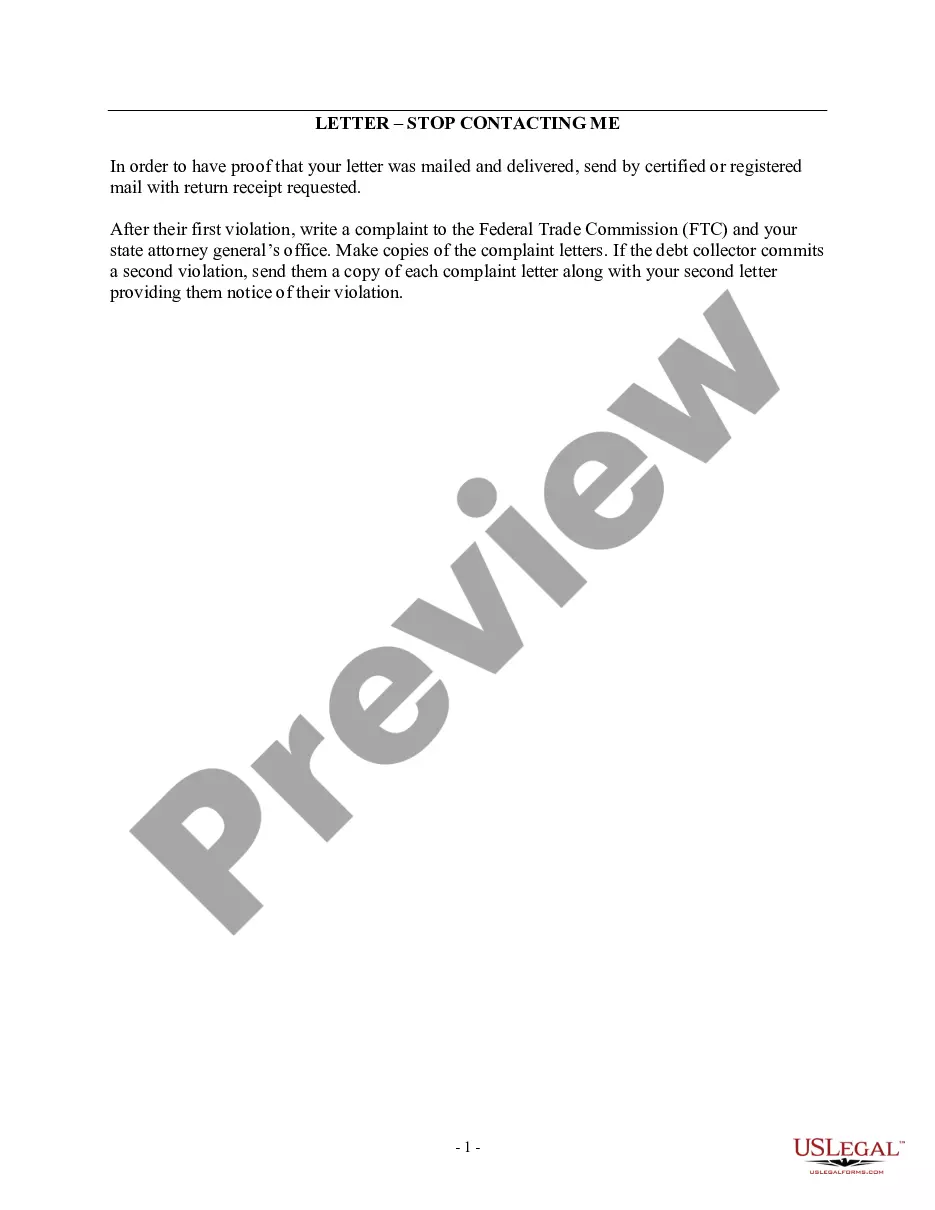
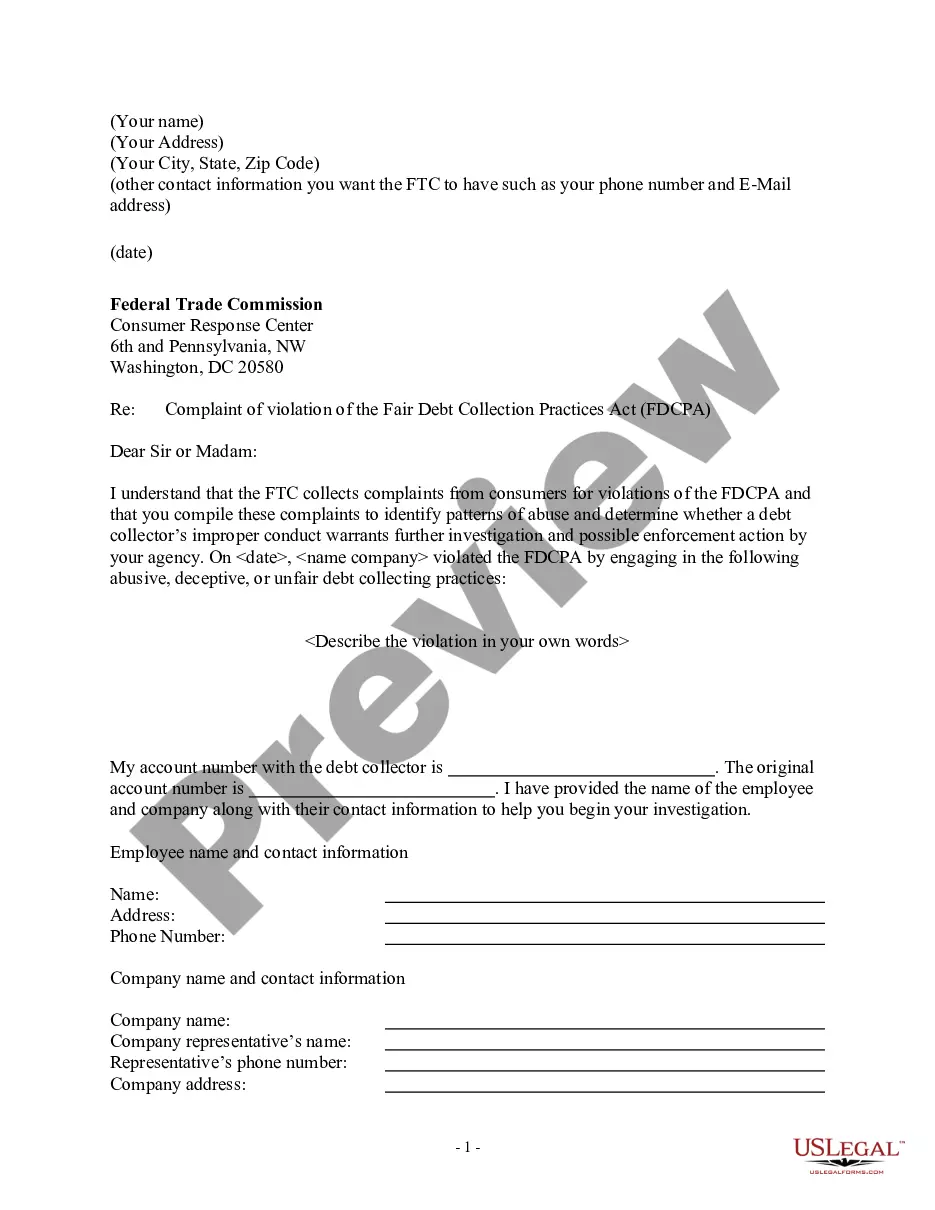
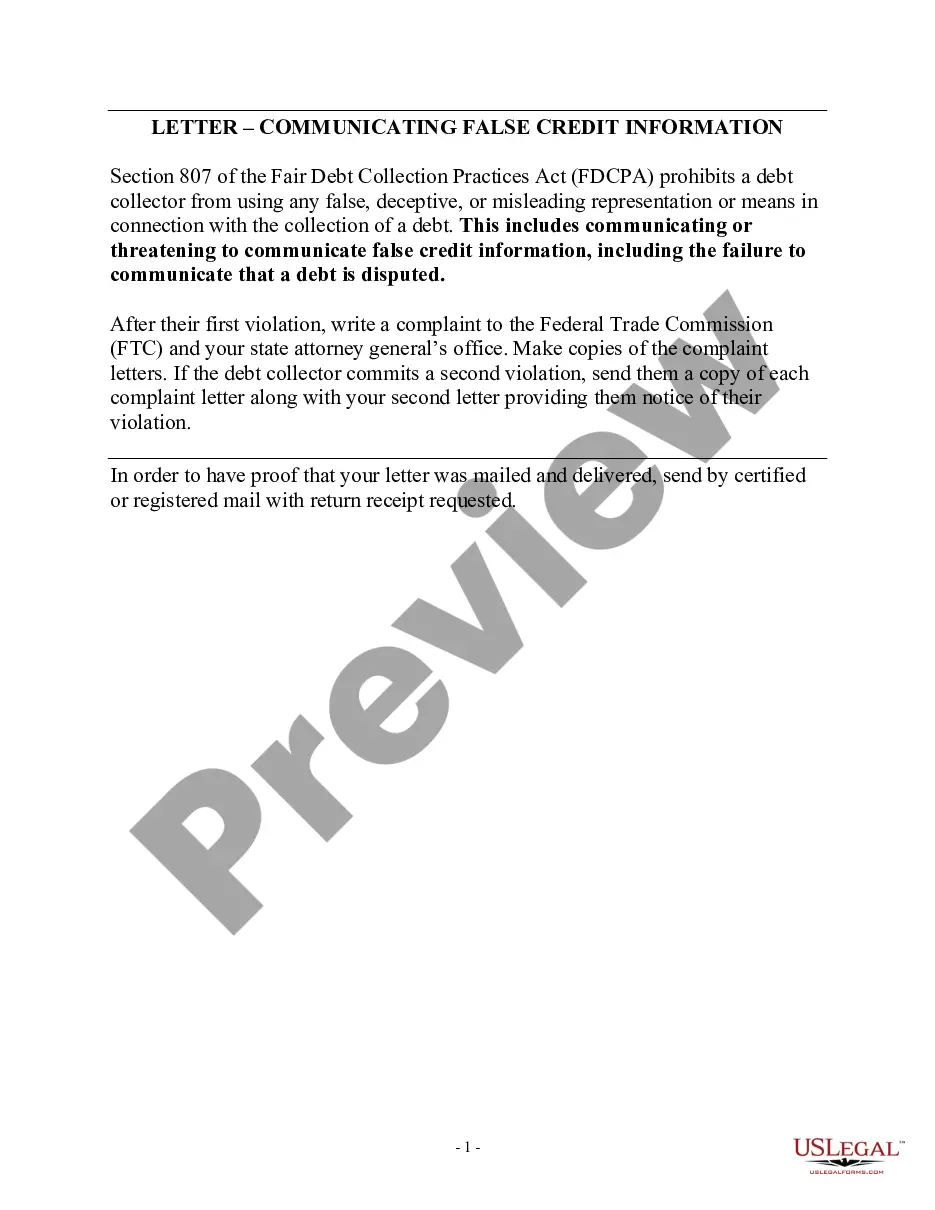
This handbook describes the Fair Debt Collection Practices Act (FDCPA) and discusses how to negotiate with debt collectors and creditors. The handbook is divided into 4 sections. Section 1 briefly describes how consumer credit got started. Section 2 describes how to deal with debt collectors. Section 3 provides a detailed overview of the FDCPA. Finally, Section 4 is a journal for you to use to document your communicatioins with debt collectors.
California Fair Debt Collection Practices Act Handbook
Category:
State:
Multi-State
Control #:
US-DCPA-23
Format:
PDF
Instant download
Description
Free preview

Get your form ready online
Our built-in tools help you complete, sign, share, and store your documents in one place.
Built-in online Word editor
Make edits, fill in missing information, and update formatting in US Legal Forms—just like you would in MS Word.
Export easily
Download a copy, print it, send it by email, or mail it via USPS—whatever works best for your next step.
E-sign your document
Sign and collect signatures with our SignNow integration. Send to multiple recipients, set reminders, and more. Go Premium to unlock E-Sign.
Notarize online 24/7
If this form requires notarization, complete it online through a secure video call—no need to meet a notary in person or wait for an appointment.
Store your document securely
We protect your documents and personal data by following strict security and privacy standards.

Make edits, fill in missing information, and update formatting in US Legal Forms—just like you would in MS Word.

Download a copy, print it, send it by email, or mail it via USPS—whatever works best for your next step.

Sign and collect signatures with our SignNow integration. Send to multiple recipients, set reminders, and more. Go Premium to unlock E-Sign.

If this form requires notarization, complete it online through a secure video call—no need to meet a notary in person or wait for an appointment.

We protect your documents and personal data by following strict security and privacy standards.
Looking for another form?



How to fill out Fair Debt Collection Practices Act Handbook?
Are you currently in a position where you need documentation for either business or personal purposes almost all the time.
There are numerous legal document templates accessible online, but finding versions you can trust is not simple.
US Legal Forms offers a vast array of form templates, such as the California Fair Debt Collection Practices Act Handbook, that are designed to fulfill state and federal requirements.
Once you find the correct form, click Buy now.
Select the payment plan you prefer, fill in the necessary information to create your account, and purchase your order using your PayPal or credit card.
- If you are already familiar with the US Legal Forms site and have an account, simply Log In.
- After that, you can download the California Fair Debt Collection Practices Act Handbook template.
- If you do not have an account and wish to start using US Legal Forms, follow these steps.
- Find the form you need and ensure it is for the correct city/region.
- Use the Review button to examine the form.
- Read the description to confirm that you have selected the appropriate form.
- If the form is not what you are looking for, utilize the Search field to locate the form that fits your needs.
Form popularity
FAQ
A statute of limitations is a law that tells you how long someone has to sue you. In California, most credit card companies and their debt collectors have only four years to do so. Once that period elapses, the credit card company or collector loses its right to file a lawsuit against you.
In California, the statute of limitations on most debts is four years. With some limited exceptions, creditors and debt buyers can't sue to collect debt that is more than four years old. When the debt is based on a verbal agreement, that time is reduced to two years.
Your credit card debt, auto loans, medical bills, student loans, mortgage, and other household debts are covered under the FDCPA.
It is the purpose of this subchapter to eliminate abusive debt collection practices by debt collectors, to insure that those debt collectors who refrain from using abusive debt collection practices are not competitively disadvantaged, and to promote consistent State action to protect consumers against debt collection
California has a statute of limitations of four years for most types of debt (20 years for state tax debt). The only exception are debts taken on via an oral contract, which are subject to a statute of limitations of two years. Be careful about paying or promising to pay debts that exceed the statute of limitations.
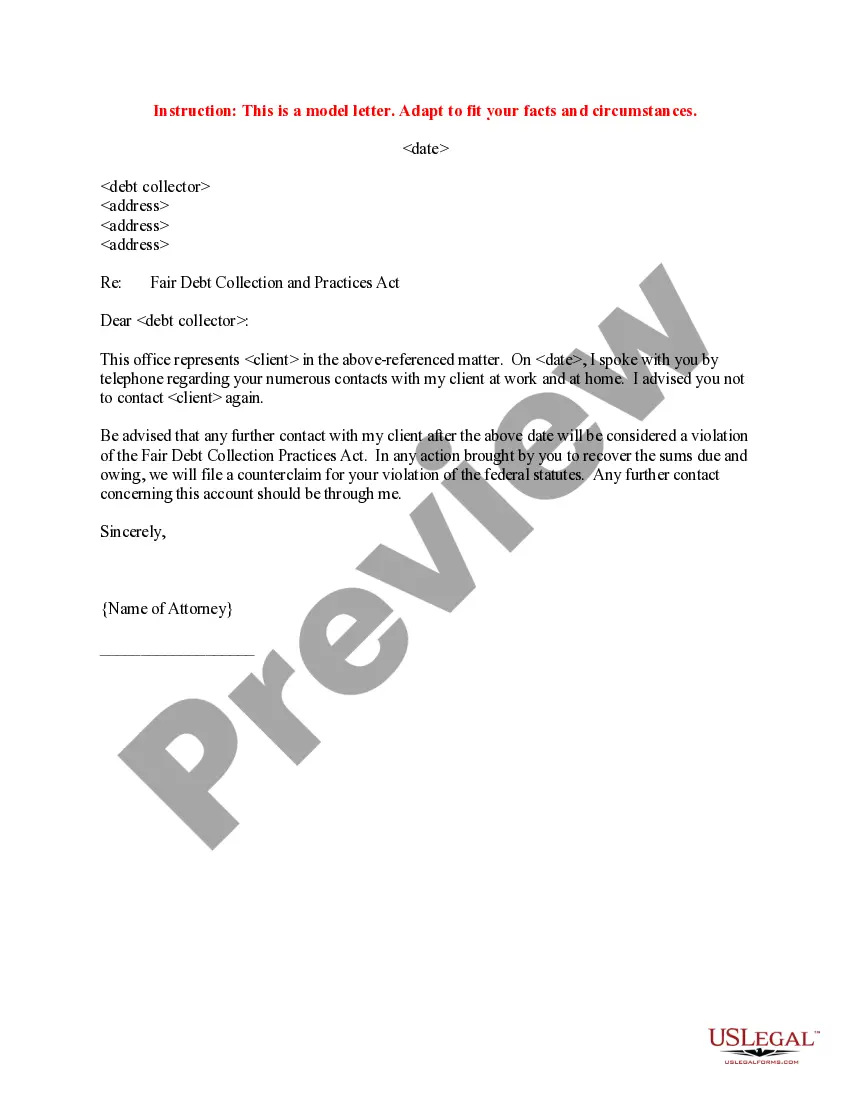
The California statute is called the Rosenthal Fair Debt Collection Practices Act. Creditors and debt collection agencies are permitted to take reasonable steps to enforce and collect payment of debts. That is because an efficient and productive economy requires a credit process.
What are the provisions of the FDCPA?Call Time Restrictions.Honoring Workplace Opt-Outs.Honoring Home Phone Opt-Outs.Restrictions Against Harassment.Restrictions Against Unfair Practices.Restrictions Against False Lawsuit Threats.
In California, the statute of limitations for consumer debt is four years. This means a creditor can't prevail in court after four years have passed, making the debt essentially uncollectable. But there are tricks that can restart the debt clock.
7 Most Common FDCPA ViolationsContinued attempts to collect debt not owed.Illegal or unethical communication tactics.Disclosure verification of debt.Taking or threatening illegal action.False statements or false representation.Improper contact or sharing of info.Excessive phone calls.16 Sept 2020
California has a statute of limitations of four years for most types of debt (20 years for state tax debt). The only exception are debts taken on via an oral contract, which are subject to a statute of limitations of two years.