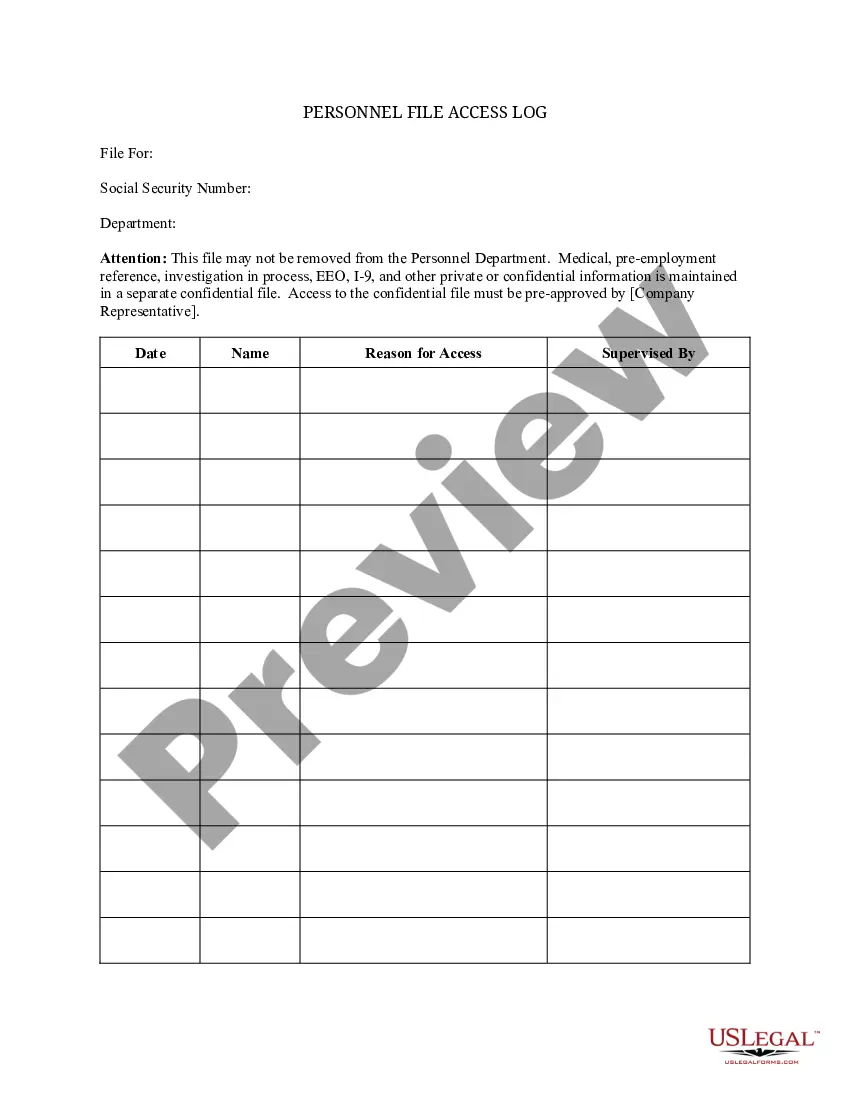
California Personnel File Access Log
Description
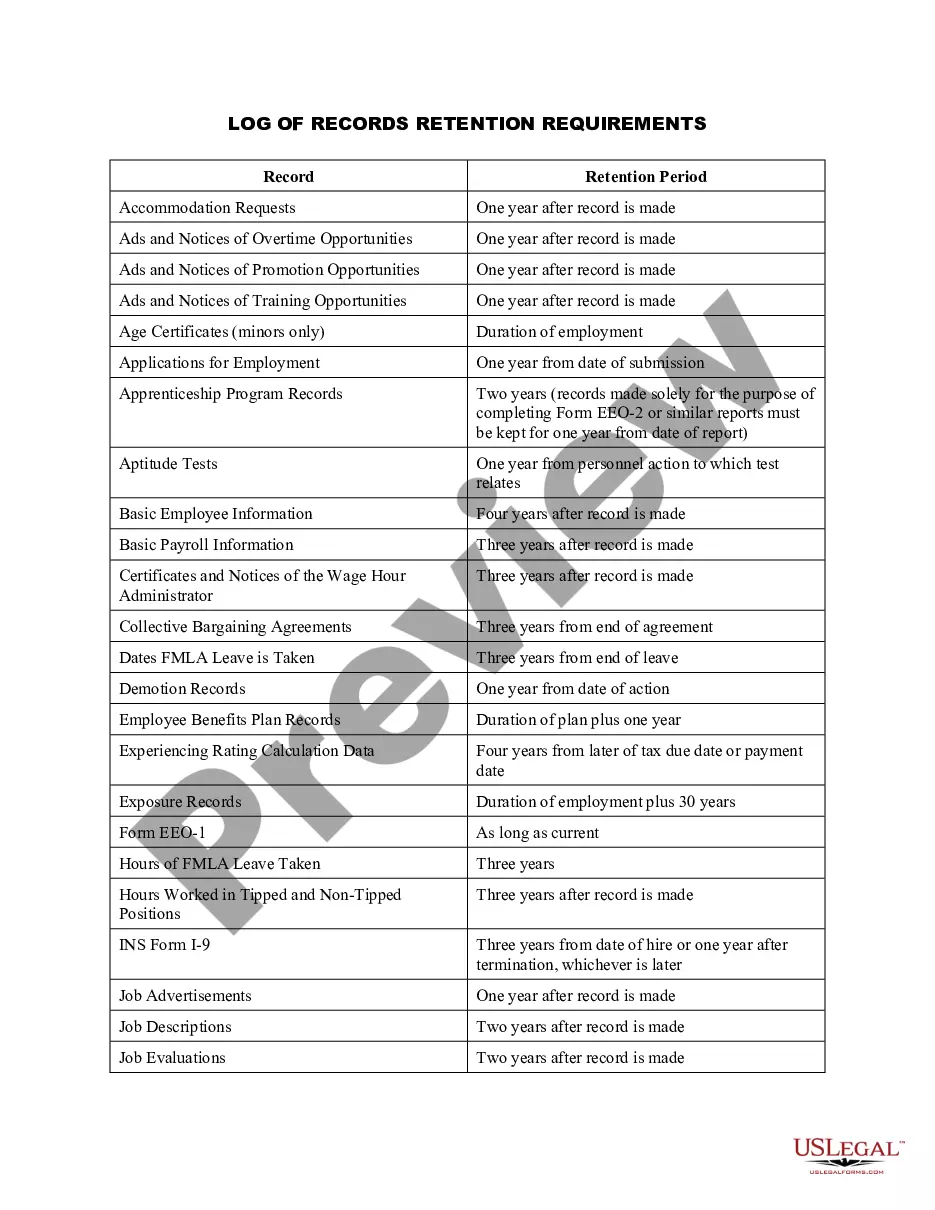
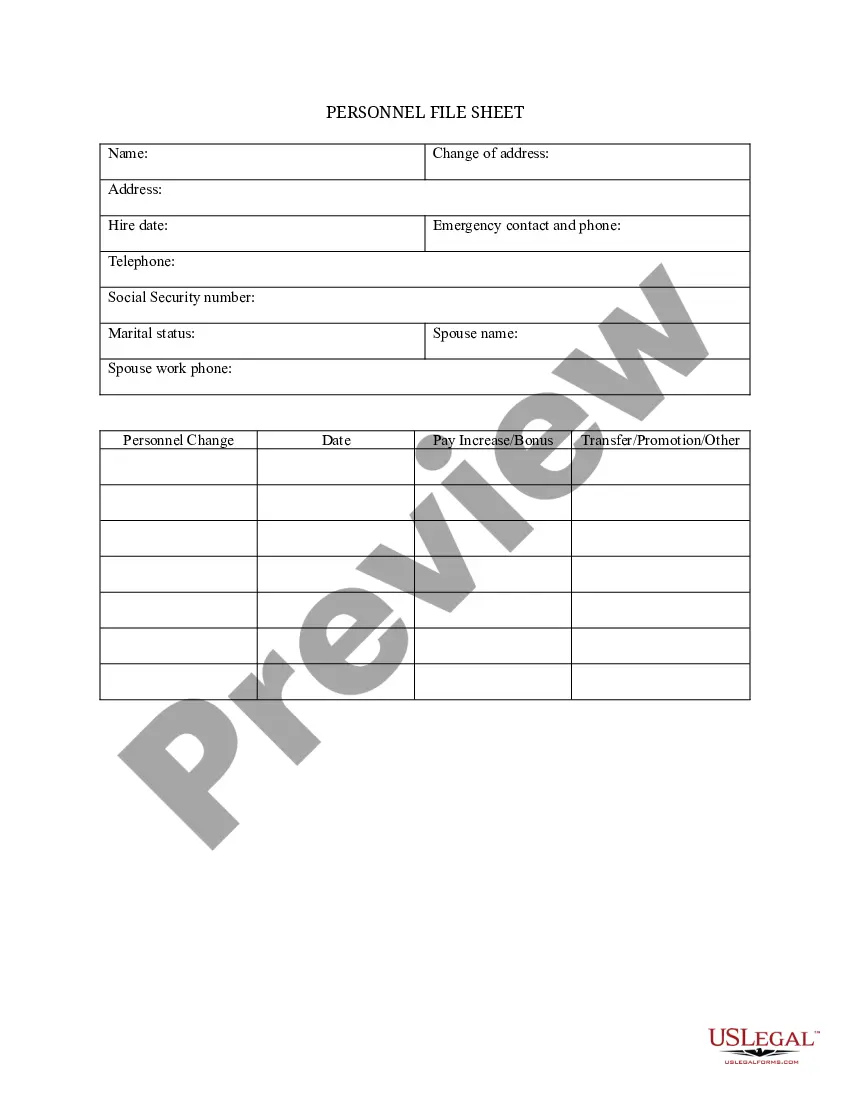
Get your form ready online
Our built-in tools help you complete, sign, share, and store your documents in one place.
Make edits, fill in missing information, and update formatting in US Legal Forms—just like you would in MS Word.
Download a copy, print it, send it by email, or mail it via USPS—whatever works best for your next step.
Sign and collect signatures with our SignNow integration. Send to multiple recipients, set reminders, and more. Go Premium to unlock E-Sign.
If this form requires notarization, complete it online through a secure video call—no need to meet a notary in person or wait for an appointment.
We protect your documents and personal data by following strict security and privacy standards.

Make edits, fill in missing information, and update formatting in US Legal Forms—just like you would in MS Word.

Download a copy, print it, send it by email, or mail it via USPS—whatever works best for your next step.

Sign and collect signatures with our SignNow integration. Send to multiple recipients, set reminders, and more. Go Premium to unlock E-Sign.

If this form requires notarization, complete it online through a secure video call—no need to meet a notary in person or wait for an appointment.

We protect your documents and personal data by following strict security and privacy standards.
Looking for another form?




How to fill out Personnel File Access Log?
You can spend hours online searching for the valid document format that complies with the state and federal requirements you need.
US Legal Forms provides a vast array of lawful templates that have been reviewed by experts.
It is easy to download or print the California Personnel File Access Log from the service.
To find another version of your form, use the Search field to locate the format that suits your requirements and specifications.
- If you already have a US Legal Forms account, you can Log In and click the Acquire button.
- After that, you can fill out, modify, print, or sign the California Personnel File Access Log.
- Each legal document format you receive is yours indefinitely.
- To obtain another copy of the acquired form, visit the My documents section and click the corresponding button.
- If this is your first time using the US Legal Forms website, follow the simple instructions below.
- First, ensure you have chosen the correct document format for the area/city of your choice.
- Check the form details to ensure you have selected the appropriate form.
Form popularity
FAQ
Under the pre-CCPA privacy laws, employment records are deemed confidential in California and disclosure is restricted absent a subpoena and notice. Workers have certain access rights under various California laws other than the CCPA but, until the CCPA, the right was limited to specific categories of data.
As an employee, do I have a right to see my personnel files? The short answer is 'yes'. You have a right to make a SAR to your employer, asking to see your personnel files, at any time. Your employer has the right to ask why you want to see your files, but must then provide all your records to you.
Personal employee information will be considered confidential and as such will be shared only as required and with those who have a need to have access to such information. All hard copy records will be maintained in locked, secure areas with access limited to those who have a need for such access.
Confidential Employee Information Personal data: Social Security Number, date of birth, marital status, and mailing address. Job application data: resume, background checks, and interview notes. Employment information: employment contract, pay rate, bonuses, and benefits.
As an employee, do I have a right to see my personnel files? The short answer is 'yes'. You have a right to make a SAR to your employer, asking to see your personnel files, at any time. Your employer has the right to ask why you want to see your files, but must then provide all your records to you.
Summary: A staff employee's confidential file contains documents not directly related to the employee's job and may contain personal information. The confidential file is part of an employee's personnel record.
Labor Code section 1198.5 provides that employers must keep a copy of the employee's personnel records for three years after the employee has left the company. Labor Code section 1198.5(c)(1).
Superior Court (2008) 165 Cal. App. 4th 1412, 1432 (permitting discovery of non-party potential class members in a class action lawsuit). Personnel records from one's place of employment are confidential and are sometimes protected from disclosure by the right to privacy.
Effective January 1, 2013, California law provides that current and former employees (or a representative) have the right to inspect and receive a copy of the personnel files and records that relate to the employee's performance or to any grievance concerning the employee.
The short answer is 'yes'. You have a right to make a SAR to your employer, asking to see your personnel files, at any time. Your employer has the right to ask why you want to see your files, but must then provide all your records to you.