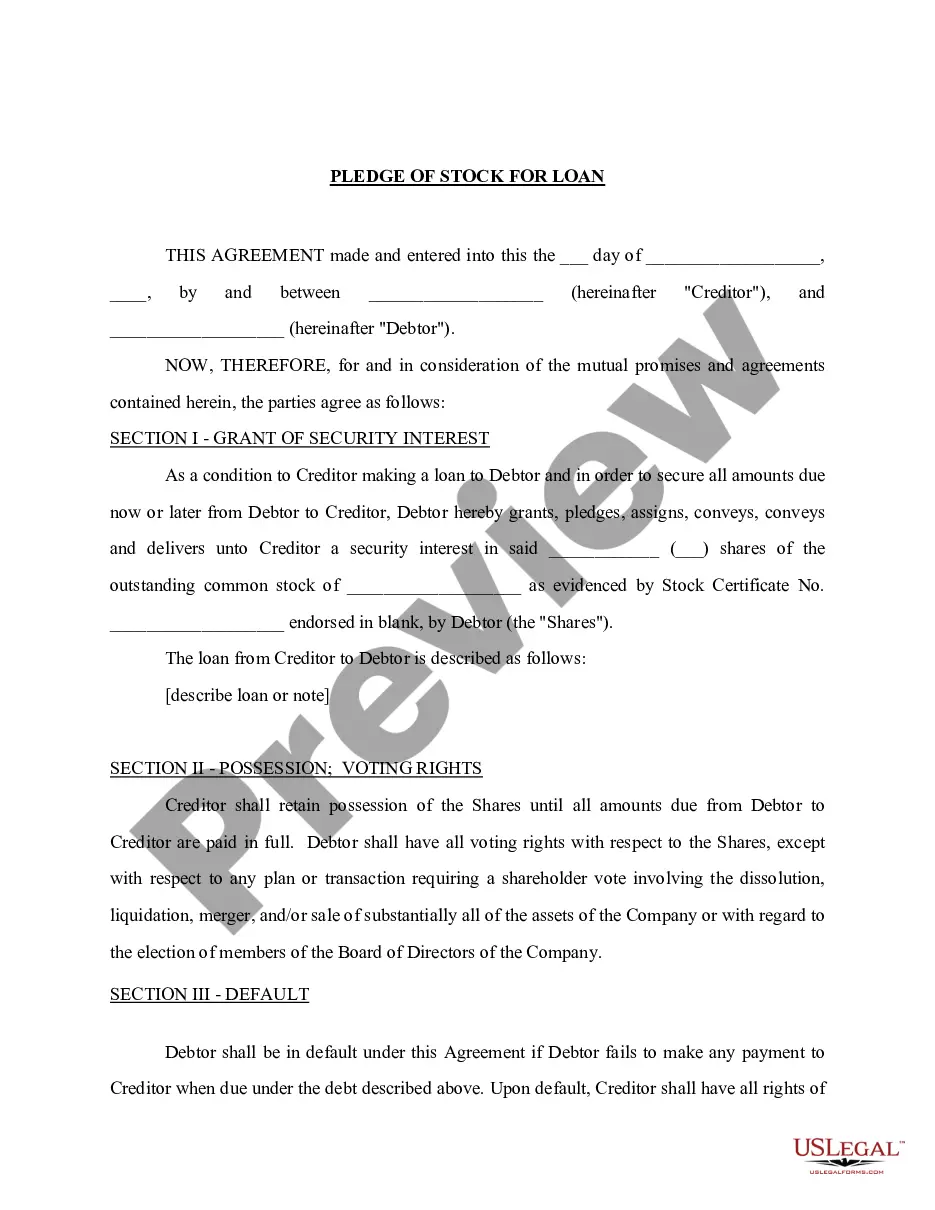
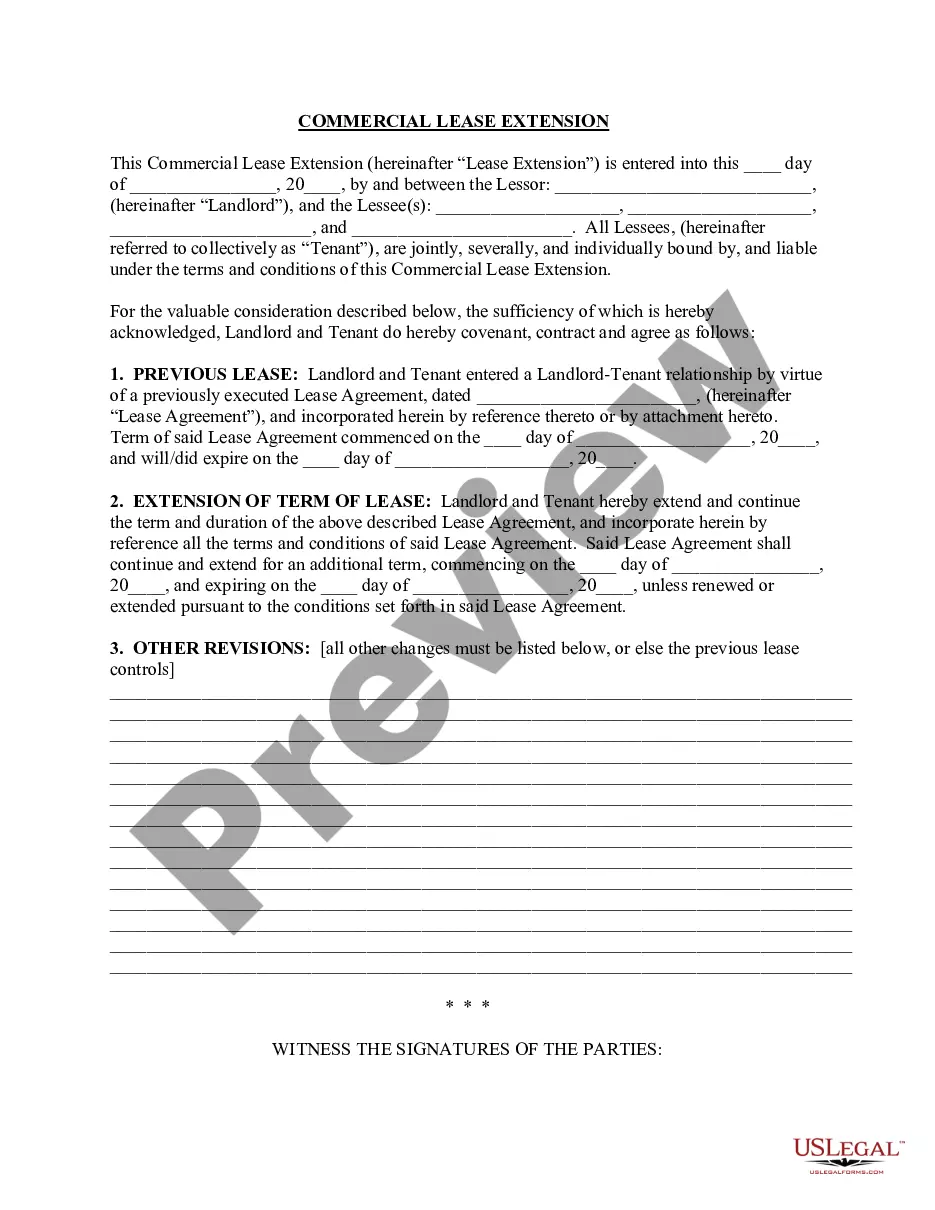
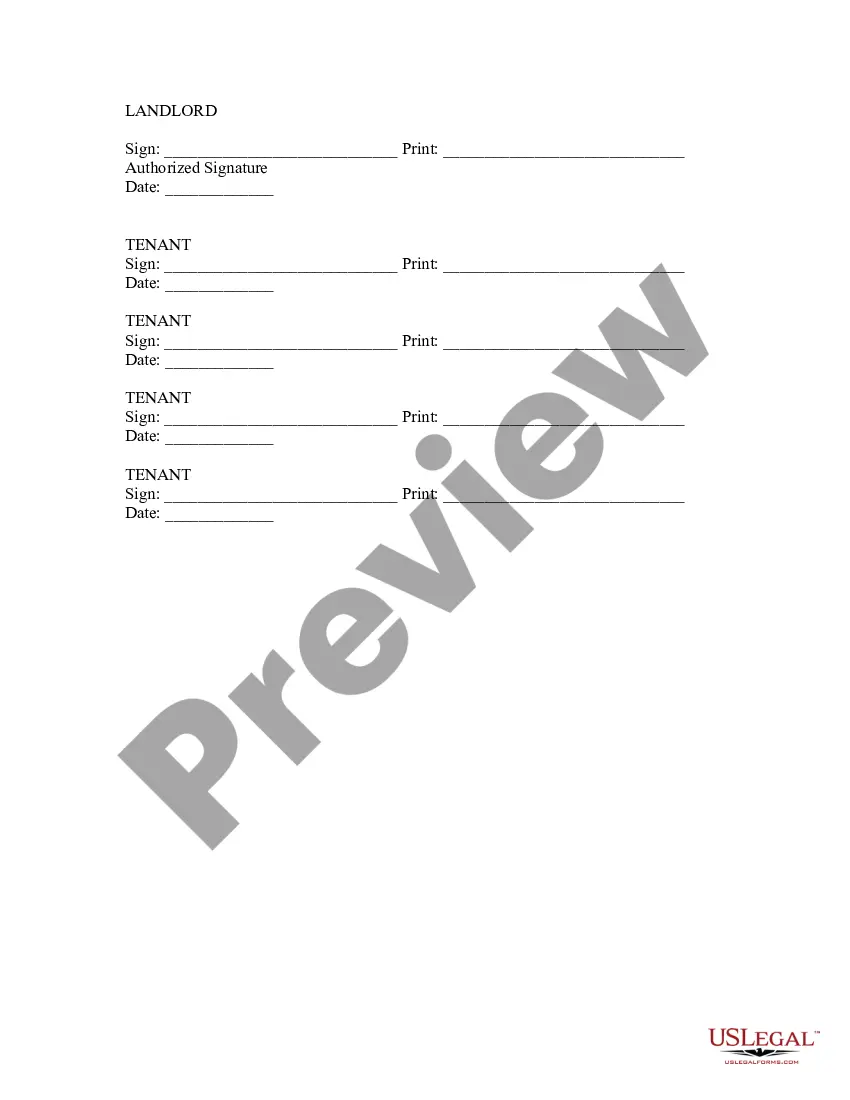
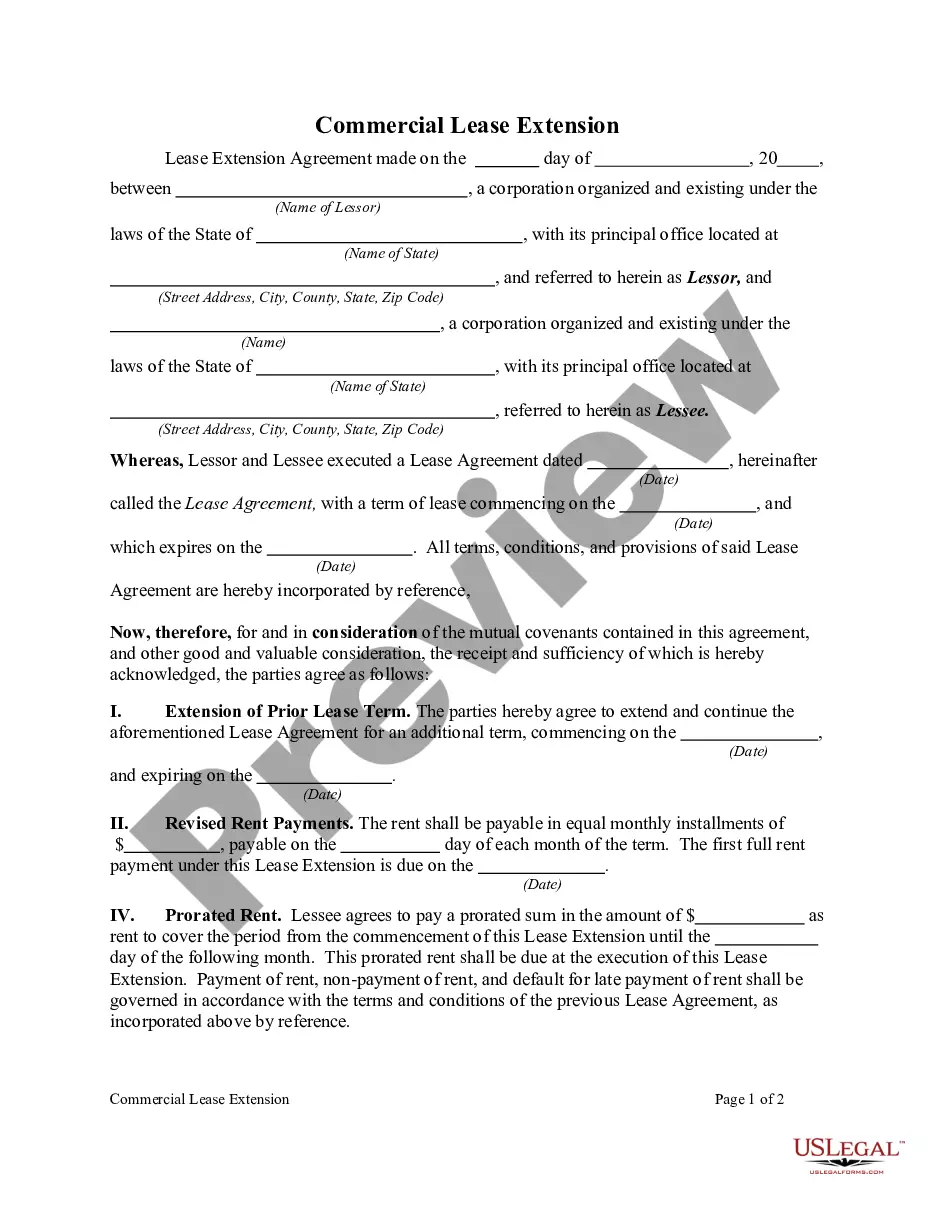
California Commercial Lease Extension
Description
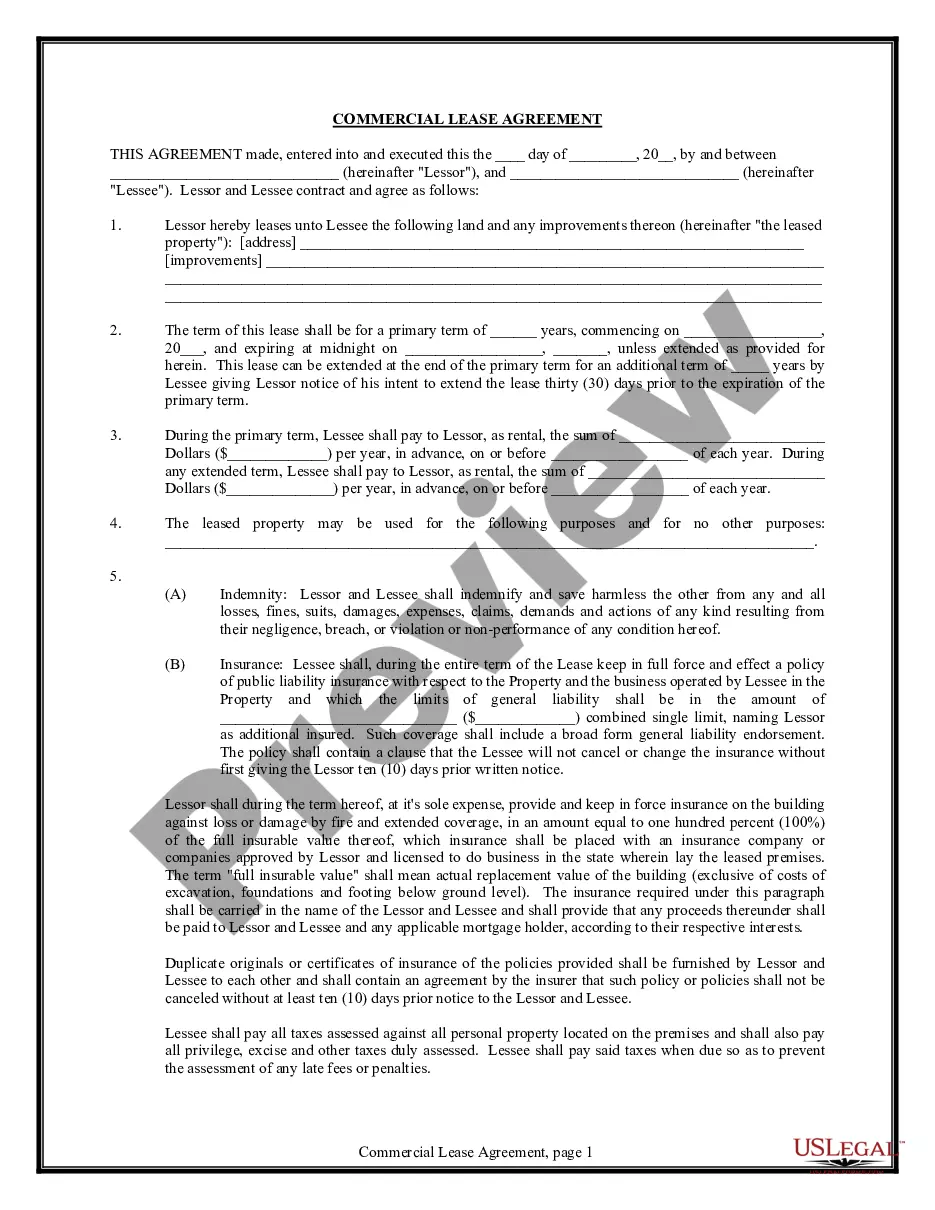
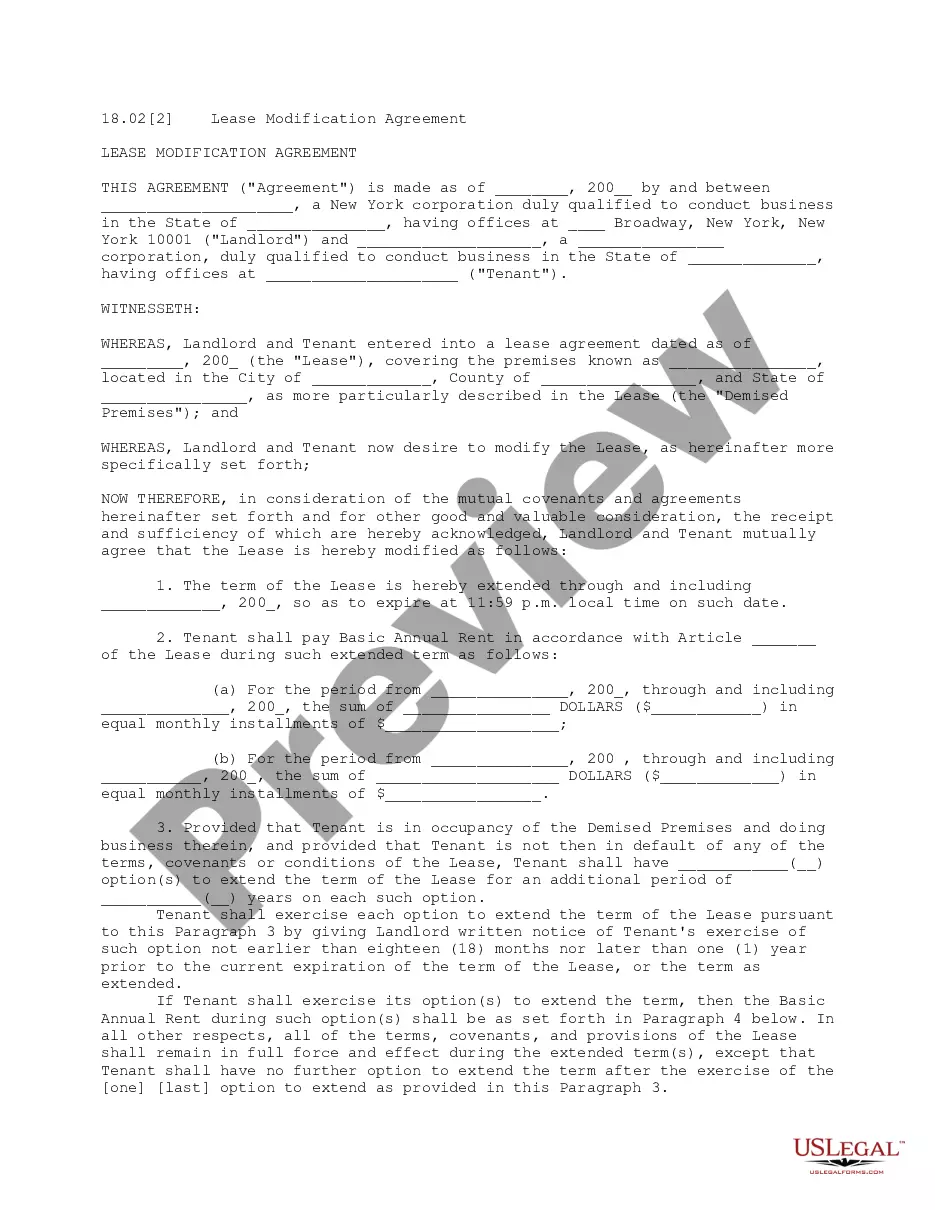
Get your form ready online
Our built-in tools help you complete, sign, share, and store your documents in one place.
Make edits, fill in missing information, and update formatting in US Legal Forms—just like you would in MS Word.
Download a copy, print it, send it by email, or mail it via USPS—whatever works best for your next step.
Sign and collect signatures with our SignNow integration. Send to multiple recipients, set reminders, and more. Go Premium to unlock E-Sign.
If this form requires notarization, complete it online through a secure video call—no need to meet a notary in person or wait for an appointment.
We protect your documents and personal data by following strict security and privacy standards.

Make edits, fill in missing information, and update formatting in US Legal Forms—just like you would in MS Word.

Download a copy, print it, send it by email, or mail it via USPS—whatever works best for your next step.

Sign and collect signatures with our SignNow integration. Send to multiple recipients, set reminders, and more. Go Premium to unlock E-Sign.

If this form requires notarization, complete it online through a secure video call—no need to meet a notary in person or wait for an appointment.

We protect your documents and personal data by following strict security and privacy standards.
Looking for another form?
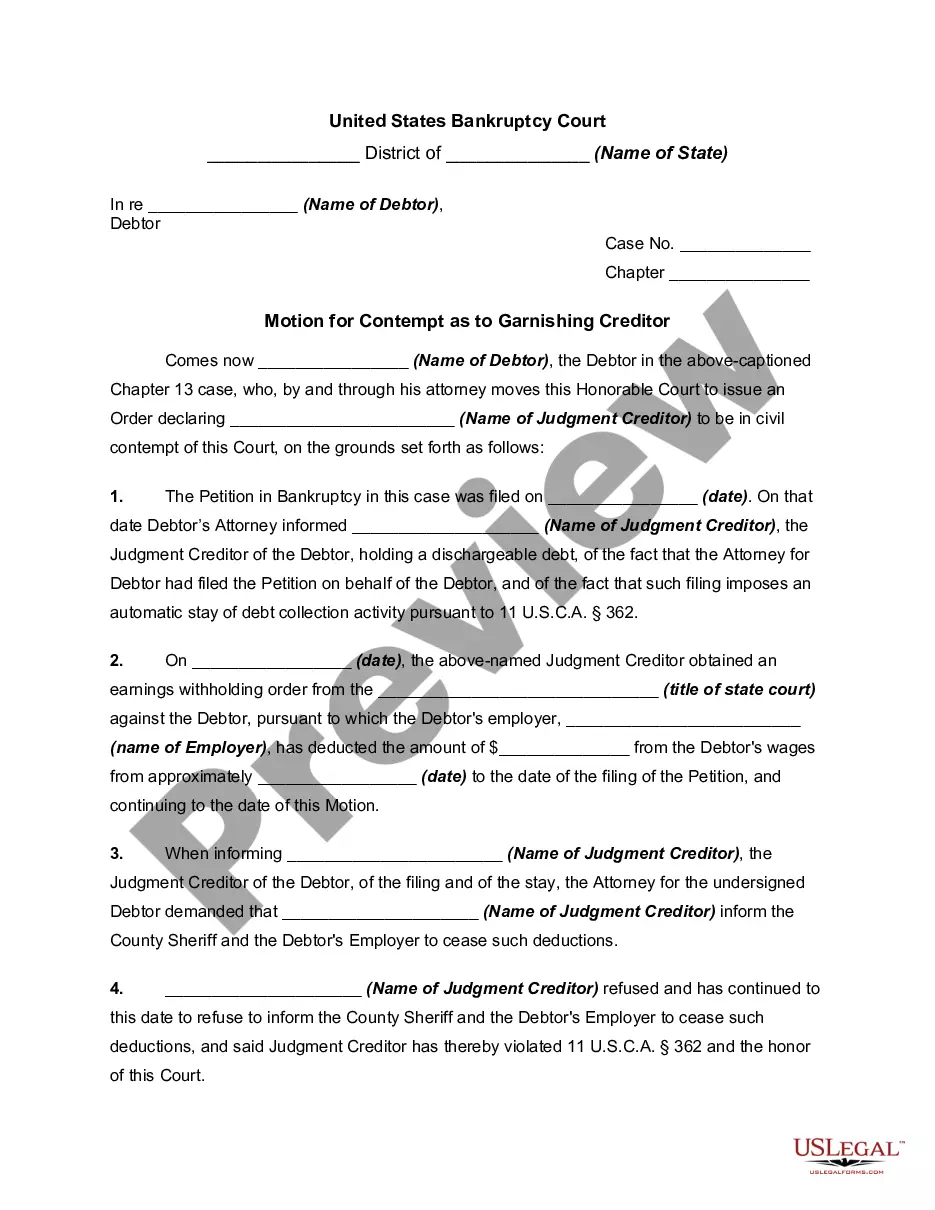
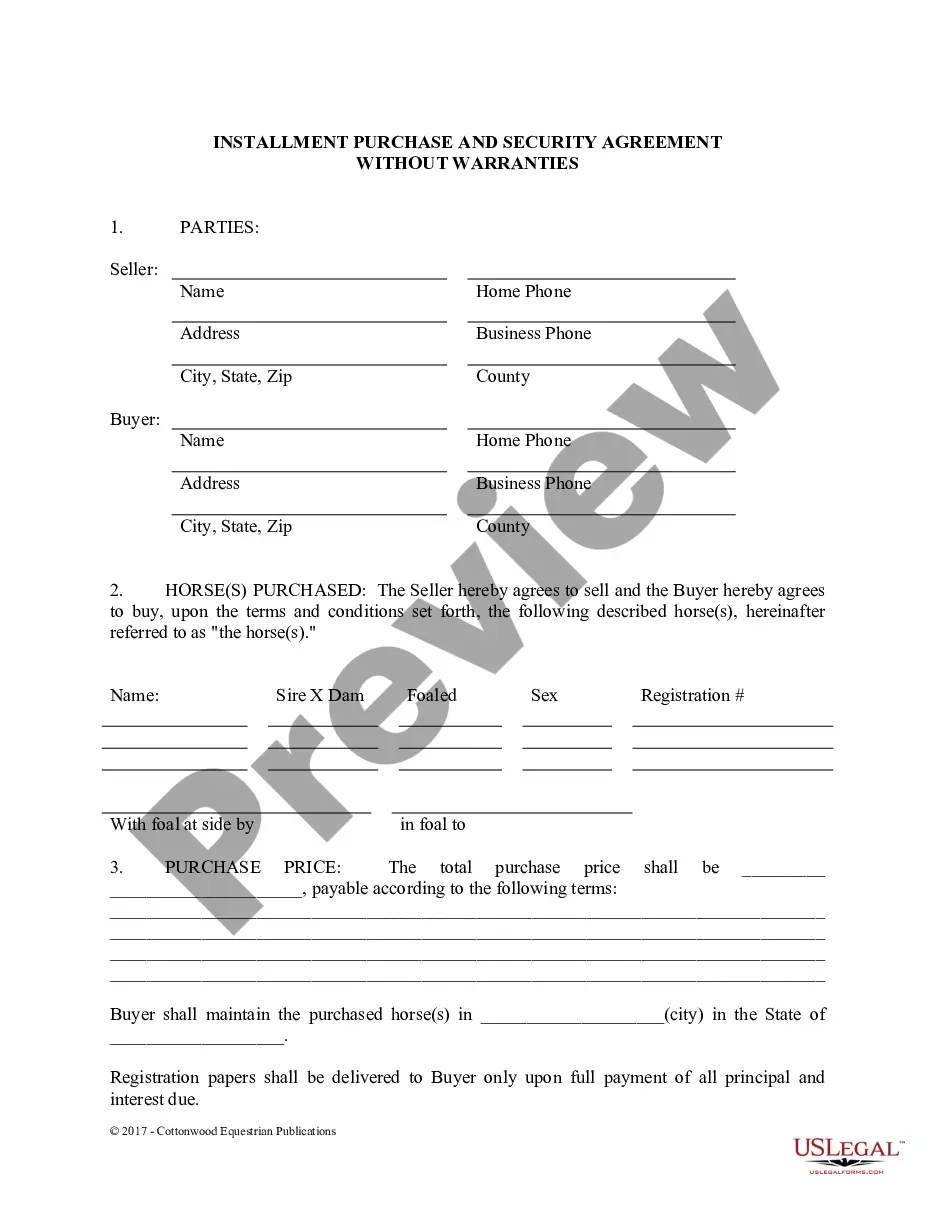
How to fill out Commercial Lease Extension?
Selecting the correct sanctioned document format can be a challenge.
Of course, there are numerous templates accessible on the web, but how can you locate the authorized version you need.
Utilize the US Legal Forms platform. This service offers a vast selection of templates, such as the California Commercial Lease Extension, suitable for both business and personal requirements. All forms are verified by experts and comply with state and federal standards.
If the form does not meet your requirements, utilize the Search area to find the suitable form. Once you are confident that the form is appropriate, click the Acquire now button to obtain the document. Choose the pricing plan you prefer and input the necessary details. Create your account and process the payment using your PayPal account or credit card. Select the file format and download the official document format to your device. Complete, revise, print, and sign the acquired California Commercial Lease Extension. US Legal Forms is the largest collection of legal templates where you can find various document formats. Use the service to acquire well-crafted documents that adhere to state regulations.
- If you are already registered, Log Into your account and click the Obtain button to get the California Commercial Lease Extension.
- Use your account to browse through the legal forms you have previously acquired.
- Visit the My documents section of your account to obtain another copy of the document you need.
- If you are a new user of US Legal Forms, here are simple steps for you to follow.
- Firstly, ensure you have selected the correct form for your jurisdiction/state.
- You can examine the form using the Review option and read the form details to confirm this is indeed the correct one for you.
Form popularity
FAQ
Every rental property in California (that is not exempt from AB 1482) can have an annual rent increase of 5% plus the annual CPI (Consumer Price Index) percentage change.
Can the contractual term of a commercial lease be extended? Yes. Subject to satisfying certain criteria, business tenants have a statutory right under the Landlord and Tenant Act 1954 to extend the contractual term of their lease. At the end of the lease, the tenant can ask the landlord for a new lease.
Under the provisions of the TPA, landlords are allowed to increase rents each year by 5% plus the applicable average increase in the cost of living in order to allow for inflation. There is a maximum increase of 10% allowed in any given year, thus the Act's provision is often referred to as a rent cap.
For commercial tenants on protected leases, as long as they continue paying rent what happens when the lease expires is largely up to them as the lease will turn into a periodic tenancy and retain protection from the Act.
There's No Rent Control Rent control, or the capping of rents and rent hikes in a specific area, doesn't apply to commercial property. So, if you're taking a commercial lease in a rent control city like San Francisco, you should not expect to receive these protections.
Rent increases cannot exceed 5% plus the percentage of annual increase in the cost of living adjustment promulgated by the U.S. Department of Labor, Bureau of Labor Statistics. The total increase is capped at 10% annually, and only one increase is allowed in any 12 month period.
The landlord's right to refuse Your landlord can refuse to renew your lease if: you're in breach of your obligations (for example, you've not paid your rent) they want to use the premises themselves, for their business, or to live there.
Commercial tenants usually remain in a property when a lease has expired because they are still negotiating the terms of a new, renewed lease with the landlord or they have an informal agreement to stay on.
When the lease ends, landlords can increase the rent on a holdover tenant. California courts have found commercial rent increases of 150% to be enforceable, since the tenant could choose to leave the unit instead of paying the increased rent.
Landlord may increase rent once every 12 months, limited to 3% of the current rent, or the regional Consumer Price Index (CPI), whichever is higher. Rent increases are expressly subject to the provisions of AB 1482 California Tenant Protections Act (Cal.