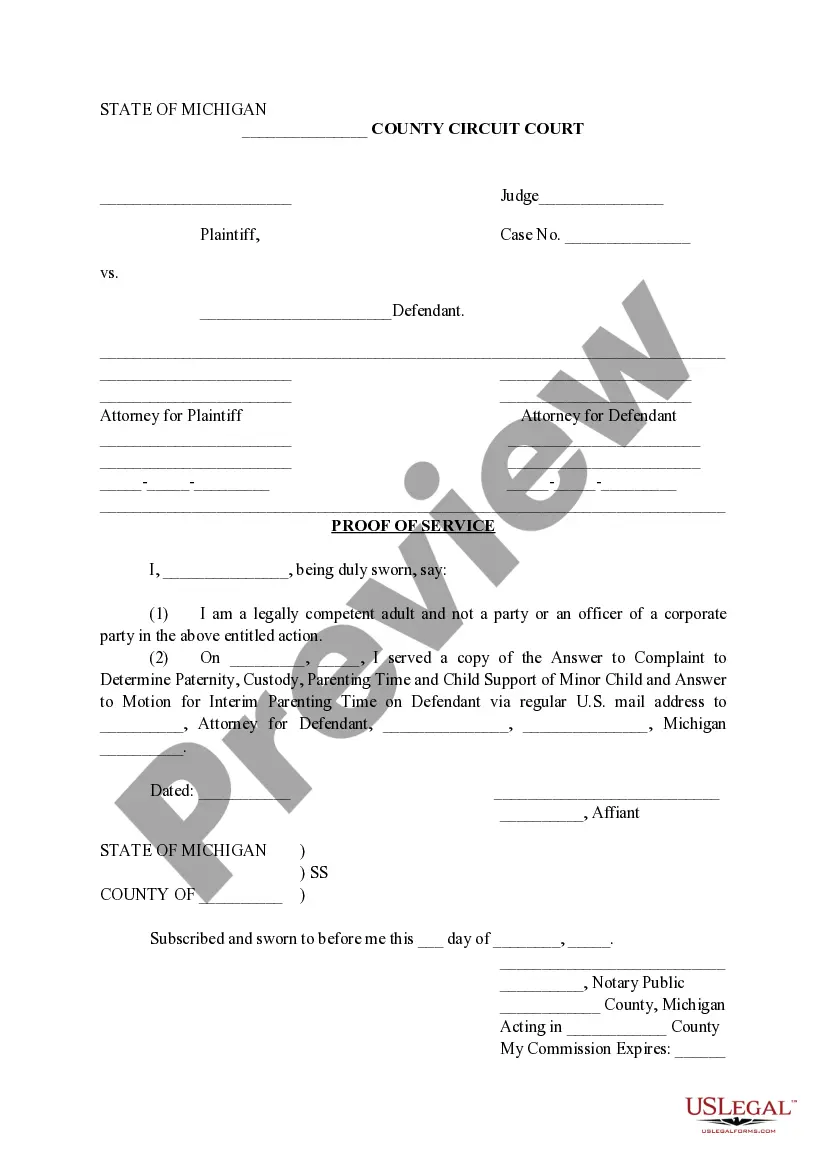
Informed Consent for Virtual Counseling Services
What is this form?
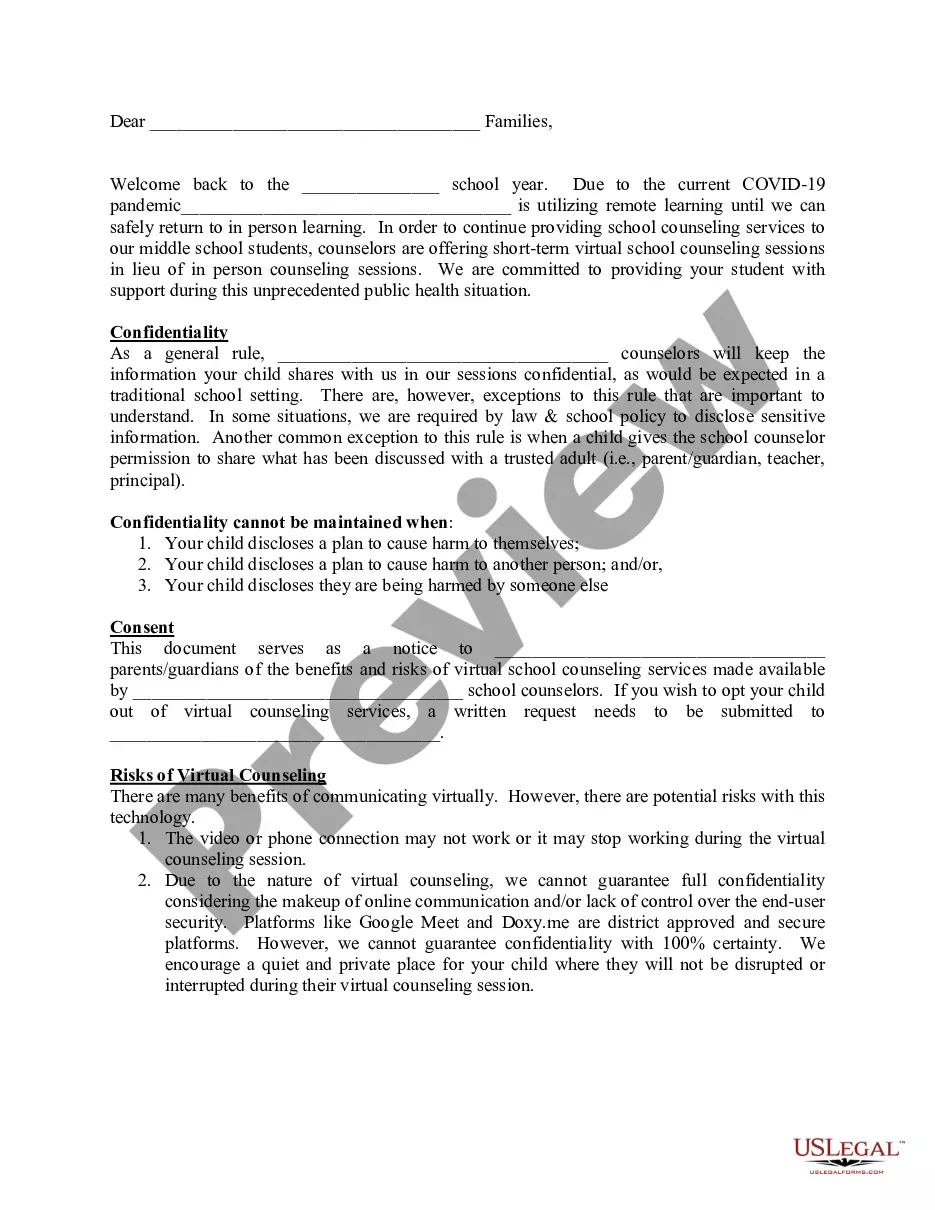
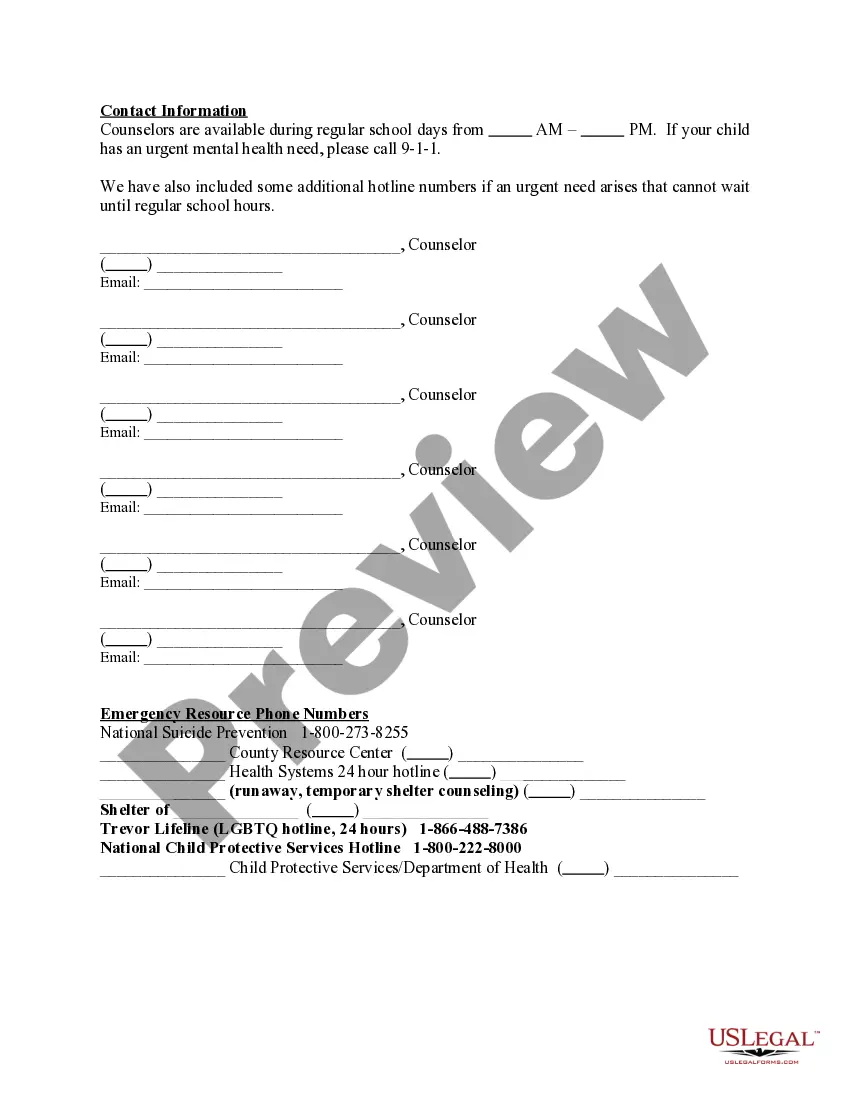
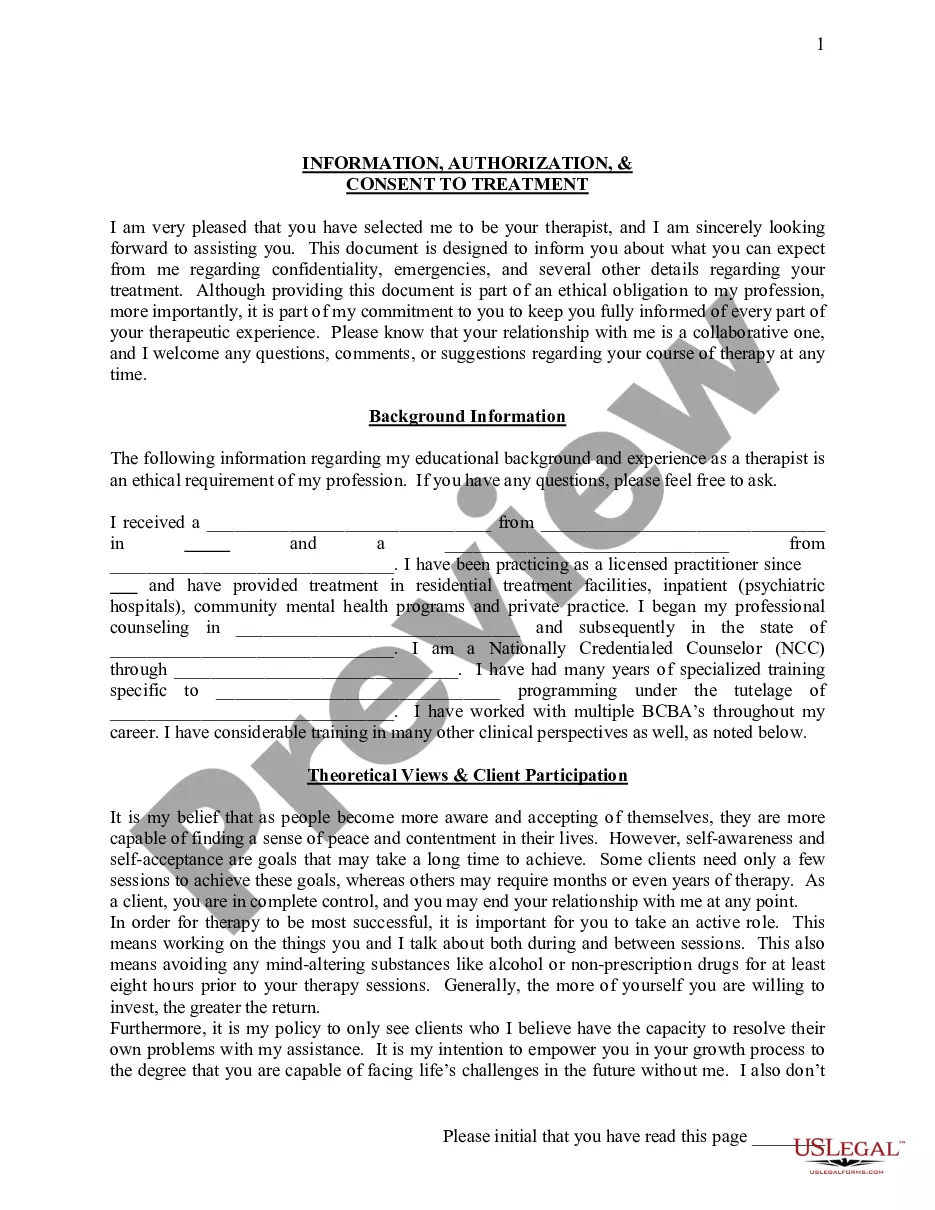
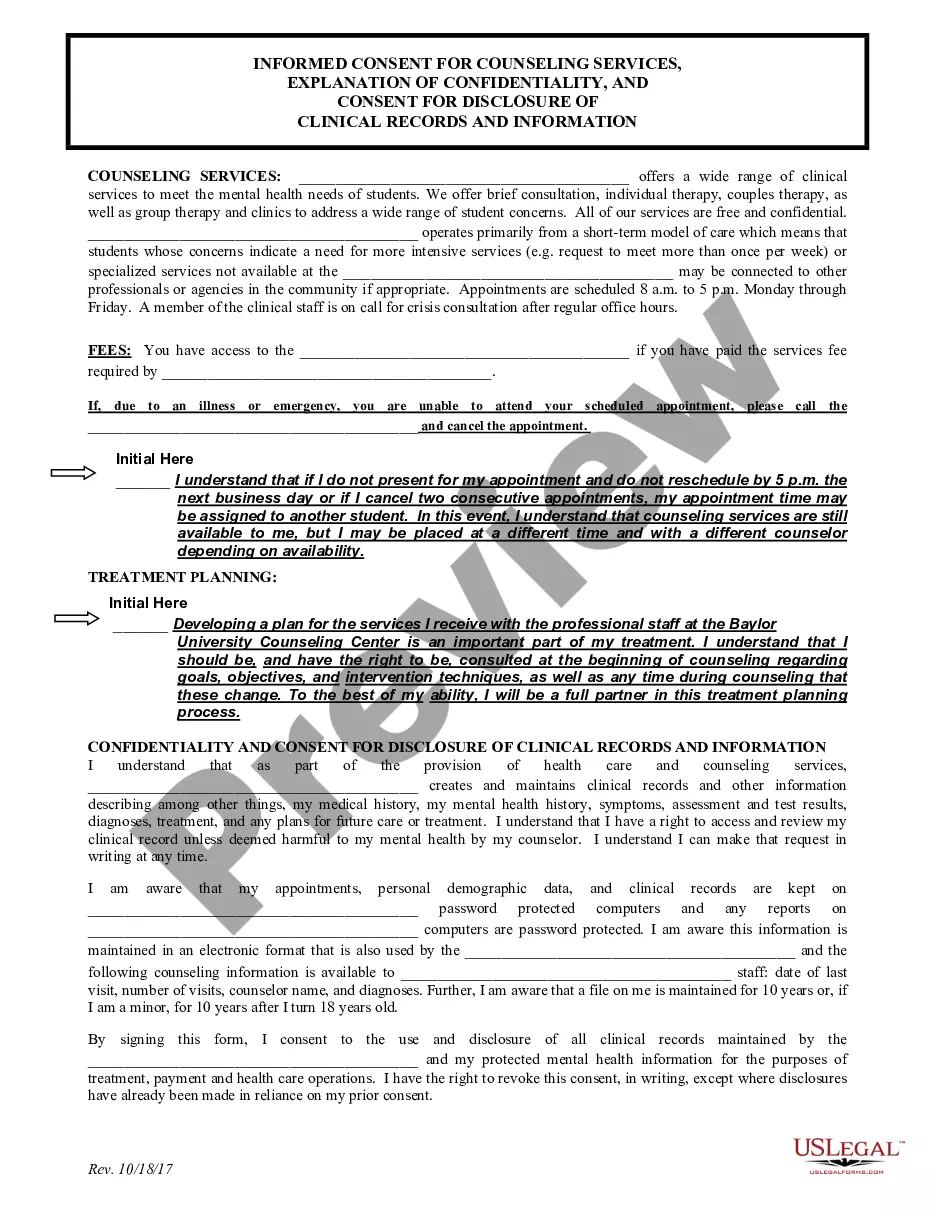
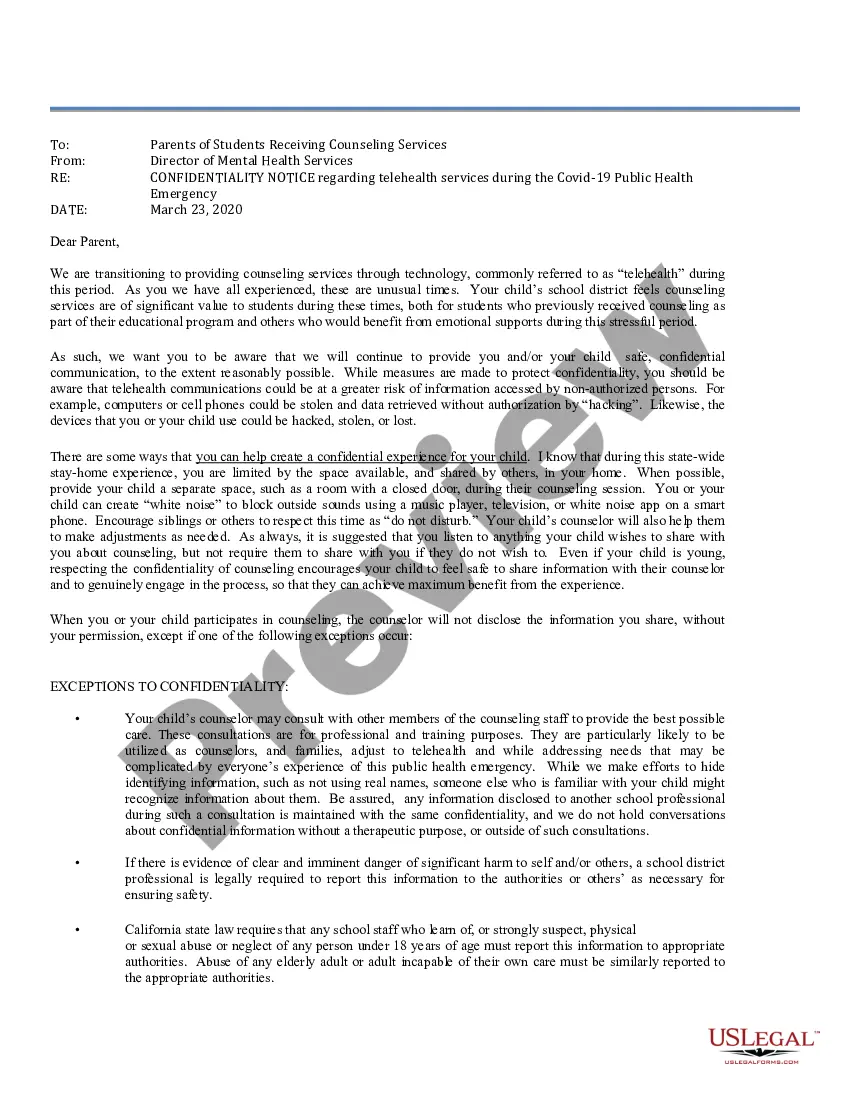
The Informed Consent for Virtual Counseling Services form is a legal document that allows parents or guardians to provide consent for their children to participate in virtual counseling sessions. This form outlines confidentiality protocols specific to video and teleconferencing, ensuring parents are informed about the services provided during remote learning. Unlike standard consent forms, this document addresses the unique aspects of virtual counseling amidst the ongoing COVID-19 pandemic.
What’s included in this form
- Welcome message indicating the adaptation to virtual counseling due to COVID-19.
- Confidentiality clause outlining how information shared is protected, with exceptions.
- Statement of consent detailing the benefits and risks of virtual counseling.
- Instructions for opting out of virtual counseling services.
- Risks associated with the virtual format, including possible technical issues.
When to use this document
This form should be used when parents or guardians wish to enroll their children in virtual counseling services offered by a school during a period of remote learning. It is particularly relevant during public health emergencies like the COVID-19 pandemic, where in-person services are not feasible.
Who this form is for
- Parents or guardians of middle school students seeking virtual counseling services.
- School counselors who need to obtain consent for virtual sessions.
- Educational administrators managing counseling services during remote learning periods.
Instructions for completing this form
- Fill in the name of the school and the current school year at the beginning of the document.
- Read the confidentiality section carefully to understand exceptions to information sharing.
- Review the consent section regarding the benefits and risks associated with virtual counseling.
- Decide whether to consent to virtual counseling; if opting out, provide a written request as instructed.
- Ensure that all signatures are collected from the appropriate parties as needed.
Does this document require notarization?
This form does not typically require notarization unless specified by local law. Parents or guardians should ensure they have properly completed and signed the document to validate consent as per school policy.
Get your form ready online
Our built-in tools help you complete, sign, share, and store your documents in one place.
Make edits, fill in missing information, and update formatting in US Legal Forms—just like you would in MS Word.
Download a copy, print it, send it by email, or mail it via USPS—whatever works best for your next step.
Sign and collect signatures with our SignNow integration. Send to multiple recipients, set reminders, and more. Go Premium to unlock E-Sign.
If this form requires notarization, complete it online through a secure video call—no need to meet a notary in person or wait for an appointment.
We protect your documents and personal data by following strict security and privacy standards.

Make edits, fill in missing information, and update formatting in US Legal Forms—just like you would in MS Word.

Download a copy, print it, send it by email, or mail it via USPS—whatever works best for your next step.

Sign and collect signatures with our SignNow integration. Send to multiple recipients, set reminders, and more. Go Premium to unlock E-Sign.

If this form requires notarization, complete it online through a secure video call—no need to meet a notary in person or wait for an appointment.

We protect your documents and personal data by following strict security and privacy standards.
Common mistakes to avoid
- Failing to provide a written opt-out request if choosing not to participate.
- Not fully understanding the exceptions to confidentiality.
- Overlooking the potential technical issues that may arise during virtual sessions.
Benefits of completing this form online
- Convenient access to legal templates from home, reducing the need for in-person visits.
- Editability to customize for specific student and school needs easily.
- Reliable support from licensed attorneys in ensuring compliance and accuracy.
Looking for another form?


Form popularity
FAQ
Informed consent demonstrates respect for personal autonomy (?Respect for Persons? in the Belmont Report) and is an important ethical requirement in research.
Health care providers must inform the patient prior to the initial delivery of telehealth services about the use of telehealth and obtain verbal or written consent from the patient for the use of telehealth as an acceptable mode of delivering health care services.
Obtain patients' consent verbally and note it in the medical record. If you need a signed form, use your patient portal or the mail to get a signature. If patients can sign the consent form in your patient portal, ask whether they are able to access the portal.
1. I have a right to confidentiality with regard to my treatment and related communications via Telehealth under the same laws that protect the confidentiality of my treatment information during in-person psychotherapy.
I hereby consent to the use of telehealth/telemedicine in the provision of care and the above terms and conditions. By signing below, I certify that I am the legal representative of the participant or that I am the patient and am 18 years of age or older, or otherwise legally authorized to consent.
There are five hardware requirements you need to fulfill before you launch your telehealth coverage. These requirements include a secure internet connection, a video platform, proper tech support, video recording capabilities, and telehealth peripherals that will assist you in your virtual patient visits.
, it is a good rule of practice to always get consent before a telehealth visit. Patients can give informed consent through signed paperwork completed before the appointment and/or through verbal consent at the beginning of each session.
Patients can give their consent verbally at the beginning of their first telehealth visit, and clinicians can document it in the medical record. In addition to verbal consent, a signature can be obtained through your patient portal and the U.S. mail.