California Affidavit - Community Property With Right of Survivorship
What this document covers
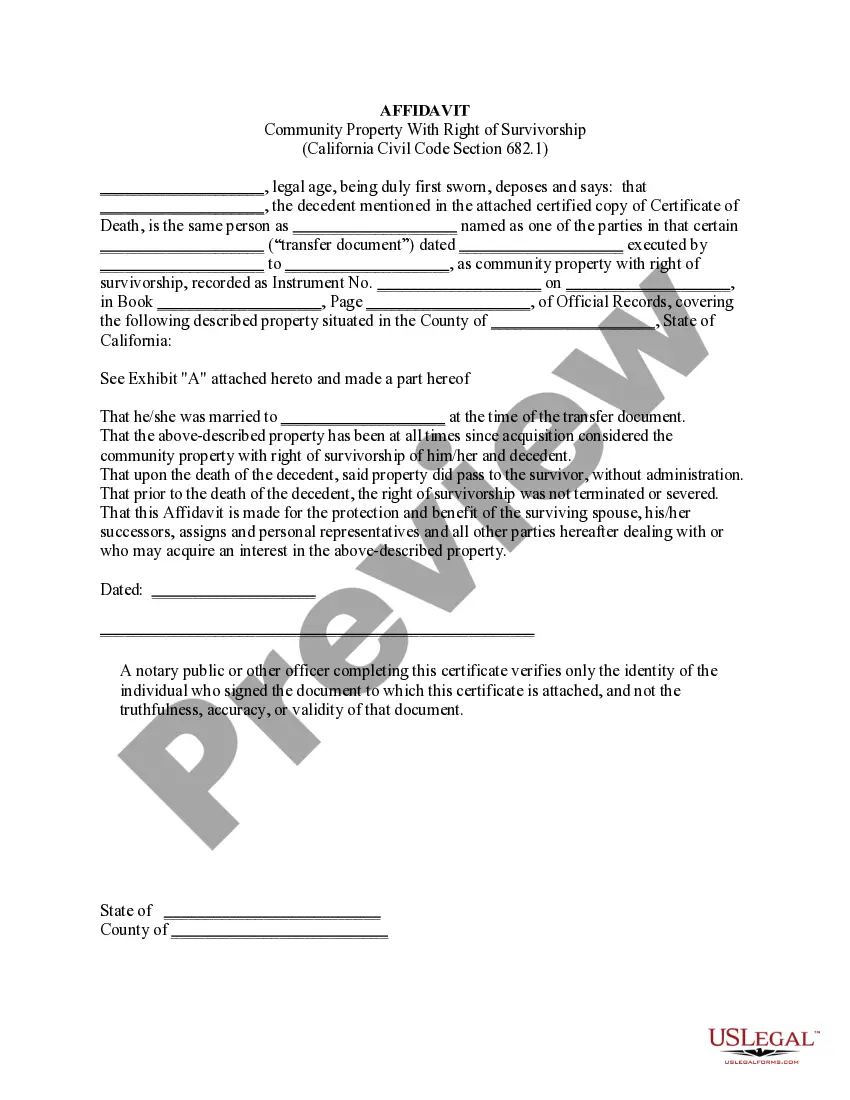
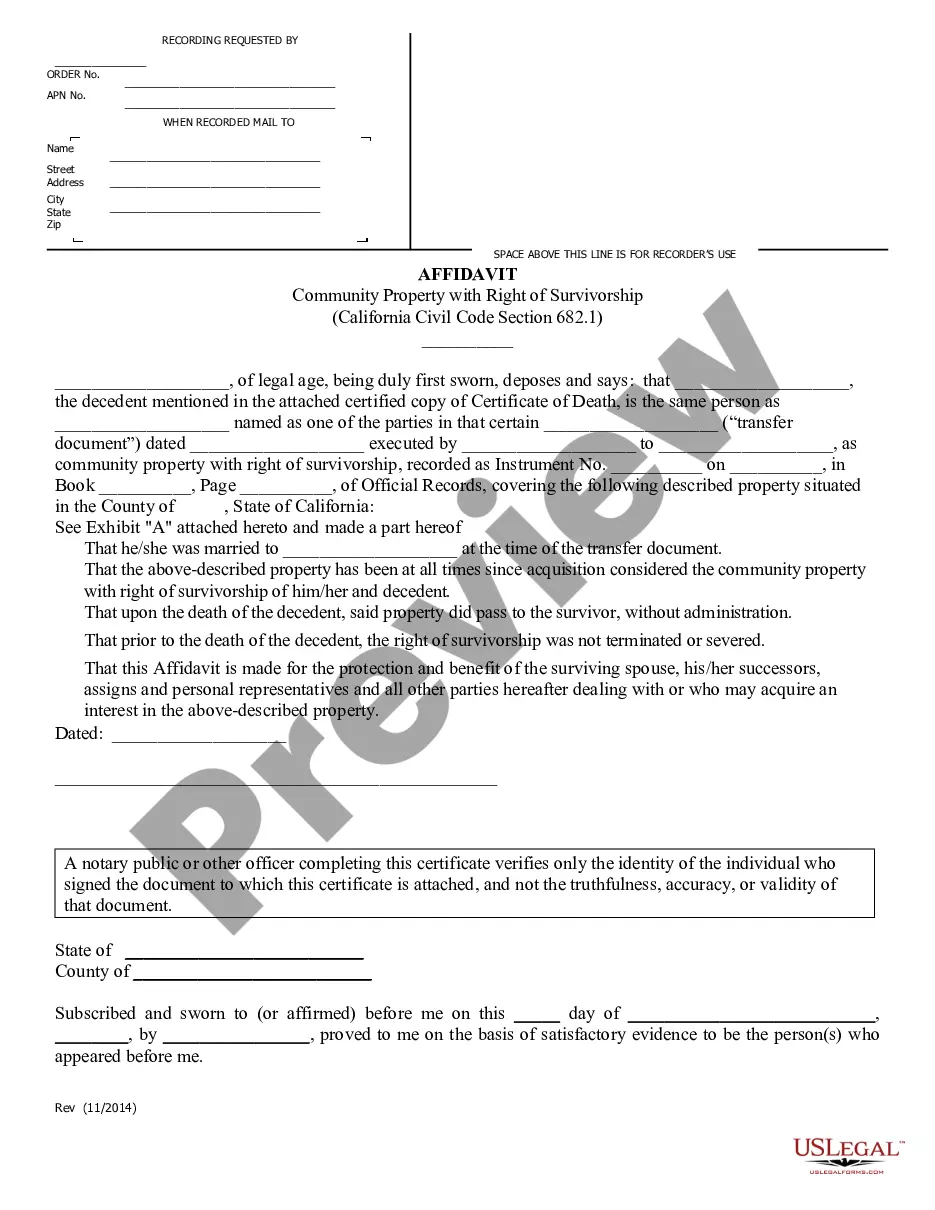
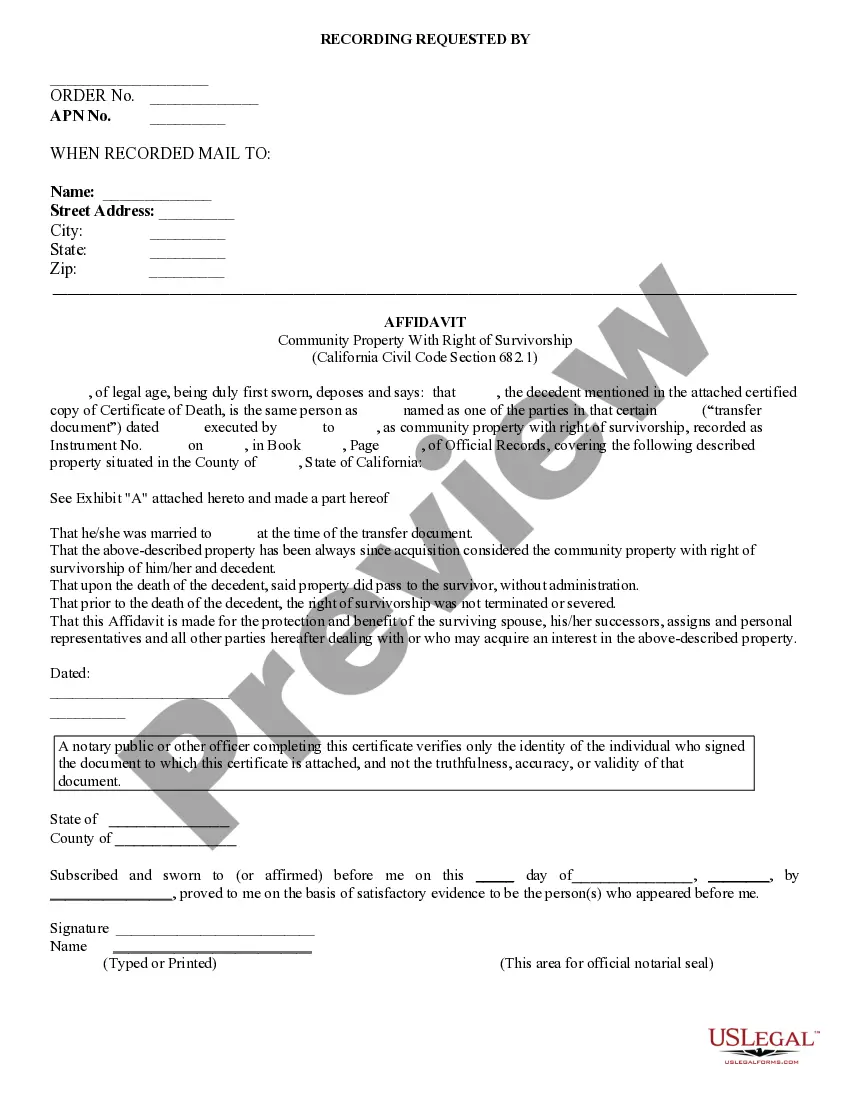
An Affidavit - Community Property With Right of Survivorship is a legal document that allows a surviving co-owner to claim joint property owned with a deceased individual. This affidavit transfers full ownership of the property to the surviving owner, affirming that the property was held as community property with right of survivorship and enabling the survivor to manage the asset without the need for a lengthy probate process.
Key parts of this document
- Identification of the surviving owner and the deceased individual.
- Reference to the transfer document outlining property ownership.
- Description of the property in question.
- Affirmation of community property status prior to the decedent's death.
- Statement confirming the property passed directly to the survivor upon death.
- Signature and notarization section for authenticity.
When to use this form
This affidavit should be used when a co-owner of community property dies, and the surviving owner wishes to claim the deceased's interest in the property. It is particularly useful in avoiding probate, allowing for a straightforward transfer of ownership. Scenarios may include the loss of a spouse or partner where property was co-owned, facilitating the transition of ownership to the survivor.
Who this form is for
The following individuals should consider using this form:
- Surviving spouses of a deceased co-owner.
- Individuals in a domestic partnership where property was held as community property.
- Heirs who have co-owned property with a decedent and seek to claim ownership.
Completing this form step by step
- Identify yourself as the surviving owner and provide your legal age.
- Provide the name of the deceased and attach a certified copy of their Certificate of Death.
- Fill in details of the transfer document that establishes your joint ownership of the property.
- Describe the property accurately and reference any legal records associated with it.
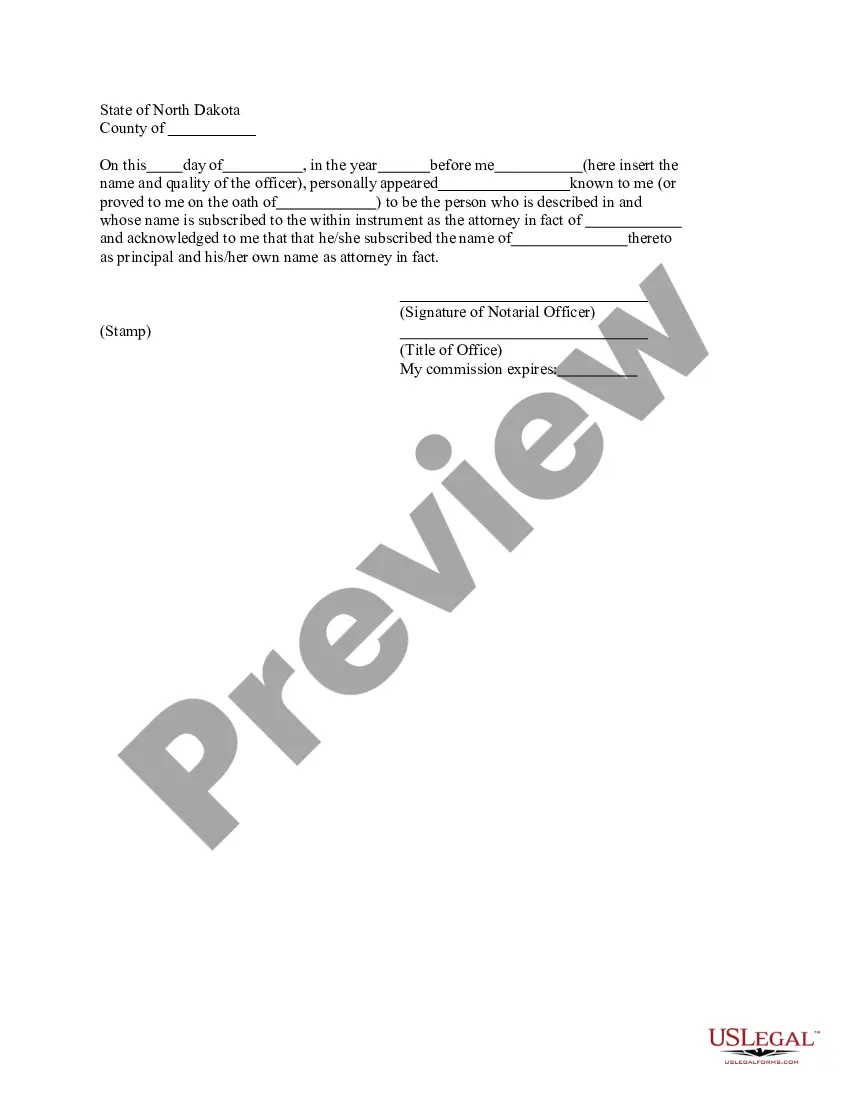
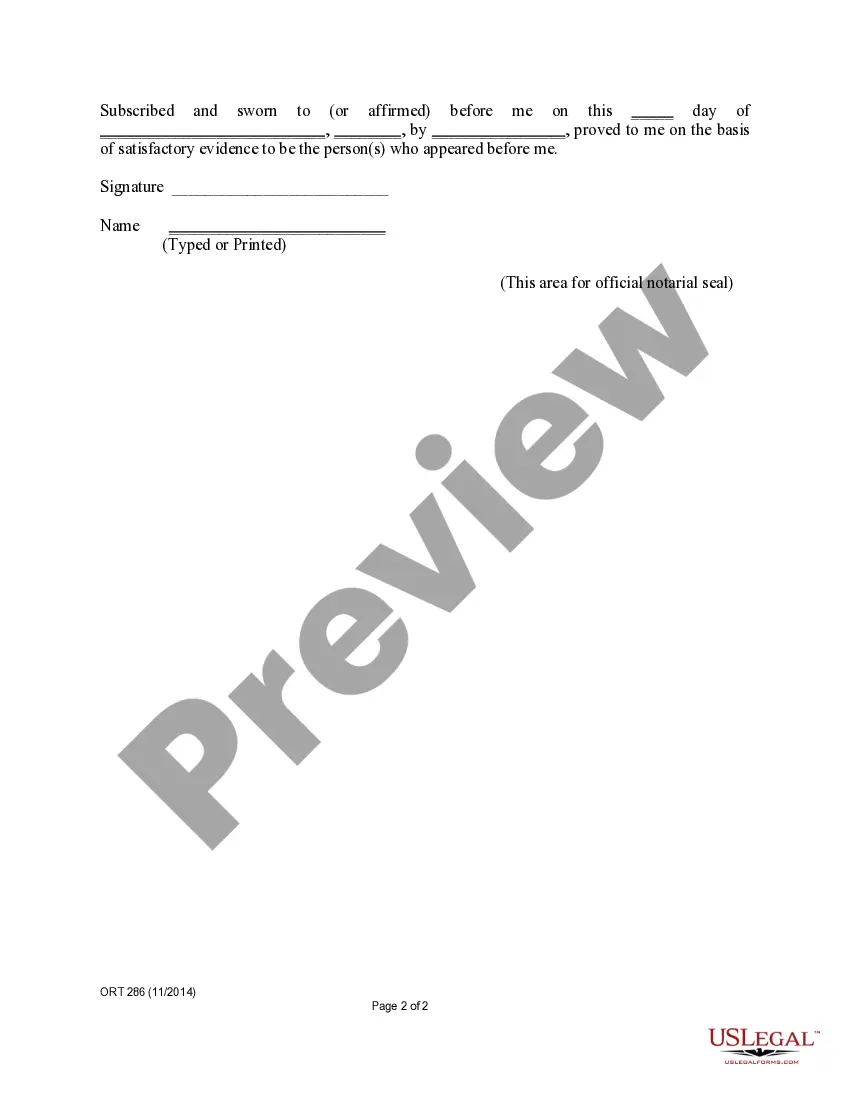
- Sign the affidavit in the presence of a notary public to validate the document.
Notarization requirements for this form
Yes, this form must be notarized to be legally valid. It requires the signature of the surviving owner to be witnessed by a notary public or a qualified officer who confirms the identity of the signatory. US Legal Forms offers integrated online notarization, allowing for secure and convenient notarization via video call.
Get your form ready online
Our built-in tools help you complete, sign, share, and store your documents in one place.
Make edits, fill in missing information, and update formatting in US Legal Forms—just like you would in MS Word.
Download a copy, print it, send it by email, or mail it via USPS—whatever works best for your next step.
Sign and collect signatures with our SignNow integration. Send to multiple recipients, set reminders, and more. Go Premium to unlock E-Sign.
If this form requires notarization, complete it online through a secure video call—no need to meet a notary in person or wait for an appointment.
We protect your documents and personal data by following strict security and privacy standards.

Make edits, fill in missing information, and update formatting in US Legal Forms—just like you would in MS Word.

Download a copy, print it, send it by email, or mail it via USPS—whatever works best for your next step.

Sign and collect signatures with our SignNow integration. Send to multiple recipients, set reminders, and more. Go Premium to unlock E-Sign.

If this form requires notarization, complete it online through a secure video call—no need to meet a notary in person or wait for an appointment.

We protect your documents and personal data by following strict security and privacy standards.
Common mistakes
- Failing to attach the Certificate of Death.
- Omitting the complete and accurate legal description of the property.
- Not having the affidavit notarized properly.
- Providing incorrect information about the decedent or the property.
Why use this form online
- Convenient downloading of the form ensures immediate access.
- Editable templates allow customization to fit your specific situation.
- Peace of mind knowing templates are drafted by licensed attorneys.
- Ability to complete and store documents securely online.
Looking for another form?
Form popularity
FAQ
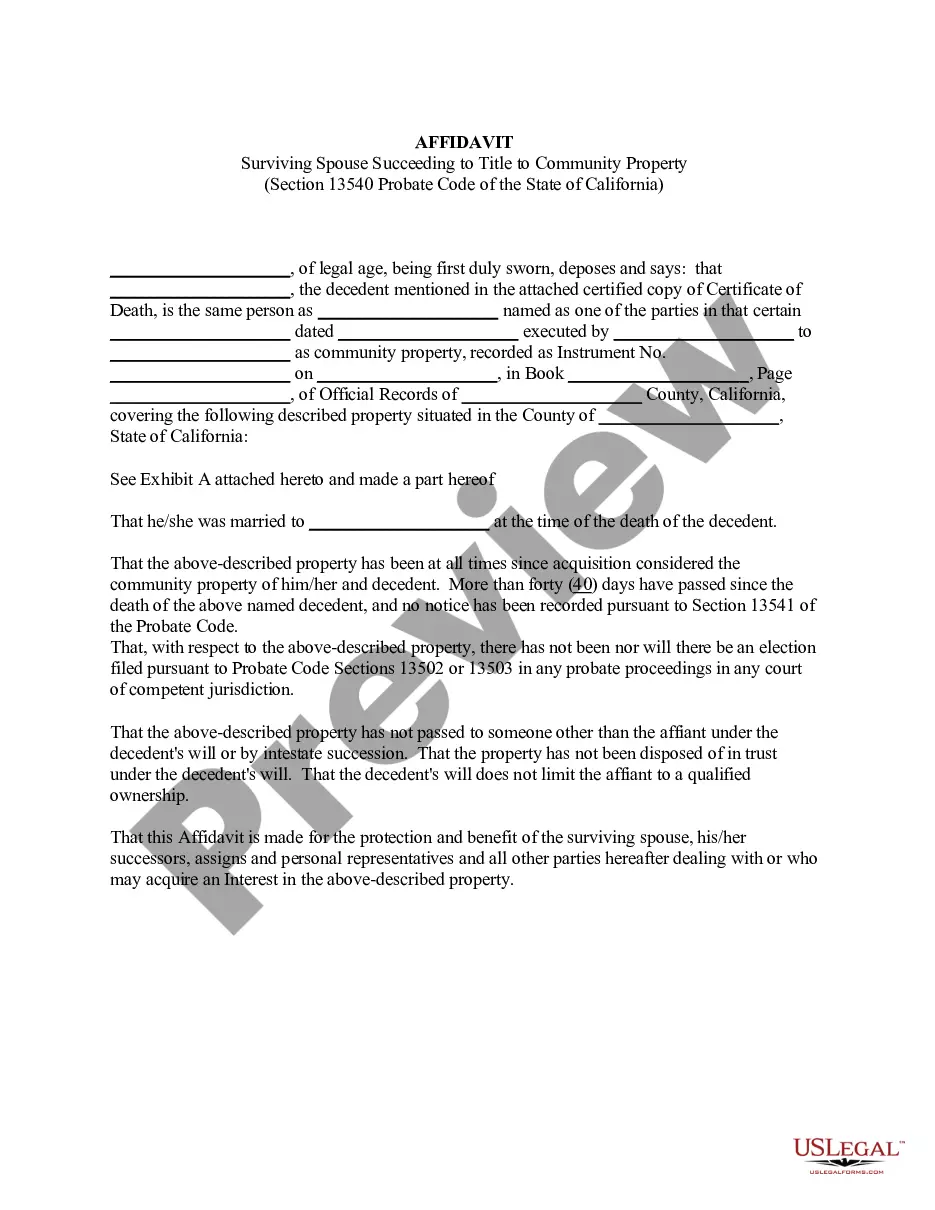
At least 40 days have passed since the death of the decedent, as shown by the attached certified copy of the decedent's death certificate.
Disadvantages of community property with a right of survivorship: If a spouse dies having willed a piece of property titled as community property with a right of survivorship to someone other than their spouse, their gift may be deemed invalid.
If a property is titled solely as ?community property,? then it will still pass through probate because it indicates ownership interest but doesn't indicate how the property should be conveyed in the case of the death of an owner.
Community property with right of survivorship is a legal distinction that allows two spouses to equally share assets through marriage as well as pass on assets to the other spouse upon death without going through probate.
California is a community property state, which means that following the death of a spouse, the surviving spouse will have entitlement to one-half of the community property (i.e., property that was acquired over the course of the marriage, regardless of which spouse acquired it).
California Affidavit of Surviving Spouse Information Section 100(a) of the California Probate Code states that when a married person dies, one-half of the couple's community property belongs to the surviving spouse and the other half stays in the decedent's name, ostensibly for probate distribution.
A spouse's separate property in California remains their separate property even at death, meaning that they can dispose of 100% of it to whomever they please through their will or trust (i.e., they do not have to leave any portion of it to their surviving spouse).
The asset that is inherited receives a second ?step up.? Thus, in a state with community property laws, the inherited asset gets stepped up twice?once for the surviving spouse, and then again for the person who becomes the final beneficiary of the asset.