California Order Confirming Appointment of Receiver and Preliminary Injunction - Rents, Issues, and Profits Receivership
What this document covers
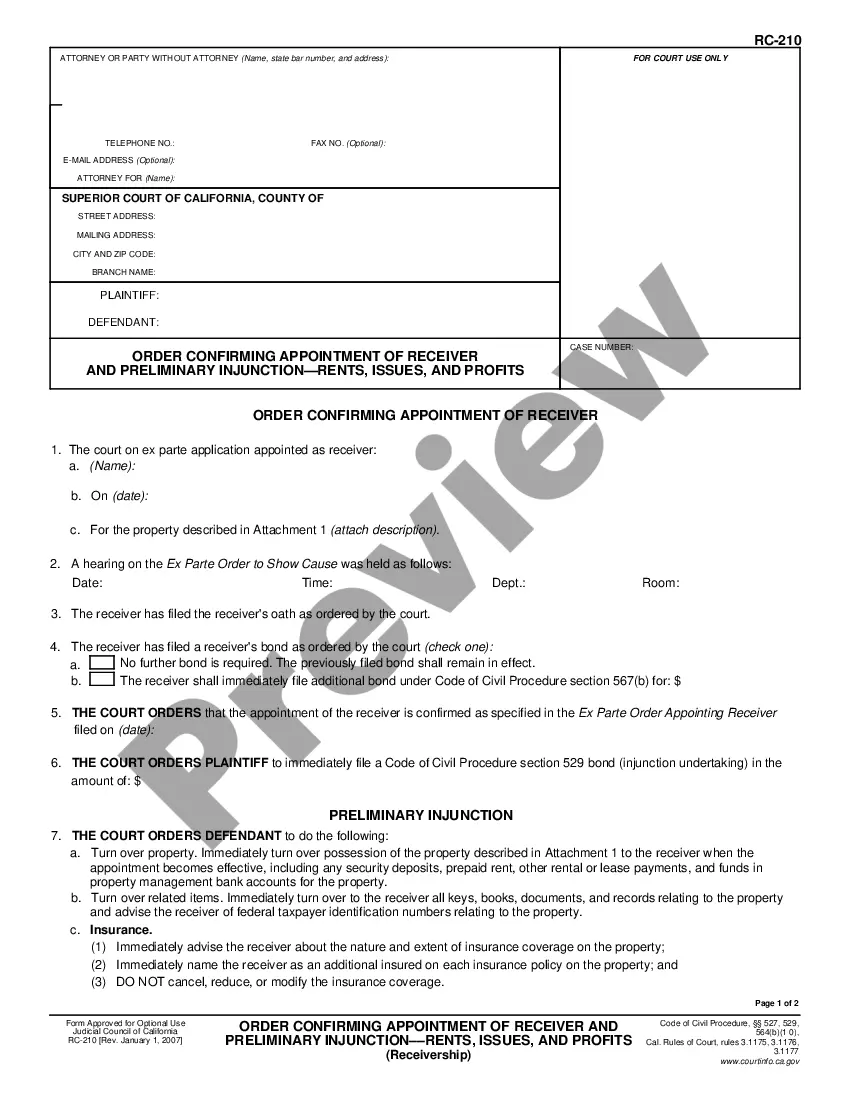
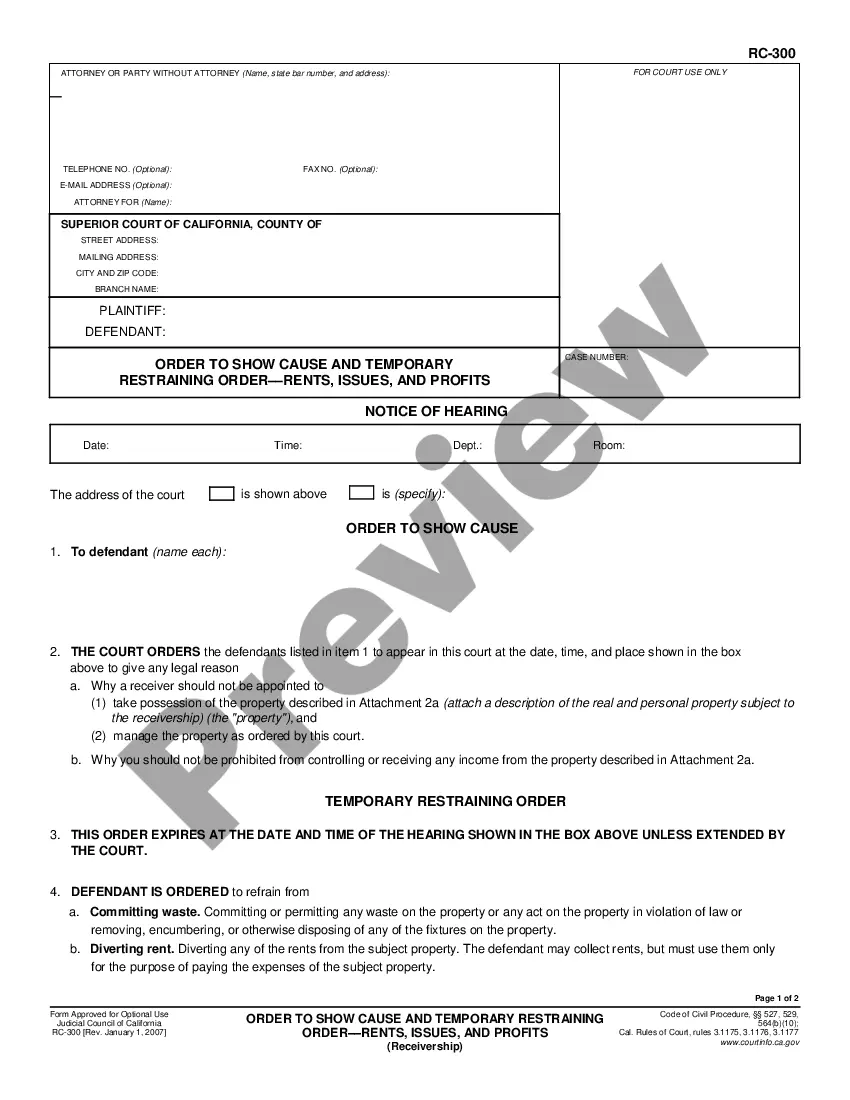
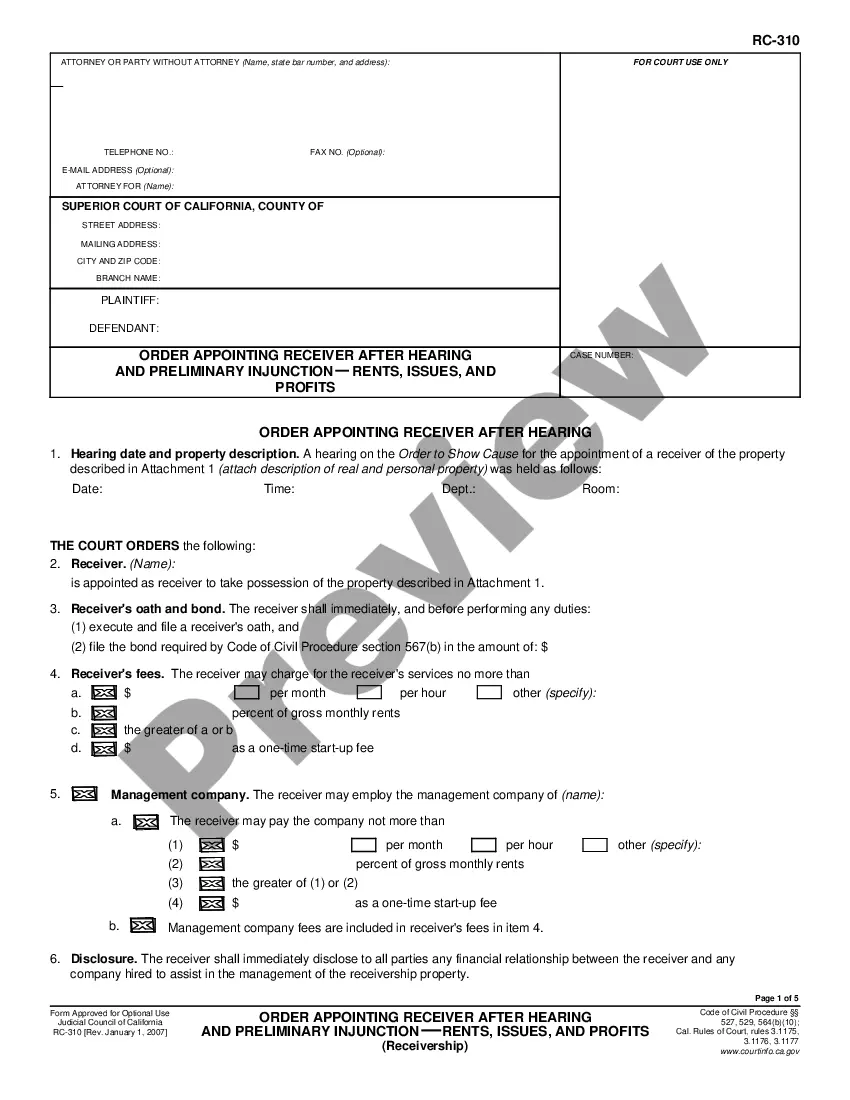
The Order Confirming Appointment of Receiver and Preliminary Injunction - Rents, Issues, and Profits Receivership is a legal document issued by the court. It confirms the appointment of a receiver to manage the property in question while a legal dispute is ongoing. Unlike other legal orders, this specific order includes provisions for handling rents, issues, and profits related to the property. It is designed to protect the interests of parties involved until the matter is resolved in court.
Form components explained
- Identification of the receiver, including name and appointment date.
- Details of the property described in an attachment.
- Confirmation of the receiver's oath and bond requirements.
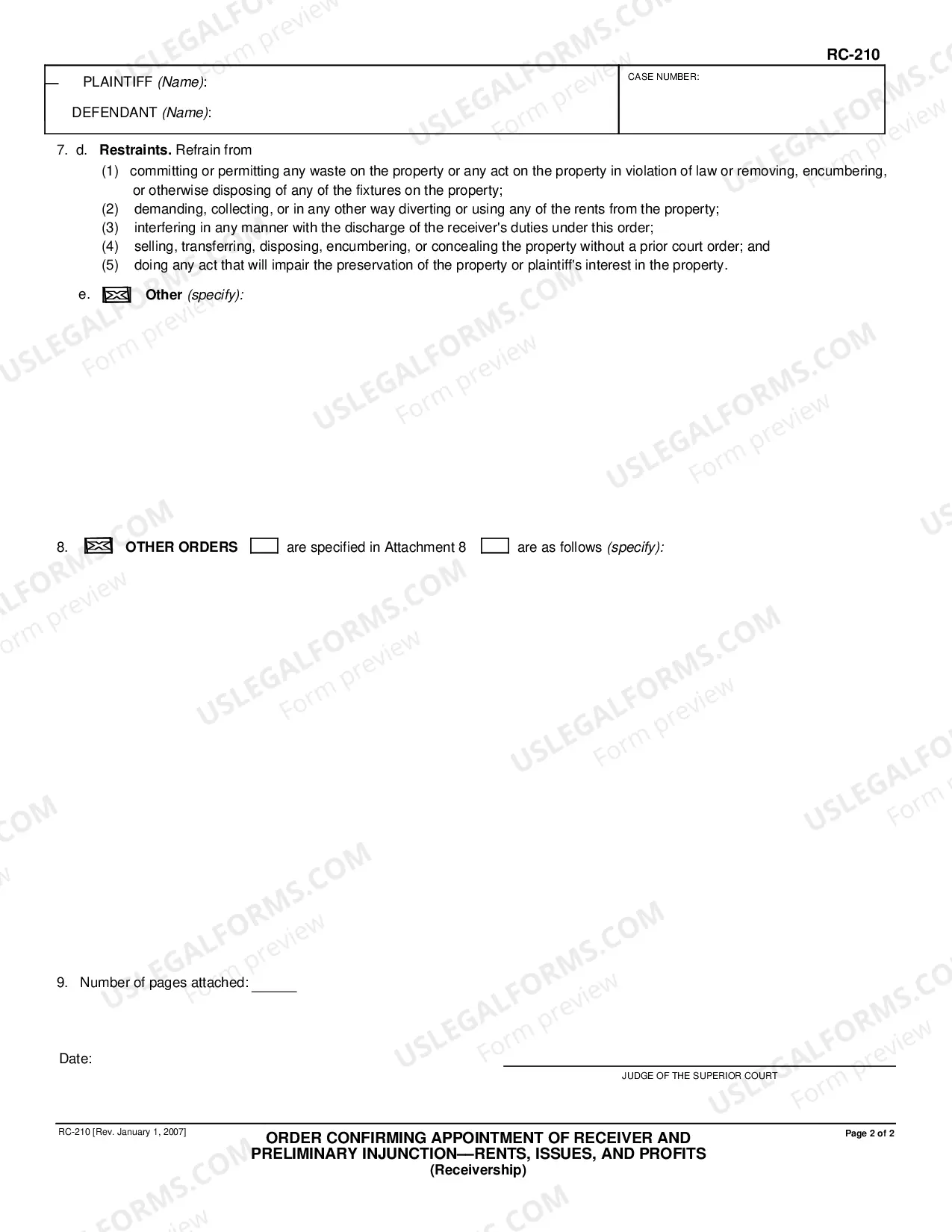
- Specific orders directing the defendant on property turnover and related responsibilities.
- Provisions for the preliminary injunction to protect the plaintiff's interests.
- Other relevant orders issued by the court included in attachments.
When to use this document
This form is typically used in legal proceedings where a party seeks the appointment of a receiver to manage a property during a dispute. Common situations include cases involving foreclosure, landlord-tenant conflicts, or disputes over property management. If there is a risk that the property may be mismanaged or its value diminished during the legal process, this order can be essential to secure assets.
Who should use this form
- Plaintiffs or defendants involved in property disputes.
- Attorneys representing clients in receivership cases.
- Property owners facing eviction or foreclosure actions.
- Persons interested in securing property management during litigation.
Steps to complete this form
- Identify and enter the names of the parties involved, including the receiver.
- Specify the property and attach a detailed description of it.
- Fill in the date of the court's appointment and any bond amounts required.
- Detail the obligations of the defendant regarding property turnover and compliance.
- Include any additional orders as specified by the court in the attachments.
Notarization guidance
This form does not typically require notarization unless specified by local law. Always verify local court requirements for any additional documentation needed to accompany this order.
Get your form ready online
Our built-in tools help you complete, sign, share, and store your documents in one place.
Make edits, fill in missing information, and update formatting in US Legal Forms—just like you would in MS Word.
Download a copy, print it, send it by email, or mail it via USPS—whatever works best for your next step.
Sign and collect signatures with our SignNow integration. Send to multiple recipients, set reminders, and more. Go Premium to unlock E-Sign.
If this form requires notarization, complete it online through a secure video call—no need to meet a notary in person or wait for an appointment.
We protect your documents and personal data by following strict security and privacy standards.

Make edits, fill in missing information, and update formatting in US Legal Forms—just like you would in MS Word.

Download a copy, print it, send it by email, or mail it via USPS—whatever works best for your next step.

Sign and collect signatures with our SignNow integration. Send to multiple recipients, set reminders, and more. Go Premium to unlock E-Sign.

If this form requires notarization, complete it online through a secure video call—no need to meet a notary in person or wait for an appointment.

We protect your documents and personal data by following strict security and privacy standards.
Typical mistakes to avoid
- Failing to provide a complete description of the property in the attachment.
- Not indicating the correct bond amounts or misunderstanding bond requirements.
- Omitting essential information about the receiverâs duties and obligations.
- Neglecting to sign the order before submission to the court.
Why complete this form online
- Convenient access to the form for quick download and completion.
- Editable fields for tailoring the document to specific case details.
- Reliability of legally vetted language drafted by licensed attorneys.
- Fast retrieval and storage options for easy reference throughout the legal process.
Legal use & context
- This order is enforceable in California courts and is used primarily in property litigation.
- It is crucial to comply with the terms set out in the order to avoid legal penalties.
- Non-compliance with the court's instructions may result in contempt of court actions.
Quick recap
- The form confirms the appointment of a receiver for specific property management.
- It clarifies the obligations of both the plaintiff and the defendant regarding the management of the property during legal proceedings.
- Utilizing this form correctly can help secure the interests of the involved parties until the legal matter is concluded.
Looking for another form?

Form popularity
FAQ
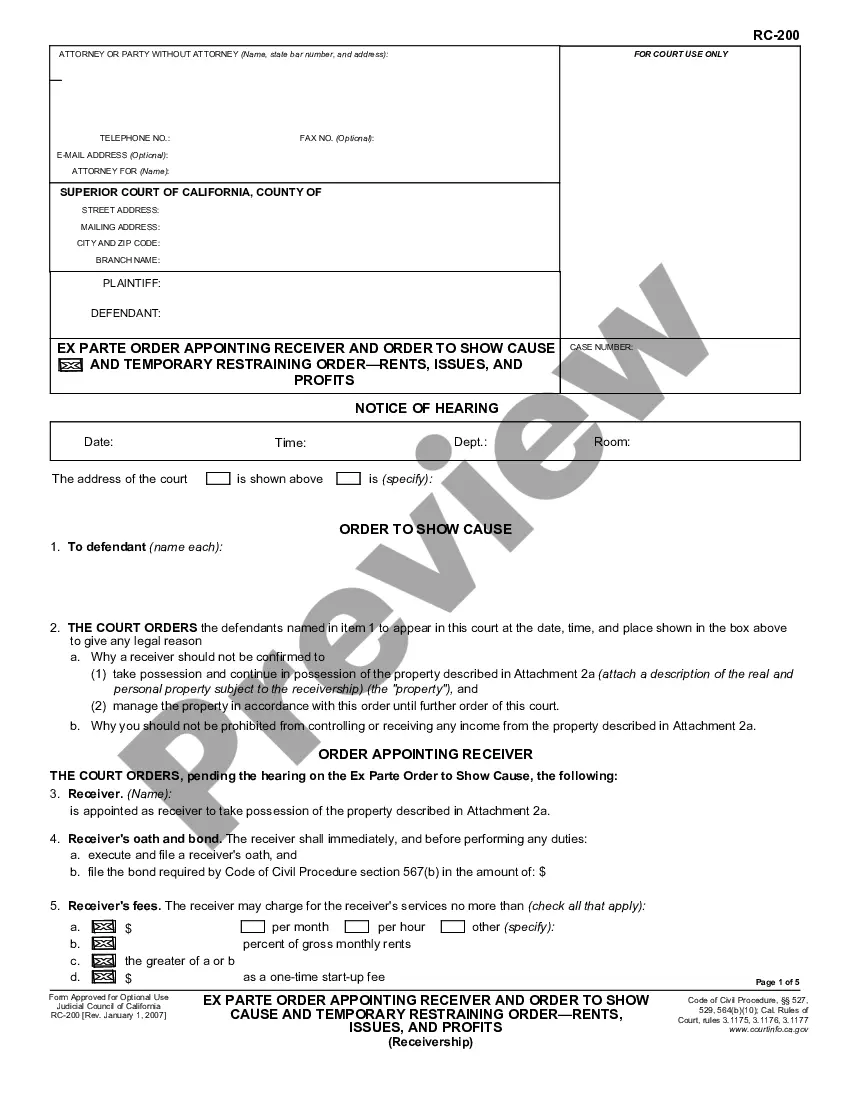
Appointing a receiver means that the court designates a third party to take control of certain assets or properties during legal proceedings. The receiver acts under the court's authority, ensuring that the assets are preserved, managed, and utilized appropriately throughout the process. The California Order Confirming Appointment of Receiver and Preliminary Injunction - Rents, Issues, and Profits Receivership outlines this process and the protections it offers to parties involved.
To become a court-appointed receiver in California, you must demonstrate relevant qualifications and experience in managing properties or businesses. Generally, you would need to submit an application along with supporting documentation to the court. The California Order Confirming Appointment of Receiver and Preliminary Injunction - Rents, Issues, and Profits Receivership can help you understand the qualifications and application process effectively.
A motion to appoint a receiver is a formal request made to the court, asking for a receiver to be installed to manage specific assets during a legal dispute. This motion must clearly outline the reasons for the appointment, including potential harm or risk to the assets in question. The California Order Confirming Appointment of Receiver and Preliminary Injunction - Rents, Issues, and Profits Receivership provides legal frameworks to support your motion, ensuring all procedural requirements are met.
In a lawsuit, a receiver manages and oversees assets or properties that are under dispute, ensuring they remain maintained and secure. The receiver acts as a neutral party, reporting to the court and safeguarding the interests of all involved. The California Order Confirming Appointment of Receiver and Preliminary Injunction - Rents, Issues, and Profits Receivership provides essential guidelines on the role and powers of a receiver in such cases.
A temporary restraining order serves as a short-term solution to prevent immediate harm before a court can hear a case, while a preliminary injunction is a longer-term order that may remain in place until the case is fully resolved. Essentially, the temporary restraining order is a stopgap measure, whereas the preliminary injunction offers more comprehensive protection. Understanding the California Order Confirming Appointment of Receiver and Preliminary Injunction - Rents, Issues, and Profits Receivership can help clarify the distinctions and applications of each.
When a receiver is appointed by the court, they take control of specific assets or properties as directed. This appointment aims to protect the assets during legal disputes or ensure that they are maintained properly. The California Order Confirming Appointment of Receiver and Preliminary Injunction - Rents, Issues, and Profits Receivership outlines the rights and responsibilities of receivers and provides legal clarity on this process.
In California, to secure a preliminary injunction, you must demonstrate the likelihood of success on the merits of your case. Additionally, you need to show that you will suffer irreparable harm without the injunction, and that the injunction will not cause significant harm to the opposing party. The California Order Confirming Appointment of Receiver and Preliminary Injunction - Rents, Issues, and Profits Receivership can help clarify how these requirements apply to your specific situation.