North Dakota Mutual Wills containing Last Will and Testaments for Man and Woman living together not Married with No Children
Understanding this form
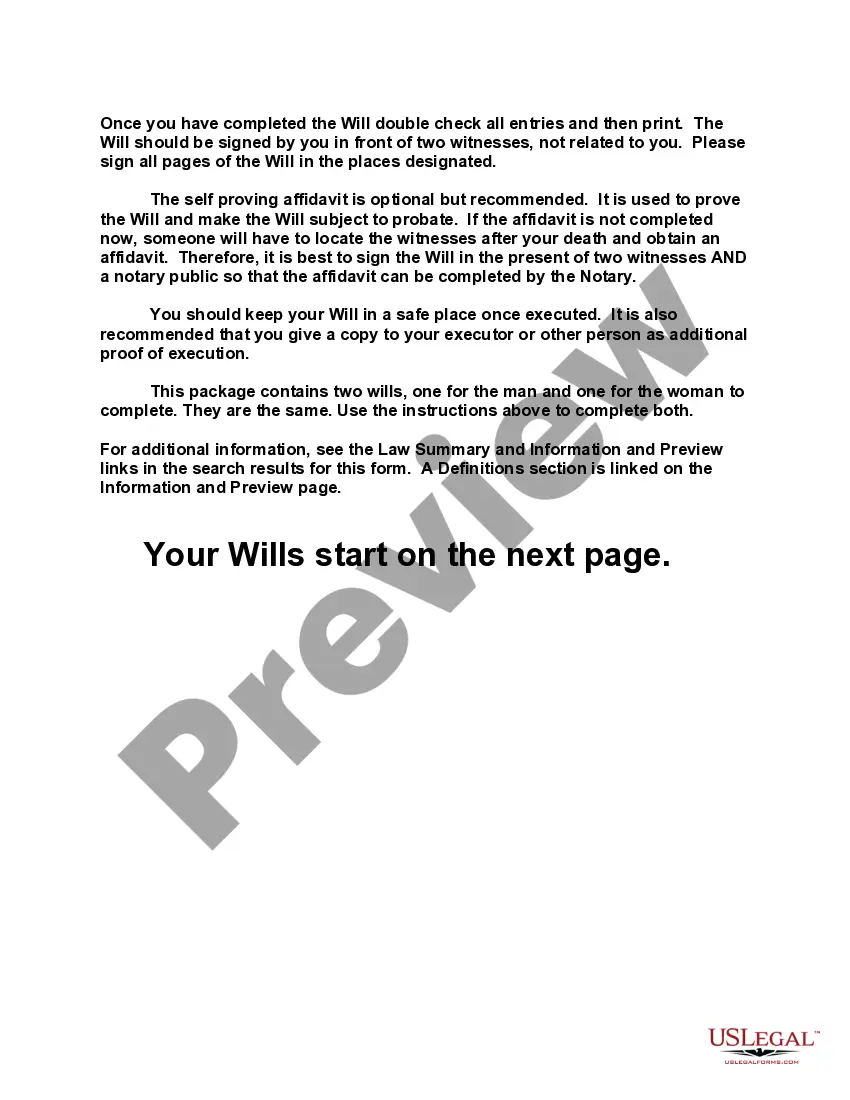
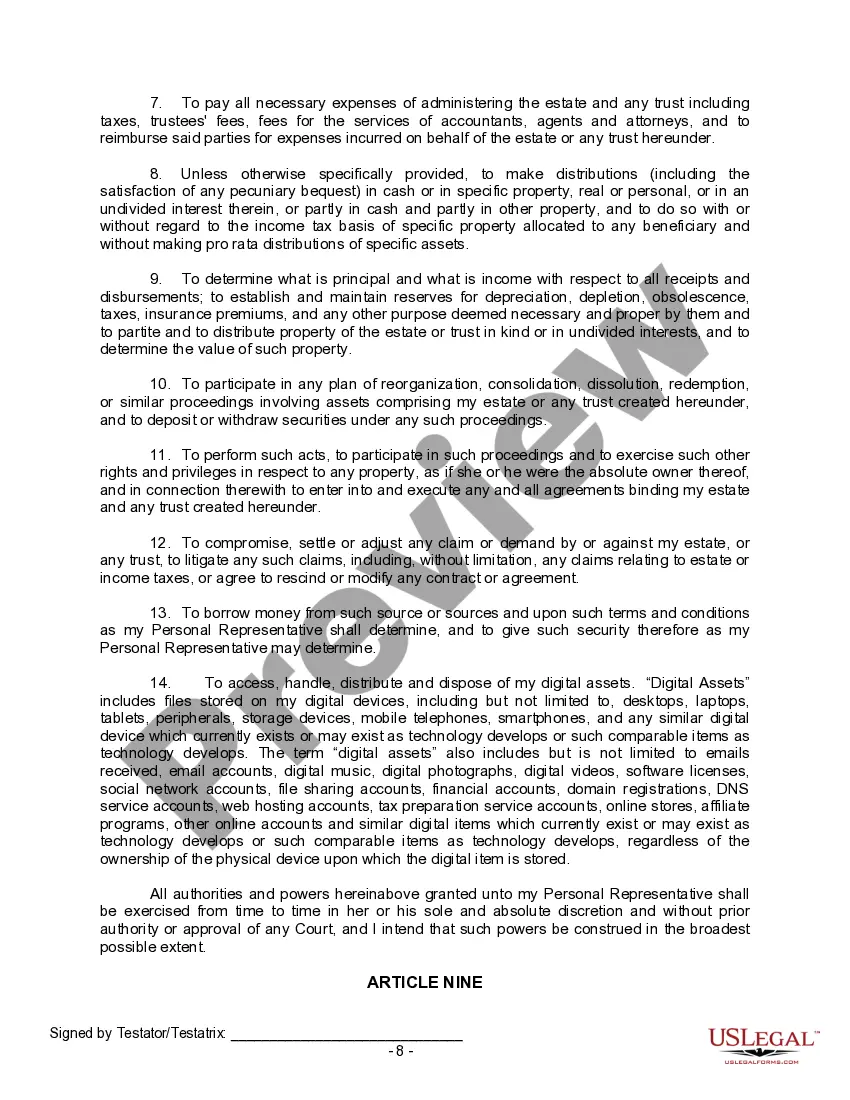
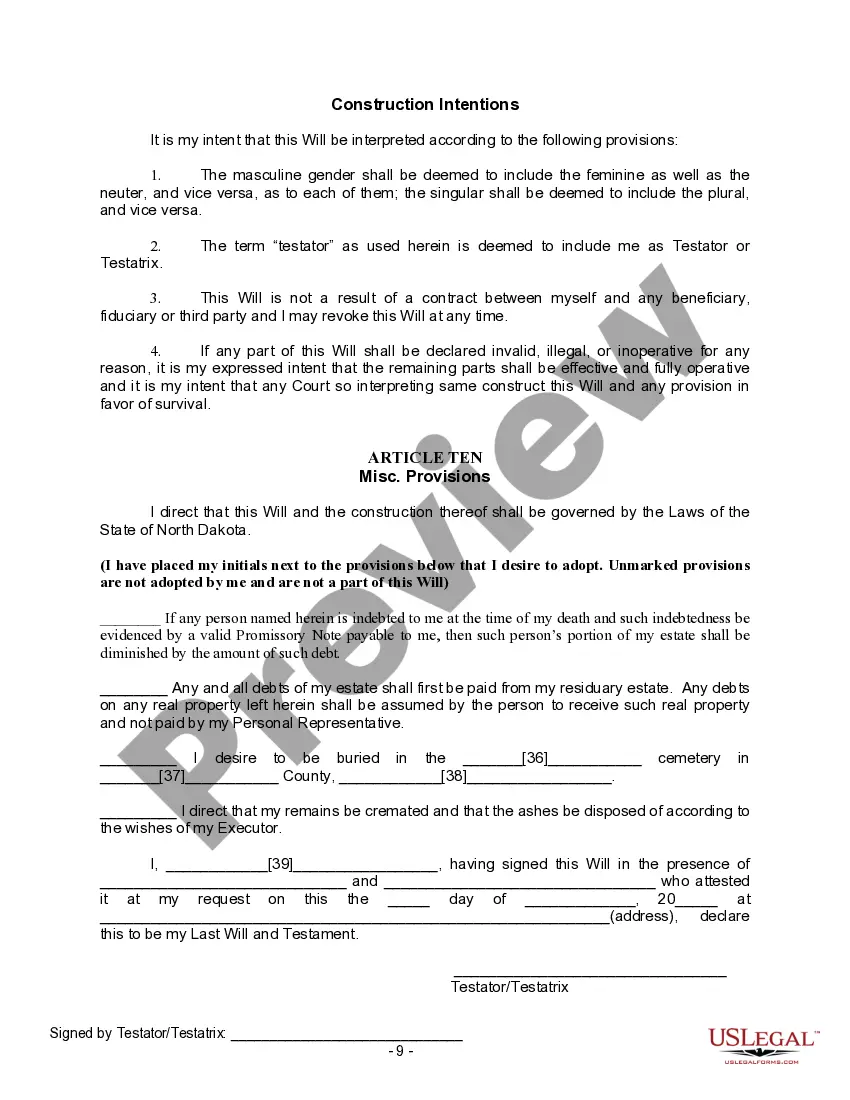
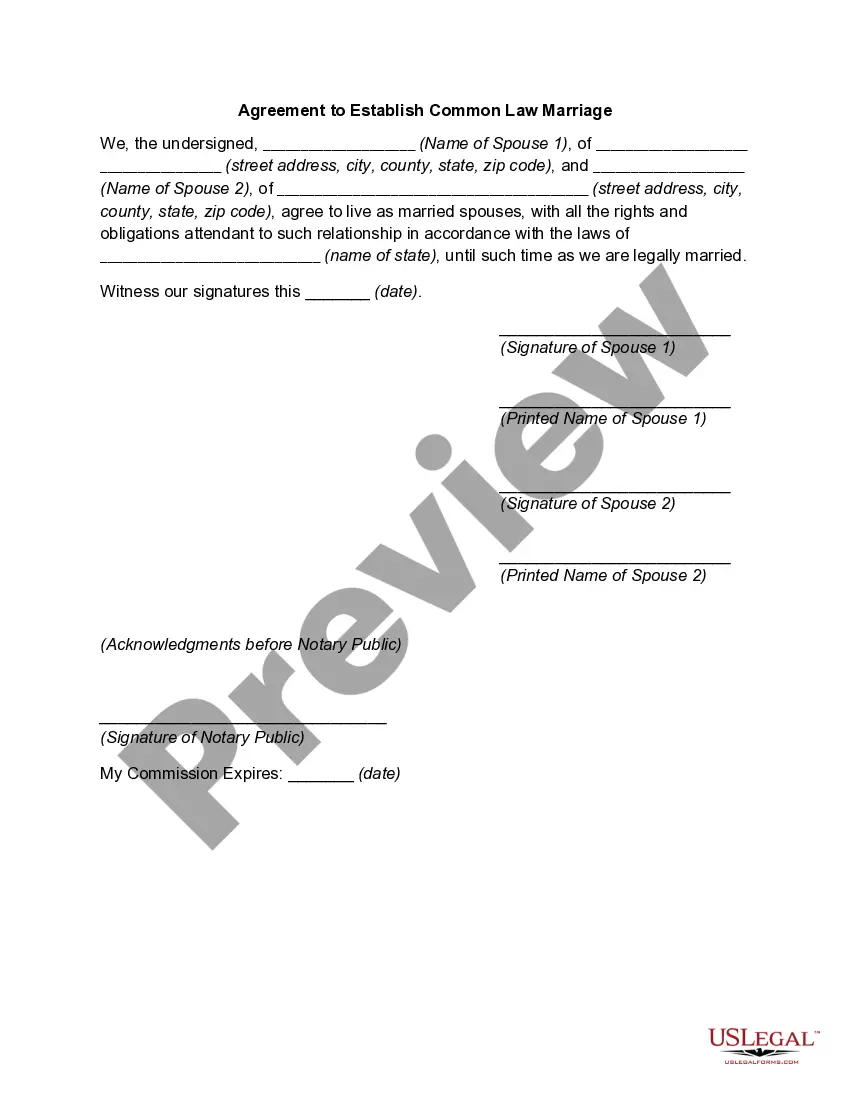
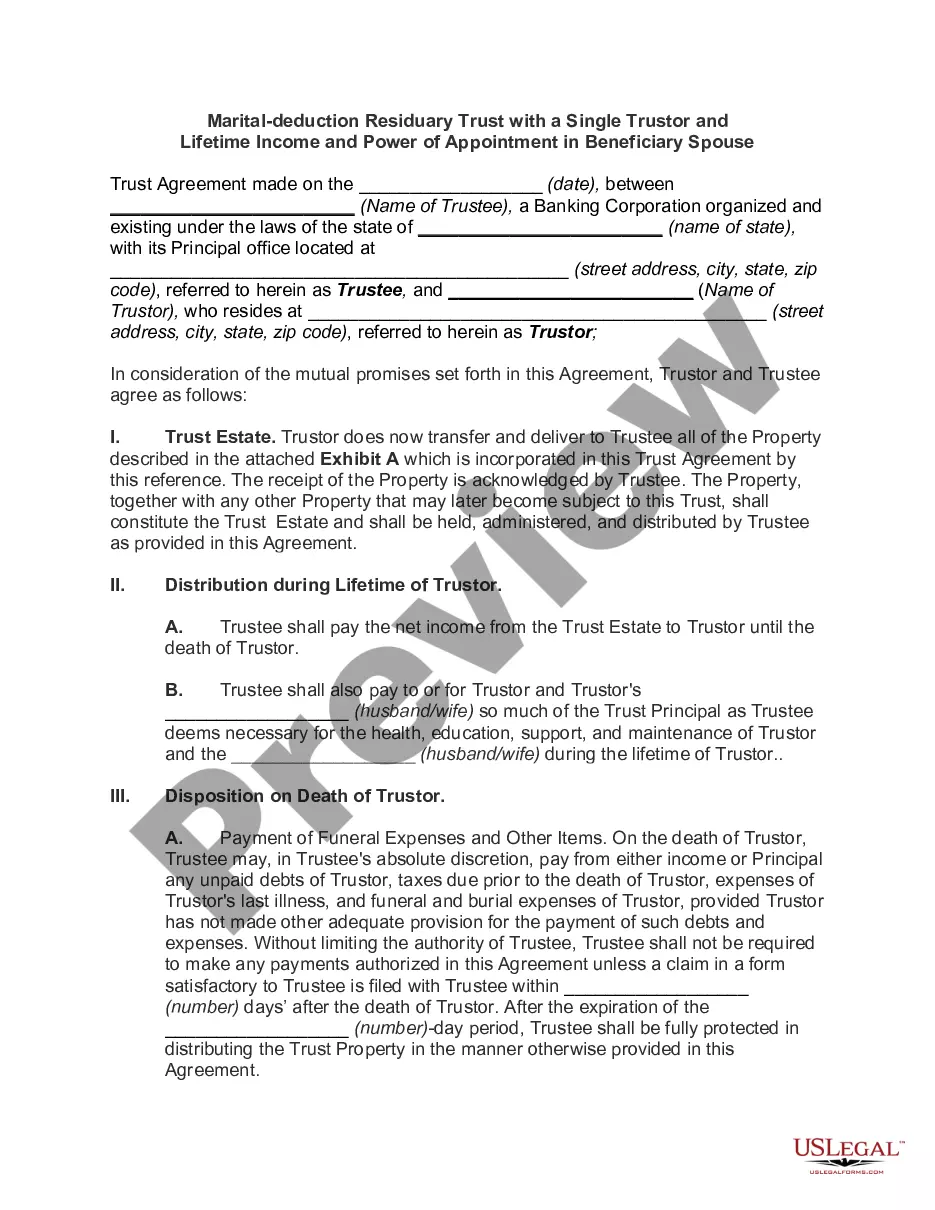
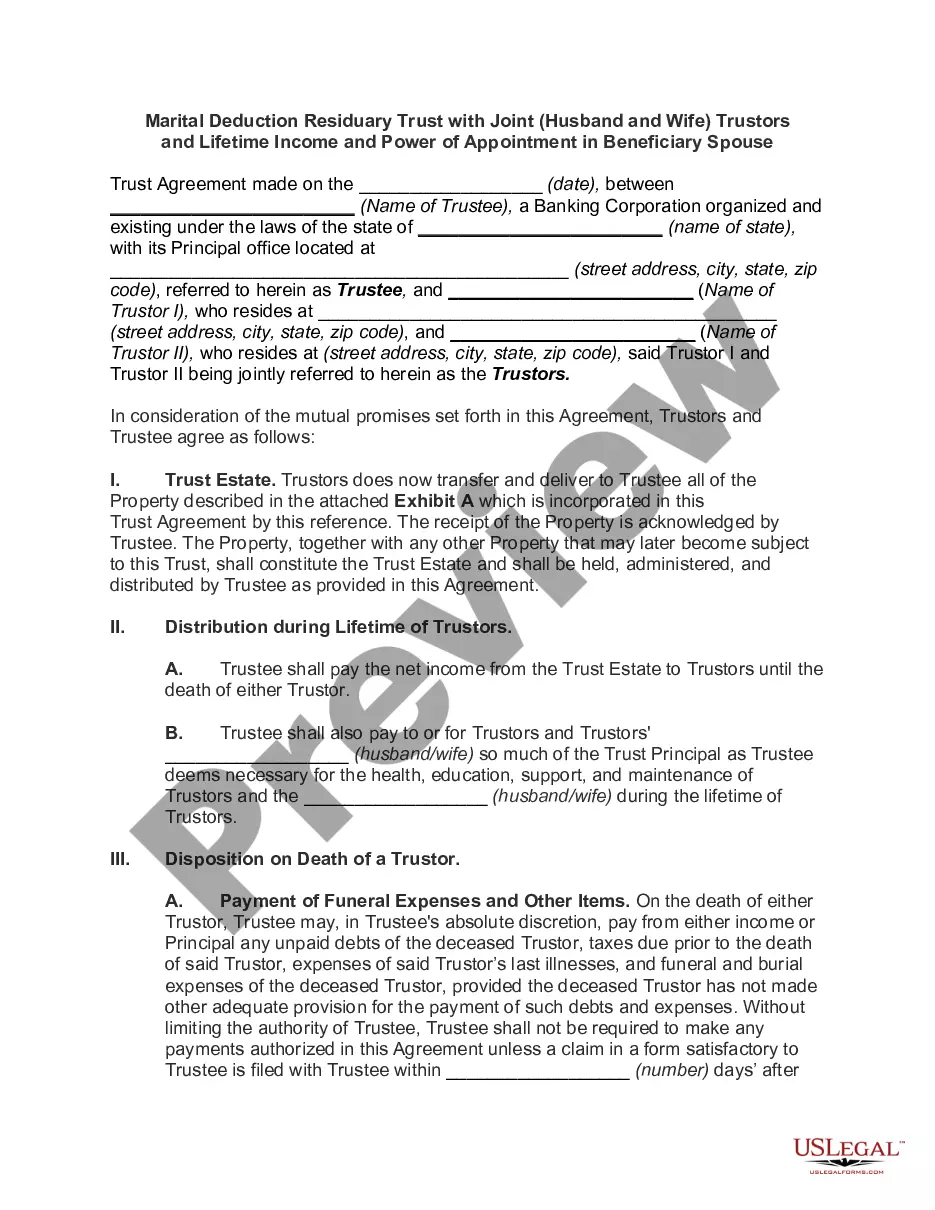
This Mutual Will form includes Last Will and Testaments for a man and woman living together but not married, with no children. It is specifically designed for couples who wish to make mutual estate planning decisions regarding their property. Unlike traditional wills, mutual wills are meant to provide a reciprocal agreement between partners about how to distribute their assets to each other.
Main sections of this form
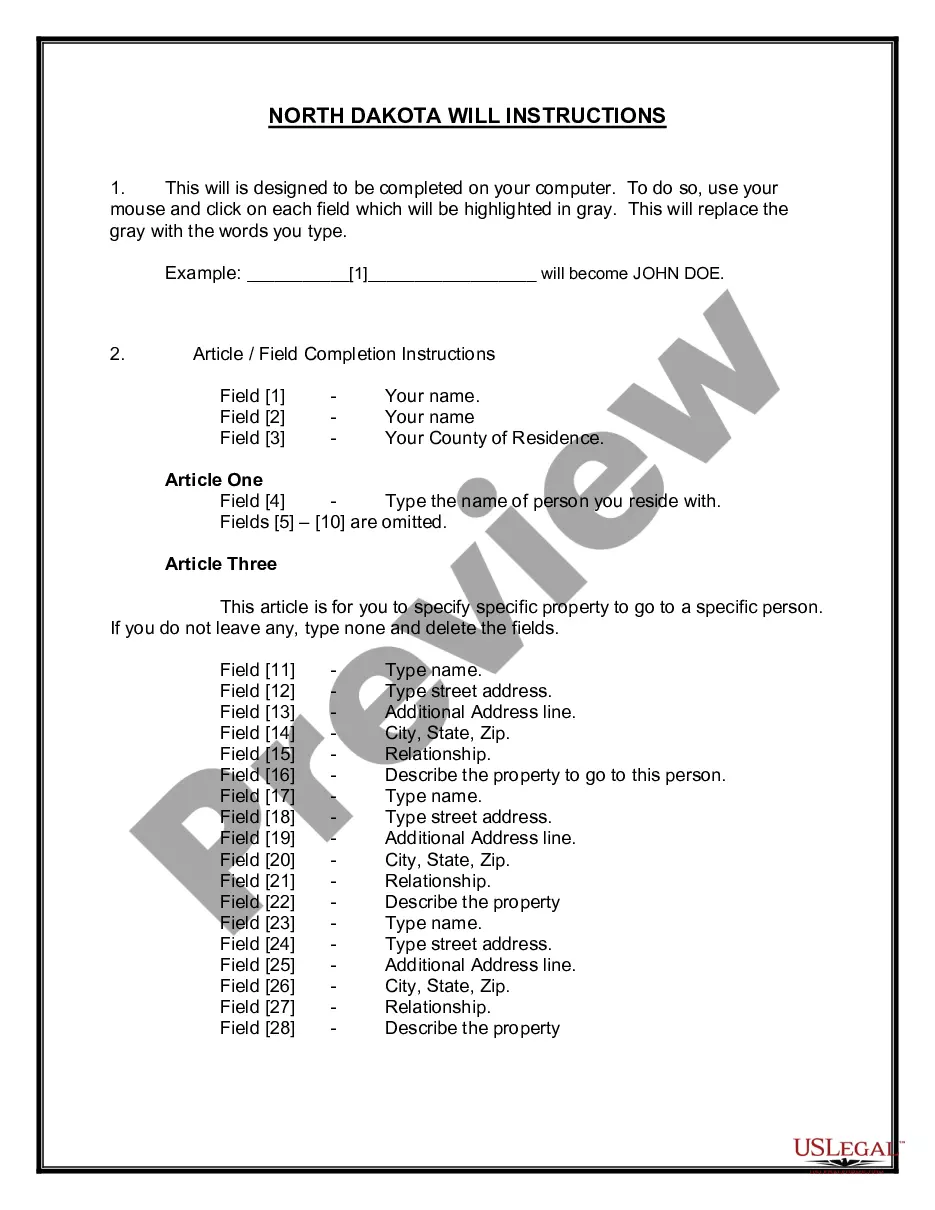
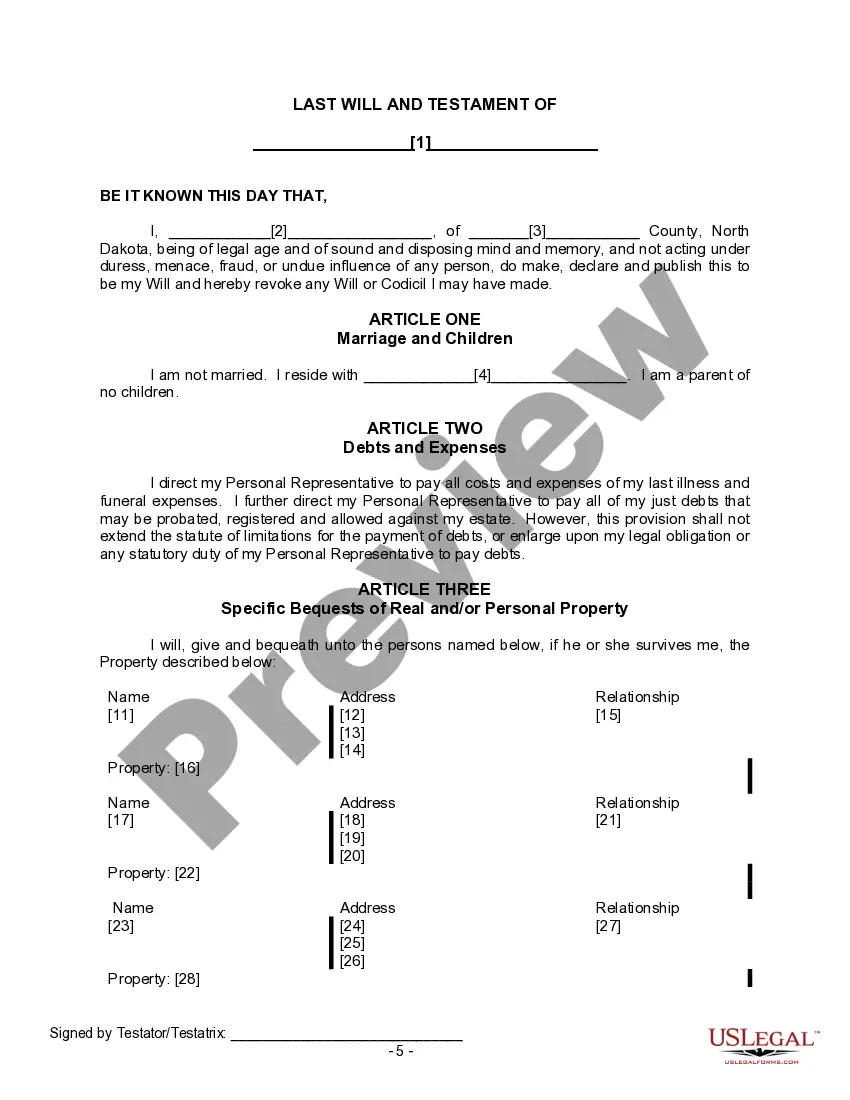
- Personal information fields for both partners, including names and county of residence.
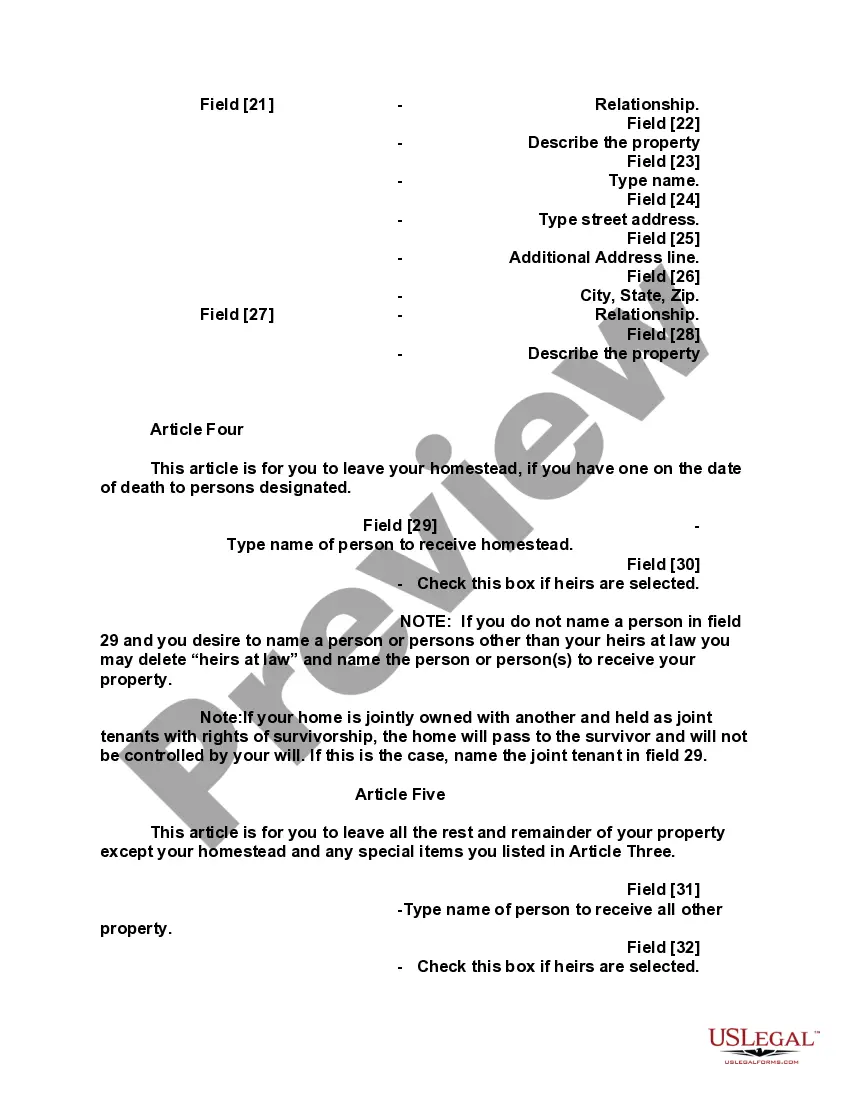
- Provisions for specific bequests of property to designated individuals.
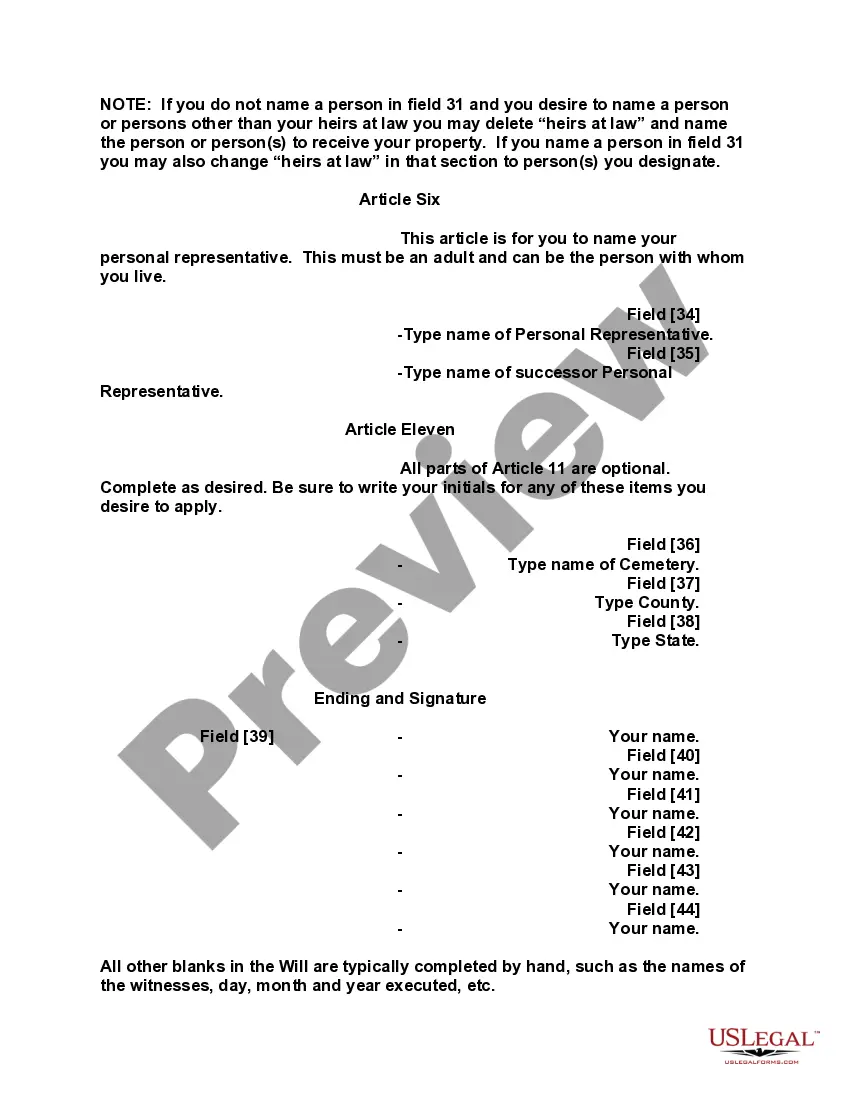
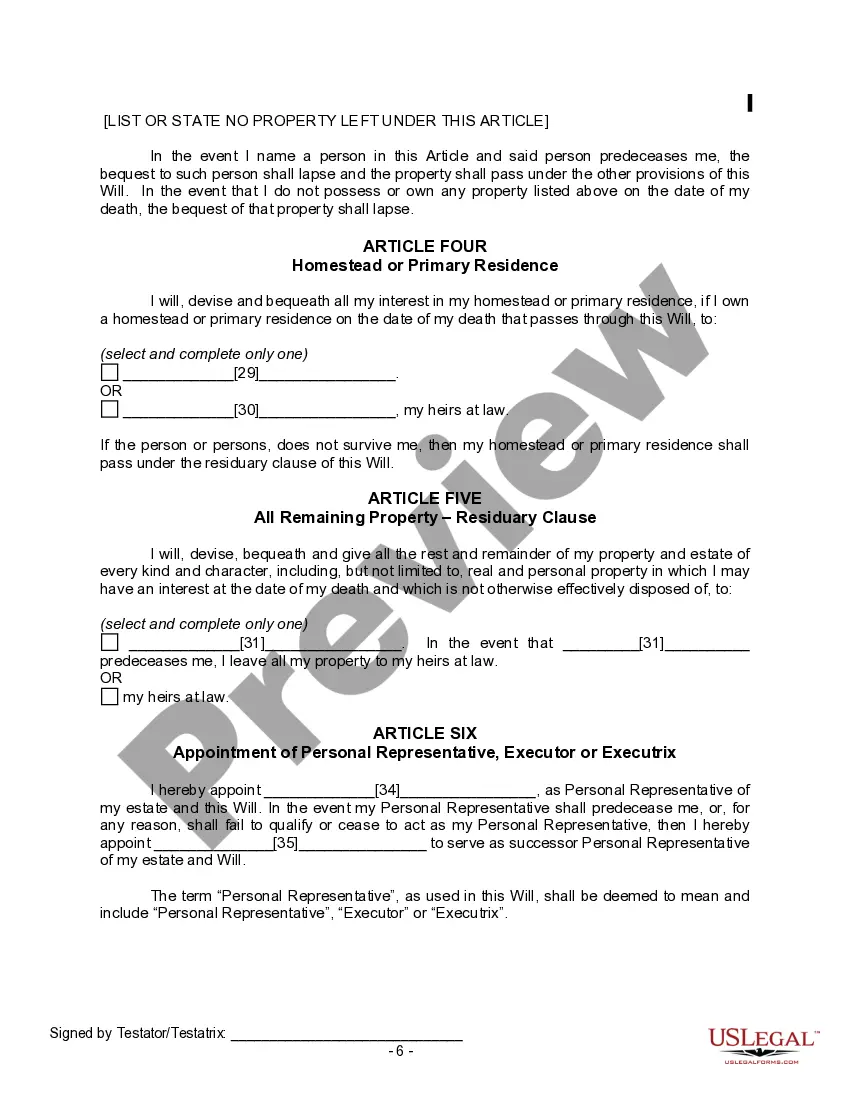
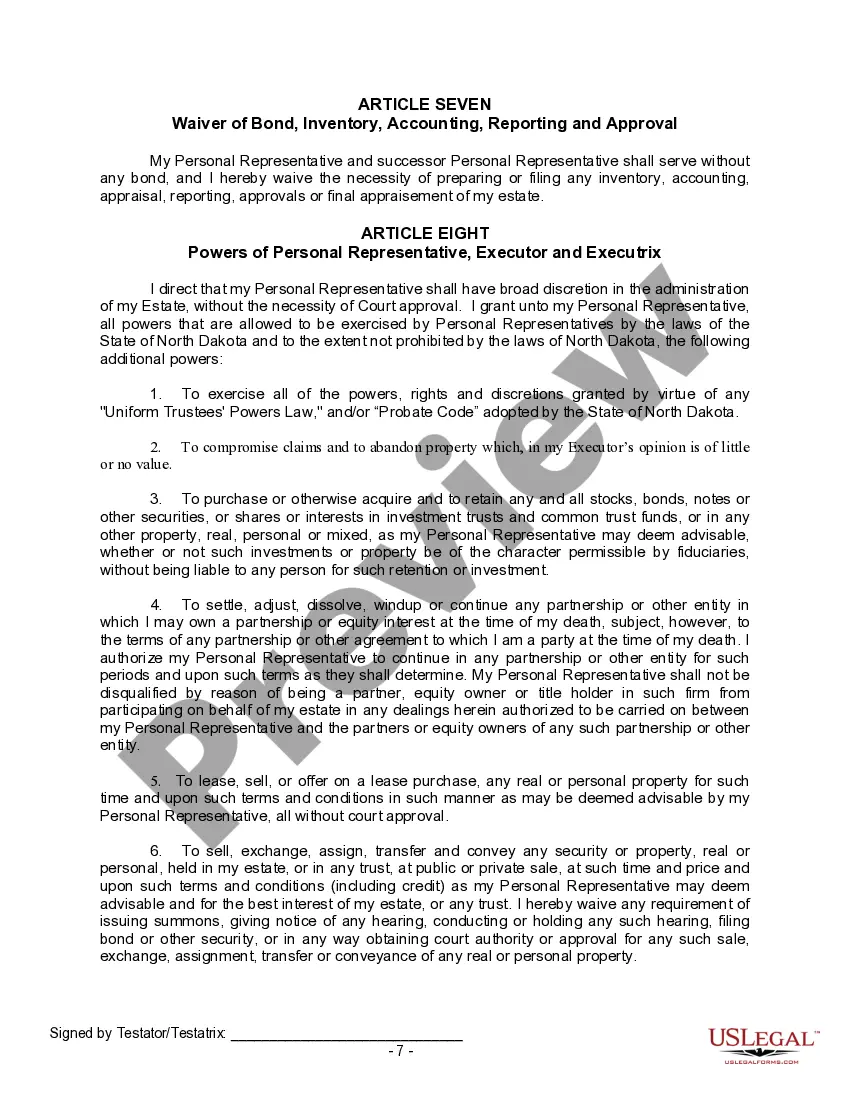
- Instructions on how to name a personal representative to manage the estate.
- Clauses outlining debts and expenses associated with the estate.
- Space for designating a homestead or primary residence after death.



When this form is needed
This form is essential for couples living together who want to ensure that their assets are passed to one another in the event of death. It is particularly relevant for partners without children who wish to have clear instructions regarding their property distribution and mutual intentions regarding their estate.
Intended users of this form
- Couples living together without legal marriage.
- Individuals with no children who want to ensure their partner inherits their property.
- Partners seeking clear and equitable estate planning solutions.
Steps to complete this form
- Identify and enter the names of both partners in their respective fields.
- Specify the county of residence for both individuals.
- Complete the sections outlining specific bequests of property, detailing the property and who it will go to.
- Name a personal representative who will oversee the distribution of the estate.
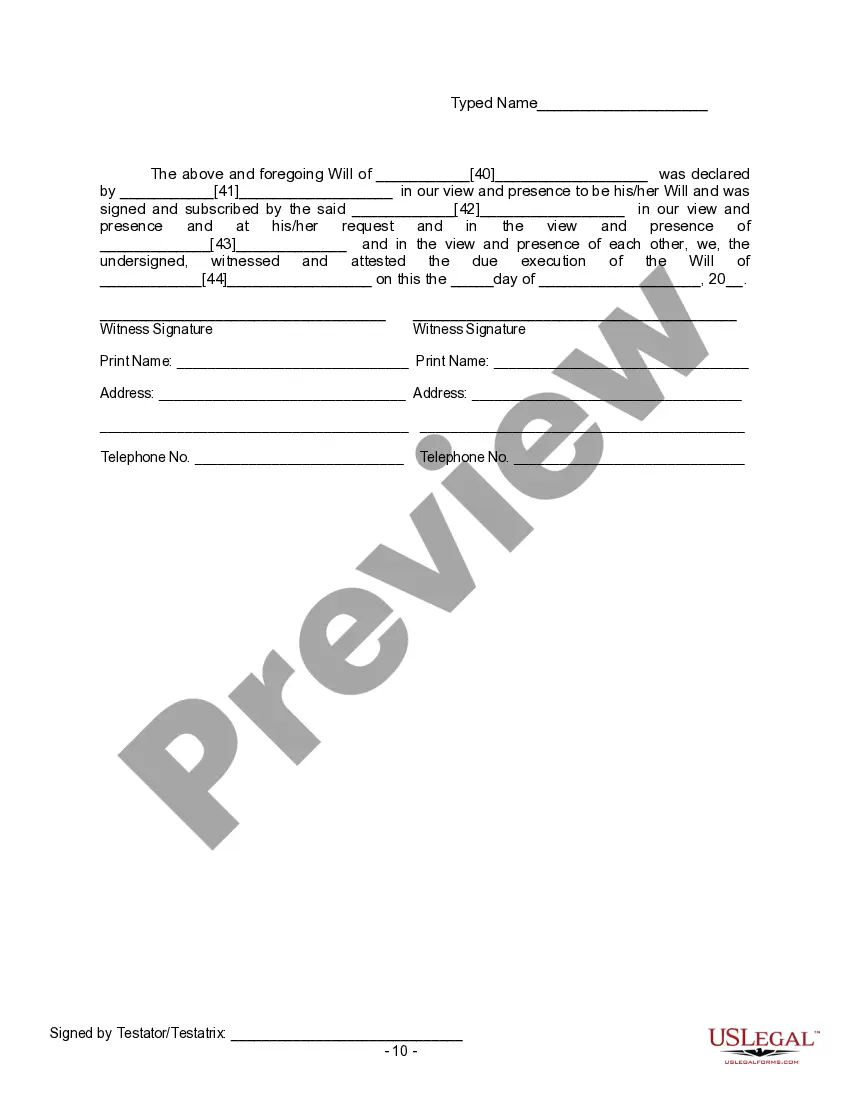
- Sign the document in the presence of two unbiased witnesses.
Does this form need to be notarized?
Notarization is required for this form to take effect. Our online notarization service, powered by Notarize, lets you verify and sign documents remotely through an encrypted video session, available 24/7.
Get your form ready online
Our built-in tools help you complete, sign, share, and store your documents in one place.
Make edits, fill in missing information, and update formatting in US Legal Forms—just like you would in MS Word.
Download a copy, print it, send it by email, or mail it via USPS—whatever works best for your next step.
Sign and collect signatures with our SignNow integration. Send to multiple recipients, set reminders, and more. Go Premium to unlock E-Sign.
If this form requires notarization, complete it online through a secure video call—no need to meet a notary in person or wait for an appointment.
We protect your documents and personal data by following strict security and privacy standards.

Make edits, fill in missing information, and update formatting in US Legal Forms—just like you would in MS Word.

Download a copy, print it, send it by email, or mail it via USPS—whatever works best for your next step.

Sign and collect signatures with our SignNow integration. Send to multiple recipients, set reminders, and more. Go Premium to unlock E-Sign.

If this form requires notarization, complete it online through a secure video call—no need to meet a notary in person or wait for an appointment.

We protect your documents and personal data by following strict security and privacy standards.
Common mistakes
- Failing to have the wills signed by two witnesses as required.
- Omitting the details of specific property bequests.
- Neglecting to name a personal representative.
- Not ensuring both partners have identical information in their completed wills.
Advantages of online completion
- Convenient access and flexibility to edit the form as needed.
- Legal reliability through templates drafted by licensed attorneys.
- Time-saving as the forms can be downloaded and completed at your pace.
Legal use & context
- These wills are designed to provide clear instructions for asset distribution upon death.
- They can mitigate potential legal disputes among heirs and surviving family members.
- Using mutual wills can help couples achieve peace of mind regarding their estate planning.
Key takeaways
- This form serves unmarried couples living together to create mutual wills.
- Proper execution requires witnesses and potentially notarization.
- Specific property allocations can be clearly defined within this document.
- Ensure to follow state-specific regulations for validity.
Looking for another form?
Form popularity
FAQ
Witnesses. As a protection against fraud, almost every state requires that witnesses (as well as the will-maker) sign the will. If the witnessing requirements were not met, the probate court judge will decide whether or not to admit the will to probate.
A notarized will does not need to be probated.When a person dies leaving behind a will that is not notarized, the law requires that its validity be ascertained by a notary or by a court. Similarly, any non-notarized modification made to a will must be probated, whether the will is notarized or not.
Holographic wills can be alternatives to wills that lawyers create. Holographic wills do not require notarization or witnesses. This type of will can lead to problems in probate court.
If each spouse has their own Will, California law allows them to make new Wills after the divorce has been filed and creating the new Will does not violate the Automatic Temporary Restraining Order (ATRO) against changing beneficiaries, selling assets, etc.
It must be in writing. Generally, of course, wills are composed on a computer and printed out. The person who made it must have signed and dated it. A will must be signed and dated by the person who made it. Two adult witnesses must have signed it. Witnesses are crucial.
Fraud or Undue Influence A nonfamily caregiver forcing the testator to leave them an inheritance. A family member getting the testator to sign a will by pretending it is just a general legal document that needs a signature.
A will typically must be properly witnessed to be valid. Unlike other legal documents, a will generally isn't valid unless two adult witnesses watch the will-maker sign it. The witnesses must know that the document is intended to be that person's will, and they must also sign the document themselves.
As an heir, you are entitled to a copy of the Will, whether you are named as a beneficiary or not. If there is a probate estate, then you should receive a copy of the Will. If you do not, you can always get it from the court. If there is no probate estate, then the Will is not going to do anything.
A will can also be declared invalid if someone proves in court that it was procured by undue influence. This usually involves some evil-doer who occupies a position of trust -- for example, a caregiver or adult child -- manipulating a vulnerable person to leave all, or most, of his property to the manipulator instead