California Oil and Gas Acknowledgment
Overview of this form
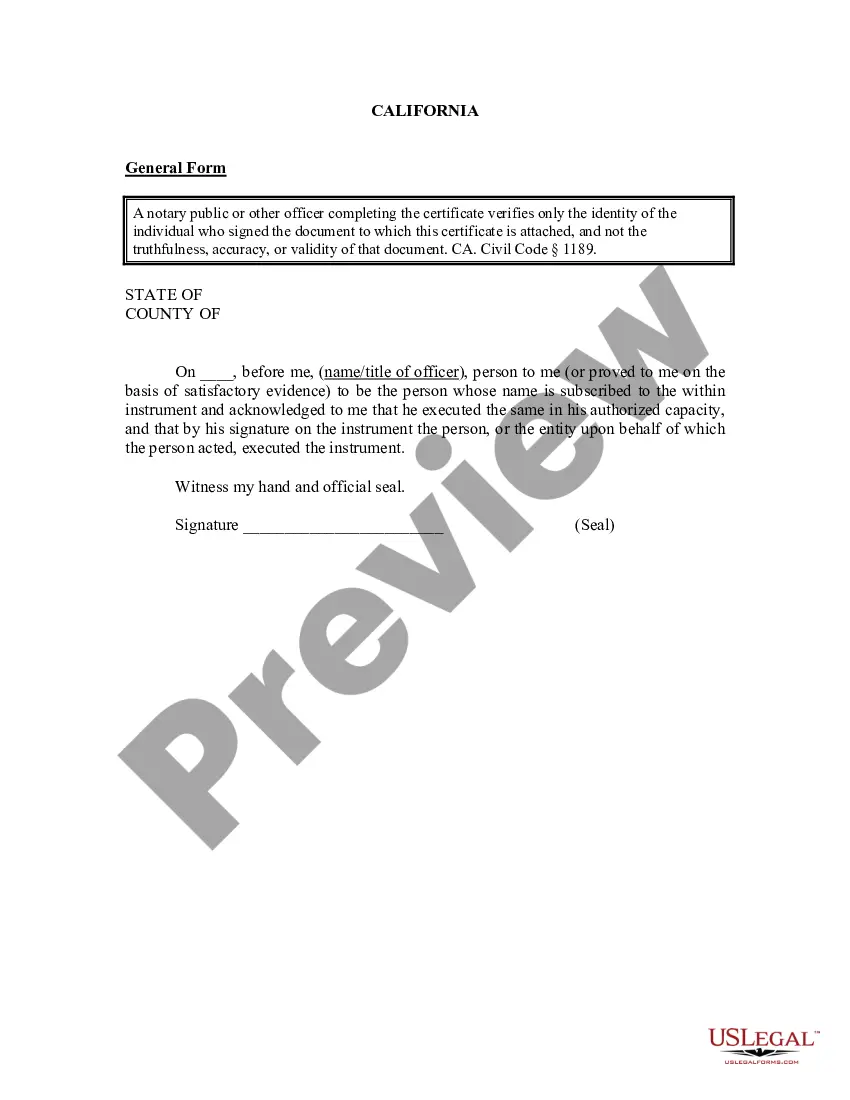
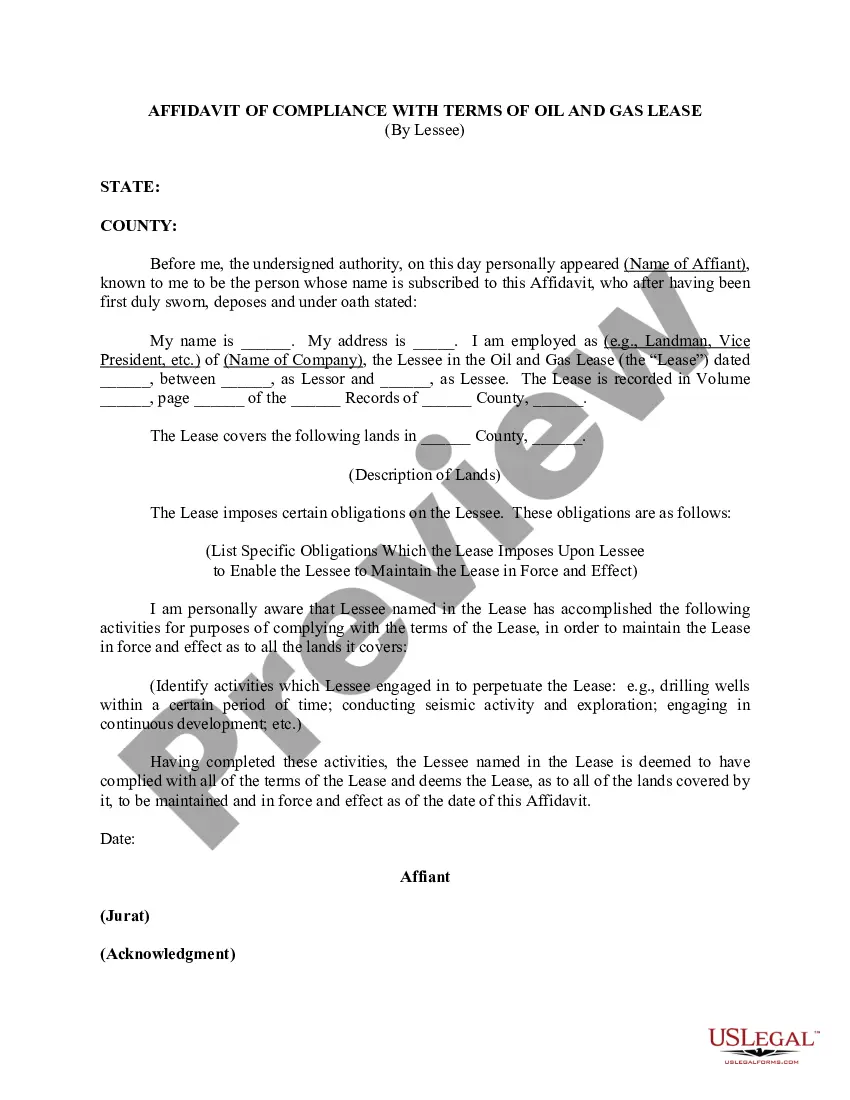
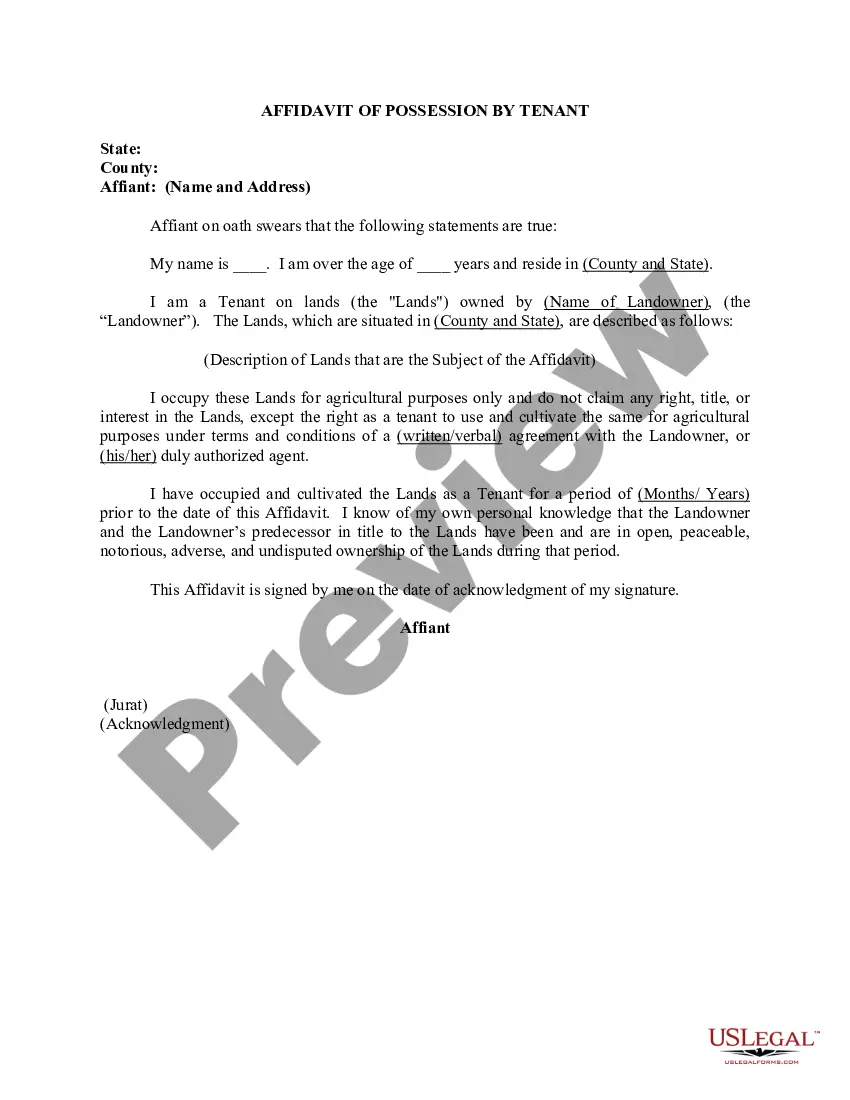
The California Oil and Gas Acknowledgment is a legal document that confirms the signing party's signature on an instrument related to real property. This acknowledgment is essential for any instrument that may be recorded and pertains to transferring interests in real estate, making it distinct from other types of acknowledgments that may not have such stringent requirements.
What’s included in this form
- Identification of the signing party and their authorized capacity.
- Details about the instrument being acknowledged.
- Notary section to verify the identity of the signer.
- Official seal of the notary public.
- Date of acknowledgment.
When this form is needed
This form is used when an individual or entity needs to acknowledge their signature on a legal instrument affecting real property, such as a property deed or lease agreement. It is typically required when the instrument is intended to be recorded with the county recorder's office in California.
Intended users of this form
- Property owners who are transferring real estate interests.
- Individuals entering into leases or other agreements concerning property.
- Attorneys representing clients in real estate transactions.
- Notaries public facilitating the acknowledgment process.
Instructions for completing this form
- Identify the signing party and their capacity to act on behalf of an entity, if applicable.
- Specify the date and circumstances under which the acknowledgment is made.
- Provide the notary's details, including their name, title, and signature.
- Attach the official seal of the notary public.
Is notarization required?
This form needs to be notarized to ensure legal validity. US Legal Forms provides secure online notarization powered by Notarize, allowing you to complete the process through a verified video call, available anytime.
Get your form ready online
Our built-in tools help you complete, sign, share, and store your documents in one place.
Make edits, fill in missing information, and update formatting in US Legal Forms—just like you would in MS Word.
Download a copy, print it, send it by email, or mail it via USPS—whatever works best for your next step.
Sign and collect signatures with our SignNow integration. Send to multiple recipients, set reminders, and more. Go Premium to unlock E-Sign.
If this form requires notarization, complete it online through a secure video call—no need to meet a notary in person or wait for an appointment.
We protect your documents and personal data by following strict security and privacy standards.

Make edits, fill in missing information, and update formatting in US Legal Forms—just like you would in MS Word.

Download a copy, print it, send it by email, or mail it via USPS—whatever works best for your next step.

Sign and collect signatures with our SignNow integration. Send to multiple recipients, set reminders, and more. Go Premium to unlock E-Sign.

If this form requires notarization, complete it online through a secure video call—no need to meet a notary in person or wait for an appointment.

We protect your documents and personal data by following strict security and privacy standards.
Common mistakes to avoid
- Failing to provide the date of acknowledgment.
- Not identifying the individual or entity properly in the form.
- Omitting the notary's signature or seal.
- Using an outdated version of the form.
Benefits of using this form online
- Convenient access to legal forms anytime and anywhere.
- Easily editable to meet specific needs before download.
- Reliability ensured through professionally drafted templates by licensed attorneys.
Looking for another form?
Form popularity
FAQ
Senate Bill 1137 proposes significant changes to oil and gas well regulations, focusing on enhancing public health and environmental protections. The bill includes measures such as increased oversight of drilling operations and safety protocols. Understanding these changes is crucial, and the California Oil and Gas Acknowledgment can serve as a valuable resource for navigating the implications of this legislation.
The setback law in California requires oil and gas operations to maintain a designated distance from certain structures and facilities, such as homes and schools. This regulation aims to protect public health and the environment from potential risks associated with drilling activities. To understand these regulations better, stakeholders can refer to the California Oil and Gas Acknowledgment for official guidance.
Yes, California continues to drill for oil, although the state has implemented stricter regulations and reduced the number of active drilling sites. These measures aim to mitigate environmental risks while still meeting energy demands. Awareness of laws and guidelines can be enhanced through the California Oil and Gas Acknowledgment, benefiting all involved parties.
The new gas law in California includes regulations intended to reduce emissions and minimize environmental harm from gas production. It sets forth guidelines for safety standards and operational procedures within the gas sector. Many stakeholders utilize the California Oil and Gas Acknowledgment to stay informed about these developments and comply with the regulations.
The severance tax in California is a tax imposed on the extraction of natural resources, including oil and gas. This tax aims to generate revenue for the state while regulating the oil and gas industry. It's important to understand how this tax impacts operations, and utilizing the California Oil and Gas Acknowledgment can provide detailed insights.
A setback in California refers to the minimum distance that oil and gas operations must maintain from sensitive areas, like neighborhoods and schools. These regulations are designed to safeguard the health and safety of the community while balancing resource extraction. For comprehensive information, the California Oil and Gas Acknowledgment serves as an essential resource for understanding these distances.
The new oil law in California focuses on enhancing safety and environmental protections for oil production. It requires operators to adhere to stricter regulations and obtain necessary permits for drilling activities. This law also emphasizes the importance of the California Oil and Gas Acknowledgment to ensure compliance and awareness among stakeholders.
The difference primarily revolves around the signing process and purpose. An acknowledgment is a formal declaration that a signature is genuine, whereas a jurat involves the signer taking an oath regarding the truthfulness of the content. This distinction is particularly relevant in the context of the California Oil and Gas Acknowledgment, as proper documentation is paramount for legal clarity.
For an acknowledgment, key terms include 'acknowledgment', 'notary public', 'signature verification', and 'legal documentation'. These keywords highlight the roles and functions involved in the acknowledgment process. When discussing the California Oil and Gas Acknowledgment, focusing on these terms can enhance understanding and improve the searchability of related content.
The primary difference lies in the purpose each serves. Acknowledgment confirms the signature but does not address the content's truthfulness, while a jurat requires the signer to swear that the content is true. Both serve important roles in legal documentation, particularly for transactions related to the California Oil and Gas Acknowledgment, and choosing the right method is essential for compliance.