North Carolina Notice of Option for Recording
What this document covers
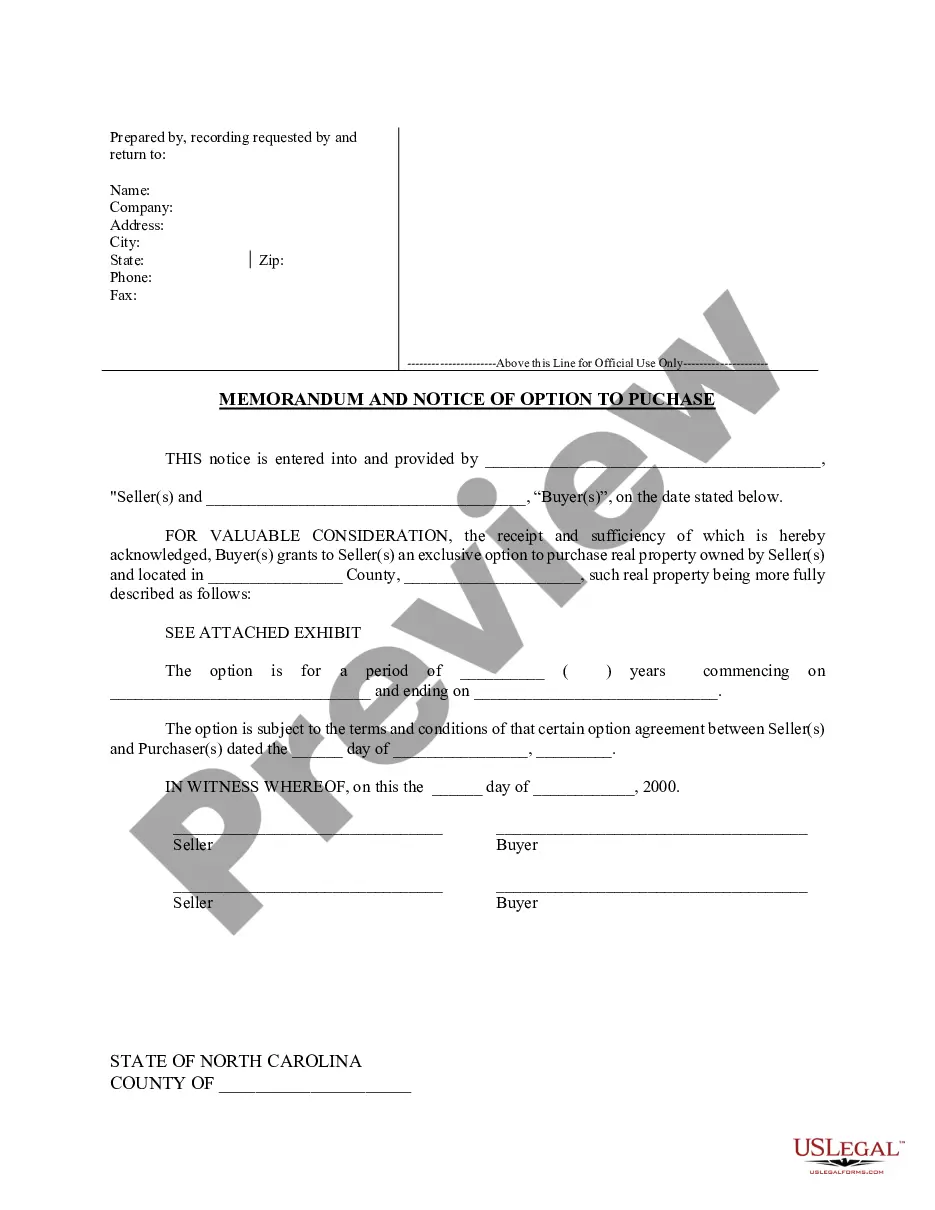
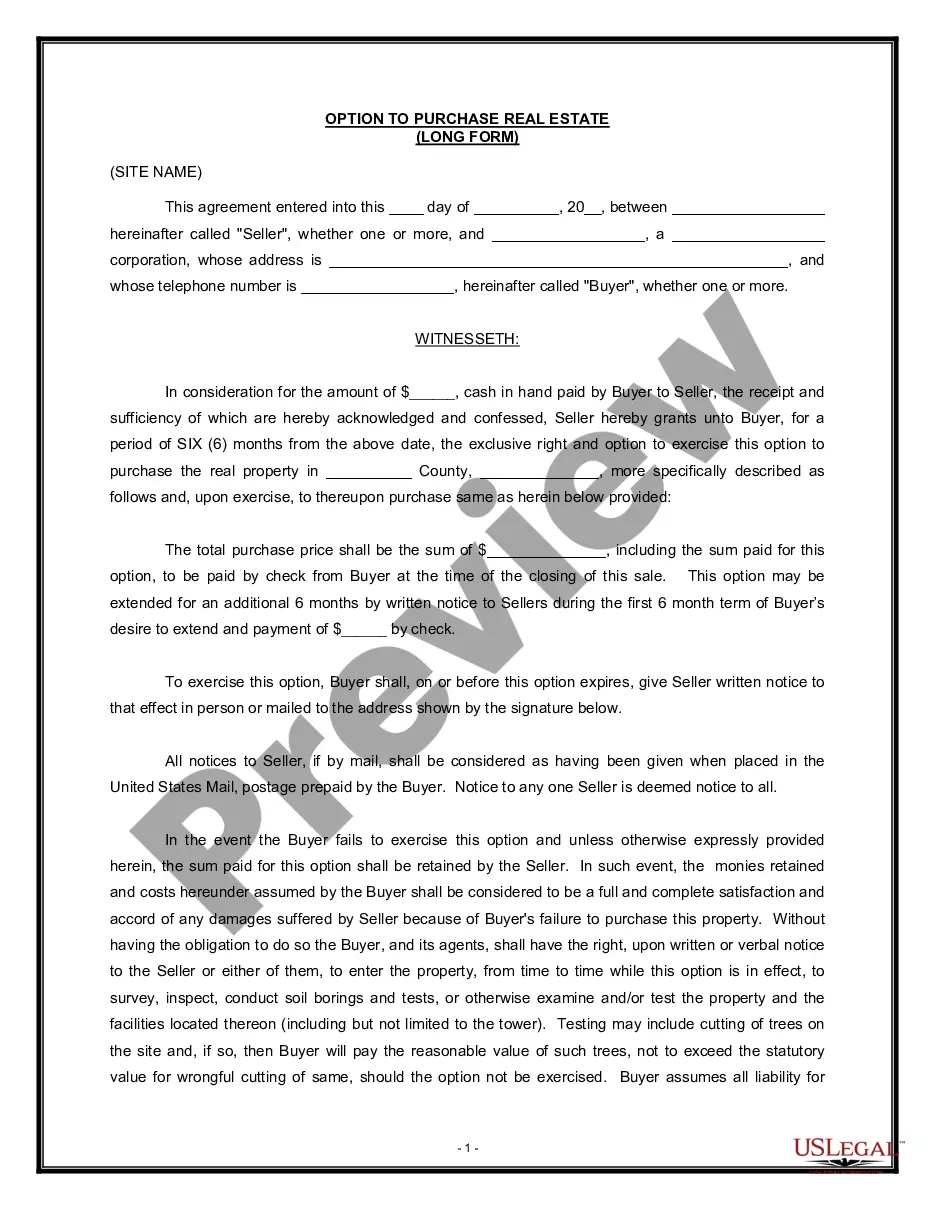
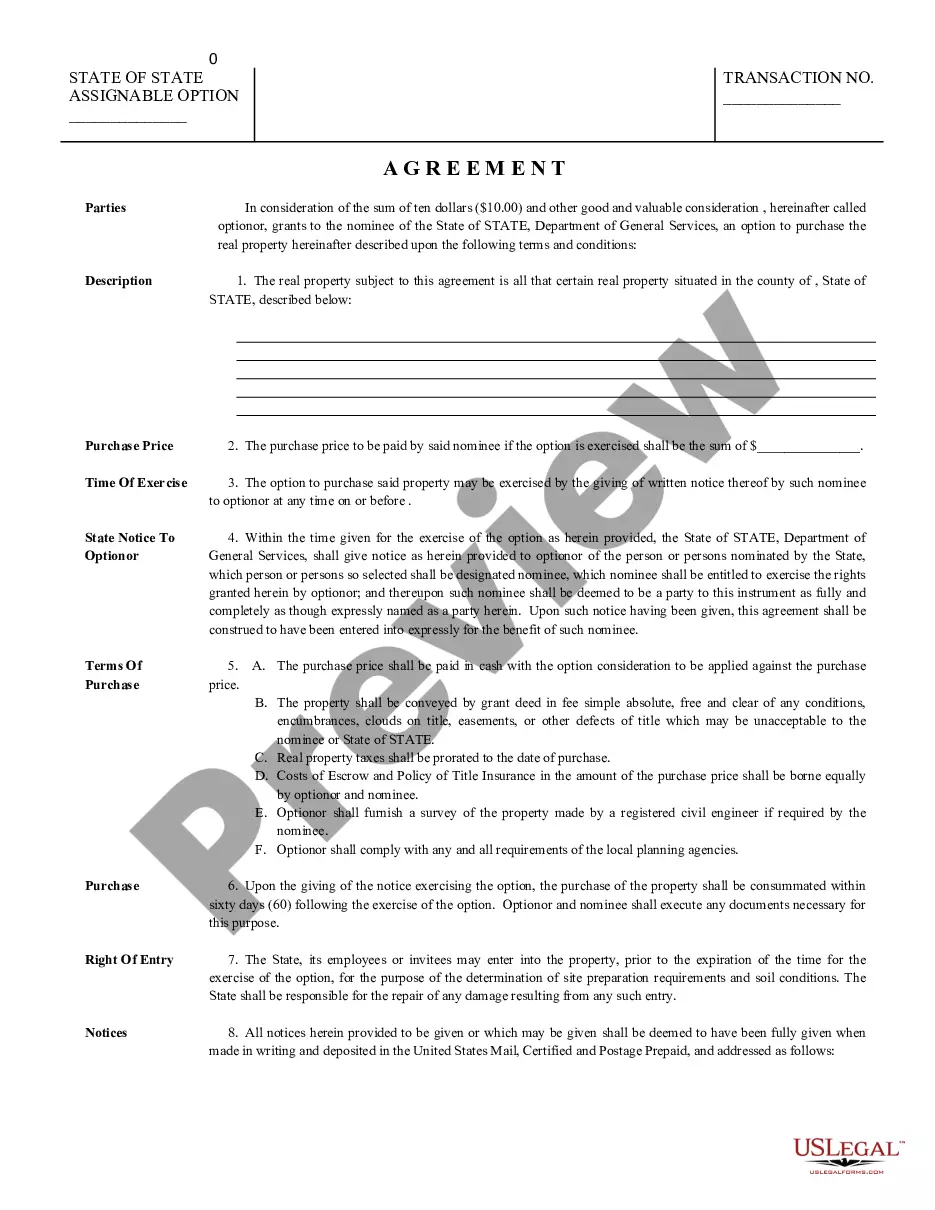
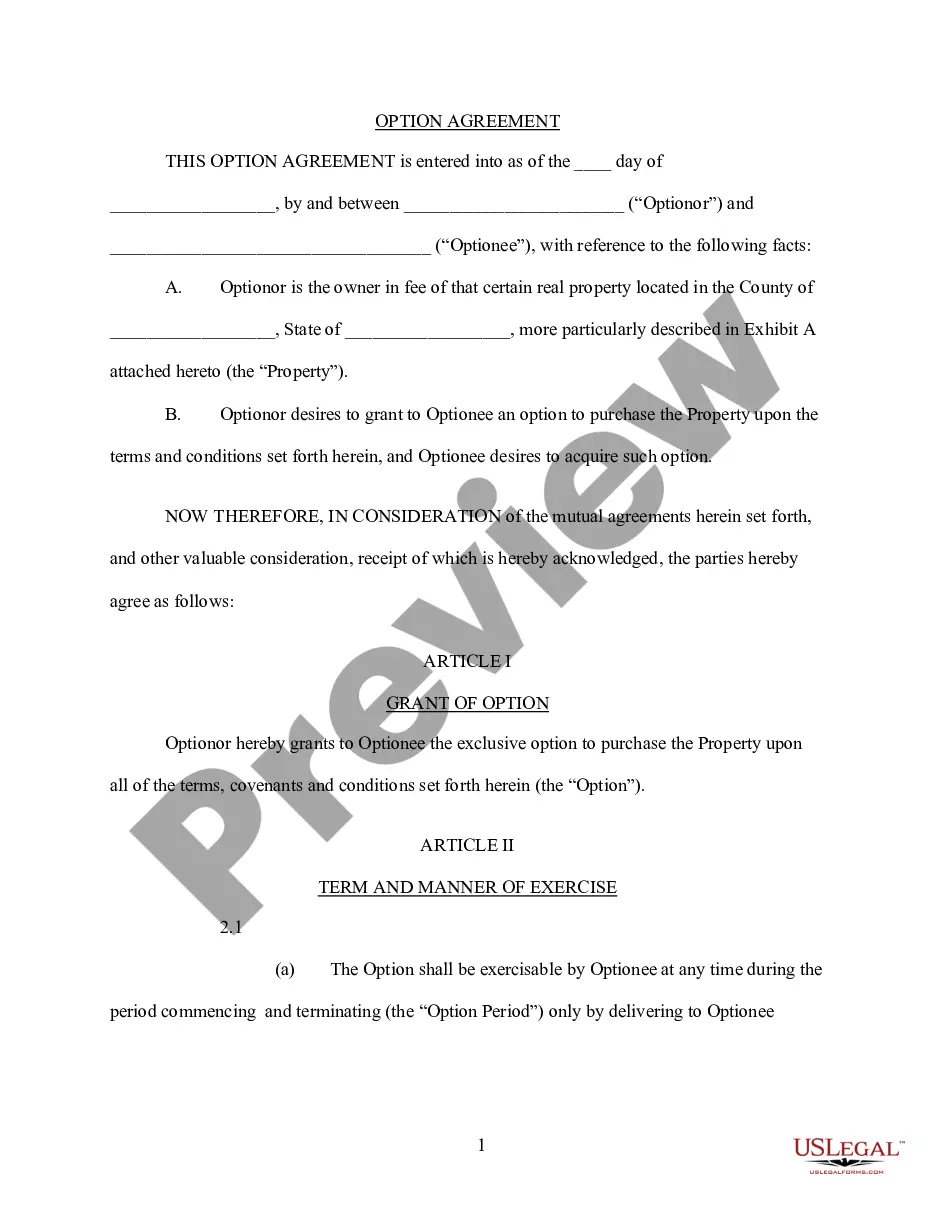
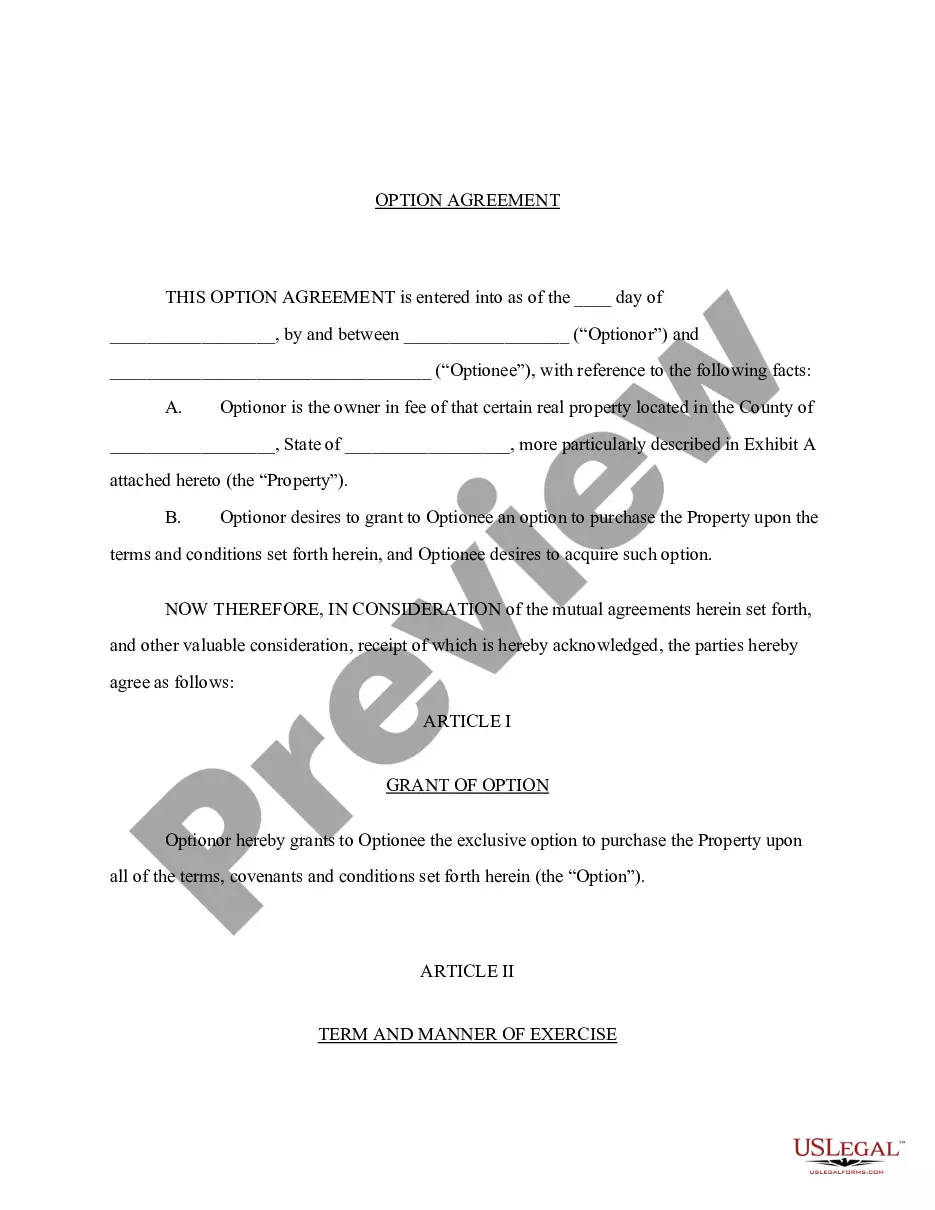
The Notice of Option for Recording is a legal document used to notify interested parties that an option to purchase a specific parcel of real estate exists. This form is useful for record-keeping purposes, as it allows you to provide notice of your option without needing to record the entire Option Agreement. By filing this notice, you can establish a claim to the property and protect your rights as a buyer or seller.
Key components of this form
- Names and addresses of the seller(s) and buyer(s).
- Specific description of the property subject to the option.
- Time period during which the option is valid.
- Reference to the original option agreement with applicable dates.
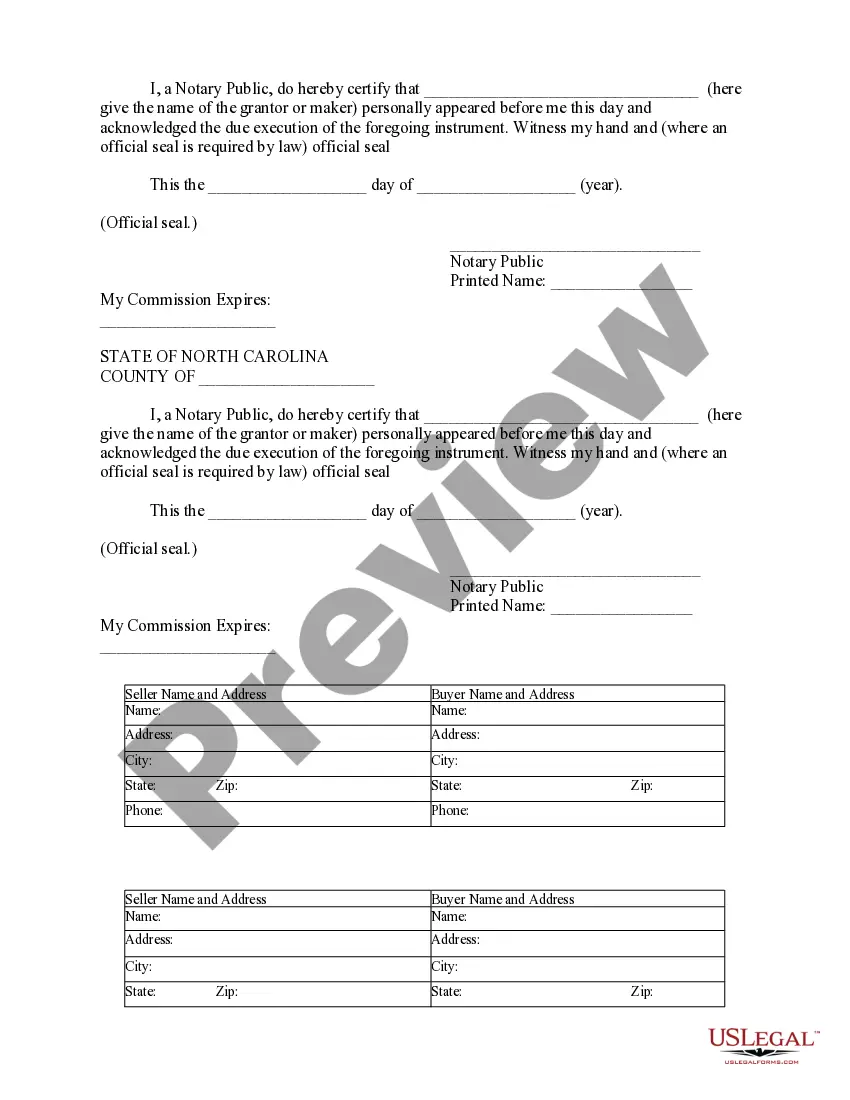
- Signatures of the parties involved, witnessed by a notary public.
Common use cases
This form should be used when a buyer has been granted an option to purchase real estate but does not wish to record the entire Option Agreement. It serves as a notice to protect the buyer's interest in the property, especially when there are multiple potential buyers or if the seller might attempt to sell the property to someone else.
Intended users of this form
- Individuals or entities acting as sellers in a real estate transaction.
- Buyers who have received an exclusive option to purchase property.
- Real estate agents or attorneys representing either party.
- Investors in real estate looking to secure potential purchases.
How to complete this form
- Identify the parties involved by entering the seller(s) and buyer(s) information.
- Specify the location and description of the real property being purchased.
- Indicate the time period for the option, including start and end dates.
- Reference the original option agreement providing its date for clarity.
- Ensure all parties sign the form in the presence of a notary public.
Does this document require notarization?
This form must be notarized to be legally valid. US Legal Forms provides secure online notarization powered by Notarize, allowing you to complete the process through a verified video call.
Get your form ready online
Our built-in tools help you complete, sign, share, and store your documents in one place.
Make edits, fill in missing information, and update formatting in US Legal Forms—just like you would in MS Word.
Download a copy, print it, send it by email, or mail it via USPS—whatever works best for your next step.
Sign and collect signatures with our SignNow integration. Send to multiple recipients, set reminders, and more. Go Premium to unlock E-Sign.
If this form requires notarization, complete it online through a secure video call—no need to meet a notary in person or wait for an appointment.
We protect your documents and personal data by following strict security and privacy standards.

Make edits, fill in missing information, and update formatting in US Legal Forms—just like you would in MS Word.

Download a copy, print it, send it by email, or mail it via USPS—whatever works best for your next step.

Sign and collect signatures with our SignNow integration. Send to multiple recipients, set reminders, and more. Go Premium to unlock E-Sign.

If this form requires notarization, complete it online through a secure video call—no need to meet a notary in person or wait for an appointment.

We protect your documents and personal data by following strict security and privacy standards.
Avoid these common issues
- Failing to include all required names and addresses of the parties involved.
- Omitting the description of the real estate, making the form incomplete.
- Not specifying the option period clearly.
- Incorrectly signing the document without a witness or notary.
Why use this form online
- Convenient access to legally-drafted forms tailored to your needs.
- Ability to edit and customize the form before downloading.
- Reliable and secure process for completing legal documentation.
What to keep in mind
- The Notice of Option for Recording notifies third parties of a purchase option.
- It is essential to complete the document accurately and have it notarized.
- Using this form helps protect your rights in a real estate transaction.
Looking for another form?
Form popularity
FAQ
Recording a property interest transfer means that everyone is on notice that the prior owner no longer is responsible for the real estate but that the new owner is in charge.In short, recording a property deed is not just the law; it's a good idea and offers both parties legal protections.
A deed is a legal instrument that evidences legal ownership of a parcel of real property, which includes land and any buildings on the land. To transfer ownership of land in North Carolina, the owner must execute and file a new deed with the register of deeds for the North Carolina county where the property is located.
Recording All deeds must be filed in the Register of Deeds in the County where the real estate is located. Signing (§ 47-38) All deeds must be signed with the Grantor(s) signing in front of a Notary Public.
When done properly, a deed is recorded anywhere from two weeks to three months after closing.
Leases with an initial term not exceeding seven years are not required to be recorded so long as each renewal term under the lease (a) is for seven years or fewer, and (b) may be effected or prevented by a party to the lease or its assigns.
Generally, recording of the lease protects the tenant against subsequent claims to the property. If the Landowner dies or sells the property during the lease term, a recorded lease helps ensure that the new owner adheres to the lease agreement (if that is specifically stated in the lease).
Adding someone to your house deed requires the filing of a legal form known as a quitclaim deed. When executed and notarized, the quitclaim deed legally overrides the current deed to your home. By filing the quitclaim deed, you can add someone to the title of your home, in effect transferring a share of ownership.
Failure to record a deed effectively makes it impossible for the public to know about the transfer of a property. That means the legal owner of the property appears to be someone other than the buyer, a situation that can generate serious ramifications.