California Notice of Petition to Administer Estate
Understanding this form
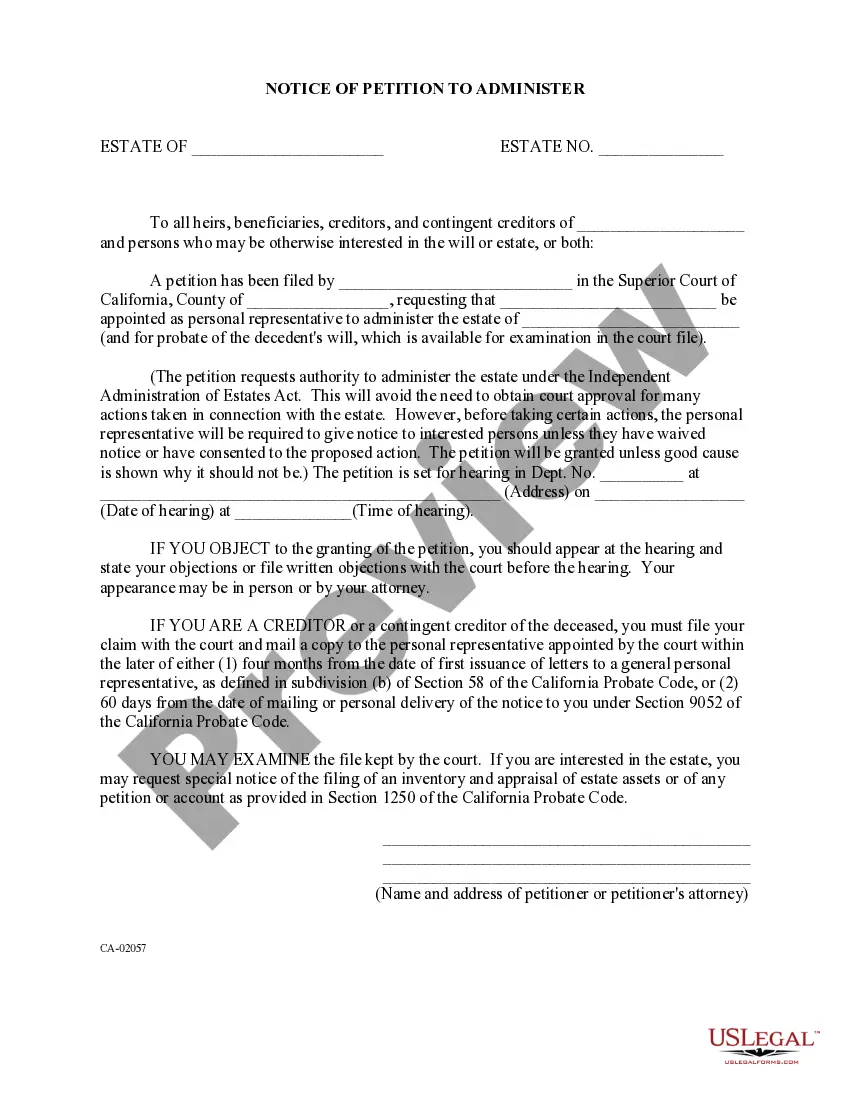
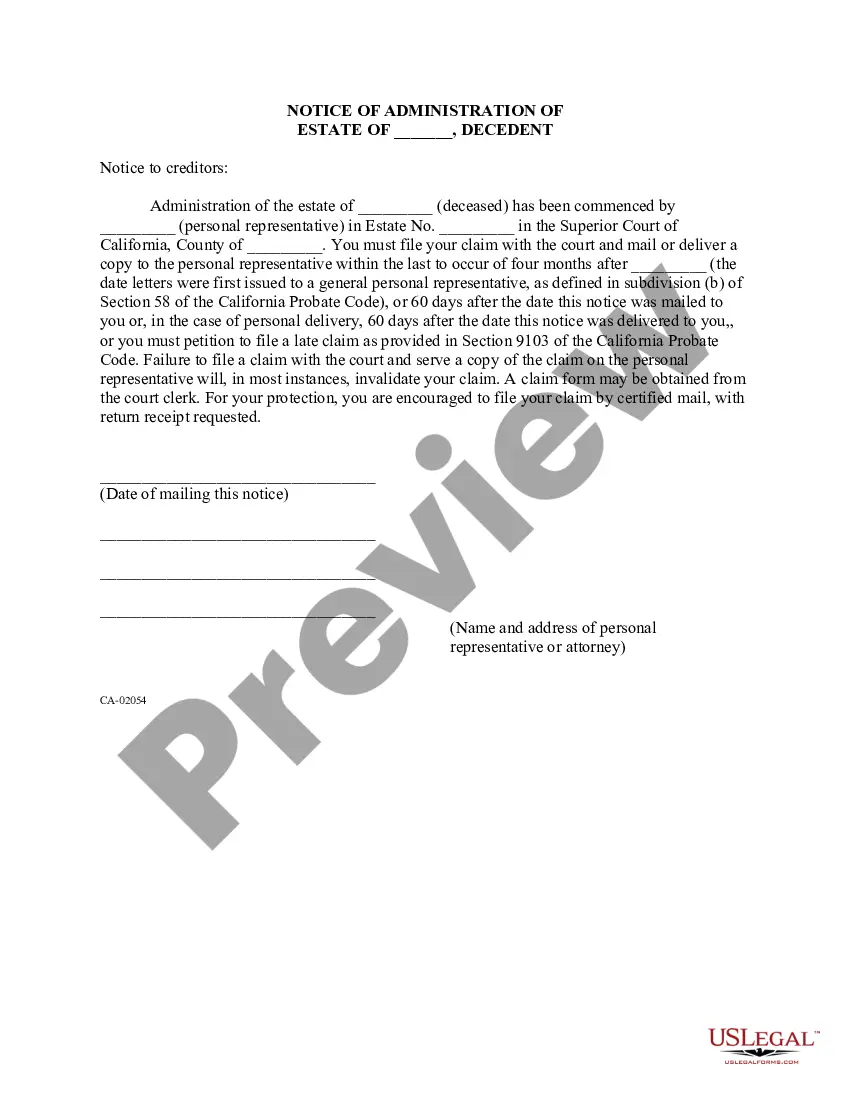
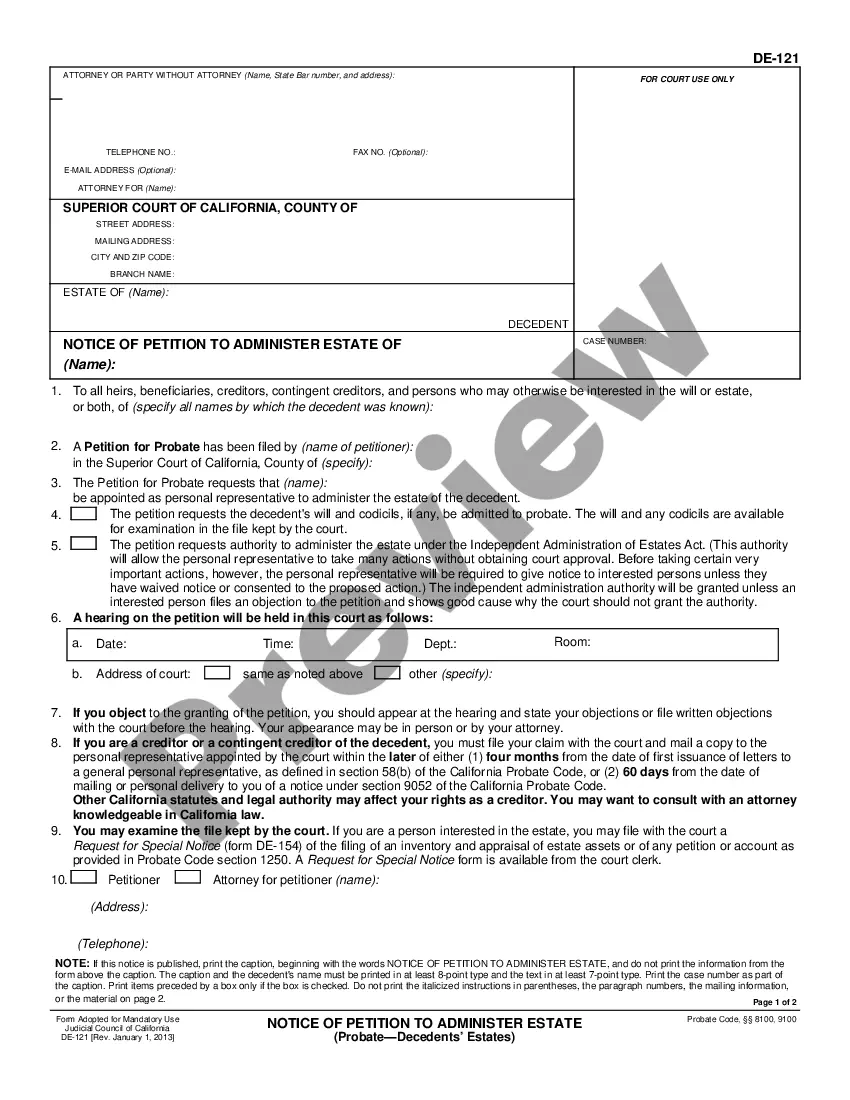
The Notice of Petition to Administer Estate is a legal notification document used to inform heirs, beneficiaries, and creditors about the filing of a petition in the probate court. This form serves as a formal announcement that a request has been made to appoint a personal representative to manage the deceased's estate. By providing this notice, the form ensures all interested parties are aware of the proceedings, which helps prevent delays often caused by a lack of notification.
Key parts of this document
- Estate and case identification: Includes the name of the deceased and the estate number.
- Petitioner information: Details of the individual or attorney filing the petition.
- Hearing details: Specifies the date, time, and location of the court hearing regarding the petition.
- Instructions for objections: Information for creditors and interested parties on how to voice objections.
- Claim filing deadlines: Outlines the time frame for creditors to file their claims with the court.
When to use this form
This form is used when a petition for appointing a personal representative is filed in the probate court. It is essential to notify all potential heirs, beneficiaries, and creditors about the proceedings to allow them the opportunity to respond or object if they have concerns regarding the appointment or administration of the estate. This form is significant in situations such as the passing of an individual, when the estate needs to be settled legally, or when an executor is required to manage the distribution of assets.
Intended users of this form
- Executors or administrators of an estate who need to notify interested parties.
- Heirs and beneficiaries of a deceased person's estate who wish to understand their rights.
- Creditors of the deceased who need to file claims against the estate.
- Attorneys representing parties with interests in the estate.
How to prepare this document
- Identify the estate: Fill in the name of the deceased and the estate number.
- Enter the petitioner's details: Provide the name and contact information of the individual filing the petition.
- Specify hearing information: Include the date, time, and address of the court hearing.
- Notify interested parties: Ensure all relevant individuals receive a copy of the notice.
- Review for accuracy: Check all information for correctness before submission to the court.
Notarization requirements for this form
In most cases, this form does not require notarization. However, some jurisdictions or signing circumstances might. US Legal Forms offers online notarization powered by Notarize, accessible 24/7 for a quick, remote process.
Get your form ready online
Our built-in tools help you complete, sign, share, and store your documents in one place.
Make edits, fill in missing information, and update formatting in US Legal Forms—just like you would in MS Word.
Download a copy, print it, send it by email, or mail it via USPS—whatever works best for your next step.
Sign and collect signatures with our SignNow integration. Send to multiple recipients, set reminders, and more. Go Premium to unlock E-Sign.
If this form requires notarization, complete it online through a secure video call—no need to meet a notary in person or wait for an appointment.
We protect your documents and personal data by following strict security and privacy standards.

Make edits, fill in missing information, and update formatting in US Legal Forms—just like you would in MS Word.

Download a copy, print it, send it by email, or mail it via USPS—whatever works best for your next step.

Sign and collect signatures with our SignNow integration. Send to multiple recipients, set reminders, and more. Go Premium to unlock E-Sign.

If this form requires notarization, complete it online through a secure video call—no need to meet a notary in person or wait for an appointment.

We protect your documents and personal data by following strict security and privacy standards.
Mistakes to watch out for
- Failing to identify all interested parties who should receive the notice.
- Incorrectly filling out the date, time, or location of the hearing.
- Not adhering to the statutory deadlines for notifying creditors.
- Neglecting to update the form with any changes before submission.
Why use this form online
- Convenient access: Download and complete the form at your convenience.
- Editability: Easily customize the form to fit your specific situation and needs.
- Reliability: Ensure all legal language is up to date and compliant with California law.
Looking for another form?




Form popularity
FAQ
You should file the DE 121 form immediately after you file the California Notice of Petition to Administer Estate. Doing so ensures that all interested parties are informed of the proceedings promptly. This filing typically takes place within 30 days of filing your initial petition, and can aid in preventing any disputes later on. It's always a good idea to consult a probate attorney to guide you through the process.
The DE 121 form, also known as the Notice of Petition to Administer Estate, is a crucial document in the California Probate process. This form notifies interested parties about the Probate proceedings and their rights. Submitting a DE 121 form is a vital step to ensure transparency and allow stakeholders to participate in the process. Understanding its role can significantly impact how smoothly your Probate journey goes.
To Probate an estate in California, you need several essential documents. Key items include the California Notice of Petition to Administer Estate, the original will, death certificate, and sometimes, a list of beneficiaries. These documents help establish the validity of your claims and ensure a smooth court process. It's wise to double-check with your legal advisor to ensure you have everything required.
A petition to admit a will to Probate is a formal request presented to the court. This document establishes the validity of the will and initiates the Probate process. When you file a California Notice of Petition to Administer Estate, you essentially seek the court’s recognition of the will, allowing the estate to be managed according to the deceased’s wishes. This step is crucial for ensuring that all assets are properly handled.
Yes, there is a time limit to start Probate in California. Generally, you should file a California Notice of Petition to Administer Estate within a certain period after the death of the individual. This period can vary, but typically, you must start the process within 60 days to avoid complications. It's advisable to consult with a legal professional to ensure you meet all deadlines.
You should file DE 121 when you are notifying heirs and beneficiaries about the petition to administer the estate. This notice must be sent within a specific timeframe after filing the California Notice of Petition to Administer Estate. The DE 121 form ensures that all interested parties are informed about the proceedings and their rights regarding the estate. Timely filing is essential to maintain transparency and compliance with California probate laws.
The primary difference between an executor and an administrator in California lies in how they are appointed. An executor is named in the deceased's will, whereas an administrator is appointed by the court when there is no will. Both roles involve managing the estate and ensuring proper distribution, but the executor typically follows the decedent's instructions detailed in the will. Understanding these roles is crucial when filing the California Notice of Petition to Administer Estate.
To file as an administrator of an estate after a death, you must complete a series of legal steps. Begin by gathering essential documents, such as the death certificate and a list of assets. Next, you need to file a California Notice of Petition to Administer Estate with the probate court in the county where the deceased lived. Following the filing, a hearing will be scheduled where the petitioner's qualifications will be reviewed before the court appoints an administrator.
In California, an administrator of an estate can be a person or institution that is legally qualified to handle the deceased's affairs. This typically includes individuals who are over 18 years old, are of sound mind, and have no felony convictions. Family members, such as spouses, children, or siblings, commonly apply to serve as the administrator. Ultimately, the court appoints the most appropriate candidate after reviewing the California Notice of Petition to Administer Estate.
A Petition to Administer an Estate in California is a legal document filed with the probate court to begin the administration of a deceased person's estate. This petition outlines essential details about the deceased, including assets, debts, and potential heirs. By filing the California Notice of Petition to Administer Estate, you formally request the court to appoint an administrator or executor. It establishes the groundwork for settling the estate in accordance with California probate laws.