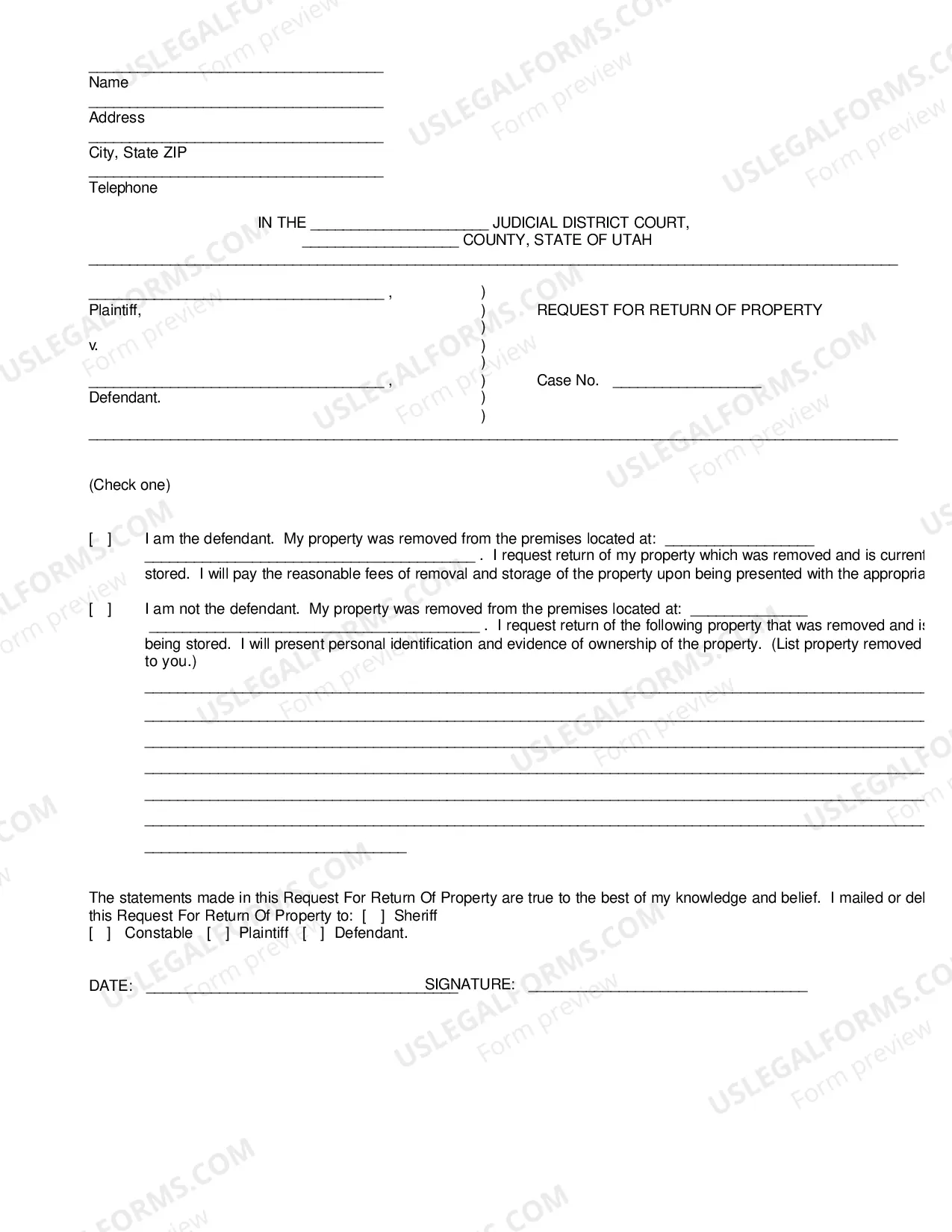
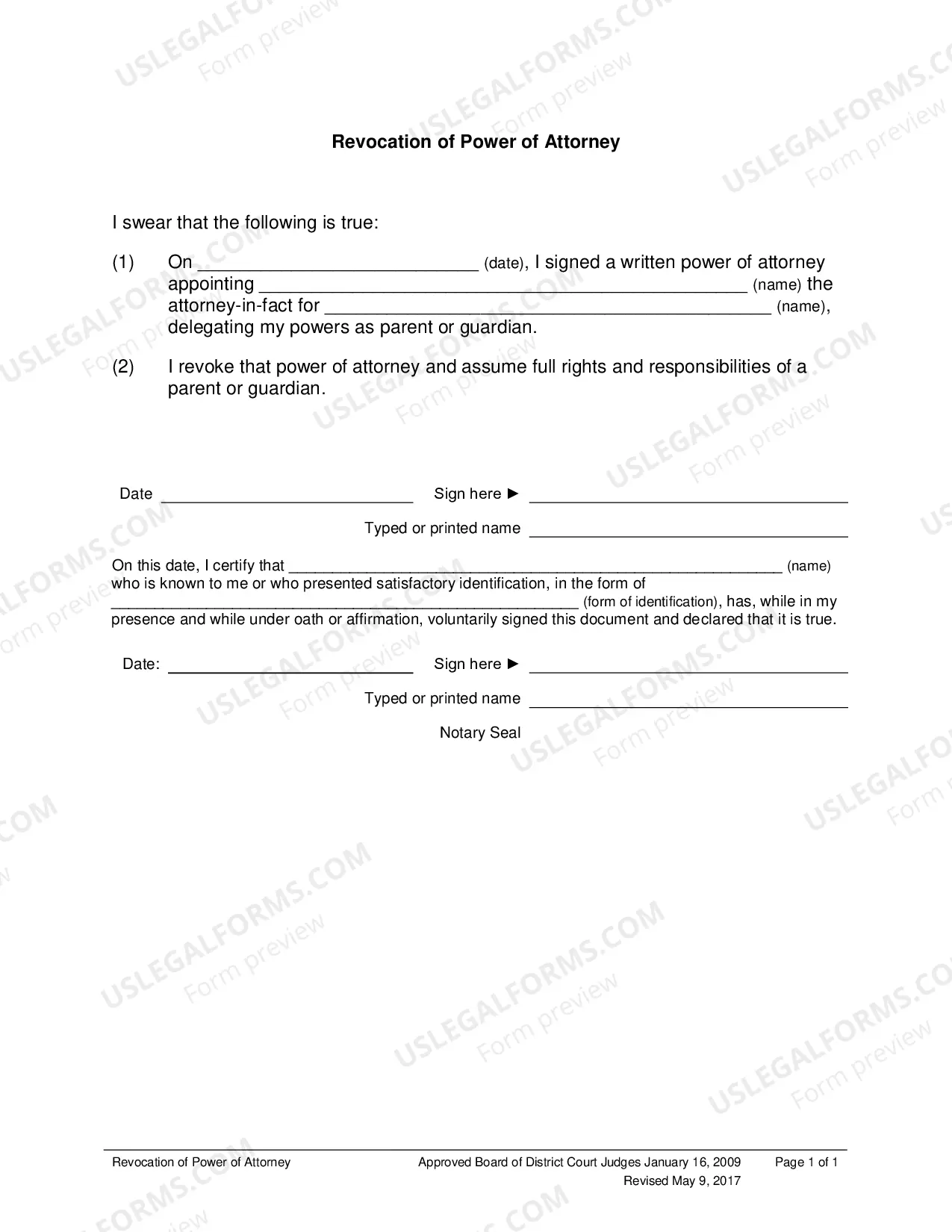
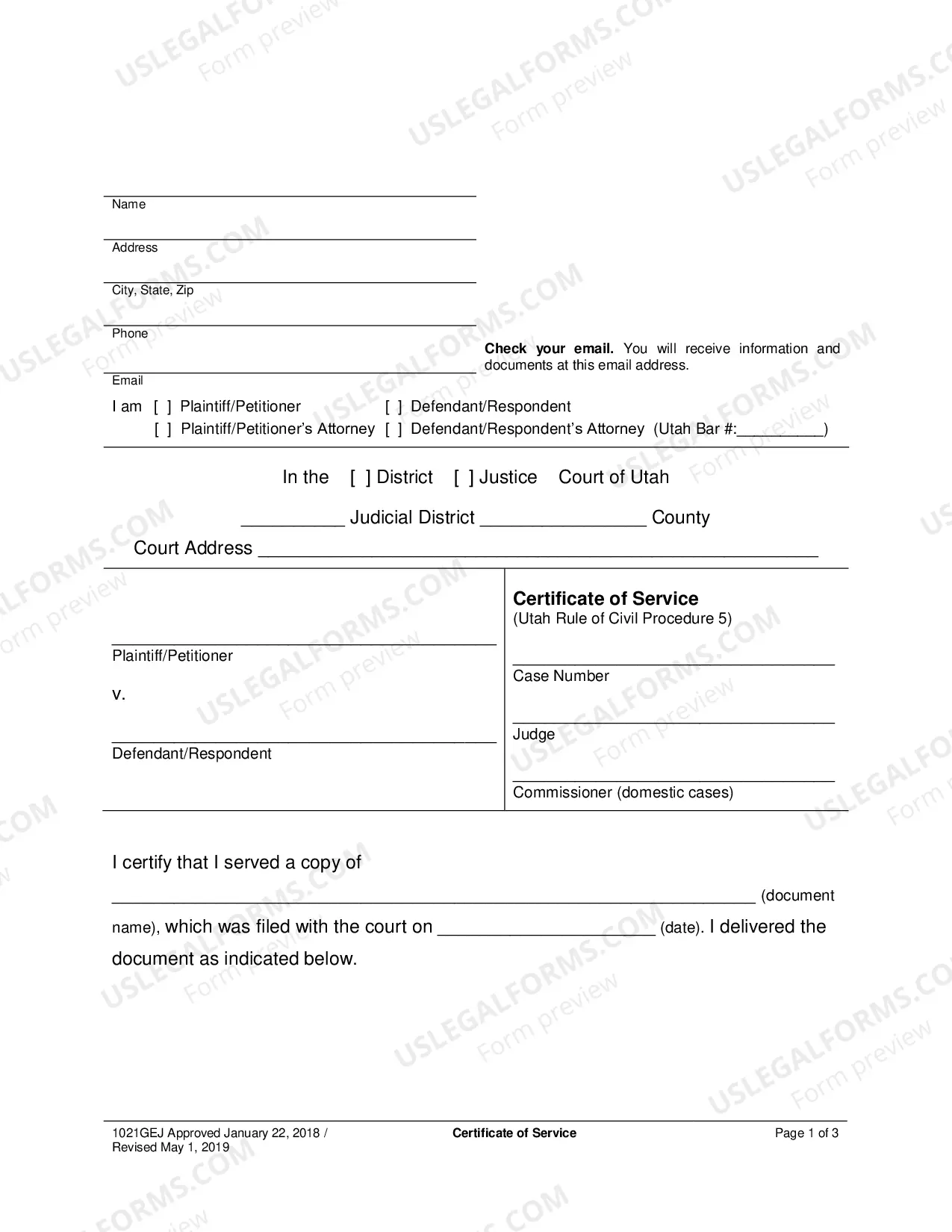
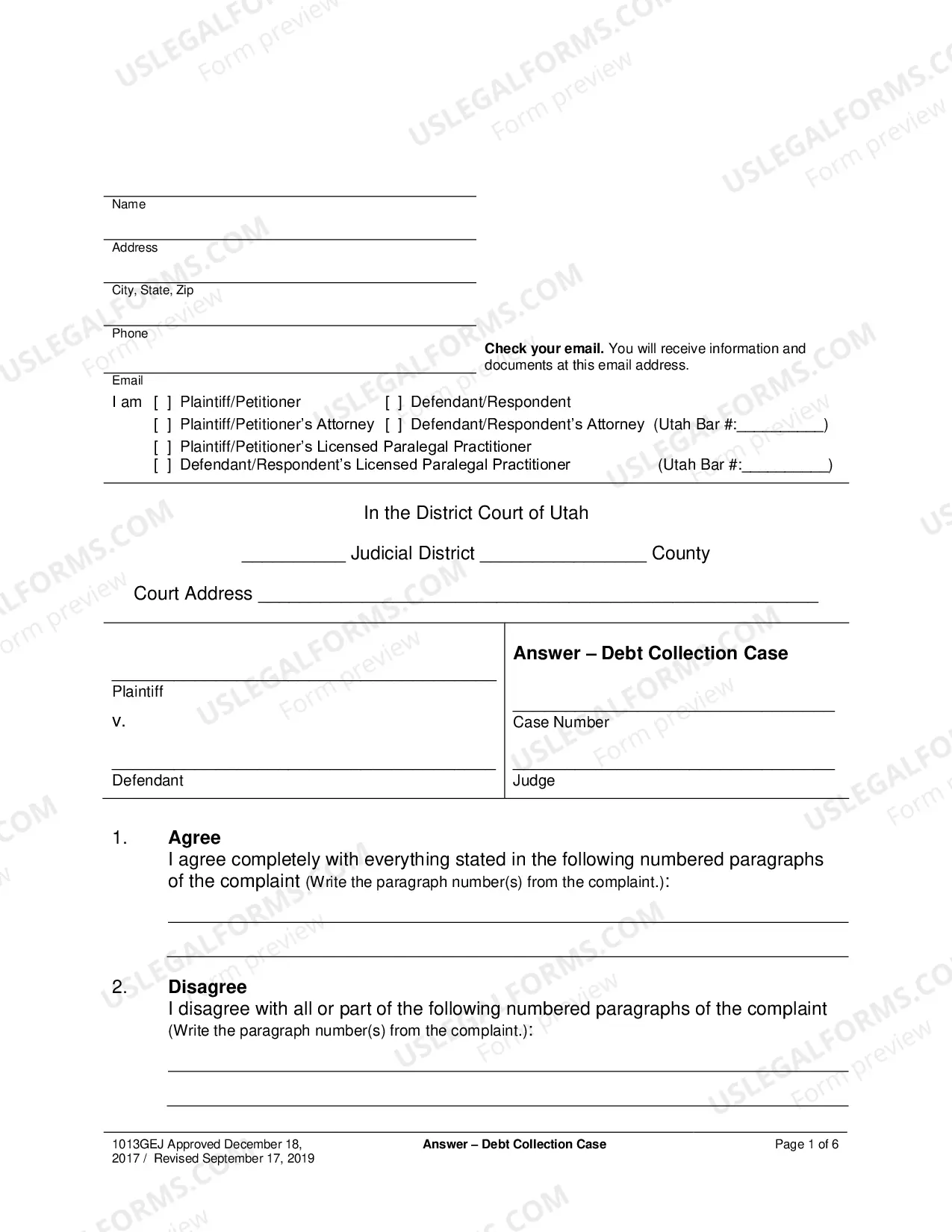
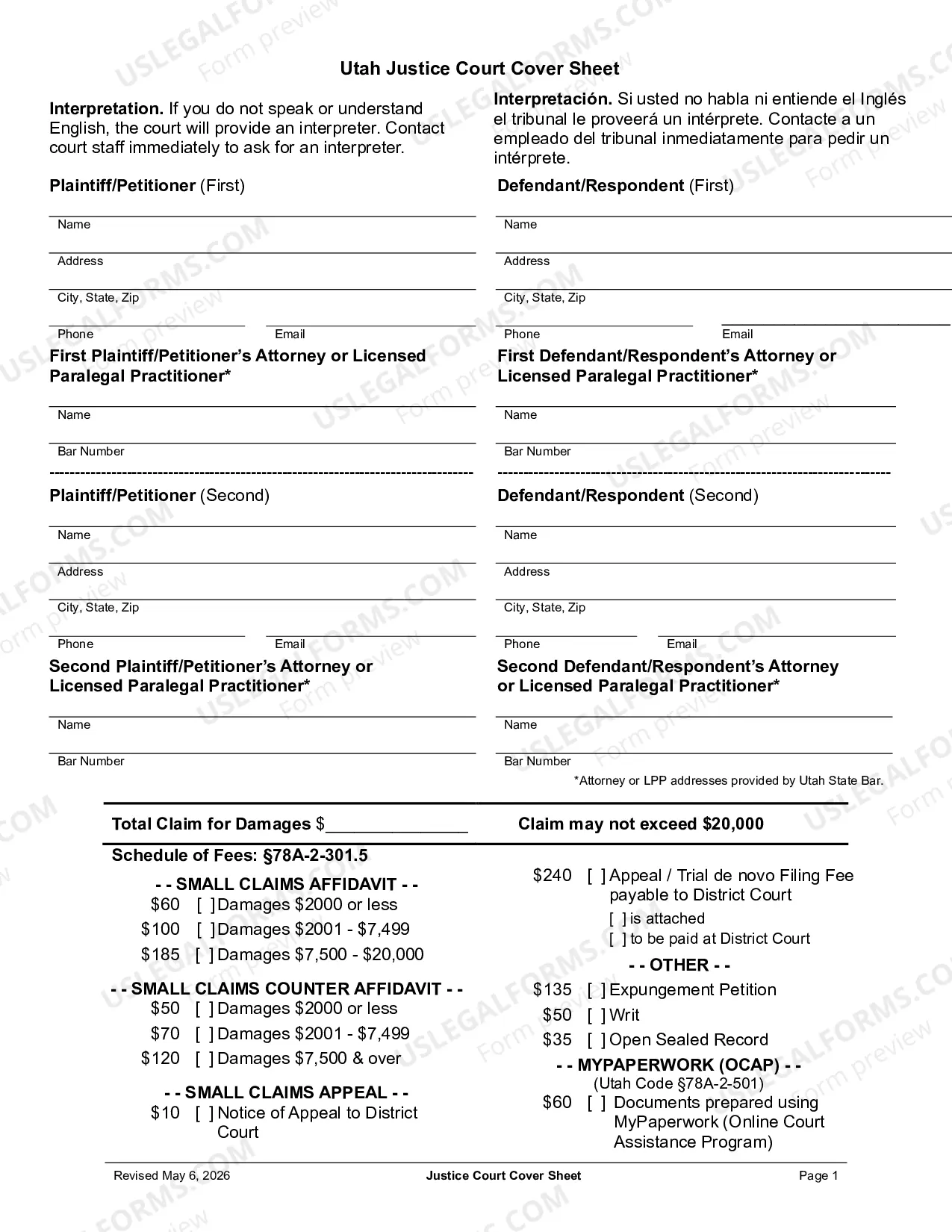
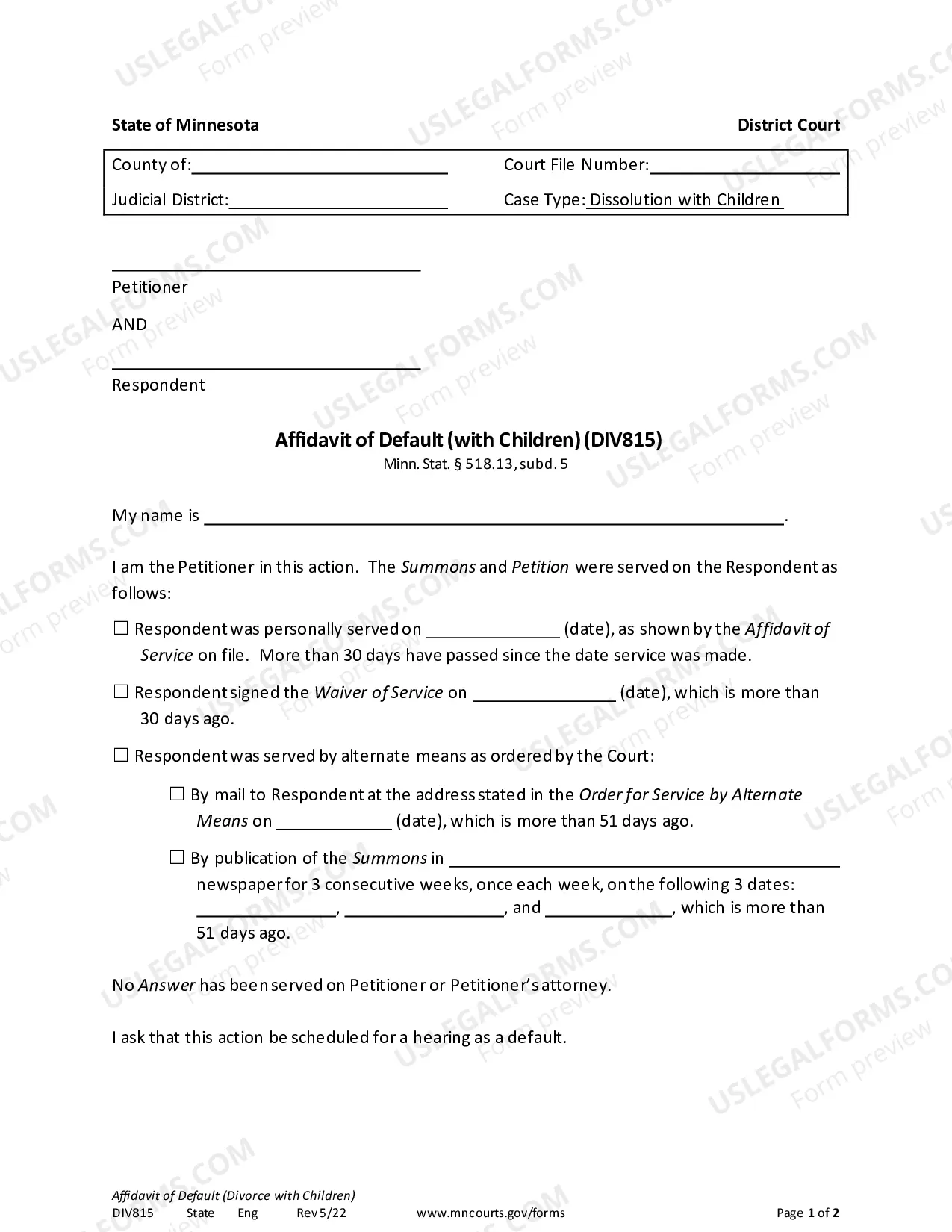
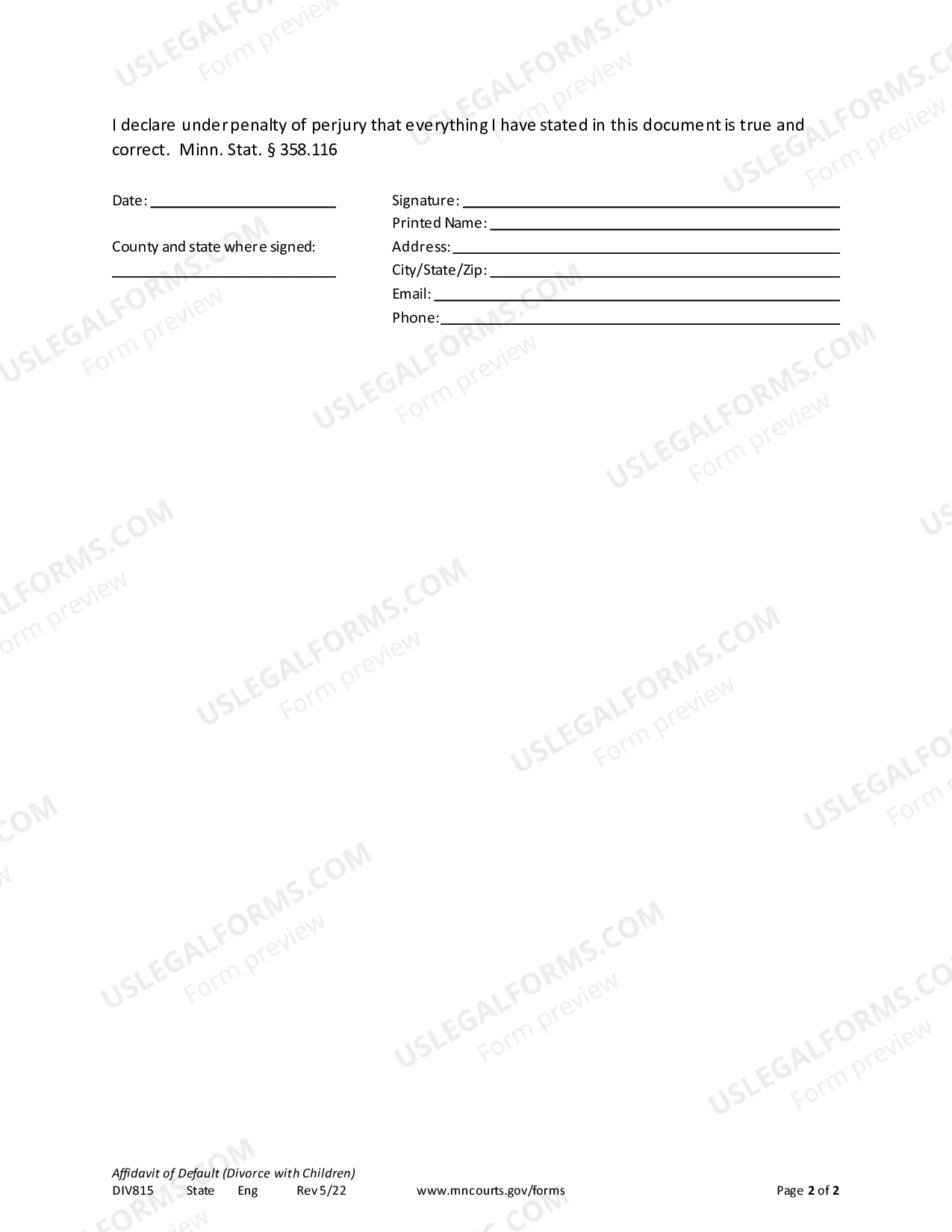
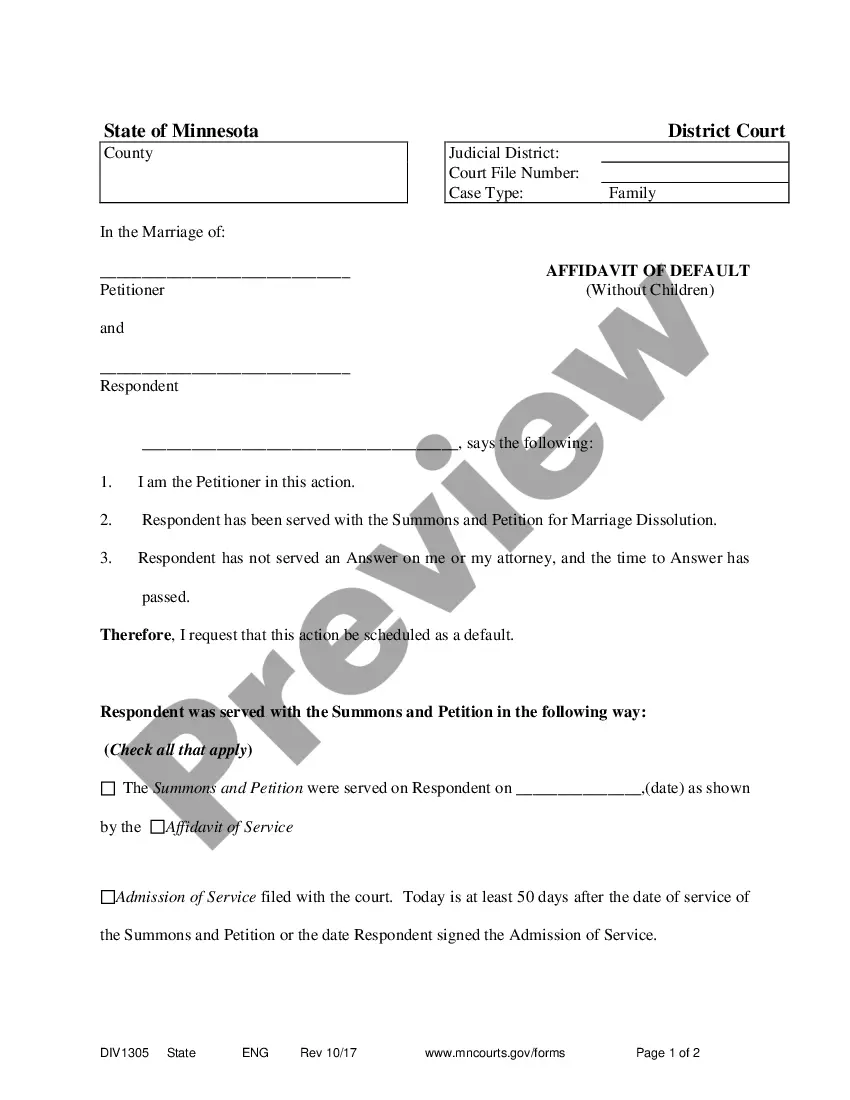
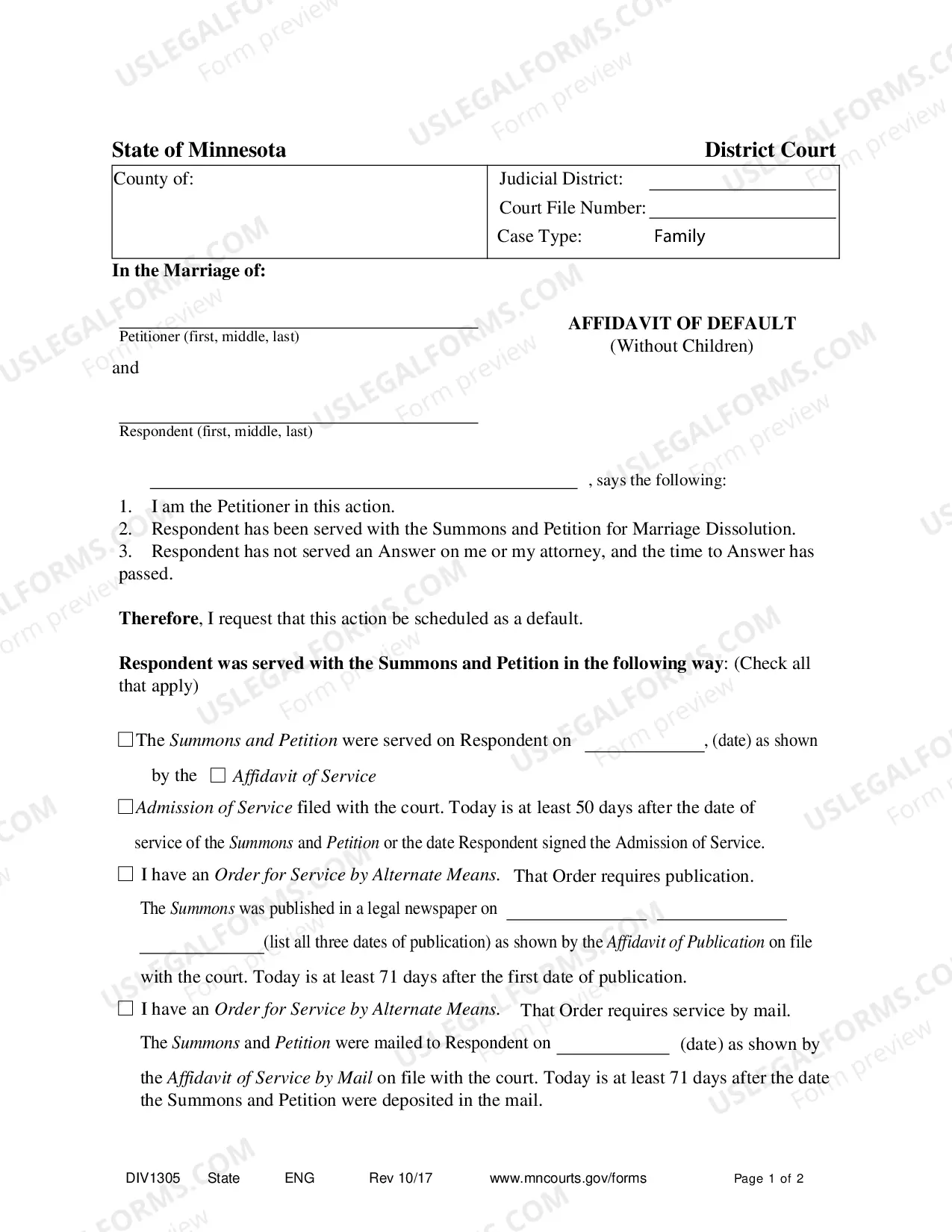
A Minnesota Affidavit of Default is a legal document used in Minnesota to prove that a debtor has failed to pay a debt. It is typically used when a creditor is attempting to collect a debt that is past due. There are two types of Minnesota Affidavit of Default: an Affidavit of Default for Secured Transactions and an Affidavit of Default for Unsecured Transactions. The Affidavit of Default for Secured Transactions is used when a debt is secured by a lien or other security interest, such as a mortgage or car loan. The Affidavit of Default for Unsecured Transactions is used when a debt is not secured by a lien or other security interest, such as a credit card debt or medical bill. The Affidavit of Default must be notarized and must include the names of the debtor and creditor, the amount of the debt, and a statement of facts that demonstrate the debtor has failed to pay the debt.
Minnesota Affidavit of Default
Description
Get your form ready online
Our built-in tools help you complete, sign, share, and store your documents in one place.
Make edits, fill in missing information, and update formatting in US Legal Forms—just like you would in MS Word.
Download a copy, print it, send it by email, or mail it via USPS—whatever works best for your next step.
Sign and collect signatures with our SignNow integration. Send to multiple recipients, set reminders, and more. Go Premium to unlock E-Sign.
If this form requires notarization, complete it online through a secure video call—no need to meet a notary in person or wait for an appointment.
We protect your documents and personal data by following strict security and privacy standards.

Make edits, fill in missing information, and update formatting in US Legal Forms—just like you would in MS Word.

Download a copy, print it, send it by email, or mail it via USPS—whatever works best for your next step.

Sign and collect signatures with our SignNow integration. Send to multiple recipients, set reminders, and more. Go Premium to unlock E-Sign.

If this form requires notarization, complete it online through a secure video call—no need to meet a notary in person or wait for an appointment.

We protect your documents and personal data by following strict security and privacy standards.
Looking for another form?

How to fill out Minnesota Affidavit Of Default?
US Legal Forms is the easiest and most affordable method to discover appropriate legal templates.
It’s the largest online collection of business and personal legal documents created and verified by attorneys.
Here, you can access printable and fillable templates that adhere to national and local regulations - just like your Minnesota Affidavit of Default.
Review the form description or preview the document to ensure you’ve located the one that meets your needs, or search for another using the search tab above.
Click Buy now when you’re confident about its suitability with all the requirements, and select the subscription plan you prefer.
- Acquiring your template involves only a few straightforward steps.
- Users who already possess an account with an active subscription merely need to Log In to the site and download the document to their device.
- Subsequently, they can locate it in their profile under the My documents section.
- And here’s how you can get a correctly prepared Minnesota Affidavit of Default if you are utilizing US Legal Forms for the first time.
Form popularity
FAQ
An affidavit of default is a legal document that confirms a party has failed to meet the obligations of a contract, often related to loans or leases. In Minnesota, this affidavit serves as an essential tool for lenders or landlords to initiate foreclosure or eviction proceedings. By filing a Minnesota Affidavit of Default, you provide clear evidence of the default, which can streamline legal processes. Utilizing platforms like US Legal Forms can help you create and file this document efficiently, ensuring you meet all legal requirements.
Yes, in Minnesota, an affidavit generally requires notarization to be considered valid. This step ensures that the document holds legal weight and that the signer affirms the truth of the statements within. When dealing with a Minnesota Affidavit of Default, notarization is essential for the document to be enforceable in court. If you need assistance with creating or notarizing your affidavit, consider using US Legal Forms for a seamless experience.
In Minnesota, the 48 hour rule refers to the timeframe for notifying the borrower of a default under certain conditions. When a borrower fails to meet their obligations, the lender must inform them of the default status within 48 hours. This is critical for the process of a Minnesota Affidavit of Default, as it ensures transparency and gives the borrower time to address the issue. Understanding this rule can help you navigate the legal landscape effectively.
Equitable distribution of marital wealth Minnesota is an equitable distribution state. This does not necessarily mean a 50-50 settlement of everything. But the law presumes that all assets and debts acquired during the marriage will be divided equitably, including: Your house and other real estate.
No, it does not legally matter who files for divorce first in Minnesota. When one party files the petition, the other party must respond to the court within 30 days or the divorce will be considered uncontested, which means the unresponsive party is giving up their rights to have a say in the divorce proceedings.
A default divorce is when the respondent doesn't respond to the petition for divorce within thirty days of the summons. They not only don't sign any paperwork, but they also don't appear in court as requested. This is perfectly legal, but it isn't in their best interest.
If your divorce does not require a contested hearing or you do not need a hearing, your divorce is considered a Default and you must submit a Default Scheduling Request.
In Minnesota, a divorce (legally called a ?dissolution of marriage?) can take anywhere from several weeks to a few months to even years to finalize. To determine a realistic timeline, you'll need to take into account how much you and your spouse agree on the terms of your divorce.
In Minnesota, once a divorce petition has been served, you have a certain amount of time to address the issue before it defaults. Once a divorce has defaulted, the spouse who filed for divorce will get everything they asked for because they other party did not contest any of it.
A motion for default judgment is a request asking the court to provide a default judgment when the defendant has not responded to a complaint within the court-allotted time-frame. The following are examples of forms used for a default judgment motion in Minnesota court.