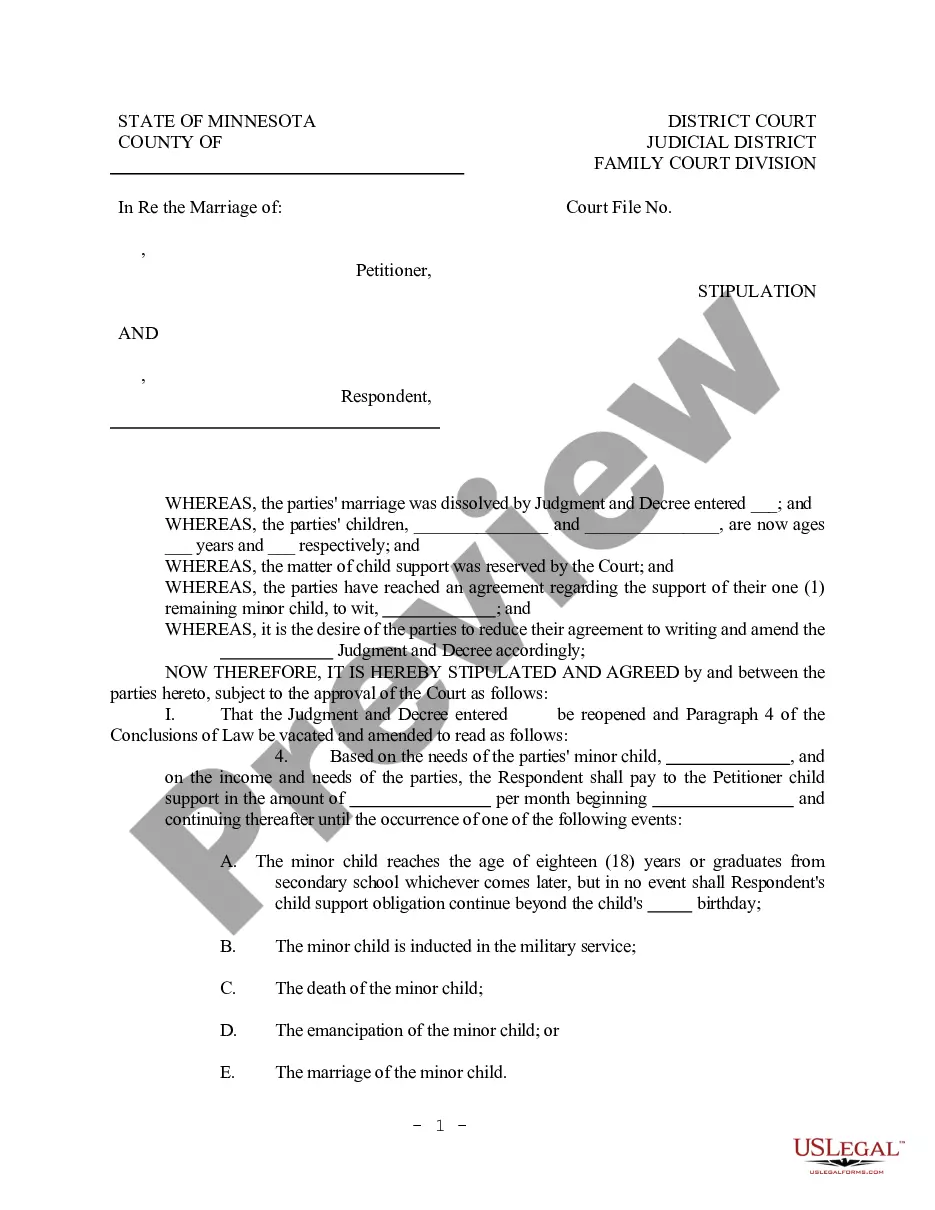
Arizona Last Will and Testament for Widow or Widower with Minor Children
What this document covers
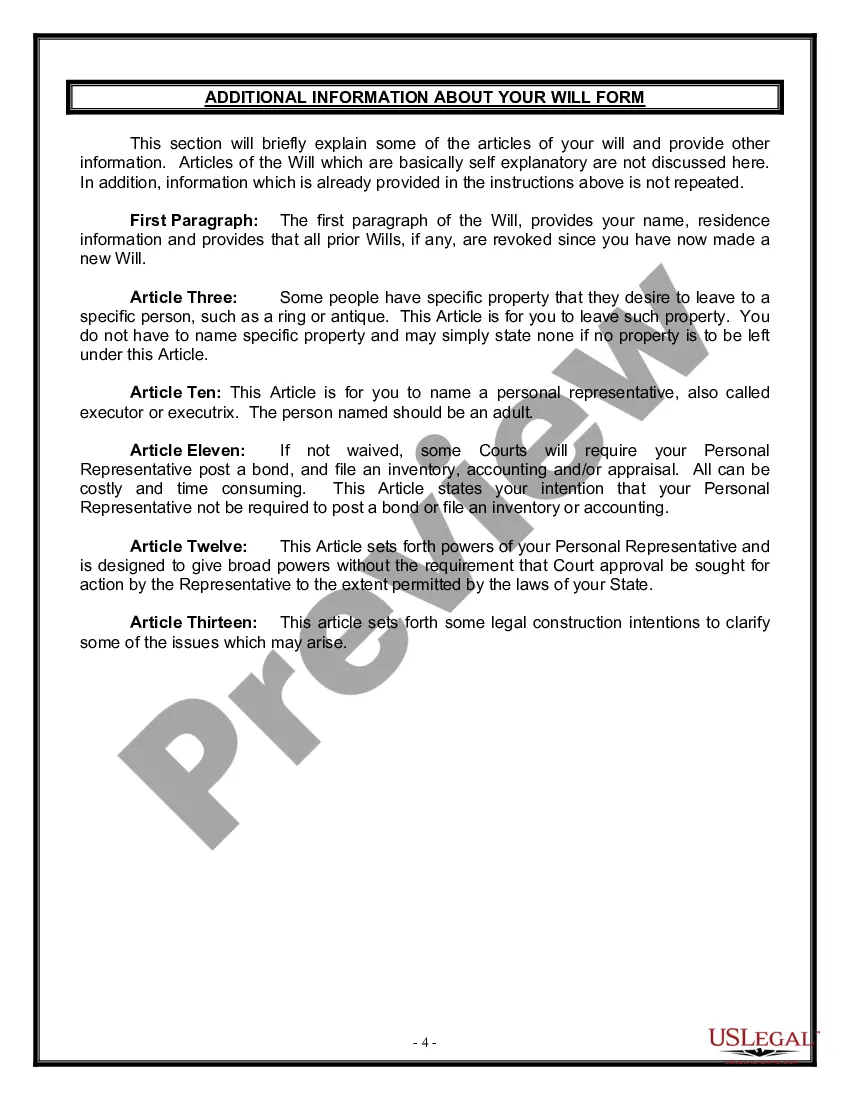
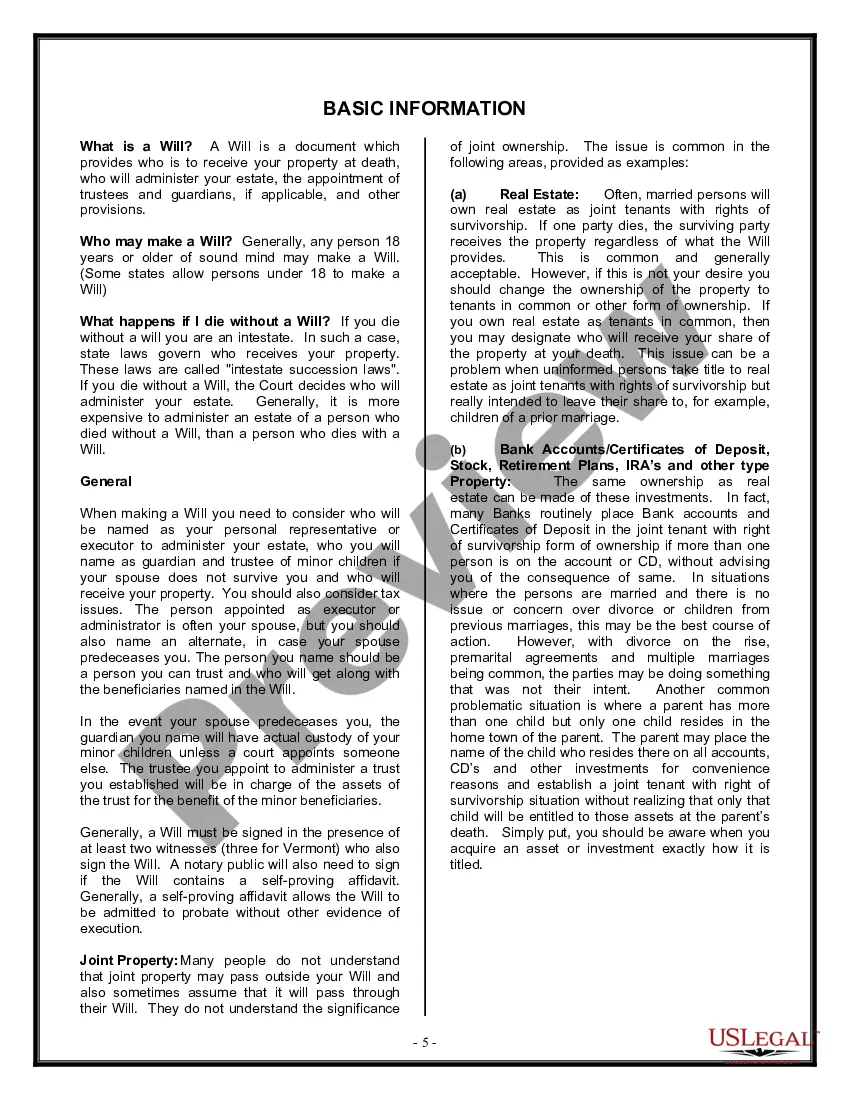
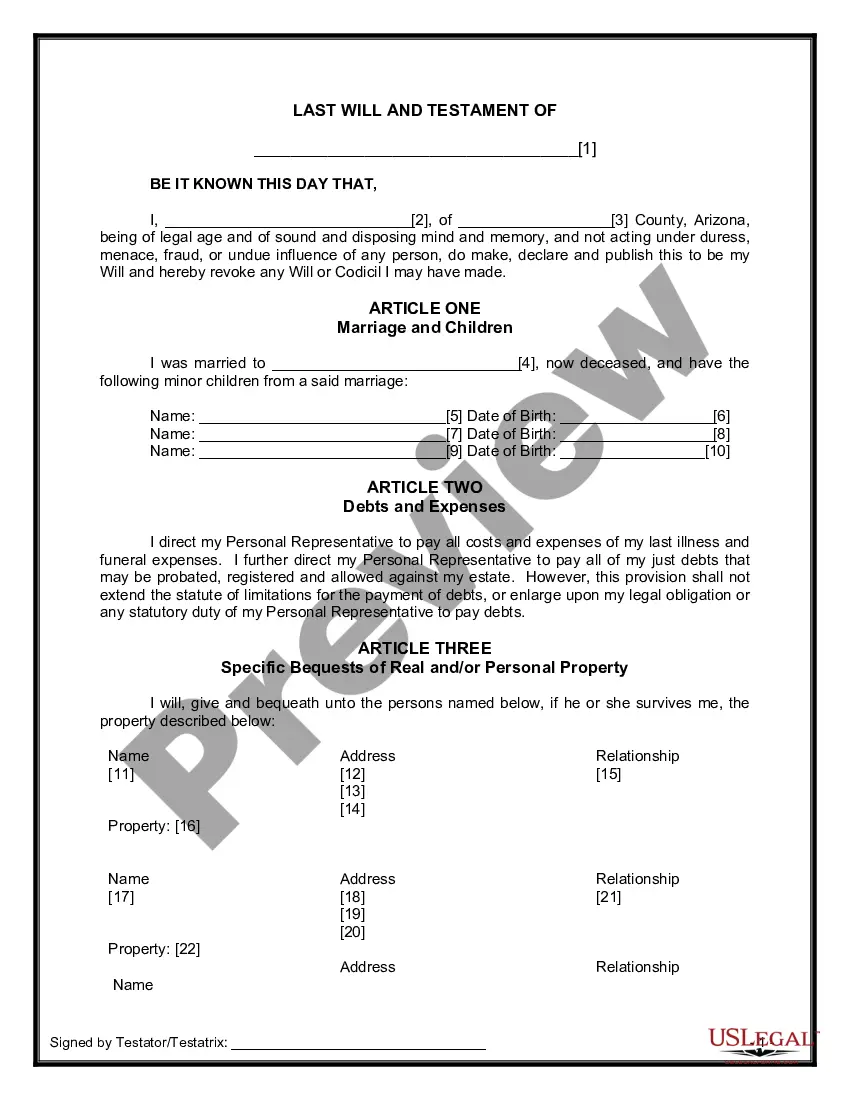
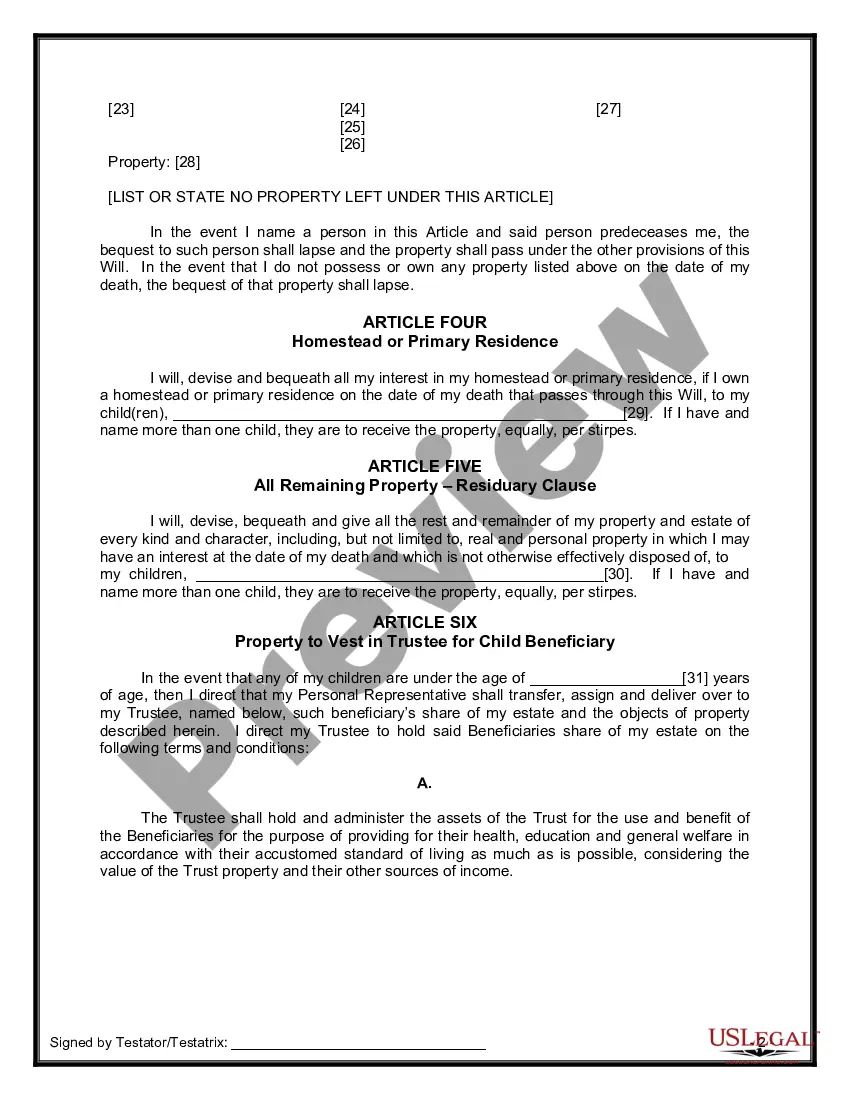
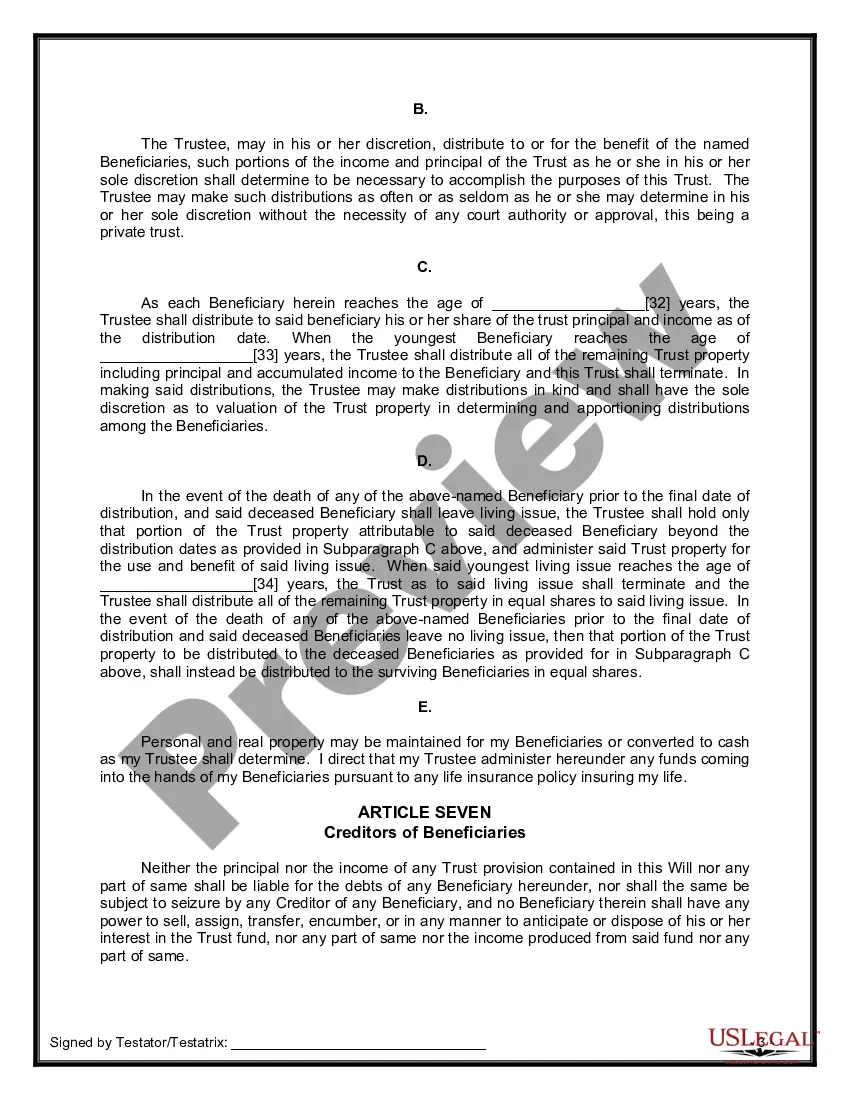
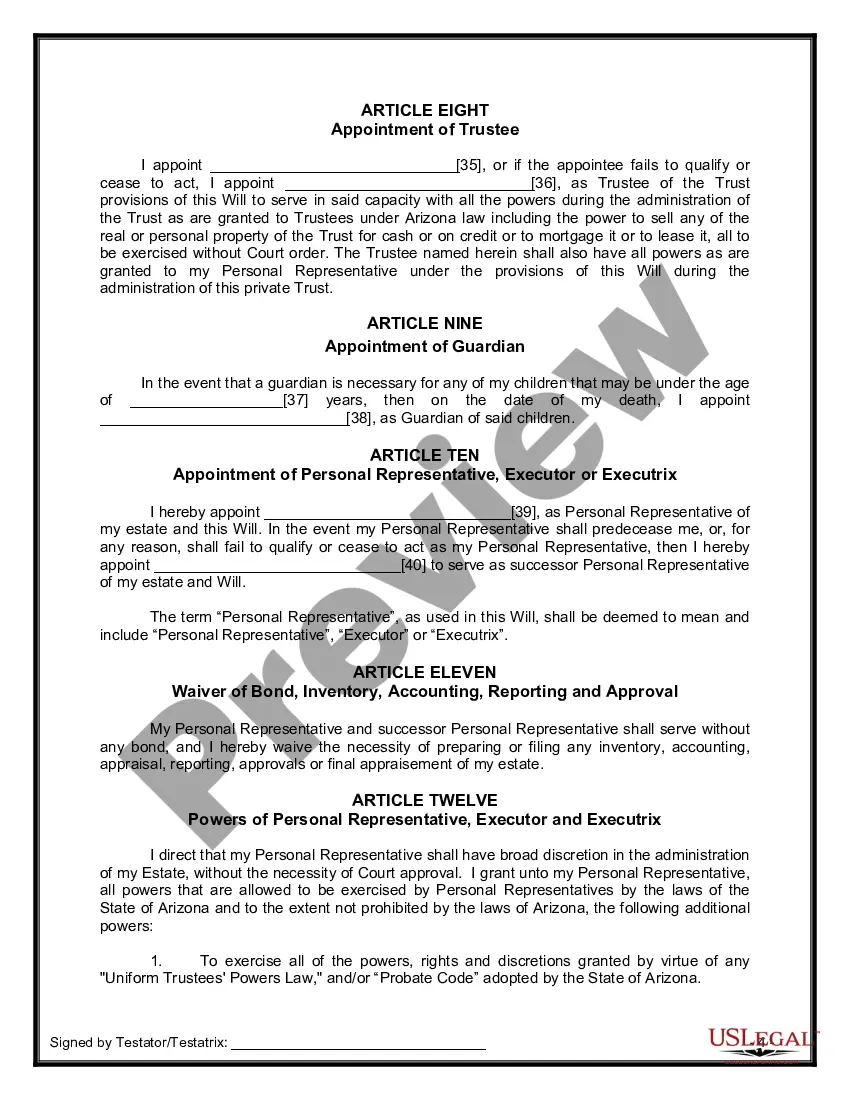
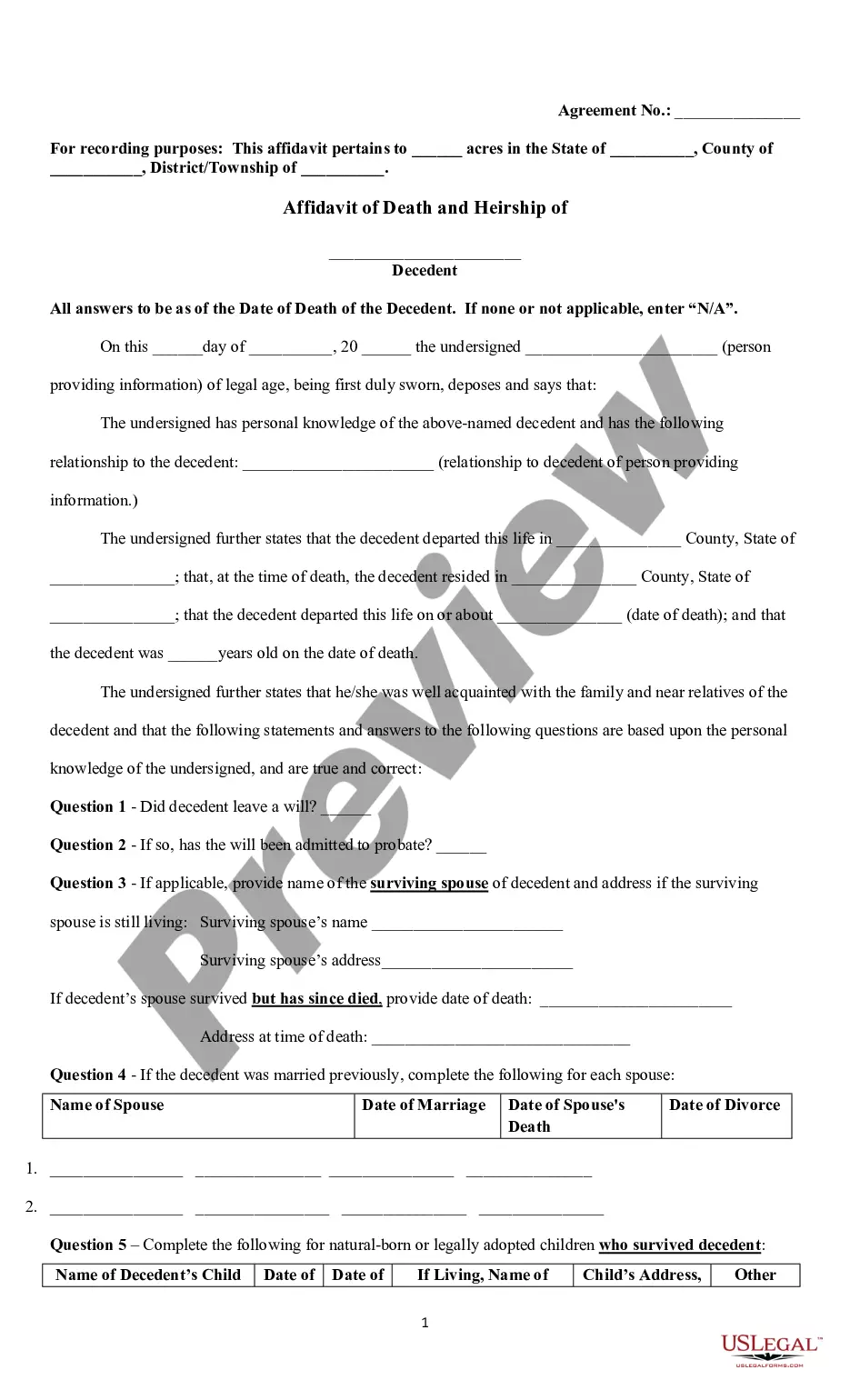
The Last Will and Testament for Widow or Widower with Minor Children is a legal document that specifies how your assets will be distributed after your death. It is specifically designed for individuals who have lost a spouse and have minor children. This form allows you to appoint a personal representative to manage your estate, designate beneficiaries for your property, and include provisions for the care of your children, such as appointing a trustee for their inherited assets.
Key parts of this document
- Appointment of a personal representative to handle your estate.
- Designation of beneficiaries who will receive your assets.
- Provisions for appointing a trustee to manage assets for minor children.
- Instructions for funeral expenses and payment of debts.
- Options for specific bequests of property and distribution of remaining assets.
- Instructions for appointing a guardian for minor children if necessary.




When to use this form
This form is essential for widows or widowers with minor children who want to ensure their estate is managed according to their wishes after their passing. It is especially important when there are children involved to provide for their care and support, and to clearly outline who will inherit your assets, thus avoiding potential conflicts among family members.
Intended users of this form
- Widows or widowers who have children under the age of majority.
- Individuals looking to specify how their assets will be divided after their death.
- Parents who want to appoint guardians for their minor children.
- Individuals wanting to ensure their estate is managed by a trusted personal representative.
How to prepare this document
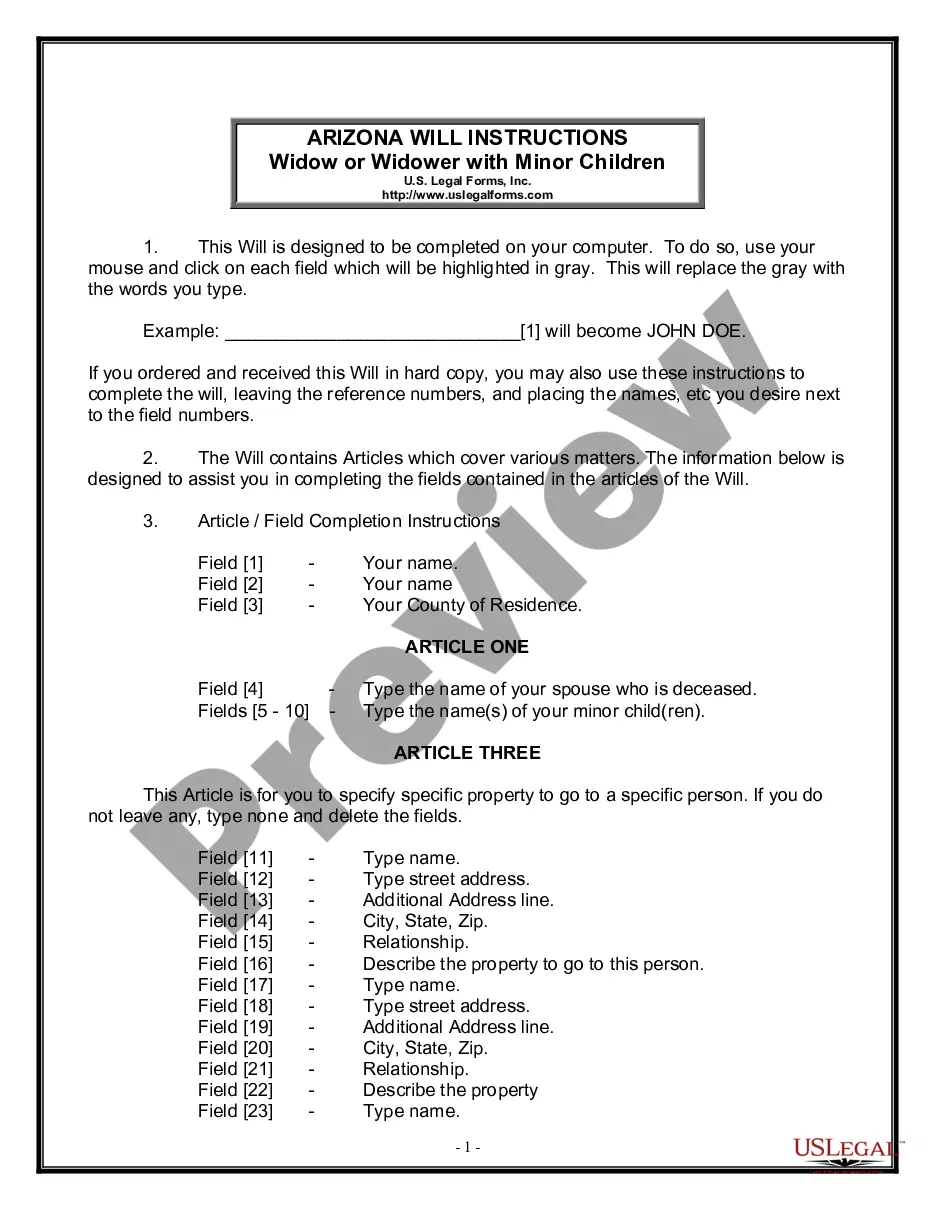
- Start by filling in your full name and address at the beginning of the document.
- Provide the names and birthdates of your minor children under the marriage you are referencing.
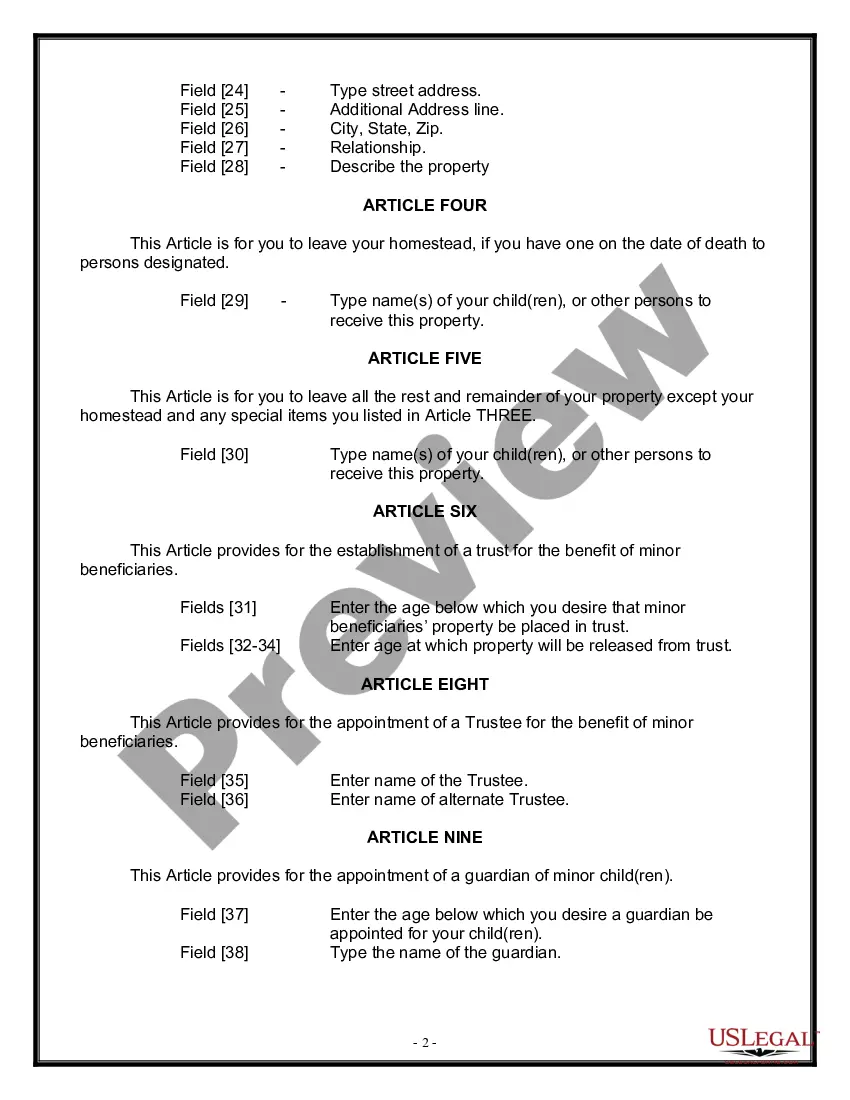
- Designate the beneficiaries by listing their names and the property they will receive.
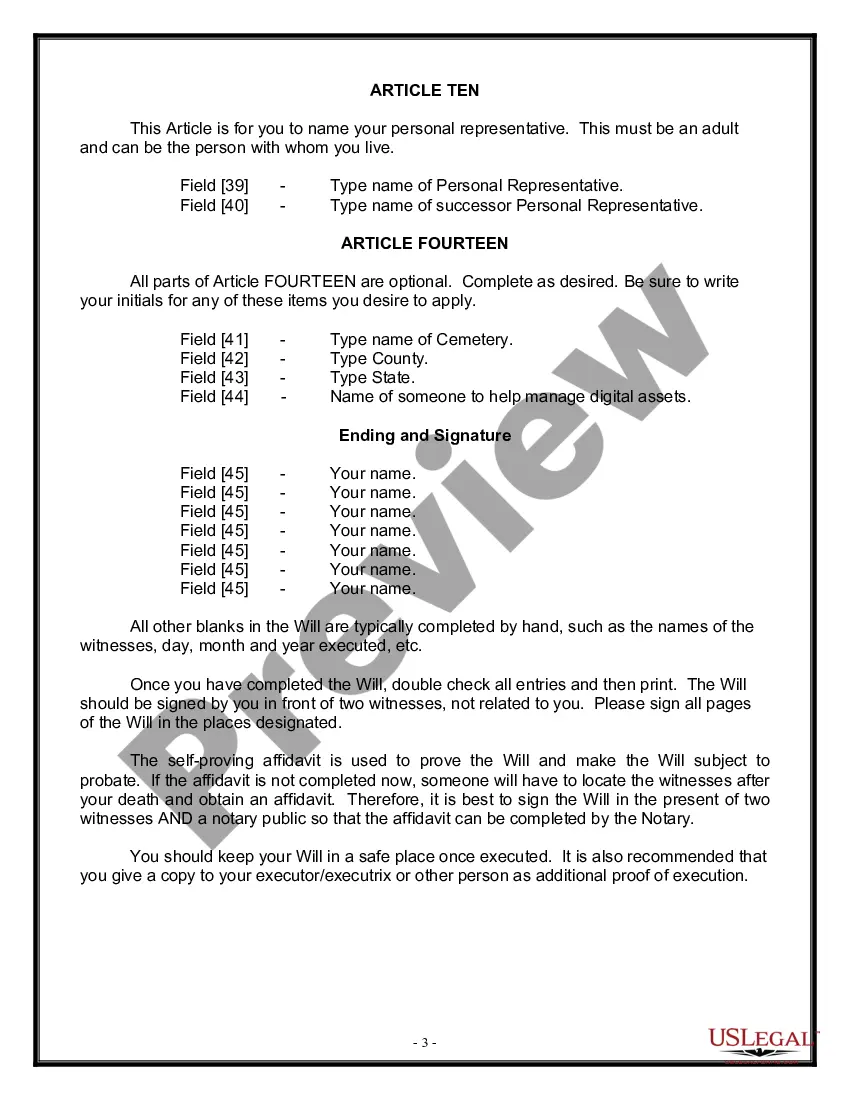
- Appoint a personal representative and a trustee for your minor childrenâs assets.
- Specify any additional instructions regarding the care of your children and the handling of your estate.
- Ensure you sign the document in front of two witnesses and, if required, have the will notarized.
Notarization guidance
Yes, this form must be notarized to be legally valid in Arizona. Having the will notarized can help eliminate challenges to its validity after your death, protecting your wishes and ensuring a smoother probate process.
Get your form ready online
Our built-in tools help you complete, sign, share, and store your documents in one place.
Make edits, fill in missing information, and update formatting in US Legal Forms—just like you would in MS Word.
Download a copy, print it, send it by email, or mail it via USPS—whatever works best for your next step.
Sign and collect signatures with our SignNow integration. Send to multiple recipients, set reminders, and more. Go Premium to unlock E-Sign.
If this form requires notarization, complete it online through a secure video call—no need to meet a notary in person or wait for an appointment.
We protect your documents and personal data by following strict security and privacy standards.

Make edits, fill in missing information, and update formatting in US Legal Forms—just like you would in MS Word.

Download a copy, print it, send it by email, or mail it via USPS—whatever works best for your next step.

Sign and collect signatures with our SignNow integration. Send to multiple recipients, set reminders, and more. Go Premium to unlock E-Sign.

If this form requires notarization, complete it online through a secure video call—no need to meet a notary in person or wait for an appointment.

We protect your documents and personal data by following strict security and privacy standards.
Avoid these common issues
- Not having the document signed in the presence of the required number of witnesses.
- Failing to appoint a guardian for minor children.
- Leaving out specific bequests or failing to clearly outline asset distribution.
- Not including a self-proving affidavit if required by state law.
Why use this form online
- Convenient access to legal document templates that can be customized for your needs.
- Editable forms that allow you to make changes as your situation evolves.
- Reliable resources drafted by licensed attorneys to ensure legal compliance.
Main things to remember
- The Last Will and Testament is crucial for widows or widowers with minor children to secure their assets.
- Ensure the document is signed in front of two witnesses and a notary for validity.
- Clearly outline your intentions regarding guardianship and property distribution to avoid conflicts.
- Utilizing reliable online legal forms simplifies the process of estate planning.
Looking for another form?


Form popularity
FAQ
Yes, a hand-written will, known as a holographic will, is valid in Arizona as long as it meets certain criteria. The document must be signed by the testator, and the material provisions should be in their handwriting. For those considering an Arizona Last Will and Testament for Widow or Widower with Minor Children, a holographic will can be a simple way to express your wishes. Just be sure to consider using US Legal Forms to guide you through any specific requirements.
A last will and testament in Arizona does not require notarization to be legally binding. That said, notarizing your document can prevent potential disputes and clarify your intentions, especially when crafting an Arizona Last Will and Testament for Widow or Widower with Minor Children. Using platforms like US Legal Forms can help you understand the benefits of notarization and ensure your will protects your loved ones effectively.
In Arizona, you typically do not file your will with the court until the person passes away. At that point, the will must be submitted to the probate court to initiate the distribution of assets. For individuals preparing an Arizona Last Will and Testament for Widow or Widower with Minor Children, this ensures that their wishes are honored. US Legal Forms offers guidance on the probate process and necessary steps to take.
In Arizona, a will does not need to be notarized to be valid. However, having a notary can help verify its authenticity and can streamline the probate process later on. This is particularly important for those creating an Arizona Last Will and Testament for Widow or Widower with Minor Children. Utilizing tools like US Legal Forms can assist in drafting and ensuring your will meets all legal requirements.
For a will to be valid in Arizona, it must be in writing, signed by the person making the will, and witnessed by two individuals who are not beneficiaries. Additionally, the testator must have the mental capacity to understand the contents of the will and its effects. Creating an Arizona Last Will and Testament for a Widow or Widower with Minor Children involves ensuring these criteria are met to avoid future legal issues.
Yes, once a will is filed with the probate court in Arizona, it becomes a public record. This means anyone can access the document. Keeping this in mind, it is essential to ensure your Arizona Last Will and Testament for a Widow or Widower with Minor Children clearly outlines your wishes regarding asset distribution and the care of your minor children.
A will can be considered invalid in Arizona if it does not meet specific legal requirements. This includes not being signed by the testator and two witnesses or if the testator lacks mental capacity. To avoid these pitfalls, ensure your Arizona Last Will and Testament for a Widow or Widower with Minor Children adheres to all legal standards set forth by Arizona law.
In Arizona, wills do not need to be recorded before your death. Upon your death, your Arizona Last Will and Testament for a Widow or Widower with Minor Children should be filed with the probate court. Recording is part of the probate process, ensuring that the will is legally valid and that its provisions regarding minor children are upheld.
No, a will does not need to be registered in Arizona while you are still alive. However, after your passing, your Arizona Last Will and Testament for a Widow or Widower with Minor Children must be filed with the probate court. This process allows your estate to be administered according to your wishes as outlined in your will.
In Arizona, you typically do not need to file your will with the court before your death. However, once you pass away, your Arizona Last Will and Testament for a Widow or Widower with Minor Children must be filed with the probate court to initiate the estate settlement process. This filing helps ensure that your wishes are honored and that your children receive their rightful inheritance.