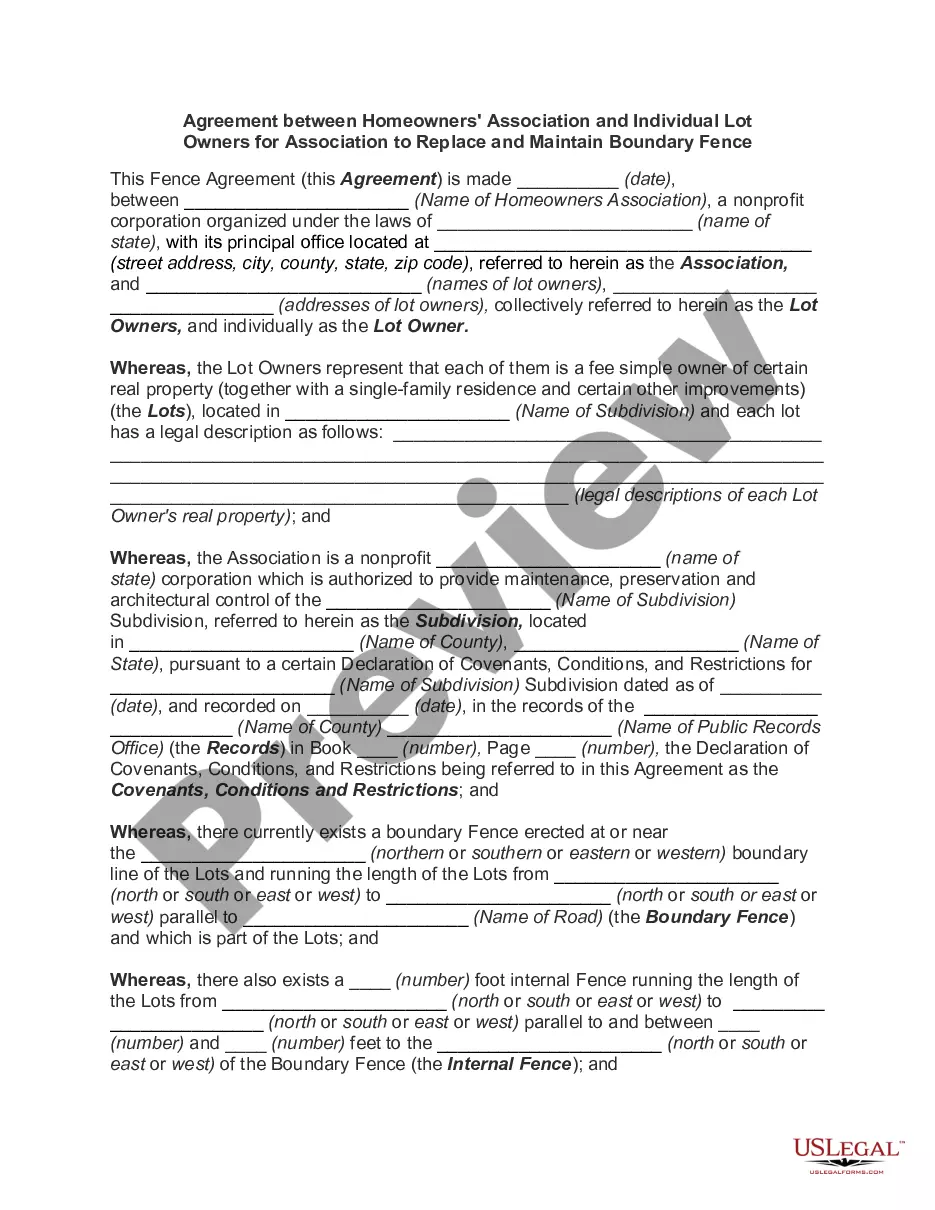
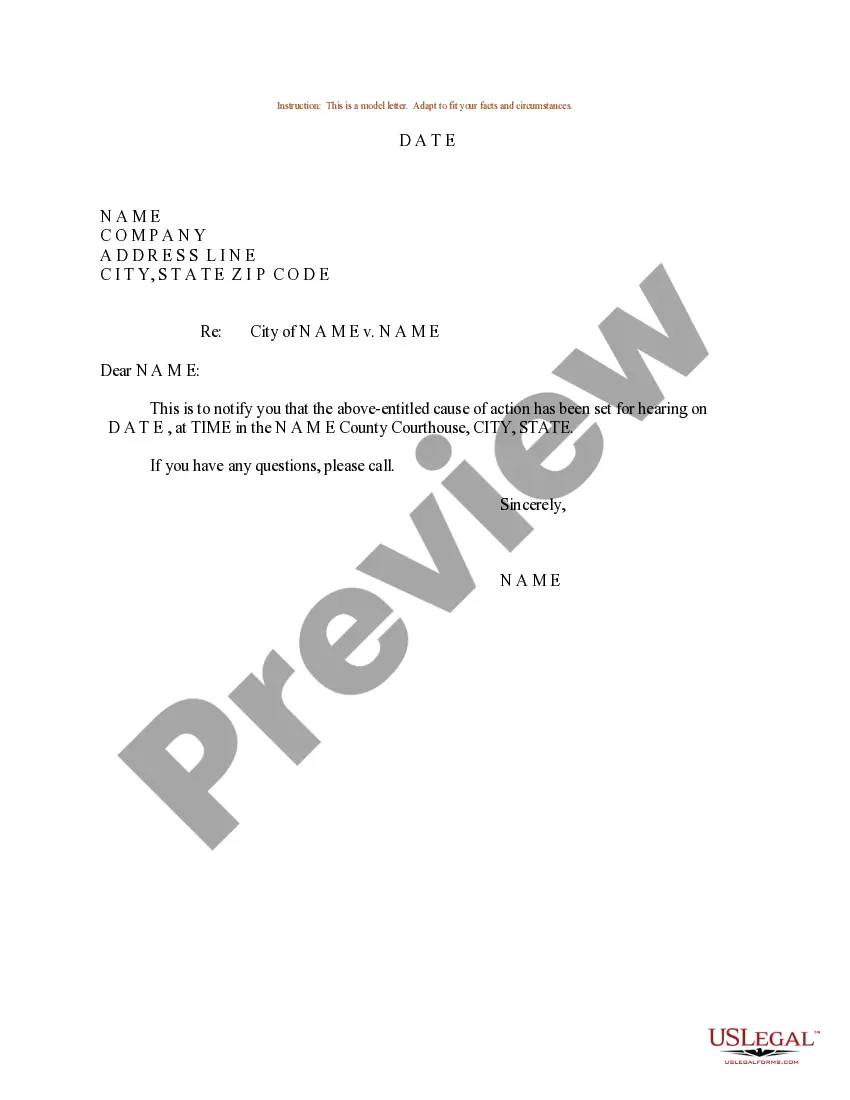
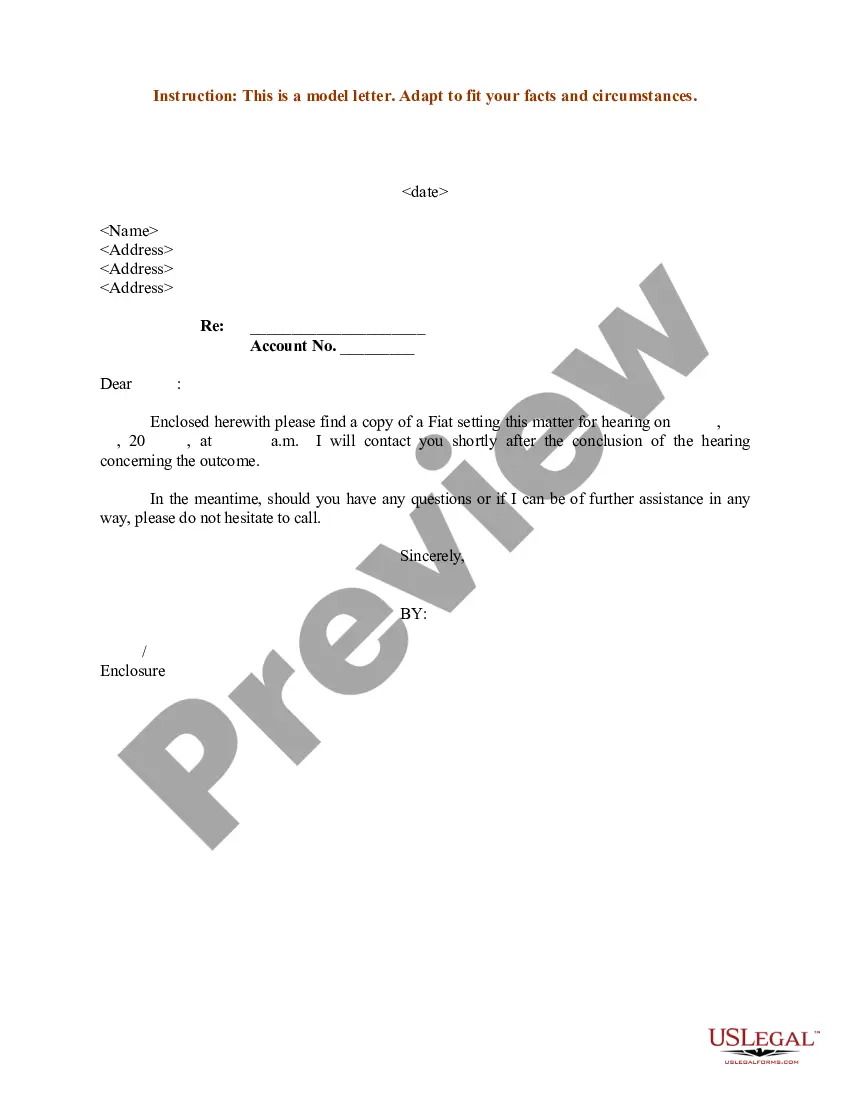
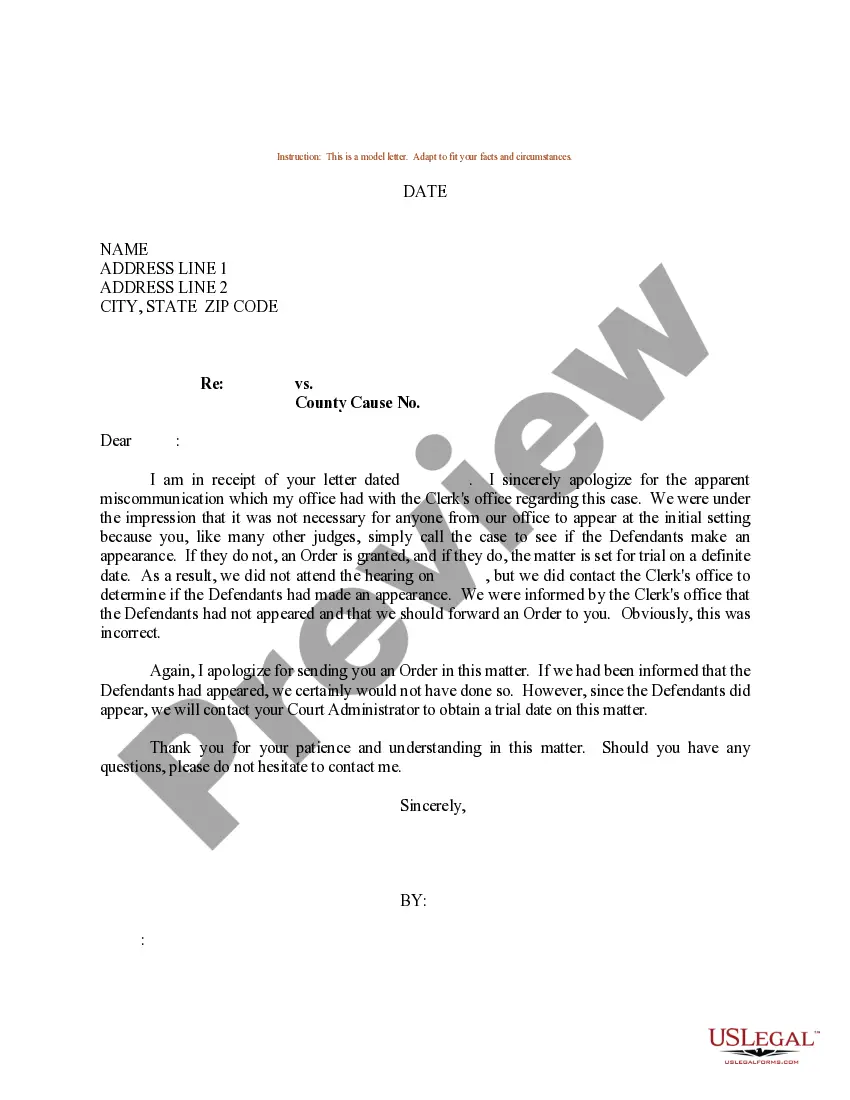
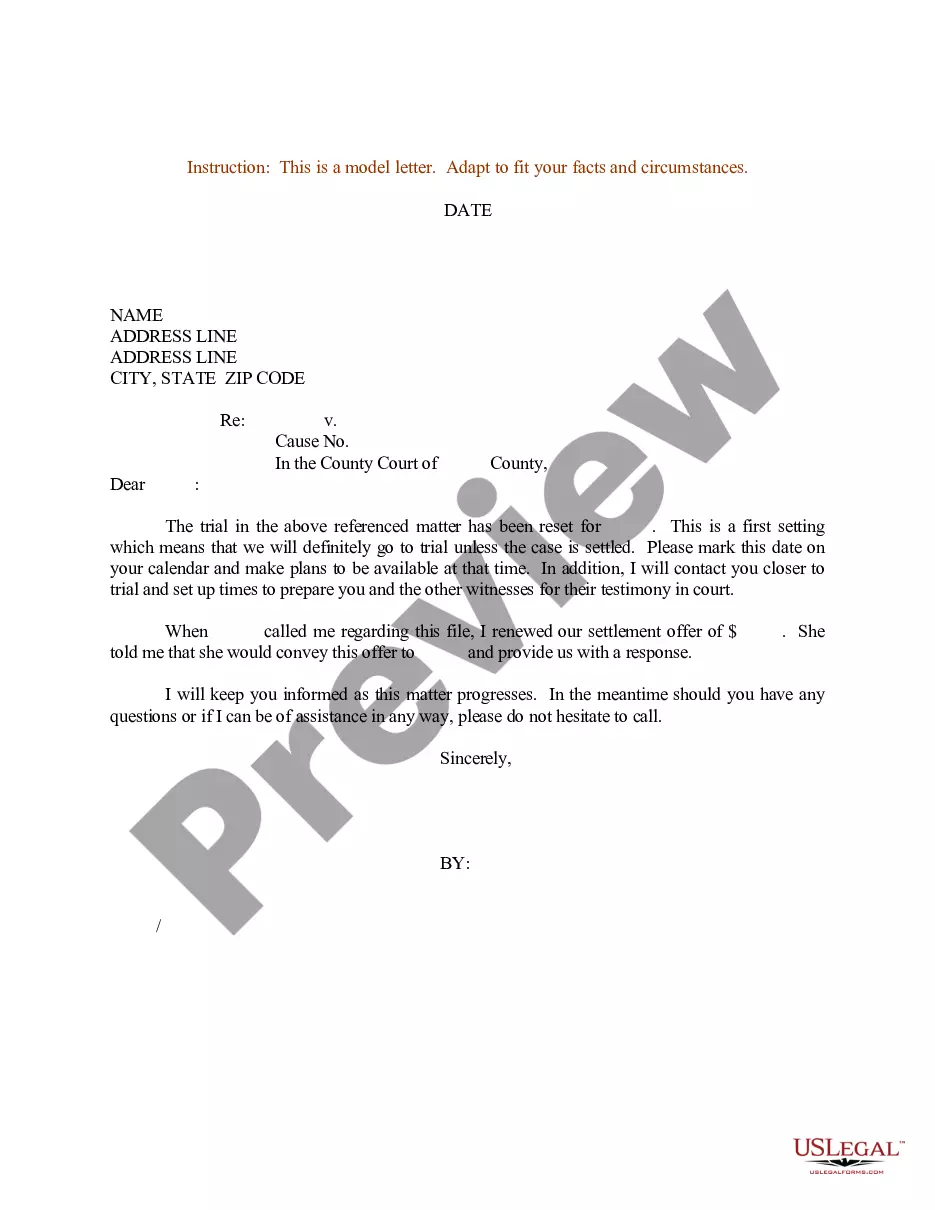
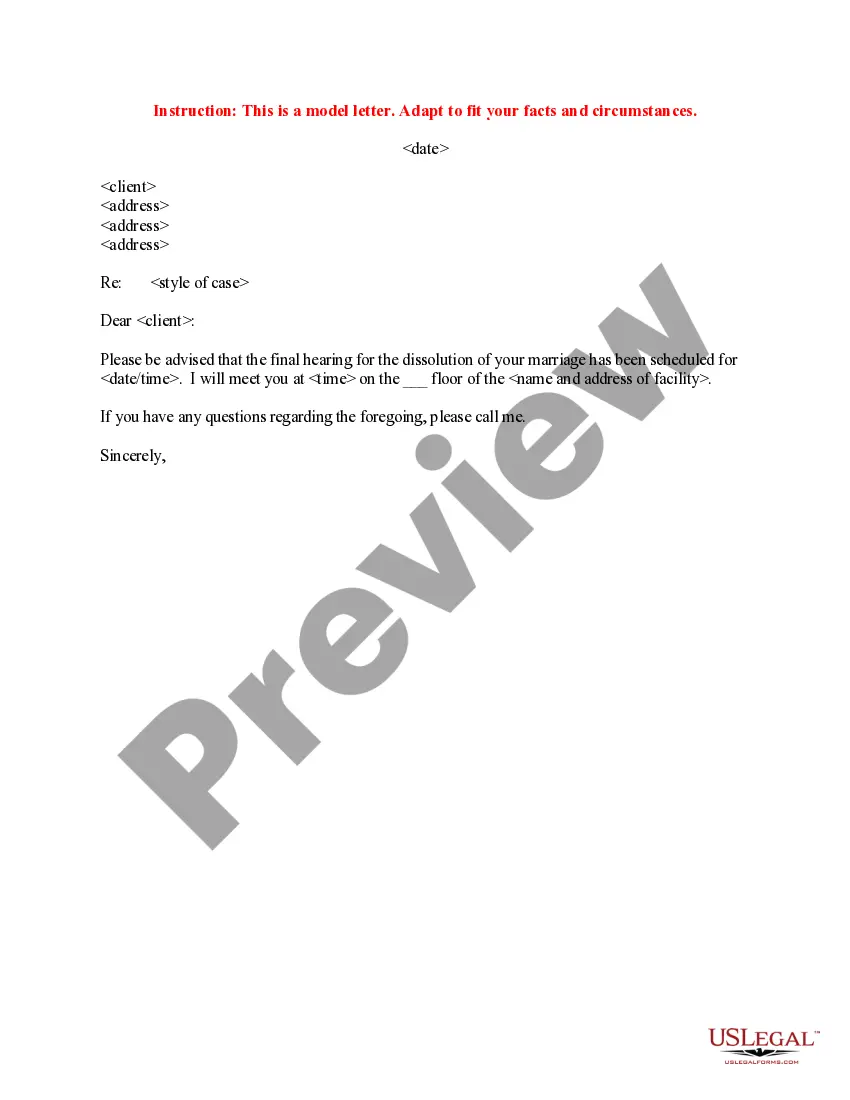
Arizona Sample Letter for Date for Hearing
Description
Get your form ready online
Our built-in tools help you complete, sign, share, and store your documents in one place.
Make edits, fill in missing information, and update formatting in US Legal Forms—just like you would in MS Word.
Download a copy, print it, send it by email, or mail it via USPS—whatever works best for your next step.
Sign and collect signatures with our SignNow integration. Send to multiple recipients, set reminders, and more. Go Premium to unlock E-Sign.
If this form requires notarization, complete it online through a secure video call—no need to meet a notary in person or wait for an appointment.
We protect your documents and personal data by following strict security and privacy standards.

Make edits, fill in missing information, and update formatting in US Legal Forms—just like you would in MS Word.

Download a copy, print it, send it by email, or mail it via USPS—whatever works best for your next step.

Sign and collect signatures with our SignNow integration. Send to multiple recipients, set reminders, and more. Go Premium to unlock E-Sign.

If this form requires notarization, complete it online through a secure video call—no need to meet a notary in person or wait for an appointment.

We protect your documents and personal data by following strict security and privacy standards.
Looking for another form?






How to fill out Sample Letter For Date For Hearing?
Finding the right authorized record design might be a have difficulties. Obviously, there are tons of themes accessible on the Internet, but how do you find the authorized type you require? Take advantage of the US Legal Forms web site. The support gives 1000s of themes, including the Arizona Sample Letter for Date for Hearing, that can be used for organization and private needs. All of the types are checked out by pros and fulfill state and federal needs.
When you are already signed up, log in to your accounts and click the Obtain option to have the Arizona Sample Letter for Date for Hearing. Utilize your accounts to appear with the authorized types you might have purchased formerly. Check out the My Forms tab of the accounts and acquire an additional version in the record you require.
When you are a new end user of US Legal Forms, listed here are simple guidelines that you can comply with:
- Initially, be sure you have selected the proper type for your town/area. You are able to check out the shape while using Review option and browse the shape outline to make sure this is the best for you.
- When the type is not going to fulfill your requirements, utilize the Seach area to find the right type.
- Once you are positive that the shape would work, click on the Buy now option to have the type.
- Pick the pricing plan you need and type in the required information and facts. Build your accounts and pay for the transaction with your PayPal accounts or bank card.
- Select the document file format and download the authorized record design to your product.
- Full, change and produce and signal the attained Arizona Sample Letter for Date for Hearing.
US Legal Forms may be the greatest library of authorized types where you can discover a variety of record themes. Take advantage of the service to download appropriately-manufactured papers that comply with condition needs.
Form popularity
FAQ
I am unable to appear before this Court on the date of the scheduled hearing because Briefly explain why you are unable to appear. However, I am able to appear before this Court on or after Date. I respectfully request this Court to stay the proceedings of this case until Date.
To Whom It May Concern: First Paragraph: Explain who you are. ... Second Paragraph: Explain why you are writing the letter. ... Third Paragraph: Thank the court, and make your ?ask.? State that you are available to confirm the facts in this letter as necessary.
You shouldn't waste too much of the reader's time. Instead, get directly to the point. In the first paragraph, ask for the hearing in your case. For example, you could simply state, ?I am writing to request a court hearing date in the above-referenced matter.?
How do I write a letter requesting a continuance? When writing a request for a continuance, include your name, the case name and number, what you are requesting and why. State the date of the currently scheduled court hearing and clearly request a new date. Give the reasons for your request.
However, there are a few reasons a judge might excuse your absence from court, which include: The death of a loved one in your immediate family; The sickness of a child or parent if you care for that person; An emergency hospitalization; Severe illness;
I am requesting a continuance until after (provide a date when your scheduling issue will be resolved), when this scheduling conflict will be resolved. Thank you for your attention to this matter. The rules and procedures regarding requesting a continuance can vary depending on state and local rules.
Format full mailing address of the sender. date on which letter is written. address of person to whom letter is addressed. subject line. salutation. body (the main message) complimentary closing. signature line (be sure to sign your letter)