Arizona Revised Uniform Anatomical Gift Act Donation
Understanding this form
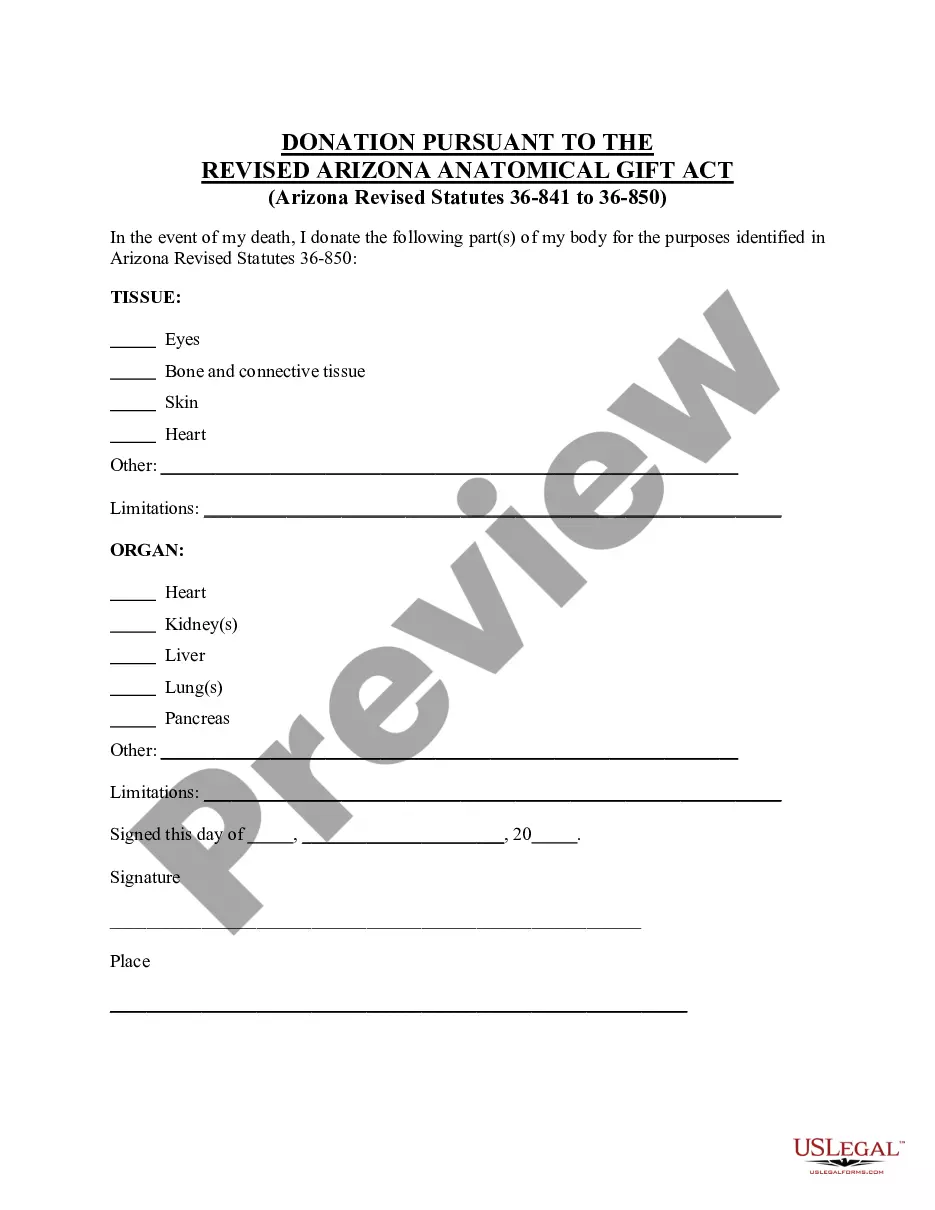
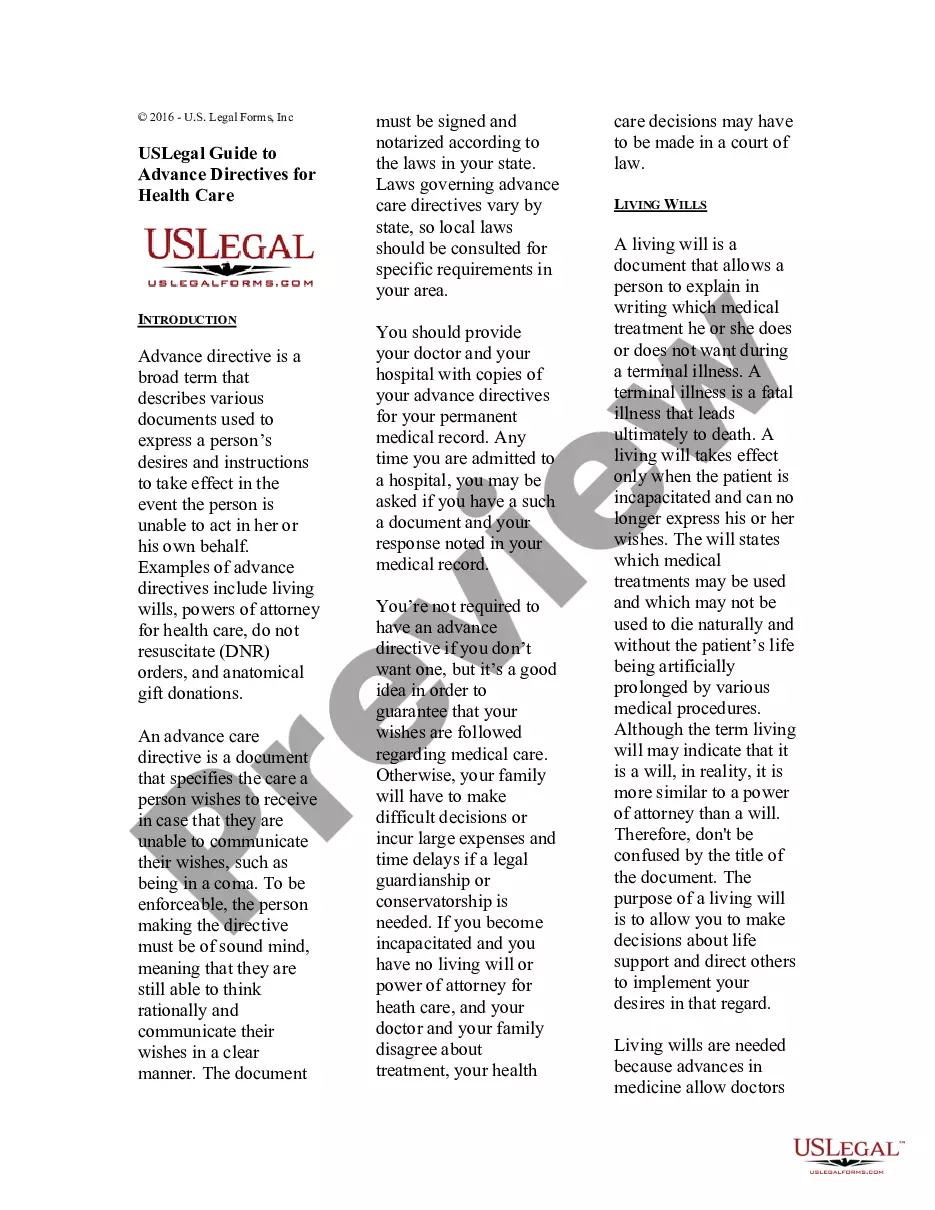
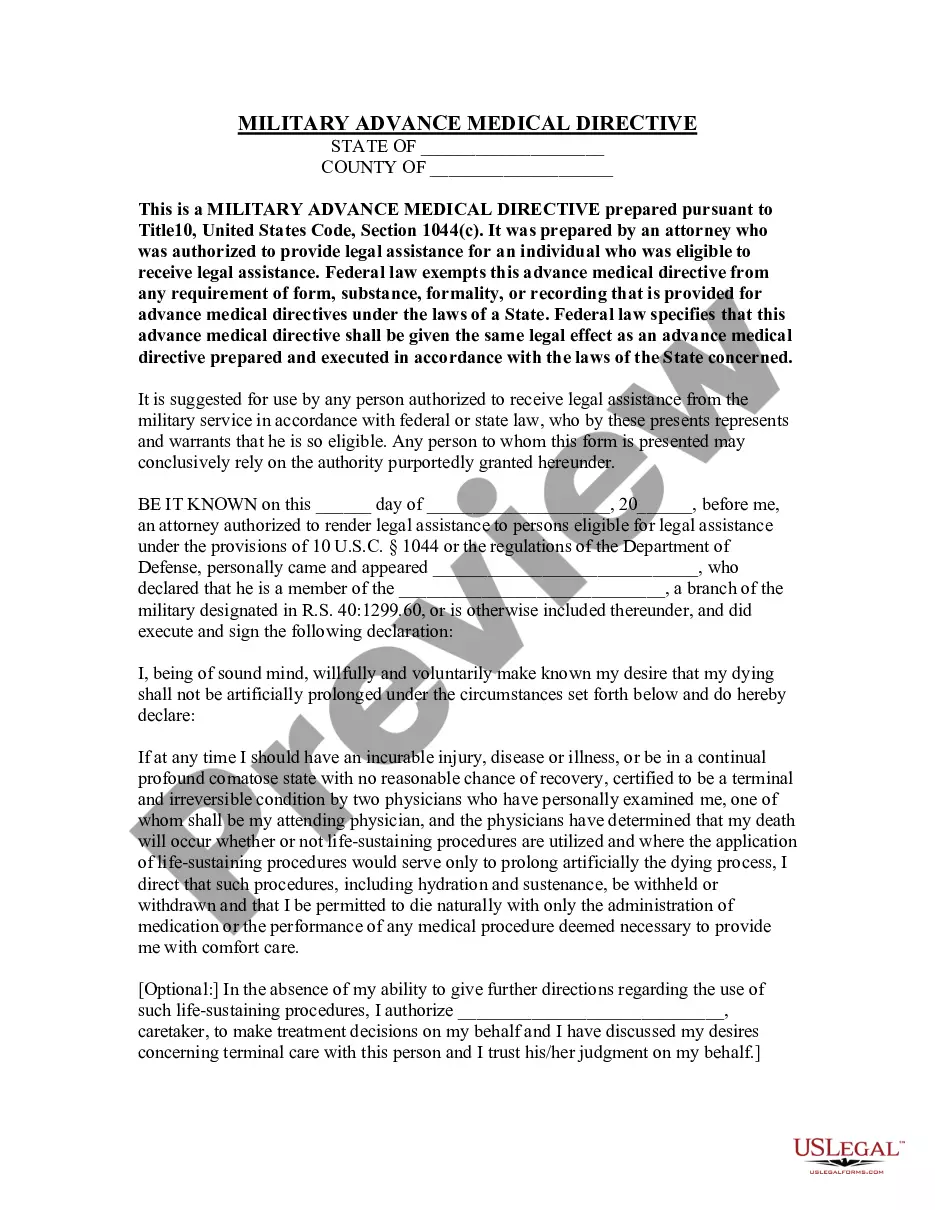
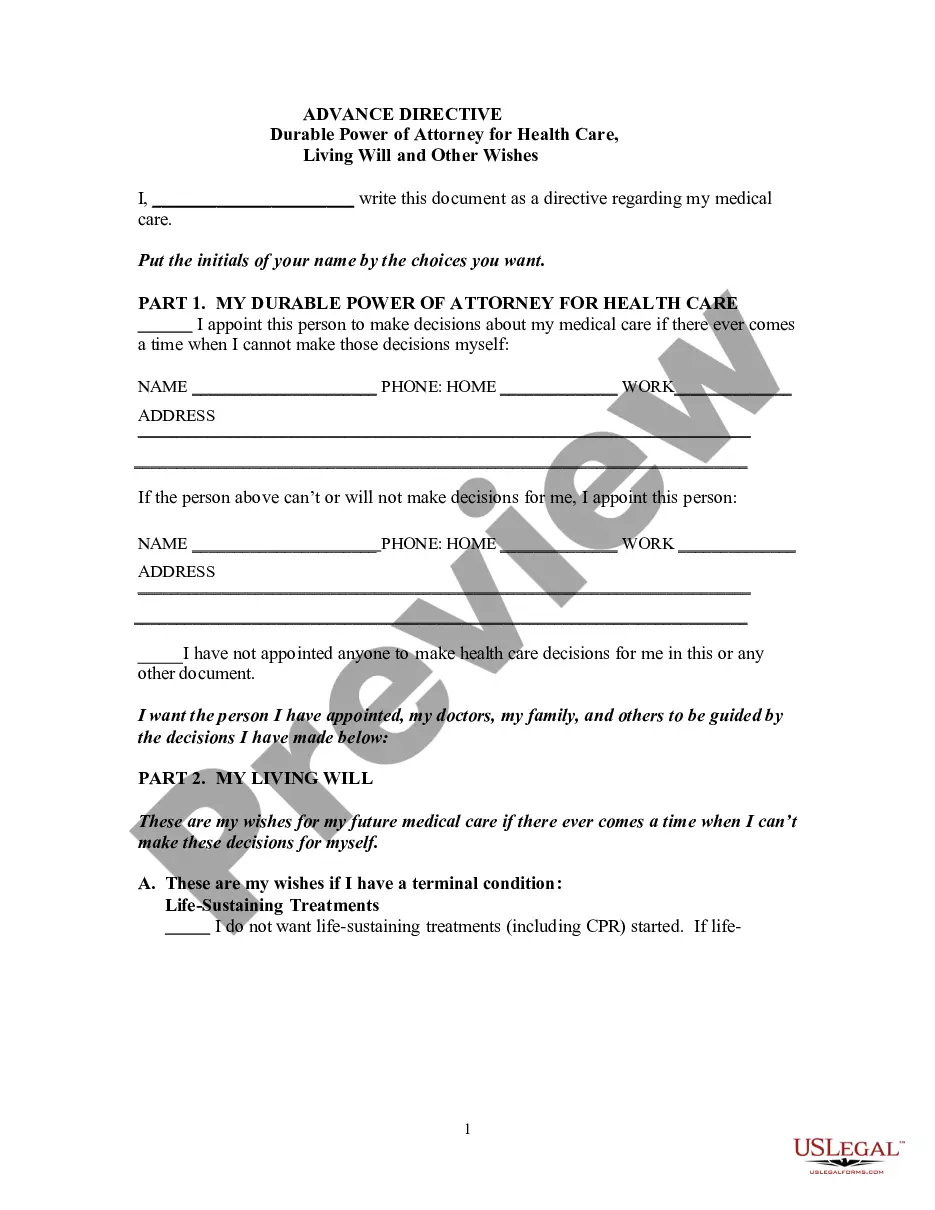
The Revised Uniform Anatomical Gift Act Donation form allows individuals to specify the body parts and organs they wish to donate upon their death. This form serves a critical function in designating anatomical gifts according to state laws, ensuring that the donor's wishes are legally recognized and can be honored by medical professionals. Unlike general wills or directives, this form is specifically focused on anatomical donations, providing clarity on what is being given for medical purposes.
Main sections of this form
- Identification of the donor and the specific organs or body parts designated for donation.
- Confirmation that the donor is at least 18 years of age to make the anatomical gift.
- Signature field for the donor, requiring witnesses to validate the document.
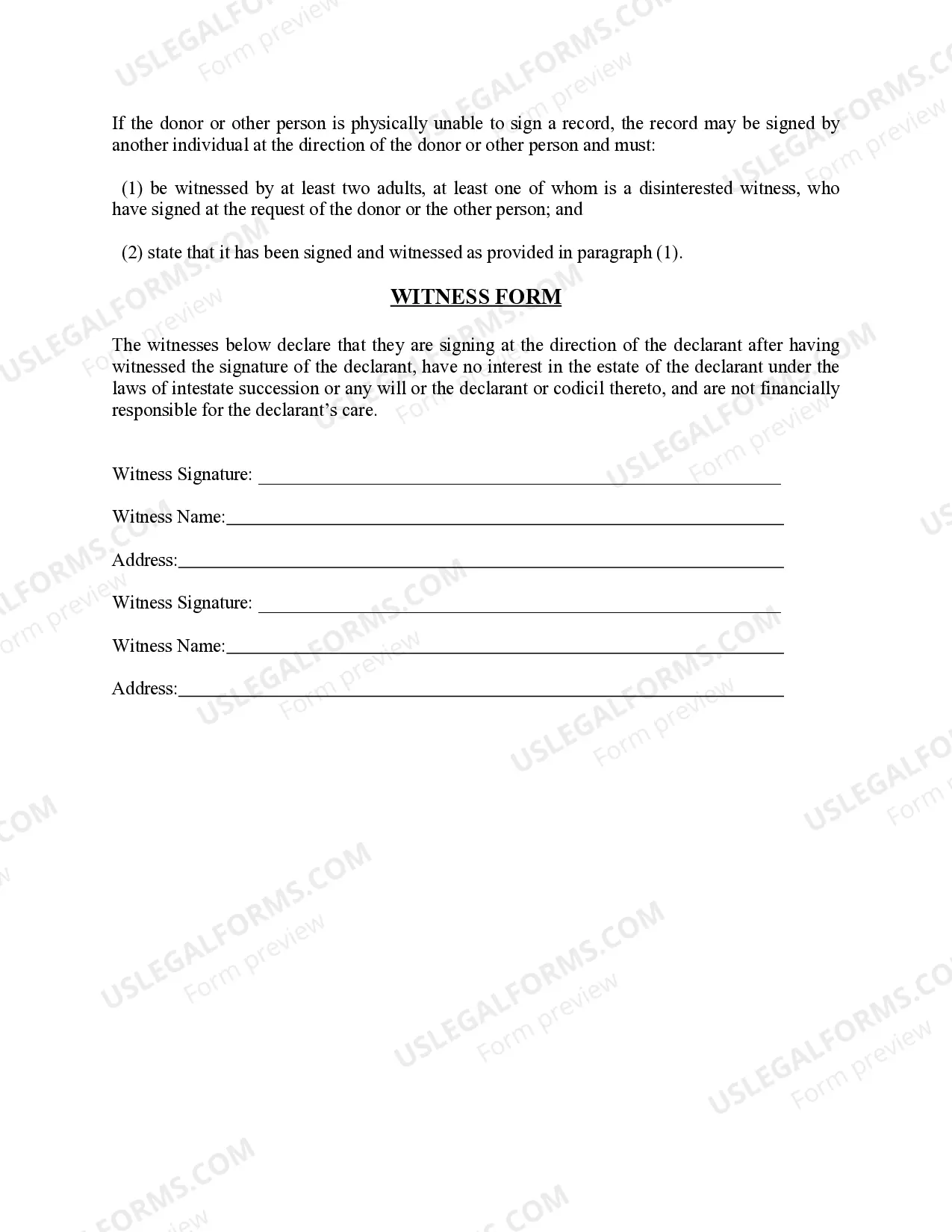
- Instructions for individuals unable to sign personally, including the role of witnesses.
Situations where this form applies
This form should be utilized when an individual wishes to ensure their anatomical gifts are recognized at the time of death. It is especially important in situations where a person has strong personal beliefs about organ donation or wants to contribute to medical research or the needs of others following their death. It can also be useful for those discussing their wishes with family members, providing clarity and relieving potential burdens during a difficult time.
Who this form is for
- Individuals who are 18 years of age or older and wish to donate their organs or tissues upon death.
- Individuals who want to ensure their wishes regarding organ donation are clearly communicated and legally documented.
- People who have specific preferences about the body parts they do or do not want to donate.
Steps to complete this form
- Begin by filling out your full name and other identifying information.
- Specify which body parts or organs you wish to donate.
- Sign the document in the presence of at least two witnesses, ensuring one is disinterested.
- If you cannot sign, have someone sign on your behalf following the proper witnessing procedure.
- Complete any additional required fields, if applicable, before finalizing the form.
Notarization requirements for this form
Notarization is generally not required for this form. However, certain states or situations might demand it. You can complete notarization online through US Legal Forms, powered by Notarize, using a verified video call available anytime.
Get your form ready online
Our built-in tools help you complete, sign, share, and store your documents in one place.
Make edits, fill in missing information, and update formatting in US Legal Forms—just like you would in MS Word.
Download a copy, print it, send it by email, or mail it via USPS—whatever works best for your next step.
Sign and collect signatures with our SignNow integration. Send to multiple recipients, set reminders, and more. Go Premium to unlock E-Sign.
If this form requires notarization, complete it online through a secure video call—no need to meet a notary in person or wait for an appointment.
We protect your documents and personal data by following strict security and privacy standards.

Make edits, fill in missing information, and update formatting in US Legal Forms—just like you would in MS Word.

Download a copy, print it, send it by email, or mail it via USPS—whatever works best for your next step.

Sign and collect signatures with our SignNow integration. Send to multiple recipients, set reminders, and more. Go Premium to unlock E-Sign.

If this form requires notarization, complete it online through a secure video call—no need to meet a notary in person or wait for an appointment.

We protect your documents and personal data by following strict security and privacy standards.
Common mistakes
- Failing to have the document witnessed by the appropriate number of individuals.
- Not specifying the organs or body parts intended for donation.
- Not signing the document, which could render it invalid.
Why use this form online
- Convenient access to legal form templates anytime and anywhere.
- Ability to edit and customize the form based on personal preferences before printing.
- Reliable templates drafted by licensed attorneys to ensure compliance with legal standards.
Main things to remember
- The Revised Uniform Anatomical Gift Act Donation form allows individuals to specify their organ donation wishes.
- Witnessing and signing are crucial steps in completing this form.
- Using this form helps ensure that your wishes regarding anatomical gifts are clearly understood and legally recognized.
Looking for another form?
Form popularity
FAQ
Transplants may have a lifespan of around 10 years due to factors like organ rejection and the body’s immune response. Each individual's body reacts differently, and underlying health conditions can influence the success duration of a transplant. Understanding this helps reinforce the importance of the Arizona Revised Uniform Anatomical Gift Act Donation, as ongoing research aims to improve transplant longevity.
You can obtain a donor card through various organizations, including local health departments or online platforms. Completing it online is often a quick and easy option. By having a donor card, you actively participate in the Arizona Revised Uniform Anatomical Gift Act Donation, indicating your willingness to donate your organs.
The brain is generally not suitable for donation after death due to its complex functions and the importance of brain activity in organ viability. Other organs can be evaluated for donation depending on various factors, including health condition and age. The Arizona Revised Uniform Anatomical Gift Act Donation outlines the ethical considerations regarding organ donation to ensure responsible practices.
To remove yourself from the organ donor list in Arizona, you typically need to contact the state’s donor registry. You can also check with your local Department of Motor Vehicles, as this is often where donor status is recorded. Maintaining your rights related to the Arizona Revised Uniform Anatomical Gift Act Donation is important, so make sure to follow the correct process.
The organ with the longest waiting list is usually the kidney. Many people await this critical transplant, as kidney disease is prevalent across the United States. Engaging with the Arizona Revised Uniform Anatomical Gift Act Donation can help ease this burden by encouraging more donors to step forward.
Organs are typically removed within hours after death is confirmed. The exact timing can vary based on the organ type and the specific circumstances surrounding the donation. Under the Arizona Revised Uniform Anatomical Gift Act Donation, timely removal is essential for maximizing the chances of successful transplants.
The 90-minute rule refers to the timeframe within which viable organs must be assessed for donation after a person’s heart has stopped beating. This rule ensures that organs maintain optimal viability for transplant. Adhering to the Arizona Revised Uniform Anatomical Gift Act Donation is crucial, as it guides how and when organs can be procured while respecting the wishes of the donor.
In Arizona, family members can have a say in the decision to proceed with organ donation, even if the deceased expressed their wishes. However, the Arizona Revised Uniform Anatomical Gift Act Donation aims to honor the individual's preferences whenever possible. It's vital to have open discussions with family about your wishes regarding organ donation. This way, everyone understands and respects the choices made.
Organ donation involves the removal and transplant of whole organs, while tissue donation refers to the donation of tissues such as skin, bones, and corneas. The Arizona Revised Uniform Anatomical Gift Act Donation provides a framework for both types of donation. Organ donation is often life-saving, while tissue donation can improve lives and enhance recovery for burn victims. Each plays a significant role in medical treatment and research.
Brain donation is possible, but it usually occurs in specific circumstances, such as after the declaration of brain death. The Arizona Revised Uniform Anatomical Gift Act Donation covers various types of anatomical gifts, including brain tissue. Donating brain material can help researchers advance medical science and improve treatment options. Consider discussing your wishes with your healthcare provider.